 Education › Re: Meet Capybara, The Friendliest Animal On Earth by IamMichael(op): 2:32pm On May 30, 2020 Education › Re: Meet Capybara, The Friendliest Animal On Earth by IamMichael(op): 2:32pm On May 30, 2020 |
Shukusheka:
Bro, wars tend to accelerate technological development to adapt tools for the purpose of solving specific military needs. Later, these military tools tend to evolve into non-military devices e.g the Internet, microwave oven, stealth aircraft technology etc. Humans didn't attain this level of civilization without the help of conflict. I'm not doubting what you are saying. It's fact, so it can't be argued. What I'm telling you is that war is in no way advancing humans at all. For every 1 good technology that comes as a result of war, thousands of better technology, human resources, and any attained development is destroyed. Is like a one foot forward, 1,000,000 steps backwards! Think of all the million's of people killed in useless wars, think of the million's of ideas that died with them. |
| Christianity Etc › Re: A Thread For The Mental Emancipation Of Indoctrinated Religious Adherents by IamMichael(op): 2:16pm On May 30, 2020 |
shadeyinka:
See escapism in full blare!
I speak about the "Creator God/ gods"
Now answer the question
Can you please apply what you have preached here to this dogma
Because God cannot be experimentally verified, therefore He doesn't exist!
Is this a FACT or a BELIEF?
You are not listening. When you say you speak about the creator God/gods, you have not said anything because already you have made a conclusion about a non-existent thing as existing. The only thing you succeeded in doing is asking an open ended ambiguous and vague question.Be specific and coin the question using a specific name. When you use a specific name, you get a specific answer. I hope that's more clearer for you now! 

|
| Education › Re: Meet Capybara, The Friendliest Animal On Earth by IamMichael(op): 2:03pm On May 30, 2020 |
sinkhole:
even angels dey fight war, why should we humans not fight war then?
There is always war in heaven, hence same must occur on earth.
Better develop your war tools before others will take you over.  Lol... Abeg o... Mind as you dey talk war online o, before you will get some personal visit from the you know who!  |
| Education › Re: Some Rare Animals That Seem To Come From Another World by IamMichael(op): 1:56pm On May 30, 2020 |
JFT24:
That number 8, when pepper fried or roast; d taste is out of this world They don come!  |
| Education › Re: Meet Capybara, The Friendliest Animal On Earth by IamMichael(op): 1:50pm On May 30, 2020 |
Shukusheka:
If humans were like this, we won't be at the top of the chain on this planet. Love and hate have their own different purposes, the same wars we love to condemn was what fuelled major technological advancement we all enjoy.
The only thing war fuels is technological advancements in weapons of mass destruction and millions of deaths.
If all the trillions of dollars spent in developing weapons of destruction and footing war bills are channeled into making the world a better place, people will be vacating on Mars by now!
|
| Education › Re: Meet Capybara, The Friendliest Animal On Earth by IamMichael(op): 1:42pm On May 30, 2020 |
SKhanmi:
Hmmm, almost similar to what they call an Ewuju here. The meat sweet ehn Doubt if it will remain friendly when introduced to Nigeria. It would learn fast Very true...We too dey eat! |
| Christianity Etc › Re: A Thread For The Mental Emancipation Of Indoctrinated Religious Adherents by IamMichael(op): 1:38pm On May 30, 2020 |
shadeyinka:
Can you please apply what you have preached here to this dogma
1. Because God cannot be experimentally verified, therefore He doesn't exist!
Is this a FACT or a BELIEF? You are always in a hurry to argue illogical conclusions. Just slow down for once and think, try to conceptualise. Don't always be in a hurry to show you know. Before you pose a question, at least try and first consider if the question you are asking have been asked properly, so that you elicit proper reply. What god are you talking about? Is it Zeus, Ogun, Allah, Yahweh, Amadioha?
|
| Education › Re: Meet Capybara, The Friendliest Animal On Earth by IamMichael(op): 9:32am On May 30, 2020 |
Sweet Capybara, we love you too. 



|
| Education › Re: Meet Capybara, The Friendliest Animal On Earth by IamMichael(op): 9:31am On May 30, 2020 |
Just sweet. 



|
| Education › Re: Meet Capybara, The Friendliest Animal On Earth by IamMichael(op): 9:29am On May 30, 2020 |
So much love for Capy... 



|
| Education › Re: Meet Capybara, The Friendliest Animal On Earth by IamMichael(op): 9:28am On May 30, 2020 |
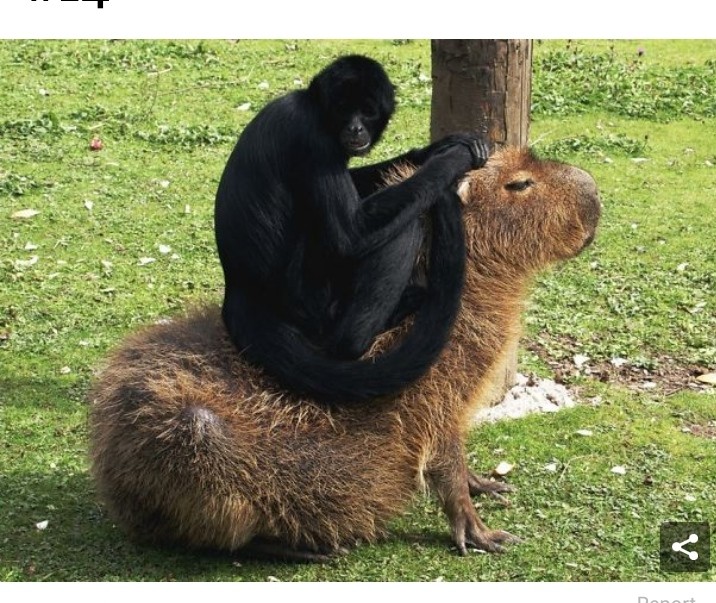
More... 


|
| Education › Re: Meet Capybara, The Friendliest Animal On Earth by IamMichael(op): 9:26am On May 30, 2020 |
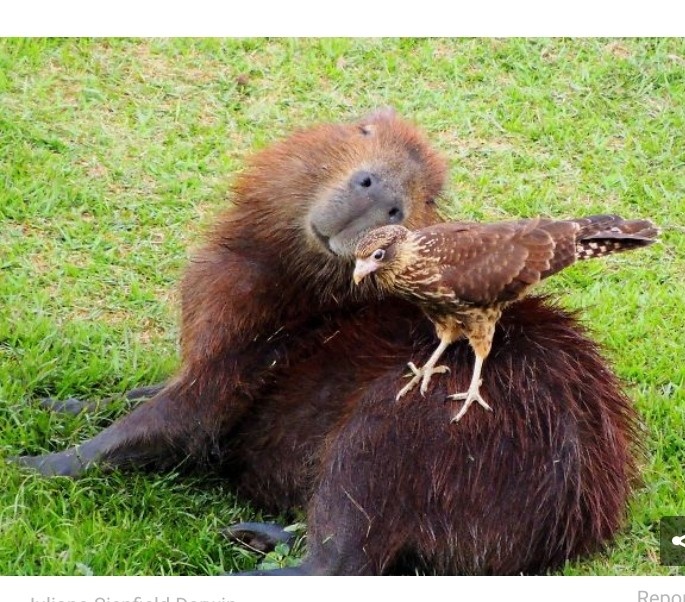
More cuties... 


|
| Education › Re: Meet Capybara, The Friendliest Animal On Earth by IamMichael(op): 9:25am On May 30, 2020 |
Aren't they cute? 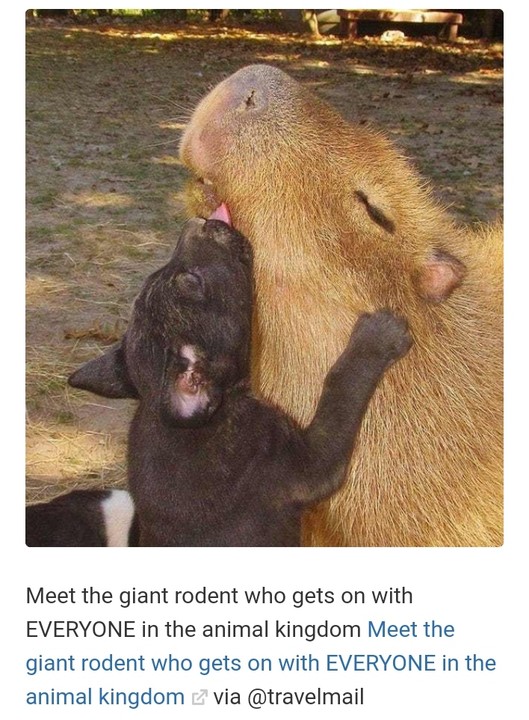



|
| Education › Meet Capybara, The Friendliest Animal On Earth by IamMichael(op): 9:22am On May 30, 2020 |
The capybara is an animal native to South America, is the size of a big dog, and looks like its closest relative, the guinea pig. They inhabit dense forests and savannas located near water. It’s the largest rodent on the planet, hangs out with a lot of different species, and lives in groups of 10-20, and sometimes even 100 individuals. Capybaras always live near water because their dry skin needs a lot of moisture. They like napping in the humid soil of marshland, and sometimes even mud. The group usually consists of more females, but it’s led by alpha-males. If the animal kingdom were a school, this chap would be the most popular student in every class. 



|
| Education › Re: Some Rare Animals That Seem To Come From Another World by IamMichael(op): 8:46am On May 30, 2020 |
|
| Christianity Etc › How To Know If Your Beliefs Are True by IamMichael(op): 8:31am On May 30, 2020*. Modified: 1:41pm On May 30, 2020 |
Before you subscribe to any belief system, you should always take it upon yourself to verify it rather than rely on the experience of others. Experiences are subjective, even if experienced in groups. A belief is a strong conviction that something is true of something. Don't assume something to be true just because it sounds good. Everything about a belief is verifiable, and there are always simple ways of verifying your beliefs, and i don't just mean religious beliefs alone. The only true belief's are the ones that cannot be refuted. If a belief being paraded as truth is refuted with verifiable facts, then it is senseless still trying to hold on to it. It's now about your ego rather than the subject of belief. Here is an excerpt that you should really take your time to read and digest. There is nothing wrong in admitting that you don't know for certain. There is nothing wrong in accepting that you may be wrong. You cannot grow as a person if you don't step out of your comfort zone and verify things for yourself. Enjoy.
HOW DO I KNOW MY BELIEFS ARE TRUE?
1)Have you ever held a false belief?
2) What made you realize you were wrong about that belief?
3) How did that realization make you feel?
4) Is it possible that you might hold false beliefs right now and you just don’t realize it yet?
5) What would it take to convince you that a belief you hold right now is false?
6) Are you passively or perhaps even actively resisting a change in your beliefs because of the emotional impact it might cause to realize you are wrong?
7) What is more important to you… Believing true things? Or believing things that confirm your existing worldview and don’t challenge you emotionally?
CHANGING WHAT WE BELIEVE IS HARD.
It’s not so simple as just “choosing” to believe something. Think of a closely held belief you have and try to remember if you chose to believe it, or if you were just exposed to enough information about it that it became impossible not to believe it. Do you choose to believe that the sun will rise tomorrow or do you believe it will based on what you’ve experienced about every sunrise before? Could you actively choose to believe that the sun will fail to rise tomorrow without some evidence that it won’t? Actually, you might say that you don’t “believe” the sun will rise tomorrow, you “know” it as a fact. Well, strictly speaking from a philosophical viewpoint, none of us “know” anything with 100% certainty. When we say we know something we really just mean that we have a very high confidence in that belief. Knowledge is a subset of belief. There are likely objective truths about reality that we can observe and make conclusions about, but personally I don’t see how we could ever perceive reality with 100% accuracy. This is a humbling concept to admit that we don’t actually know things, and even the things we have a high certainty in believing, we must admit that we may only have part of the picture.
I’m going to frame the rest of this discussion around a belief that I held very closely for most of my life. Up until I was about 22 years old, I sincerely and wholeheartedly believed that there was an eternal being who created the universe and gave us a special place in it. His only son came to Earth and sacrificed himself to give us a life after death. It took me several years, but I was exposed to enough outside information that challenged this belief that I was eventually forced to abandon it. I didn’t choose to lose my faith, in fact, there were times where I actively wished I could choose not to. Losing my faith came from a larger process of skepticism and scientific thinking.
WHEN DID I CHOOSE REASON OVER FAITH?
It started with the first question I asked you here today. How do I know my beliefs are true? When I left home for the first time to attend university, my worldviews were thrust wide open. I was being exposed to new people, new ideas, new beliefs. Often times these new things were at odds with my personal experiences to that point. I was recognizing that my perception of the world was quite small. Like I had been looking through a spyglass my whole life. I relied too heavily on that narrow view. It was very jarring to have someone take my spyglass and point it at something I couldn’t see before. I lost confidence in many beliefs, and I realized if I was wrong about even simple things, perhaps I was wrong about pretty important things like religion. I wanted to believe as many true things as possible and as few false things as possible. I started pointing my spyglass in directions I had never looked before. In fact, what I found most disconcerting was that my faith sometimes actively discouraged me from looking in certain directions. But my intent at that point was not to actively find reasons not to believe. It was actually quite the opposite. I believed in God and Jesus Christ, but I thought my narrow spyglass perspective of Christianity wasn’t sufficient. I wanted to increase the certainty of my belief, and in the process of doing so I unwittingly decreased it to the point of non-belief.
I want to use my experience and show you how you can examine your own beliefs in a similar way. If you care about holding true beliefs then I think there are some valuable tools here that you can use.
#1) NEVER EXEMPT ANY ONE BELIEF YOU HOLD FROM THE SAME CRITICISMS YOU APPLY TO OTHER BELIEFS.
The inverse is also good advice. Don’t defend your beliefs with reasoning that you don’t accept in relation to other beliefs. Almost every child of Christian parents is taught this backwards way of thinking. When they ask “If God made the universe, then where did God come from?”, they are given the response “God just is, and always will be.” This is certainly a question I asked at some point and obviously my young mind found the answer satisfactory since I continued to believe it for many years. This argument remains relatively identical even when discussed among adults; however, just with slightly more complex philosophical language. In fact, this argument has a specific name, called the Cosmological Argument. Christian apologist William Lane Craig uses the following form:
- Whatever begins to exist has a cause.
- The Universe began to exist.
- Therefore, the Universe had a cause.
From here he jumps to assuming that the cause of the universe must itself be un-caused. If whatever caused the universe to exist had a cause itself, then we create an infinite regress of causes that require causes. So what caused the universe? Well, an eternal, necessary, and perfect being called God of course. In apologetics this is called a presupposition. He jumps from requiring an un-caused cause to a god. He has exempted his god from the same criticism that he applies to the universe itself. Why insert a god at all? How does he know that the conditions required to spawn a universe could not have simply existed and been un-caused? Furthermore, scientists are relatively confident that time itself began with the big bang. What sense does it even make to claim that something existed before the universe that could cause the big bang if time itself did not exist yet? Before and after, cause and effect. These are all temporal concepts. What does it even mean to say that something existed before matter existed? Can something completely void of matter exist? If mister Craig and others who use the Cosmological Argument were consistent in their application of philosophical criticisms they would see that the only reasonable position to take is to admit that we are here, we exist, we’re not sure why, and we may never find out. From a young age I was told that our beliefs about God were special. That the normal rules don’t apply to God. I can’t use human logic to understand God. When people describe their beliefs about God as being “sacred” what they are really saying is that they should be exempt from criticism. But beliefs about God aren’t the only ones we can hold sacred. If you’ve ever talked to someone about any belief they hold who said “there’s nothing you can say to convince me I’m wrong”, then you are talking to someone who doesn’t care about whether their beliefs are true. Be open to criticisms and strive for a consistent application of logic and reason between all your beliefs.
#2) NEVER ATTEMPT TO BOLSTER YOUR BELIEFS BY ONLY SEEKING SOURCES THAT CONFIRM THEM.
This is called Confirmation Bias. Early on in my journey to increase my confidence in my religious beliefs I was absolutely guilty of practicing in confirmation bias. I wanted to believe that there was a God that cared about me and that I would get to see my family again when I died. I sought out theologians to help answer some of my most difficult questions, like why an all-powerful God would allow children to suffer and die, or why he would include verses in the Bible that detailed how you are allowed to beat your slaves as long as they don’t die within 24 hours. While many might have found their answers satisfactory, I did not. I started to realize that lots of other people also didn’t find their answers satisfactory, and many of them called themselves atheists. I had never actually met someone who didn’t believe in any kind of god, so this was quite a shock to find such a strong and vibrant online community who had more satisfactory answers than the leaders within my own faith. Investigating the claims of those that disagree with you is perhaps the most important point I can make today. In fact, it should be the first thing you do when you find yourself falling on one side of an issue. Always challenge your first assumptions when forming a belief by playing your own “devil’s advocate”. It is much too easy to find an echo chamber of support for your beliefs and become rooted in them before you learn the full picture. If I had stuck to only religious sources for answers to my questions I would still think that all atheists are just people who want to sin without remorse and hate god.
#3) NEVER ASSUME WE ALREADY HAVE THE COMPLETE PICTURE.
I’ve already mentioned how our own narrow view of the world can be problematic for discovering truths. This is especially the case for Christianity. Growing up I was never taught what other religions believed or why they believed them. I was told that the Bible was all we needed. It was the complete picture of our origins, of our purpose, and of our destiny in the afterlife. For some reason, this perfect picture of divine knowledge was bestowed upon some Middle Eastern sheep herders 2,000 years ago. I wasn’t satisfied with that answer and I thought that perhaps the historical record would confirm the claims of the Bible. Much to my surprise, there is virtually no historical mention of the man called Jesus Christ in sources outside the Bible. There is no historical evidence that the Jews were ever slaves in Egypt or that Moses led them through the desert for 40 years. We can’t even be sure who wrote the books of the Bible, let alone account for the veracity of their claims. These are not things you are taught in Sunday school. Always be skeptical of any belief that claims ownership over the truth. Doubt anyone who tells you to ignore other sources of information that might contradict their claims. Don’t let someone with authority dissuade you from seeking to learn more and investigate claims for yourself. If you are not familiar with Plato’s allegory of the cave I strongly encourage you to seek it out as it perfectly encapsulates the idea of being trapped in an insular belief system.
#4) NEVER ASSUME THAT THE REST OF THE PICTURE IS IMPOSSIBLE TO FILL IN.
This is closely tied with the previous point, but there’s a subtle distinction. Sometimes I would have questions that Christians would honestly say they don’t know the answer to. Not only that, but the answer was designed by God to be beyond our reach. I was told that “God works in mysterious ways” or “maybe you will find out the answer some day when you are face to face with God in the afterlife” and many other cliches and platitudes. The truth is that Christianity never did provide answers, it provided excuses that inhibit knowledge. If Galileo had accepted the authority of the church we would still believe that the Earth was the center of the universe. If barriers placed in the way of progress were wrong in the past, how many discoveries about the world are currently being held back by similar modes of thought? Never accept that there are things we cannot know. A few minutes ago you might remember I said that we might never know why we exist, but that doesn’t mean we should stop searching. The only way to find out what we can’t know is to search in the first place. And you don’t have to seek out only things that have never been known before. There are plenty of things that each of us can learn that will widen the aperture of our spyglass and help us form a more accurate picture of our world.
#5) NEVER TURN A BLIND EYE TO BELIEFS YOU HOLD THAT ARE INHERENTLY CONTRADICTORY.
One side effect of having a low evidence threshold for accepting certain beliefs is that you can actually end up holding beliefs that are mutually exclusive. This is especially true for many religions where you are encouraged to adopt an entire umbrella of beliefs without critically examining them. When you do take the time to ensure your beliefs are compatible with each other you might experience something called Cognitive Dissonance. This is the feeling of emotional discomfort you get when you recognize an incompatibility. One example in Christianity stands out to me from my deconversion process and that is the concept of Free Will. I’ve had this discussion many times over with numerous Christians and it has always perplexed me. If God is omniscient, meaning that he knows all things, including our future, how can we possibly have free will? If he knows exactly what actions I will take, then by definition those actions have been determined for me. If I had the power to change those actions, then God could not claim to know which one I would choose. So if a God exists, either free will is an illusion, or God is not omniscient. My feeling of cognitive dissonance with these beliefs was just one more reason that I felt I needed to reject the premises altogether. Yet many Christians have no issue holding these seemingly contradictory beliefs at the same time. And that’s usually because they have never compared the two separate beliefs. When presented with events that are difficult to understand, Christians will claim that it’s part of God’s plan and that he has a reason for everything that happens. Yet when they discuss moral matters they will stress the importance of free will and that your choices will impact the most important thing of all, your eternal salvation. It is exceedingly rare to find these two concepts discussed in relation to one another. No priest wants to answer the question, “Does God override our free will to enact his divine plan?”. The lesson here can be applied to all of your beliefs. When you adopt a new belief about the world it necessitates that you then compare that new belief to as many other beliefs you already hold to ensure they are internally consistent. Perhaps you’ve heard a headline that said something to the effect of “New discovery causes scientists to go back to the drawing board”. This isn’t a failure of science, it is one of the most important features of the scientific method. Bad ideas should be thrown out and we should work every day towards a consistent and compatible set of beliefs that conform to reality as accurately as possible.
WHAT ABOUT THINGS THAT OTHER PEOPLE BELIEVE?
Once we have increased the confidence in our own beliefs (and rejected the ones we no longer have good reasons to believe) how do we help others to reassess the confidence in their beliefs? More simply, how do we convince others that they are wrong?
One of the most powerful tools for influencing belief is the Socratic method. The following is a excellent description of how it works taken from Wikipedia: “The Socratic method is a method of hypothesis elimination, in that better hypotheses are found by steadily identifying and eliminating those that lead to contradictions. The Socratic method searches for general, commonly held truths that shape beliefs and scrutinizes them to determine their consistency with other beliefs. The basic form is a series of questions formulated as tests of logic and fact intended to help a person or group discover their beliefs about some topic.” I asked you a series of questions at the very beginning of my talk that were very much designed to influence your thinking according to the Socratic method. And actually, the title I picked today is probably the most impactful question you can ask yourself and others. “How do you know your beliefs are true?” When it comes to using the Socratic method to address Christianity, there is actually a very active community of people who practice something called Street Epistemology. It’s something I only discovered recently, but I can tell you that if I had been approached by someone using Street Epistemology back while I was having serious doubts I likely would have abandoned my faith much sooner.
As I came through this process of inspecting my own beliefs, I realized that I actually felt more secure, confident, and honest. I felt the cognitive dissonance slip away. Even when there are things that I’m still not sure what to believe it feels natural to admit that “I don’t know” until I have gathered enough justification to believe one way or the other. Eventually I found that there was a group that call themselves Humanists that most closely aligned with my new worldviews. The very first bullet point on their list of affirmations reads as follows: “We are committed to the application of reason and science to the understanding of the universe and to the solving of human problems.”
****
https://uuburlington.org/news/2018/4/3/how-do-i-know-my-beliefs-are-true This was the subject i had in mind to discuss today, but it appears someone else beat me to it. So instead of repeating it, I'm just deferring to it as it is comprehensively well laid and written. Do not read to argue, read to understand. I had to stress on this topic because of the moniker @whitestar who seem to be really conflicted about the word "Freethinking" and the moniker @shadeyinka who is always confusing himself with the Uncreated First Cause ridiculous absurdity. Seun, Lalasticlala |
| Christianity Etc › Re: A Thread For The Mental Emancipation Of Indoctrinated Religious Adherents by IamMichael(op): 8:27am On May 30, 2020 |
Before you subscribe to any belief system, you should always take it upon yourself to verify it rather than rely on the experience of others. Experiences are subjective, even if experienced in groups. A belief is a strong conviction that something is true of something. Don't assume something to be true just because it sounds good. Everything about a belief is verifiable, and there are always simple ways of verifying your beliefs, and i don't just mean religious beliefs alone. The only true belief's are the ones that cannot be refuted. If a belief being paraded as truth is refuted with verifiable facts, then it is senseless still trying to hold on to it. It's now about your ego rather than the subject of belief. Here is an excerpt that you should really take your time to read and digest. There is nothing wrong in admitting that you don't know for certain. There is nothing wrong in accepting that you may be wrong. You cannot grow as a person if you don't step out of your comfort zone and verify things for yourself. Enjoy.
HOW DO I KNOW MY BELIEFS ARE TRUE?
1)Have you ever held a false belief?
2) What made you realize you were wrong about that belief?
3) How did that realization make you feel?
4) Is it possible that you might hold false beliefs right now and you just don’t realize it yet?
5) What would it take to convince you that a belief you hold right now is false?
6) Are you passively or perhaps even actively resisting a change in your beliefs because of the emotional impact it might cause to realize you are wrong?
7) What is more important to you… Believing true things? Or believing things that confirm your existing worldview and don’t challenge you emotionally?
CHANGING WHAT WE BELIEVE IS HARD.
It’s not so simple as just “choosing” to believe something. Think of a closely held belief you have and try to remember if you chose to believe it, or if you were just exposed to enough information about it that it became impossible not to believe it. Do you choose to believe that the sun will rise tomorrow or do you believe it will based on what you’ve experienced about every sunrise before? Could you actively choose to believe that the sun will fail to rise tomorrow without some evidence that it won’t? Actually, you might say that you don’t “believe” the sun will rise tomorrow, you “know” it as a fact. Well, strictly speaking from a philosophical viewpoint, none of us “know” anything with 100% certainty. When we say we know something we really just mean that we have a very high confidence in that belief. Knowledge is a subset of belief. There are likely objective truths about reality that we can observe and make conclusions about, but personally I don’t see how we could ever perceive reality with 100% accuracy. This is a humbling concept to admit that we don’t actually know things, and even the things we have a high certainty in believing, we must admit that we may only have part of the picture.
I’m going to frame the rest of this discussion around a belief that I held very closely for most of my life. Up until I was about 22 years old, I sincerely and wholeheartedly believed that there was an eternal being who created the universe and gave us a special place in it. His only son came to Earth and sacrificed himself to give us a life after death. It took me several years, but I was exposed to enough outside information that challenged this belief that I was eventually forced to abandon it. I didn’t choose to lose my faith, in fact, there were times where I actively wished I could choose not to. Losing my faith came from a larger process of skepticism and scientific thinking.
WHEN DID I CHOOSE REASON OVER FAITH?
It started with the first question I asked you here today. How do I know my beliefs are true? When I left home for the first time to attend university, my worldviews were thrust wide open. I was being exposed to new people, new ideas, new beliefs. Often times these new things were at odds with my personal experiences to that point. I was recognizing that my perception of the world was quite small. Like I had been looking through a spyglass my whole life. I relied too heavily on that narrow view. It was very jarring to have someone take my spyglass and point it at something I couldn’t see before. I lost confidence in many beliefs, and I realized if I was wrong about even simple things, perhaps I was wrong about pretty important things like religion. I wanted to believe as many true things as possible and as few false things as possible. I started pointing my spyglass in directions I had never looked before. In fact, what I found most disconcerting was that my faith sometimes actively discouraged me from looking in certain directions. But my intent at that point was not to actively find reasons not to believe. It was actually quite the opposite. I believed in God and Jesus Christ, but I thought my narrow spyglass perspective of Christianity wasn’t sufficient. I wanted to increase the certainty of my belief, and in the process of doing so I unwittingly decreased it to the point of non-belief.
I want to use my experience and show you how you can examine your own beliefs in a similar way. If you care about holding true beliefs then I think there are some valuable tools here that you can use.
#1) NEVER EXEMPT ANY ONE BELIEF YOU HOLD FROM THE SAME CRITICISMS YOU APPLY TO OTHER BELIEFS.
The inverse is also good advice. Don’t defend your beliefs with reasoning that you don’t accept in relation to other beliefs. Almost every child of Christian parents is taught this backwards way of thinking. When they ask “If God made the universe, then where did God come from?”, they are given the response “God just is, and always will be.” This is certainly a question I asked at some point and obviously my young mind found the answer satisfactory since I continued to believe it for many years. This argument remains relatively identical even when discussed among adults; however, just with slightly more complex philosophical language. In fact, this argument has a specific name, called the Cosmological Argument. Christian apologist William Lane Craig uses the following form:
- Whatever begins to exist has a cause.
- The Universe began to exist.
- Therefore, the Universe had a cause.
From here he jumps to assuming that the cause of the universe must itself be un-caused. If whatever caused the universe to exist had a cause itself, then we create an infinite regress of causes that require causes. So what caused the universe? Well, an eternal, necessary, and perfect being called God of course. In apologetics this is called a presupposition. He jumps from requiring an un-caused cause to a god. He has exempted his god from the same criticism that he applies to the universe itself. Why insert a god at all? How does he know that the conditions required to spawn a universe could not have simply existed and been un-caused? Furthermore, scientists are relatively confident that time itself began with the big bang. What sense does it even make to claim that something existed before the universe that could cause the big bang if time itself did not exist yet? Before and after, cause and effect. These are all temporal concepts. What does it even mean to say that something existed before matter existed? Can something completely void of matter exist? If mister Craig and others who use the Cosmological Argument were consistent in their application of philosophical criticisms they would see that the only reasonable position to take is to admit that we are here, we exist, we’re not sure why, and we may never find out. From a young age I was told that our beliefs about God were special. That the normal rules don’t apply to God. I can’t use human logic to understand God. When people describe their beliefs about God as being “sacred” what they are really saying is that they should be exempt from criticism. But beliefs about God aren’t the only ones we can hold sacred. If you’ve ever talked to someone about any belief they hold who said “there’s nothing you can say to convince me I’m wrong”, then you are talking to someone who doesn’t care about whether their beliefs are true. Be open to criticisms and strive for a consistent application of logic and reason between all your beliefs.
#2) NEVER ATTEMPT TO BOLSTER YOUR BELIEFS BY ONLY SEEKING SOURCES THAT CONFIRM THEM.
This is called Confirmation Bias. Early on in my journey to increase my confidence in my religious beliefs I was absolutely guilty of practicing in confirmation bias. I wanted to believe that there was a God that cared about me and that I would get to see my family again when I died. I sought out theologians to help answer some of my most difficult questions, like why an all-powerful God would allow children to suffer and die, or why he would include verses in the Bible that detailed how you are allowed to beat your slaves as long as they don’t die within 24 hours. While many might have found their answers satisfactory, I did not. I started to realize that lots of other people also didn’t find their answers satisfactory, and many of them called themselves atheists. I had never actually met someone who didn’t believe in any kind of god, so this was quite a shock to find such a strong and vibrant online community who had more satisfactory answers than the leaders within my own faith. Investigating the claims of those that disagree with you is perhaps the most important point I can make today. In fact, it should be the first thing you do when you find yourself falling on one side of an issue. Always challenge your first assumptions when forming a belief by playing your own “devil’s advocate”. It is much too easy to find an echo chamber of support for your beliefs and become rooted in them before you learn the full picture. If I had stuck to only religious sources for answers to my questions I would still think that all atheists are just people who want to sin without remorse and hate god.
#3) NEVER ASSUME WE ALREADY HAVE THE COMPLETE PICTURE.
I’ve already mentioned how our own narrow view of the world can be problematic for discovering truths. This is especially the case for Christianity. Growing up I was never taught what other religions believed or why they believed them. I was told that the Bible was all we needed. It was the complete picture of our origins, of our purpose, and of our destiny in the afterlife. For some reason, this perfect picture of divine knowledge was bestowed upon some Middle Eastern sheep herders 2,000 years ago. I wasn’t satisfied with that answer and I thought that perhaps the historical record would confirm the claims of the Bible. Much to my surprise, there is virtually no historical mention of the man called Jesus Christ in sources outside the Bible. There is no historical evidence that the Jews were ever slaves in Egypt or that Moses led them through the desert for 40 years. We can’t even be sure who wrote the books of the Bible, let alone account for the veracity of their claims. These are not things you are taught in Sunday school. Always be skeptical of any belief that claims ownership over the truth. Doubt anyone who tells you to ignore other sources of information that might contradict their claims. Don’t let someone with authority dissuade you from seeking to learn more and investigate claims for yourself. If you are not familiar with Plato’s allegory of the cave I strongly encourage you to seek it out as it perfectly encapsulates the idea of being trapped in an insular belief system.
#4) NEVER ASSUME THAT THE REST OF THE PICTURE IS IMPOSSIBLE TO FILL IN.
This is closely tied with the previous point, but there’s a subtle distinction. Sometimes I would have questions that Christians would honestly say they don’t know the answer to. Not only that, but the answer was designed by God to be beyond our reach. I was told that “God works in mysterious ways” or “maybe you will find out the answer some day when you are face to face with God in the afterlife” and many other cliches and platitudes. The truth is that Christianity never did provide answers, it provided excuses that inhibit knowledge. If Galileo had accepted the authority of the church we would still believe that the Earth was the center of the universe. If barriers placed in the way of progress were wrong in the past, how many discoveries about the world are currently being held back by similar modes of thought? Never accept that there are things we cannot know. A few minutes ago you might remember I said that we might never know why we exist, but that doesn’t mean we should stop searching. The only way to find out what we can’t know is to search in the first place. And you don’t have to seek out only things that have never been known before. There are plenty of things that each of us can learn that will widen the aperture of our spyglass and help us form a more accurate picture of our world.
#5) NEVER TURN A BLIND EYE TO BELIEFS YOU HOLD THAT ARE INHERENTLY CONTRADICTORY.
One side effect of having a low evidence threshold for accepting certain beliefs is that you can actually end up holding beliefs that are mutually exclusive. This is especially true for many religions where you are encouraged to adopt an entire umbrella of beliefs without critically examining them. When you do take the time to ensure your beliefs are compatible with each other you might experience something called Cognitive Dissonance. This is the feeling of emotional discomfort you get when you recognize an incompatibility. One example in Christianity stands out to me from my deconversion process and that is the concept of Free Will. I’ve had this discussion many times over with numerous Christians and it has always perplexed me. If God is omniscient, meaning that he knows all things, including our future, how can we possibly have free will? If he knows exactly what actions I will take, then by definition those actions have been determined for me. If I had the power to change those actions, then God could not claim to know which one I would choose. So if a God exists, either free will is an illusion, or God is not omniscient. My feeling of cognitive dissonance with these beliefs was just one more reason that I felt I needed to reject the premises altogether. Yet many Christians have no issue holding these seemingly contradictory beliefs at the same time. And that’s usually because they have never compared the two separate beliefs. When presented with events that are difficult to understand, Christians will claim that it’s part of God’s plan and that he has a reason for everything that happens. Yet when they discuss moral matters they will stress the importance of free will and that your choices will impact the most important thing of all, your eternal salvation. It is exceedingly rare to find these two concepts discussed in relation to one another. No priest wants to answer the question, “Does God override our free will to enact his divine plan?”. The lesson here can be applied to all of your beliefs. When you adopt a new belief about the world it necessitates that you then compare that new belief to as many other beliefs you already hold to ensure they are internally consistent. Perhaps you’ve heard a headline that said something to the effect of “New discovery causes scientists to go back to the drawing board”. This isn’t a failure of science, it is one of the most important features of the scientific method. Bad ideas should be thrown out and we should work every day towards a consistent and compatible set of beliefs that conform to reality as accurately as possible.
WHAT ABOUT THINGS THAT OTHER PEOPLE BELIEVE?
Once we have increased the confidence in our own beliefs (and rejected the ones we no longer have good reasons to believe) how do we help others to reassess the confidence in their beliefs? More simply, how do we convince others that they are wrong?
One of the most powerful tools for influencing belief is the Socratic method. The following is a excellent description of how it works taken from Wikipedia: “The Socratic method is a method of hypothesis elimination, in that better hypotheses are found by steadily identifying and eliminating those that lead to contradictions. The Socratic method searches for general, commonly held truths that shape beliefs and scrutinizes them to determine their consistency with other beliefs. The basic form is a series of questions formulated as tests of logic and fact intended to help a person or group discover their beliefs about some topic.” I asked you a series of questions at the very beginning of my talk that were very much designed to influence your thinking according to the Socratic method. And actually, the title I picked today is probably the most impactful question you can ask yourself and others. “How do you know your beliefs are true?” When it comes to using the Socratic method to address Christianity, there is actually a very active community of people who practice something called Street Epistemology. It’s something I only discovered recently, but I can tell you that if I had been approached by someone using Street Epistemology back while I was having serious doubts I likely would have abandoned my faith much sooner.
As I came through this process of inspecting my own beliefs, I realized that I actually felt more secure, confident, and honest. I felt the cognitive dissonance slip away. Even when there are things that I’m still not sure what to believe it feels natural to admit that “I don’t know” until I have gathered enough justification to believe one way or the other. Eventually I found that there was a group that call themselves Humanists that most closely aligned with my new worldviews. The very first bullet point on their list of affirmations reads as follows: “We are committed to the application of reason and science to the understanding of the universe and to the solving of human problems.”
****
https://uuburlington.org/news/2018/4/3/how-do-i-know-my-beliefs-are-true This was the subject i had in mind to discuss today, but it appears someone else beat me to it. So instead of repeating it, I'm just deferring to it as it is comprehensively well laid and written. Do not read to argue, read to understand. I had to stress on this topic because of the moniker @whitestar who seem to be really conflicted about the word "Freethinking" and the moniker @shadeyinka who is always confusing himself with the Uncreated First Cause ridiculous absurdity. I will also open a thread for it for wider audience. |
| Christianity Etc › Re: List Of Gods Born By A Virgin On 25th December by IamMichael(m): 7:23am On May 30, 2020 |
|
| Christianity Etc › Re: A Logical Question For African Christians. by IamMichael(m): 7:01am On May 30, 2020 |
Preach on brother.
Now in 2020, a lot of people are becoming more wise and discarding the brainwashing orchestrated through Religion.
It's a gradual process. |
| Christianity Etc › Re: God Is A Good Loving God. See Proof by IamMichael(m): 6:45am On May 30, 2020 |
Of course it is a loving god.
He so much loves the world that he sent his son to save everyone...but just in case you decide you don't want to be saved, a little roasting is waiting for you by the corner.
|
| Education › Re: Some Rare Animals That Seem To Come From Another World by IamMichael(op): 6:09am On May 30, 2020 |
Nicklaus619:
Boy oh boy, this iguana sure don't look happy As in eeh... |
| Education › Re: Some Rare Animals That Seem To Come From Another World by IamMichael(op): 6:02am On May 30, 2020 |
1stola:
Why so many albinos?
Albinism is not a normal trait nau... It's a malformation... It's mutation... |
| Christianity Etc › Re: Why does Religion Pervert and Twist the Intellect of Christians - An Opinion by IamMichael(op): 6:00am On May 30, 2020 |
psyco:
Your creator isn't relevant to your existence?
Santa Claus isn't relevant to your existence?
|
| Education › Re: Some Rare Animals That Seem To Come From Another World by IamMichael(op): 10:15pm On May 29, 2020 |
|
| Education › Re: Some Rare Animals That Seem To Come From Another World by IamMichael(op): 10:02pm On May 29, 2020 |
More pics. 



|
| Education › Re: Some Rare Animals That Seem To Come From Another World by IamMichael(op): 9:57pm On May 29, 2020 |
More. 


|
| Education › Re: Some Rare Animals That Seem To Come From Another World by IamMichael(op): 9:54pm On May 29, 2020 |
More weird pics. 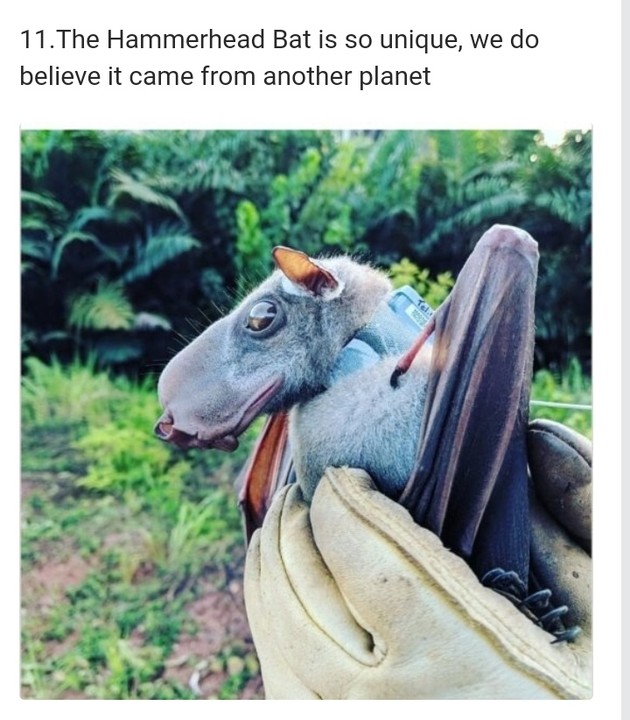


|
| Education › Re: Some Rare Animals That Seem To Come From Another World by IamMichael(op): 9:52pm On May 29, 2020 |
More. 


|
| Education › Some Rare Animals That Seem To Come From Another World by IamMichael(op): 9:49pm On May 29, 2020*. Modified: 6:04am On May 30, 2020 |
Just pictures.
...
Sources:
Bright side, Reddit, Instagram, Pinterest, Steemit and Flickr. 


|
| Christianity Etc › Re: Why does Religion Pervert and Twist the Intellect of Christians - An Opinion by IamMichael(op): 9:36pm On May 29, 2020 |
Lol... After running away from the first page, he is here again.
Why not go and ride flying horses or sing Kumbaya to your god instead of running around Nairaland showing the whole world how unintelligent you are.
Except you are looking for a second whooping!
|
| Christianity Etc › Re: Why does Religion Pervert and Twist the Intellect of Christians - An Opinion by IamMichael(op): 9:30pm On May 29, 2020 |
whitestar01:
one of the problem of free thinking isabsurdism. Why not get straight to the point of what you believe about life, but you run around the circles of words instead? What are you even talking about? What is your point exactly? Seems like at every point, you divert to something else entirely. What exactly is your point? |
| Christianity Etc › Re: Why does Religion Pervert and Twist the Intellect of Christians - An Opinion by IamMichael(op): 7:49pm On May 29, 2020 |
whitestar01:
If you really believe that you don't know everything, why are you bothered about Christianity (not really nairaland Christians) Don't you think there is something they know about that you don't? They have personal conviction on life and death based on biblical perspective. If you doubt and don't cherish their conviction then you focus on what you know because you have claimed not to know everything.
There are many type of emotions that control how we relate with people in our environment. What type of emotions are you really controlling? Real Christians are not emotional about Christianity, if you think am wrong or am brainwashed as most of you claim over what we believe, then you can wrap your head around with what you know, after all you don't know everything
You asked me to show you belief that is not questionable, and that you will disprove it. I was specific in asking you the type of belief you mean...and you pointed it out.
Now you are going back to christian belief's.
I really don't understand you, because religious beliefs was one of the belief's i asked you if it's what you mean, and you said no.
Incase you have forgotten, christian beliefs are based on a book, and presented as facts. You can't present something as fact and expect not to be questioned about it. If you cannot prove what you are saying, then it is not true.
There are a lot of abstract things which we don't see, but we know they exist because they can be proved.
- Love
- Anger
- Hatred
- Jealousy
- Hunger
- Thirst
- Thoughts
- etc
They are all abstract things we can't see with our eyes, but yet can be felt heavily by anybody.
Secondly, noone controls your emotions for you, you do. If you get angry, you chose to get angry. Even if someone curses you, slaps you, angers you, berates you, debases you and dehumanises you in every vile manner possible, whatever emotion you show afterwards is what you chose to display.
Words are just words, until you personally decide to give them meaning and interpret it anyway you like. It's as simple as that.
You should learn to have a good premises for your arguments, else you will keep on trying to justify absurdities with more ridiculous absurdities.
Regards!!! |


