Jen33's Posts
Nairaland Forum › Jen33's Profile › Jen33's Posts
1 2 3 4 5 6 7 8 9 10 11 12 (of 14 pages)
 Politics › Re: Bill Gates' Application For Nigerian Visa Was Initially Denied by Jen33(m): 1:16pm On Oct 09, 2007 Politics › Re: Bill Gates' Application For Nigerian Visa Was Initially Denied by Jen33(m): 1:16pm On Oct 09, 2007 |
Eryck said: Please peeps, lets not shy away from the truth despite the fact that the immigration rules has to be adhered to but You & I know very well that there is no country in this Glode that does not like Foreign Investment or whatever the case maybe.And so? We should flout the rules so investors can come in without documentation? Have you ever heard that Dangote or Adenuga was denied visa @ any embassy.No, probably because they applied properly for it. Peeps with so much to contribute to others welfare should be treated (because its not an easy task) though with a little respect but that does not mean worshipping the person.You contradict yourself. If you treat a persdon with 'a little respect' more than others, then you do 'worship' that person. Why does Bill Gates deserve any more respect than the next man. Because he has money? Is that the way you were raised to think? So if it were Oprah Winfrey thats how she would also be deniedAbsolutely. If she follows the same slap-dash procedure Gates attempted she WOULD be denied a visa, absolutely, and rightly so. plz search your heart.You search YOUR heart. Is there anything in it that counts for more than money? Hope you know how much she spent building that school in South Africa when she was criticized for not building it in USA.Does not give her leeway to flout the rules of any nation. If she is building schools, then she herself needs to act educated. Same goes for Gates as well. If he's building software, he should be smart enough to know how to apply for a visa properly. The reason for Bills denial is too flimsy, nigerians needs to grow up.And you need to get a brain, and rid yourself of your inferiority complex. Same goes for the other ignorants here who think like you. |
| Christianity Etc › Re: Archaelogical Proofs That The Bible Is Fact Not Fiction by Jen33(m): 11:24pm On Oct 08, 2007 |
ricadelide, not sure what your problem is with 'copy and paste'. I've some input in what I just posted, but I deal in FACTS and FIGURES pal. I do not debate an issue like this off the top of my head. I will give your quotes, references, sources, from the major players in this, including your own church figures, to PROVE the accuracy of this side of the debate. I will not like you, just come on hear spouting insults, and claiming 'that's a lie, that's ridiculous' etc etc with nothing to back it up. Apart from 'the church fathers said so'. (This was your response to the well known fact that the earliest written documents mentioning Jesus were 40 yrs after his 'ascension' - 'the church fathers believe it was much earlier than that') Why should we take you seriously based on such a pathetic response? Why should peeps not read the direct quotes of Ignatius Loyola for instance, who virtually ordained LIES and LYING as a legitimate mode of operation for the church? I mean, we name SCHOOLS after this guy in Nigeria. Do you want me to remind you of his quote? Is it not a good thing that we get to read just what Loyola said and thought? Our people MUST see the truth, not off-the-cuff, bullying remarks from your type to shut everyone up. Why would you deny readers full knowledge of the truth?? Why should I 'summarise' the truth? What are you afraid of? |
| Politics › Re: Bill Gates' Application For Nigerian Visa Was Initially Denied by Jen33(m): 11:09pm On Oct 08, 2007 |
seun said: This is a man that can single-handedly pay off our national debt.We've already paid off our national debt. Next fool please! |
| Christianity Etc › Re: Archaelogical Proofs That The Bible Is Fact Not Fiction by Jen33(m): 5:59pm On Oct 08, 2007 |
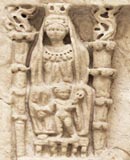
ricadelide, your defensive, confrontational posture throughout your response is instructive. I wonder why you sound so upset. As for your 'trashing' of the article, dream on! You think you can obfuscate issues by blowing all hot, bluffing and blustering your way through, and dismissing this as ''appallng'', and that as ''ridiculous''? And what's this stuff about ''credible scholars believe in the historicity of Jesus. Why should we believe you over them?'' That sounds suspiciously like blackmail by force of majority. The majority see it this way so it must be right. The thing about such an argument is that, it was no doubt used by the defenders of a variety of ancient gods and beliefs to advance their causes. Think of Egypt back in the day - ''All scholars agree on the existence of Osiris, who are YOU to dispute it?'' Or more recently ''All scholars agree the earth is flat. Who are YOU to say it's round? Why should we believe YOU over all these esteemed scholars?'' See how SILLY and desperate you sound? Or are you taking a cue from another holy falsifier - "It is usual for the sacred historian to conform himself to the generally accepted opinion of the masses in his time.' – St Jerome (P.L., XXVI, 98; XXIV, 855). It may be ''usual'' St Jerome, but is it right? Is it moral? Is it godly? I'll get back to some of the stuff you've written up there, but really all you've done is skirted round the issue. What we need is PROOF that Jesus lived, and you've simply not furnished ANY proof. Where is the archaeologcal proof you claim exists?? It is known to all that the gospels were written WELL AFTER the alleged life of Jesus. 40 years at the earliest. Not 3 or 10 years after like you've falsely claimed. You base those figures on what 'church fathers' think. But we know, from history - and from their own admission - that 'church fathers' would think and do just about anything to further their aims, including mass murder and bare faced falsehood peddling. We need INDEPENDENT verification, and the INDEPENDENT verification places the earliest written text about a 'Jesus Christ' at no less than 40 years after he supposedly returned to heaven in the clouds. No writings contemporary to Jesus in other words, written during or shortly after his alleged life exist or have ever been known to exist. The works of hundreds of scholars of the period remain with us today, Seneca etc, you name them. NOT ONE mentions Jesus, despite the fact that they recorded a whole lot of comparatively inconsequential occurences, Those of us with brains still intact know that it is not possible for such a momentous individual to live, draw crowds of thousands, attract the ire of priests, scribes, and authorities, a man who caused an infanticide as a toddler, and yet not have anyone write about him for decades after his ''ascension into heaven''. Incredibly, you claim no one contemporary to Jesus wrote about him because ''he only lived the last three years of his life in public glare''. But that's simply not true. According to the bible story, just as soon as he was born, he was on the run from Herod, who went on to commit infanticide, slaughtering thousands of first borns in his bid to find and kill Jesus! So it is quite crazy to state that such an occurrence would not be recorded by even ONE of the hundreds of Jewish writers present at the time, Or that the rest of this individual's life will simply be ignored by writers until 40 years after his departure. The fact we're even arguing for or against the historicity of Jesus shows there's a serious problem. Like someone said, you'd think the Creator would be able to bark up his life on earth with some good solid evidence. Oh, by the way, what's your take on the apparent false claim in the bible regarding a city of Nazareth? No such city ever existed in the first century. But then again, the Christian church, by its own admission, has a history of lies and deceit that is truly breathtaking. 'Clearly the Christians have used , myths , in fabricating the story of Jesus' birth , It is clear to me that the writings of the Christians are a lie and that your fables are not well-enough constructed to conceal this monstrous fiction.' – Celsus (On The True Doctrine, c178 AD) Celsus was one of the foremost thinkers of his age. His critique of the Christians was so damaging that Christians destroyed every copy of his work they could find. The 5th and 6th centuries was the 'golden age' of Christian forgery. In a moment of shocking candour, the Manichean bishop (and opponent of Augustine) Faustus said: "Many things have been inserted by our ancestors in the speeches of our Lord which, though put forth under his name, agree not with his faith; especially since – as already it has been often proved – these things were written not by Christ, nor [by] his apostles, but a long while after their assumption, by I know not what sort of half Jews, not even agreeing with themselves, who made up their tale out of reports and opinions merely, and yet, fathering the whole upon the names of the apostles of the Lord or on those who were supposed to follow the apostles, they maliciously pretended that they had written their lies and conceits according to them." 'The Church forgery mill did not limit itself to mere writings but for centuries cranked out thousands of phony "relics" of its "Lord," "Apostles" and "Saints" … There were at least 26 'authentic' burial shrouds scattered throughout the abbeys of Europe, of which the Shroud of Turin is just one … At one point, a number of churches claimed the one foreskin of Jesus, and there were enough splinters of the "True Cross" that Calvin said the amount of wood would make "a full load for a good ship." ' (Acharya S, The Christ Conspiracy) Ignatius Loyola (1491-1556), the tireless zealot for papal authority – he was the founder of the Society of Jesus (the Jesuits) – even wrote: "We should always be disposed to believe that which appears to us to be white is really black, if the hierarchy of the church so decides." Martin Luther, in private correspondence, argued: "What harm would it do, if a man told a good strong lie for the sake of the good and for the Christian church , a lie out of necessity, a useful lie, a helpful lie, such lies would not be against God, he would accept them." – Martin Luther (Cited by his secretary, in a letter in Max Lenz, ed., Briefwechsel Landgraf Phillips des Grossmüthigen von Hessen mit Bucer, vol. I.) Bishop Eusebius, the official propagandist for Constantine, entitles the 32nd Chapter of his 12th Book of Evangelical Preparation: "How it may be Lawful and Fitting to use Falsehood as a Medicine, and for the Benefit of those who Want to be Deceived." Eusebius is notoriously the author of a great many falsehoods – but then he does warn us in his infamous history: "We shall introduce into this history in general only those events which may be useful first to ourselves and afterwards to posterity." (Ecclesiastical History, Vol. 8, chapter 2). John Chrysostom, 5th century theologian and erstwhile bishop of Constantinople, is another: "Do you see the advantage of deceit? For great is the value of deceit, provided it be not introduced with a mischievous intention. In fact action of this kind ought not to be called deceit, but rather a kind of good management, cleverness and skill, capable of finding out ways where resources fail, and making up for the defects of the mind , And often it is necessary to deceive, and to do the greatest benefits by means of this device, whereas he who has gone by a straight course has done great mischief to the person whom he has not deceived." (Treatise On The Priesthood, Book 1). 'Golden Mouth' John is notable for his extensive commentaries on the Bible which emphasized a literal understanding of the stories; the style popular at Alexandria until then was to acknowledge an allegorical meaning of the text. Thus eminent ‘believers’ added falsehood to the beliefs of later generations. ‘For the best of reasons’ they ‘clarified’ obscure points, conjured up characters to speak dialogue that could have been said, invented scenarios that could have happened, borrowed extensively from a wider culture. And this all before they became the custodians of power and had real reasons for lies, inventions and counterfeits. As we shall see, god’s immutable laws became as flexible as putty. The 5th and 6th centuries was the 'golden age' of Christian forgery. In a moment of shocking candour, the Manichean bishop (and opponent of Augustine) Faustus said: "Many things have been inserted by our ancestors in the speeches of our Lord which, though put forth under his name, agree not with his faith; especially since – as already it has been often proved – these things were written not by Christ, nor [by] his apostles, but a long while after their assumption, by I know not what sort of half Jews, not even agreeing with themselves, who made up their tale out of reports and opinions merely, and yet, fathering the whole upon the names of the apostles of the Lord or on those who were supposed to follow the apostles, they maliciously pretended that they had written their lies and conceits according to them." Even bible writers are not exempt from this (ocassional) candour: 'Only lies have our fathers handed down to us, emptiness in which there is nothing of any avail!' Jeremiah 16.19 Still Lying in 2002 The Pope has chosen to canonise Juan Diego, supposedly a sixteenth century Mexican Indian who had the good fortune to have the Blessed Virgin (in the guise of 'Our Lady of Guadeloupe') impress her own image onto his cloak. Not surprisingly, Diego was a paragon of Catholic devotion, completely submissive to Spanish colonial authorities. Mind you, the story only surfaced a century after its alleged occurrence, at the height of the campaign to eradicate indigenous religions. Commented David Brading, Professor of Mexican History at Cambridge University: 'When the Pope canonises Juan Diego, he will have elevated to sainthood the hero of a religious work of fiction.' (The Times, 31 June 2002) Continued The Times: 'An interview with the man given the task in 1947 of restoring Diego's cloak, on which an image of the Virgin appeared, revealed this week that the image was not a miracle. Instead, he said, it had been painted on.' Whether we look at the Middle Ages and the Reformation, the first centuries of the Christian era or even today, Christianity has always been a fabrication, layer set upon layer of lies and nonsense, a fraud from its very inception. OTHER NOTABLE FORGERIES AND DECEPTIONS The Donation of Constantine – 'Without doubt a forgery, ' Catholic Encyclopedia A two-part document purporting to be from the first Christian emperor to Pope Sylvester I (314-35). In the 'Confessio' Constantine thanks Sylvester for his Christian instruction and baptism (and consequent cure of leprosy!) In his 'Donatio' Constantine confers on the pope and his successors primacy over all other bishops, including the eastern patriarchs, senatorial privileges for the clergy, imperial palaces and regalia, Rome itself and the western empire!! In truth, this monstrous eighth century forgery (peppered with anachronisms) was almost certainly written by the future Pope Paul I (757-67) while his equally ambitious brother Stephen II (752-57) sat on the papal throne. The False Decretals – A riot of more than a hundred fake letters and decrees attributed to pontiffs from first century Clement (88-97) to seventh century Gregory I (590-604). Now attributed to 'Isodore Mercator', a ninth century master forger, almost certainly a papal aide. Like the Donation, the Decretals conferred rights and privileges on the papacy. 'Thundering Legion' Decree of Marcus Aurelius – In this fabricated letter from the emperor to the Senate, Marcus is said to have forbidden persecution of Christians because, in a battle with the Quadi in 174, prayers from Christian soldiers brought on a thunderstorm which rescued the Romans from thirst and dispersed the barbarian opponents. The emperor is said to have accorded the Twelfth Legion the suffix fulminata or fulminea, that is, 'thundering.' Tertullian (c.160 - c.230), north African theologian, made up this nonsense; the twelfth legion had had the suffix legio fulminata from the time of Augustus. The stoic Marcus Aurelius had nothing but contempt for the Christians. 'Letters' of Emperor Antoninus Pius to the Greeks – More fakery, this time from the pen of fourth century Bishop Eusebius (Ecclesiastic History, IV, 13). He has the pious second century pagan forbid 'tumults against the Christians.' The Clementines – These fancies, twenty books of 'curious religious romance' (Catholic Encyclopedia), masquerade as the work of first century pontiff Clement I. Written in the fourth century, their purpose was to bolster Rome's claim to be the primary see: here we have the 'Epistle of Clement to James' which originated the notion that St. Peter was the first Bishop of Rome. Correspondence between Seneca and Paul - a fourth century invention of first century letters. They alluded to fires in Rome and to the persecution of Jews and Christians. 'Testimonium Flavianum' - The infamous 'passing reference' to Jesus Christ supposedly written by the first century Jewish historian Josephus (he adopted the family name of the imperial house). We know in graphic detail the course of the first Jewish War because – remarkably – the history recorded by Josephus somehow survived. Whereas whole libraries of antiquity were torched by the Christians, curiously, this testimony of a Jew made it through the centuries. A subsequent work by Josephus, The Antiquity of the Jews, which iterated and extended his story of the 'chosen people' also survived. The survival of these two overlapping works was no coincidence because they rather too well 'confirm' from a 'non-Christian source' the existence of the godman. In short, sometime in the fourth century, while most else of ancient scholarship was being thrown into bonfires, a Christian scribe – probably Eusebius, Bishop of Caesarea– 'rescued' the histories of Josephus and 'doctored' them to provide convenient 'proof' that Christ had been flesh-and-blood and was neither a fiction (as pagan critics maintained) nor solely a spiritual being, as gnostics reasoned. The Chronicle of Sulpicius Severus - a 5th century disciple of Bishop Martin of Tours invented the lurid story of the Neronian persecution. The Jewish historian Josephus says nothing about any "persecution" under Nero, though he is not slow to describe him as "acting like a madman" who "slew his brother, and wife, and mother, from whom his barbarity spread itself to others that were most nearly related to him; and how, at last, he was so distracted that he became an actor in the scenes, and upon the theater." (Wars, 13.1) If a bonfire of Christians had actually happened Josephus would have mentioned it – but he does not, and nor does any early Christian writer. "In reality, the Neronian persecution never occurred. It is a fiction of the Church, invented for its greater glory." (Arthur Drews, The Legend of St Peter, p63) Chapter 16 of Life of Nero by Suetonius. This is the origin of the 'Christians burnt as torches' nonsense. The Lentulus Letter For this pious fancy the forger created a fictitious predecessor to Pontius Pilate, governor of Judaea, calling him "Publius Lentulus". The forger has his creation write to the Roman Senate, reporting Christ's "raising of the dead". He describes Jesus as "the most beautiful of the sons of men." The letter was first printed in the "Life of Christ" by Ludolph the Carthusian (Cologne, 1474). It was probably composed in 13th/14th century, based on an earlier Greek forgery. Report of Pilate to Caesar – Pilate's conversion to Christianity – and even the debauched Emperor Tiberius a closet-Christian! Another gem from the pen of Tertullian! ‘All these things Pilate did to Christ; and now in fact a Christian in his own convictions, he sent word of Him to the reigning Caesar, who was at the time Tiberius. Yes, and even the Caesars would have believed on Christ, if either the Caesars had not been necessary for the world, or if Christians could have been Caesars.’ (Tertullian Apol. xxi and Anti-Nicene Fathers, iii, 35) Letter of Jesus to the King of Edessa Nothing less than the handwritten note of the godman himself! This fabrication was supposedly delivered by the apostle Thaddeus, together with a self-portrait by the artist – Jesus Christ (he wiped his face with the canvass)! Actually, the text is borrowed from the 'concordance' of Tatian, compiled in the second century, and known as the 'Diatessaron'. The forgery is almost certainly the work of Eusebius, Christian propagandist of the fourth century. He was the first to mention the letter and claimed to have personally 'translated' it from Syriac (Ecclesiastical History I, xii). The Virgin Birth Fraud The most colossal blunder of the Septuagint translators, the mistranslation of the original Hebrew text of Isaiah, 7.14, allowed deceitful early Christians to concoct their infamous prophecy that somehow the ancient Jewish text presaged the miraculous birth of their own godman. The Hebrew original says: 'Hinneh ha-almah harah ve-yeldeth ben ve-karath shem-o immanuel.' Honestly translated, the verse reads: 'Behold, the young woman has conceived — and bears a son and calls his name Immanuel.' The Greek-speaking translators of Hebrew scripture (in 3rd century B.C. Alexandria) slipped up and translated 'almah' (young woman) into the Greek 'parthenos' (virgin). The Hebrew word for virgin would have been 'betulah.' The slip did not matter at the time, for in context, Isaiah’s prophesy – set in the 8th century BC but probably written in the 5th – had been given as reassurance to King Ahaz of Judah that his royal line would survive, despite the ongoing siege of Jerusalem by the Syrians. And it did. In other words, the prophesy had nothing to do with events in Judaea eight hundred years into the future! Justin ‘Martyr’, a pagan Greek from Palestine, fled to Ephesus at the time of Bar Kochbar’s revolt (132 -135 AD). He joined the growing Christian community and found himself competing with the priests of Artemis, an eternally virgin goddess. Justin successfully overcame the sentiments of established Christians and had Mary, mother of Jesus, declared a virgin, citing his Greek copy of Isaiah as 'evidence' of scriptural prescience. The Greek priest who then forged the 'Gospel according to St. Matthew' went one stage further, taking the word 'harah' – in Hebrew a past or perfect tense – and switched it into a future tense to arrive at: 'Behold, a virgin shall be with child, and shall bring forth a son, and they shall call his name Emmanuel.' (Matthew 1.23) All this to arrive at the monstrous fiction that ancient scripture foretold of the arrival of an infant actually called Jesus! Believe it or not, St. Augustine devoted two whole treatises to the topic of lying. The first of these, 'De mendacio' ('On Lying'), written in 395, discussed the pros and cons of lying. On balance, of the eight kinds of lie which he identified (each with several sub-types!) he excused 'jocular' lies, was 'uncertain' about others (depending on motive and the likelihood of being believed) but questioned the morality of the remainder. (Great) On balance, of the eight kinds of lie which he identified (each with several sub-types!) he excused 'jocular' lies, was 'uncertain' about others (depending on motive and the likelihood of being believed) but questioned the morality of the remainder. In light of such a horrible, shocking record of deceit and lies, how can ANYBODY in their right mind possibly defend ANYTHING written or said by christians  ricadelide, you truly are an example of a brainwashed African. (Assuming that you ARE an African. Sanctified deceivers, manipulators and liars staring you in the face and admitting as much, YET, like a programmed robot, you still come here to defend their record. Have you no shame? Long before ''Jesus'' was invented, the world had several godmen believed to have been born of virgins and later killed as a ransome for mankind. It's the oldest fairytale in the book. Christians simply copied, stole, and appropriated all these stories to form their own https://www.jesusneverexisted.com/IMAGES/magna-mater.jpg Magna Mater (Cybele, Great Mother) with the child Attis (Ostia, Rome). Attis castrated himself, bled to death, and, after 3 days, was restored to life as a tree. Hence, a spring-time fertility festival. Sound familiar? Which comes back to this: Nobody wrote about Jesus while he was 'alive', and for decades afterwards. Nobody. The record does not exist. Jesus was famous far and wide, the Bible says. King Herod tried to kill Jesus as an infant, so famed was Jesus even before he knew his own name. Yet nobody wrote about him. The Judaic and Roman cultures were literate, as we well know. And yet, nobody wrote about the 'King of Kings'?, It's impossible. More likely that Jesus did not exist. And from the church's self confessed record of lies + the fact of historical godmen with virgin mothers with identical stories to 'Jesus' which predate christianity, it becomes a no-brainer that Jesus was yet another fabrication from the super-efficient, indefatigable lying factories of Christendom. |
| Christianity Etc › Re: Archaelogical Proofs That The Bible Is Fact Not Fiction by Jen33(m): 5:41pm On Oct 07, 2007 |
Um, they - the writers - didn't bestow sainthood on themselves: the Church did.I think the writer is stressing here the basic dishonesty of the church, by stressing that the insertion of ''St.'' in the some bibles constitutes an interpolation. |
| Christianity Etc › Re: Archaelogical Proofs That The Bible Is Fact Not Fiction by Jen33(m): 10:10am On Oct 07, 2007 |
KAG, sorry I don't buy your explanation for their silence. Unless the forumers here are barely literate, lazy dolts, your rationalisation for their silence makes no sense. And what does it matter in whose words they are written? I'm pretty sure if I'd pasted an article providing conclusive evidence of Jesus' existence, such considerations as you're suggesting would not come into play. Put simply, I reckon its the silence of surrender. Afterall, WHAT can they possibly argue against there? It's such a heavily researched article that you just have to read it and chill.  No point arguing. Like Fela would have said, the author really 'opened book' for them. The most they can do is to pick up little inconsequential things like you did. The central point -total lack of evidence for Jesus' existence + the church's self-admitted history of lies and myth peddling - will remain unchallenged, because quite simply, it cannot be challenged. It cannot be challenged because it cannot be refuted. As for your other points, I consider them far too minor and pedantic to constitute any form of credible riposte to the article. I even sensed a slight embarassment on your part at the paucity of viable objections to the article, perhaps explaining your haste to include yourself among the skeptics.  |
| Christianity Etc › Re: Archaelogical Proofs That The Bible Is Fact Not Fiction by Jen33(m): 5:49pm On Oct 06, 2007 |
The crescendo of silence is so strong as to shatter my eardrums. |
| Politics › Re: Obasanjo Compares Nigeria And Congo, 47 Years After by Jen33(m): 1:18pm On Oct 06, 2007 |
The intrigung thing here is that many (if not most) of the critics of OBJ and Nigeria here, if they were to get into power, will be just as incapacitated from executing their functions to full effect. Imagine if you were to be made a minister or state governor. The immense pressures coming from everywhere, including from your own family and even parents, to be 'wealthy' and share largesse will eventually compel you to corruption. Else, your own people will spit at u and call you a foool behind your back. Your kids will be wondering ''was our dad really the governor? Why are we still suffering like this?'' Your village people will wonder what benefit your appointment brought to them, and may end up shunning you for your 'uselessness'.  These are the FACTS of the matter, and until we address the social disconnect between habit and aspiration, we will keep fooling ourselves. Lastly, it really makes no sense trying to bring in the likes of Malaysia/South Korea etc into this. Anyone who studied the development of those nations knows they could not do it without massive western assistance in terms of funds/access to credit/investors/human resources/access to western markets etc etc, all orchestrated by the US in order to form a bulwark against communism in Asia. I read a study recently, a comparison between foreign investment in Botswana, and in Vietnam. The researcher produced statistics detailing the level of progress in both nations, using indices like literacy, GNP, economic performance year on year, GDP, public accountability, natural resources, etc etc. In each of these categories, Botswana won hands down. Yet, Vietnam had recorded exponential foreign investment to the tune of tens of billions of dollars while Botswana received under a billion $ worth of it, over a five year period. Can anyone here offer an explanation for this please?? Now Vietnam's economy is 'booming'. Manufacturing concerns are setting up everywhere, they have major access to western markets, foreign investment is shooting through the roof, and their standard of living is fast eclipsing that of Botswana. Tomorrow some ignoramus in Botswa will now look at Vietnam and moan : ''Look at Vietnam that was a dump compared to us. Now look at them today. In fact we're more than useless!'' Just like our foolish Nigerians are doing here. And before you moan that 'we have oil' remember that our huge population makes such income a mere pittance, compared to Saudi, Kuwait, and other oil producing nations, and that for Nigeria to become like Malaysia, South Korea etc, it will require copious amounts of international economic co-operation as was granted the 'Asian Tigers'. Corruption was (and is) heavily entrenched in those nations as well, (they've had some verry corrupt, dictatorial rulers) but when you enjoy such massive economic 'co-operation' from the west, it hardly makes a difference! Thus the problems are really not as clear cut as some here seem to think. Maybe Baba knew exactly what he was talking about. |
| Christianity Etc › Re: There Is No Such Thing As Death by Jen33(op): 5:21am On Oct 05, 2007 |
Glad to be of help. |
| Culture › Re: Ramses, Cleopatra, Nefertiti: Original Egyptians Were Black? by Jen33(m): 5:15am On Oct 05, 2007 |
Well spoken, beneli. |
| Christianity Etc › Re: Archaelogical Proofs That The Bible Is Fact Not Fiction by Jen33(m): 11:58pm On Oct 03, 2007 |
ricadelide, I think you need to read some home truths about the nature of your present beliefs: Did a historical Jesus exist? by Jim Walker Amazingly, the question of an actual historical Jesus rarely confronts the religious believer. The power of faith has so forcefully driven the minds of most believers, and even apologetic scholars, that the question of reliable evidence gets obscured by tradition, religious subterfuge, and outrageous claims. The following gives a brief outlook about the claims of a historical Jesus and why the evidence the Christians present us cannot serve as justification for reliable evidence for a historical Jesus. ALL CLAIMS OF JESUS DERIVE FROM HEARSAY ACCOUNTS No one has the slightest physical evidence to support a historical Jesus; no artifacts, dwelling, works of carpentry, or self-written manuscripts. All claims about Jesus derive from writings of other people. There occurs no contemporary Roman record that shows Pontius Pilate executing a man named Jesus. Devastating to historians, there occurs not a single contemporary writing that mentions Jesus. All documents about Jesus got written well after the life of the alleged Jesus from either: unknown authors, people who had never met an earthly Jesus, or from fraudulent, mythical or allegorical writings. Although one can argue that many of these writings come from fraud or interpolations, I will use the information and dates to show that even if these sources did not come from interpolations, they could still not serve as reliable evidence for a historical Jesus, simply because all sources derive from hearsay accounts. Hearsay means information derived from other people rather than on a witness' own knowledge. Courts of law do not generally allow hearsay as testimony, and nor does honest modern scholarship. Hearsay provides no proof or good evidence, and therefore, we should dismiss it. If you do not understand this, imagine yourself confronted with a charge for a crime which you know you did not commit. You feel confident that no one can prove guilt because you know that there exists no evidence whatsoever for the charge against you. Now imagine that you stand present in a court of law that allows hearsay as evidence. When the prosecution presents its case, everyone who takes the stand against you claims that you committed the crime, not as a witness themselves, but solely because other people said so. None of these other people, mind you, ever show up in court, nor can anyone find them. Hearsay does not work as evidence because we have no way of knowing whether the person lies, or simply bases his or her information on wrongful belief or bias. We know from history about witchcraft trials and kangaroo courts that hearsay provides neither reliable nor fair statements of evidence. We know that mythology can arise out of no good information whatsoever. We live in a world where many people believe in demons, UFOs, ghosts, or monsters, and an innumerable number of fantasies believed as fact taken from nothing but belief and hearsay. It derives from these reasons why hearsay cannot serves as good evidence, and the same reasoning must go against the claims of a historical Jesus or any other historical person. Authors of ancient history today, of course, can only write from indirect observation in a time far removed from their aim. But a valid historian's own writing gets cited with sources that trace to the subject themselves, or to eyewitnesses and artifacts. For example a historian today who writes about the life of George Washington, of course, can not serve as an eyewitness, but he can provide citations to documents which give personal or eyewitness accounts. None of the historians about Jesus give reliable sources to eyewitnesses, therefore all we have remains as hearsay. THE BIBLE GOSPELS The most "authoritative" accounts of a historical Jesus come from the four canonical Gospels of the Bible. Note that these Gospels did not come into the Bible as original and authoritative from the authors themselves, but rather from the influence of early church fathers, especially the most influential of them all: Irenaeus of Lyon who lived in the middle of the second century. Many heretical gospels existed by that time, but Irenaeus considered only some of them for mystical reasons. He claimed only four in number; according to Romer, "like the four zones of the world, the four winds, the four divisions of man's estate, and the four forms of the first living creatures-- the lion of Mark, the calf of Luke, the man of Matthew, the eagle of John (see Against the Heresies). The four gospels then became Church cannon for the orthodox faith. Most of the other claimed gospel writings were burned, destroyed, or lost." [Romer] Elaine Pagels writes: "Although the gospels of the New Testament-- like those discovered at Nag Hammadi-- are attributed to Jesus' followers, no one knows who actually wrote any of them." [Pagels, 1995] Not only do we not know who wrote them, consider that none of the Gospels existed during the alleged life of Jesus, nor do the unknown authors make the claim to have met an earthly Jesus. Add to this that none of the original gospel manuscripts exist; we only have copies of copies. The consensus of many biblical historians put the dating of the earliest Gospel, that of Mark, at sometime after 70 C.E., and the last Gospel, John after 90 C.E. [Pagels, 1995; Helms]. This would make it some 40 years after the alleged crucifixion of Jesus that we have any Gospel writings that mention him! Elaine Pagels writes that "the first Christian gospel was probably written during the last year of the war, or the year it ended. Where it was written and by whom we do not know; the work is anonymous, although tradition attributes it to Mark, " [Pagels, 1995] The traditional Church has portrayed the authors as the apostles Mark, Luke, Matthew, & John, but scholars know from critical textural research that there simply occurs no evidence that the gospel authors could have served as the apostles described in the Gospel stories. Yet even today, we hear priests and ministers describing these authors as the actual disciples of Christ. Many Bibles still continue to label the stories as "The Gospel according to St. Matthew," "St. Mark," "St. Luke," St. John." No apostle would have announced his own sainthood before the Church's establishment of sainthood. But one need not refer to scholars to determine the lack of evidence for authorship. As an experiment, imagine the Gospels without their titles. See if you can find out from the texts who wrote them; try to find their names. Even if the texts supported the notion that the apostles wrote them, consider that the average life span of humans in the first century came to around 30, and very few people lived to 70. If the apostles births occured at about the same time as the alleged Jesus, and wrote their gospels in their old age, that would put Mark at least 70 years old, and John at over 110. The gospel of Mark describes the first written Bible gospel. And although Mark appears deceptively after the Matthew gospel, the gospel of Mark got written at least a generation before Matthew. From its own words, we can deduce that the author of Mark had neither heard Jesus nor served as his personal follower. Whoever wrote the gospel, he simply accepted the mythology of Jesus without question and wrote a crude an ungrammatical account of the popular story at the time. Any careful reading of the three Synoptic Gospels (Matthew, Mark, Luke) will reveal that Mark served as the common element between Matthew and Luke and gave the main source for both of them. Of Mark's 666* verses, some 600 appear in Matthew, some 300 in Luke. According to Randel Helms, the author of Mark, stands at least at a third remove from Jesus and more likely at the fourth remove. [Helms] * Most Bibles show 678 verses for Mark, not 666, but many Biblical scholars think the last 12 verses came later from interpolation. The earliest manuscripts and other ancient sources do not have Mark 16: 9-20. Moreover the text style does not match and the transition between verse 8 and 9 appears awkward. Even some of today's Bibles such as the NIV exclude the last 12 verses. The author of Matthew had obviously gotten his information from Mark's gospel and used them for his own needs. He fashioned his narrative to appeal to Jewish tradition and Scripture. He improved the grammar of Mark's Gospel, corrected what he felt theologically important, and heightened the miracles and magic. The author of Luke admits himself as an interpreter of earlier material and not an eyewitness (Luke 1:1-4). Many scholars think the author of Luke lived as a gentile, or at the very least, a hellenized Jew and even possibly a woman. He (or she) wrote at a time of tension in the Roman empire along with its fever of persecution. Many modern scholars think that the Gospel of Matthew and Luke got derived from the Mark gospel and a hypothetical document called "Q" (German Quelle, which means "source" . [Helms; Wilson] . However, since we have no manuscript from Q, no one could possibly determine its author or where or how he got his information or the date of its authorship. Again we get faced with unreliable methodology and obscure sources.John, the last appearing Bible Gospel, presents us with long theological discourses from Jesus and could not possibly have come as literal words from a historical Jesus. The Gospel of John disagrees with events described in Mark, Matthew, and Luke. Moreover the unknown author(s) of this gospel wrote it in Greek near the end of the first century, and according to Bishop Shelby Spong, the book "carried within it a very obvious reference to the death of John Zebedee (John 21:23)." [Spong] Please understand that the stories themselves cannot serve as examples of eyewitness accounts since they came as products of the minds of the unknown authors, and not from the characters themselves. The Gospels describe narrative stories, written almost virtually in the third person. People who wish to portray themselves as eyewitnesses will write in the first person, not in the third person. Moreover, many of the passages attributed to Jesus could only have come from the invention of its authors. For example, many of the statements of Jesus claim to have come from him while allegedly alone. If so, who heard him? It becomes even more marked when the evangelists report about what Jesus thought. To whom did Jesus confide his thoughts? Clearly, the Gospels employ techniques that fictional writers use. In any case the Gospels can only serve, at best, as hearsay, and at worst, as fictional, mythological, or falsified stories. OTHER NEW TESTAMENT WRITINGS Even in antiquity people like Origen and Eusebius raised doubts about the authenticity of other books in the New Testament such as Hebrews, James, John 2 & 3, Peter 2, Jude, and Revelation. Martin Luther rejected the Epistle of James calling it worthless and an "epistle of straw" and questioned Jude, Hebrews and the Apocalypse in Revelation. Nevertheless, all New Testament writings came well after the alleged death of Jesus from unknown authors (with the possible exception of Paul, although still after the alleged death). Epistles of Paul: Paul's biblical letters (epistles) serve as the oldest surviving Christian texts, written probably around 60 C.E. Most scholars have little reason to doubt that Paul wrote some of them himself. However, there occurs not a single instance in all of Paul's writings that he ever meets or sees an earthly Jesus, nor does he give any reference to Jesus' life on earth. Therefore, all accounts about a Jesus could only have come from other believers or his imagination. Hearsay. Epistle of James: Although the epistle identifies a James as the letter writer, but which James? Many claim him as the gospel disciple but the gospels mention several different James. Which one? Or maybe this James has nothing to do with any of the gospel James. Perhaps this writer comes from any one of innumerable James outside the gospels. James served as a common name in the first centuries and we simply have no way to tell who this James refers to. More to the point, the Epistle of James mentions Jesus only once as an introduction to his belief. Nowhere does the epistle reference a historical Jesus and this alone eliminates it from an historical account. [1] Epistles of John: The epistles of John, the Gospel of John, and Revelation appear so different in style and content that they could hardly have the same author. Some suggest that these writings of John come from the work of a group of scholars in Asia Minor who followed a "John" or they came from the work of church fathers who aimed to further the interests of the Church. Or they could have simply come from people also named John (a very common name). No one knows. Also note that nowhere in the body of the three epistles of "John" does it mention a John. In any case, the epistles of John say nothing about seeing an earthly Jesus. Not only do we not know who wrote these epistles, they can only serve as hearsay accounts. [2] Epistles of Peter: Many scholars question the authorship of Peter of the epistles. Even within the first epistle, it says in 5:12 that Silvanus wrote it. Most scholars consider the second epistle as unreliable or an outright forgery (for some examples, see the introduction to 2 Peter in the full edition of The New Jerusalem Bible, 1985, and [3]). In short, no one has any way of determining whether the epistles of Peter come from fraud, an unknown author also named Peter (a common name) or from someone trying to further the aims of the Church. Of the remaining books and letters in the Bible, there occurs no other stretched claims or eyewitness accounts for a historical Jesus and needs no mention of them here for this deliberation. As for the existence of original New Testament documents, none exist. No book of the New Testament survives in the original autograph copy. What we have then come from copies, and copies of copies, of questionalbe originals (if the stories came piecemeal over time, as it appears it has, then there may never have existed an original). The earliest copies we have got written more than a century later than the autographs, and these exist on fragments of papyrus. [Pritchard; Graham] According to Hugh Schonfield, "It would be impossible to find any manuscript of the New Testament older than the late third century, and we actually have copies from the fourth and fifth. [Schonfield] LYING FOR THE CHURCH The editing and formation of the Bible came from members of the early Christian Church. Since the fathers of the Church possessed the texts and determined what would appear in the Bible, there occurred plenty of opportunity and motive to change, modify, or create texts that might bolster the position of the Church or the members of the Church themselves. Take, for example, Eusebius who served as an ecclesiastical church historian and bishop. He had great influence in the early Church and he openly advocated the use of fraud and deception in furthering the interests of the Church [Remsberg]. The first mention of Jesus by Josephus came from Eusebius (none of the earlier church fathers mention Josephus' Jesus). It comes to no surprise why many scholars think that Eusebius interpolated his writings. In his Ecclesiastical History, he writes, "We shall introduce into this history in general only those events which may be useful first to ourselves and afterwards to posterity." (Vol. 8, chapter 2). In his Praeparatio Evangelica, he includes a chapter titled, "How it may be Lawful and Fitting to use Falsehood as a Medicine, and for the Benefit of those who Want to be Deceived" (book 12, chapter 32). The Church had such power over people, that to question the Church could result in death. Regardless of what the Church claimed, people had to take it as "truth." St. Ignatius Loyola of the 16th century even wrote: "We should always be disposed to believe that which appears to us to be white is really black, if the hierarchy of the church so decides." The orthodox Church also fought against competing Christian cults. Irenaeus, who determined the inclusion of the four (now canonical) gospels, wrote his infamous book, "Against the Heresies." According to Romer, "Irenaeus' great book not only became the yardstick of major heresies and their refutations, the starting-point of later inquisitions, but simply by saying what Christianity was not it also, in a curious inverted way, became a definition of the orthodox faith." [Romer] The early Church burned many heretics, along with their sacred texts. If a Jesus did exist, perhaps eyewitness writings got burnt along with them because of their heretical nature. We will never know. In attempting to salvage the Bible the respected revisionist and scholar, Bruce Metzger has written extensively on the problems of the New Testament. In his book, "The Text of the New Testament-- Its Transmission, Corruption and Restoration, Metzger addresses: Errors arising from faulty eyesight; Errors arising from faulty hearing; Errors of the mind; Errors of judgement; Clearing up historical and geographical difficulties; and Alterations made because of doctrinal considerations. [Metzger] With such intransigence from the Church and the admitting to lying for its cause, the burning of heretical texts, Bible errors and alterations, how could any honest scholar take any book from the New Testament as absolute, much less using extraneous texts that support a Church's intolerant and biased position, as reliable evidence? GNOSTIC GOSPELS In 1945, an Arab made an archeological discovery in Upper Egypt of several ancient papyrus books. They have since referred to it as The Nag Hammadi texts. They contained fifty-two heretical books written in Coptic script which include gospels of Thomas, Philip, James, John, Thomas, and many others. Archeologists have dated them at around 350-400 C.E. They represent copies from previous copies. None of the original texts exist and scholars argue about a possible date of the originals. Some of them think that they can hardly have dates later than 120-150 C.E. Others have put it closer to 140 C.E. [Pagels, 1979] Other Gnostic gospels such as the Gospel of Judas, found near the Egyptian site of the Nag Hammadi texts, shows a diverse pattern of story telling, always a mark of myth. The Judas gospel tells of Judas Iscariot as Jesus' most loyal disciple, just opposite that of the canonical gospel stories. Note that the text does not claim that Judas Iscariot wrote it. The Judas gospel, a copy written in Coptic, dates to around the third-to fourth-century. The original Greek version probably dates to between 130 and 170 C.E., around the same tine as the Nag Hammadi texts. Irenaeus first mentions this gospel in Adversus Haereses (Against Heresies) written around 180 C.E., so we know that this represented a heretical gospel. Since these Gnostic texts could only have its unknown authors writing well after the alleged life of Jesus, they cannot serve as historical evidence of Jesus anymore than the canonical versions. Again, we only have "heretical" hearsay. NON-CHRISTIAN SOURCES Virtually all other claims of Jesus come from sources outside of Christian writings. Devastating to the claims of Christians, however, comes from the fact that all of these accounts come from authors who lived after the alleged life of Jesus. Since they did not live during the time of the hypothetical Jesus, none of their accounts serve as eyewitness evidence. Josephus Flavius, the Jewish historian, lived as the earliest non-Christian who mentions a Jesus. Although many scholars think that Josephus' short accounts of Jesus (in Antiquities) came from interpolations perpetrated by a later Church father (most likely, Eusebius), Josephus' birth in 37 C.E., well after the alleged crucifixion of Jesus, puts him out of range of an eyewitness account. Moreover, he wrote Antiquities in 93 C.E., after the first gospels got written! Therefore, even if his accounts about Jesus came from his hand, his information could only serve as hearsay. Pliny the Younger, a Roman official, got born in 62 C.E. His letter about the Christians only shows that he got his information from Christian believers themselves. Regardless, his birth date puts him out of the range of eyewitness accounts. Tacitus, the Roman historian's birth year at 64 C.E., puts him well after the alleged life of Jesus. He gives a brief mention of a "Christus" in his Annals (Book XV, Sec. 44), which he wrote around 109 C.E. He gives no source for his material. Although many have disputed the authenticity of Tacitus' mention of Jesus, the very fact that his birth happened after the alleged Jesus and wrote the Annals during the formation of Christianity, shows that his writing can only provide us with hearsay accounts. Suetonius, a Roman historian, born in 69 C.E. mentions a "Chrestus," a common name. Apologists assume that "Chrestus" means "Christ" (a disputable claim). But even if Seutonius had meant "Christ," it still says nothing about an earthly Jesus. Just like all the others, Suetonius' birth occurred well after the purported Jesus. Again, only hearsay. Talmud: Amazingly some Christians use brief portions of the Talmud, (a collection of Jewish civil a religious law, including commentaries on the Torah), as evidence for Jesus. They claim that Yeshu (a common name in Jewish literature) in the Talmud refers to Jesus. However, this Jesus, according to Gerald Massey actually depicts a disciple of Jehoshua Ben-Perachia at least a century before the alleged Christian Jesus. [Massey] Regardless of how one interprets this, the Palestinian Talmud got written between the 3rd and 5th century C.E., and the Babylonian Talmud between the 3rd and 6th century C.E., at least two centuries after the alleged crucifixion! At best it can only serve as a controversial Christian and pagan legend; it cannot possibly serve as evidence for a historical Jesus. The above sources get quoted the most as "evidence" for Jesus by Christians. All other sources (Christian and non-Christian), some of which include: Mara Bar-Serapion (cira 73 C.E.), Ignatius (50 - 98? C.E.), Polycarp (69 - 155 C.E.), Clement of Rome (? - cira 160 C.E.), Justin Martyr (100 - 165 C.E.), Lucian (circa 125 - 180 C.E.), Tertullian (160 - ? C.E.), Clement of Alexandria (? - 215 C.E.), Origen (185 - 232 C.E.), Hippolytus (? - 236 C.E.), and Cyprian (? - 254 C.E.). All these people got born well after the alleged death of Jesus. Not one of them provides an eyewitness account, all of them simply spout hearsay. As you can see, apologist Christians embarrass themselves when they unwittingly or deceptively violate the rules of historiography by using after-the-event writings as evidence for the event itself. Not one of these writers gives a source or backs up his claims with evidential material about Jesus. Although we can provide numerous reasons why the Christian and non-Christian sources prove spurious, and argue endlessly about them, we can cut to the chase by simply looking at the dates of the documents and the birth dates of the authors. It doesn't matter what these people wrote about Jesus, an author who writes after the alleged happening and gives no detectable sources for his material can only give example of hearsay. All of these anachronistic writings about Jesus could easily have come from the beliefs and stories from Christian believers themselves. And as we know from myth, superstition, and faith, beliefs do not require facts or evidence for their propagation and circulation. Thus we have only beliefs about Jesus' existence, and nothing more. FAKES, FRAUDS, AND FICTIONS Because the religious mind relies on belief and faith, the religious person can inherit a dependence on any information that supports a belief and that includes fraudulent stories, rumors, unreliable data, and fictions, without the need to check sources, or to investigate the reliability of the information. Although hundreds of fraudulent claims exist for the artifacts of Jesus, I will present only three examples which seem to have a life of their own and have spread through the religious community and especially on internet discussion groups. The Shroud of Turin Many faithful people believe the shroud represents the actual burial cloth of Jesus where they claim the image on the cloth represents an actual 'photographic' image left behind by the crucified body. The first mention of the shroud comes from a treatise (written or dictated) by Geoffroi de Charny in 1356 and who claims to have owned the cloth (see The Book of Chivalry of Geoffroi De Charny). Later, in the 16th century, it suddenly appeared in a cathedral in Turin, Italy. (Note that thousands of claimed Jesus relics appeared in cathedrals throughout Europe, including the wood from the cross, chalices, blood of Jesus, etc. These artifacts proved popular and served as a prosperous commercial device which filled the money coffers of the churches.) Sadly, many people of faith believe that there actually exists scientific evidence to support their beliefs in the shroud's authenticity. Considering how the Shroud's apologists use the words, "science," "fact," and "authentic," without actual scientific justification, and even include pseudo-scientists (without mentioning the 'pseudo') to testify to their conclusions, it should not come to any surprise why a faithful person would not question their information or their motives. There also has appeared several television specials which purport the authenticity of the shroud. Science, however, does not operate though television specials who have a commercial interest and have no qualms about deceiving the public. Experts around the world consider the 14-foot-long linen sheet, which has remained in a cathedral in Turin since 1578, a forgery because of carbon-dating tests performed in 1988. Three different independent radiocarbon dating laboratories in Zurich, Oxford and the University of Arizona yielded a date range of 1260-1390 C.E. (consistent with the time period of Charny's claimed ownership). Joe Zias of Hebrew University of Jerusalem calls the shroud indisputably a fake. "Not only is it a forgery, but it's a bad forgery." The shroud actually depicts a man whose front measures 2 inches taller than his back and whose elongated hands and arms would indicate that he had the affliction of gigantism if he actually lived. (Also read Joe Nickell's, Inquest On The Shroud Of Turin: Latest Scientific Findings) Walter C. McCrone, et al, (see Judgment Day for the Shroud of Turin) discovered red ochre (a pigment found in earth and widely used in Italy during the Middle Ages) on the cloth which formed the body image and vermilion paint, made from mercuric sulphide, used to represent blood. The actual scientific findings reveal the shroud as a 14th century painting, not a two-thousand year-old cloth with Christ's image. Revealingly, no Biblical scholar or scientist (with any credibility), cites the shroud of Turin as evidence for a historical Jesus. The Burial box of James Even many credible theologians bought this fraud, hook-line-and-sinker. The Nov./Dec. 2002, issue of Biblical Archaeology Review magazine announced a "world exclusive!" article about evidence of Jesus written in stone, claiming that they found the actual ossuary of "James, Brother of Jesus" in Jerusalem. This story exploded on the news and appeared widely on television and newspapers around the world. Interestingly, they announced the find as the "earliest historical reference of Jesus yet found." Since they claimed the inscription on the box occured around 70 C.E., that would agree with everything claimed by this thesis (that no contemporary evidence exists for Jesus). (Note that even if the box script proved authentic, it would not provide evidence for Jesus simply because no one knew who wrote the script or why. It would only show the first indirect mention of an alleged Jesus and it could not serve as contemporary evidence simply because it didn't come into existence until long after the alleged death of Jesus.) The claim for authenticity of the burial box of James, however, proved particularly embarrassing for the Biblical Archaeology Review and for those who believed them without question. Just a few months later, archaeologists determined the inscription as a forgery (and an obvious one at that) and they found the perpetrator and had him arrested (see 'Jesus box' exposed as fake and A fake? James Ossuary dealer arrested, suspected of forgery). Regrettably, the news about the fraud never matched the euphoria of the numerous stories of the find and many people today still believe the story as true. Letters of Pontius Pilate This would appear hilarious if not for the tragic results that can occur from believing in fiction: many faithful (especially on the internet) have a strong belief that Pontius Pilate actually wrote letters to Seneca in Rome where he mentions Jesus and his reported healing miracles. Considering the lack of investigational temper of the religious mind, it might prove interesting to the critical reader that the main source for the letters of Pilate come from W. P. Crozier's 1928 book titled, "Letters of Pontius Pilate: Written During His Governorship of Judea to His Friend Seneca in Rome." The book cites Crozier as the editor as if he represented a scholar who edited Pilate's letters. Well, from the title, it certainly seems to indicate that Pilate wrote some letters doesn't it? However, unbeknownst or ignored by the uncritical faithful, this book represents Crozier's first novel, a fictionalized account of what he thought Pilate would have written. During the first publication, no one believed this novel represented fact and reviews of the day reveal it as a work of fiction. Crozier, a newspaper editor, went to Oxford University and retained an interest in Latin, Greek and the Bible. He wrote this novel as if it represented the actual letters of Pilate. Of course no scholar would cite this as evidence because no letters exist of Pilate to Seneca, and Seneca never mentions Jesus in any of his writings. The belief in Pilate's letters represents one of the more amusing fad beliefs in evidential Jesus, however, it also reveals just how myths, fakes, and fictions can leak into religious thought. Hundreds of years from now, Crozier's fictionalized account may very well end up just as 'reliable' as the gospels. WHAT ABOUT WRITINGS DURING THE LIFE OF JESUS? What appears most revealing of all, comes not from what got later written about Jesus but what people did not write about him. Consider that not a single historian, philosopher, scribe or follower who lived before or during the alleged time of Jesus ever mentions him! If, indeed, the Gospels portray a historical look at the life of Jesus, then the one feature that stands out prominently within the stories shows that people claimed to know Jesus far and wide, not only by a great multitude of followers but by the great priests, the Roman governor Pilate, and Herod who claims that he had heard "of the fame of Jesus" (Matt 14:1)". One need only read Matt: 4:25 where it claims that "there followed him [Jesus] great multitudes of people from Galilee, and from Decapolis, and from Jersulaem, and from Judaea, and from beyond Jordon." The gospels mention, countless times, the great multitude that followed Jesus and crowds of people who congregated to hear him. So crowded had some of these gatherings grown, that Luke 12:1 alleges that an "innumberable multitude of people, trode one upon another." Luke 5:15 says that there grew "a fame abroad of him: and great multitudes came together to hear, " The persecution of Jesus in Jerusalem drew so much attention that all the chief priests and scribes, including the high priest Caiaphas, not only knew about him but helped in his alleged crucifixion. (see Matt 21:15-23, 26:3, Luke 19:47, 23:13). The multitude of people thought of Jesus, not only as a teacher and a miracle healer, but a prophet (see Matt:14:5). So here we have the gospels portraying Jesus as famous far and wide, a prophet and healer, with great multitudes of people who knew about him, including the greatest Jewish high priests and the Roman authorities of the area, and not one person records his existence during his lifetime? If the poor, the rich, the rulers, the highest priests, and the scribes knew about Jesus, who would not have heard of him? Then we have a particular astronomical event that would have attracted the attention of anyone interested in the "heavens." According to Luke 23:44-45, there occurred "about the sixth hour, and there was darkness over all the earth until the ninth hour, and the sun was darkened, and the veil of the temple was rent in the midst." Yet not a single mention of such a three hour ecliptic event got recorded by anyone, including the astronomers and astrologers, anywhere in the world, including Pliny the Elder and Seneca who both recorded eclipses from other dates. Note also that, for obvious reasons, eclipses can't occur during a full moon (passovers always occur during full moons), Nor does a single contemporary person write about the earthquake described in Matthew 27:51-54 where the earth shook, rocks ripped apart (rent), and graves opened. Matthew 2 describes Herod and all of Jerusalem as troubled by the worship of the infant Jesus. Herod then had all of the children of Bethlehem slain. If such extraordinary infanticides of this magnitude had occurred, why didn't anyone write about it? Some apologists attempt to dig themselves out of this problem by claiming that there lived no capable historians during that period, or due to the lack of education of the people with a writing capacity, or even sillier, the scarcity of paper gave reason why no one recorded their "savior." But the area in and surrounding Jerusalem served, in fact, as the center of education and record keeping for the Jewish people. The Romans, of course, also kept many records. Moreover, the gospels mention scribes many times, not only as followers of Jesus but the scribes connected with the high priests. And as for historians, there lived plenty at the time who had the capacity and capability to record, not only insignificant gossip, but significant events, especially from a religious sect who drew so much popular attention through an allegedly famous and infamous Jesus. Take, for example, the works of Philo Judaeus who's birth occurred in 20 B.C.E. and died 50 C.E. He lived as the greatest Jewish-Hellenistic philosopher and historian of the time and lived in the area of Jerusalem during the alleged life of Jesus. He wrote detailed accounts of the Jewish events that occurred in the surrounding area. Yet not once, in all of his volumes of writings, do we read a single account of a Jesus "the Christ." Nor do we find any mention of Jesus in Seneca's (4? B.C.E. - 65 C.E.) writings, nor from the historian Pliny the Elder (23? - 79 C.E.). If, indeed, such a well known Jesus existed, as the gospels allege, does any reader here think it reasonable that, at the very least, the fame of Jesus would not have reached the ears of one of these men? Amazingly, we have not one Jewish, Greek, or Roman writer, even those who lived in the Middle East, much less anywhere else on the earth, who ever mention him during his supposed life time. This appears quite extraordinary, and you will find few Christian apologists who dare mention this embarrassing fact. To illustrate this extraordinary absence of Jesus Christ literature, just imagine going through nineteenth century literature looking for an Abraham Lincoln but unable to find a single mention of him in any writing on earth until the 20th century. Yet straight-faced Christian apologists and historians want you to buy a factual Jesus out of a dearth void of evidence, and rely on nothing but hearsay written well after his purported life. Considering that most Christians believe that Jesus lived as God on earth, the Almighty gives an embarrassing example for explaining his existence. You'd think a Creator might at least have the ability to bark up some good solid evidence. HISTORICAL SCHOLARS Many problems occur with the reliability of the accounts from ancient historians. Most of them did not provide sources for their claims, as they rarely included bibliographic listings, or supporting claims. They did not have access to modern scholarly techniques, and many times would include hearsay as evidence. No one today would take a modern scholar seriously who used the standards of ancient historians, yet this proves as the only kind of source that Christology comes from. Couple this with the fact that many historians believed as Christians themselves, sometimes members of the Church, and you have a built-in prejudice towards supporting a "real" Jesus. In modern scholarship, even the best historians and Christian apologists play the historian game. They can only use what documents they have available to them. If they only have hearsay accounts then they have to play the cards that history deals them. Many historians feel compelled to use interpolation or guesses from hearsay, and yet this very dubious information sometimes ends up in encyclopedias and history books as fact. In other words, Biblical scholarship gets forced into a lower standard by the very sources they examine. A renowned Biblical scholor illustrated this clearly in an interview when asked about Biblical interpretation. David Noel Freeman (the General editor of the Anchor Bible Series and many other works) responed with: "We have to accept somewhat looser standards. In the legal profession, to convict the defendant of a crime, you need proof beyond a reasonable doubt. In civil cases, a preponderance of the evidence is sufficient. When dealing with the Bible or any ancient source, we have to loosen up a little; otherwise, we can't really say anything." -David Noel Freedman (in Bible Review magazine, Dec. 1993, p.34) The implications appear obvious. If one wishes to believe in a historical Jesus, he or she must accept this based on loose standards. Couple this with the fact that all of the claims come from hearsay, and we have a foundation made of sand, and a castle of information built of cards. CITING GEOGRAPHY, AND KNOWN HISTORICAL FIGURES AS "EVIDENCE" Although the New Testament mentions various cities, geological sites, kings and people that existed or lived during the alleged life of Jesus, these descriptions cannot serve as evidence for the existence of Jesus anymore than works of fiction that include recognizable locations, and make mention of actual people. Homer's Odyssey, for example, describes the travels of Odysseus throughout the Greek islands. The epic describes, in detail, many locations that existed in history. But should we take Odysseus, the Greek gods and goddesses, one-eyed giants and monsters as literal fact simply because the story depicts geographic locations accurately? Of course not. Mythical stories, fictions, and narratives almost always use familiar landmarks as placements for their stories. The authors of the Greek tragedies not only put their stories in plausible settings as happening in the real world but their supernatural characters took on the desires, flaws and failures of mortal human beings. Consider that fictions such as King Kong, Superman, and Star Trek include recognizable cities, planets, and landmarks, with their protagonists and antagonists miming human emotions. Likewise, just because the Gospels mention cities and locations in Judea, and known historical people, with Jesus behaving like an actual human being (with the added dimension of supernatural curses, miracles, etc.) but this says nothing about the actuality of the characters portrayed in the stories. However, when a story uses impossible historical locations, or geographical errors, we may question the authority of the claims. For example, in Matt 4:8, the author describes the devil taking Jesus into an exceedingly high mountain to show him all the kingdoms of the world. Since there exists no spot on the spheroid earth to view "all the kingdoms," we know that the Bible errs here. John 12:21 says, "The same came therefore to Philip, which was of Bethsaida of Galilee. . . ." Bethsaida resided in Gaulonitis (Golan region), east of the Jordan river, not Galilee, which resided west of the river. John 3:23 says, "John also was baptizing in Aenon near Salim. . . ." Critics agree that no such place as Aenon exists near Salim. There occurs not a shred of evidence for a city named Nazareth at the time of the alleged Jesus. [Leedom; Gauvin] Nazareth does not appear in the Old Testament, nor does it appear in the volumes of Josephus's writings (even though he provides a detailed list of the cities of Galilee). Oddly, none of the New Testament epistle writers ever mentions Nazareth or a Jesus of Nazareth even though most of the epistles got written before the gospels. In fact no one mentions Nazareth until the Gospels, where the first one didn't come into existence until about 40 years after the hypothetical death of Jesus. Apologists attempt to dismiss this by claiming that Nazareth existed as an insignificant and easily missed village (how would they know?), thus no one recorded it. However, whenever the Gospels speak of Nazareth, they always refer to it as a city, never a village, and a historian of that period would surely have noticed a city. (Note the New Testament uses the terms village, town, and city.) Nor can apologists fall on archeological evidence of preexisting artifacts for the simple reason that many cities get built on ancient sites. If a city named Nazareth existed during the 1st century, then we need at least one contemporary piece of evidence for the name, otherwise we cannot refer to it as historical. Many more errors and unsupported geographical locations appear in the New Testament. And although one cannot use these as evidence against a historical Jesus, we can certainly question the reliability of the texts. If the scriptures make so many factual errors about geology, science, and contain so many contradictions, falsehoods could occur any in area. If we have a coupling with historical people and locations, then we should also have some historical reference of a Jesus to these locations and people. But just the opposite proves the case. The Bible depicts Herod, the Ruler of Jewish Palestine under Rome as sending out men to search and kill the infant Jesus, yet nothing in history supports such a story. Pontius Pilate supposedly performed as judge in the trial and execution of Jesus, yet no Roman record mentions such a trial. The gospels portray a multitude of believers throughout the land spreading tales of a teacher, prophet, and healer, yet nobody in Jesus' life time or several decades after, ever records such a human figure. The lack of a historical Jesus in the known historical record speaks for itself. COMPARING JESUS TO OTHER HISTORICAL FIGURES Many Christian apologists attempt to extricate themselves from their lack of evidence by claiming that if we cannot rely on the post chronicle exegesis of Jesus, then we cannot establish a historical foundation for other figures such as Alexander the Great, Augustus Caesar, Napoleon, etc. However, there sits a vast difference between historical figures and Jesus. There occurs either artifacts, writings, or eyewitness accounts for historical people, whereas, for Jesus we have nothing. Alexander, for example, left a wake of destroyed and created cities behind. We have buildings, libraries and cities, such as Alexandria, left in his name. We have treaties, and even a letter from Alexander to the people of Chios, engraved in stone, dated at 332 B.C.E. For Agustus Caesar, we have the Res gestae divi augusti, the emperor's own account of his works and deeds, a letter to his son (Epistula ad Gaium filium), Virgil's eyewitness accounts, and much more. Napoleon left behind artifacts, eyewitness accounts and letters. We can establish some historicity to these people because we have evidence that occurred during their life times. Yet even with contemporary evidence, historians have become wary of after-the-fact stories of many of these historical people. For example, some of the stories of Alexander's conquests, or Nero starting the fire in Rome always get questioned or doubted because they contain inconsistencies or come from authors who wrote years after the alleged facts. In qualifying the history of Alexander, Pierre Briant writes, "Although more than twenty of his contemporaries chronicled Alexander's life and campaigns, none of these texts survive in original form. Many letters and speeches attributed to Alexander are ancient forgeries or reconstructions inspired by imagination or political motives. The little solid documentation we possess from Alexander's own time is mainly to be found in stone inscriptions from the Greek cities of Europe and Asia." [Briant] Inventing histories out of whole cloth or embellished from a seed of an actual historical event appears common throughout the chronicle of human thought. Robert Price observes, "Alexander the Great, Caesar Augustus, Cyrus, King Arthur, and others have nearly suffered this fate. What keeps historians from dismissing them as mere myths, like Paul Bunyan, is that there is some residue. We know at least a bit of mundane information about them, perhaps quite a bit, that does not form part of any legend cycle." [Price, pp. 260-261] Interestingly, almost all important historical people have descriptions of what they looked like. We have the image of Augustus Caesar cast on denarius coins, busts of Greek and Roman aristocrats, artwork of Napoleon, etc. We have descriptions of facial qualities, height, weight, hair length & color, age and even portraits of most important historical figures. But for Jesus, we have nothing. Nowhere in the Bible do we have a description of the human shape of Jesus. How can we rely on the Gospels as the word of Jesus when no one even describes what he looked like? How odd that none of the disciple characters record what he looked like, yet believers attribute them to know exactly what he said. Indeed, this gives us a clue that Jesus came to the gospel writers and indirect and through myth. Not until hundreds of years after the alleged Jesus did pictures emerge as to what he looked like from cult Christians, and these widely differed from a blond clean shaven, curly haired Apollonian youth (found in the Roman catacombs) to a long-bearded Italian as depicted to this day. This mimics the pattern of Greek mythological figures as their believers constructed various images of what their gods looked like according to their own cultural image. Historial people leave us with contemporary evidence, but for Jesus we have nothing. If we wanted to present a fair comparison of the type of information about Jesus to another example of equal historical value, we could do no better than to compare Jesus with the mythical figure of Hercules. IF JESUS, THEN WHY NOT HERCULES? If a person accepts hearsay and accounts from believers as historical evidence for Jesus, then shouldn't they act consistently to other accounts based solely on hearsay and belief? To take one example, examine the evidence for the Hercules of Greek mythology and you will find it parallels the "historicity" of Jesus to such an amazing degree that for Christian apologists to deny Hercules as a historical person belies and contradicts the very same methodology used for a historical Jesus. Note that Herculean myth resembles Jesus in many areas. Hercules got born as a human from the union of God (Zeus) and the mortal and chaste Alcmene, his mother. Similar to Herod who wanted to kill Jesus, Hera wanted to kill Hercules. Like Jesus, Hercules traveled the earth as a mortal helping mankind and performed miraculous deeds. Like Jesus who died and rose to heaven, Hercules died, rose to Mt. Olympus and became a god. Hercules gives example of perhaps the most popular hero in Ancient Greece and Rome. They believed that he actually lived, told stories about him, worshiped him, and dedicated temples to him. Likewise the "evidence" of Hercules closely parallels that of Jesus. We have historical people like Hesiod and Plato who mentions Hercules. Similar to the way the gospels tell a narrative story of Jesus, so do we have the epic stories of Homer who depict the life of Hercules. Aesop tells stories and quotes the words of Hercules. Just as we have a brief mention of Jesus by Joesphus in his Antiquities, Joesphus also mentions Hercules (more times than Jesus), in the very same work (see: 1.15; 8.5.3; 10.11.1). Just as Tacitus mentions a Christus, so does he also mention Hercules many times in his Annals. And most importantly, just as we have no artifacts, writings or eyewitnesses about Hercules, we also have nothing about Jesus. All information about Hercules and Jesus comes from stories, beliefs, and hearsay. Should we then believe in a historical Hercules, simply because ancient historians mention him and that we have stories and beliefs about him? Of course not, and the same must apply to Jesus if we wish to hold any consistency to historicity. Some critics doubt that a historicized Jesus could develop from myth because they think there never occurred any precedence for it. We have many examples of myth from history but what about the other way around? This doubt fails in the light of the most obvious example-- the Greek mythologies where Greek and Roman writers including Diodorus, Cicero, Livy, etc., assumed that there must have existed a historical root for figures such as Hercules, Theseus, Odysseus, Minos, Dionysus, etc. These writers put their mythological heroes into an invented historical time chart. Herodotus, for example, tried to determine when Hercules lived. As Robert M. Price revealed, "The whole approach earned the name of Euhemerism, from Euhemerus who originated it." [Price, p. 250] Even today, we see many examples of seedling historicized mythologies: UFO adherents who's beliefs began as a dream of alien bodily invasion, and then expressed as actually having occurred (some of which have formed religious cults); beliefs of urban legends which started as pure fiction or hoaxes; propaganda spread by politicians which stem from fiction but believed by their constituents. People consider Hercules and other Greek gods as myth because people no longer believe in the Greek and Roman stories. When a civilization dies, so go their gods. Christianity and its church authorities, on the other hand, still hold a powerful influence on governments, institutions, and colleges. Anyone doing research on Jesus, even skeptics, had better allude to his existence or else risk future funding and damage to their reputations or fear embarrassment against their Christian friends. Christianity depends on establishing a historical Jesus and it will defend, at all costs, even the most unreliable sources. The faithful want to believe in Jesus, and belief alone can create intellectual barriers that leak even into atheist and secular thought. We have so many Christian professors, theologians and historical "experts" around the world that tell us we should accept a historical Jesus that if repeated often enough, it tends to convince even the most ardent skeptic. The establishment of history should never reside with the "experts" words alone or simply because a scholar has a reputation as a historian. Historical review has yet to achieve the reliability of scientific investigation, (and in fact, many times ignores it). If a scholar makes a historical claim, his assertion should depend primarily with the evidence itself and not just because he or she says so. Facts do not require belief. And whereas beliefs can live comfortably without evidence at all, facts depend on evidence. THEN WHY THE MYTH OF JESUS? Some people actually believe that just because so much voice and ink has spread the word of a character named Jesus throughout history, that this must mean that he actually lived. This argument simply does not hold. The number of people who believe or write about something or the professional degrees they hold say nothing at all about fact. Facts derive out of evidence, not from hearsay, not from hubris scholars, and certainly not from faithful believers. Regardless of the position or admiration held by a scholar, believer, or priest, if he or she cannot support their hypothesis with good evidence, then it can only remain a hypothesis. While the possibility exists that an actual Jesus lived, a more likely possibility reveals that a mythology could have arrived totally out of earlier mythologies. Although we have no evidence for a historical Jesus, we certainly have many accounts for the mythologies of the Middle East and Egypt during the first century and before that appear similar to the Christ saviour story. If you know your ancient history, remember that just before and during the first century, the Jews had prophesied about an upcoming Messiah based on Jewish scripture. Their beliefs influenced many of their followers. We know that powerful beliefs can create self-fulfilling prophesies, and surely this proved just as true in ancient times. It served as a popular dream expressed in Hebrew Scripture for the promise of an "end-time" with a savior to lead them to the promised land. Indeed, Roman records show executions of several would-be Messiahs, (but not a single record mentions a Jesus). Many ancients believed that there could come a final war against the "Sons of Darkness"-- the Romans. This then could very well have served as the ignition and flame for the future growth of Christianity. We know that the early Christians lived within pagan communities. Jewish scriptural beliefs coupled with the pagan myths of the time give sufficient information about how such a religion could have formed. Many of the Hellenistic and pagan myths parallel so closely to the alleged Jesus that to ignore its similarities means to ignore the mythological beliefs of history. Dozens of similar savior stories propagated the minds of humans long before the alleged life of Jesus. Virtually nothing about Jesus "the Christ" came to the Christians as original or new. For example, the religion of Zoroaster, founded circa 628-551 B.C.E. in ancient Persia, roused mankind in the need for hating a devil, the belief of a paradise, last judgment and resurrection of the dead. Mithraism, an offshoot of Zoroastrianism probably influenced early Christianity. The Magi described in the New Testament appears as Zoroastrian priests. Note the word "paradise" came from the Persian pairidaeza. The Egyptian mythical Horus, god of light and goodness has many parallels to Jesus. [Leedom, Massey] For some examples: Horus and the Father as one Horus, the Father seen in the Son Horus, light of the world, represented by the symbolical eye, the sign of salvation. Horus served the way, the truth, the life by name and in person Horus baptized with water by Anup (Jesus baptized with water by John) Horus the Good Shepherd Horus as the Lamb (Jesus as the Lamb) Horus as the Lion (Jesus as the Lion) Horus identified with the Tat Cross (Jesus with the cross) The trinity of Atum the Father, Horus the Son, Ra the Holy Spirit Horus the avenger (Jesus who brings the sword) Horus the afflicted one Horus as life eternal Twelve followers of Horus as Har-Khutti (Jesus' 12 disciples) According to Massey, "The mythical Messiah is Horus in the Osirian Mythos; Har-Khuti in the Sut-Typhonian; Khunsu in that of Amen-Ra; Iu in the cult of Atum-Ra; and the Christ of the Gospels is an amalgam of all these characters." Osiris, Hercules, Mithra, Hermes, Prometheus, Perseus and others compare to the Christian myth. According to Patrick Campbell of The Mythical Jesus, all served as pre-Christian sun gods, yet all allegedly had gods for fathers, virgins for mothers; had their births announced by stars; got born on the solstice around December 25th; had tyrants who tried to kill them in their infancy; met violent deaths; rose from the dead; and nearly all got worshiped by "wise men" and had allegedly fasted for forty days. [McKinsey, Chapter 5] The pre-Christian cult of Mithra had a deity of light and truth, son of the Most High, fought against evil, presented the idea of the Logos. Pagan Mithraism mysteries had the burial in a rock tomb, resurrection, sacrament of bread & water (Eucharist), the marking on the forehead with a mystic mark, the symbol of the Rock, the Seven Spirits and seven stars, all before the advent of Christianity. Even Justin Martyr recognized the analogies between Christianity and Paganism. To the Pagans, he wrote: "When we say that the Word, who is first born of God, was produced without sexual union, and that he, Jesus Christ, our teacher, was crucified and died, and rose again, and ascended into heaven; we propound nothing different from what you believe regarding those whom you esteem sons of Jupiter (Zeus)." [First Apology, ch. xxi] Virtually all of the mythical accounts of a savior Jesus have parallels to past pagan mythologies which existed long before Christianity and from the Jewish scriptures that we now call the Old Testament. The accounts of these myths say nothing about historical reality, but they do say a lot about believers, how they believed, and how their beliefs spread. In the book The Jesus Puzzle, the biblical scholar, Earl Doherty, presents not only a challenge to the existence of an historical Jesus but reveals that early pre-Gospel Christian documents show that the concept of Jesus sprang from non-historical spiritual beliefs of a Christ derived from Jewish scripture and Hellenized myths of savior gods. Nowhere do any of the New Testament epistle writers describe a human Jesus, including Paul. None of the epistles mention a Jesus from Nazareth, an earthly teacher, or as a human miracle worker. Nowhere do we find these writers quoting Jesus. Nowhere do we find them describing any details of Jesus' life on earth or his followers. Nowhere do we find the epistle writers even using the word "disciple" (they of course use the term "apostle" but the word simply means messenger, as Paul saw himself). Except for two well known interpolations, Jesus always gets presented as a spiritual being that existed before all time with God, and that knowledge of Christ came directly from God or as a revelation from the word of scripture. Doherty writes, "Christian documents outside the Gospels, even at the end of the first century and beyond, show no evidence that any tradition about an earthly life and ministry of Jesus were in circulation." Furthermore, the epistle to the Hebrews (8:4), makes it explicitly clear that the epistle writer did not believe in a historical Jesus: "If He [Jesus] had been on earth, He would not be a priest." These early historical documents can prove nothing about an actual Jesus but they do show an evolution of belief derived from varied and diverse concepts of Christianity, starting from a purely spiritual form of Christ to a human figure who embodied that spirit, as portrayed in the Gospels. The New Testament stories appears as an eclectic hodgepodge of Jewish, Hellenized and pagan stories compiled by pietistic believers to appeal to an audience for their particular religious times. A NOTE ABOUT DATING: The A.D. (Anno Domini, or "year of our Lord" dating method derived from a monk named Dionysius Exiguus (Dennis the Little), in the sixth-century who used it in his Easter tables. Oddly, some people seem to think this has relevance to a historical Jesus. But of course it has nothing at all to do with it. In the time before and during the 6th century, people used various other dating methods. The Romans used A.You.C. (anno urbis conditae, "year of the founded city," that being Rome). The Jews had their own dating system. Not until the tenth century did most churches accept the new dating system. The A.D. system simply reset the time of January 1, 754 A.You.C. to January 1, of year one A.D., which Dionysius obliquly derived from the belief of the date of "incarnation" of Jesus . The date, if one uses the Bible as history, can't possibly hold true. *Instead of B.C. and A.D., I have used the convention of B.C.E. (Before the Common Era) and C.E. (Common Era) as often used in scholarly literature. They correspond to the same dates as B.C. and A.D., but without alluding to the birth or death of an alleged Christ. * Dionysius believed that the conception (incarnation) of Jesus occurred on March 25. This meant that the conception must have occurred nine months later on December 25, probably not coincidentally, the very same date that the Emperor Aurelian, in 274 C.E., declared December 25 a holiday in celebration of the birth of Mithras, the sun god. By 336 C.E., Christians replaced Mithras with Jesus' birth on the same date. Dionysius then declared the new year several days later on January 1, probably to coincide with the traditional Roman year starting on January 1st. Dionysius probably never read the gospel account of the birth of Jesus because the Matthew gospel says his birth occurred while Herod served as King. That meant that if he did exist, his birth would have to occur in 4 B.C.E. or earlier. He made another mistake by assigning the first year as 1 instead of 0 (everyone's birthday starts at year 0, not 1). The concept of zero (invented from Arabia and India) didn't come into Europe until about two hundred years later. -------------------------------------------------------------------------------- |
| Culture › Re: Ramses, Cleopatra, Nefertiti: Original Egyptians Were Black? by Jen33(m): 9:56pm On Oct 03, 2007 |
Toshmann did you REALLY ask for a 'source'?? Well, here are sources of various kinds, not just one. Happy reading and viewing! Ancient Egyptian ethnographic "mural of the races" found in the tomb of Rameses III - Monuments from Egypt and Ethiopia by Karl Richard Lepsius (German: "Denkmaler aus Agypten und Athiopian" . French Egyptologist Champollion found similar murals in other royal tombs. Left to right are the Egyptian, the Semite, Other Africans, and last the 'Nahasu' (barbarian) (white caucasian). Black Africa in the ancient world was called Ethiopia. https://www.geocities.com/wally_mo/Egypt_files/image004.jpg "One Picture is worth more than ten thousand words." - Chinese Proverb Catechism: "The Egyptians called their country Kemet or Black country." Here's what the Ancient Egyptian language has to say (Ref: EHD, page 787b.): Note: words inside brackets are the determinatives or word classifiers along with their English meanings. Kem, kame, kmi, kmem, kmom = to be black Kememu = Black people (Ancient Egyptians) in both Ancient and modern Egyptian (Kmemou). Kem [khet][wood] = extremely black, jet-black Kemet = any black thing. Note: "t" is silent - pronounced Kemé Kemet [nu][community, settlement, nation] = Black nation = Ancient Egypt. Kemet [Romé][people] = Black people. Ancient Egyptians. https://www.freemaninstitute.com/Gallery/Egyp059_big_copy.jpg King Tutunkahamun (found in his tomb) https://www.freemaninstitute.com/Gallery/Egyp340_big_copy.jpg https://www.freemaninstitute.com/Gallery/Egyp031_big_copy.jpg Queen Tiye (King Tut's mother) Kemit [Shoit][books] = Black books, Ancient Egyptian literature. Kem wer [miri][large body of water] = The Great Black sea (The Red sea). This sea is neither black nor red, this is in reference to which nation, Black or Red, at a particular time, controlled this body of water. (Interestingly, the ancient Egyptian word for water (miri) is the same used by Igbos (miri), and similar to Yorubas (o-mi). Many other such linguistic connections abound. Kemi fer = Black double house; seat of government. Note: by reference to Wolof again, we know that to make a plural of per or house, the "p" becomes an "f" or fer. Thus fero=great houses (double), it is not pero as Budge writes. In Ancient Egyptian, the ordinary adjective always follows the noun it modifies, whereas a sanctified adjective usually comes before its noun. The sanctified adjectives are: Kem -- Black Suten - Royal Nter --- Holy, Sacred Examples: Kem ti = Black image, sacred image : ti oubash = white image Kem ho = Black face/title of a god : ho oubash = white face Kem ta = Black land, holy land : Ta deshret = Red land (also; Ta Sett) https://www.geocities.com/wally_mo/0000000000_nefertiti.jpg Nefertiti. This was the result of an experiment by British experts who inputed the skull remains of the ancient queen into a cutting edge computer program to reproduce a version of her original features. Reportedly, the British experts nearly fell of their chairs in shock when the computer produced the image above. According to the Ancient Egyptians, the second Egyptian ruling ethnic/class's ancestral homeland was Punt (Somalia). They referred to this land as "Ta Nteru" ('Land of the gods'). To emphasize their Puntite origins, the Egyptians portrayed the Puntites in the exact same manner in which they portrayed themselves. https://www.geocities.com/wally_mo/00000punt8.jpg This new ruling ethnic/class called themselves "Mesnitu" ('Metalw workers/blacksmiths'), and was also referred to as "Shemsu Hor" ('Followers of Horus'). These Mesnitu had overthrown the original ruling ethnic/class, the Anu (those belonging to Osiris's ethnic group; and yes, Osiris was a real life personage), who had previously established its domination over all of Egypt through military conquest and political unification. Their place of origin was "Ta Seti" ('Land of the Bow') in the Sudan. Gradually tradition would identify both Somalia and the Sudan as "Ta Khent" ('Land of the Beginning' or 'Ancestral land'). The answers to the questions "Where did the Ancient Egyptians come from?" or "What race were the Ancient Egyptians?" have already been given centuries ago, by the Ancient Egyptians themselves. It isn't a surprise, however, that such relevant information on Ancient Egypt by the Ancient Egyptians themselves, is never mentioned in contemporary books about Ancient Egypt. https://www.geocities.com/wally_mo/001egypt1.gif https://www.geocities.com/wally_mo/00000punt2.jpg Just in case the Ancient Egyptians were confused or possibly mistaken as to what they were, here are some observations from, The Ancient Chronicles The KJV Bible And the sons of Ham; Cush (Nubia), and Mizraim (Egypt), and Phut (East Africa), and Canaan (Palestine). And Cush begat Nimrod: he began to be a mighty one in the earth. He was a mighty hunter before the LORD: wherefore it is said, even as Nimrod the mighty hunter before the LORD. And the beginning of his kingdom was Babel, and Erech, and Accad, and Calneh, in the land of Shinar. Genesis 10:6-10 And they (the sons of Judah upon entering Canaan) found fat pasture and good, and the land was wide, and quiet, and peaceable; for they of Ham had dwelt there of old. I Chronicles 4:40 Israel also came into Egypt; and Jacob sojourned in the land of Ham, They forgat God their saviour, which had done great things in Egypt; wondrous works in the land of Ham, and terrible things by the Red Sea. Psalms 105:23, 106:21-22 And the lord said, like as my servant Isaiah hath walked naked and barefoot three years for a sign and wonder upon Egypt and upon Ethiopia. For I am the LORD thy God, the Holy One of Israel, thy saviour: I gave Egypt for thy ransom, Ethiopia and Seba for thee. Isaiah 20:3, 43:3 And the sword shall come upon Egypt, and great pain shall be in Ethiopia, when the slain shall fall in Egypt, and they shall take away her multitude, and her foundations shall be broken down. Ezekial 30:4 (Pharaoh's daughter) I am black, and comely, O ye daughters of Jerusalem, as the tents of Kedar, as the curtains of Solomon. Song of Solomon 1 Ethiopia and Egypt were her strength and it was infinite. Nahum 3:9 Kebra Nagast (Ethiopian bible - "The Glory of Kings" Solomon has taken a wife not of his color, who is moreover black, for he has married the daughter of Pharaoh. The Greek Chronicles Herodotus (Called 'The father of history' by western historians. Origins of the Oracle of Dodona At Dodona, however, the priestesses who deliver the oracles have a different version of the story: two black doves, they say, flew away from Thebes in Egypt, and one of them alighted at Dodona, the other in Libya (Africa), The story which the people of Dodona tell about the doves came, I should say, from the fact that the women were foreigners, whose language sounded to them like the twittering of birds, As to the bird being black, they merely signify by this that the woman was Egyptian. -book II Colchians are of Egyptian Descent But it is undoubtedly a fact that the Colchians are of Egyptian descent, My own idea on the subject was based on the fact that they have black skins and wooly hair, and secondly, and more especially, on the fact that the Colchians, the Egyptians, and the Ethiopians are the only races which from ancient times have practiced circumcision. -book II Aristotle ''Those who are too black are cowards, like for instance, the Egyptians and Ethiopians. But those who are excessively white are also cowards as can be seen from the example of women, the complexion of courage is between the two -Physiognomy'' 6 Diodorus of Sicily Origins of the Egyptians ''The Ethiopians say that the Egyptians are one of their colonies, which was led into Egypt by Osiris. They claim that at the beginning of the world Egypt was simply a sea but that the Nile, carrying down vast quantities of loam from Ethiopia in its flood waters, finally filled it in and made it part of the continent, They add that the Egyptians have received from them, as from authors and their ancestors, the greater part of their laws.'' -Universal History, book III Colossi of Memnon These are two colossal seated statues of Pharaoh Amenhotep III in western Thebes. At dawn, the northern statue emitted a whistling sound. Ancient Greeks who visited the statue called it the 'vocal Memnon', thinking the figure represented the Homeric character Memnon, singing to his mother Eos, the goddess of the dawn. Memnon was an Ethiopian king who went to troy to help Priam, his uncle, and was killed by Achilles. To the Ancient Greeks; Egyptian - Ethiopian - same thing. Ancient clues found in Egypt: https://www.geocities.com/wally_mo/0000000000_rc2446-wighair.jpg https://www.geocities.com/wally_mo/00000haircare02.jpg https://www.geocities.com/wally_mo/0000000000_afrocomb2.jpg (I sure know whites or 'arabs' don't use these) https://www.freemaninstitute.com/Gallery/Egyp095_150pixBest_copy.jpg When visiting Egypt today, this is what we see of The Sphinx of Giza. https://www.freemaninstitute.com/images/Sphinx_drawing_best_cropped.jpg This is what Vivant Denon saw in 1798 before the Sphinx was defaced. "Israel also came into Egypt, the land of Ham." (Psalm 105: 23). https://www.freemaninstitute.com/Gallery/Egyp152_big_copy.jpg Pharoah Menkaure (Third Dynasty) https://www.freemaninstitute.com/Gallery/Egyp158_big_copy.jpg King Usekafe https://www.freemaninstitute.com/Gallery/Egyp154_big_copy.jpg https://www.freemaninstitute.com/Gallery/Egyp186_big_copy.jpg Egyptian priest https://www.freemaninstitute.com/Gallery/Egyp201_big_copy.jpg Man from Old Kingdom https://www.freemaninstitute.com/Gallery/Egyp221_big_copy.jpg Egyptian priest 2nd dynasty https://www.freemaninstitute.com/Gallery/Egyp217_big_copy.jpg King Nyamare Amenhemet (2nd Dynasty) https://www.freemaninstitute.com/Gallery/Egyp232_big_copy.jpg Pharoah Hotepsekhami https://www.freemaninstitute.com/Gallery/Egyp214_big_copy.jpg Pharoah Djoser https://www.freemaninstitute.com/Gallery/Egyp254_big_copy.jpg Queen Hatshepshu https://www.freemaninstitute.com/Gallery/Egyp323_big_copy.jpg Pharoah Peri Anku IVth https://www.freemaninstitute.com/Gallery/Egyp311_big_copy.jpg Rameses II https://www.freemaninstitute.com/Gallery/Egyp234_big_copy.jpg King Amenehmet III ''The dreadlocked Pharaoh''. Toshmann, if you need more ''sources'', let me know! One last thing. Because of the western/arab conspiracy to shield the truth of the African nature of Ancient Egypt, you will notice that many of the statues have their noses chiselled off, or sawn off. But the stubbornly negroid base of the noses displays the truth. Many of the practices of the Egyptians which western historians term ''strange'' are actually African customs. Circumcision, the divinity of kings, matrilineal succession, bride price, pouring of libation, festivals, naming ceremonies, elaborate burials, to name a few. Of course if you look around the world, who are the only people who practise these things in their entirety till today, not black Africans? Egypt fell to foreign hands first with the invasion of the Greeks, led by Alexander 'The Great', who sacked the country and had thousands of Africans migrating southwards. This is why many traditions in West Africa ascribe a Nile Valley origin of one form or another to their histories. Many African groups have the tradition of having migrated from the land of the great river, Following Alexander's conquest in 30 BC, Ptolemy, the Greek, became ruler of Egypt. By then the pyramids were already ancient relics, having been constructed between 5000 to 2000 BC. So you may find recent Greek like sculptures of 'Egyptian' aristocrats, such as Cleopatra, but these are from what is known as the Late Period, starting from a few years BC, when Egypt had fallen under Greek rule. Then in 600AD, Egypt was overrun by Arabs, leading to further emigration of blacks southwards. It is believed by Yorubas that this was the period Oduduwa led his people down to Nigeria, to escape the Islamic hordes bent on converting them away from their religion, This is why Cairo, Alexandra etc today are Arab cities, with no real connection to the history of the place. And this is why outside of those two cities even today in Egypt, you're more or less in black Africa. 1 Like |
| Christianity Etc › Re: There Is No Such Thing As Death by Jen33(op): 1:33am On Oct 03, 2007 |
Insights Into the Afterlife 30 Questions and Answers on What to Expect by Nora M. Spurgin While surveys show that most people believe in some form of life after death, most of us are less certain what form that life will take. Interest in death as a transition into a higher state of consciousness moved from the realm of the solely religious when psychiatrist and author Elisabeth Kübler-Ross, who writes and speaks extensively on death and dying, caused physicians, psychiatrists, and scientists to take a new look at the meaning of death. Knowledge and understanding of the afterlife can help many of us overcome fear and pain when making preparations for our own death, or for that of someone we love. Understanding can help tremendously with the grieving or separation process. Our lives on earth are preparation for the eternal life and this is a source of great hope, expectation and joy. We came to an understanding that every person has a place in the heart of God. Every individual has been created to receive the joy, the blessing and the delights of heavenly life because of God's love. Death or passing to the spiritual world is like birth, into a new and deeper level of existence, and, if we are prepared, the time of passing can be a celebration of joy, like a birthday! For the format for this informative booklet, I have chosen 30 commonly asked questions with answers that you will hopefully find simple and clear. These answers are presented without specific religious doctrine and dogma and are for the sole purpose of enhancing life both on earth and beyond. This booklet is for those who are in the full bloom of life; for there is still time to prepare. For those who are terminally ill, it might make a difference in the quality of the final years or months and help the new arrival into the spiritual world. I want to express my gratitude to Farley Jones, Lynn Mathers, June Kiburz, Nancy Barton, and Anne Edwards, a few of Linna's friends, who helped pull together these ideas and pass them on to you. Nora M. Spurgin, M.S.W. Life is real! Life is Earnest! And the grave is not its goal; Dust thou art, to dust returneth, Was not spoken of the soul. Henry Wadsworth Longfellow -------------------------------------------------------------------------------- Questions and Answers Is there life after death? How do we know? From Plato and the early Greeks, through Jesus and Paul, through most African and Oriental cultures, to spiritualists of the twentieth century, a belief in some kind of survival of bodily death has been unequivocally affirmed. Jesus' assertion that in his Father's house there are many rooms, would seem to be justified by the fact that this common belief is held by such divergent peoples. While many traditional believers tend to shy away from the topic, testimony to the existence of a spirit world actually permeates the Bible. Prophets such as Ezekiel and Isaiah report powerful spiritual visions, as does the writer of the book of Revelation. In the Gospels, angels speak (Lk 1:28) and on the Mount of Transfiguration, Jesus talks with the long-dead Moses and Elijah (Mt 17:1-3). Christian mystics and saints throughout history also spoke of spiritual experiences. The proposition that life continues beyond physical death goes a long way toward explaining well-recognized and otherwise unexplainable phenomena, for example, near-death experiences, visions of deceased persons and the experience of authentic communication from the other side. To understand what happens to us at death, we first need to understand of what we are made. Most of us tend to identify closely with our physical bodies, but this is only part of the picture. We are not only physical matter, but also spiritual essence. It is accurate to say that we are essentially spiritual beings who possess physical bodies. When we die, we in effect take off our physical bodies as one might take off an overcoat. The essential person remains. If life continues after physical death, where is such life lived? Our bodies exist, of course, in the physical world, which provides an environment for our activity and growth on earth and offers us nourishment, stimulation and joy. Likewise, there is a spiritual dimension of the universe the invisible spirit world- which serves as the environment for our spirits. Our spirit is the internal counterpart to our physical body, and the spirit world is the invisible counterpart to the physical world. This world is located not up in heaven, but in a different dimension, inter-penetrating the physical world and the universe. While on earth we exist in both worlds at once, in effect connecting the two. For this reason, people on occasion can have visions and communicate with the dead. While most people are prepared to admit belief in some kind of life after death, fewer accept the proposition that during our physical lifetimes we are existing in two realms at once a material one and a spiritual one. There is an invisible spiritual world surrounding this physical one, inhabited by those who have passed on. Because the two realms inter-penetrate each other, the spirit of a person near death can float out of the body. To begin to understand how we could simultaneously live in two realms and, for the most part, be unaware of it, we must remember that there are many things in the natural world that exist beyond the range of our five physical senses. For example, we cannot see infra-red light or x-rays, or hear sounds above or below certain frequencies. Nevertheless, x-rays and high and low frequency sound vibrations do exist. In the same way, even though we cannot perceive a spiritual world through our physical senses, it exists all around us. The discoveries of modern science lend credence to this prospect. Whereas in prior times scientists thought of the material world as constructed of solid, though minute, blocks of matter, they now believe this is not the case. Rather, what we think of as the material world seems to consist of invisible patterns of energy. The implications of this theory with regard to the existence of a spiritual dimension are clear. Indeed, it is probably such a discovery as this that gave rise to Albert Einstein's celebrated remark that his work was spiritual, involving the discovery of where matter ends and spirit begins. Just as we perceive the physical world with our physical senses (sight, hearing, taste, touch and smell), so the spirit world can be perceived by a set of spiritual senses; which are not limited by the physical laws of nature. Because most of us are not attuned to our spiritual senses, we become aware of the spirit world only when we pass into it at the end of our physical lives. What is a near-death experience? Due to modern technology, the number of people who have been revived from clinical death and brought back to physical life has increased tremendously in recent years. Many such individuals have shared amazingly similar accounts of their experience. Whereas in the past people may have been reluctant to discuss their experiences, perhaps due to fear of ridicule, thousands are now reporting near-death experiences (NDEs). Documented observation on the subject of the next life reported by individuals who have had near-death experiences has taken this area of research beyond theory. Near-death experiences gained widespread publicity when Dr. Raymond Moody's book, Life After Life, became a best seller. Dr. Moody writes convincingly of his vast research on people who were clinically dead for a short time and were revived. Elements which appear most frequently in such accounts are the following: The identity of the individual who has died remains intact. The conscious self leaves the body and observes it in its lifeless state but feels no break in the continuity of consciousness. The sensations associated with leaving the body are described as being very positive lightness, brightness, love, joy, peace and cessation of pain. The consciousness, or spirit, enters a dark tunnel with an extremely bright light at the end. Relatives and friends (already deceased) are often seen. Usually they communicate a welcome, and the person who has just died may be given the choice to return to physical life on earth. Often the spirit is greeted by beings of great light and love perceived to be God, the Creator, or a religious figure such as Jesus. There may be a life-review, which is a rapid panoramic view of the earthly life in chronological order. The consciousness, or spirit, can hear and observe everything that is happening in the physical world, but cannot communicate with people on earth through speaking or touching. There is instinctive knowledge that in going into the light there is a point of no return to physical earth life. Since these accounts come only from people who have returned to physical life, there was a point past which they did not venture. When they return to physical life, most people who have had an NDE feel an enhanced quality in life; there is a lack of fear of dying, and a new purposefulness in living. Is going to the spirit world automatic? Yes. It is not a matter of choice or qualification. Every person is created as a being whose spirit is eternal. Life in the spirit world is simply the next step after life on earth, much as life on earth is the natural step after life in the womb. Physical birth takes place when a baby, having spent nine months in a small, dark, warm place, suddenly pushes through the birth canal into a bright, expansive new world. There is a similar sequence of events in our birth into the next life. Those who have had NDEs describe a dark tunnel leading toward a bright light where loved ones await their arrival. It should be noted, however, that if one is educated to believe that there is no life after death, she may fail to recognize the natural process which automatically takes place. There are those who describe this lack of knowing as an incredible injustice, for the passage to the next world is confused and the spirit may wander indefinitely without the body, stuck between two worlds, feeling part of neither. This condition may persist until a spiritual guide is sent to rescue and re-educate the lost soul. What is the spirit world like? Sensitive people who have had glimpses into the world beyond say it is a world much like our own, but having no time nor space as we think of these dimensions; it exists in a higher dimension of energy and, in its higher realms, is a world of inexpressible beauty. It is a world where it is possible to be fully alive, where, for example, the whole body perceives. It is a world of endless possibilities for creativity and full realization of self; and it is a world where the love of God is like the air we breathe. As air is the atmosphere on earth, God's love is the atmosphere in the spirit world. One's spiritual body can travel with thought waves. Therefore, if one thinks of a person and place, he can immediately be transported there. Communication is also by thought. In addition, one is free from the restrictions of the physical body; eating, for example, is possible, but not necessary to maintain the physical body. In the spiritual world, one realizes that life on earth has, like life in the womb, been preparation for a fuller, freer and richer eternal existence. Can spiritual growth take place on the other side? Yes, it appears to be a law of the universe that growth is always possible. According to many accounts, the spiritual world has teachers and guides (those who have died, sometimes centuries before, who have the mission to guide newcomers who want to learn and grow in the spirit world). For children, teachers are provided to give them basic knowledge, and people in the position of parents provide them with essential love. Those who are lacking in emotional growth, or who have lived unloving, resentful, vengeful, or selfish lives will be given the opportunity to serve and help others in order that they may advance to higher realms. They may even come back to earth as spiritual helpers, like guardian angels, to influence people to avoid misdeeds and harmful lifestyles, and to overcome unloving attitudes. Those who have passed on often come back to their descendants to help and protect them. In so doing, spiritual growth takes place for both. Desire for such spiritual growth arises from a desire to be close to God. The spiritual world is a world where an ever-increasing unity with the love of God is the goal of one's growth. Are people on the spiritual side aware of our passing? Yes. Whenever someone passes from the earth, no matter who, people in the spirit world know that the person is arriving. Those on the other side know who, when and where, because it is the responsibility of those in the spirit world to receive the newcomer. In most cases, relatives are apprised so that they can welcome the one who is passing on. Because the major motive of those in the higher realms in the spirit world is love, there is great desire to help the new arrival leave the physical world in the best possible way. Will we know and be with our relatives and friends who have passed on before us? Just as on earth we seek out relationships which are comfortable, the same is true in the spiritual world. We are likely to seek out our relatives, loved ones and ancestors with whom we have a bond. However, if there is a vast difference in spiritual development, a person of lesser development and thus having a lower vibration, will be unable to enter the higher realm to which those of greater development have advanced. In this case, the more highly developed loved one may choose to visit and help the person in need of spiritual development. What will we look like in the spiritual world? As already stated, each person has a physical body and a spirit body, even while on earth. The physical body which one leaves behind is a reflection of his spirit and is similar in appearance. The spiritual body has the same identity, the same vibration; it simply lives in a different dimension. The higher one's development, or vibration, the brighter and more finely attuned will be his spirit. Fundamentally, an individual maintains distinguishing characteristics. However, what determines what one looks like in the spirit world is the person's quality of heart and life. One's inner quality is perceived as light. One's features are visible but the light that comes from her very essence is the identifying feature. For example, because they lived totally for other people, Jesus and other religious leaders emanate brilliant light. A very homely person who has served sacrificially will emanate such light and be very attractive to others in the spirit world. If at the time of death one's physical body was impaired, his spiritual body will be free of pain and impairment. However, because the spirit world is the world of mind, he may still think of himself as being in pain or having impairment. If so, as long as he carries it in his mind, such pain and impairment will be present. What will we do in the spiritual world? It depends on where we are in the spirit world. The higher realms of spirit world is truly heaven; a world of enjoyment and recreation. People do things they enjoy, and keep company with people they enjoy. It is a world of joyful activity. The skills, interests, and abilities developed on earth may be reflected in the roles chosen in eternity. Each of us will contribute uniquely toward the goodness and beauty in our realm. Further, it is said that the spirit world is vast and of transcendent beauty. Those dwelling in the higher realms are able to travel to its vast reaches. The quality of life in the spirit world is directly affected by one's heart and his activities on earth. Since love is supreme, opportunities for the practice of love will continue. The means for spiritual growth is through the dynamic of love, which is to serve. Relationships are thus very important. Do we have to be religious? As indicated above, everyone, religious or not, believing in God or not, transitions to the spirit world as part of the natural process of life. Just as one does not need to be religious to live in the physical world, one does not need to profess a particular faith to live in the spirit world. Nevertheless, it is also true that the great world religions have been the carriers of universal spiritual truth, have been the source of the spiritual education of millions, perhaps billions, of people and have been the central force in the spiritual development of the human race. Properly understood and fully lived, the teachings underlying the great religious traditions inevitably promote the spiritual growth of their followers and thus are enormously valuable in preparing such individuals for the richest possible lives in the spirit world. Thus while one does not have to be religious to dwell in the spirit world, one inevitably will benefit from a thorough understanding and practice of a particular tradition. This said, however, it needs to be recognized that not all teachings described as religious are beneficial. Religion which is judgmental, prejudicial, critical, and narrow may impede the spirit's natural growth. It is love, not religion, which creates spiritual growth. Where religion teaches love, there is growth. Where religion impedes love, there is stagnation. If we are not religious, what happens? As explained above, everyone transitions to the spirit world on the death of the physical body. One's state there is determined by the level of spiritual maturity. If not mature, one may find that an understanding of the knowledge available through the various religious traditions may help him to begin the process. This knowledge is best acquired through an experienced mediator who in effect serves as a type of spiritual parent or guide for one just beginning his journey. Further, while the ideal place to grow spiritually is on earth indeed, this is the reason for life on earth growth in the spirit world remains a possibility. There, however, in the absence of a physical body, growth is more difficult. The opportunity for the full range of love (child's love, marital love, and parental love) is ideally available while one is on earth. Love which has been misused or misdirected, is also best corrected in the physical life, for there is the full range of physical and spiritual senses with which to act and communicate. Does what we believe and practice in different religious traditions make a difference in terms of quality of life in the spiritual world? It is said that the Golden Rule is the governing principle in the spirit world: do unto others as you would have them do unto you. People who truly practice the religion of love will find themselves in a universal sphere where everyone understands that true religion is to love others as ourselves. The most difficult thing for a person who has been deeply steeped in a particular religious tradition is to realize that the form alone is not what elevates a person; it is the heart. Still, those who cling to an external form of religion will be most comfortable with others who practice the same rituals, whatever they may be. In this sense, congregations may continue centered around the particular religious traditions they practiced while on earth. Will we meet God and other religious figures? Everyone in the realms of light knows that there is a Creator. It is said that this presence is so obvious it cannot be denied. In the spirit world one can see and experience the source of life. So the first awesome feeling is said to be, God IS! There is no question. Other religious figures including the founders of world religions, the saints and prophets, exist in their own dimensions of the spirit world. The similarity of one's life, heart and knowledge to a particular figure determines one's closeness to these religious figures. Of what significance are repentance and making amends before we die? Wrongs which cause injury to others require repentance, forgiveness and restoration of wholeness. When one has hurt someone else, unless she apologizes to that person, repents for the hurt caused and is forgiven, she will carry that burden into the spirit world. If someone has something against a person who has not apologized, progress is impeded in the spirit world. When we can recognize the hurt brought to others, and make amends for it by seeking forgiveness, then healing of the spirit can take place. This liberates both parties for greater love and spiritual growth. A re-orientation of one's life toward God and love at any point has great value. If a person can take this step while still on earth, and in particular can make amends for any wrong done, this will do much to enhance his status in the spirit world. The next step for the last minute repenter is to preserve this new orientation and upon arrival in the spirit world to do whatever is necessary to continue growth there. The quality of the energy that we maintain is affected by whether our intentions and actions lead us toward, or separate us from, goodness and God. What about heaven and hell? On earth we are all aware of different gradations in the lifestyles of various individuals. Some seem to have a very desirable lifestyle, others less so. The same may be said about life in the spirit world. In terms of externals, some persons there live in more attractive and comfortable environments, others in less appealing conditions. At the extremes there are beautiful and uplifting settings which are truly heavenly and, on the other hand, there are very unattractive, even repugnant, environments which are without a doubt hellish. The difference between life in the physical world and life in the spiritual world is that the environment in the spiritual world corresponds to one's internal nature rather than to that which can be created through external resources, as is possible in the physical world. If, during our lifetime on earth, we matured in a spiritually rich and beautiful way, we will come to dwell in an environment that corresponds with these qualities. Indeed, such environments are said by those who have experienced them to possess a beauty that is beyond anything seen on earth. In the spirit world, God's truth is represented by light and His love by warmth. Those individuals in the spirit world who live in harmony with God thus live in light and warmth. Conversely, if one has been stunted in his spiritual growth through an undeveloped or misdirected lifestyle, has led a purely self- centered life or has hurt other people, his spiritual environment will reflect something of these realities. A self-centered life on earth places one in an area of the spiritual world with like- minded people who have yet to learn the value of unselfishness for the advancement of the soul. Environments distant from God are said to be dark, cold and inhospitable. Indeed, they reflect the spirits of those dwelling therein. In between these extremes are many levels representing different stages of spiritual growth. The central factor determining our level is the degree to which we have lived for the sake of others, and the extent to which we have been able to influence others likewise to follow paths of service and love. In this respect, the actions of loving, serving and teaching others carry the highest spiritual value. What could we do while still living in the physical body to make a better transition at death? We should educate ourselves as much as possible about the spirit world. Even gaining the smallest impression that there is life after death will bring enlightenment and understanding. The more understanding one has to illuminate the objective reality of the spirit world, the more one has the desire to live in accordance with natural and spiritual laws and is enabled to go directly from earth into the higher realms of the spirit world. Betty Eadie, author of Embraced by the Light, explains that it is possible for the uneducated and unbelieving spirit to be a virtual prisoner of this earth. This is especially true of those who remain bonded to the earth through greed, bodily appetites and other earthly commitments which make it difficult to let go and move on. Such spirits, she was told during her near-death experience, may not recognize the energy and light which draws one toward God. Lacking the faith and power to reach for the light, unenlightened spirits may actually stay on earth until they learn of the higher power which surrounds, and is available to them. After entering the spirit world, can we return to loved ones on earth? Unknown to most of humanity, the moving back and forth of spiritual beings to their loved ones on earth is going on night and day, all over the world. As indicated previously, it is due to our inability to see spiritually that we have no awareness of the spirit world. Dreams, a visitation beside one's bed which seems like a dream, visions of departed loved ones and appearances of religious figures are all manifestations of spirit return. The major purposes of these visits is to guide those on earth or to comfort those who are bereaved by a beloved one's passing. Those from the other side are continually working to elevate the spiritual level of those on earth. By aiding in the spiritual growth of those on earth, the attending spirit derives energies for his own advancement. Why can't people on earth see or hear the spirit if it is still alive and trying to make contact? It seems from the accounts of people who have had NDEs that the spiritual self can hear and see everything physical, but the reverse is not true. Because their spiritual senses are undeveloped, those on the physical plane usually cannot penetrate this dimension, making communication impossible. The spirit on the other hand, may not necessarily know that death has occurred, and may be bewildered to discover that no one in the physical world responds to his efforts to communicate. No one sees or hears him. It is important for a person to know of the spirit world before death; otherwise the spirit may enter his new life frustrated and ignorant of the fact that he has, in fact, passed on. Seemingly intact, and not realizing that the physical body is dead, the spirit may wander indefinitely, seeking to make contact with those still in the physical body. It may be noted here that there are people on the physical plane whose senses are attuned to the vibrations of the spiritual world. They have experiences other than the near-death experience which give them extraordinary insight into the spiritual realm. They may be called clairvoyant (if they see spiritually) and/or clairaudient (if they hear spiritually). While it is often not reported, it is common for spouses and relatives to receive communication from their deceased loved ones. Among noted individuals who have recorded these unique experiences are Emanuel Swedenborg and Anthony Borgia. Emanuel Swedenborg was an eighteenth century scientist, philosopher, and theologian who explained that the Almighty allowed him to make frequent visits to the world beyond for a period extending over 25 years. He recorded his extensive experiences as a resource for others to understand the life hereafter. Borgia likewise has produced volumes of information on life after death based on spiritual communications with a deceased nineteenth century priest. Do our prayers for the deceased help? As a form of positive mental energy, prayer rightly directed represents our joining our energies with those of God as He seeks the growth and well-being of His children. Through prayer we cooperate with both God and the angelic and spiritual beings of the spirit world in an on-going, cosmic effort for the liberation of humanity. Because God looks to humankind as cocreators, and because He cherishes all efforts for the well-being of others, prayer is never wasted. Sooner or later, these efforts inevitably bear fruit, assisting in the positive advancement of those persons on whose behalf they are made. Calling out a specific name in prayer will draw cosmic energy to that person. Praying for someone who has passed on will be a boost on the other side to enlist the help of spiritual guides for the new arrival. Indeed, living in the spirit world, spirit persons may be even more sensitive to the beneficial effects of prayer than they were on earth. Is there time and space in the spiritual world? If one is in the highest realms, love reigns. And where there is love, there is happiness. Where there is happiness, there is no awareness of time. Therefore, there is no time as we know it here. However, in the lower realms, because one is very unhappy, time seem interminable. There is space, but the whole spirit world is a reflection of the qualities of the people who live there. Where love reigns, there is no distance between people. The spirit world is thus not like our three-dimensional world, but is more like a symbolic reflection of the inner quality of the people. Can we still enjoy physical and sensual pleasure in the spirit world; for example, food, drink, and sex? All that is good in human experience, whether it be food, drink, human affection, or sexual intercourse can be experienced in spirit world. Because our physical senses of hearing, seeing, smelling, tasting, and touching are only poor reflections of our very sensitive spiritual senses, music, art, fragrances, occasional spiritual food and the feeling of textures are all more rich and enjoyable in the spiritual world. Swedenborg comments that husbands and wives enjoy intercourse just as on earth, only happier and richer, because when the love becomes spiritual, it becomes deeper and purer and therefore more fully appreciated. Intercourse does not conceive children, however, because the material element is missing. Since the spiritual world is a world of mind and imagination, physical nourishment is not necessary for the maintenance of the spirit. One may still have a desire for familiar physical pleasures as they were experienced on earth. There is fruit to be eaten; one can even have a banquet. It may be useful to mention here that a spirit obsessed with or addicted to sensual pleasures may sometimes seek to gratify these desires through a person on earth. This is very harmful to the spiritual growth of both parties. These spirits are called possessing or obsessing spirits; they do not realize the harm done by the wrong use of another's body. Excessive or unbalanced behavior distracts one from those activities which nurture spiritual and physical vitality. Edith Fiore, psychologist and author of The Unquiet Dead, records numerous anecdotal accounts of clients who, through hypnosis, were able to identify and be liberated from such possessing spirits. Dr. Fiore is one of a growing number of professionals who use hypnosis in depossession or spirit releasement therapy to free clients of emotional traumas due to spirit possession. It appears that educating the earth-bound and possessing spirit about the existence and laws of the spirit world can liberate the spirit to begin his upward journey and the troubled client to live an emotionally healthy life on earth. What happens to one who commits suicide? This booklet would not be complete without mention of those who enter the spiritual world as a result of ending their own physical lives. The death of the physical body is determined by natural law, which is governed by divine law. To take one's physical life is to break that law, with the result that there must be special care and arrangements made in the spiritual world. In other words, breaking natural law must be accounted for before one can go to higher levels. According to some psychics, because the person's life was cut short and her work on earth incomplete, it will be necessary to live out this uncompleted time in spirit aiding the very ones on earth who were most hurt by the suicide. Since the motivation for suicide is usually to avoid unhappiness, we can assume that the spirit takes such unhappiness into the spiritual world. Any problems experienced on earth are always better worked out on earth. Does suffering on earth have spiritual value? Few things on earth are inherently good or inherently evil. Money, power, knowledge, and even love can be used for either positive or negative purposes and can be either good or evil. Suffering, too, can be meaningful or meaningless, valuable or worthless. Suffering, for example, that accompanies one's pursuit of a noble goal, or that produces a depth of character or sensitivity to the suffering of others, has positive spiritual merit and no doubt contributes to spiritual advancement. Indeed, one need look no further than the recognition that history has accorded those who have endured suffering for the sake of others, e.g, Gandhi, or Martin Luther King, Jr., to see the truth of this principle. Further, it is often through suffering that one may come to appreciate God's grace. If one sees suffering as a means to understand more deeply the love of God, or indeed to become more God-like, such suffering will have great value. What about reincarnation? Traditional Judeo-Christian teachings describe a single incarnation with eternal, personal existence after death. On the other hand, many contemporary writings and some established Eastern teachings embrace reincarnation as true. Phenomena described by spiritually gifted persons may be logically justified by either concept; therefore, ideas common to both theories are important: Unique, personal existence continues after the physical body dies. Continued spiritual growth through love and service is a central aspect of eternal existence. After passing into the spiritual world, we do not lose interest in the welfare of our loved ones or the human race. We achieve merit and benefit from helping those on earth toward higher truth and greater love. It is extremely important on passing into the spiritual world to look toward the light and accept orientation from spiritual guides. If a person dies ignorant of the spiritual world, an earth-bound state or spirit possession may result, severely hindering the growth of all involved. A prayer or call for help may be enough to move us through the tunnel and into the light described in NDEs. Most psychics who espouse reincarnation do not believe that one must immediately inhabit another body upon physical death. Long periods (centuries in physical time) are used for continued growth by entities who earn merit by temporarily visiting earth as spiritual guides and teachers. Psychics believing in a single incarnation describe a similar return of spirit helpers who work so closely with us that thoughts and feelings blend, causing the distinct impression of past lives. Proponents of both schools share the belief that it is best to exist in eternity without reincarnating. Reincarnationists see this as the liberation of the soul from illusion, when the lessons of physical life have been learned. Others believe it is God's ideal for an individual to evolve through love and service beginning in this life and continuing in the next, without the necessity for reincarnation. Are angels different from spirits of people who have lived on earth? There is much interest in angels today. An angel is a spiritual being who lives in the spiritual realm and, yes, is different from the spirits of people who have lived on the earth. The angels were created first, to assist with the creation of man and woman as well as with the rest of the creation. The Bible and other scriptures speak of angels as spiritual beings who serve as messengers or helpers to men and women on the earth. Without our spiritual senses, we are not aware of their daily presence in our lives. Have you heard of guardian angels? It is said that we all have at least two. The angels of God are beautiful, radiant beings of light, similar in form to humans, often beautifully clothed, with the ability to speak, act and fully communicate. We might say that fallen angels are those spiritual beings, originally of God, who chose not to respond to the light and have turned away from God. Such spiritual beings seek to separate or distract humans from fulfilling their purpose, which is to fully live as God's children. Are there demonic spirits and angels? Numerous scriptural accounts describe angels who turned against the pure goodness and love of God, and also turn humankind toward evil by malicious intent. The master of such forces is often called Satan or the devil. [although no one has ever reported encountering such an entity] There is no doubt that evil exists on earth. Similarly, those who have communication with the spiritual world state that all is not goodness and light there as well. Since we know that we enter the spiritual world at the same level of spiritual development we have gained while on earth, then it makes sense that those who have had much give and take with selfishness, revenge and maliciousness will continue such acts in the spirit world. There is, therefore, evil and darkness in the spirit world. The darkness may be a result of ignorance and lack of understanding. Spiritual guides will enlighten willing souls and offer growth opportunities to lead the spirit into the light and warmth of higher realms. Some accounts inform us that ignorance of the need to seek growth may keep someone in a state of darkness for a long period of time. Apart from ignorance, there are also dark forces in the spirit world created by those of vengeful and malicious desires. Such are the forces, often called demonic, which influence, obsess or possess people on earth and which may be instigators of crime and violence, sexual abuse and aberrations, and belief in Satanism. A person of such interests on earth will inevitably be drawn to similar companionship in the spirit world. The dwelling place of such evil could certainly be called hell. Everyone entering the spiritual world, however, should know that a God of love suffers for those in darkness, ignorance and misery. Based on desire and willingness, the spirit is given opportunity for an upward journey. One book recently reprinted, A Wanderer in the Spirit Lands by Franchezzo, is a vivid descriptive account of this process of growth and development. Do we pass through some kind of judgment on our earthly life? Upon one's entering the spirit world, we face a life review. In this review, a panorama-like view of one's whole life will appear in which both the good and the bad, the right and wrong are presented and are self-judged. Typically there is a good feeling for all the good, and a deep remorse for the wrongs. This is the judgment; it is self-imposed. Such judgment, however, is not the end. Out of remorsefulness can come the beginning of repentance, which enables the spirit to be liberated from ignorance and to begin to grow spiritually. Are there marriages in the next life? If I'm married now, will our family be together? According to Emanuel Swedenborg, people who were married on the earth meet in the spiritual world, recognize one another and may want to live together as they lived on earth. As the superficialities drop off, the couple will discover what they are like inwardly, what their love and attraction were and whether they can continue to live as one. A marriage without God's love and blessing may soon disintegrate. Where love is undeveloped, growth is necessary before such blessed oneness can be experienced and enjoyed. In fact, misuse of love and sex during one's earthly life leaves a deep scar on the spirit which can be mended only through true love. Truly loving marriages are perhaps God's greatest gift. These marriages in which the love of God is expressed between the spouses are for eternity. Each person experiences a deep inner relationship of love with God and with his spouse. Such a marriage is a union where each individual continues to grow close both to God and to his or her mate in the marital relationship. Where children were born to such a union, the depth of love shared on earth keeps the family together in the spiritual world. What are some guidelines for disposing of one's estate? Perhaps one could look at it this way: material possessions are a legacy which can bring about certain good and joy to others. It is one last service which one can control with a clear will. It may be wise to imagine watching the distribution of one's personal estate without being able to communicate your desire for its use. Then make a will accordingly as a final unselfish act. Epilogue Our life on earth is a precious growing opportunity. All of us, in living, are preparing to die. Some know that it will be soon, others will have many more years to prepare, and there will be those who die far sooner than they expect. It is a fact of life that everyone will pass on and none of us knows exactly when. Many will not be given an opportunity to prepare to make their passing a new celebration of life. The purpose of this booklet is to educate people about the next life in order to provide guidelines for a more meaningful life on earth, offer enlightenment and comfort, and dispel the fear of death and the next life. Published by Women's Federation for World Peace 4 West 43rd Street New York, NY 10036 (212) 764-7239 Contact publisher for information on quantity sales. 1 Like |
| Christianity Etc › There Is No Such Thing As Death by Jen33(op): 1:17am On Oct 03, 2007 |
What happens when we die? By Victor Zammit “There is nothing more important, as critical, as significant and vital as accepting that communicating with afterlife entities is the greatest discovery in human history.” Sources Just some of the voluminous sources on which this study is based include: Silver Birch (Ortzen 1988, 1989, 1990, 1991), Arthur Findlay, White Eagle (Grace Cook), Anthony Borgia, Lord Dowding, Sir William Crookes, Sir Oliver Lodge, Sir Arthur Conan Doyle, David Thompson, Leslie Flint, Ivan Cooke, George Meek, Dr. Carl Wickland, Sir William Crookes, Dr. Robert Crookall, Sir William Barrett, the Rev. C. Drayton Thomas, Geraldine Cummins, F.W.D. Myers, Raymond Bayliss, Arthur Ford, Johannes Greber, George Anderson, Charles Hapgood, Dr. Maurice Rawlings, Allan Kardec, Dr. Ian Stevenson, Emmanuel Swedenborg, Martin Ebon, Robert James Lees, Ruth Montgomery, Stainton Moses, Ursula Roberts, Elisabeth Kubler-Ross, Jane Roberts, Helen Greaves, The Proceedings of the Society for Psychical Research, Professor James Hyslop, Mark Macy, The American Association for EVP, Edith Fiore, Dr. Raymond Moody, Edward C. Randall (N. Riley Heagerty). Once you are on this planet Earth, it is extremely important to know what is going to happen to you when you die. But how can you find out? Whilst I respect your beliefs, what you will read here has nothing to do with religion. It is based on information gathered by hundreds of courageous open-minded investigators over the last hundred and fifty years who used careful empirical observation and analysis. Why does the empirical information have more authority than the descriptions of the afterlife given by the Christian, Hindu, Jewish, Islamic, Buddhist and other religions? First, beliefs about the afterlife in religions that rely on a "holy book" were written down by people who lived some thousand or more years ago and based upon their own psychic experiences. One big problem is that often the original documents do NOT exist any more and over the centuries they have been changed by unknown copyists. We do NOT have the original, authentic Biblical texts. We have copies of Biblical copies that we know have been changed a number of times over the centuries, and therefore we can only analyze what we have today. Historians and Biblical experts agree that what information from the ancient texts we have to day is highly unreliable. Would it not be reasonable to investigate who these people were, where they came from, the extent of their learning and experience, their character, their beliefs, their motivation, who asked them to write, their intentions in writing and on what basis they stated the things they stated? But we can never answer these questions. We, the people of the world, are asked to believe in these religious writings just because our parents and our ancestors believed in them. Those who do want to believe what was written over two thousand years ago, by people about whom we know nothing, have to balance those beliefs against the documented experiences of millions of people recorded using strict empirical methods in modern psychic science. For example, those who want to believe that the dead lie in unawareness until the sounding of the trumpet on the day-of-judgment have to balance that belief against the experience of millions who have seen and spoken to their loved ones after their death. Not too many people in the world today accept that some people will be punished in “hell for all eternity" in the afterlife. But some religions still teach that. So why should you accept the empirical explanation as to what is going to happen to you when you die and the conditions that exist in the afterlife when you inevitably cross over? The need for objective information Note carefully: all knowledge/information can basically be divided into that which is scientific (or empirical, with which the scientific method is used to validate or to measure phenomena) on the one side and the unreliable subjective beliefs on the other side. Another way of saying this is that science is “objective” – i.e. science has the substance to be independently substantiated – and all beliefs are “subjective” – beliefs do NOT have the substance to be independently substantiated and are regarded as personal beliefs. One most important problem with all beliefs (including skeptical beliefs) is that anything subjective, i.e. all religious beliefs and all skeptical beliefs, are themselves subject to complete invalidation. The advantage of anything scientific or empirical is that given any empirical formula or principle, it can be repeated over time and space, and keeping variables constant obtains the same results. That is powerful and that is irrefutable. Where one can predict with accuracy, by way of repeating the same formula using the scientific method and obtaining the same results, it would be impossible to show that the formula is wrong. It will follow that whenever there is an inconsistency between science (the empirical) and beliefs, inevitably, science (the empirical) prevails and will ALWAYS prevail over beliefs – even if beliefs have been around for thousands of years. It can never be any other way. The consequences of the afterlife are enormous. The more you get to know about the afterlife conditions, the easier your transition will be. There is one universal agreement in this world: we ALL have to make the journey, we all have to cross over. Where can we get empirical information? There are at least seven major areas of modern evidence for what happens when you die. First, there are Near-Death Experiences, or [b]NDE[/b]s. Second, there are out-of-body journeys and the experiences of shamans and remote viewers. Third, there is direct experience through apparitions, clairvoyance, clairaudience and deathbed visions. Fourth, there are revelations through other than conscious states of awareness, such as hypnosis, dreams and holotropic states. (The word holotropic is from the Greek holos, meaning “whole,” and trepein, meaning “moving or oriented towards.” It relates to a powerful method of self-exploration, personal transformation, and healing created by Christina and Stanislav Grof, M.D.) Fifth, there are revelations through mediums (mental mediums, trance mediums and materialization mediums) from loved ones who have died. Sixth, there are revelations through electronic voice phenomena (EVP) and instrumental trans-communication (ITC). Seventh, there are transmissions from spirit teachers of high degree speaking through mediums, channellers and automatic writers. These kinds of direct experiences of a psychic nature have led people of every culture that ever existed to understand that life continues after physical death. In every culture they have formed the basis of religious beliefs.Since the end of the nineteenth century, however, a body of scientists in England and America have set out to investigate large numbers of such experiences. They work systematically, using empirical methods to reach conclusions that are based on sound research and on repeatable observations, thus taking the study of the afterlife out of the province of “religion” and into the realm of psychic science. Over the last sixteen years I have researched hundreds of the most highly credible sources I could find. I was particularly interested in the investigations of researchers who were highly qualified, highly trained observers, such as scientists, doctors, engineers, lawyers and judges who were of impeccable character and who had more to lose than gain from putting their credibility on the line. In the case of revelations through mediums, I wanted to know about the character and motivations of the medium, and whether that medium had been able to produce empirically verified survival evidence before a number of credible investigators. I also wanted to know whether those investigators had established over a long period of years a consistent relationship with the communicating entities. I was particularly impressed by the work of the following investigators. Dr. Robert Crookall The great scientist Dr. Robert Crookall, D.Sc., PhD, undertook a systematic study of hundreds of such communications from the afterlife obtained through many of the above avenues and published the results in his book The Supreme Adventure (1961). His work is considered “scientific” because it painstakingly and objectively examines the evidence, it is internally coherent and it provides hypotheses consistent with a great mass of factual evidence. Crookall was amazed at the consistency of the evidence coming from all over the world. Communications from every country and continent – from Brazil, from England, from South Africa, from Tibet, from Europe, from India and from Australia are all consistent. He was surprised that they were identical with the beliefs held by the natives of the Hawaiian Islands, cut off from other civilizations for years prior to their “discovery” by Captain Cook in 1788. He also noted the consistency of the evidence given by people who had out-of-body experiences, near-death experiences and the communications of high level mediums. Crookall was a member of the Churches' Fellowship for Psychical Study, which came into being in England to allow those who had personal experiences of a psychic and spiritual nature to share them and examine them in the light of traditional church teachings on the afterlife. The preface to his book was written by a former Chief Justice of the British High Court, who concluded that, “It behooves every ordained Minister in the land to use it.” Vital eyewitness messages from the afterlife Vital messages from afterlife intelligences transmitted in different countries to us humans on this earth in the last few decades REPEATEDLY inform us that, (succinctly put): • All humans survive physical death, irrespective of their beliefs. • At the point of death we take our mind with all its experiences, our character and our etheric (spirit) body – which is a duplicate of the earth body. It comes out of the earth body on the point of death and is connected to the earth body by a silver chord. Death occurs when the silver cord is severed from the physical body. Silver Birch, a high Intelligence from the afterlife who has transmitted more than nine books, informs us that in the afterlife the etheric body and our surroundings will be just as solid as our world seems to us now. • There is no such thing as heaven “up in the sky” or hell “down below”: the location of the afterlife does not change from the earth plane. Just as there are different radio frequencies within the same room different worlds or “spheres” or “planes” inter-penetrate – from the highest vibrations to the lowest. • There are different levels or “spheres” in the afterlife – from the lowest vibrations to the highest. On physical death we go to the sphere which can accommodate the vibrations we accumulated throughout our life on earth. Simplistically put, most ordinary people are likely to go to the “third” sphere – some people call it the “Summerland.” The higher the vibrations, the better the conditions – this will take us to the higher spheres. We are informed that the higher spheres are too beautiful to even imagine. For those with very, very low vibrations, very serious problems do exist. • Hell for eternity and eternal damnation were invented by men to manipulate the hearts and the minds of the unaware – they do NOT exist. Whilst there ARE lower spheres in the afterlife that are particularly dark, unpleasant and even horrific – some call them “hell” – ending down there is NOT for eternity. There is always help available for any soul willing to learn the lessons of kindness and unselfishness. • Once you are freed from the body and enter the afterlife, you will experience a feeling of enormous lightness. Some communicators liken it to taking off a heavy divers’ suit. • The state of mind at the point of death is crucial. Some pass over consciously and are fully aware of the loved ones who come to welcome the new arrival; others are unconscious and are taken to a special place of rest.• In the areas nearest to our world, the mind creates reality. So those who expect to find nothing may well stay in a deep sleep. • Those people who have been ill for some time may need to be helped to change their mental picture of themselves and create with their minds a healthy etheric body. “Hospitals” exist for this purpose.• Ordinary reasonable people are met by their loved ones – soul-mates are reunited. Higher Intelligences inform us that in the afterlife our appearance can regress to our best age – for most people, from the early to mid twenties. • Atheists, agnostics and others may not be encumbered from passing on to the higher spheres – what they did in their lifetime and the motivation for what they did will be important, not what they believed in. • Not participating in religious rituals, e.g. baptism and confessions, and non-belief in creeds and dogmas does NOT encumber anyone from attaining higher spirituality and the higher afterlife spheres. • Soon after crossing over you will experience a life-review. In your life review you will experience all of your thoughts, words and deeds and effects they had on others. No-body judges you. You judge yourself by comparing the reality of your life and the effects it had on others with what you set out to do. • Loved ones from the afterlife, recently arrived and others, do have the power to visit loved ones still living on earth and some of them may even become their “guides”. • In the afterlife communicating is done by telepathy. Communicating from and to the earthplane with those in the afterlife can be (and is being) done by telepathy. • Recently arrived loved ones, usually within three months of transition, are permitted to transmit visually – by way of dreams or by apparition and other means – evidence that they are still alive. Many choose to attend their own funerals.• Any physical disabilities people had on earth will disappear. Once they have adjusted mentally there will be no such thing as deformity, sickness, blindness or any other thing that adversely affected them on earth. • The mind has enormous power in the afterlife. It can create matter there and can cause the body to travel at the speed of thought, e.g. you imagine you are at any place in the world and you are there instantly. • Some people on earth have a much better transition to the afterlife than others. The more knowledge we have about the afterlife, the easier the transition. It also helps if you are able to control your mind, think positively and concentrate on one thing at a time. • Some people get stuck “between the two worlds.” Because they still feel themselves solid, they do not accept that they have actually died. Some are afraid of going to the light. Many get into mental confusion and could get lost for decades and even for thousands of years. • In the afterlife, there is no need to eat or drink or go to sleep. There is no night-time, no rain or bad weather. All is light. • You will have the opportunity to mix with others of the same vibrations and join with them in co-operative endeavors. • You will usually find yourself in a house, often the exact replica of a favorite house from your life. Of if you have a clear mental picture of the house you have always wanted and you have earned it, you can create it. • All animals also survive death. You can expect to be reunited with loved pets who are usually cared for by someone close to you until you arrive. Undomesticated animals continue to exist in their own spheres. • You can continue to pursue your favorite interests. You can continue to read, enjoy art, music, attend concerts or play sports. Or you can do gardening. • One can still learn spiritual lessons in the afterlife and progress to higher, even more beautiful spheres. • You also will have the opportunity to go to the Halls of Learning, and continue to do spiritual work – helping those crossing over or helping others less informed. You may like to do rescue work – informing those lost in the darker realms and who qualify to be in the sphere of the light to come up towards the light. You can be creative in how you spend your time. • Ultimately, there will come a time when you have to increase your vibrations by increased spirituality to continue to spiritually refine and graduate to a higher realm where circumstances would be much more beautiful and better than the one you were in before. • This “transition” to the next sphere happens gradually and naturally. You find yourself going into a deep sleep and awaken on the next level.• In the higher spheres, you will be able to recall and see any event in any period of your existence three dimensionally. • Love, unconditional love, is the most powerful force known in the universe. It is the link with our loved ones in the afterlife. • No one judges you or condemns you to the lower spheres. You condemn yourself to the lower horrific spheres (“hell”) by the low vibrations (low spirituality) you acquired during life on earth. • Those who were consistently evil are, on their transition, either left alone or are met by those others of the same very low vibrations and with the same very low spirituality. They are naturally attracted to the darker lower spheres. • However the universal Law of Progress ensures that at some time in the future those with lower vibrations will eventually, even if it takes eons of time – centuries or even thousands of years – obtain higher vibrations and graduate to the higher spheres. • Selfishness is one of the greatest transgressions against spirituality and is highly karmic. • Energy – positive or negative – is a “boomerang.” When you send out good energy towards someone, that good energy is returned sooner or later. If you send out negative energy by unfairly being dishonest against someone, or by cheating, lying, harassing, discrediting or causing harm to someone, that kind of negative energy will inevitably return to you. • “You will reap what you sow” – the Law of Cause and Effect - is the recognized universal spiritual law. Karma means you will not get away with it. All negative deeds against others have to be experienced for the purpose of “continuous spiritual refinement.” • Selfishness, abuse of power and systematic harassment of others are two of the most karmic actions. Horrific karma awaits those whose task it was to protect society but themselves willfully abused their power, indulged in willful transgressions and caused harm and injury to others. • You will NOT be excused for your evil behavior by claiming that you were just obeying orders. • Cruelty – mental or physical against humans or animals – is highly karmic and is never justified. • Those who consistently abused and harassed others will have to face their victims in the afterlife to ask for forgiveness. After the severest retribution, the transgressors will have to apologize and seek forgiveness by the victims before they are allowed to make any progress. • Those who on earth are deeply caught in very strong addictions – drugs, alcohol, gambling, tobacco, or overindulgence in sex – can get caught on the astral level trying to satisfy them. • A WARNING: Some hallucinogenic drugs have the potency to lift the duplicate out of the physical body. Seen by entities from the afterlife, drug takers “, have pathetic looks as if they had no soul , they are vacant behind the eyes. When out of the body, other lower entities try to enter the drug-taker's body – then you have possession.” • Deathbed conversion? We have been and we are repeatedly being informed by Higher Sources that immediately after we die our vibrations do not change – not even if one repents shortly before death. We take with us the accumulated vibrations (spirituality) we gained or lost during our whole lifetime on earth. Baptism as repentance is absolutely meaningless as a way of getting “a better deal” immediately after death. • If you helped just one person to attain the true knowledge you would have justified your existence on earth – Silver Birch. • Not everybody has to “reincarnate.” • You do not come into this world to have a dream run – without pain, suffering, without problems. The more varied your experience, the more learning from many mistakes, the more valuable your lifetime. • Many of you will be cheated, maligned, unfairly harassed , but justice will be done, not in your world, maybe, but certainly in the world to come. The universal laws operate whether or not you are aware of them. • There are some inherent dangers in communicating with entities from the afterlife. Those from the afterlife can sometimes read our minds and can put thoughts and ideas into our minds. Lower, mischievous entities can put negative thoughts and ideas and the positive more enlightened entities assist us with positive thoughts and ideas. A great deal is left to the exercise of free will. • We are at liberty to call the powerful protectors from the afterlife to assist us in coping with our everyday problems, but they will not make decisions for us. • Materialists and others spend too much time worrying about their last ten or twenty years on earth and do not spend a tiny fraction of their time thinking what's going to happen to them in the next ten, twenty thousand years, fifty thousand years , and much, very much longer. • What will happen to a person who suicides will depend on a number of things. Motivation is always very important. For example, there will be a big difference if one commits suicide because of inevitable death and one who suicides to avoid responsibilities. Those who take their own lives to avoid problems and responsibilities are likely to increase their problems and responsibilities in the afterlife. • Consistent with the Law of Progress, eventually, even if it takes eons of time, all will progress to the higher spheres. • Like attracts like in the afterlife. Unlike on the earth plane, those with lower vibrations cannot mix freely with those in the higher spheres. • Self-responsibility – ultimately, you yourself are responsible for all acts and omissions during your time on the earth plane. • The kind of life to be lived in the afterlife – the beauty, peace, light and love that await most decent people – is unimaginable. Internet references Silver Birch is an extremely wise and loving spiritual teacher who spoke through English trance-medium Maurice Barbanell for more than forty years. A number of books have been published containing his teachings. He is an eyewitness to the afterlife and an inspiration to millions. Silver Birch Anthology http://www.newage.com.au/library/SilverB.html Nora M. Spurgin was motivated to research this question when a dear friend was dying of cancer. Her findings are highly relevant: Insights Into the Afterlife - 30 Questions and Answers on What to Expect |
| Autos › Re: Cost Of Car Shipment To Nigeria? by Jen33(m): 8:14pm On Oct 02, 2007 |
Guys, I'd like to know the general profit margins involved in shipping a 2003-2006 car to Nigeria to sell. How viable is it as an ongoing business venture? Regards. |
| Christianity Etc › Re: Do Humans Become Angels When They Die? by Jen33(m): 7:32pm On Oct 02, 2007 |
The first question to be asked here is, what is an ''angel''? Are they physical beings or are they spirits? Some verses in the bible actually suggest they were physical beings. In some verses, an angel arrived, went indoors, and was given food to eat. Some scholars believe these ''angels'' could well have been physical beings from an advanced civilization, with the bible 'God' being merely their leader. Certainly the bible 'God' displays all the signs of NOT being the Creator of all that is. He gets angry, demands sacrifice (including human sacrifice) gets jealous, gets vengeful, is bloodthirsty, and is murderous. These are human/physical qualities that contradict the notion of a spirit God of Love so often propagated by christians. I believe in God, but not the one depicted in the bible whom at best, appears to be a jewish tribal deity, and a particularly unpleasant one at that. As for what happens at death, what I do know is that every human is a container of an immortal spirit/soul/consciousness, which, upon the expiration of the physical body via 'death', regains its freedom and returns to the spirit world, its original home. This process is not dependent on belief, religion, faith, or moral state. Everybody is immortal. Do not believe the religions that tell you that only if you believe what they say, you will ''go to heaven''. They are lying to you. God does not operate that way. Religions come and go. Before Christianity came 2000 years ago we had other religions, and after christianity there will be others yet. God is not a fool, whereby he will base your survival on some parochial earthly belief, the adoption of which is based more on accident of birth than anything else. If you were born Chinese, would you even know anything about Jesus? Would you tolerate anyone trying to convert you to christianity? Of course not. You would simply be a hard line Buddhist. Or what if you'd been born in India? You'd laugh at anyone that mentions 'Jesus', simply because it would seem like so much nonsense to you, JUST AS Hinduism seems like nonsense to you now. What makes you think God cannot see such a simple thing, and base his actions accordingly, disregarding your earthly religions? But then, this is what religion does. It brainwashes you into thinking that YOUR belief is the real one while that of others is 'nonsense' or wrong. Sad. |
| Christianity Etc › Re: Archaelogical Proofs That The Bible Is Fact Not Fiction by Jen33(m): 7:09pm On Oct 02, 2007 |
Just because we see some curious object with pontius pilate scribbled on it doesn't mean any person by the name of Jesus Christ existed. In a lot of the legends and tales from the ancient world, real people and place names are used when fabricating stories of heroes. The various written legends of Hercules for instance, are filled with real people and places, even though everyone knows that Hercules was a mythcal figure. Intriguingly, many of the bible stories - miracles, virgin birth etc with regard to Jesus are also contained in the Hercules stories, Meanwhile, the earliest written word about a man named Jesus was around 45 years after ''the lord'' had ascended into heaven, according to bible myth. None of the gospels are eyewitness accounts, as every bible scholar knows. That's like nobody writing about Martin Luther King Jnr till the year 2020! If that ain't a fraud, what is? |
| Politics › Re: What Is Wrong With Yaradua? by Jen33(m): 10:37pm On Oct 01, 2007 |
Dayokanu said: Imagine rogues like Ahmadu Ali and Obanikoro ambassadors while the likes Tony Blair are representing other countries. What image can they possibly give the country.Tony Blair? The war criminal? A man with the blood of countless innocent thousands (millions in fact) on his hands? You must be having a laugh. Ahmadu Ali and Obanikoro are choirs boys in comparison to Tony Blair. |
| Christianity Etc › Re: Did Jesus Know When He Will Return Back To Earth Please Bible References. by Jen33(m): 4:55pm On Oct 01, 2007 |
Dios, my guy, abeg tell them. You know what really gets me about this whole christianity thing is, let's assume Jesus was around 2000 years ago and did all the things he's credited with, how come this good news failed to filter down to West Africa for 1,800 years or thereabout, only to land on our laps when whites decided they required slaves to work their massive plantations in the New world? Think of all those millions of our ancestors who would have escaped the hell wrought by their 'heathen' ways, if only the apostle Paul and his ''disciples'' had just caught the boat down the Nile to inform brothas about ''the lord'', or mounted a donkey down the Sahara to spread the 'good news of the kingdom'. Or maybe they thought the Africans would boil and eat them for dinner?? And why did the colonialists map out their territories of capture by placing little models of churches along their intended line of conquest? Sounds life a psy-op operation gone exceedingly well, Even the CIA would cringe at the efficiency of its execution. |
| Politics › Re: Nigeria Ranked 37th In Africa by Jen33(m): 6:00am On Sep 28, 2007 |
Botswana is ranked top for the rule of law, transparency and lack of corruption And what separates Botswana from the other African states is what? They practice their traditional form of representative government. This is exactly what Fela wanted us to do in Nigeria, and elsewhere in Africa - in his words, to 'allow our culture to guide in the running of the government'. But no. We're still looking to western systems of governance as the standard to follow - US Presidential System, Westminster Parliamentary System etc, and the results are clear to see! Well done Botswana. |
| Politics › Re: Picture of President 'yar Adua With Ahmadinejad In New York by Jen33(m): 1:38am On Sep 28, 2007 |
The president of the Federal Republic of Nigeria has a right, indeed an obligation, to meet with whomsoever he pleases in his drive to secure a better, safer future for all Nigerians. Kindest Regards. |
| Politics › Re: 60 million illiterates, 22 miliion blind. So what % is productive???? by Jen33(m): 1:27am On Sep 28, 2007 |
Those statistics are FALSE. Every single one of them. This is the rubbish that these foools have started. They come in with some dubious figures proclaiming the worst news in order to secure some sort of cooperation, funding, tax exemption etc etc. For instance. ''There are 60 million adult Nigerians 85% of whom are illiterate.'' That's an outrageously false statistic. The UN literacy figures place Nigeria at something like 68%, which completely flies in the face of those figures. And to claim that 22 million Nigerians are blind, is just outrageous. It is a BIG FAT LIE. 22 million is a huge number. If 22 million Nigerians were blind, we would know, because we would definitely be seeing blind men all over the place. That's 1 out of every 5 or 6 Nigerians! Where are they all hiding? |
| Christianity Etc › Re: Did Jesus Know When He Will Return Back To Earth Please Bible References. by Jen33(m): 1:05am On Sep 25, 2007 |
'Jesus' promised in several places that he would return before the end of the lifetimes of those he was addressing. ''Truly I say unto you. Many standing here will not taste of death before the son of man comes in the clouds, '' That was over 2000 years ago. I can imagine many who dropped all they were doing back then to follow him based on that promise must have felt sorely disappointed and let down (and lied to) as they clocked 95 years and still no sign of ''the lord''. All this of course, is assuming anyone called Jesus existed in the first place and that the entire story isn't just made up. |
| Christianity Etc › Re: Are Humans Spirit? by Jen33(m): 10:47pm On Sep 24, 2007 |
dearone I think the problem is that, as the author noted above, the world is structured along lines that are contrary to the full exhibition of the spirit in human form. A world in which success is measured, not by degree of virtue, selflessness, compassion, and grace, but by power over others and material acquisitions can never produce the just and peaceful world that would represent a spiritually elevated human collective. Thus until we see a change in the entire social construct around which we define 'success', expect more spiritual bankruptcy in the human family. Religion is of limited use in all of this because it itself propagates values which are contrary to the criterion for 'success' on earth. Which is why most religious people are really just paying it lip service. I'll give an example. Do a poll and ask how many christians would work for Shell Petroleum if offered a job there? You'll find close to 100% would say yes without batting an eyelid. Yet look at Shell's appalling record on the environment and how millions have suffered/died from their pollution. By working for Shell, a christian is wilfully contributing to this evil. Same goes for working in a bank/stockbrokers/etc. Most of the policies undertaken by such institutions run very much contrary to any religious principles. Their actions affect adversely the lives of millions. Until materialism, greed, ambition, competition etc are disposed of culturally, we will have NO peace on earth, and we will keep pretending in churches and mosques, to care about God and our fellows. |
| Christianity Etc › Re: Are Humans Spirit? by Jen33(m): 12:23am On Sep 24, 2007 |
NDEr who returned with Scientific discoveries: http://www.near-death.com/experiences/reincarnation04.html Other Evidence: http://www.mikepettigrew.com/afterlife/html/dutch_study.html http://www.near-death.com/experiences/evidence02.html Nferyn, I'm reposting the last article I did before you disappeared the last time. So let's take it up from there. Suffice it to add that in the debate we had back then, I presented you with NUMEROUS documented cases of out-of-body experiences, which somehow, was never quite enough for you, Who's Afraid of Life After Death? By Neal Grossman When researchers ask the question, "How can the near-death experience be explained?" they tend to make the usual assumption that an acceptable explanation will be in terms of concepts—biological, neurological, psychological—with which they are already familiar. The near-death experience (NDE) would then be explained, for example, if it could be shown what brain state, which drugs, or what beliefs on the part of the experiencer correlate with the NDE. Those who have concluded that the NDE cannot be explained mean that it cannot be, or has not yet been, correlated with any physical or psychological condition of the experiencer. I wish to suggest that this approach to explaining the NDE is fundamentally misguided. To my knowledge, no one who has had an NDE feels any need for an explanation in the reductionist sense that researchers are seeking. For the experiencer, the NDE does not need to be explained because it is exactly what it purports to be, which is, at a minimum, the direct experience of consciousness—or minds, or selves, or personal identity—existing independently of the physical body. It is only with respect to our deeply entrenched materialist paradigm that the NDE needs to be explained, or more accurately, explained away. In this article, I will take the position that materialism has been shown to be empirically false; and hence, what does need to be explained is the academic establishment's collective refusal to examine the evidence and to see it for what it is. The academic establishment is in the same position today as the bishop who refused to look through Galileo's telescope. Why is this the case? Before addressing this question, I'd like to say something about the kind and strength of evidence that refutes materialism. Emily Williams Cook, Bruce Greyson, and Ian Stevenson (1998) describe "three features of NDEs—enhanced mentation, the experience of seeing the physical body from a different position in space, and paranormal perception—which we believe might provide convergent evidence supporting the survival hypothesis." They then go on to describe fourteen cases that satisfy these criteria. From an epistemological perspective, the third criterion, paranormal perception, is the most important. The materialist can, in principle, give no account of how a person acquires veridical information about events remote from his or her body. Consider, for example, the kind of case where the NDEer accurately reports the conversation occurring in the waiting room while his or her body is unconscious in the operating room. There is no way for the relevant information, conveyed in sound waves or light waves, to travel from the waiting room, through corridors and up elevators, to reach the sense organs of the unconscious person. Yet the person wakes from the operation with the information. This kind of case—and there are lots of them—shows quite straightforwardly that there are nonphysical ways in which the mind can acquire information. Hence materialism is false. Perhaps the "smoking gun" case is the one described by Michael Sabom in his book Light and Death. In this case, the patient had her NDE while her body temperature was lowered to 60 degrees, and all the blood was drained from her body. "Her electroencephalogram was silent, her brain-stem response was absent, and no blood flowed through her brain." A brain in this state cannot create any kind of experience. Yet the patient reported a profound NDE. Those materialists who believe that consciousness is secreted by the brain, or that the brain is necessary for conscious experience to exist, cannot possibly explain, in their own terms, cases such as this. An impartial observer would have to conclude that not all experience is produced by the brain, and that therefore the falsity of materialism has been empirically demonstrated. Thus, what needs to be explained is the abysmal failure of the academic establishment to examine this evidence and to embrace the conclusion: Materialism is false, and consciousness can and does exist independently of the body. Moreover, the evidence against materialism comes not only from the NDE, but from other areas of research as well. Both mediumship, which has been extensively investigated since the time of William James, and Stevenson-type cases of children who have verified true memories of past lives, offer an abundance of evidence against materialism. The best epistemological analysis of the evidence is given by Robert Almeder: After a lengthy and detailed discussion of past-life cases, he calls the researcher to task for concluding only that "it is rational to believe in reincarnation, given the evidence." The proper conclusion, according to Almeder, should be "it is irrational NOT to believe in reincarnation, given the evidence." I agree with Almeder. Our collective irrationality with respect to the wealth of evidence against materialism manifests in two ways: (i) by ignoring the evidence, and (ii) by insisting on overly stringent standards of evidence, that, if adopted, would render any empirical science impossible. One of my earliest encounters with this kind of academic irrationality occurred more than twenty years ago. I was devouring everything on the near-death experience I could get my hands on, and eager to share what I was discovering with colleagues. It was unbelievable to me how dismissive they were of the evidence. "Drug-induced hallucinations," "last gasp of a dying brain," and "people see what they want to see" were some of the more commonly used phrases. One conversation in particular caused me to see more clearly the fundamental irrationality of academics with respect to evidence against materialism. I asked, "What about people who accurately report the details of their operation?" "Oh," came the reply, "they probably just subconsciously heard the conversation in the operating room, and their brain subconsciously transposed the audio information into a visual format." "Well," I responded, "what about cases where people report veridical perception of events remote from their body?" "Oh, that's just a coincidence or a lucky guess." Exasperated, I asked, "What will it take, short of having a near-death experience yourself, to convince you that it's real?" Very nonchalantly, without batting an eye, the response was "Even if I were to have a near-death experience myself, I would conclude that I was hallucinating, rather than believe that my mind can exist independently of my brain." He went on to add that dualism (the philosophical thesis that asserts mind and matter are independent substances, neither of which can be reduced to the other) is a false theory, and that there cannot be evidence for something that's false. This was a momentous experience for me, because here was an educated, intelligent man telling me that he will not give up materialism, no matter what. Even the evidence of his own experience would not cause him to give up materialism. I realized two things in that moment. First, this experience cured me of any impulse to argue these things with recalcitrant colleagues; it is pointless to argue with someone who tells me that his mind is already made up, and nothing I can say will change it. Second, this experience taught me that it is important to distinguish between (a) materialism as an empirical hypothesis about the nature of the world, which is amenable to evidence one way or the other (this is the hallmark of a scientific hypothesis—that evidence is relevant for its truth or falsity) and (b) materialism as an ideology, or paradigm, about how things "must" be, which is impervious to evidence (this is the hallmark of an unscientific hypothesis—that evidence is not relevant for its truth). My colleague believed in materialism not as a scientific hypothesis that, qua scientific hypothesis, might be false, but rather as dogma and ideology that "must" be true, evidence to the contrary notwithstanding. For him, materialism is the fundamental paradigm in terms of which everything else is explained, but which is not itself open to doubt. I shall coin the term "fundamaterialist" to refer to those who believe that materialism is a necessary truth, not amenable to empirical evidence. I call it fundamaterialism to make explicit comparison with fundamentalism in religion. Fundamentalism connotes an attitude of certainty towards one's core belief. Just as the fundamentalist Christian is absolutely certain that the world was created in the manner described by The Bible (fossil evidence notwithstanding), so also the fundamaterialist is absolutely certain that there exists nothing that is not made up of matter or physical energy (NDE and other evidence notwithstanding). In fact, and this is the crucial point, their respective beliefs have nothing to do with evidence. As my fundamaterialist colleague put it, "There can't be evidence for something that's false." With respect to (a), materialism held as an empirical hypothesis about the world, the evidence against it is overwhelming. With respect to (b), materialism held as an ideology, evidence against it is logically impossible. A complicating factor is that the fundamaterialist typically holds the metabelief that his belief in materialism is not ideological, but empirical. That is, he misclassifies himself under (a), while his behavior clearly falls under (b). The debunker and skeptic believe they are being "scientific" in ignoring and rejecting the evidence against materialism. But when asked what kind of evidence it would take to convince them that materialism is empirically false, they are, like my colleague, usually at a loss for what to say. If they're not familiar with the data, they'll come up with a criterion of evidence that in fact has already been met. When it is pointed out that there exist many well-documented cases that satisfy the proposed criterion, they will simply make the criterion more stringent, and at some point they cross the line between the reasonable demand for scientific evidence and the unreasonable (and unscientific) demand for logical proof. Philosophy & Afterlife We might think that, of all the disciplines, philosophy ought to be most interested in, and would meticulously study, all the research on the NDE. After all, isn't philosophy supposed to be concerned with questions of ultimate meaning, of the purpose of life, of the relation between mind and body, of God? NDE research has data that are directly relevant to all of these questions. So how is it possible that philosophy has collectively managed to ignore and even ridicule this research? To those outside academic philosophy, it may come as a surprise to learn that the great majority of academic philosophers are atheists and materialists. While they incorrectly use science to support their materialism, they systematically ignore the findings of science that refute their materialism. And, more surprisingly, even those philosophers who are not materialists (and their number, I think, is growing) refuse to look at the data. One would think that Cartesian dualists or Platonists would eagerly devour the wealth of data that strongly support their point of view that mind transcends the physical world, but that is not the case. I would like to share a personal experience that highlights some of the attitudes involved. In the late 1970s, when the early research on the NDE was just being published, I was involved in team-teaching a course with one of the campus chaplains. Excitedly, I shared what I was learning about the NDE, thinking he would welcome empirical data that, at the very least, constituted strong prima facie evidence for much of what he believed in—soul, afterlife, ultimate responsibility for one's actions, a higher power, etc. To my astonishment, he was just as dismissive of the evidence as was my fundamaterialist colleague. When I questioned him about why he was so resistant to the data, he said, in effect, that his belief in God, afterlife, etc. is based on faith, and if these things were decidable empirically, there would be no room left for faith, which for him was the foundation of his religious convictions. I knew then that the NDE is between a rock and a hard place, because it is not taken seriously by the two disciplines that should be the most interested in it—philosophy and theology. Once theology and religion open the door to empirical evidence, then the possibility arises that the evidence may contradict some aspects of what was believed solely on the basis of faith. Indeed, this has already happened. The evidence from the NDE, for example, suggests that God is not vengeful, does not judge us or condemn us, and is not angry at us for our "sins"; there is judgment, to be sure, but the reports appear to be in agreement that all judgment comes from within the individual, not from the Being of Light. It seems, in fact, that all God is capable of giving us is unconditional love. But the concept of an all-loving, nonjudgmental God contradicts and undermines the teachings of many religions, and thus it is no wonder that religious fundamentalists are uncomfortable with the near-death experience. Strange Bedfellows One conclusion I have come to over the years is that both the atheist and the believer, from the fundamaterialist to the fundamentalist, share something in common. In fact, from an epistemological perspective, what they have in common is much more significant than what they disagree about. What they agree about is this: Beliefs pertaining to the possible existence of a transcendent reality—God, soul, afterlife, etc.—are based on faith, not fact. If this is true, then there can be no factual evidence that pertains to such beliefs. This metabelief—that beliefs about a transcendent reality cannot be empirically based—is so deeply entrenched in our culture that it has the status of a taboo. The taboo is very democratic in that it allows everyone to believe whatever he or she wants to believe about such matters. This allows the fundamaterialist to feel comfortable in her conviction that reason is on her side, that there is no afterlife, and that those who believe otherwise have fallen prey to the forces of irrationality and wishful thinking. But it also allows the fundamentalist to feel comfortable in his conviction that he has God on his side, and that those who believe otherwise have fallen prey to the forces of Satan and evil. Thus, although the fundamentalist and the fundamaterialist are on opposite extremes of the spectrum of possible attitudes towards an afterlife, the extreme positions they hold unite them as "strange bedfellows" ['opposames'] in their battles against the possibility that there are matters of fact about the afterlife that empirical research might discover. The very suggestion that empirical research might be relevant to beliefs pertaining to a transcendent reality—that such beliefs are subject to empirical constraint—runs strongly against this taboo, and is thus very threatening to most elements of our culture. The Purpose of Life Research on the NDE has yielded the following unambiguous conclusion: NDEers confirm basic values common to most of the world's religions. The purpose of life, NDEers agree, is knowledge and love. Studies on the transformative effect of the NDE show that the cultural values of wealth, status, material possessions and so on become much less important, and the perennial religious values of love, caring for others, and acquiring knowledge about the divine ascend to greater importance. That is, the studies show that NDEers not only verbally profess the values of love and knowledge, but they tend to operate in accordance with these values, if not entirely, then at least more so than before their NDE. As long as religious values are presented as merely religious values, then it is easy for popular culture to ignore them or give them minimal lip service on Sunday mornings. But if these same religious values are presented as empirically verified scientific facts, then everything changes. If the belief in an afterlife were to be accepted not on the basis of faith or on the basis of speculative theology, but as a well-confirmed scientific hypothesis, then this could not be ignored by our culture. In fact, it would mean the end of our culture in its present form. Consider the following scenario: Further research on the NDE confirms in great detail what has already been established; many more cases of confirmed veridical perceptions while "out of body" are collected and documented; advancing medical technology makes possible many more "smoking gun" cases of the type discussed above; longitudinal studies on NDEers confirm the already observed behavioral changes aligned with their newly acquired (or recently reinforced) spiritual values; and so forth. The studies are replicated in different cultures with the same results. Eventually, the weight of evidence begins to set in, and scientists are ready to announce to the world, if not as fact, then at least as highly confirmed scientific hypotheses: (1) There is an afterlife. (2) Our real identity is not our body, but our mind or consciousness. (3) Although the details of the afterlife are not known, we are reasonably certain that everyone will experience a life review in which the individual experiences not only every event and every emotion of his or her life, but also the effects his or her behavior, positive or negative, have had on others. The usual defense mechanisms by which we hide from ourselves our sometimes cruel and less-than-compassionate behavior towards others seem not to operate during the life review. (4) The purpose of life is love and knowledge—to learn as much as possible about both this world and the transcendent world, and to grow in our ability to feel kindness and compassion towards all beings. (5) A consequence of (3) is that it appears to be a great disadvantage to oneself to harm another person, either physically or psychologically, since whatever pain one inflicts on another is experienced as one's own in the life review. This scenario is by no means far-fetched. I believe there is already sufficient evidence to present the above propositions as "probable" or "more likely than not" based on the evidence. Further studies will only increase the probability. When this happens, the fallout will be revolutionary. When these findings are announced by science, it will become impossible for our culture to do business as usual, either economically, or politically, or academically. It would be interesting to speculate what an economy that tries to align itself with the above five empirical hypotheses might look like, but that is a project well beyond the scope of this article. The findings of NDE researchers would mark the beginning of the end of a culture whose driving forces have been greed and ambition, and which measures success in terms of material possessions, wealth, reputation, social status, etc. The present culture, therefore, has an enormous vested interest in undermining NDE research, which it does by ignoring, debunking, and otherwise marginalizing the research. I'll close with a little story. C. D. Broad, a famous British philosopher who wrote in the mid-twentieth century, served as president of the British Society for Psychical Research. He was the last philosopher with an international reputation who believed there was something to it. Toward the end of his life, he was asked how he would feel if he found himself still present after his body had died. He replied that he would feel more disappointed than surprised. Not surprised, because his investigations led him to conclude that an afterlife was more likely than not. But why disappointed? His reply was disarmingly honest. He said, in effect, that he had had a good life: that he was comfortable materially, and that he enjoyed admiration and respect from students and colleagues. There is no guarantee that his status, reputation, and comfort would carry over intact into the afterlife. The rules by which success is measured in the afterlife might be quite different from the rules according to which success is measured in this life. And indeed, NDE research suggests that C. D. Broad's fears were well-founded, that "success" by afterlife standards is measured, not in terms of publications, grants, or reputation, but rather by acts of kindness and compassion toward others. Summary Why NDE Evidence is Ignored Resistance to paradigm change: Ever since the publication of Thomas Kuhn's The Structure of Scientific Revolutions, the concept of a paradigm has been a familiar, useful, albeit sometimes controversial, tool. The concept of a paradigm helps us considerably in understanding scientific revolutions, when dramatic changes occur involving deep-rooted assumptions about how things are or how things must be. All academics matriculate within the context of a specific discipline that trains its practitioners to think in terms of the currently operating paradigm. Once the operating paradigm has been internalized in the mind of the individual, other competing paradigms appear wrong and/or foolish. To one who has internalized a paradigm, this way of approaching things appears to be right, reasonable, objective, and sensible. The paradigm itself is rarely questioned. It is the very water in which the academic philosopher swims, which is why it is so difficult for one who is immersed in the paradigm to see it as a paradigm, rather than as the way things "must be." Someone operating out of a different paradigm appears to be out of touch with reality, irrational, and so on. Intellectual arrogance: In addition to the normal kind of resistance with which any paradigm defends itself against change, the atheist paradigm of academia generally, and philosophy in particular, feels especially threatened by the findings of paranormal research. This is because intellectuals like to regard themselves as the highest manifestation of intelligence on the planet, if not in the universe. Embracing an evolutionary model according to which consciousness is correlated with brain development, intellectuals regard the human brain as the highest development of evolutionary forces, and an educated human brain as the highest of the high. Intellectuals like to feel that they are riding atop the crest of the wave of evolution. This intellectual smugness is greatly threatened by paranormal research, especially the NDE, the results of which strongly suggest (I am tempted to say "clearly show" that the human intellect is by no means the highest form of intelligence. The "Being of Light" in many NDEs is often described as infinite intelligence and love; moreover, intermediate between humans and God there appear to be many forms of non-embodied intelligence, greatly superior to our own. And furthermore, NDEers report that they feel themselves to be more alive and intelligent while out of the body than in the body. NDE research seems to be confirming Plato's view that the body acts as a damper on the soul's native intelligence, weighing it down, so to speak, so that the soul is not able to manifest its full intelligence as long as it is embodied in material form.Social and cultural taboo: This is the most serious and powerful source of resistance, because it involves not only the university system but our whole culture, indeed, our whole way of life. Despite avowals to the contrary, we live in a completely atheistic and irreligious culture. To be sure, most people profess a belief in a higher power of some sort, and many people attend religious services regularly. But religion, by which I mean religious values, plays no role in shaping the economic and political forces that structure and control our culture. The "good life," according to religion, consists not in the pursuit of wealth, reputation, or power, but rather in the pursuit of right relationship with the divine. The values of our culture are diametrically opposed to the values of religion. Success in our culture is measured by wealth, reputation, and power; and the desires that are requisite for obtaining this success are greed and ambition. No one gets rich by being kind to competitors; no one gains political office by being loving towards their opponents. Religious values are paid lip service, but they are inoperative in our culture. Indeed, they are fundamentally incompatible with the values that do, in fact, drive our culture. —NG |
| Christianity Etc › Re: Are Humans Spirit? by Jen33(m): 3:40am On Sep 22, 2007 |
nferyn said: Of course not. Spirits are inventions of our over active human imagination. Near death experiences or Out-of-body experiences are caused by chemical reactions in the brain.Not you again! We debated this topic at length a while back and you were soundly defeated. Your chemical reaction theory does not negate the spiritual experience felt by the consciousness. The experience may manifest physically as a chemical reaction, but since consciousness is not physical matter, the manifestation of the death experience on a non-physical level is totally different. All in all, a dying brain reaction can simply not account for the huge catalogue of experiences and visions reported by NDErs. Do you realise that a number of NDEers have returned from the dead with special abilities, knowledge, and insights which have been confirmed as authentic and hitherto beyond the abilities/purview of the experiencer(s)? At least one I know returned with scientific knowledge for which he has gotten patents. How does your 'dying brain chemical reaction' theory explain THAT? |
| Christianity Etc › Re: Your God Is A Liar by Jen33(m): 2:19pm On Sep 21, 2007 |
Ziddy said: So give us the right representation now you retard. Oponu.I suggest you go to your village and ask your elders the right representation of God, rather than looking to Europeans and Jews to tell you, SLAVE. You think you can drum up legitimacy for your beliefs by trashing other people's religion.Pointing out the TRUTH about religions is somethng that HAS TO BE DONE. Why are you afraid of the TRUTH? Is there any part of the bible quoted that is untrue? Does your loving jewish tribal ''God'' not order RAPE, ROBBERY, LYING, STEALING, AND MASS MURDER? Yes he does. THAT'S THE TRUTH. If you can't handle it, go jump into the sea. You're a complete idiot.Thanks. And you're a completely brainwashed purveyor of ludicrous myths. |
| Christianity Etc › Re: Are Humans Spirit? by Jen33(m): 2:03pm On Sep 21, 2007 |
Yes, indeed, we have lost a lot of the ancient knowledge. Prior to the advent of christianity and Islam, Africans and other peoples KNEW that death was simply a passage to the next world, unlike today when many are not aware of anything. Materialism, ''education'', and modern religion have all but destroyed our ancient knowledge of human transcendence. But the modern testimonies of Near Death experiencers, and Out of Body experiencers attest to the truth of our immortality. My own in-law, a lady I trust like my own mother, related to me an incident that occurred when she was 10 years old. She fell very ill, and was on the hospital bed surrounded by her family. Then she found herself at the ceiling looking down at them, and at her own body. She did not remember having any 'body' as she looked down at the room from the ceiling. When she was revived, she was told that she had kept on repeating the words: ''why am I at the ceiling? why am I at the ceiling?'' during the period she lay semi-conscious on the bed. She remembers the incident like it happened yesterday. |
| Politics › Re: Mike Tyson Put To Shame In Nigeria House Of Representative - Blows Upon Blows by Jen33(m): 9:09pm On Sep 20, 2007 |
I was very pleased by the brawl at the National Assembly. It shows that democracy is well and truly here in Nigeria. Don't forget the scuffle arose from anger among representatives at the corruption of the speaker. Such a scene would have been unthinkable in the Nigeria of yesteryear, where Mrs Etteh's actions would have gone completely unnoticed and unreported. The country is changing for the better. UP NIGERIA. |
| Christianity Etc › Re: Are Humans Spirit? by Jen33(m): 7:27pm On Sep 20, 2007 |
YES. ABSOLUTELY. When we ''die'', we simply return to our spirit bodies with our consciousness intact and very much ALIVE. We also experience an expanded awareness upon re-entering that phase of existence. We were also alive in the spirit world before we are born as humans. We are made to 'forget' our spirit existence as full knowledge will negate the reason for our brief earthly sojourn, which has to do with learning, and teaching lessons, with the goal of greater spiritual development of our immortal souls. See www.near-death.com for further details, as gleaned from Near Death Experiencers - those who've been certified dead, but revived to relate truly astonishing accounts of what it feels like to be ''dead''. |