PhysicsQED's Posts
Nairaland Forum › PhysicsQED's Profile › PhysicsQED's Posts
1 2 3 4 5 6 7 8 ... 60 61 62 63 64 65 66 67 68 (of 154 pages)
 Food › Re: Pls What Is The Price Of Garri In The Market by PhysicsQED(m): 7:40am On Jul 30, 2012 Food › Re: Pls What Is The Price Of Garri In The Market by PhysicsQED(m): 7:40am On Jul 30, 2012 |
The price is. . .unaffected. Many people on nairaland have testified to this. |
| TV/Movies › Re: Japanese Animation (anime) Vs Western Animation by PhysicsQED(m): 6:42am On Jul 30, 2012*. Modified: 7:42am On Jul 30, 2012 |
Hey michelin89, I just remembered this thread. A good/useful site to watch anime online is kuroanime dot com which used to be known as onlygoodanime dot com. I think Dragon Ball Z and Gundam Wing had more impact and influence in the West than Sailor Moon. Then probably after these three would be the film Akira and then Cowboy Bebop, Naruto and Bleach. Within Japan itself, really old "classic" anime like Astro Boy are considered the most important and influential. |
| Culture › Re: Is This True? Do They Use Hyenas For Debt Collection In Nigeria? by PhysicsQED(m): 6:08am On Jul 30, 2012 |
pleep: That dude looks boss as hell.That's what I think every time I see the picture. These guys are controlling hyenas but people are pretending that's not some powerful, fearless behavior. |
| Culture › Re: Indigenous African Architecture South Of The Sahara. . . by PhysicsQED(op): 1:40am On Jul 30, 2012*. Modified: 5:32am On Jul 30, 2012 |
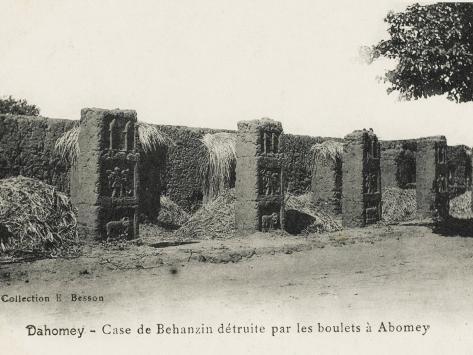
lol, what was ezeagu's hidden post about? Anyway, I abandoned this old thread because the opening post was misguided. I actually meant to erase my posts in this thread, but never got around to it because I went to other threads in nairaland to look at other things every time I decided to open nairaland. The problem with the opening post is that it presumes that there was necessarily an overriding Islamic/North African element to all Sahelian architecture and so therefore all architecture of places that adopted Islam en masse should all be ignored automatically as non-indigenous. In fact, there was some Islamic influence in different places, but much of it was indigenous adaptation of city dwelling or urbanized groups to their materials and Sahelian environment. The great ancient city walls of Kano, for example, were indigenous West African Sahelian architecture, not fundamentally North African or Islamic and trying to dismiss them out hand or ignore them as Arab or North African would be a distortion. Presumably there may have been some Sahelian connections in Ashanti architecture as well as one book on African architecture that I came across a while back went into that idea in detail. The other reason I abandoned this thread is because I realized that it was probably better for people to create and have individual threads for the buildings of different places that go into detail about those groups and their buildings. I will post one image of ruins of buildings from the old kingdom of Dahomey that I found interesting though: https://imgc.allpostersimages.com/images/P-473-488-90/46/4620/4VMFG00Z/posters/dahomey-modern-benin-ruins-of-royal-apartments.jpg "Dahomey (Modern Benin) - Ruins of Royal Apartments" It kind of makes you wonder what the "royal apartments" there might have looked like in earlier times. 1 Like |
| Christianity Etc › Re: Speed Of Light, Time, Einstein, And An Extra-universal Timeline. by PhysicsQED(m): 12:54am On Jul 30, 2012*. Modified: 2:30am On Jul 30, 2012 |
Deep Sight: Really? So its expanding into nothingness? Does nothingness exist?This idea implied by this argument is fallacious. It implies that there is something spatial about nothingness and that therefore nothingness is something that can be expanded into. Once again it is totally unnecessary to posit the existence of something external to the universe to talk about its expansion. To summarize, what I'm saying is that there is no evidence (actual experimental evidence) that there is anything outside of the universe. Basically the universe is all that there is, though I am not making claims about whether there are or are not any special/extraordinary attributes to it beyond what we can observe, such as an entity or guiding principle of the universe that influences the rules/guidelines for how the universe is to exist. |
| Culture › Re: The Ghana Empire - 300 CE by PhysicsQED(m): 12:41am On Jul 30, 2012*. Modified: 1:50am On Jul 30, 2012 |
Black Kenichi: Not true. The Akan of Ghana and Ivory Coast have been confirmed by many historians, ethnolinguists and genetics to have come from the Ancient Ghana Empire. The cultures of the Ashanti king's court and Ghana emperor's court are too much alike to be a coincidence.Dude. They're totally separate nations, peoples and cultures. Don't give me some wiki link because I've read about this in detail from better sources. Are you part Ghanaian? You claimed to be from the Caribbean before, but the way you promote anything Ghanaian even to the point of straining credibility is unusual. 3 Likes |
| Culture › Re: Oyo Empire - 1300CE by PhysicsQED(m): 12:26am On Jul 30, 2012*. Modified: 4:50am On Jul 30, 2012 |
http://harriet.tubman1.yorku.ca/sites/default/files/file/LAW_Oyo_texts.pdf "CONTEMPORARY SOURCE MATERIAL FOR THE HISTORY OF THE OLD OYO EMPIRE, 1627-1824" by Robin Law ^^^^^ This is an extremely informative source for anyone who wants to read first and second-hand contemporary information on Oyo (as viewed or talked about by outsiders) from those dates. |
| Culture › Re: The Ghana Empire - 300 CE by PhysicsQED(m): 4:08pm On Jul 29, 2012 |
Modern Ghana was named after the original Ghana empire that was almost entirely unrelated. Kind of like Dahomey being renamed the Republic of Benin. |
| Culture › Re: Benin Art And Architecture by PhysicsQED(m): 3:36pm On Jul 29, 2012 |
I see. Well, that makes sense - if they feel the child may be taken away from them if they change him or her from the way he or she was naturally brought into the world without appeasing the gods, that's a pretty strong motivation to try some form of appeasement before going through with the change. Thanks for the explanation. |
| Culture › Re: Benin Art And Architecture by PhysicsQED(m): 2:59pm On Jul 29, 2012 |
On those children called "Agbihiagha", why did any sacrifice need to be performed (or why did people think they would have been performed) before cutting off their locks? |
| Culture › Re: Benin Art And Architecture by PhysicsQED(m): 2:39pm On Jul 29, 2012 |
Interesting. Thanks. I actually kind of expected to hear that you didn't really see (non-natural) dreadlocks on modern Edo males - I would have been surprised if you had said the opposite. On the priests, I guess they've changed with the rest of society as well. It seems to be seen as something associated mostly or almost exclusively with black males that are outside of Africa in modern times. |
| Culture › Re: Benin Art And Architecture by PhysicsQED(m): 1:57pm On Jul 29, 2012*. Modified: 2:29pm On Jul 29, 2012 |
Thanks for answering my earlier question, bokohalal. I never had any reason to learn the word for plait when I began learning Edo, and the sentence read to me as if there was a word "ome" there that I didn't know, so I couldn't translate it. I've got a question that's been on my mind for a while. Were there any Edo males that you saw wearing dreadlocks when you were growing up? Or was that completely looked down upon and out of fashion by then? I ask because with the (negative) way my parents talk about dreadlocks on men (when they see them on TV) and the way they view it as virtually non-African (unless the hair is naturally like that, 'dada'), one would think it wasn't part of the culture - but the art tells a different story completely. I understand why they wouldn't see it as "proper", but I'm pretty sure they don't even see it as part of their culture. |
| Sports › Re: Should Eko Atlantic City Bid For 2028 Olympics by PhysicsQED(m): 7:59am On Jul 29, 2012 |
Waste of money. I'd prefer to see a great Nigerian Olympic team breaking records at the Olympics and taking home scores of medals than to see it hosted in Nigeria. |
| Culture › Re: Oyo Empire - 1300CE by PhysicsQED(m): 7:56am On Jul 29, 2012*. Modified: 12:28am On Jul 30, 2012 |
^^^ The wikipedia article is referencing tribute being paid to Oyo by some groups from the Republic of Benin (formerly Dahomey). The part about a war between Oyo and the Benin empire (which ended in stalemate and an agreement on demarcation of territory) is from Jacob Egharevba. There is a reference in Clapperton's work to a common boundary in Ekiti between the Oyo and Benin empire that seems to independently agree with Egharevba's statements about the demarcation of territory. |


1 2 3 4 5 6 7 8 ... 60 61 62 63 64 65 66 67 68 (of 154 pages)