PhysicsQED's Posts
Nairaland Forum › PhysicsQED's Profile › PhysicsQED's Posts
1 2 3 4 5 6 7 8 ... 71 72 73 74 75 76 77 78 79 (of 154 pages)
 Politics › Re: Imo State And The Hand Of Midas by PhysicsQED(m): 6:43am On Jul 16, 2012 Politics › Re: Imo State And The Hand Of Midas by PhysicsQED(m): 6:43am On Jul 16, 2012 |
spyder880: and the house is built! just like that....Do you know how they fastened/secured the walls to the ground and to each other? Just curious. |
| Politics › Re: Where Is The Giant Of Africa??? by PhysicsQED(m): 6:40am On Jul 16, 2012 |
CAMEROONPRIDE: if a bamileke has a store/boutique a little one don't know if you have this in your country ..where they sell bread chocolate butter etc...you know what they do, they take the chocolate they divide in then add vegetal oil and peanut butter you turn and you have 3 new boxes of chocolate(which look like chocolate) taste like chocolate but it's so diluate that you will wonder....etcthat's not kosher bro tell them to stop that sh1t if God wanted vegetable oil in chocolate, he would have put it there himself |
| Politics › Re: Where Is The Giant Of Africa??? by PhysicsQED(m): 6:24am On Jul 16, 2012 |
CAMEROONPRIDE: here we have the jews of africa aka the Bamilekemazel tov, bro |
| Politics › Re: Bini People Have Put Nairaland Tribalists To Shame by PhysicsQED(m): 4:46am On Jul 16, 2012 |
Well, all I'm saying is that it's not like Oshiomhole's opponent was really very popular prior to the election. That's my opinion, though I see how others might see it differently and agree with the OP. |
| Politics › Re: Bini People Have Put Nairaland Tribalists To Shame by PhysicsQED(m): 3:53am On Jul 16, 2012 |
faithin9ja: They have voted again for a man who is not Bini against their own son.If the Bini PDP candidate had actually been a formidable political opponent, with past achievements behind him like Oshiomhole's and a popular name, then this election would actually be a good example of a group opting for accomplished people from other groups over your own. But since Oshiomhole's opponent was who he was, I don't think it's really relevant as an anti-tribalism example. |
| Politics › Re: Why I Won't Congratulate Oshiomhole - Airhivbere by PhysicsQED(m): 1:27am On Jul 16, 2012 |
He lost. He should rise above this kind of pettiness and get over it. |
| Culture › Re: Non-Africans adopting African spirituality by PhysicsQED(m): 11:27pm On Jul 15, 2012*. Modified: 12:36am On Jul 16, 2012 |
JallowBah: I have had dreadlocks four times in my life, and I truly understand why people wish to never cut them.I think that's what you meant. |
| Culture › Re: African Medieval Military Systems Pre-colonial by PhysicsQED(m): 6:12am On Jul 15, 2012*. Modified: 6:48am On Jul 15, 2012 |
. |
| Culture › Re: African Medieval Military Systems Pre-colonial by PhysicsQED(m): 5:48am On Jul 15, 2012 |
| Culture › Re: African Medieval Military Systems Pre-colonial by PhysicsQED(m): 5:43am On Jul 15, 2012*. Modified: 6:05am On Jul 15, 2012 |
Some Yoruba sword styles. The two middle swords could be used in one on one combat: [img]http://1.bp..com/_bUlZdWxNK7M/S1akIlyqBaI/AAAAAAAAAEY/2zDQHyON2Wg/s1600/swords.jpg[/img] |
| Culture › Re: African Medieval Military Systems Pre-colonial by PhysicsQED(m): 5:36am On Jul 15, 2012*. Modified: 7:52am On Jul 15, 2012 |
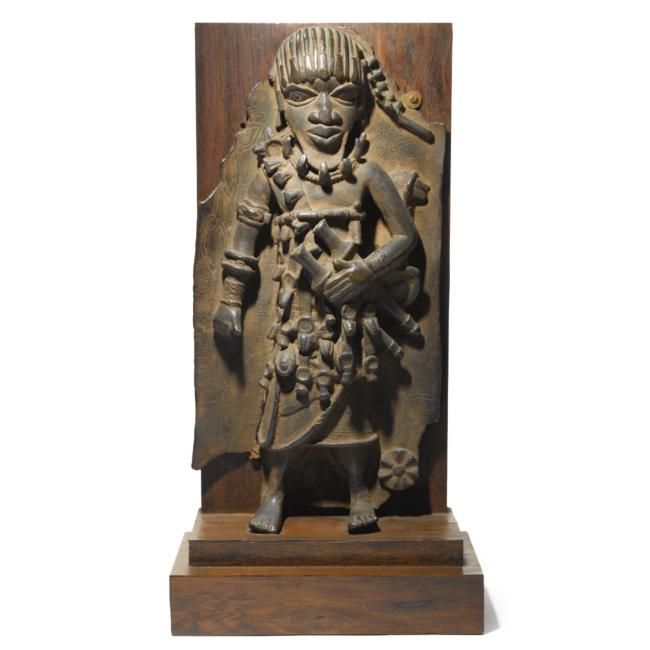
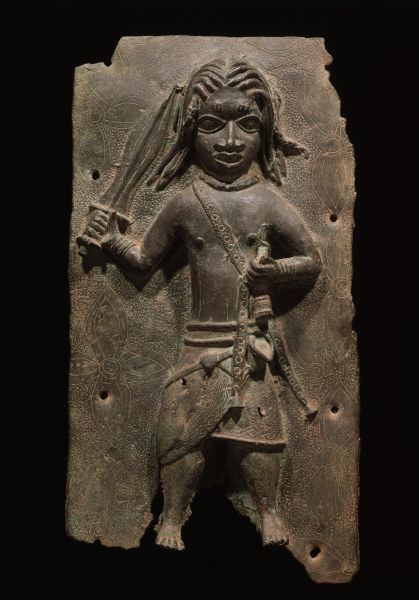
pleep: As far as i know swords were never the primary weapon in civilizations south of the shahara.Well, where were swords ever the primary weapon? The only place I can think of is ancient Rome, and even then they made heavy use of spears/pikes anyway. I think spears and projectile weapons were the primary weapon for almost all nations, though I could be wrong. Most you will find are extreamly ornate, like the executions sword, and werent used for fighting. In west Africa you will find solid gold swords with spherical hilts especailly in ghana. These were used in processions for tribal cheifs and kings.I've seen many images in Benin art of swords that either have a large or small crossguard and I've seen other West African swords that had crossguards. A Benin victory scene with enemy captives (probably Igala, based on the particular scarification marks on the face and the use of horses): https://img714.imageshack.us/img714/1039/2ndcapturefromthebookth.jpg Benin man with twin daggers: https://storage.canalblog.com/06/42/119589/39662989.jpg The sword in this image also has a crossguard: https://img23.imageshack.us/img23/6361/capturefigure254fromthe.jpg Benin man, probably a hunter, holding a sword with a crossguard: https://www.art-prints-on-demand.com/kunst/noartist/k/krieger_benin_nigeria__relief.jpg Benin soldiers holding an enemy military leader captive: https://img193.imageshack.us/img193/6706/capturefigures6and7from.jpg A similar scene is shown in the attached picture and the sword there also has a crossguard:
|
| Politics › Re: South Sudan Begs Nigeria Police For Training by PhysicsQED(m): 8:38pm On Jul 14, 2012 |
SMH. Sometimes Nigerian arrogance just embarrasses me. Why write that they "begged" for police training? There was a better word that they could have used there. Tact is not alien to African culture. 2 Likes |
| Culture › Re: African Medieval Military Systems Pre-colonial by PhysicsQED(m): 6:48pm On Jul 14, 2012*. Modified: 7:15am On Apr 10, 2013 |
Looking back through this thread, it's clear why the OP was interested in medieval armor from a specific time frame. All around the world, as you move away from the medieval period into the late 1700s and then the 1800s, you begin to see armies abandoning body armor because guns made body armor basically irrelevant. In fact, since an armored and an unarmored person would both die from a gunshot (although the unarmored person may die a bit more quickly), the person with the armor is more encumbered and therefore probably significantly slower moving/less agile. Basically armor was reduced or eliminated completely because it became little more than a burden. Unfortunately for those of us that like cool looking armor, this means that the time period during which outside observers really started making detailed drawings of some of these African societies and their soldiers is exactly the time period when armor would have been mostly obsolete. Unfortunately, like ezeagu said, there aren't many images of armor from West Africa from that medieval time period so we have to go mainly by the art or by actual material evidence of the armor, which is limited to certain places. Benin has a lot of images of soldiers wearing armor, so if you want to know what Benin armor looked like, I recommend looking at these books: Antiquities from the City of Benin & from Other Parts of West Africa in the British Museum by Ormonde M. Dalton and Charles H. Read Bronzes and ivories from the old kingdom of Benin by Louis Carré Benin: Kings and Rituals: Court Arts from Nigeria by Barbara Plakensteiner (Editor) and O.J. Eboreime (Foreword) Antique works of art from Benin by Pitt Rivers Die Altertumer von Benin (The Antiquities of Benin) by Felix von Luschan The art of Benin by Nigel Barley The first book, in bold, is not easy to find anywhere other than at a university library and has only a short selection of images of the art, but it has some of the most interesting and impressive looking individuals to be seen in all of the Benin art - figures which, to the best of my knowledge, have not been shown in any other books or museum exhibits. A while back, I was looking at flickr and when looking through some pages which showed Benin art, among other African art, at a museum, I came across a comment that claimed that the museum officials don't even exhibit a lot of the best Benin art, but instead keep a lot of it stashed away in a storeroom. I thought that the comment was merely conspiracy theorist talk until I saw that book by Read and Dalton and also the book by von Luschan. I guess they feel that they don't have to exhibit the art based merely on the impressiveness of the figures and objects in the art but instead based on what pieces of art they can explain/give more background to, or based on presenting exhibits with the greatest diversity of themes/figures. Another problem is that some of the best pieces of African art are held in private collections in Europe and the U.S. I'm sure there's a reasonable explanation, but I think it's a shame that images of such impressive looking African soldiers, dignitaries, royalty, etc. are hidden in such obscure places. |
| Culture › Re: African Medieval Military Systems Pre-colonial by PhysicsQED(m): 8:20am On Jul 14, 2012 |
"Soldier with Weapons, Senegal, 1780s" [img]http://hitchcock.itc.virginia.edu/SlaveTrade/collection/large/VILE-36.JPG[/img] "Source René Claude Geoffroy de Villeneuve, L'Afrique, ou histoire, moeurs, usages et coutumes des africains: le Sénégal (Paris, 1814), vol. 3, facing p. 36. (Copy in Special Collections, University of Virginia Library) Comments Caption, "Soldat Negre" (black soldier); holding lance/spear, with sword, pistol, wearing beads and amulets. Villeneuve lived in the Senegal region for about two years in the mid-to-late 1780s. The engravings in his book, he writes, were made from drawings that were mostly done on the spot during his African residence (vol. 1, pp. v-vi). The same illustration appears in color in the English translation of Villeneuve; see Frederic Shoberl (ed.), Africa; containing a description of the manners and customs, with some historical particulars of the Moors of the Zahara . . . (London, 1821), vol. 2, facing p. 41." |
| Culture › Re: African Medieval Military Systems Pre-colonial by PhysicsQED(m): 8:04am On Jul 14, 2012 |
"Soldiers on the March, Senegal, 1850s" [img]http://hitchcock.itc.virginia.edu/SlaveTrade/collection/large/Raffenel5.JPG[/img] "Source Anne Raffenel, Nouveau voyage dans le pays des negres, suivi d'études sur la colonie du Sénégal . . . (Paris, 1856), vol. 1, facing p. 444. Comments Caption: "Une armée Bambara en marche," shows a group of Bambara/Bamana foot soldiers, led by three horse-mounted "officers" who are followed by two musicians; shown are arms, musical instruments,clothing styles, and the horse's gear." |
| Culture › Re: African Medieval Military Systems Pre-colonial by PhysicsQED(m): 7:17am On Jul 14, 2012 |
"Clothing Style, Wolof Man, Senegal, 1850s" [img]http://hitchcock.itc.virginia.edu/SlaveTrade/collection/large/Boilat02.JPG[/img] "Source P. David Boilat, Esquisses Sengelaises (Paris, 1853), plate 4 (Special Collections, University of Virginia Library) Comments Captioned, "Mari de la Reine du Walo" (Husband of the Queen of the Walo), the plate shows the "Marosso" or the Queen's husband, who was also the head general of the Walo army. He is in full regalia or formal attire, holding his rifle "of honor" and wearing various ornaments, including a bead necklace, earrings, anklets, and, on his left arm, "an enormous silver bracelet, the emblem of his office" (p. 9). Walo was a pre-colonial Wolof state. Boilat made his drawings from life; his 24 plates are explained in an accompanying text. Born in Senegal of a French father and a bi-racial mother ('metisse signare'), Boilat left Senegal at around the age of 13, was educated in France and became ordained as a Catholic priest. He returned to Senegal in 1842, lived there for ten years as an educator and, after returning to France, completed his Esquisses Senegalaises; he also authored the first comprehensive grammar of the Wolof language. He died in France in 1901, at the age of 84." |
| Culture › Re: African Medieval Military Systems Pre-colonial by PhysicsQED(m): 6:40am On Jul 14, 2012 |
"A Kong Soldier, Ivory Coast, 1824" [img]http://hitchcock.itc.virginia.edu/SlaveTrade/collection/large/B027.JPG[/img] "Source Joseph Dupuis, Journal of a Residence in Ashantee (London, 1824); facing p. xxxvii, in Part II, "On the Geography of Western Africa". Comments Caption, "a Moslem of Kong, in military costume"; lance-armed soldier. Dupuis was the British government envoy to Ashanti; Kong an important commercial center by the Niger River." |
| Culture › Re: African Medieval Military Systems Pre-colonial by PhysicsQED(m): 6:37am On Jul 14, 2012 |
"Muslim Men, Gold Coast, 1824" [img]http://hitchcock.itc.virginia.edu/SlaveTrade/collection/large/B024.JPG[/img] "Source Joseph Dupuis, Journal of a Residence in Ashantee (London, 1824), facing p. 72. Comments Caption, "Moslems of Dagombah and Salagha in the Costumes of their Countries" shows three men, two carrying weapons. Dupuis was the British government envoy to Ashanti." |
| Culture › Re: African Medieval Military Systems Pre-colonial by PhysicsQED(m): 6:35am On Jul 14, 2012*. Modified: 7:19am On Jul 14, 2012 |
"Ceremony of Swearing Loyalty to British Government, Ashanti, 1824" [img]http://hitchcock.itc.virginia.edu/SlaveTrade/collection/large/B023.JPG[/img] "Source Joseph Dupuis, Journal of a Residence in Ashantee (London, 1824). Comments Caption, "Representation of the court of select audience-costume, and the ceremony of swearing fidelity to the British Government"; detailed court scene. Dupuis was the British government envoy to Ashanti." [Multiple Ashanti spearmen can be seen in the court if one looks closely] |
| Culture › Re: African Medieval Military Systems Pre-colonial by PhysicsQED(m): 6:18am On Jul 14, 2012 |
"Ceremony and Military Parade, Dahomey, 1790s" [img]http://hitchcock.itc.virginia.edu/SlaveTrade/collection/large/B010.JPG[/img] "Source Archibald Dalzel, The History of Dahomey: An Inland Kingdom of Africa (London, 1793), facing p.136. Comments "Public reception of the king's women"; "amazons" and other troops with guns parading in front of the king and his European visitors (slave traders?)." |
| Culture › Re: African Medieval Military Systems Pre-colonial by PhysicsQED(m): 6:16am On Jul 14, 2012 |
"Procession with Women Warriors, Dahomey, 1790s" [img]http://hitchcock.itc.virginia.edu/SlaveTrade/collection/large/B008.JPG[/img] "Source Archibald Dalzel, The History of Dahomey: An Inland Kingdom of Africa (London, 1793), facing p. 55. Comments Caption: "armed women with the king at their head, going to war." [Obviously not everyone in this picture is actually a woman. The author probably assumed they were because the Dahomeans were famous for using women soldiers in particular. Also, the most interesting thing to me about the picture, if it's an accurate depiction, is not the soldiers, but the part of a building in the background.] |
| Culture › Re: African Medieval Military Systems Pre-colonial by PhysicsQED(m): 4:43am On Jul 14, 2012 |
https://www.heatons-of-tisbury.co.uk/images/africa/kaffer.jpg Images of the Wadjagga of east Africa. The people at the top are obviously warriors. |
| Culture › Re: African Medieval Military Systems Pre-colonial by PhysicsQED(m): 4:31am On Jul 14, 2012 |
"Ashanti Nobleman, Gold Coast, 1820" [img]http://hitchcock.itc.virginia.edu/SlaveTrade/collection/large/Hutton02.JPG[/img] "Source William Hutton, Nouveau voyage dans l'interieur de l'Afrique, ou, Relation de l'ambassade anglaise envoyée en 1820 , au royaume d'Ashantée (Paris, 1823), facing p. 201. (Copy in Special Collections Department, University of Virginia Library) Comments Caption, "Adoo Quamina "; showing him mounted on a horse. This hand-colored illustration is in the French translation of Hutton's "A Voyage to Africa, including a narrative of an embassy to one of the interior Kingdoms in the year 1820" (London, 1821). Hutton was the British government's consul to Ashanti." |
| Culture › Re: African Medieval Military Systems Pre-colonial by PhysicsQED(m): 4:29am On Jul 14, 2012 |
"Weapons, Gold Coast, late 17th cent." [img]http://hitchcock.itc.virginia.edu/SlaveTrade/collection/large/2-693.JPG[/img] "Source From Jean Barbot, A Description of the Coasts of North and South Guinea, in Thomas Astley (ed.), A New General Collection of Voyages and Travels (London, 1745-47), vol. 2, plate 69, facing p. 693. (Copy in Special Collections, University of Virginia Library) Comments Various types of swords, shields, bows and arrows, spears, knives and daggers, axes; some of these items were also used in agriculture. A number of these items, but arranged differently on the page, are also shown in Awnsham and John Churchill, A Collection of Voyages (London, 1732; vol. 5, plate 22, p. 251) in the translation of Barbot's late 17th century account." |
| Culture › Re: African Medieval Military Systems Pre-colonial by PhysicsQED(m): 4:22am On Jul 14, 2012 |
"Horse-Mounted Soldier, Sierra Leone, early 1820s" [img]http://hitchcock.itc.virginia.edu/SlaveTrade/collection/large/LCP-26.JPG[/img] "Source Alexander Gordon Laing, Travels in the Timannee, Kooranko, and Soolima countries in Western Africa (London, 1825), facing p. 230. (Copy in Library Company of Philadelphia) Comments Caption, "Yarradee, War-Master of the Soolimas"; shows cavalryman with his weapons. The author traveled in Sierra Leone in the early 1820s, and describes at length a mock-battle he witnessed involving Yarradee and a large group of his soldiers." |
| Culture › Re: African Medieval Military Systems Pre-colonial by PhysicsQED(m): 4:20am On Jul 14, 2012 |
"Male Soldiers, Dahomey, 1890s" [img]http://hitchcock.itc.virginia.edu/SlaveTrade/collection/large/Norman05.JPG[/img] "Source Henri Morienval, La guerre du Dahomey (Paris, 1898), p. 79 Comments Trio of soldiers, armed with rifles, spears, swords, and shields." |
| Culture › Re: Is Benita Mixed (Yoruba/Edo) by PhysicsQED(m): 4:19am On Jul 14, 2012 |
I looked it up. She was born in Lagos and her mother's name is Bunmi. |
| Culture › Re: African Medieval Military Systems Pre-colonial by PhysicsQED(m): 4:13am On Jul 14, 2012*. Modified: 8:20am On Jul 14, 2012 |
edited |
| Culture › Re: African Medieval Military Systems Pre-colonial by PhysicsQED(m): 1:20am On Jul 14, 2012 |
These are probably the best two books you can read as far as information on the pre colonial armies of West Africa: Robert Smith - Warfare and Diplomacy in Pre-colonial West Africa https://i43.tower.com/images/mm113258906/warfare-diplomacy-in-pre-colonial-west-africa-robert-s-smith-paperback-cover-art.jpg John Thornton - Warfare in Atlantic Africa, 1500-1800 https://covers.openlibrary.org/w/id/2056412-M.jpg I read both of these several years ago. They're really informative. |
| Culture › Re: African Medieval Military Systems Pre-colonial by PhysicsQED(m): 1:12am On Jul 14, 2012*. Modified: 4:01am On Jul 14, 2012 |
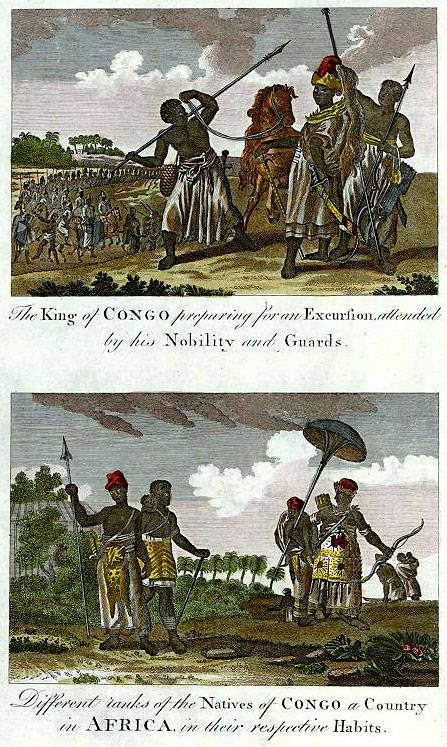
For Kongo, when the Portuguese originally arrived in Kongo, they found an already powerful/developed kingdom. I don't recall whether they made any comments on what the soldiers looked like or what they wore extensively, because I have only looked at a few of the primary sources for information on the Kongo. http://www.africafederation.net/Kongo_History.htm ^^^^ This page, which also includes an article on the Kongo by John Henrik Clarke, is very informative. This is apparently something close to how they dressed: https://www.africafederation.net/King_Kongo_Traditional.jpg |





1 2 3 4 5 6 7 8 ... 71 72 73 74 75 76 77 78 79 (of 154 pages)