PhysicsQED's Posts
Nairaland Forum › PhysicsQED's Profile › PhysicsQED's Posts
1 2 3 4 5 6 7 8 ... 85 86 87 88 89 90 91 92 93 (of 154 pages)
 Culture › Re: Abstract Or Stylized African Art In Pictures by PhysicsQED(op): 1:24am On Jun 11, 2012 Culture › Re: Abstract Or Stylized African Art In Pictures by PhysicsQED(op): 1:24am On Jun 11, 2012 |
[img]http://art.missouristate.edu/arthist/IMAGES1/Ex4Photo24.JPG[/img] Brass Goldweight: Antelope with Large Horizontal Horns 'Despite the stylized twist in the bodies of each of these two antelope figures, the Asante artist has captured accurately the impression of a resting antelope in each. The delicate facial features, the spiral twisting of the tiny horns, and the position of the tail illustrates sensitive observation of these animals. These figures may express one or both of the Asante proverbs: “When the antelope is unhappy, it is the hunter who is the cause,” and “Let the antelope rot in the hollow of the tree!” ' Brass Goldweight: Antelope with Large Horizontal Horns Asante culture 20th century (before 1985) Brass, L. 3.5 cm x W. .9 cm x H. 3 cm Stoneman Collection #1985.125A |
| Culture › Re: Abstract Or Stylized African Art In Pictures by PhysicsQED(op): 1:22am On Jun 11, 2012 |
[img]http://1.bp..com/_NJj1gS1wEqs/S7oomYLrhgI/AAAAAAAAE1A/1P4LfLcf-d8/s1600/Akan+Gold+Sculpture+of+a+Water+Buffalo.jpg[/img] Akan gold sculpture of a water buffalo |
| Culture › Re: Abstract Or Stylized African Art In Pictures by PhysicsQED(op): 1:21am On Jun 11, 2012 |
[img]http://3.bp..com/_NJj1gS1wEqs/S7oousTEZPI/AAAAAAAAE1I/zk3gPd1ckew/s1600/Akan+Gold+Mask+Pendant.jpg[/img] Akan gold mask pendant |
| Culture › Re: Abstract Or Stylized African Art In Pictures by PhysicsQED(op): 1:02am On Jun 11, 2012 |
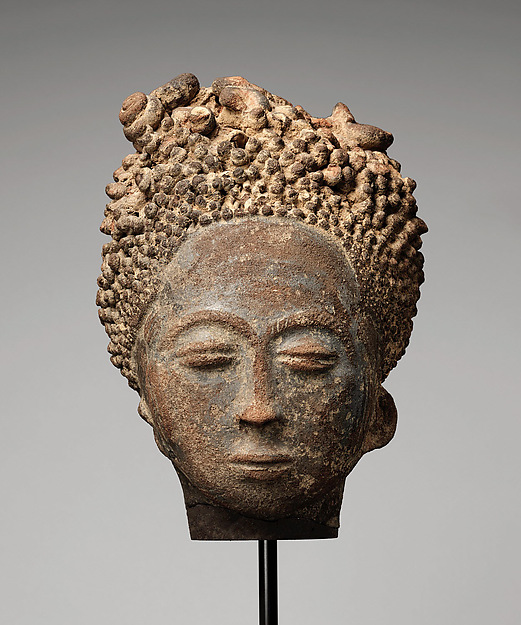
https://images.metmuseum.org/CRDImages/ao/web-large/2.44R3_98C.jpg https://images.metmuseum.org/CRDImages/ao/web-large/2.67.BR3_98D.jpg Memorial head Date: ca. 1800 Geography: Ghana, Twifo-Heman traditional area (?) Culture: Akan peoples Medium: Terracotta Dimensions: H. x W.: 8 1/2 x 6 in. (21.6 x 15.2 cm) Classification: Ceramics-Sculpture Credit Line: The Kronos Collections |
| Culture › Re: Abstract Or Stylized African Art In Pictures by PhysicsQED(op): 12:59am On Jun 11, 2012 |
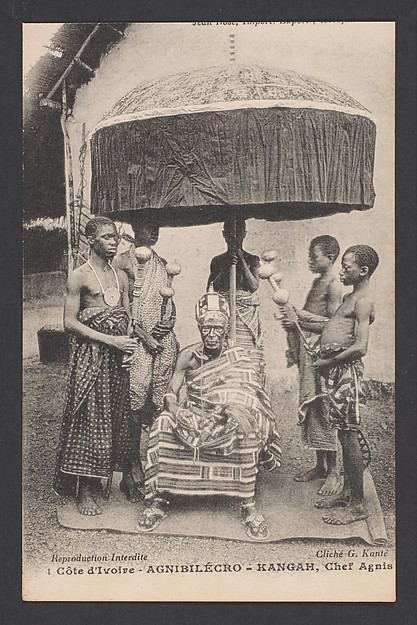
https://images.metmuseum.org/CRDImages/ao/web-large/DP251936.jpg Agnibilécro-Kangah, chief of the Anyi Date: Early 20th century Geography: Côte d’Ivoire Medium: Postcard Dimensions: Overall: 5 5/16 x 3 7/16 in. (13.5 x 8.7 cm) Classification: Paper Credit Line: Holly W. Ross Postcard Collection |
| Culture › Re: Abstract Or Stylized African Art In Pictures by PhysicsQED(op): 12:56am On Jun 11, 2012 |
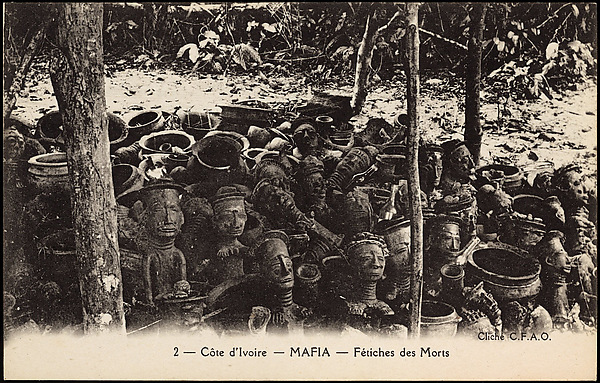
https://images.metmuseum.org/CRDImages/ao/web-large/2.80.altR1_98E.jpg A large mmaso in the southern Anyi traditional area of Sanwi Date: ca. 1900 Geography: Côte d’Ivoire Medium: Postcard Dimensions: Other: 3 1/2 x 5 1/2 in. (8.9 x 14 cm) Classification: Paper Credit Line: Holly W. Ross Postcard Collection |
| Culture › Re: Abstract Or Stylized African Art In Pictures by PhysicsQED(op): 12:54am On Jun 11, 2012 |
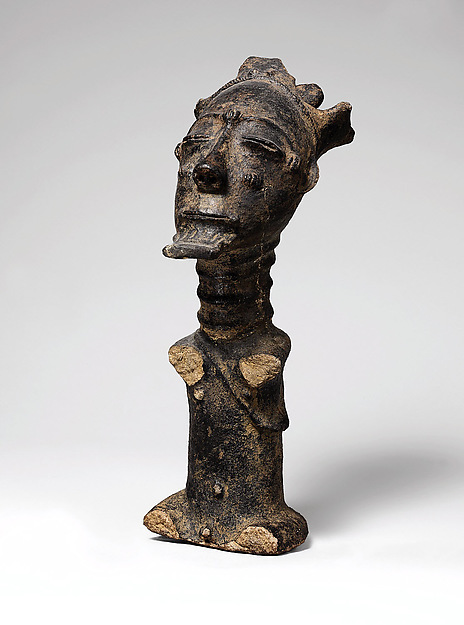
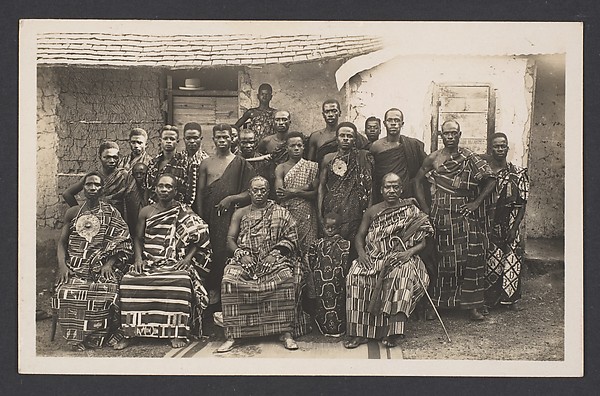
https://images.metmuseum.org/CRDImages/ao/web-large/2.82.CR1_98E.jpg Memorial figure of a priest Date: 18th–early 20th century Geography: Krinjabo(?), Sanwi Culture: Akan peoples, Anyi group Medium: Terracotta Dimensions: H. x W. x D.: 16 x 5 x 8 in. (40.6 x 12.7 x 20.3 cm) Classification: Ceramics-Sculpture Not art, but an interesting photo: https://images.metmuseum.org/CRDImages/ao/web-large/DP251937.jpg His Highness Boua Kouassi, king of the Anyi Date: ca. 1910–15 Geography: Côte d’Ivoire Medium: Postcard Dimensions: Overall: 3 7/16 x 5 7/16 in. (8.7 x 13.8 cm) Classification: Paper Credit Line: Holly W. Ross Postcard Collection |
| Culture › Re: Abstract Or Stylized African Art In Pictures by PhysicsQED(op): 12:52am On Jun 11, 2012 |
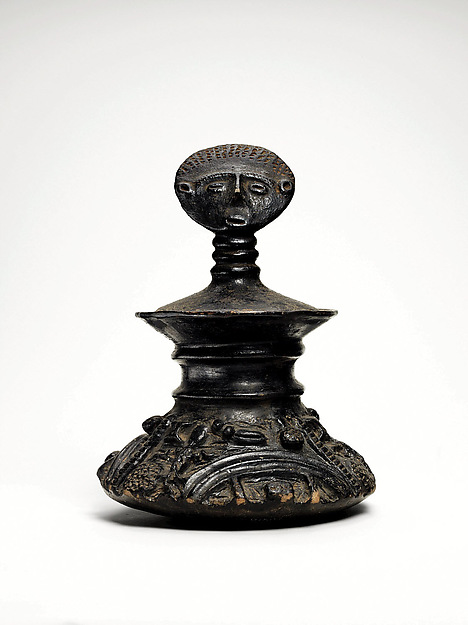
https://images.metmuseum.org/CRDImages/ao/web-large/2.52R2_98C.jpg Clan vessel Date: 20th century, before 1962 Geography: Ghana Culture: Akan peoples Medium: Terracotta Dimensions: H. x W. x D.: 12 1/8 x 8 7/8 x 9 1/8 in. (30.6 x 22.7 x 23.2 cm) Classification: Ceramics-Sculpture Credit Line: Musée du Quai Branly, Paris (73.1962.8.21) |
| Culture › Re: Abstract Or Stylized African Art In Pictures by PhysicsQED(op): 12:51am On Jun 11, 2012 |
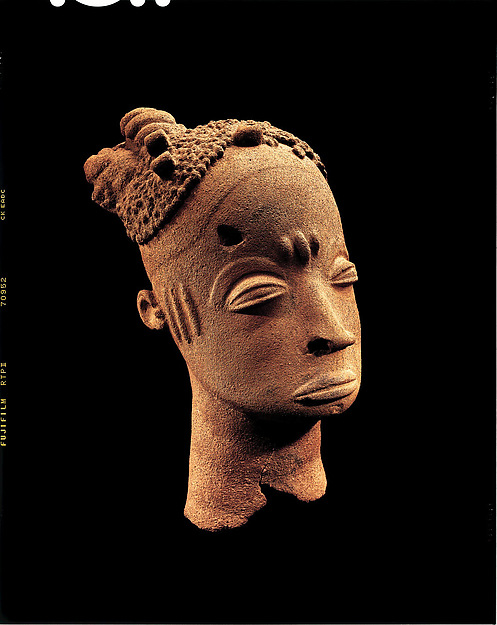
https://images.metmuseum.org/CRDImages/ao/web-large/2.66.BR2_98D.jpg Memorial head Date: ca. 1800 Geography: Ghana, Twifo-Heman traditional area (?) Culture: Akan peoples Medium: Terracotta Dimensions: H. x W. x D.: 9 x 5 3/4 x 4 1/2 in. (22.9 x 14.6 x 11.4 cm) Classification: Ceramics-Sculpture Credit Line: Private collection |
| Culture › Re: Abstract Or Stylized African Art In Pictures by PhysicsQED(op): 12:50am On Jun 11, 2012 |
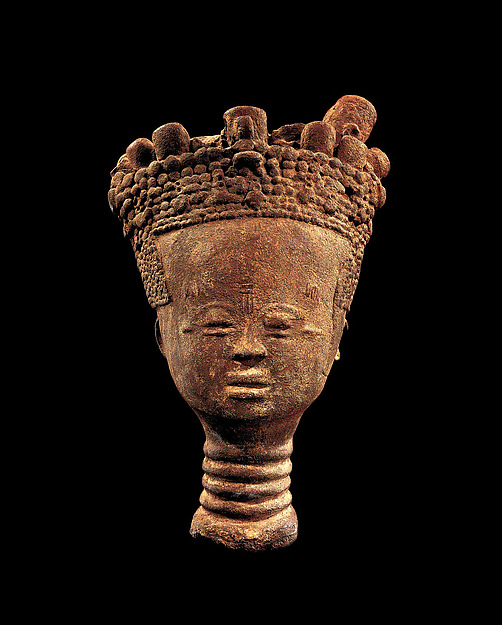
https://images.metmuseum.org/CRDImages/ao/web-large/2.69r2_98D.jpg Memorial head Date: 18th century Geography: Ghana, Twifo-Heman traditional area(?) Culture: Akan peoples Medium: Terracotta Dimensions: H. x W.: 11 7/8 x 5 7/8 in. (30 x 15 cm) Classification: Ceramics-Sculpture Credit Line: Musée Dapper, Paris (2799) |
| Culture › Re: Abstract Or Stylized African Art In Pictures by PhysicsQED(op): 12:48am On Jun 11, 2012 |
https://images.metmuseum.org/CRDImages/ao/web-large/2.70R1_98D.jpg Memorial head Date: 18th century Geography: Ghana, Twifo-Heman traditional area Culture: Akan peoples; Twifo-Heman traditional area, Ghana Medium: Terracotta Dimensions: H. x W.: 14 7/8 in. x 9 1/4 in. (38 x 23.5 cm) Classification: Ceramics-Sculpture Credit Line: Musée Dapper, Paris (2798) |
| Culture › Re: Abstract Or Stylized African Art In Pictures by PhysicsQED(op): 12:41am On Jun 11, 2012*. Modified: 1:06am On Jun 11, 2012 |
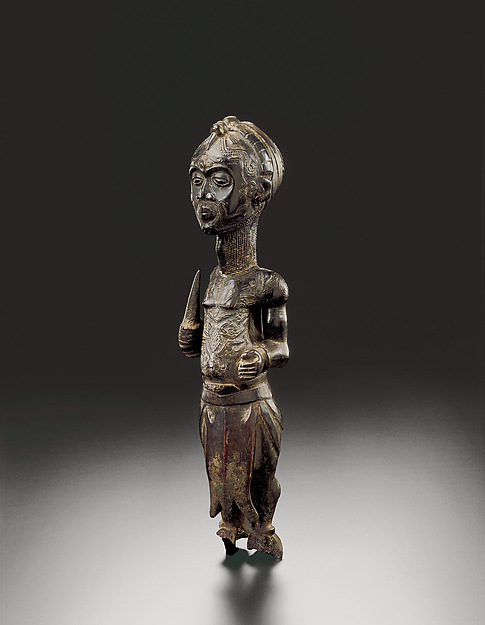
https://images.metmuseum.org/CRDImages/ao/web-large/5.185r2_98J.jpg Figure of a leopard chief Date: 19th century Geography: Democratic Republic of the Congo, Makabu-Buanga Culture: Luluwa peoples Medium: Wood Dimensions: H.: 29 1/8 in. (74 cm) Classification: Wood-Sculpture Credit Line: Ethnologisches Museum - Staatliche Museen zu Berlin, Germany (III C 3246) Accession Number: Portrait-Luluwa-03 This artwork is part of Heroic Africans: Legendary Leaders, Iconic Sculptures Another view: https://upload.wikimedia.org/wikipedia/commons/7/73/Statue_Luluwa-Mus%C3%A9e_ethnologique_de_Berlin.jpg |
| Culture › Re: Abstract Or Stylized African Art In Pictures by PhysicsQED(op): 12:40am On Jun 11, 2012 |
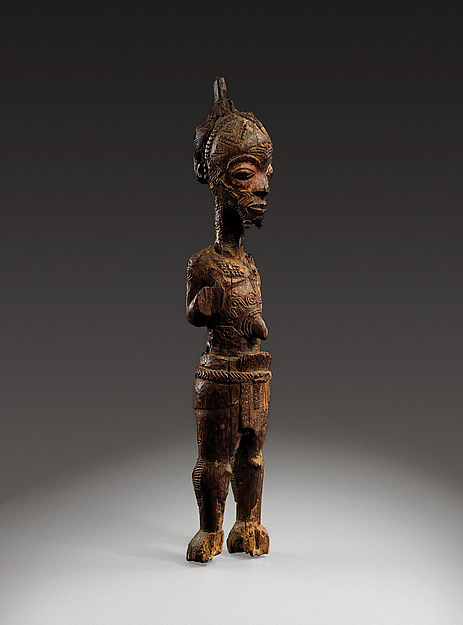
https://images.metmuseum.org/CRDImages/ao/web-large/5.180R3_98J.jpg Figure of a leopard chief Date: 19th–early 20th century Geography: Democratic Republic of the Congo, Western Kasai Culture: Luluwa peoples, Bakwa Ndolo Medium: Wood (Vitex madiensis), pigments, metal, plastic Dimensions: H.: 26 3/8 in. (67 cm) Classification: Wood-Sculpture Credit Line: The Royal Museum for Central Africa, Belgium (EO.0.0.43845) |
| Culture › Re: Abstract Or Stylized African Art In Pictures by PhysicsQED(op): 12:39am On Jun 11, 2012 |
https://images.metmuseum.org/CRDImages/ao/web-large/5.181.AR2_98J.jpg Figure of a leopard chief: Ilunga Mukulu Date: 19th–early 20th century Geography: Democratic Republic of the Congo, Western Kasai Culture: Luluwa peoples, Bakwa Ndolo, Bumba Medium: Wood Dimensions: H.: 26 3/8 in. (67 cm) Classification: Wood-Sculpture Credit Line: The Royal Museum for Central Africa, Belgium (EO.0.0.43854) |
| Culture › Re: Abstract Or Stylized African Art In Pictures by PhysicsQED(op): 12:35am On Jun 11, 2012 |
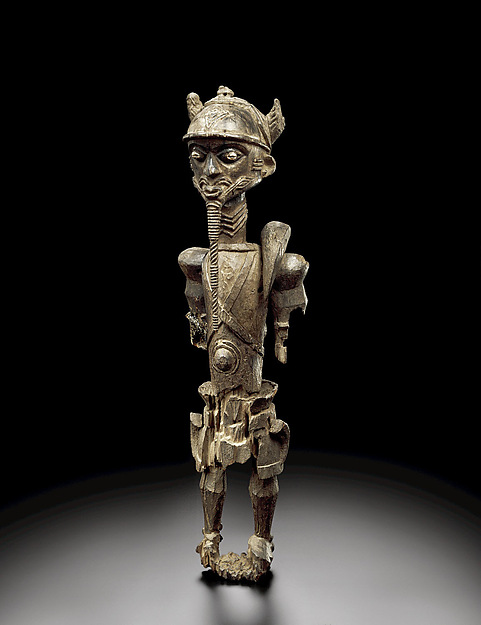
https://images.metmuseum.org/CRDImages/ao/web-large/5.181.Br2_98J.jpg Figure of a leopard chief: Chibwabwa Ilunga Date: 19th–early 20th century Geography: Democratic Republic of the Congo, Western Kasai Culture: Luluwa peoples Medium: Wood (Trichilia gilgiana), cowrie shells Dimensions: H.: 30 3/8 in. (77 cm) Classification: Wood-Sculpture Credit Line: The Royal Museum for Central Africa, Belgium (EO.0.0.43848) This artwork is part of Heroic Africans: Legendary Leaders, Iconic Sculptures |
| Politics › Re: Gowon & Ojukwu In Aburi (video) by PhysicsQED(m): 8:36am On Jun 08, 2012 |
I still can't fathom how a clause introducing a claim that secession is ruled out as a possibility and a clause claiming (correctly) that any region can be subordinated (for example, the northern region) to the will of the other three regions that happen to agree to oppose whatever improper actions the fourth is taking could have been the immediate basis (of course the killings in the north were an enormous factor) for anything that followed. Decrees, accords, and constitutions can be renegotiated and changed later on if they don't suit both parties. It's a tragedy of course, but one that's never made much sense from a purely logical standpoint. |
| Phones › Re: Favorite Android Apps? by PhysicsQED(m): 5:57am On Jun 07, 2012 |
Barnes & Noble Nook (reading) Amazon Kindle (reading) Aupeo (radio) <--- I especially like this one. I stumble across a lot of good music I had never heard before from here. Pandora (radio, comedy, etc.) <--- Also good. Netflix (movies, TV shows, documentaries) <--- not free of course That's about it. Those are the essentials, although I might get skype if the need arises. |
| Education › Re: Why Does IBB Have A University Named After Him? by PhysicsQED(op): 1:38am On Jun 07, 2012 |
| Nairaland General › Re: She's A Tricycle Driver For Reals! by PhysicsQED(m): 1:22am On Jun 07, 2012 |
Hmmm . . . |
| Politics › Re: President Fashola Meets Envoys Of Affected Foreign Nationals by PhysicsQED(m): 4:30am On Jun 06, 2012 |
*Wonders whether it's in any way appropriate for someone to use the aftermath of this tragedy as another avenue to promote Fashola* *Reaches a conclusion* *Leaves thread* |
| Culture › Re: Why Do Yoruba Guys Mostly Marry Igbo Girls Than Vice Versa? by PhysicsQED(m): 11:59pm On Jun 05, 2012*. Modified: 1:10am On Jun 06, 2012 |
tpia@:On "picking fights" over "anything Edo/Bini", I wonder if you're somehow unaware of the crap posted on this forum about different ethnic groups or if you've suddenly become ignorant about what the atmosphere of this forum is like sometimes. Why would I keep quiet when people that don't bother to dig up any information for themselves just repeat whatever stereotypes or misinformation they've been walking around with? I post about what I want, but for the record, the majority of my posts on Edo are not "fights" over Edo or Bini. If "Edo culture" actually leans more toward Igbo culture than toward one particular neighbor to the west that's fine, but I want an explanation of how it's "the same". What you said is a bit like me asserting that Yoruba and Nupe culture are "the same" without bothering to explain how or why and without having an in depth knowledge of either of the cultures. This may not have occurred to you earlier, but if someone takes the statement that Yoruba culture is radically different from most other cultures in southern Nigeria as a fact, it does not somehow prove the assertion that most other cultures in southern Nigeria are "the same". And as someone who has actually read about Urhobo culture specifically (not Etsako, not Owan, not Engenni, etc.) from Urhobo writers and from objective ethnographers for my own enlightenment, I don't see how the culture is "the same" as Igbo culture and I want an explanation from someone who presumably knows much more about both Igbo and Urhobo culture. I want you to actually back up one of these assertions. 1 Like |
| Culture › Re: Why Do Yoruba Guys Mostly Marry Igbo Girls Than Vice Versa? by PhysicsQED(m): 5:41am On Jun 05, 2012*. Modified: 2:21pm On Jun 05, 2012 |
tpia@:  Can you actually back up some of the generalizations you make once in a while? If you're not an expert on Igbo culture and Urhobo culture, how can you just declare them to be "the same"? In fact, if you're not an expert on all of those cultures, how can you just claim that they're the same? I would have stayed out of this thread, but the statement I quoted above needs an explanation. 1 Like |
| Politics › Re: African-americans Now Want To Be Called Blacks by PhysicsQED(m): 6:05am On Jun 04, 2012 |
^ Understood. |
| Politics › Re: African-americans Now Want To Be Called Blacks by PhysicsQED(m): 5:55am On Jun 04, 2012 |
davidylan: where am i forcing my perception down her throat? I just stated facts."Face the facts my dear. You are just tagging along and an inconsequential part of what is essentially a colony developed by white Europeans." where did you get the impression i dont like black americans?From your posts. My gf is black american.Strom Thurmond's mistress was black.  j/k You might not hate them, but you're so vicious it's hard not to get the impression that there's some strong dislike there. |
| Education › Re: Why Does IBB Have A University Named After Him? by PhysicsQED(op): 5:50am On Jun 04, 2012 |
Habiba kasim: Great ibbulite.How would you pronounce the part in bold? |




1 2 3 4 5 6 7 8 ... 85 86 87 88 89 90 91 92 93 (of 154 pages)