Sage's Posts
Nairaland Forum › Sage's Profile › Sage's Posts
1 2 3 4 5 6 7 8 ... 10 11 12 13 14 15 16 17 18 (of 53 pages)
 Politics › Re: Gaddafi Wants Atleasts 5 Billion Euros/yr from EU To Prevent "black Europe" by sage(m): 3:13am On Sep 03, 2010 Politics › Re: Gaddafi Wants Atleasts 5 Billion Euros/yr from EU To Prevent "black Europe" by sage(m): 3:13am On Sep 03, 2010 |
chyz:Its not even about "race" Every group of people have aversions towards people who are not completely like them Even in Nigeria we have seen this hatred pour over some times with the result of loss of life for people If Fulanis were 100 times richer than Igbos, the would never welcome a full scale flooding of Igbos into their land or vice versa Una see am Korokoro for South Africa as they killed immigrants in broad day light When Naija tire for Ghanian invasion they send Ghanians go back house If you guys worry yourselves about Ghaddafi, una go just get heart attack die If you are looking for something to complain about in Europe, una go complain tire The mad man is going to keep talking rubbish. Some people are always going to dislike poor immigrants |
| Politics › Re: Gaddafi Wants Atleasts 5 Billion Euros/yr from EU To Prevent "black Europe" by sage(m): 3:06am On Sep 03, 2010 |
With regards to this topic Why are people here agitating over Ghaddafi  ?? ??He is a senile old man who thinks he has more tricks up his sleeve than he actually does. Infact he is a "mad man" who talks trash to get money from richer countries. Its all about Ghaddafi and nobody else and its funny how some victimhood peddlers are all over here looking for who to peddle their rubbish to. This might be news to you but People around the world look down on any group of people who they perceive as trying to flood their country for economic immigration issues. British people hate Polish immigrants, South Africans hate Nigerians etc |
| Politics › Re: Gaddafi Wants Atleasts 5 Billion Euros/yr from EU To Prevent "black Europe" by sage(m): 2:56am On Sep 03, 2010 |
People here seem to be talking out of their butts. Who told you guys that Ghaddafi is Arab? Who told you guys that many people in Morrocco, Algeria, Tunisia and Lybia are "Arab"? People who dont know what they are talking about should shut the fvck up |
| European Football (EPL, UEFA, La Liga) › Re: The AC Milan Thread: 2021/2022 Serie A Champions! by sage(m): 3:36am On Aug 29, 2010 |
Forza Ibra!!!!!!!!! If Jankuluvski and Kaladzde had agreed to take their useless selfs to Genoa, we would have Bochetti in exchange and our central defense would have been Sandro, Silva, Papa, Bochetti, Yepes, Bonera. That's a better CB list than any other team in the world. Far better than any other teams. Yepes is not that bad for his age. Even against Barca he did well. Our CB is okay for now though it could be better Hope we can sign a couple of players. A versatile FAST midfielder that can play through the center and on the wings and also a versatile defender who can play LB. Then we would be ready to kick ass in Europe and Serie A |
| European Football (EPL, UEFA, La Liga) › Re: The AC Milan Thread: 2021/2022 Serie A Champions! by sage(m): 11:56pm On Aug 26, 2010 |
We dey tough group Hope Ibra and at least one more player comes before market closes |
| Politics › Re: Will You Be A Black Man A Second Time? by sage(m): 4:56am On Aug 24, 2010 |
chiogo:There are white Latinos. Latino is just a cultural reference Also not only Anglo-Saxons are "white" Semetic Middle Easterners are white and so are North Africans ie Morroccans, Lebanese, Jews, Iranians etc Even dark skinned Arabs are technically caucasian As for this thread, it is an EPIC FAIL from the get go |
| Politics › Re: Milton Friedman On Slavery And Colonialism. A Must Watch For Africans by sage(m): 4:22am On Aug 17, 2010 |
Also come and list what haplogroup the Negeritos are from and how they are genetically related to Africans more than say Chinese people You obviously dont know anything about genetics and humanity otherwise you wold not have dared to suggest the nonsense you were parroting in this thread How dare you parrot lies to our face ?  Guy you just march shit! |
| Politics › Re: Milton Friedman On Slavery And Colonialism. A Must Watch For Africans by sage(m): 3:55am On Aug 17, 2010 |
gadogado:Dude your fraud has been completely exposed! Finish exposing your nyash now by yourself   What the heck are you talking about haplogroups? If you knew anything about haplogroups, you would not be shaming yourself by bringing it to support your fraudulent idea of a "black race" I just provided concrete scientific proof from 2010 of the fraud that the idea of race is and the funny idea of a "black race" that is genetically deficient Oya take the platform and show us how haplogroup=race  (It would be fun watching this clown try to turn the haplogroup L1= "black race" joke he is parading about (It would be fun watching this clown try to turn the haplogroup L1= "black race" joke he is parading about  . Bring out the pop corn guys. This liar thought he was dealing with uneducated people living in the 18th century ) What a joke . Bring out the pop corn guys. This liar thought he was dealing with uneducated people living in the 18th century ) What a joke He is about to commit harikiri |
| Politics › Re: Milton Friedman On Slavery And Colonialism. A Must Watch For Africans by sage(m): 3:42am On Aug 17, 2010 |
So my fellow Nigerians Whenever an ignorant wants to start talking about the "black race", he is an uninformed who is intent on demeaning people. The different African societies are as different from each other as they are from non-African societies. They have never been similar on any level at all. People always talk about a "black race" when they want to ask extremely silly questions like "What did they achieve" and all sorts of similar nonsense. Germans and English were complete babarians and savages for most of human history. They were low class slaves who never contributed anything to humanity until just recently. They never had any lost glory to reclaim. East Africans were far more civilized than them for thousands of years Many parts of Eastern Europe have not contributed anything meaningful to humanity either and also many parts of Asia Any fraud that comes on this site to ask what a mythical "black race" bla bla bla should be smacked down immediately! |
| Politics › Re: Milton Friedman On Slavery And Colonialism. A Must Watch For Africans by sage(m): 2:30am On Aug 17, 2010 |
Clear evidences in humanity backed up by solid scientific proof show clearly that 1. There has never been any such thing as a "black race" ever in all of humanity. It is not based on Genetics or shared history or culture or anything. It is the biggest fraud in the history of humankind and a figment of the imagination of prejudiced 17th and 18th century people 2. Just because a person has dark skin and kinky hair does not mean they are the same with people all over the African continent or that they are your brothers/sisters. An Hausa man for example is as genetically different if not more different from a Zulu than he is from a French man 3. Two people who are genetically very distant and have nothing in common can look very similar while two people who are closer genetically could look different from each other |
| Politics › Re: Milton Friedman On Slavery And Colonialism. A Must Watch For Africans by sage(m): 1:45am On Aug 17, 2010 |
Summary of the article above 1 These people have kinky hair and dark skin 2 They have NOTHING in common with the average African genetically and are closer to Asians like Chinese, Japanese etc and even Europeans genetically some direct quotes from the article above "Other more recent studies have shown closer craniometric affinities to Egyptians and Europeans than to Sub Saharan populations such as that of African Pygmies. Walter Neves' study of the Lagoa Santa people had the incidental correlation of showing Andamanese as classifying closer to Egyptians and Europeans than any Sub Saharan population." These features include short stature, very dark skin, woolly hair, scant body hair and occasional steatopygia. The claim that Andamanese pygmoids more closely resemble Africans than Asians in their cranial morphology in a 1973 study added some weight to this theory before genetic studies pointed to a closer relationship with Asians. Later genetic and craniometric (mentioned earlier) studies have found more genetic affinities with Asians and Polynesians |
| Politics › Re: Milton Friedman On Slavery And Colonialism. A Must Watch For Africans by sage(m): 1:40am On Aug 17, 2010 |
| Politics › Re: Milton Friedman On Slavery And Colonialism. A Must Watch For Africans by sage(m): 1:35am On Aug 17, 2010 |
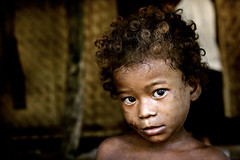
The Negrito people of Asia have dark skin and kinky hair but the greatest genetic distance in all of humanity exists between them and Africans https://upload.wikimedia.org/wikipedia/commons/thumb/c/cb/Malaya_1905.jpg/300px-Malaya_1905.jpg [img]http://www.google.com/imgres?imgurl=http://upload.wikimedia.org/wikipedia/commons/d/d9/Ati_woman_2.jpg&imgrefurl=http://abaca8./2010/01/01/&usg=__-vTsowHV7FFFFZWsU2cnXevFRY4=&h=800&w=536&sz=118&hl=en&start=61&tbnid=ZRuIy0mchmYjKM:&tbnh=143&tbnw=96&prev=/images%3Fq%3Dpictures%2Bof%2Bnegritos%26um%3D1%26hl%3Den%26client%3Dfirefox-a%26sa%3DN%26rls%3Dorg.mozilla:en-US:official%26biw%3D1680%26bih%3D869%26tbs%3Disch:10%2C1152&um=1&itbs=1&ei=L9lpTJ2aE8TFnAfg7sDBBQ&biw=1680&bih=869[/img] The term Negrito refers to several ethnic groups in isolated parts of Southeast Asia.[2] Their current populations include 12 Andamanese tribes of the Andaman Islands, six Semang tribes of Malaysia, the Mani of Thailand, and the Aeta, Agta, Ayta, Pygmies, Ita, Baluga, Ati, Dumagat and at least 25 other tribes of the Philippines. Reports on the presence of British traders on Borneo (Sarawak), dating from the end of the 19th century, speak of negrito tribes on this island. There are reports that these traders presented "pygmies" to the emperor of China. Pygmies being another word for negrito. (Journal of the Malayan Branch Royal Asiatic Society, Vol. XXIX, part 1, 1956) Negritos share some common physical features with African pygmy populations, including short stature, natural afro-hair texture, and dark skin; however, their origin and the route of their migration to Asia is still a matter of great speculation. They are the most genetically distant human population from Africans at most loci studied thus far (except for MC1R, which codes for dark skin). They have also been shown to have separated early from Asians, suggesting that they are either surviving descendants of settlers from an early migration out of Africa, or that they are descendants of one of the founder populations of modern humans The term "Negrito" is the Spanish diminutive of negro, i.e. "little black person", referring to their small stature, and was coined by early European explorers who assumed that the Negritos were recent arrivals from Africa. Occasionally, some Negritos are referred to as pygmies, bundling them with peoples of similar physical stature in Central Africa, and likewise, the term Negrito was previously occasionally used to refer to African Pygmies.[4] Sometimes the term "Negroid" will be used when referring to these groups, especially to their superficial physical features, such as their hair texture and skin color. Being among the least-known of all living human groups, the origins of the Negrito people is a much debated topic. The Malay term for them is orang asli, or original people. They are likely descendants of the indigenous populations of the Sunda landmass and New Guinea, predating the Mongoloid peoples who later entered Southeast Asia.[5] Alternatively, some scientists claim they are merely a group of Australo-Melanesians who have undergone island dwarfing over thousands of years, reducing their food intake in order to cope with limited resources and adapt to a tropical rainforest environment. Anthropologist Jared Diamond in his bestselling book, Guns, Germs, and Steel suggests that the Negritos are possible ancestors of the Aboriginal Australians and Papuans of New Guinea. This assertion is echoed by Windshuttle and Gillin (2002). A number of features would seem to suggest a common origin for the Negritos and African pygmies, especially in the Andamanese Islanders who have been isolated from incoming waves of Asiatic and Indo-Aryan peoples. No other living human population has experienced such long-lasting isolation from contact with other groups [6]. [b]These features include short stature, very dark skin, woolly hair, scant body hair and occasional steatopygia. The claim that Andamanese pygmoids more closely resemble Africans than Asians in their cranial morphology in a 1973 study added some weight to this theory before genetic studies pointed to a closer relationship with Asians.[6] Other more recent studies have shown closer craniometric affinities to Egyptians and Europeans than to Sub Saharan populations such as that of African Pygmies. Walter Neves' study of the Lagoa Santa people had the incidental correlation of showing Andamanese as classifying closer to Egyptians and Europeans than any Sub Saharan population.[7][8] Multiple studies also show that Negritos from Southeast Asia to New Guinea share a closer cranial affinity with Australo-Melanesians.[5][9] Further evidence for Asian ancestry is in craniometric markers such as sundadonty, shared by Asian and Negrito populations. It has been suggested that the craniometric similarities to Asians could merely indicate a level of interbreeding between Negritos and later waves of people arriving from the Asian mainland. This hypothesis is not supported by genetic evidence that has shown the level of isolation populations such as the Andamanese have had. However, some studies have suggested that each group should be considered separately, as the genetic evidence refutes the notion of a specific shared ancestry between the "Negrito" groups of the Andaman Islands, Malay Peninsula, and Philippines.[10] While earlier studies, such as that of WW Howell, allied Andamanese craniometrically with Africans, they did not have recourse to genetic studies.[5] Later genetic and craniometric (mentioned earlier) studies have found more genetic affinities with Asians and Polynesians.[6] A study on blood groups and proteins in the 1950s suggested that the Andamanese were more closely related to Oceanic peoples than Africans. Genetic studies on Philippine Negritos, based on polymorphic blood enzymes and antigens, showed they were similar to surrounding Asian populations[/b].[6] Genetic testing places all the Onge and all but two of the Great Andamanese in the mtDNA Haplogroup M, found in East Africa, East Asia, and South Asia, suggesting that the Negritos are at least partly descended from a migration originating in eastern Africa as much as 60,000 years ago. This migration is hypothesized to have followed a coastal route through India and into Southeast Asia, which is sometimes referred to as the Great Coastal Migration. Analysis of mtDNA coding sites indicated that these Andamanese fall into a subgroup of M not previously identified in human populations in Africa and Asia. These findings suggest an early split from the population of African migrants whose descendants would eventually populate the entire habitable world.[6] Haplogroup C and haplogroup D is believed to represent Y-DNA in the migration.[11] Negritos have also possibly lived in Taiwan. The Saisiyat people performed the songs and rites of the festival called Ritual of the Little Black People (矮靈祭). In fact, the short, black men the festival celebrates are one of the most ancient types of modern humans on this planet and their kin still survive in Asia today. They are said to be diminutive Africoids and are variously called Pygmies, Negritos and Aeta. Chinese historians called them "black dwarfs" in the Three Kingdoms period (AD 220 to AD 280) and they were still to be found in China during the Qing dynasty (1644 to 1911). In Taiwan they were called the "Little Black People" and, apart from being diminutive, they were also said to be broad-nosed and dark-skinned with curly hair.[12] After the Little Black People -- and well before waves of Han migrations after 1600 -- came the Aboriginal tribes, who are part of the Austronesian race. They are thought to have come from the Malay Archipelago 6,000 years ago at the earliest and around 1,000 years ago at the latest, though theories on Aborigine migration to Taiwan are still hotly debated. Gradually the Little Black People became scarcer, until a point about 100 years ago, when there was just a small group living near the Saisiyat tribe.[13] The story goes that the Little Black People taught the Saisiyat to farm by providing seeds and they used to party together. But one day, the Little Black People sexually harassed some Aboriginal women. So, the Saisiyat took revenge and killed them off by cutting a bridge over which they were all crossing. Just two Little Black People survived. Before departing eastward, they taught the Saisiyat about their culture and passed down some of their songs, saying if they did not remember their people they would be cursed and their crops would fail.[14] There are other stories about them in other aboriginals.[15] Their sites still remains.[16] |
| Politics › Re: Milton Friedman On Slavery And Colonialism. A Must Watch For Africans by sage(m): 1:01am On Aug 17, 2010 |
the highlights in the article include "And from their population level analysis, the researchers detected as many or more genetic differences between the Khoisan and West African populations than between West African and European populations." "On average, there are more genetic differences between any two Bushmen in our study than between a European and an Asian," This is genetic sequencing that was done this year ie 2010 genetic proof as opposed to 17th century ignorance |
| Politics › Re: Milton Friedman On Slavery And Colonialism. A Must Watch For Africans by sage(m): 12:56am On Aug 17, 2010 |
This is genetic sequencing that was done this year. 2010 genetic proof as opposed to 17th century ignorance Sequencing Study Highlights Genetic Diversity in Southern Africa An international research team reported in Nature today that it has characterized five human genomes from southern Africa, identifying millions of SNPs never before found in the human population. The American, African, and Australian researchers sequenced the full genomes of two African individuals: a member of a hunter-gatherer population in the Kalahari desert known as the Bushmen, San, or Khoisan, and a Bantu individual from South Africa — Nobel peace prize winner Archbishop Desmond Tutu. After sequencing the exomes of three other Khoisan men, the team compared all five genomes, identifying more than 1.3 million previously undetected SNPs. During their subsequent analyses, they not only found genetic differences between southern African populations and populations from other parts of Africa and the world but also within the Khoisan population — findings that may eventually inform everything from studies of human population history and adaptations to agriculture to personalized medicine strategies in southern Africa. "On average, there are more genetic differences between any two Bushmen in our study than between a European and an Asian," co-lead author Stephan Schuster, a biochemistry and molecular biology researcher with Pennsylvania State University's Center for Comparative Genomics and Bioinformatics, said in a statement. Southern Africa is believed to be the source of modern humans and, subsequently, is home to a great deal of human genetic diversity. But despite the decades-long effort to characterize the human genome and human population genetics, most studies have lacked representatives from this region, Schuster explained during a telephone briefing with reporters this morning. In an effort to get a better sense of the genetic variation within humans, he and his team set out to characterize the genomes of individuals from the Khoisan population — thought to be the oldest modern human population. Schuster described the project at the American Society for Human Genetics meeting last fall, though this paper marks the first publication from the sequencing effort. Archbishop Tutu, who has ancestry from Sotho-Tswana and Nguni language groups, which represent roughly 90 percent of southern Africans, also participated in the study. Tutu was a good candidate not only because of his ancestry but also because he is known to have survived polio, tuberculosis, and prostate cancer and because he is a voice for southern Africa and indigenous populations, senior author Vanessa Hayes, a cancer genetics researcher at the University of New South Wales, told reporters. The four Khoisan men who participated in the study all came from different communities in Namibia's Kalahari Desert. Each was the most elder member of his community. The team sequenced the genome of a Khoisan man named named !Gubi to 10.2 times coverage using paired-end sequencing with the Roche 454 GS FLX Titanium platform. !Gubi is believed to be around 86 years old and lives in the southern Kalahari on the Namibia-Botswana border. They also used a similar approach to sequence the genome of a second Khoisan man named G/aq'o, from a community in the northern Kalahari, to about two times coverage. Meanwhile, the researchers sequenced Tutu's genome using the Applied Biosystems SOLiD 3.0 platform, generating sequence covering the genome about 12.3 times. For the exome sequencing portion of the study, the team captured protein-coding sequences for each of the five individuals with the NimbleGen 2.1 M array and sequenced them by Roche 454 Titanium sequencing. The genomic and exomic sequences were verified using a range of approaches, including genotyping and whole-genome and exome sequencing with the Illumina platform, which was used to sequence !Gubi's genome to 23.2 times coverage and Tutu's genome to 7.2 times coverage. When the team compared the genomes and exomes to version 18 of the human reference genome and eight personal genomes sequenced, they found 1.3 million previously undetected SNPs, including 13,146 new SNPs that alter the amino acid sequence of 7,720 genes. !Gubi's genome contained more SNPs than Tutu's, though both contained more SNPs overall — and more novel SNPs — than any other individual genome sequenced so far. And from their population level analyses, the researchers detected as many or more genetic differences between the Khoisan and West African populations than between West African and European populations. The team's preliminary peek at the functional role of genes affected by new SNPs in the Khoisan population suggests that these variants tend to fall in genes involved in immune response, reproduction, and sensory perception. "We believed that because of their extremely long lineage, their genome would be very different," co-lead author Webb Miller, a researcher at Penn State's Center for Comparative Genomics and Bioinformatics, told reporters. And, he said, the findings so far support that hypothesis. This type of genetic diversity within the human genome is believed to have helped humans thrive over thousands of years, Schuster said, though he emphasized that modern human genomes from all around the world still share far more similarities than differences. "We are genetically one healthy species," he said. The team believes understanding human genetic diversity in southern Africa will likely be medically important, both for developing personalized medicine in this region and for identifying and understanding the roles of rare variants in human health and disease in general. "Adding the described variants to current databases will facilitate the inclusion of southern Africans in medical researchers' efforts, particularly when family and medical histories can be correlated with genome-wide data," the researchers wrote. The researchers have already started developing microarrays incorporating the newly identified southern African SNPs. For the next phase of the study, they plan to use these microarrays to genotype hundreds of individuals from southern Africa. http://www.genomeweb.com/sequencing/sequencing-study-highlights-genetic-diversity-southern-africa |
| Politics › Re: Milton Friedman On Slavery And Colonialism. A Must Watch For Africans by sage(m): 12:53am On Aug 17, 2010 |
My Fellow Nigerians The time has come to demolish this nonsense 17th century concept of race or a "black race" The whole concept is a total fraud based on attempts to demean different people collectively Hang on for the ride |
| Politics › Re: Milton Friedman On Slavery And Colonialism. A Must Watch For Africans by sage(m): 6:03pm On Aug 16, 2010 |
Guys I am going to come back and demolish this frauds false 17th century theory later today. A "Black race" is the biggest myth in the history of human kind. Such a thing has never existed. EzeUche22:Slavery was a bad thing but even Europeans sold each other into slavery in North Africa. Slavery is hardly unique to the African continent so lets stop this American rubbish of "Africans sold their brothers" Africans did not sell their brothers. They sold strangers just like other people in the world did. |
| Politics › Re: Milton Friedman On Slavery And Colonialism. A Must Watch For Africans by sage(m): 4:14pm On Aug 16, 2010 |
gadogado:Dude you are talking rubbish of the highest order. Complete unrivalled nonsense. It is a mere wish to think that a "black race" exists. No wonder you came here with a phony 17th century argument |
| Politics › Re: Milton Friedman On Slavery And Colonialism. A Must Watch For Africans by sage(m): 4:58am On Aug 16, 2010 |
ChinenyeN:\ +1000000000000000000 The thing with it is that even the White Berber North African societies also struggled with the concept of written language despite being very close to the medditerenian while "sub-saharan parts like Ethiopia had a fully developed system Your diffusion theory I reckon is 100% correct |
| Politics › Re: Milton Friedman On Slavery And Colonialism. A Must Watch For Africans by sage(m): 2:55am On Aug 16, 2010 |
You cannot make a phony genetic argument about a "black race" when no such thing exists at all genetically. Any such arguments that tries to create a FALSE commonality has no credibility at all Where does a "black race" start and stop Anybody making a genetic argument about intelligence and a "black race" is a crappy liar at best and is not worth anybody's time |
| Politics › Re: Milton Friedman On Slavery And Colonialism. A Must Watch For Africans by sage(m): 2:38am On Aug 16, 2010 |
gadogado:Looking back at it now, I should not have agreed with you at all The premise of your whole argument is falsehood. Your intent was always to say "black race" , which is complete falsehood in its entirety because your attempt to bring up genetics as a reason was a joke of the highest order. People in Africa are very different genetically from each other so it is impossible for them to have one genetic fault at all. Many African groups have closer genetics to non-Africans than they do to other Africans Skin colour or looks have nothing to do with intelligence at all Your whole argument now totally sounds empty to me |
| Politics › Re: Milton Friedman On Slavery And Colonialism. A Must Watch For Africans by sage(m): 1:38am On Aug 16, 2010 |
ikenwan:I am begining to agree with you. I mean I agreed with some of the points the guy made earlier on but as soon as a phony genetic argument started, I became weary. He seems to think that the reasons some East Africans developed a written language is because of admixture White Northern Africans(Berbers) didnt even have a written language while darker skinned Africans in East Africa did but he is somehow making a phony genetic/skin colour argument If you go back you would see where I even agreed with some of his points His arguments however started to resemble more and more of a "Supremacist" argument The dude might actually have 2 or 3 Nairaland user names to support his arguments I get weary whenever people start to ask what did the "black" race bla bla bla There is no "black race" from a genetic viewpoint and only ignorant people make arguments about a "black race" since such a thing does not exist from a genetic standpoint When people start insisting on it, it shows ulterior motives and very sinister ones as that |
| Politics › Re: Milton Friedman On Slavery And Colonialism. A Must Watch For Africans by sage(m): 1:34am On Aug 16, 2010 |
gadogado:As much as South East Asia, Eastern Europe and parts of the Americas The problem with this discussion is that people try to link Africas issues with skin colour It has nothing whatsoever to do with skin colour and any skin colour related argument is retarded from the start because like i noted, NOTHING in humanity supports the phony idea of race There is actually no group of people known as "sub-saharan" people. Its a phony western classification for a commonality that does not exist Ethiopians are a "sub-Saharan" people but they had a complete set of written language with alphabeths to boot. I had nothing to do with hem beign mixed at all. They are not the only mixed people in Africa |
| Politics › Re: Milton Friedman On Slavery And Colonialism. A Must Watch For Africans by sage(m): 1:18am On Aug 16, 2010 |
There is no "Black race" based on genetics so a genetic argument is a big fail Where did people get this idea of a "black race" from? There is no such a thing from a genetic standpoint so it is ignorance of the highest order to suggest a common trait of a "race"/ "black race" |
| Politics › Re: Milton Friedman On Slavery And Colonialism. A Must Watch For Africans by sage(m): 1:17am On Aug 16, 2010 |
bgees:Except that the so-called sub-sahahran Africans are very different from each other geneically so it cant be genetics. Some are more different from each other than they are from other groups actually |
| Politics › Re: Milton Friedman On Slavery And Colonialism. A Must Watch For Africans by sage(m): 1:13am On Aug 16, 2010 |
@ Ola Olabiy There is no such thing as a "black" race. That is a myth of the highest order. Whoever came up with the idea of a "black" race needs to be shot at immediately |
| Politics › Re: Milton Friedman On Slavery And Colonialism. A Must Watch For Africans by sage(m): 1:08am On Aug 16, 2010 |
ola olabiy:Europeans were also behind for thousands of years. Was it an inherent factor? Just because a place is backwards and behind other places at a point in time does not mean that the people are less intelligent or that with a change in circumstances that they would not do well Europeans are living proof of that |
| Politics › Re: Milton Friedman On Slavery And Colonialism. A Must Watch For Africans by sage(m): 12:50am On Aug 16, 2010 |
ola olabiy:You didnt answer the question When Europeans were backwards and behind Asia, the Middle East and North Africa, where they inherently less intelligent than people from those places? |
| Politics › Re: Milton Friedman On Slavery And Colonialism. A Must Watch For Africans by sage(m): 12:21am On Aug 16, 2010 |
ezeagu:The thread was bound to be a fail from the start |
| Politics › Re: Milton Friedman On Slavery And Colonialism. A Must Watch For Africans by sage(m): 12:19am On Aug 16, 2010 |
@gadogado and Ola Im waiting for an answer |
| Politics › Re: Milton Friedman On Slavery And Colonialism. A Must Watch For Africans by sage(m): 12:10am On Aug 16, 2010 |
When Europe was backwards and behind everyother place including Asia, Middle East and North Africa Where Europeans less intelligent than all those people? |
| Politics › Re: Milton Friedman On Slavery And Colonialism. A Must Watch For Africans by sage(m): 12:07am On Aug 16, 2010 |
gadogado:well as much as it made Europeans less inteligent during their own time. Societies evolve. The European one did over time due to various factors. There was a time that Asia and the middle East were more advanced and Europe was a backward place. It didnt mean Europeans were less intelligent then |




1 2 3 4 5 6 7 8 ... 10 11 12 13 14 15 16 17 18 (of 53 pages)