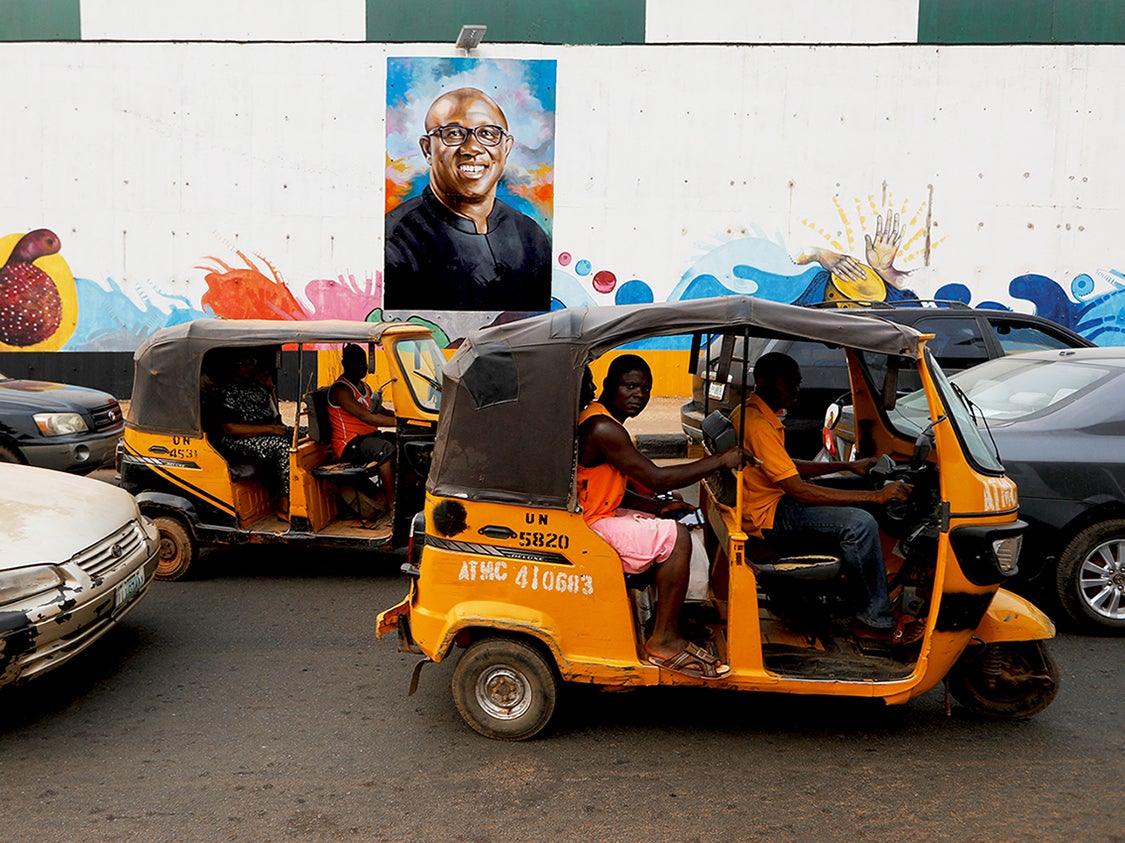
Africa’s most populous nation goes to the polls on Saturday (25 February) to elect a new president. One candidate, Peter Obi, who appears to have become the front runner, has captured the imagination of the western media.
Obi, 61, the leader of the Nigerian Labour Party, has pitched himself as a fresh-faced progressive and outsider who will clean up the muck of Nigerian politics and build a fairer, more just nation. The country’s youth – a powerful voting bloc in a country where around two-thirds of the population of 213 million is under the age of 30 – appear to be on Obi’s side and, if you read election coverage in the international press, you might get the impression that Nigeria is on the verge of a bright new era. But is Obi really Nigeria’s saviour, or is this simply a media mirage?
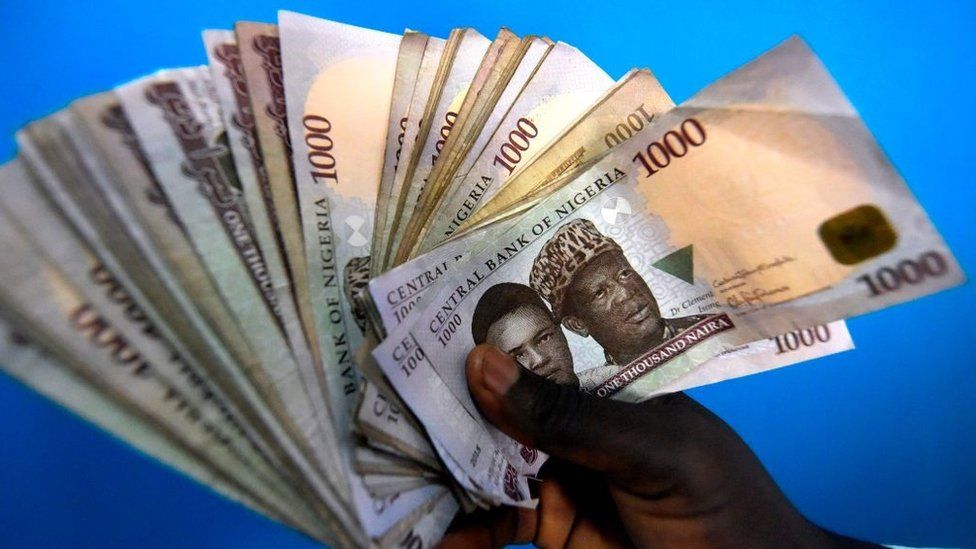
The challenges facing Nigeria’s next president are immense. Security has deteriorated drastically over the last few years, the country is in the midst of a cash crisis caused by a disastrous attempt to replace old naira bills with redesigned ones, inflation is soaring, and corruption is so widespread that the state barely functions. For many Nigerians, things can barely get worse and Obi – who is running against two well-established and well-funded candidates in their seventies – is promising to deliver prudence and accountability to a failing political system.
It feels like we’ve been here before. From Syriza in Greece to Barack Obama via Aung San Suu Kyi in Myanmar, recent history is full of examples of fawning journalists turning progressive political leaders and movements into deities that inevitably fail to live up to the hopes projected onto them.
Syriza came to power on an anti-austerity platform and then promptly proceeded to ignore the results of the 2015 Greek bailout referendum and accepted an austerity programme imposed by the EU and International Monetary Fund. Far from delivering hope, Obama’s underwhelming presidency laid the ground for the profound cynicism of Donald Trump’s administration. Suu Kyi, a Nobel Peace Prize laureate, refused to acknowledge the genocide of Rohingya Muslims in her country.
This trend is often far more pronounced in the developing world, which is largely ignored in between election cycles by the international media. Nigeria has profound and complicated political fault lines. Analysis of these divides is rare until election time and even then global audiences receive little more than a superficial overview.
Passing readers demand a narrative that is easy to comprehend and basic information on who to back so that they can feel invested in the race. And nothing is more engaging than an underdog story about a candidate who preaches western values, like Peter Obi. Often this turns flawed politicians into messianic revolutionaries who are arguably set up for failure. No wonder faith in journalists and politicians is so low when both are so guilty of overinflating the expectations of the public.
Recent coverage of Obi is evidence of this. He is presented as an anti-establishment outsider coming up against the two dominant forces in Nigerian politics, the All Progressives Congress (APC) and the Peoples Democratic Party (PDP). This picture doesn’t fit the reality. Obi has been involved in politics for nearly 20 years. He was the PDP’s vice-presidential candidate at the last election in 2019, running alongside Atiku Abubakar, a former vice-president, who, now 76, is once again the party’s nominee.
Like Atiku, Obi has been accused of corruption. His financial affairs were reported in the 2021 Pandora Papers leaks and Obi has admitted to owning several shell companies based in offshore tax havens and maintaining foreign bank accounts while holding political office, both of which violate anti-corruption laws in Nigeria.
Obi, who was governor of Anambra state in south-east Nigeria between 2006 and 2014, has publicly defended the Indigenous Peoples of Biafra (IPOB), a secessionist group that is officially listed as a terrorist organisation by the Nigerian government (though the UK has not listed the group as such). Nigerian officials say that IPOB bombings have killed dozens of civilians in the south-east, though the organisation denies involvement.
Security was also a significant blight on Obi’s period of governor. The local unit of the Special Anti-Robbery Squad (SARS) – a notorious branch of the Nigerian police that was dissolved in 2020 for engaging in widespread criminality – in the Anambra town of Awkuzu became known for detaining civilians on bogus charges, torturing and often murdering detainees. An Amnesty International report singled out Awkuzu SARS as one of the most brutal after it dumped the bodies of 35 victims in the Ezu river. Though the report was published after Obi left office, in an election where security is the number one issue, there is little in the politician’s track record to suggest that he is equipped to make the country safer. Or, for that matter, resolve any of the deep-rooted dysfunctions that plague the Nigerian state. His intentions may be genuine, but his ability to deliver on his promises is unclear.
A common criticism of the media is that it only reports bad news, but unrealistic optimism can also undermine faith in journalism. Because when the great new hope eventually fails to deliver the change that voters expect, people become even more jaded. Fatalism then sets in and the electorate grows ever more contemptuous of politicians. It would be uniquely troubling if this were to happen to Nigeria, because, with a median age of just 18 years, it is one of the world’s youngest nations and one of the fastest growing – by 2050, Nigeria is projected to overtake the US to become the third most-populous country after India and China.
If a “youthquake” does bring Obi to power on Saturday, we should all hope that he’s capable of living up to the glowing coverage that he has received from western journalists. If Nigerian readers do succumb to this hype and he fails to deliver on his promise, Africa’s largest democracy risks sinking into disillusion for generations to come. If it does, be certain that there are plenty of malign forces in Nigeria ready to exploit that.
Will youth voters break Nigeria's political status quo?
Polls and election commission figures suggest young voters could play a defining role in Nigeria's upcoming election. Many are flocking to Peter Obi, whose campaign has tapped into frustrations against the established parties.
RedPilChurchBoy: I had a feeling that this earthquake was manmade.
And one mumu US diplomat visited Turkiye immediately after the disaster urging them to quickly approve Sweedens NATO bid.
Your feelings do not help the cause of humanity in this instance. They simply muddy the waters
In the past century alone, Turkey has seen nearly 20 earthquakes of a magnitude 7.0 or above.
Seismic activity is so frequent in this area because it sits on three continually grating tectonic plates. This means the region has a history of earthquakes that stretches far beyond the previous century.
Dem dem don come again with #FakeNews Ask make dem pay attention for school, nah lie.
“I DO NOT WANT TO BE MISUNDERSTOOD”
Upon the spread of the post, Yıldırım made a statement on the subject on social media. In the messages he shared on February 15, he made the following statements:
“There are many questions about the video that has been circulating on social media for a few days. This short video is an excerpt from a conference I gave a long time ago at a strategy institute. I explained the weapon system that can wipe out a small city from the map when deployed and used in Earth orbit. This weapon system has no function such as triggering fault lines or creating tectonic earthquakes. Therefore, it has nothing to do with the Maraş disaster, which is a tectonic earthquake that occurred on a known fault line. I don’t want it to be misunderstood. The effect of this weapon is comparable to a meteorite impact.”
But checks by DAILY POST revealed that the social media post appeared to be false.
A source at the Kaduna State Urban Planning Development Agency, KASUPDA told our reporter during inquiries that there was no directive from the state government to demolish any bank.
”There is no instruction to bring down any bank that refuses to comply with the order asking banks to accept old naira notes from customers in the state.
“It was last year that those operating commercial businesses were asked to come and settle their ground rents, banks were not even included in the directive.”
Nigeria Sees Surge in Online Payments Amid Scarcity of New Cash
February 20, 2023 10:21 AM Timothy Obiezu
A Nigerian banking report shows the volume of electronic payments has surged following cash shortages caused by a currency redesign. The Nigeria Interbank Settlement System says transactions increased by 55% in January alone. While the surge is seen as a positive move toward a cashless society, experts say Nigeria still faces challenges with online payments. Timothy Obiezu reports from Abuja, Nigeria.
The Director General of the Atiku Okowa campaign council and Sokoto state Governor Aminu Waziri Tambuwal has accused the spokesman of the team as well the director of mobilization of pocketing some monies meant to be shared to members and stakeholders as mobilization fees in some Northern States.
Source please!
Update: Abuja Network News? I will sit this one out.
P.S - I know I have left the infestation of leprosy unattended to chase the flies it attracts. But this is because each of the leading candidates is banking on unwavering support from his own ethnic groups
Your Policies Hurting Ordinary Nigerians, Atiku Tells CBN
Atiku Abubakar, presidential candidate of People Democratic Party (PDP,) has assured Nigerians that if elected president in the forthcoming general elections he will ensure no one lose his legitimately earned money as a result of naira redesign policy.
Atiku via his social media handles appealed to the Central Bank of Nigeria (CBN) to allow commercial banks to collect old N500 and N1000 notes to ease the sufferings face by Nigerians.
He urged the apex bank to make the new notes available.
“The CBN currency policy is hurting ordinary citizens and those who legitimately earned their money. The apex bank should, as a matter of urgency, allow commercial banks to join the CBN in the collection of the deposits of old N500 and N1000 notes.
“The new currency should be immediately made available in sufficient quantities to alleviate the suffering of the masses.
“I assure you that when we come to power by the mandate of your votes, the PDP administration will not allow any Nigerian who legitimately earned their money to lose a single kobo of it.
“You can take that promise to the bank because our aim is to create prosperity and not to impoverish our people,” he said.
By Chiagozie Nwonwu, Fauziyya Tukur, and Yemisi Oyedepo BBC Global Disinformation Team
A BBC investigation has discovered that political parties in Nigeria are secretly paying social media influencers to spread disinformation about their opponents ahead of general elections in February.
The BBC's Global Disinformation Team has spoken to whistle-blowers working for two of Nigeria's political parties, and prominent influencers who have described it as "an industry".
The whistle-blowers say parties give out cash, lavish gifts, government contracts and even political appointments for their work.
We changed their names to protect their identity. "Yemi" is a prominent strategist and "Godiya" a politician.
"We've paid an influencer up to 20m naira ($45,000; £37,000) for delivering a result. We've also given people gifts. Other people prefer to hear: 'What do you want to do in government, be a board member, be a special assistant?'," says Godiya.
Situation rooms are commonplace in the run-up to an election. It's where political parties strategise, develop plans and monitor their campaigns' success. But in the rooms the whistle-blowers described to us, there was another function: following how false narratives assigned to influencers were performing.
Strategist Yemi says fake stories are developed to improve their candidates' chances: "You can deliberately misinform in a suitable way for you."
The BBC has spoken to multiple influencers who have confirmed that payment in exchange for false political posts is widespread.
One influencer who asked not to be named - with almost 150,000 Facebook followers - told us he is paid by political parties to post completely false stories about political opponents. He says he does not do it openly but rather plants false stories through other micro-influencers he hires.
Separately, Rabi'u Biyora is a major influencer known for supporting the governing All Progressives Congress (APC) party.
He told us he was "wooed" by an opposition party to stop promoting the APC's candidate, and give his support to their candidate instead.
Posts on his Facebook timeline confirm he did just that. He told us he did not receive gifts of any kind to do so. But we discovered a Facebook post from 2019 in which he said he received a car and money from a party in exchange for his support on social media.
We put this finding to him, but he stopped responding to us.
Tactics With an estimated 80 million Nigerians online, social media plays a huge role in national debates about politics. Our investigation uncovered different tactics used to reach more people on Twitter. Many play on divisive issues such as religious, ethnic and regional differences.
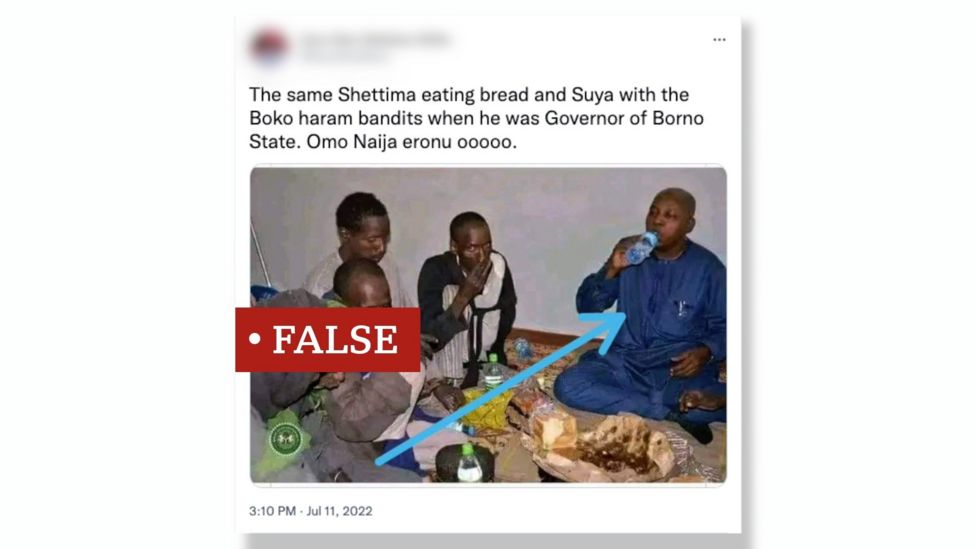
In July, influencers widely shared posts associating Kashim Shettima, the APC's candidate for vice-president, with members of the Islamist militant group Boko Haram.
This false narrative gained momentum on Twitter and was shared thousands of times, spilling onto WhatsApp and other platforms.
Using reverse image search, we found that those in the picture with Mr Shettima were nomadic Fulani parents whose children he had enrolled in secular schools in 2017, not members of Boko Haram.
A month later, influencers promoted a claim without evidence that Labour Party presidential candidate Peter Obi was linked to, and following orders from, the Indigenous People of Biafra (Ipob) - a separatist movement designated in Nigeria as a terror group. His party denies this.
Those who shared this information included Reno Omokri - special assistant to former opposition President Goodluck Jonathan - who has more than two million followers on Twitter.
When approached for a comment, Reno Omokri said he stands by his accusations, but insists he has not been paid by the main opposition People's Democratic Party (PDP) to campaign on their behalf.
Meanwhile, false claims that the PDP presidential candidate, Atiku Abubakar, fell ill and was rushed out of the country have been shared several times on Twitter.
Godiya, the politician we interviewed, says political parties tell influencers to elicit as much emotion as they can with their paid posts.
"We use images that may not even be relevant to the story we are trying to spin. We can take pictures from East Africa in the 1990s in warzones and attach them to a tweet about how my ethnic group is being killed. When people get emotional they retweet, they like, and it gets traction," she says.
According to the whistle-blowers, the hired influencers are sometimes given an idea that they should frame in their own words. At other times, they are given the actual tweets that need to be published at specific times.
They say influencers are paid based on the number of followers they have. They also say payment happens mostly in cash to avoid a paper trail.
Moral compass It is not illegal for political parties to hire social media influencers in Nigeria, but spreading disinformation on social media is a breach of the country's laws and Twitter's policy.
The BBC has asked Nigeria's main political parties, APC, PDP, and the Labour Party, about the whistle-blowers' allegations. They did not reply to our request for comment.
In response to our findings, Twitter has taken down some of the accounts we reported to them and said it had a responsibility to protect electoral conversations from interference, manipulation, and false information.
However, there are concerns about the platform's capacity to tackle misinformation in Africa after Elon Musk's takeover of the company, when its continental headquarters in Ghana was closed and nearly all its staff fired.
The BBC has reached out to Twitter again after these changes, but received no response.
Idayat Hassan, director at the Centre for Democracy and Development, says the activities of these influencers amounted to "political interference".
"It is undermining trust in democracy, undermining trust in the electoral system, and it is instigating conflict," she says.
But politician Godiya sees it a different way, and defends the tactic: "It is a game. Somebody had to win, and God help me, I will not be on the losing side."
AfricanColumbus: A lot of arguments are currently raging online on if the president's executive order should supercede a supreme court ruling.
This are few points to note, which are sacrosanct.
● The president is the number one citizen in the land and his directives are final.
● From above, a president's executive order can only be revoked by the president himself.
● From above, a president's executive order may be deemed unconstitutional, but in very rare cases.
● A president's executive order is hardly deemed unconstitutional because executive orders do pass through legislature for checking.
● From above, a president can decide to veto the legislature and give an executive order nonetheless, if deemed crucial.
● The three arms of government are equal truly, but the powers that be are lodged mainly in the executive (president).
● From above, the president is not under the judiciary and can overrule ANY ruling from the supreme court in a critical situation.
● The president who is also the overall head of the Nigerian armed forces can effect the immediate arrest of ANY governor in Nigeria. Though situations like this hardly arise.
Nigerians need to understand that there are no binding powers on the president of the federal republic. The president only has the "obligation" to respect the court orders. It is not binding on him. A presidential executive order supercedes any order in the land.
cc BluntCrazeMan
Mr Teacher, what executive order informs your post. Executive order no dey get number again?
thenewsc: Against the judgment of the Supreme Court, the Central Bank of Nigeria has issued a statement noting that old naira notes of N200, N500, and N1000 have ceased to be legal tender.
If you are going to heat up the polity, at least have the decency to provide an authoritative source!
What is it with trigger-happy Nairalanders who seem to relish making the blood boil?
The Governor of the Central Bank of Nigeria, Godwin Emefiele, has said that there was no need to shift the February 10, 2023 deadline.
He said this during a visit on Tuesday to the Ministry of Foreign Affairs, to discuss the monetary and currency redesign policy of the bank.
He said, “The situation is substantially calming down since the commencement of over-the-counter payments to complement ATM disbursements and the use of super-agents.
FFK, why don't you just admit you are highly to susceptible to conspiracy theories. That no bridge is considered too far where your overactive imagination is concerned.
Let FFK, the flame-thrower, carry his own Jerry can. Perhaps in future he will become more judicious in #FactChecking the claims he throws around, no matter the temptation or attraction.
Nigeria's leading conspiracy theorist needs to study the travails of Alex Jones.
Okealaaye: In any case, he wasn't the first politician to do that! Obi is following the example of Zik of Africa who appropriated the Alhaji Ibrahim Waziri founded Nigerian Peoples Party in1978. He made it a wholly Igbo party just as Peter Obi has converted Labour Party to an Igbo party today. Earlier in 1946 after the death of Herbert Macaulay who founded Nigerian National Democratic Party, Azikiwe who used to be the General Secretary, appropriated the party structures and made it an all-Igbo party. Nnamdi Azikiwe never founded any political party throughout his political "Odyssey". Obi is following in his footsteps. It is in the blood.
Thanks for the trip down memory lane. I am however not sure if your qualification here advances Peter Obi's interests or detracts from it - in view of what opportunism is and the following...
"...The original intention of NPP was to transcend the politics of ethnicity and to promote the cause of both the prominent ethnic groups and ethnic minorities. However, the entry of Nnamdi Azikiwe to NPP led to a power struggle in which Waziri lost. Waziri then led a group of minorities in the north and some southerners to form the Great Nigeria Peoples Party." Source: Wikipedia
No matter what Nigerians have gone through in the hands of this administration, give it to them when it comes to this game of politics. PDP na novice for the game and unfortunately many Nigerians are falling for the antics of APC.
Some people up till now still believe Buhari is working against Tinubu. The same Buhari that appointed the CJN that perfecting all their cases in supreme court, Buhari that all he had to do was to just mention one person's name at that APC primaries and delegates will queue behind that person but he didn't.
Look at the same Malami that was challenging supreme court judgement on the currency redesign (all na for the show), I told somebody that the date would be shifted, that was the plan from the onset.
With all these drama playing out now, Tinubu doesn't have the burden of Buhari's incompetence resting on his shoulders again, he is rather now the victim that some invisible cabal are struggling for him not to come and rescue Nigeria from the same party he belongs to.
Political Juggernaut I call it.
We learn everyday
Isn't it a shame though that we are saddled with a political CBN Governor and a political Attorney General at this point in our nation's development?
What you joyfully call a 'political juggernaut' ought to be seen for what it truly is - the underpinnings of state capture!
So help me understand this: Sekibo embraced the brigandage in his face-off with Nigeria's most thugged-out governor? Clearly there was only going to be one winner. For now.
Homefingers: Nigeria do not mint her own currency.
They come from Eastern Europe or Asia
Your assertion is completely at odds with the view expressed by the Managing Director of MINT, Mr.Ahmed Halilu, Whose opinion carries more weight in these matters?
Mr. Halilu said that his company has been meeting the currency needs of Nigeria “with the support of the Central Bank of Nigeria since 2014 and Nigeria has achieved zero importation of currency, developed local capacity and, to an extent, conserved foreign exchange within this period,” and that it would maintain international standards in producing the Naira.
With chaos spreading due to the scarcity of new naira notes, Nigeria’s attempt to replace its high-denomination currency notes less than a month before a crucial general election has put a spotlight on the local capacity of Nigeria’s print company.
In Africa’s biggest economy, lengthy queues are the new norm at banking halls and Automated Teller Machines (ATM) as most Nigerians struggle to access money in a slow-growing economy still largely reliant on cash transactions.
BusinessDay gathered that there is a level of secrecy surrounding the actual volume or value of new naira notes in circulation since the Central Bank of Nigeria (CBN) introduced the new N200, N500 and N1,000 notes as legal tender in December 2015.
Findings showed the scarcity of the new naira has raised questions on the capacity of Nigerian Security Printing and Minting plc (NSPM) to meet printing demands, especially considering the short time frame.
“The system has never been tested for the kind of demand we are seeing,” a source familiar with the minting company operations.
NSPM’s latest data show that the company has an installed capacity to produce four billion pieces of banknotes per annum. In 2020, a total of 2.52 billion pieces of banknotes were produced, compared with 3.05 billion pieces of banknotes in 2019. This represented a decrease of 529.31 million pieces or 17.37 percent.
“The timing and implantation of the new naira showed a lack of understanding Nigeria’s domestic terrain,” a source told BusinessDay.
The NSPMC, also known as The Mint, was established in 1963 with the objective of producing the nation’s currency notes and coins for the CBN as well as security documents for ministries, departments and agencies of government, banks and other blue-chip companies.
Data from the World Bank showed there are 16 ATMs per 100,000 adults in Nigeria. This means for a population of at least 200 million people there are at least 32, 000 ATMs across the federations.
Putting a minimum of one million in each of these ATMS will require daily cash of N32 million, BusinessDay’s calculations show.
“They don’t have the structure to meet this demand irrespective of the cashless policy being championed,” another source said.
The chief financial officer of one of Nigeria’s biggest lenders told BusinessDay that commercial banks are not receiving enough naira notes from NSPM through CBN to meet local demand.
“I agree that some banks misbehave in terms of hoarding but those are the outliers; we shouldn’t ignore the fact that the central bank is simply not printing enough. There is simply not enough,” a senior executive in Nigeria’s banking sector said.
He added, “There is no money anywhere – our daily consumption is around N4 billion, but the CBN now gives us a maximum of N1 billion which we have to ration across the branches and ATMs.”
When grilled by members of the House of Representatives during a plenary session, Aishah Ahmad, the deputy governor of CBN, said she did not know “how much was printed of the new naira notes”.
“We ordered 500 million pieces of currency from the Mint but I can’t provide accurate figures on the exact amount printed,” Ahmad said. Her response caused a stir in the chamber as the lawmakers wondered why she would not be aware of the figure.
After adjusting for the 2022 average inflation rate, BusinessDay’s calculation showed the cost of printing the new naira notes may cost Africa’s biggest economy N77.6 billion while another cost of N6billion would be incurred distributing the new naira notes across the 36 states and the Federal Capital Territory (FCT).
“It’s a big distraction. It’s going to impose lots of costs on the economy. It’s not going to be cheap. We are talking about printing N3.3 trillion currency notes,” said Muda Yusuf, the executive director, the Centre for the Promotion of Private Enterprise (CPPE) and former director-general of the Lagos State Chamber of Commerce (LCCI).
Data sourced from CBN showed the logistic cost of printing new naira notes jumped by 75 percent from N33.3 billion in 2016 to N58.6 billion in 2020. The cost of printing the new naira stood at N49.5 billion in 2017; N64 billion in 2018 and N 75.5 billion in 2019.
Further breakdown showed the cost of distributing the naira decreased by 21 percent to N4.5 billion in 2020 from N5.7 billion in 2018.
After adjusting for the average inflation rate, BusinessDay’s estimation showed the cost of distributing the new naira notes hit N5.3 billion in 2021 and N6.0 billion in 2022.
“At a time when the government is grappling with high fiscal deficit, debt crisis, severe revenue crisis and underfunding of many government projects and programmes, it is most inappropriate to embark on such a profligate exercise.
“Currency as a percentage of money supply is less than seven percent. The exercise, therefore, has no monetary policy significance,” said Yusuf.
He added that there were more urgent issues demanding the attention of the CBN.
“We have issues with liquidity in the foreign exchange market, the depreciating currency, the recent Moody’s downgrade of Nigeria, soaring inflation, and many more,” he said.
 Politics › Re: Is Peter Obi Nigeria’s Saviour Or A Western Delusion? - The Newstatesman by Talawaka(op): 4:53pm On Feb 24, 2023