Ezeagu's Posts
Nairaland Forum › Ezeagu's Profile › Ezeagu's Posts
1 2 3 4 5 6 7 8 ... 125 126 127 128 129 130 131 132 133 (of 349 pages)
 Culture › Re: Igbo Architecture | Ụlọ omé n'Ìgbò by ezeagu(op): 5:31pm On Aug 11, 2012 Culture › Re: Igbo Architecture | Ụlọ omé n'Ìgbò by ezeagu(op): 5:31pm On Aug 11, 2012 |
| Culture › Re: Igbo Architecture | Ụlọ omé n'Ìgbò by ezeagu(op): 5:22pm On Aug 11, 2012 |
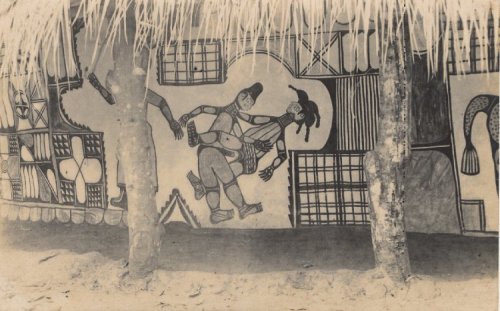
https://25.media.tumblr.com/tumblr_m5fcndnLkU1qjh37to1_500.jpg "Bird-like creature giving birth to a human in an Mbari (beauty earth godess shrine)." |
| Culture › Re: Igbo Architecture | Ụlọ omé n'Ìgbò by ezeagu(op): 5:22pm On Aug 11, 2012 |
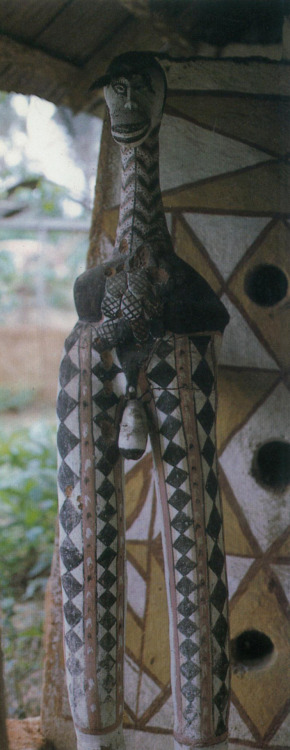
Imo area. Mbari house. https://25.media.tumblr.com/tumblr_m5fcyokrKR1qjh37to1_500.jpg "Mbari temple house." |
| Culture › Re: Igbo Architecture | Ụlọ omé n'Ìgbò by ezeagu(op): 5:20pm On Aug 11, 2012 |
Roofing structure. Thatch. Now Abia State. https://24.media.tumblr.com/tumblr_lv1k6aekew1r2dz47o1_500.jpg "Abiriba" |
| Culture › Re: Igbo Architecture | Ụlọ omé n'Ìgbò by ezeagu(op): 5:18pm On Aug 11, 2012 |
This is a masquerade, but it's so big that it can be considered architecture (like a tent/tipi). Omambara region. https://24.media.tumblr.com/tumblr_m7txi0fMsE1qjh37to1_500.jpg "IJELE UNDER CONSTRUCTION BY NWEKE KOGULU AND THREE ASSISTANTS AT UMUEZEDE ACHALLA IN 1983. THE MASK WAS LATER DISPLAYED AT THE 1984 EXHIBITION “IGBO ARTS COMMUNITY AND COSMOS,” OR-GANIZED BY THE MUSEUM OF CULTURAL HISTORY UCLA. — Richard N. Henderson and Ifekandu Umunna" |
| Culture › Re: Igbo Architecture | Ụlọ omé n'Ìgbò by ezeagu(op): 5:16pm On Aug 11, 2012 |
Not really a detailed picture, but you can get a good idea of the planning of the compound. https://25.media.tumblr.com/tumblr_m7vxhyXQ4J1qjh37to1_500.jpg "PERSONAL SHRINE TO THE COURTYARD EARTH IN THE ANCESTRAL HOUSE OF JERRY UGBO, ONITSHA. — Richard N. Henderson and Ifekandu Umunna" |
| Culture › Re: Igbo Architecture | Ụlọ omé n'Ìgbò by ezeagu(op): 5:15pm On Aug 11, 2012 |
https://24.media.tumblr.com/tumblr_m7xlouaRpU1qjh37to2_500.jpg "CHUKUEGGU S “MBARI CULTURAL ART CENTRE” AT HIS HOME IN MBAISE, NORTH OF THE REGION OF TRADITIONAL CLAY MBARI HOUSES. NOTE THE VERBAL AND VISUAL EMPHASIS ON INDIGENOUS CULTURE. — Herbert M. Cole" |
| Culture › Re: Igbo Architecture | Ụlọ omé n'Ìgbò by ezeagu(op): 5:15pm On Aug 11, 2012 |
https://24.media.tumblr.com/tumblr_lw35omyJXw1qjh37to1_500.jpg Mural on an Mbari temple of the Oratta Igbo. |
| Culture › Re: Igbo Architecture | Ụlọ omé n'Ìgbò by ezeagu(op): 5:11pm On Aug 11, 2012 |
https://24.media.tumblr.com/tumblr_m8jz18I4SW1qjh37to1_500.jpg "Elogo obiogo, the resthouse of Elogo ward, Mgbom village, Afikpo Village-Group, Nigeria. The Afikpo village is variable in size but its fundamental structure consists of a grouping of major patrilineages, often divided into wards, around a central common or several commons, with its resthouse and ward shrines. Mgbom village is composed of three main wards of fifteen compounds, Agbogo (lower village), Elogo (upper village) and Amozo. The resthouse, the central gathering place for the ward men, is a place to sit and roast yams, and sometimes sleep. From the house they can watch persons come and go in the common and hear the latest news from the other villages, discuss some dispute or case, or learn what plans the Europeans or educated Nigerians are now hatching. [Ottenberg S., 1971: Leadership and Authority in an African Society; the Afikpo Village-Group. University of Washington Press]." |
| Culture › Re: Igbo Architecture | Ụlọ omé n'Ìgbò by ezeagu(op): 5:10pm On Aug 11, 2012 |
https://25.media.tumblr.com/tumblr_m8k6uf4H9z1qjh37to1_500.jpg "Tom Ibe, my field assistant wearing okpu ngwo (hat-raffia). Diviners (dibia) use it when carrying sacred objects for swearing an oath somewhere, but anyone can do so when it rains. Ancient hat form rarely seen nowadays. Note that it was used in Afikpo Yam Priest’s compound the day of first cooking of new yams. [Ottenberg field research notes, September 1959-December 1960, Part I]." |
| Culture › Re: Igbo Architecture | Ụlọ omé n'Ìgbò by ezeagu(op): 5:09pm On Aug 11, 2012 |
https://25.media.tumblr.com/tumblr_m8b3zz3uj21qjh37to1_500.jpg Igbo yam market, J Stocker, 1880-1939. |
| Culture › Re: Igbo Architecture | Ụlọ omé n'Ìgbò by ezeagu(op): 5:08pm On Aug 11, 2012 |
https://25.media.tumblr.com/tumblr_m8clr5J1fP1qjh37to1_500.jpg "The compound is called Ezi followed by the name of its founder, who is also usually the original ancestor of the patrilineage. The houses in many compounds, particularly those increasing in population, are built wall to wall and back to back, separated by narrow alleyways and streets winding tortuously here and there. There is usually a separate house for each man and for each woman and her children. New houses in the compound are constructed for a person by young age sets in the major lineage under the watchful eye of the uke ekpe grade and the major lineage elders. Any male member, or any independent woman associated with a minor patrilineage may erect a house on unused compound land. Once built, the house and the land on which it stands become the property of the minor patrilineage. [Ottenberg S., 1968: Double Descent in an African Society; the Afikpo Village-Group. University of Washington Press]." |
| Culture › Re: Igbo Architecture | Ụlọ omé n'Ìgbò by ezeagu(op): 3:42pm On Aug 11, 2012 |
[img]http://1.bp..com/_Stxpm3xeRpI/SYSmIAqquNI/AAAAAAAAAQE/tly0YrjEla8/s1600/Site+3+-+Side+buttress.JPG[/img] [img]http://3.bp..com/_Stxpm3xeRpI/SYSmIHMAbqI/AAAAAAAAAP8/X62fFDNPciM/s1600/Site+3+-+god.JPG[/img] [img]http://1.bp..com/_Stxpm3xeRpI/SYSmH1x3dAI/AAAAAAAAAP0/tj1b-jrzisk/s1600/Site+3+-+Python+symbol.JPG[/img] [img]http://4.bp..com/_Stxpm3xeRpI/SYSmHzXiRiI/AAAAAAAAAPs/BETC0g3NJ10/s1600/Site+3+-+messenger+to+the+god.JPG[/img] "Site 3 (Plate 48 in Cole) CLEMENT OPARA (Informant) Umunan, in Imerienwe The goddess of this Mbari is Uramarukwa who is a river goddess. She protects people from evil in this village. Built before 1947 might be late 30’s. Between 1929 when the women rioted and before 1941 before the second World War. He inherited the Mbari from his father, OPARABCHA EKEODA. Materials: The red earth has come from far and is symbolic, in that its importance is really that it is a natural material and that cement is an invention not nature - so that even if they had cement it would still be made of earth. It symbolises the Igbo’s relationship to the earth. It shows an identity." http://wwwmbari..co.uk/2009/01/121108-site-3.html |
| Culture › Re: Igbo Architecture | Ụlọ omé n'Ìgbò by ezeagu(op): 3:38pm On Aug 11, 2012 |
[img]http://1.bp..com/_Stxpm3xeRpI/SYTIXWjxcaI/AAAAAAAAASc/y0jMHaqhG0c/s1600/Site+4.JPG[/img] [img]http://2.bp..com/_Stxpm3xeRpI/SYTIXbWaH8I/AAAAAAAAASE/xItXR1bvxFs/s1600/Site+4+-+Ala.JPG[/img] Ala earth deity at Mbari house. "UMUGOT (Village), ORITSHEZE in NGOR-EKPAL LGA." From: http://wwwmbari..co.uk/ |
| Culture › Re: Igbo Architecture | Ụlọ omé n'Ìgbò by ezeagu(op): 3:36pm On Aug 11, 2012 |
Run down Mbari houses, "UMUGOT (Village), ORITSHEZE in NGOR-EKPAL LGA." [img]http://1.bp..com/_Stxpm3xeRpI/SYTJ_PryGEI/AAAAAAAAATE/ZoHRjkgBk_Q/s1600/Site+4+-+Umugot+Oritsheze+in+Ngor-Ekpal+LGA+.JPG[/img] [img]http://1.bp..com/_Stxpm3xeRpI/SYTJ_FJ6GeI/AAAAAAAAAS8/zg5MssLyo64/s1600/Site+4+-+painting.JPG[/img] From: http://wwwmbari..co.uk/ |
| Culture › Re: Igbo Architecture | Ụlọ omé n'Ìgbò by ezeagu(op): 3:30pm On Aug 11, 2012 |
https://24.media.tumblr.com/tumblr_m7dju1SpuF1qjh37to1_500.jpg "SHRINE TO THE GODDESS EKE AT UKE MARKET, NEWLY REPAINTED WITH ULI DESIGNS ON THE OCCASION OF THE EKE FESTIVAL, 1987. CARVED LIFE-SIZE FIGURES OF MINOR DEITIES AND SPIRITS (NKWU) ARE ALSO RECLOTHED AND REDECORATED. IN EARLIER TIMES THESE FIGURES WOULD HAVE BEEN DECORATED WITH ULI PAINTING. — Liz Willis" |
| Culture › Re: Igbo Architecture | Ụlọ omé n'Ìgbò by ezeagu(op): 3:26pm On Aug 11, 2012 |
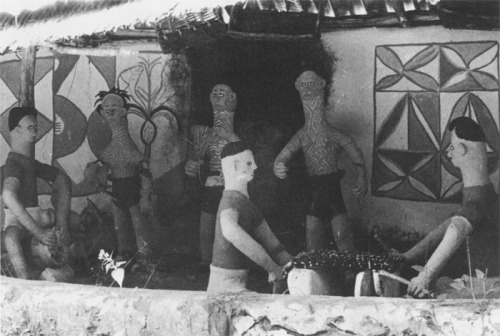
https://24.media.tumblr.com/tumblr_m7xmbuaeNz1qjh37to1_500.jpg "AKAKPORO’S APPRENTICE GODWIN MODELS A STANDING MAN IN THE NNOBIE HOUSE. AN ARMATURE OF GREEN WOOD HOLDS THE “YAM” IN PLACE. — Herbert M. Cole, 1969." |
| Culture › Re: Igbo Architecture | Ụlọ omé n'Ìgbò by ezeagu(op): 9:53pm On Aug 10, 2012 |
Building behind. Igbuzo, Delta State. [img]http://1.bp..com/_jeBv7EEofYQ/TVLTE_LpJfI/AAAAAAAAAPU/Dof8UpeBBJE/s1600/Young%2BIgbuzor%2Bwomen.jpg[/img] "YOUNG IBO WOMEN OF IBUZA, ASABA DISTRICT, WITH CICATRIZED DESIGNS ON BODIES. — Kitson Location: Igbuzor, Aniocha, Alaigbo | Date: ?Unsure?, Before 1912 | Credit: A. E. Kitson" |
| Culture › Re: Igbo Architecture | Ụlọ omé n'Ìgbò by ezeagu(op): 9:49pm On Aug 10, 2012 |
[img]http://africa.si.edu/exhibits/inscribing/images/eduimages/3.-Uli-Adams-fig-14LG.jpg[/img] "Uli artist Agbaejije Anunobi creating a mural on an obi, a men's meetinghouse Photograph by Sarah Adams, 2000 Uli is a historically ephemeral form of mural and body painting practiced predominantly by female artists in Igbo-speaking regions of southeastern Nigeria. Once very common in southeastern Nigeria, Uli body and mural painting were used in different contexts depending on the region. In some areas, commissioned artists painted shrines annually for local festivals. In other areas, artists painted their own homes or compound walls in honor of specific events, such as title takings or weddings. In the 1970s, the Nsukka Group-contemporary artists associated with the University of Nigeria, Nsukka-drew inspiration from uli and nsibidi designs. Incorporating the designs into their works and experimenting with their forms and meanings, these artists created yet another context in which these graphic systems thrived. Artists in the group included Tayo Adenaike, El Anatsui, Chika Aniakor and Ada Udechukwu, Obiora Udechukwu, Olu Oguibe and Uche Okeke." |
| Culture › Re: Igbo Architecture | Ụlọ omé n'Ìgbò by ezeagu(op): 4:53pm On Aug 10, 2012 |
https://24.media.tumblr.com/tumblr_m8gop3TEYk1qjh37to1_500.jpg "Carved figure in front of Juh-Juh House, Arochuku. Macalister, Donald A. “The Aro Country, Southern Nigeria.” The Scottish Geographical Magazine, Vol. XVIII, No. XII. 1902." |
| Culture › Re: Igbo Architecture | Ụlọ omé n'Ìgbò by ezeagu(op): 1:08am On Aug 10, 2012 |
| Politics › Re: Enugu, The Pride Of The East. by ezeagu(m): 1:35am On Aug 09, 2012 |
Ndi Enugwu (Ngwo, Nike, Agbaja, Nsukka, etc) are the most civilised and welcoming Igbo people, which is why there's no surprise that it can develop without oyel and is considered the Igbo capital. |
| Politics › Re: Why Does The Whole Nigeria Tremble At The Hearing Of Igbo Secession? by ezeagu(m): 1:32am On Aug 09, 2012 |
I also want to know the reason. |
| Culture › Re: Igbo Architecture | Ụlọ omé n'Ìgbò by ezeagu(op): 1:05am On Aug 09, 2012 |
https://25.media.tumblr.com/tumblr_m7dct7qsG21qjh37to1_500.jpg "ULI MOTIFS ON A SHRINE TO THE SPIRIT OGBANJE. AGULU, 1987. — Liz Willis" |
| Culture › Re: Igbo Architecture | Ụlọ omé n'Ìgbò by ezeagu(op): 1:01am On Aug 09, 2012 |
https://24.media.tumblr.com/tumblr_m7xlouaRpU1qjh37to1_500.jpg "CHUKUEGGU S “MBARI CULTURAL ART CENTRE” AT HIS HOME IN MBAISE, NORTH OF THE REGION OF TRADITIONAL CLAY MBARI HOUSES. NOTE THE VERBAL AND VISUAL EMPHASIS ON INDIGENOUS CULTURE. — Herbert M. Cole" |
| Culture › Re: Igbo Architecture | Ụlọ omé n'Ìgbò by ezeagu(op): 1:00am On Aug 09, 2012 |
https://24.media.tumblr.com/tumblr_m8af20BgSO1qjh37to1_500.jpg "Head and neck of a female figure, with painted face and elaborate hairstyle or headdress. Setting is interior of Mbari house. J Stocker, 1880-1939." |
| Culture › Re: ~~~~Blacks Of The New World~Trace Their Blood~~~~ by ezeagu(m): 12:16am On Aug 09, 2012 |
Black Kenichi: Also elongated heads are quite common among West Africans! It's not just a West African Sahelian thing, it's also West Sudanian Savvanah phenotype.I thought it was 'Windward'. Anyway, yeah, he looks Fon (Benin) which is the most common ancestry of Haitians. |
| Culture › Re: Igbo Mask? by ezeagu(m): 12:13am On Aug 09, 2012 |
That's a maiden spirit mask, it's actually a depiction of a young female spirit, or deceased girl (that hair style used to be popular among Igbo women). As far as I know, this mask is wood, the Romans used metal for their helmets no? |
| Culture › Re: ~~~~Blacks Of The New World~Trace Their Blood~~~~ by ezeagu(m): 10:10pm On Aug 08, 2012 |
Those test only show a small part of ancestry though. Like Forrest Whittaker, although he does look like where he comes from. It's the same for those of African descent whose ancestry comes out as Irish. |
| Culture › Re: ~~~~Blacks Of The New World~Trace Their Blood~~~~ by ezeagu(m): 7:27pm On Aug 08, 2012 |
PhysicsQED: I like how everybody is being claimed to be either Senegambian, Akan, Yoruba, or Igbo.Those are the most common results nau. |
| Culture › Re: ~~~~Blacks Of The New World~Trace Their Blood~~~~ by ezeagu(m): 2:07am On Aug 08, 2012 |
I made a thread similar to this sometime ago. Michael Jordan - Cameroon/Wolof/Senegambia Shelly-Ann Fraser-Pryce - Akan/Ghana Spike Lee - Yoruba/Mix Curtis Jackson - Akan/Ghana (I said this in the other thread) Eddie Murphy - Mbundu/Congo Angola (see Patrice Lumumba) Floyd Mayweather Jr - Igbo/Congo (father: Congo) Flava Flav - Congo/Angola/Mix (see Otta Benga) Forest Whitaker - Igbo (Proven) Snoop Dogg - Fulani/Kanuri Kevin Garnett - Songhai/Mali Michael Jackson - Congo/Cameroon Remy Ma - Hausa/Cameroon Denzel Washington - Cameroon/Ivory C. Terrence - Ewe/Cameroon Notorious B.I.G. (RIP) - Yoruba/Fon/Togo DJ Kool Herc Igbo/Congo/Wolof Naomi Campbell - Sierra Leone/Igbo/Cameroon (see Isha Sessay Perri Shakes-Drayton - Congo |
| Culture › Re: Igbo Architecture | Ụlọ omé n'Ìgbò by ezeagu(op): 3:23am On Aug 07, 2012 |
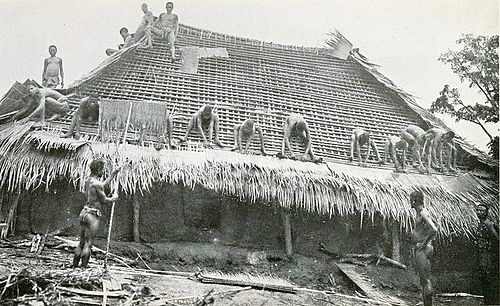
https://upload.wikimedia.org/wikipedia/commons/thumb/6/6e/Igbo_palm_thatch.jpg/500px-Igbo_palm_thatch.jpg Thatching with palm leaf mats, among the Igbo people. Basden, G. T. Among the Ibos of Nigeria. Philadelphia: J.B. Lippincott, 1921, pg. 168. |




1 2 3 4 5 6 7 8 ... 125 126 127 128 129 130 131 132 133 (of 349 pages)