Ezeagu's Posts
Nairaland Forum › Ezeagu's Profile › Ezeagu's Posts
1 2 3 4 5 6 7 8 ... 127 128 129 130 131 132 133 134 135 (of 349 pages)
 Culture › Re: Igbo Architecture | Ụlọ omé n'Ìgbò by ezeagu(op): 5:10pm On Aug 05, 2012 Culture › Re: Igbo Architecture | Ụlọ omé n'Ìgbò by ezeagu(op): 5:10pm On Aug 05, 2012 |
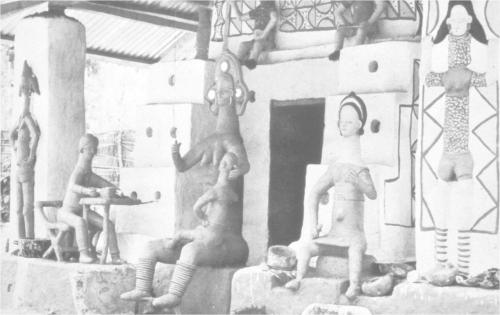
Mbari, Imo State. I don't know much about all this, but the Mbari's seem to have a big range of styles and forms, such as the round or square pillars. https://25.media.tumblr.com/tumblr_m893joA6y71qjh37to1_500.jpg "IGBO MBARI house (near OWERRI) Igbo Mbari shrine. The building is square with pointed thatched-roof raised on pillars. Pillars are painted with patterns and spots. Figures, which appear to represent adult females, sitting between pillars. — William Fagg, 1946." |
| Culture › Re: Igbo Architecture | Ụlọ omé n'Ìgbò by ezeagu(op): 5:07pm On Aug 05, 2012 |
Enugu State. Igbo clay armchair. I find this photo funny, maybe because of how much armchairs are associated with Western culture, and then there's one Igbo one made with clay. In my mind, the armchair looks like one that would be sat in front of a TV so it's funny to think of Igbo people from 18th century and back watching TV on clay armchairs. (I know TVs didn't exist then). https://24.media.tumblr.com/tumblr_m88u2cuKnl1qjh37to1_500.jpg "NGWO AMANKWO ETITI. Compound of Ozo Ejinwa Emeone Uzude. Verandah of dwelling with clay armchair facing the entrance. — Zbigniew Dmochowski" |
| Culture › Re: Igbo Architecture | Ụlọ omé n'Ìgbò by ezeagu(op): 4:55pm On Aug 05, 2012 |
The origin isn't noted. The house has quite thick walls. I think I can see a compound wall in the background, but not all Igbo houses were surrounded with compound walls. https://24.media.tumblr.com/tumblr_m88yprT8db1qjh37to1_500.jpg "Nigeria, Igbo house. Single-storey, thatched roof building with a relief pattern on the exterior walls which appears to depict animals. Edward Chadwick. 1927-1943." |
| Culture › Re: Igbo Architecture | Ụlọ omé n'Ìgbò by ezeagu(op): 4:49pm On Aug 05, 2012 |
This picture was posted earlier but here's a higher resolution. The temple would be long gone since Mbari houses are left to decay as a sacrifice to the earth goddess. https://25.media.tumblr.com/tumblr_m88y40q7JV1qjh37to1_500.jpg "Nigeria, view of Oratta Igbo Mbari house. Thatched-roof has several points. Sculptures and wall-paintings are visible inside the building. — Edward Chadwick, 1927-1943" |
| Culture › Re: Igbo Architecture | Ụlọ omé n'Ìgbò by ezeagu(op): 4:47pm On Aug 05, 2012 |
I don't know if this is a place for sleeping, or just a living room, but there seems to be some kind of beds, maybe mud benches. https://24.media.tumblr.com/tumblr_m88yn5Jucs1qjh37to1_500.jpg "BENDE OZUABAM. Compound of Kalu Ufere. — Zbigniew Dmochowski" |
| Culture › Re: Igbo Architecture | Ụlọ omé n'Ìgbò by ezeagu(op): 4:38pm On Aug 05, 2012 |
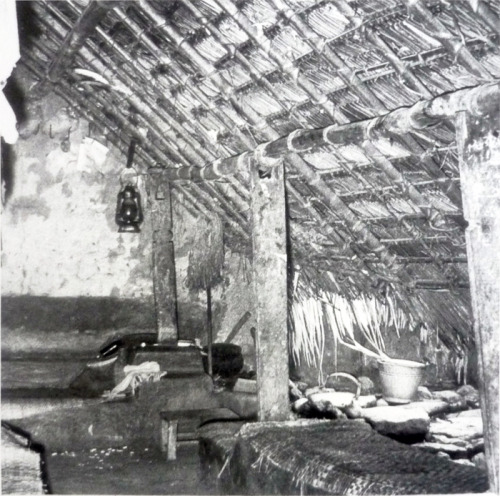
A bed. The bed is a "sorcerers" bed, but it's probably how many other beds were built (I've seen this kind of bed in a house built with mud). The environment doesn't seem to be primarily for living (it seems like a religious room), so it may be simpler than other beds. https://25.media.tumblr.com/tumblr_m893bbnG611qjh37to1_500.jpg "ABAM NDI OKEREKE. Mgbaja of Ochu Kalu. Room with sorcerers bed. — Zbigniew Dmochowski" |
| Culture › Re: Igbo Architecture | Ụlọ omé n'Ìgbò by ezeagu(op): 4:35pm On Aug 05, 2012 |
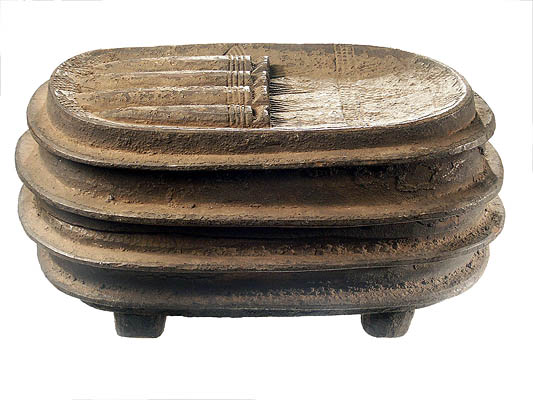
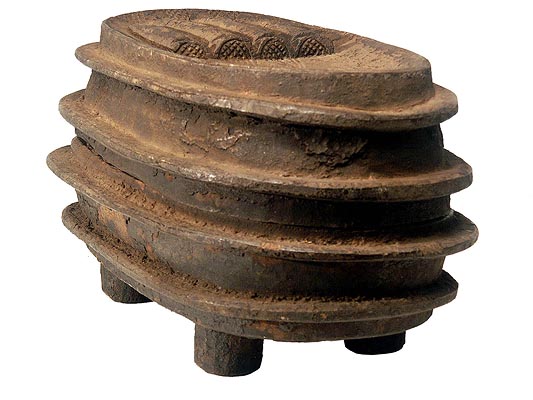
Crayola1:Here's some furniture. Some kind of box: https://24.media.tumblr.com/tumblr_m8971dcPEY1qjh37to1_500.jpg https://24.media.tumblr.com/tumblr_m8971dcPEY1qjh37to2_500.jpg "Igbo staff of authority box Height: 15 centimetres Width: 28.5 centimetres Depth: 19 centimetres “If a sacrifice is to be made some then few yards of OFO is placed inside and carried by a small boy (OKWA = bowl).” M Jeffery’s. ’Acquired’ in 1954 for the British Museum." |
| Culture › Re: Igbo Architecture | Ụlọ omé n'Ìgbò by ezeagu(op): 2:46pm On Aug 05, 2012 |
Abia State, near Umuahia. https://24.media.tumblr.com/tumblr_m88sqcJ9Kn1qjh37to1_500.jpg BENDE AGBODIHIDI. Meeting house: interior facing the entrance. — Zbigniew Dmochowski |
| Culture › Re: Igbo Architecture | Ụlọ omé n'Ìgbò by ezeagu(op): 2:44pm On Aug 05, 2012*. Modified: 3:19pm On Aug 22, 2012 |
Igbo compound with remains of what looks like some formal pavement which seems to form pathways in the compound. From Umuatugbona which is part of the Okunano or Awkwunano community in what is now Enugu State. More about them: http://www.awkunanaw.org/Awkunanaw%20Towns.htm https://24.media.tumblr.com/tumblr_m88p0jSAKu1qjh37to1_500.jpg UMUATUGBONA. South elevation of Alum Ogbodo’s house [Notice pavement] — Zbigniew Dmochowski, Introduction to Nigerian Traditional Architecture: South Eastern Nigeria v. 3. |
| Culture › Re: Igbo Architecture | Ụlọ omé n'Ìgbò by ezeagu(op): 2:39pm On Aug 05, 2012 |
Ihe iberibe. Forget it, I tried to post an Igbo pillar and it kept banning me. I'll try and post it after. 1 Like |
| Culture › Re: Igbo Architecture | Ụlọ omé n'Ìgbò by ezeagu(op): 1:30pm On Aug 05, 2012*. Modified: 2:14pm On Aug 06, 2012 |
[Hidden repost] |
| Culture › Re: Igbo Architecture | Ụlọ omé n'Ìgbò by ezeagu(op): 11:49am On Aug 05, 2012*. Modified: 2:15pm On Aug 06, 2012 |
[Hidden repost] |
| Culture › Re: Igbo Architecture | Ụlọ omé n'Ìgbò by ezeagu(op): 4:51am On Aug 05, 2012*. Modified: 2:15pm On Aug 06, 2012 |
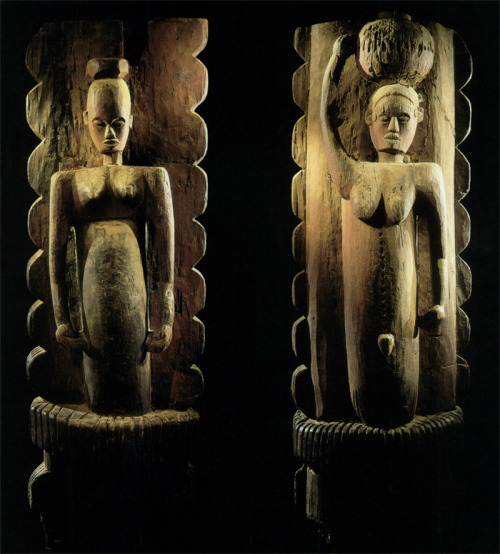
Igbo pillar, maybe to support houses although there's no information. (one pillar with reversed faces). https://24.media.tumblr.com/tumblr_m88nfiZ2QE1qjh37to1_500.jpg Grand Pilier IBO Face et Revers Hauter : 1,89 m emer - Photographe M. GUÉRIN MAUDE & RENÉ GARCIA GALLERIE 66 Seems to be a woman and maybe a man. The pillers may have been used to hold up a house although it's possible that it was just decoration. The origin and the use of the pillers are unknown but they look similar to the pillars and decoration in the Abiriba house. There are no Nri-looking influence on them like the scarification, so they may not be from that side. |
| Culture › Re: Igbo Architecture | Ụlọ omé n'Ìgbò by ezeagu(op): 1:50am On Aug 05, 2012 |
https://24.media.tumblr.com/tumblr_m88m28nsMq1qjh37to1_500.jpg "Mbari to Ala at Umedi Nnorie, Nigeria, during construction (1967). Front showing partially painted figure. Ala (goddess of the earth). Ala’s hairstyle incorporates ideas of pride, grandeur, great size, and stateliness." |
| Culture › Re: Igbo Architecture | Ụlọ omé n'Ìgbò by ezeagu(op): 7:26pm On Aug 04, 2012 |
[img]http://mccoy.lib.siu.edu/jmccall/jones/igbo/ika7.JPG[/img] "Mud figures of Chief and Attendants and Commissioner of Police. North Ika" G. I. Jones It's surprising how similar to Mbari these figures are. I believe Ika culture is related to that of Oratta, Oru, and Isu culture, not just based on these figures since they could have developed a significant time after any contact. |
| Culture › Re: Igbo Architecture | Ụlọ omé n'Ìgbò by ezeagu(op): 7:06pm On Aug 04, 2012 |
https://www.nacd.gov.ng/PICT0165.JPG "Statue of the man IGBO in front of his 'Obi'" http://www.nacd.gov.ng/Anambra_state_history.htm |
| Culture › Re: Igbo Architecture | Ụlọ omé n'Ìgbò by ezeagu(op): 6:54pm On Aug 04, 2012 |
I like thatched roofs, all over the world houses are still preserved, or even built with thatched roofs. I don't know why Nigerians don't as well. 1 Like |
| Culture › Re: Igbo Architecture | Ụlọ omé n'Ìgbò by ezeagu(op): 4:48pm On Aug 04, 2012 |
Those are the kinds of houses many in the rural communities (and some urban) live in. ------------ Asaba, late 19th century [img]http://1.bp..com/-jrtkX1VCfH8/TdQxQ5nfreI/AAAAAAAAAXU/Cl1X56BI1ig/s1600/Ahaba.jpg[/img] Location: Ahaba, Alaigbo Date: ?Unsure? Credit: ?Unsure? |
| Culture › Re: Igbo Architecture | Ụlọ omé n'Ìgbò by ezeagu(op): 1:50am On Aug 04, 2012 |
View of Ezi Nwachi compound, Amaizu Village, Afikpo Village-Group, Nigeria [img]http://sirismm.si.edu/eepa/eep2/eepa_2000_070696.jpg[/img] "This photograph was taken by Dr. Simon Ottenberg while conducting field research at Afikpo village-group, southeastern Nigeria, from September 1959 to December 1960. Original caption reads, "Scenes of Afikpo the upward movement of the senior age grades. The new Ekpe Uke Eto is replacing the old one, the latter moving to Ekpe Uke Esa, which is the senior functioning Afikpo age grade. The old Ekpe Uke Esa moves to Oni Ekara grade. This movement occurs about every nine years, each grade having a range of about nine years of age. This event takes place at Amaziu Village, Afikpo. There is rich feasting at this event which takes place sometime after the yam harvest, perhaps October. Back of Ezi Nwachi compound, Amaizu Village, which village the feasting occurs. Note new style construction, with cement blocks next to old mud walled home." [Ottenberg field research notes, September 1959-December 1960, Part II]." |
| Culture › Re: Igbo Architecture | Ụlọ omé n'Ìgbò by ezeagu(op): 1:27am On Aug 04, 2012 |
[img]http://content.lib.washington.edu/cgi-bin/showfile.exe?CISOROOT=/buildings&CISOPTR=6424[/img] TITLE Ezi Ukwu compound NATION Nigeria SITE Afikpo (a group of 22 politically related villages) DETAIL Home construction. CITY Mgbom village STATE or REGION Igbo people/culture MATERIALS mud, thatch PHOTOGRAPHER Simon Ottenberg DATE OF PHOTOGRAPH 1952 |
| Culture › Re: Igbo Architecture | Ụlọ omé n'Ìgbò by ezeagu(op): 1:26am On Aug 04, 2012 |
[img]http://content.lib.washington.edu/cgi-bin/showfile.exe?CISOROOT=/buildings&CISOPTR=6467[/img] TITLE Men's house (obiogo) NATION Nigeria SITE Afikpo (a group of 22 politically related villages) CITY Ndibe village STATE or REGION Igbo people/culture MATERIALS mud, thatch PHOTOGRAPHER Simon Ottenberg DATE OF PHOTOGRAPH 1952 |
| Culture › Re: Igbo Architecture | Ụlọ omé n'Ìgbò by ezeagu(op): 1:25am On Aug 04, 2012 |
[img]http://content.lib.washington.edu/cgi-bin/showfile.exe?CISOROOT=/buildings&CISOPTR=6481[/img] TITLE Ezi Ukwu compound NATION Nigeria SITE Afikpo (a group of 22 politically related villages) DETAIL Ancestral shrine house CITY Ndibe village STATE or REGION Igbo people/culture MATERIALS mud, thatch PHOTOGRAPHER Simon Ottenberg DATE OF PHOTOGRAPH 1952 |
| Culture › Re: Igbo Architecture | Ụlọ omé n'Ìgbò by ezeagu(op): 1:24am On Aug 04, 2012 |
[img]http://content.lib.washington.edu/cgi-bin/showfile.exe?CISOROOT=/buildings&CISOPTR=6443[/img] TITLE Ezi Akputa and Ezi Ukie compounds NATION Nigeria SITE Afikpo (a group of 22 politically related villages) DETAIL Looking out at village square from compound entrance. CITY Mgbom village STATE or REGION Igbo people/culture PHOTOGRAPHER Simon Ottenberg DATE OF PHOTOGRAPH 1952 |
| Culture › Re: Igbo Architecture | Ụlọ omé n'Ìgbò by ezeagu(op): 1:23am On Aug 04, 2012 |
[img]http://content.lib.washington.edu/cgi-bin/showfile.exe?CISOROOT=/buildings&CISOPTR=6452[/img] TITLE Storage house NATION Nigeria SITE Afikpo (a group of 22 politically related villages) DETAIL Storage house for ritual objects. Elogo ward. CITY Mgbom village STATE or REGION Igbo people/culture MATERIALS mud, thatch PHOTOGRAPHER Simon Ottenberg DATE OF PHOTOGRAPH 1952 |
| Culture › Re: Igbo Architecture | Ụlọ omé n'Ìgbò by ezeagu(op): 1:23am On Aug 04, 2012 |
[img]http://content.lib.washington.edu/cgi-bin/showfile.exe?CISOROOT=/buildings&CISOPTR=6426[/img] TITLE Ezi Akputa compound NATION Nigeria SITE Afikpo (a group of 22 politically related villages) DETAIL Passage scene. Man preparing to sacrifice to Ibini Okpabi shrine in front of compound ancestral shrine house. CITY Mgbom village STATE or REGION Igbo people/culture MATERIALS mud, thatch PHOTOGRAPHER Simon Ottenberg DATE OF PHOTOGRAPH 1952 |
| Culture › Re: Igbo Architecture | Ụlọ omé n'Ìgbò by ezeagu(op): 1:21am On Aug 04, 2012 |
[img]http://content.lib.washington.edu/cgi-bin/showfile.exe?CISOROOT=/buildings&CISOPTR=6422[/img] TITLE Ezi Ukwu compound NATION Nigeria SITE Afikpo (a group of 22 politically related villages) DETAIL Home construction, new roof just put on. Ezi Ukwu compound, Mgbom village. CITY Mgbom village STATE or REGION Igbo people/culture MATERIALS mud, thatch PHOTOGRAPHER Simon Ottenberg DATE OF PHOTOGRAPH 1952 |
| Culture › Re: Igbo Architecture | Ụlọ omé n'Ìgbò by ezeagu(op): 1:13am On Aug 04, 2012 |
[img]http://www.arthistory-archaeology.umd.edu/ARTHwebsitedecommissionedNov32008/webresources/courses/ARTH275/FA05/Images/110305images/ulihousepaint.jpg[/img] Compound walls with Uli designs. Igbo. Nigeria. 1983 [img]http://www.arthistory-archaeology.umd.edu/ARTHwebsitedecommissionedNov32008/webresources/courses/ARTH275/FA05/Images/110305images/mbarihouse.jpg[/img] Mbari House. Igbo. Nigeria. Photogaph taken 1966 Source: http://www.arthistory-archaeology.umd.edu/ARTHwebsitedecommissionedNov32008/webresources/courses/ARTH275/FA05/Class%20image%20pages/110305class.htm |
| Culture › Re: Igbo Architecture | Ụlọ omé n'Ìgbò by ezeagu(op): 1:11am On Aug 04, 2012 |
Boy surrounded by carved figures. [img]http://2.bp..com/-3KnNfW2Q2Qc/TqSeaPg7Q1I/AAAAAAAAAu8/W8yrmdeTH2s/s400/AN00058166_001_l.jpeg%2Bcopy[/img] boy standing beside two life-sized wooden Igbo figures. Figures represent a man and a woman. Location: Ihale [Ihiala?], Alaigbo Date: 1880-1939 Credit: J Stöcker |
| Culture › Re: Igbo Architecture | Ụlọ omé n'Ìgbò by ezeagu(op): 1:10am On Aug 04, 2012 |
building with Uli painting, seems to be recent. Unknown origin. [img]http://igbocybershrine.files./2011/08/anywanu-in-painting.jpg?w=538[/img] |
| Culture › Re: Igbo Architecture | Ụlọ omé n'Ìgbò by ezeagu(op): 12:42am On Aug 04, 2012 |
Ozo Title Stool (Ozo titles can be found in Anambra, parts of Enugu and Imo.) https://images.metmuseum.org/CRDImages/ao/web-large/DP270219.jpg Date: 19th–20th century Geography: Nigeria Culture: Igbo peoples Medium: Wood, pigment Dimensions: H. 18 1/4 x Diam. 14 in. (46.4 x 35.6 cm) Classification: Wood-Furniture Credit Line: The Michael C. Rockefeller Memorial Collection, Bequest of Nelson A. Rockefeller, 1979 -------------- This is a formal and ceremonial stool, but you can get the idea of how elaborate the stools could get, even if they weren't for the titled. |
| Culture › Re: Igbo Architecture | Ụlọ omé n'Ìgbò by ezeagu(op): 12:39am On Aug 04, 2012 |
Box (use not given) https://www.hamillgallery.com/IGBO/IgboBoxes/IgboBox02.jpg https://www.hamillgallery.com/IGBO/IgboBoxes/IgboBox02l.jpg "These covered boxes used by the Igbo people of Nigeria are arresting in the power of their formality and their simplicity. All show signs of significant age and use." This seems like it was used for small items, maybe jewelry or make-up, or other things. But the design on them seem quite formal so it could have been used in a ritual way. http://www.hamillgallery.com/IGBO/IgboBoxes/IgboBoxes.html |






1 2 3 4 5 6 7 8 ... 127 128 129 130 131 132 133 134 135 (of 349 pages)