Ezeagu's Posts
Nairaland Forum › Ezeagu's Profile › Ezeagu's Posts
1 2 3 4 5 6 7 8 ... 126 127 128 129 130 131 132 133 134 (of 349 pages)
 Culture › Re: Igbo Architecture | Ụlọ omé n'Ìgbò by ezeagu(op): 3:15am On Aug 07, 2012 Culture › Re: Igbo Architecture | Ụlọ omé n'Ìgbò by ezeagu(op): 3:15am On Aug 07, 2012 |
[img]http://www.stlawu.edu/gallery/images/04beier1.jpg[/img] "The custom of building mbari houses, monuments honoring Ala, the Igbo creator goddess, is limited to a region in Nigeria around the town of Owerri. Mbari are unfired, painted mud figures constructed by young boys and girls from a certain age group who work under the supervision of senior craftsmen. The artists, working from nine months to a year, live in total seclusion outside the village on a piece of land that has been fenced in with palm leaves. A mbari house is not a shrine. After a sacrifice is brought to Ala, no further ceremonies take place there. Exposed to wind and rain, the figures crumble within a few years, and then the next age group will construct new mbari. Some key figures must be represented in these monuments: Ala, the earth goddess with a child sitting on her lap, typically wields a sword in her right hand; her consort, Amadi Oha, the god of thunder, is often dressed in a topee and tie like a British district officer; and various river goddesses serve to affirm the cycles of nature. Young artists invent other gods, people, and animals: Christ in a schoolboy’s uniform, a schoolteacher with a book, a tailor with a sewing machine, women in childbirth, gorillas, monkeys, dogs, horses, leopards, and horned fantasy creatures called “elephants.” The ephemeral quality of mbari is essential to its meaning and purpose. It would have been easy enough for the builders to protect the figures from wind and rain, or the artists could construct heavy, solid forms with arms closely attached to the body, like the mud figures found in Benin City in shrines dedicated to Olokun, the god of the sea. However, mbari artists seem to provoke decay by representing Ala with an outstretched arm, or portraying a leopard pouncing onto a goat. In the mbari tradition, the act of creation is more important than the finished object. The function of the building is to honor the goddess of creation and thereby ensure the productivity of the earth and the survival of the community. The very short life span of mbari houses allows every age group in the village to participate in this eternal cycle. -Ulli Beier" http://www.stlawu.edu/gallery/exhibit-f04.htm#mbari |
| Culture › Re: Igbo Architecture | Ụlọ omé n'Ìgbò by ezeagu(op): 3:13am On Aug 07, 2012 |
https://25.media.tumblr.com/tumblr_lw1bu2zRTa1qjh37to1_500.jpg Obu (man’s house) Ohafia. G. I. Jones. |
| Culture › Re: Igbo Architecture | Ụlọ omé n'Ìgbò by ezeagu(op): 3:11am On Aug 07, 2012 |
https://25.media.tumblr.com/tumblr_lw1jfpeVzR1qjh37to1_500.jpg Female figure from an Mbari. Possibly a spirit? The marks on her face are traditional Igbo make-up painted with an indigo dyeing plant named uri. |
| Culture › Re: Igbo Architecture | Ụlọ omé n'Ìgbò by ezeagu(op): 3:09am On Aug 07, 2012 |
https://25.media.tumblr.com/tumblr_lw1kd8OdJi1qjh37to1_500.jpg Afikpo, Simon Ottenberg, 1950s. Some masquerades in front of large clustered mud houses. |
| Culture › Re: Igbo Architecture | Ụlọ omé n'Ìgbò by ezeagu(op): 3:07am On Aug 07, 2012 |
Unknown origin, possibly the Western Igbo since the statues are similar to the ones from Agbor. https://25.media.tumblr.com/tumblr_lw35j3wMhc1qjh37to1_500.jpg |
| Culture › Re: Igbo Architecture | Ụlọ omé n'Ìgbò by ezeagu(op): 3:03am On Aug 07, 2012 |
https://25.media.tumblr.com/tumblr_m2mrcr3HoZ1qjh37to1_500.jpg Unknown European figures, possibly in an Mbari shrine. The style of the Europeans and the patterns in the background walls are similar to that of most Mbari houses. |
| Culture › Re: Igbo Architecture | Ụlọ omé n'Ìgbò by ezeagu(op): 3:01am On Aug 07, 2012 |
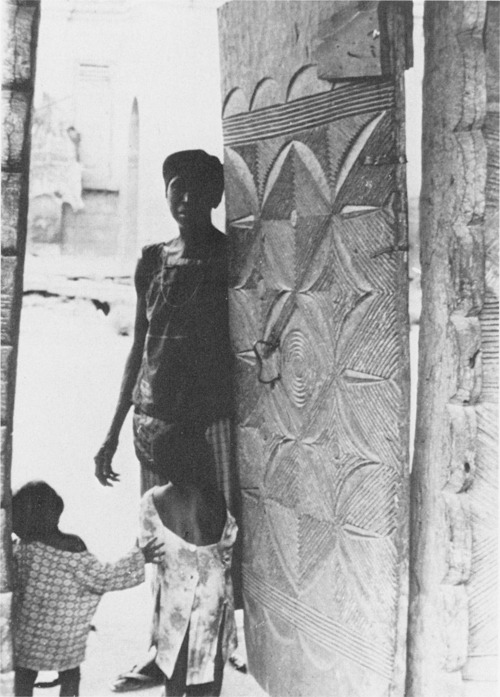
Door which I think would be the opening to a compound, making it a gate. https://25.media.tumblr.com/tumblr_m5ezi9aJY71qjh37to1_500.jpg These kind of doors are mainly from what is now known and Anambra State. |
| Culture › Re: Igbo Architecture | Ụlọ omé n'Ìgbò by ezeagu(op): 2:57am On Aug 07, 2012 |
https://25.media.tumblr.com/tumblr_m5f6lkjVaf1qjh37to1_500.jpg "Wall of compound." Looks to be uri/uli painting on the wall similar to the other compounds posted. |
| Culture › Re: Igbo Architecture | Ụlọ omé n'Ìgbò by ezeagu(op): 2:55am On Aug 07, 2012 |
I'm not sure of what this is, seems similar to the other murals posted. Maybe a compound wall or gate. https://25.media.tumblr.com/tumblr_m5fbybQiAj1qjh37to1_500.jpg The ground looks very uneven though, so I'm unsure of what the certain use of this wall is. |
| Culture › Re: Igbo Architecture | Ụlọ omé n'Ìgbò by ezeagu(op): 2:53am On Aug 07, 2012 |
I don't know if this has been posted already: https://25.media.tumblr.com/tumblr_m7vxp3FHox1qjh37to1_500.jpg "TITLED STOOL AWKA, JULY 1978 — Nancy C. Neaher" |
| Culture › Re: Igbo Architecture | Ụlọ omé n'Ìgbò by ezeagu(op): 2:49am On Aug 07, 2012 |
https://25.media.tumblr.com/tumblr_m7xmbuaeNz1qjh37to3_500.jpg "ONE OF THE LAST PARTS PAINTED IS THE LOWER WALL WHICH RUNS AROUND THE WHOLE MBARI. — Herbert M. Cole, 1969." |
| Culture › Re: Igbo Architecture | Ụlọ omé n'Ìgbò by ezeagu(op): 2:48am On Aug 07, 2012 |
https://25.media.tumblr.com/tumblr_m81sz6FQ9C1qjh37to1_500.jpg "ONITSHA. Chief Ogbua’s house. Interior. — Zbigniew Dmochowski, Introduction to Nigerian Traditional Architecture: South Eastern Nigeria v. 3." 1 Like |
| Culture › Re: Igbo Architecture | Ụlọ omé n'Ìgbò by ezeagu(op): 2:45am On Aug 07, 2012 |
Rust zinc roof. https://24.media.tumblr.com/tumblr_m89bvdESSG1qjh37to1_500.jpg "Abiriba Obu Houses (meeting houses) Obu house Abiriba — G. I. Jones" 1 Like |
| Culture › Re: Igbo Architecture | Ụlọ omé n'Ìgbò by ezeagu(op): 2:44am On Aug 07, 2012 |
Ngusu Ada Igbo [img]http://mccoy.lib.siu.edu/jmccall/jones/ada/ada10.JPG[/img] Obu Ngusu Ada (meeting house). The meeting house that had stairs leading towards it that was posted earlier. |
| Culture › Re: Igbo Architecture | Ụlọ omé n'Ìgbò by ezeagu(op): 2:41am On Aug 07, 2012 |
https://24.media.tumblr.com/tumblr_m8d2ns3dVU1qjh37to1_500.jpg "Nigeria, view of Oratta Igbo Mbari house. Thatched-roof has several points. Sculptures and wall-paintings are visible inside the building. — Edward Chadwick, 1927-1943" |
| Culture › Re: Igbo Architecture | Ụlọ omé n'Ìgbò by ezeagu(op): 2:40am On Aug 07, 2012 |
https://24.media.tumblr.com/tumblr_m8cnzs3TG41qjh37to1_500.jpg "Oko Chukwu, brother of my friend and sculptor Chukwo Okoro, preparing a hoe, sitting outside his home in ezi Ume compound, Mgbom Village, [Afikpo Village-Group, Nigeria.] [Ottenberg field research notes, September 1959-December 1960, Part I]." |
| Culture › Re: Igbo Architecture | Ụlọ omé n'Ìgbò by ezeagu(op): 2:39am On Aug 07, 2012 |
https://24.media.tumblr.com/tumblr_m8d07lAwu41qjh37to1_500.jpg "A short distance inside the compound entrance is the ancestral shrine of the lineage founder, Mma obu (ancestor-rest house), which also serves as a rest house and meeting place for the lineage elders, and near which is a small cleared area used for meetings and feasts. The founder’s house is believed to have been located where the shrine stands and his body to be buried beneath it, and the spirits of the male ancestors of the major patrilineage, Nde mma (people-ancestors or spirits), are said to reside in the shrine. Another commonly found shrine, Ibini okpabe, to the Aro Chuku oracle, is located outside of the ward resthouse. It usually has no priest, a thank offering being given it by an interested elder at the New Yam Festival and at other times on the suggestion of a diviner. [Ottenberg S., 1968: Double Descent in an African Society; the Afikpo Village-Group. University of Washington Press]." |
| Culture › Re: Igbo Architecture | Ụlọ omé n'Ìgbò by ezeagu(op): 2:06am On Aug 07, 2012 |
https://25.media.tumblr.com/tumblr_m8czt6lF0u1qjh37to1_500.jpg "A short distance inside the compound entrance is the ancestral shrine of the lineage founder, Mma obu (ancestor-rest house), which also serves as a rest house and meeting place for the lineage elders, and near which is a small cleared area used for meetings and feasts. The founder’s house is believed to have been located where the shrine stands and his body to be buried beneath it, and the spirits of the male ancestors of the major patrilineage, Nde mma (people-ancestors or spirits), are said to reside in the shrine. The uke ekpe grade, the executive arm of the lineage elders, is responsible for rebuilding the ancestral shrine house, the fashion nowdays is to use cement blocks and galvanized iron roofs, but only after receiving assurances from a diviner that the ancestral spirits will not be offended by this bit of modernity. The uke ekpe sees that the necessary communal work is carried out, that any contractor involved is paid, and that sacrifices to the appropriate shrines are performed so that the ancestral spirits will not be upset by the rebuilding. [Ottenberg S., 1968: Double Descent in an African Society; the Afikpo Village-Group. University of Washington Press]." https://25.media.tumblr.com/tumblr_m8czt6lF0u1qjh37to2_500.jpg |
| Culture › Re: Which Other African Attire Do You Like? by ezeagu(m): 1:47am On Aug 07, 2012 |
shymmex: Conclusion:I'd like to see some of the 17th century 'geles'. I believe its root comes from outside Nigeria, or at least multiple sources. |
| Culture › Re: Usain Bolt Looks Nigerian, But Which Tribe? by ezeagu(m): 12:46am On Aug 07, 2012 |
onila: yohan blake looks igboHe's from the western part of Jamaica where many of the Igbo slaves were dropped off. I've been trying to guess what country Usain look like he's from, but it's difficult. That was until I searched for his parents pictures and it soon become clear. Usain Bolt is a 'mutt', Igbo/Biafran and Senegambian (by looks oh!). But he's mothers genes are stronger and it doesn't seem to be completely Senegambian. Mother: http://jamaica-gleaner.com/gleaner/20100904/lead/images/BoltA2080830BL.jpg Father: http://www.photo-jamaica.com/usain_bolt_files/world-championships-athletics-berlin-usain-bolt-father-8428-wm.jpg |
| Culture › Re: Igbo Architecture | Ụlọ omé n'Ìgbò by ezeagu(op): 12:28am On Aug 07, 2012 |
https://24.media.tumblr.com/tumblr_m8cq48Rj661qjh37to1_500.jpg "Compound of an unknown Afikpo Village. [Ottenberg field research notes, September 1959-December 1960, Part II]." |
| Culture › Re: Igbo Architecture | Ụlọ omé n'Ìgbò by ezeagu(op): 12:24am On Aug 07, 2012 |
https://25.media.tumblr.com/tumblr_m89452FMIq1qjh37to1_500.jpg "Picture of the inside of an Oratta Igbo Mbari showing five mud sculptures. Two of the figures sit on the shoulders of the central figure. — J Stocker, 1880-1939." |
| Culture › Re: Igbo Architecture | Ụlọ omé n'Ìgbò by ezeagu(op): 8:16pm On Aug 06, 2012 |
Okumkpa masquerade play, Amuro village, Afikpo Village-Group, Nigeria. https://24.media.tumblr.com/tumblr_m8cltk4qPU1qjh37to1_500.jpg "Okumpka, the most elaborate masquerade found at Afikpo Village-Group, is the most popular and well attended Afikpo masked ritual. It consists of a series of skits, songs, and dances presented by masked players in the main common of a village during of an afternoon or evening. The play is closely associated with the village secret society; all players are society members, and all wear wooden masks and costumes. [Ottenberg, 1975: Masked Rituals of Afikpo, the Context of anAfrican Art; Seattle: University of Washington Press, 1975]." |
| Culture › Re: Igbo Architecture | Ụlọ omé n'Ìgbò by ezeagu(op): 8:11pm On Aug 06, 2012 |
https://25.media.tumblr.com/tumblr_m895rx5Ubr1qjh37to1_500.jpg Igbo Mbari shrine. Edward Chadwick, 1927-1943 |
| Culture › Re: Igbo Bia Suọ Olu Inyì :: Come And Speak Your Dialects by ezeagu(m): 1:35am On Aug 06, 2012 |
odumchi: Kowaturu m nwa.Ndi toro ruru afọ 30 na 40, di ka Chimamanda Adichie (amaghim ihe decade bu na igbo). |
| Culture › Re: Igbo Architecture | Ụlọ omé n'Ìgbò by ezeagu(op): 10:45pm On Aug 05, 2012 |
https://www.contemporary-art-dialogue.com/image-files/mbari-house-lg.jpg "Geoffrey Nwogu Creates Mbari Houses" "Geoffrey Nwogu creates [Mbari] houses. These sculptures, depicting family figures, deities, ancestral spirits, animals from myths and legends, and humorous scenes from daily life, are erected on a platform with a scenic backdrop. The Nigerian native builds these spiritually inspired Mbari houses using mud clay, fashioned over wooden armatures; he enhances the structures with colorful paint. Geoffrey learned to build these houses - that are intrinsic to the Nigerian "Igbo" school of art - from his father and grandfather, both artists and religious leaders in their village: "In the village I grew up in, everyone lives for the good of the family, and the family is for the village. This background gave me a strong belief in humanity. Later, I gravitated to SGI Buddhism with the understanding that we are all connected to each other and to everything in the universe. Interconnectedness is my mantra." .... http://www.contemporary-art-dialogue.com/mbari.html https://www.contemporary-art-dialogue.com/image-files/mbari-family-lg.jpg |
| Culture › Re: Igbo Architecture | Ụlọ omé n'Ìgbò by ezeagu(op): 10:38pm On Aug 05, 2012 |
More stools. Some look like Oka stools because of the shape (similar to Ghanaian stools). https://24.media.tumblr.com/tumblr_m88xttoBzk1qjh37to1_500.jpg "Study of three Igbo carved wooden stools. — William Fagg, 1946." |
| Culture › Re: Igbo Architecture | Ụlọ omé n'Ìgbò by ezeagu(op): 10:34pm On Aug 05, 2012 |
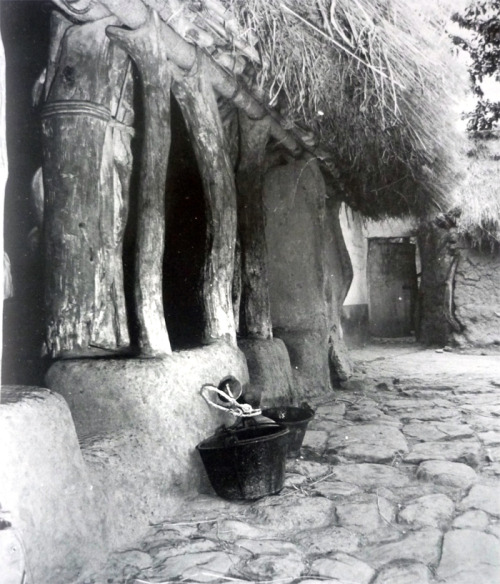
Pavement. https://24.media.tumblr.com/tumblr_m893yaXC4o1qjh37to1_500.jpg "NGWO (AWKA [IGBO]). Composite pillars supporting the eaves. [Notice pavement] — Zbigniew Dmochowski, 1960s" |
| Culture › Re: Igbo Architecture | Ụlọ omé n'Ìgbò by ezeagu(op): 10:31pm On Aug 05, 2012 |
https://25.media.tumblr.com/tumblr_m893qltQaZ1qjh37to1_500.jpg "Detail of wall paintings on an Oratta Igbo Mbari shrine, Okwu. Depicts an adult male and a female copulating, surrounded by abstract patterns. Section view of figure standing at the left. — Edward Chadwick, 1927-1943" 1 Like |
| Culture › Re: Igbo Bia Suọ Olu Inyì :: Come And Speak Your Dialects by ezeagu(m): 9:09pm On Aug 05, 2012 |
Obiagu1: ^^^Ọ wụ eziokwu ki kwuru. Nkem wụ nà: ọ bụ nà ndi mádu a naa chọ ị de asụsụ Igbò (maka ọ dighi ihe he ji ya eme, Beke wụ naani ihe he jị e ri ihe), ihe niile di ka 'phonetics" na ihe ndi ozo anyi gị ji a kuwari Igbo a gaghi mẹ ihe owụla. Naani ishi ọwụwa ka ndi madụ gị ne nye onwe ha. Na ụlọ nkuzi nọ n'ime ala Igbò kwa ha na chị madu ọchị na ị kwụ madu ihe maka ị sụ asụsụ Igbo. Ndi nne na nna ne kò-ekò shị na nwa ha a naa sụ asụsụ ebe ndi nke ha! Ọ wụ ihem sị na ndi chọri ka ọnụ ọgugu ndi na sụ Igbò bilie, ọ wụ ị tuwari oto e shi kụzi madu. ChinenyeN: Ezeagu akatanda e. Ekwere m la ke ilufu ederede Romanu.Ọ wụ ya! |
| Culture › Re: Igbo Bia Suọ Olu Inyì :: Come And Speak Your Dialects by ezeagu(m): 5:19pm On Aug 05, 2012 |
Chimamanda sị Igbò a maghi otu e shi a gụ ndèndé ndi Igbò, mọ bụ íbè ya ne to afọ 30 na 40. Ọ wụ ihe ọ sị na ọ baghi úrù ị de akwukọ ya n'Igbò. E kwerem si o wu eziokwu. Ị de asụsụ Igbò (ne ji akara òdìdè nke De Ọnwụ kèrè) a gaghi ba úrù. Ọ wụ mgbe anyi dozimara nkụzi Igbò wụ mgbe anyi gị ne de ihe nke ọma na Igbo (mọ bụ kwa na anyi gi lúfù akara òdìdè nke ndi Romanu). 1 Like |
| Culture › Re: Igbo Architecture | Ụlọ omé n'Ìgbò by ezeagu(op): 5:12pm On Aug 05, 2012 |
MBARI SCULPTURE https://www.creativeworkfund.org/modern/bios/images_bios/dollone.jpg "Artist Geoffrey Nwogu at work on traditional Mbari figures in the Great Hall of the California Academy of Sciences, photograph by Robin Quarrier Project Title: Mbari Sculpture Recipient Organization: California Academy of Sciences Lead Artist: Geoffrey Nwogu Genre and Date Awarded: Traditional Arts, June 2001 To Be Presented: March 2002" http://www.creativeworkfund.org/modern/bios/geoffrey_nwogu.html |






1 2 3 4 5 6 7 8 ... 126 127 128 129 130 131 132 133 134 (of 349 pages)