Ezeagu's Posts
Nairaland Forum › Ezeagu's Profile › Ezeagu's Posts
1 2 3 4 5 6 7 8 ... 128 129 130 131 132 133 134 135 136 (of 349 pages)
 Culture › Re: Igbo Architecture | Ụlọ omé n'Ìgbò by ezeagu(op): 12:35am On Aug 04, 2012*. Modified: 1:53am On May 07, 2015 Culture › Re: Igbo Architecture | Ụlọ omé n'Ìgbò by ezeagu(op): 12:35am On Aug 04, 2012*. Modified: 1:53am On May 07, 2015 |
Mud-modellings [img]http://2.bp..com/-w65Fym20lzc/Tpb0vqBb_cI/AAAAAAAAAok/IfCLviEPiY4/s1600/models.jpg[/img] IBO MUD-MODELLINGS, N[N]EWI OTOLO, ONITSHA DISTRICT. — Kitson Location: Nnewi Otolo, Nnewi, Alaigbo Date: ?Unsure?, Before 1912 Credit: A. E. Kitson Crayola1:I'll look around for beds, but I can post stools (since that's what most people used for sitting). [img]http://jonesarchive.siu.edu/wp-content/uploads/misc14.jpg[/img] ""Awka" stool Showing decoration of the pedestal, Amobia village, Nri-Awka" G. I. Jones [img]http://jonesarchive.siu.edu/wp-content/uploads/misc17.JPG[/img] "Another type of stool Amobia village, Nri-Awka" G. I. Jones |
| Culture › Re: Igbo Architecture | Ụlọ omé n'Ìgbò by ezeagu(op): 12:25am On Aug 04, 2012 |
[img]http://t1.gstatic.com/images?q=tbn:ANd9GcQB1QJxz_f8aaZ2HEWcSb3zwSgFHuMcsB3hlMdWgMqnz1SrW6RWMg[/img] One of those screen doors. |
| Culture › Re: Igbo Architecture | Ụlọ omé n'Ìgbò by ezeagu(op): 12:13am On Aug 04, 2012 |
Nsude pyramids, Nike people, from what is now central Enugu State. Built as shrines. [img]http://3.bp..com/-I_vQ7wzFhtw/TiSQ7EvV_TI/AAAAAAAAAX0/FoEVfTyX6xk/s1600/nsude_pyramids.jpg[/img] |
| Culture › Re: Igbo Architecture | Ụlọ omé n'Ìgbò by ezeagu(op): 12:12am On Aug 04, 2012 |
Ancestor worship [img]http://3.bp..com/-ofSMJHtVHlk/TdQ9ZSDT7eI/AAAAAAAAAX0/IBCP7N8BGMs/s1600/Igbo%2Bancestor%2Bworship.jpg[/img] WORSHIP OF ANCESTORS NZE, ỌFỌ AND IKẸṄGA (ONI[CH]A OLONA). — Thomas Location: Onicha Olona, Alaigbo Date: ?Unsure?, Before 1921 Credit: Thomas. 1 Like |
| Culture › Re: Igbo Architecture | Ụlọ omé n'Ìgbò by ezeagu(op): 12:10am On Aug 04, 2012*. Modified: 11:26am On May 07, 2015 |
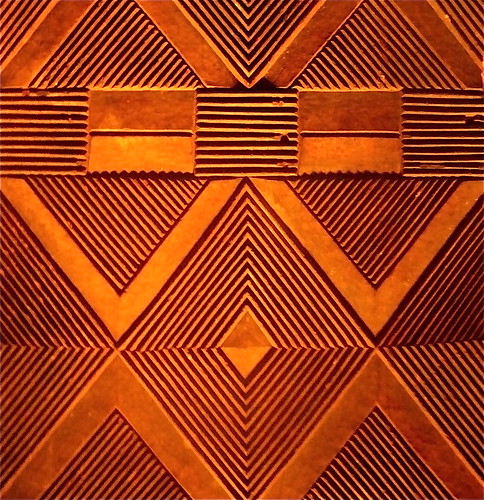
Uli designs. https://s22.postimg.org/grogt4n4h/igbo_painting.jpg https://s28.postimg.org/xkkn82xf1/igbo_pattern.jpg https://s13.postimg.org/6j1tuzyhj/igbo_pattern_woman.jpg Source: G.E.K. Ofomata, A survey of the Igbo Nation, AFP, 2002. |
| Culture › Re: Igbo Architecture | Ụlọ omé n'Ìgbò by ezeagu(op): 11:58pm On Aug 03, 2012 |
Something from Abia. [img]http://mccoy.lib.siu.edu/jmccall/jones/igbo/ekpe11.JPG[/img] "Ekpe (Egbo) Runner Umuahia" G. I. Jones Probably a farmers house which is what people around that area are known for. |
| Culture › Re: Igbo Architecture | Ụlọ omé n'Ìgbò by ezeagu(op): 11:57pm On Aug 03, 2012 |
[img]http://mccoy.lib.siu.edu/jmccall/jones/igbo/misc5.JPG[/img] "House under construction Roof is made from raffia palm branches (locally known as bamboo poles) prior to the attachment to them of tile like mats made out of raffia palm leaves (southern Igbo)" G. I. Jones, probably before 1950. |
| Culture › Re: Igbo Architecture | Ụlọ omé n'Ìgbò by ezeagu(op): 11:56pm On Aug 03, 2012 |
[img]http://mccoy.lib.siu.edu/jmccall/jones/igbo/misc8.JPG[/img] "Interior of house with plates inset in walls South Ikwerri" G. I. Jones. One for Rivers. |
| Culture › Re: Igbo Architecture | Ụlọ omé n'Ìgbò by ezeagu(op): 11:55pm On Aug 03, 2012 |
[img]http://mccoy.lib.siu.edu/jmccall/jones/igbo/misc9.JPG[/img] "House with carved panels Nri-Awka" G. I. Jones. The panels and over design is really impressive. The same can work today as a bar or scaled for some other important building. |
| Politics › Re: BREAKING NEWS: Ogoni Declares Self-government by ezeagu(m): 11:24pm On Aug 03, 2012 |
What's the source of this text, or did you write this yourself? stpat1: In a live broadcast on a newly established radio station: Voice of OgoniHmmm, sounds familiar. |
| Culture › Re: Igbo Architecture | Ụlọ omé n'Ìgbò by ezeagu(op): 11:12pm On Aug 03, 2012 |
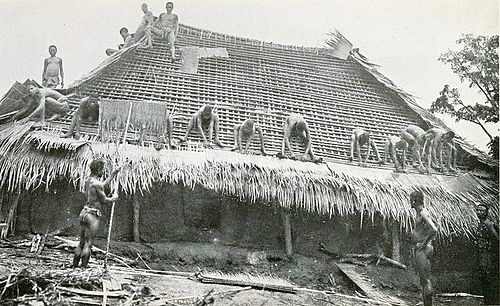
https://upload.wikimedia.org/wikipedia/commons/thumb/6/6e/Igbo_palm_thatch.jpg/500px-Igbo_palm_thatch.jpg "Thatching with palm leaf mats, among the Igbo people." Among the Ibos of Nigeria. Philadelphia: J.B. Lippincott, 1921, pg. 168. G. T. Basden |
| Culture › Re: Igbo Architecture | Ụlọ omé n'Ìgbò by ezeagu(op): 11:10pm On Aug 03, 2012 |
"Figures in Obu Abiriba" [img]http://mccoy.lib.siu.edu/jmccall/jones/igbo/abiriba28.JPG[/img] [img]http://mccoy.lib.siu.edu/jmccall/jones/igbo/abiriba18.JPG[/img] [img]http://mccoy.lib.siu.edu/jmccall/jones/igbo/abiriba20.JPG[/img] [img]http://mccoy.lib.siu.edu/jmccall/jones/igbo/abiriba29.JPG[/img] "Figures in Obu house Woman with a baby. Above her a man with cutlass and trophy head, Abiriba" "Four Obu figures Abiriba" G. I. Jones. |
| Culture › Re: Igbo Architecture | Ụlọ omé n'Ìgbò by ezeagu(op): 11:04pm On Aug 03, 2012 |
Ngusu Ada Igbo (southern Igbo) [img]http://mccoy.lib.siu.edu/jmccall/jones/ada/ada11.JPG[/img] "Obu Ngusu Ada (meeting house)" G. I. Jones. There are apparently stone stairs leading to the meeting house. Maybe this was widespread, or maybe it's unique. Either way there isn't any attention drawn towards them on the page I got this picture from, but the angle G. I. Jones took (far away from the actual meeting house) suggests that he was documenting them as a significant part of the architecture and not just an accident. |
| Culture › Re: Igbo Architecture | Ụlọ omé n'Ìgbò by ezeagu(op): 11:01pm On Aug 03, 2012 |
Detail on door similar to the one already posted. They are carved the same, but the patterns are never alike. https://farm4.static.flickr.com/3438/3796859660_7dd8665fd3.jpg |
| Culture › Re: Igbo Architecture | Ụlọ omé n'Ìgbò by ezeagu(op): 10:58pm On Aug 03, 2012 |
Mbari House [img]http://1.bp..com/-14-lQHLZVlM/TZdEdjUFAOI/AAAAAAAAASY/Q0ujbECIux8/s600/Mbari%2BHouse.jpg[/img] The author with the priest-in-charge of the Mbari house at Ulakwọ, January, 1935. The priest, as will be noticed, is a dwarf. Location: Ulakwọ, Alaigbo Date: January, 1935 Credit: Basden Notice the, what I assume to be, Mbari in the background. Also I believe in many Igbo regions dwarfs were revered and seen as sacred. |
| Culture › Re: Igbo Architecture | Ụlọ omé n'Ìgbò by ezeagu(op): 10:56pm On Aug 03, 2012 |
Okpangu (in an Oratta Igbo, near Owere, Mbari). [img]http://2.bp..com/-1Vk_RtrldJY/TjlapCf6QkI/AAAAAAAAAfI/PEn9IuMB3uY/s600/Okpangu.png[/img] THE MYTHICAL APE-MAN OKPANGU. MBARI AT UMUOKEADA ISU OBIANGWU. — Cole Location:Umuokeada Isu Obiangwu Date: 1969 Credit: Cole |
| Culture › Re: Igbo Architecture | Ụlọ omé n'Ìgbò by ezeagu(op): 10:54pm On Aug 03, 2012 |
Carved door [img]http://2.bp..com/-HSTaxH44VbQ/TnZ-SKuRM4I/AAAAAAAAAmU/tLl7Ozux9CQ/s600/doors-mud.jpg[/img] THE CARVED DOOR AND MODELED AND POLISHED WALLS OF EKE'S COMPOUND IN UMUONA. — Herbert M. Cole Location: Umuona, Alaigbo Date: 1969 Credit: Cole |
| Culture › Re: Igbo Architecture | Ụlọ omé n'Ìgbò by ezeagu(op): 10:46pm On Aug 03, 2012 |
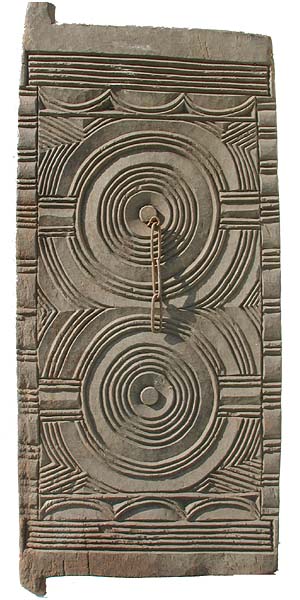
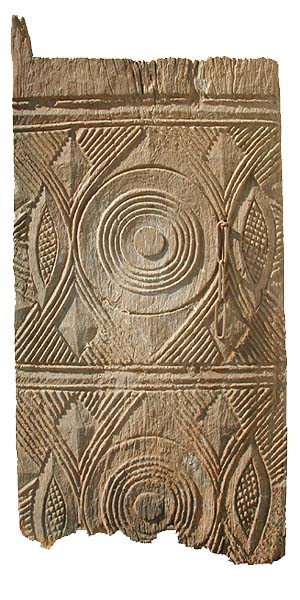
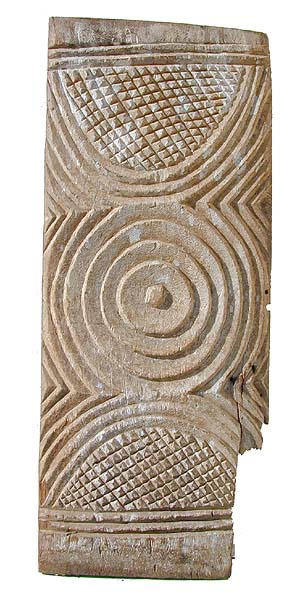
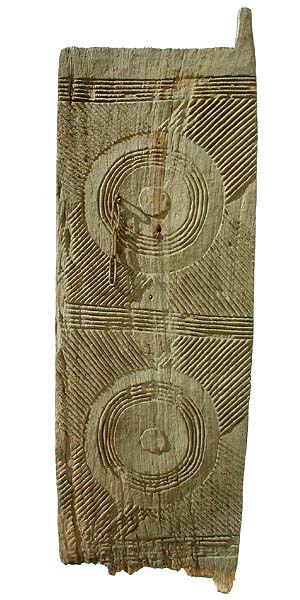
"The intricately carved doors of the Igbo people of Nigeria form a third impressive group. Carved of a sacred hardwood, iroko, for major patrons, they served as entrance portals to an obi, the male meeting house. Iroko wood is associated with males, power and certain mysteries. The tree's spirit is ritually placated before felling. The large planks were extremely difficult to make. The doors are distinguished by the careful chip carving into V-shaped grooves and the contrasts of plain with densely carved areas. Our collection of 20 doors plus two side panels is exceptional with most showing complex patterns and generations of slow weathering." https://www.hamillgallery.com/IGBO/IgboDoors/IgboDoor06.JPGhttps://www.hamillgallery.com/IGBO/IgboDoors/IgboDoor04.JPG https://www.hamillgallery.com/IGBO/IgboDoors/IgboDoor12.JPGhttps://www.hamillgallery.com/IGBO/IgboDoors/IgboDoor01.JPG These doors are probably from the Anambra area as well. http://www.hamillgallery.com/IGBO/IgboDoors/IgboDoors.html |
| Culture › Re: Disrespect Of The Red Cap And Igbo Traditions:i Blame Your Parents!! by ezeagu(m): 5:17pm On Aug 03, 2012 |
stillwater: This okpu agu is not fashionable at all, won't let my husband wear it. The red hat looks better especially for weddings. Who remembers 'the new masquerade', is that not what Natty wears?Unu ge ji 'Fashion', mọ bụ Fascistion gbu onwe gi. "This okpu agu is not fashionable at all, won't let my husband wear it." [size=18pt]O![/size] Ndi fasssion e kwujuole nke ha. Ha chọ ka anyi tiwe uwe ndi nne nne ndi beke. |
| Culture › Re: Igbo Architecture | Ụlọ omé n'Ìgbò by ezeagu(op): 10:59pm On Aug 02, 2012 |
Carved figures in Obu, Asaga Ohafia [img]http://mccoy.lib.siu.edu/jmccall/jones/igbo/asaga7.JPG[/img] Shrine priest poses in the obu, G. I. Jones. |
| Culture › Re: Igbo Architecture | Ụlọ omé n'Ìgbò by ezeagu(op): 10:50pm On Aug 02, 2012 |
Town Deities [Alusi], Adonta, Near Ogwashi [Ukwu] [img]http://2.bp..com/_jeBv7EEofYQ/TLpuQ2VO70I/AAAAAAAAAGw/VqsA45sbkA8/s1600/town-deities.jpg[/img] Location: Adonta, Aniocha, Alaigbo Date: ?Unsure?, Before 1921 Credit: Basden |
| Culture › Re: Igbo Architecture | Ụlọ omé n'Ìgbò by ezeagu(op): 10:50pm On Aug 02, 2012 |
Decoration of Ibo Houses [img]http://1.bp..com/-qqWJHjUaX08/TWAuPFbypEI/AAAAAAAAAPo/YuQchCwFB04/s1600/Note%2Bon%2BIbo%2BHouse%2B2.jpg[/img] Location: ?Unsure?, Alaigbo Date: ?Unsure?, Before 1916 Credit: P. Amaury Talbot |
| Culture › Re: Igbo Architecture | Ụlọ omé n'Ìgbò by ezeagu(op): 10:45pm On Aug 02, 2012 |
[img]http://4.bp..com/-J47kNYiSjKw/TjGcqWN3nbI/AAAAAAAAAew/eeKTVt5va5g/s600/Igbo%2Bhippo.png[/img] A FANCIFUL HIPPOPOTAMUS GLORIFIED WITH ABSTRACT PATTERNS REMINISCENT OF DESIGNS PAINTED ON WOMEN'S BODIES. IN THE MBARI TO AFO AT UMUAHIAGU. ARTIST: AKAKPORO. — Herbert M. Cole Umuahiagu Date: 1969 Credit: Herbert M. Cole |
| Culture › Re: Igbo Architecture | Ụlọ omé n'Ìgbò by ezeagu(op): 10:40pm On Aug 02, 2012 |
"FESTIVAL OF IMAGES" [img]http://1.bp..com/-DCoO5dJ5BxU/TjleBgf7FKI/AAAAAAAAAfQ/Nsz6xygumT8/s1600/igbo%2Bimages.png[/img] "A "FESTIVAL OF IMAGES" IN HONOR OF EKE AT ORERI INCLUDES ABOUT THIRTY-FIVE MEMBERS OF HIS FAMILY (SOME OUT OF THE PICTURE). WORSHIPPERS OFFER KOLA NUTS OR MONEY TO THE VARIOUS DEITIES." — Cole Location: Oraeri, Umueri, Alaigbo Date: 1969 Credit: Cole |
| Culture › Re: Igbo Architecture | Ụlọ omé n'Ìgbò by ezeagu(op): 10:39pm On Aug 02, 2012 |
[img]http://4.bp..com/-o9uM6jkdorM/T8Vkx5aNqVI/AAAAAAAAA9Q/KsXZn2iwkgI/s1600/Mbari-3.jpg[/img] Mbari Location: ?Unknown?, Alaigbo Date: ?Unknown?, Before 1904 Credit: A. A. Whitehouse |
| Culture › Re: Igbo Architecture | Ụlọ omé n'Ìgbò by ezeagu(op): 10:38pm On Aug 02, 2012 |
Mbari house [img]http://1.bp..com/-0dbJNpfuOvI/TqScPky8K_I/AAAAAAAAAsU/Gq4fKWSZmI8/s1600/AN00053841_001_l.jpg[/img] A more dressed down Mbari. Location: ?Unknown? Date: 1927-1943 Credit: Edward Rowland Chadwick |
| Culture › Re: Igbo Architecture | Ụlọ omé n'Ìgbò by ezeagu(op): 10:37pm On Aug 02, 2012 |
Ala, goddess of the earth [img]http://2.bp..com/-3wBhdqi-HjE/TqSc9cVqIgI/AAAAAAAAAtE/zE0ETu_fwwY/s1600/AN00059348_001_l.jpg[/img] Location: ?Unknown? Date: 1927-1943 Credit: Edward Rowland Chadwick |
| Culture › Re: Igbo Architecture | Ụlọ omé n'Ìgbò by ezeagu(op): 10:36pm On Aug 02, 2012 |
Where is Ihale? Entrance of a building [img]http://2.bp..com/-nqNVx7zgu2s/TqdsvFcsUQI/AAAAAAAAAvk/-PAJexzDG4c/s1600/Doors.jpg[/img] Location: Ihale (Ihiala?) Date: 1880-1939 Credit: J Stöcker |
| Culture › Re: Igbo Architecture | Ụlọ omé n'Ìgbò by ezeagu(op): 10:34pm On Aug 02, 2012 |
"Mbari plan" [img]http://4.bp..com/-SPANqYqLfiI/TnaAJJjTfbI/AAAAAAAAAmc/QZm_wuIggGI/s1600/mbari-plan.jpg[/img] "PLAN SHOWING THE PLACEMENT OF FIGURES AND VARIOUS KINDS OF ARCHITECTURAL SET-BACKS EMPLOYED TO INCREASE THE ILLUSION OF SIZE. THE MBARI, WITH THIRTY-FOUR FIGURES INCLUDING THE HEAD SPEERING THROUGH WINDOWS (RIGHT SIDE NEAREST CENTER), IS OF AVERAGE SIZE. THE MBARI TO OBIALA AT NDIAMA OBUBE. ARTIST: NNAJI." — Herbert M. Cole Location: Obiala, Alaigbo Date: 1969 Credit: Nnaji, Cole |
| Culture › Re: Igbo Architecture | Ụlọ omé n'Ìgbò by ezeagu(op): 10:32pm On Aug 02, 2012 |
From that book someone wrote a summary with some of the pictures below. Visit at: http://www.radford.edu/~rbarris/art427%20African%20Diaspora/EIU%20African%20Art%20folder/mbarishrines.htm Ala the earth Godess in Mbari near Owere. http://www.radford.edu/~rbarris/art427%20African%20Diaspora/EIU%20African%20Art%20folder/mb1.jpg "Mbari shrines are deliberately temporary or transitory, made in response to community crises such as famine or warfare. The shrine, built at the tiime of crisis, becomes a symbol of regeneration and the shrine itself may be correctly thought of as process rather than built form. The decision to build begins with a request from the god, often Ala, who begins to cause problems like drought or storms or unexplained deaths. A commitment is made and sealed through ceremony and sacrifice; a key part of the sealing ceremony involves tying the skulls of sacrificed goats to a rod of iron which signifies strength and wealth and supernatural powers; during the period of building everyone must obey the stringent laws of the god; if not, the sacrificed goat provides an example of what will happen to the person who does not. Once the contract is sealed, an artist/craftsman is chosen who will guide the building and its design; the work is thought of in ways that are similar to the notion of a commission: he will be paid for the work and he bargains for his price; later, other fees are added through rituals; if a village does not have its own artist, it will send for one from a distant village. The artists do not appear to do the work for the desire to create; they do it for the money and in some cases, because they do not feel capable of doing anything else. This is their job. But although it cannot be said that the artist has sought the opportunity to "create," it can be said that the artist aims for the highest level of skill and that this may be as much of a motivation as the salary. Next, the workers are chosen, some as an honor and some as a form of penance for some offense committed by the worker's family. The workers are thought of as the agbara slave because their work will involve a commitment of about two years during which time the worker will live in the area fenced off for the mbari. But he will not die during this time. For their initiation, the workers must walk across a long pathway of narrow iron bars laid side by side without touching the ground; if he fails, he cannot be a worker. Following this initial ritual, others are necessary before the work begins; these rites serve two primary purposes: they identify the workers by a physical "costume"-incised marks on their skin-and they are supposed to make the bodies strong. The combination of body scarring and special clothing for the workers makes them look, as one worker said, like "carved and painted figures." For 24 days from the period of walking the irons, the workers live in a secluded group, unseen by anyone else. At the end of the period, they are said to be "killed out" which signifies a ceremonial exiting from the seclusion, a feast, and a ritual rebirth; they can now be seen by others although they continue to live in the area of the mbari building which now begins." http://www.radford.edu/~rbarris/art427%20African%20Diaspora/EIU%20African%20Art%20folder/mb2.jpg |
| Culture › Re: Igbo Architecture | Ụlọ omé n'Ìgbò by ezeagu(op): 10:26pm On Aug 02, 2012 |
If you would like to know more about Igbo (or Oratta) spiritual architecture, there's a whole book dedicated to it: [img]http://www.iupress.indiana.edu/images/books/9780253303974_med.jpg[/img] Mbari Art and the Life Among the Owerri Igbo Herbert M. Cole Distribution: World Publication date: 4/1/1982 Format: cloth 6 x 9 ISBN: 978-0-253-30397-4 "One of the most fascinating artistic phenomena in tropical Africa, mbari houses are little known outside Igboland. Art historian Herbert M. Cole has drawn from his extensive research in eastern Nigeria to produce the first book-length study of this unusual art form. Cole describes the building of a mbari mud house to honor the gods, a process rich in tradition and ritual, marked by body painting, drumming, dancing, singing, and chanting. The ecology, socio-cultural systems, and religion of the Owerri area are examined as a backdrop to the elaborate stage of the building process, which may take up to two years to complete. Illustrated with rare field photographs and superb line drawings, this volume describes and interprets mbari houses not as isolated works of art but as monuments growing out of, and expressive of, the values and beliefs of Owerri Igbo culture." |
| Culture › Re: Igbo Architecture | Ụlọ omé n'Ìgbò by ezeagu(op): 10:22pm On Aug 02, 2012 |
[img]http://content.lib.washington.edu/cgi-bin/showfile.exe?CISOROOT=/buildings&CISOPTR=6002[/img] TITLE Titled man's Obi (meeting house/shrine) ARCHITECT/BUILDER Igbo peoples NATION Nigeria SITE SE Nigeria DETAIL exterior CITY Ifite Nnokwa CE DATE OF CONSTRUCTION 1966 STYLE vernacular NOTES Titled man's Obe (meeting house/shrine) PHOTOGRAPHER Herbert M. Cole DATE OF PHOTOGRAPH 1973 |








1 2 3 4 5 6 7 8 ... 128 129 130 131 132 133 134 135 136 (of 349 pages)