Ezeagu's Posts
Nairaland Forum › Ezeagu's Profile › Ezeagu's Posts
1 2 3 4 5 6 7 8 ... 130 131 132 133 134 135 136 137 138 (of 349 pages)
 Culture › Re: Igbo Architecture | Ụlọ omé n'Ìgbò by ezeagu(op): 8:54pm On Aug 01, 2012 Culture › Re: Igbo Architecture | Ụlọ omé n'Ìgbò by ezeagu(op): 8:54pm On Aug 01, 2012 |
More parts of the Obu in Ohafia. [img]http://mccoy.lib.siu.edu/jmccall/jones/igbo/asaga5.JPG[/img] The images may be some idols or ancestral figures, the painting may be uri, but there are too many types of symbols, especially in the Cross River region, to be definite. The roof seems to be constructed with bamboo beams and seems quite strong, the rest is mud and wood. |
| Culture › Re: Igbo Architecture | Ụlọ omé n'Ìgbò by ezeagu(op): 8:50pm On Aug 01, 2012 |
Asaga Ohafia, what is now in Abia State. [img]http://mccoy.lib.siu.edu/jmccall/jones/igbo/asaga1.JPG[/img] Statues in an Obu. G. I. Jones. |
| Culture › Re: Igbo Architecture | Ụlọ omé n'Ìgbò by ezeagu(op): 8:49pm On Aug 01, 2012 |
An Igbo pyramid. Enugu State. [img]http://mccoy.lib.siu.edu/jmccall/jones/igbo/arunsi11.JPG[/img] I think this is from Nsude and was used as a shrine. Maybe missionaries convinced them to destroy them or maybe they're still there. |
| Culture › Re: Igbo Architecture | Ụlọ omé n'Ìgbò by ezeagu(op): 8:47pm On Aug 01, 2012 |
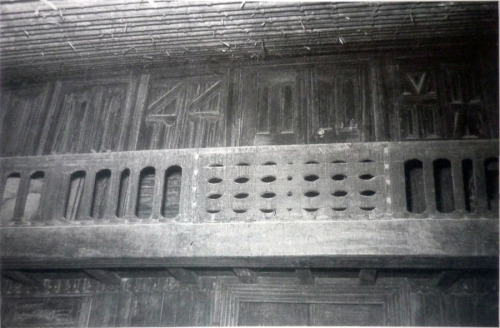
Arochukwu, Abia State. They seem to have had many storey buildings. https://25.media.tumblr.com/tumblr_m82y87PxsP1qjh37to1_500.jpg "House of Chief Ezuma-Kanu-Eni. [Arochukwu Amankwu]. — Zbigniew Dmochowski, Introduction to Nigerian Traditional Architecture: South Eastern Nigeria v. 3." |
| Culture › Re: Igbo Architecture | Ụlọ omé n'Ìgbò by ezeagu(op): 8:44pm On Aug 01, 2012 |
Ebonyi/Abia State side again. https://24.media.tumblr.com/tumblr_m836q3QPla1qjh37to1_500.jpg "Ibini okpabe shrine in front of the Nsi omomo shrine, in Ezi Akputa compound, Mgbom village, Afikpo Village-Group, Nigeria. “Religion plays an important role at Afikpo in almost every sphere of life. Everywhere there are shrines to humanlike and nonhuman supernatural forces. Often they are placed at the base of a tree, in a group of natural rocks or specifically constructed rock platforms, or in a shrine house, or are found at farms, along paths, in the commons of villages, in the compounds, sometimes even inside dwelling places. The shrines symbolize the diversity of beliefs, rituals, and history in the village group. Ward elders perform sacrifices at shrines for which the ward executive grade provides much of the sacrificial materials. One commonly found shrine, Ibini okpabe, to the Aro Chuku oracle, is located outside of the ward resthouse. It usually has no priest, a thank offering being given it by an interested elder at the New Yam Festival and at other times on the suggestion of a diviner. Another important major patrilineal shrine is Nsi omomo (medicine-birth), primarly for fertility, but also concerned with general welfare. The shrine is for the whole lineage. The controlling group selects the priest, who may also be the ancestral shrine priest, in the usual manner.” [Ottenberg S., 1968: Double Descent in an African Society; the Afikpo Village-Group. University of Washington Press]. — Simon Ottenberg, 1951-1953." |
| Culture › Re: Igbo Architecture | Ụlọ omé n'Ìgbò by ezeagu(op): 8:43pm On Aug 01, 2012 |
Ebonyi/Abia State. https://25.media.tumblr.com/tumblr_m836wtHyHy1qjh37to1_500.jpg "Nkamalo shrine inside Ezi Akputa compound, Mgbom village, Afikpo Village-Group, Nigeria. — Simon Ottenberg, 1951-1953." |
| Culture › Re: The First Race On Earth by ezeagu(m): 8:42pm On Aug 01, 2012 |
If you follow race, then Africans are not of one race. Yes, even the dark ones. The out of Africa theory suggests that everyone, including West Africans, descend from the San or "Capoid" people, these people: https://www.enjoyfrance.com/images/stories/world/news/Kun_san.jpg |
| Culture › Re: Igbo Architecture | Ụlọ omé n'Ìgbò by ezeagu(op): 6:14pm On Aug 01, 2012 |
Nri Kingdom Eze Obalike sounds his bell. I believe this is the eze before the king before the present king, he was the last king of independent Nri. https://25.media.tumblr.com/tumblr_lt474pgXqo1r0f00mo1_500.jpg "The Kingdom of Nri (948—1911) was the West African medieval state of the Nri-Igbo, a subgroup of the Igbo people, and is the oldest kingdom in Nigeria. The Kingdom of Nri was unusual in the history of world government in that its leader exercised no military power over his subjects. The kingdom existed as a sphere of religious and political influence over much of Igboland, and was administered by a priest-king called the eze Nri. The eze Nri managed trade and diplomacy on behalf of the Igbo people, and possessed divine authority in religious matters.The kingdom was a safe haven for all those who had been rejected in their communities and also a place where slaves were set free from their bondage. Nri expanded through converts gaining neighboring communities’ allegiance, not by force. Nri’s royal founder, Eri, is said to be a ‘sky being’ that came down to earth and then established civilization. One of the better-known remnants of the Nri civilization is its art, as manifested in the Igbo Ukwu bronze items.Nri’s culture had permanently influenced all of Igbo culture, especially through religion and taboos. It brought new advanced concepts of the creator, Chineke, and of the universe in general. British colonialism, as well as the Atlantic slave trade, contributed to the decline of the Nri Kingdom. The Nri Kingdom is presently going through a cultural revival. Picture: Nri Kingdom Eze Obalike sounds his bell. Picture Source here." 1 Like |
| Culture › Re: Igbo Architecture | Ụlọ omé n'Ìgbò by ezeagu(op): 6:11pm On Aug 01, 2012 |
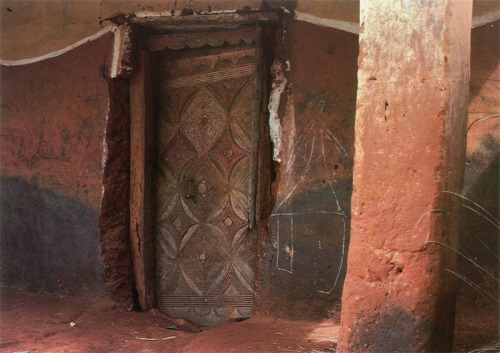
Anambra door into a walled compound. https://24.media.tumblr.com/tumblr_m6jrbwW3Rb1qjh37to1_500.jpg "Portal with decorated door, Nimo." |
| Culture › Re: Should Christianity Restrict You From Partaking In Your Tradition? by ezeagu(m): 5:49pm On Aug 01, 2012 |
damilarelr: Yeah, I understand you.And here is where Christians show themselves up. There are those among you who do not believe Jesus to be God. There is nowhere in the bible Jesus claimed to be God or the same as God. |
| Culture › Re: Igbo Architecture | Ụlọ omé n'Ìgbò by ezeagu(op): 5:47pm On Aug 01, 2012*. Modified: 12:29am On Dec 17, 2015 |
Gone to sig. |
| Culture › Re: Igbo Architecture | Ụlọ omé n'Ìgbò by ezeagu(op): 5:44pm On Aug 01, 2012*. Modified: 12:13am On Dec 17, 2015 |
As all the posts have said... 2 Likes |
| Culture › Re: Igbo Architecture | Ụlọ omé n'Ìgbò by ezeagu(op): 5:42pm On Aug 01, 2012*. Modified: 10:30am On Dec 17, 2015 |
| Culture › Re: Igbo Architecture | Ụlọ omé n'Ìgbò by ezeagu(op): 5:41pm On Aug 01, 2012*. Modified: 10:29am On Dec 17, 2015 |
Signature 1 Like |
| Culture › Re: Igbo Architecture | Ụlọ omé n'Ìgbò by ezeagu(op): 5:39pm On Aug 01, 2012*. Modified: 10:28am On Dec 17, 2015 |
Signature. |
| Culture › Re: Igbo Architecture | Ụlọ omé n'Ìgbò by ezeagu(op): 5:37pm On Aug 01, 2012*. Modified: 12:42am On Dec 17, 2015 |
See others. 1 Like |
| Politics › Re: Is This Really The ''first Storey Building In Nigeria''? by ezeagu(m): 5:34pm On Aug 01, 2012 |
PhysicsQED: There is actually an 1841 drawing from the British traveler/explorer William Allen of a two story building in the Attah of Igala's place of residence in the city of Idah.The source didn't say but the book is from the traditional archaeology of Nigeria researched in the 1960s. The first building is from what is now Abia State. |
| Culture › Re: Igbo Architecture | Ụlọ omé n'Ìgbò by ezeagu(op): 4:27pm On Aug 01, 2012*. Modified: 12:11am On Dec 17, 2015 |
See above. 3 Likes 1 Share |
| Culture › Re: Igbo Architecture | Ụlọ omé n'Ìgbò by ezeagu(op): 4:16pm On Aug 01, 2012*. Modified: 12:09am On Dec 17, 2015 |
At that forum you'll see it. |
| Culture › Re: Disrespect Of The Red Cap And Igbo Traditions:i Blame Your Parents!! by ezeagu(m): 3:40pm On Aug 01, 2012 |
Exactly, everybody wore hats, not only nze na ozo. I know there were all kinds of conical hats, wool and fibre hats. You don't even need a hat as a national dress. |
| Culture › Re: Should Christianity Restrict You From Partaking In Your Tradition? by ezeagu(m): 3:35pm On Aug 01, 2012 |
My point is that Jesus isn't just a mediator, he is literally worshipped and praised, instead of the main God. |
| Culture › Re: Igbo Architecture | Ụlọ omé n'Ìgbò by ezeagu(op): 3:33pm On Aug 01, 2012*. Modified: 12:08am On Dec 17, 2015 |
See my sig. |
| Culture › Re: Igbo Architecture | Ụlọ omé n'Ìgbò by ezeagu(op): 3:32pm On Aug 01, 2012*. Modified: 10:34am On Dec 17, 2015 |
| Culture › Re: Igbo Architecture | Ụlọ omé n'Ìgbò by ezeagu(op): 3:28pm On Aug 01, 2012 |
Yeah, I wonder what the different communities called 'floors', 'stairs', 'stair case', 'geometry', 'cube', 'balcony' and hundreds of other features seen in these buildings. |
| Culture › Re: Disrespect Of The Red Cap And Igbo Traditions:i Blame Your Parents!! by ezeagu(m): 3:23pm On Aug 01, 2012 |
Andre Uweh: The in thing is the mind of the wearer. If criminal can wear it in the name of Nze na Ozo, why can any other person especially innocent Igbo people wear it?. The identity of an Igboman's attire today rests mainly in that red hat. Ndigbo today wear Babariga, Agbada etc but to know that they are not Hausa or Igbo, it is that red hat. It has become the identity of Ndigbo, and those in Anioma and Anambra, sorry to say this but we have to move on.That's the point, they haven't 'moved on' from their culture so you'll still be questioned for wearing the hat. Just let this be an Anambra person now telling someone from Imo, Abia or Rivers State to 'get over' their culture for a greater Igbo identity. Imo and Abia may be the land of 1000 ezes, but, sorry to say, Anambra, Delta, and to a certain extent Ebonyi are the last fronts on the war of bastardization on Igbo culture. |
| Culture › Re: Igbo Architecture | Ụlọ omé n'Ìgbò by ezeagu(op): 3:09pm On Aug 01, 2012*. Modified: 12:07am On Dec 17, 2015 |
See above 1 Like |
| Culture › Re: Igbo Architecture | Ụlọ omé n'Ìgbò by ezeagu(op): 3:03pm On Aug 01, 2012*. Modified: 12:06am On Dec 17, 2015 |
Going, going, gone. 1 Like |
| Politics › Re: Is This Really The ''first Storey Building In Nigeria''? by ezeagu(m): 2:59pm On Aug 01, 2012 |
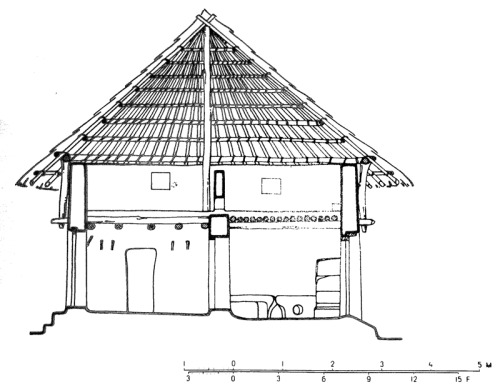
No. Igbo houses from before the 20th century: https://24.media.tumblr.com/tumblr_m7omc84v631qjh37to1_500.jpg https://24.media.tumblr.com/tumblr_m7omc84v631qjh37to3_500.jpg https://25.media.tumblr.com/tumblr_m82w9sWwzn1qjh37to1_500.jpg There is no known "first story building" in Nigeria. More here: https://www.nairaland.com/1005808/igbo-traditional-architecture-%E1%BB%A5l%E1%BB%8D-nke |
| Culture › Re: Igbo Architecture | Ụlọ omé n'Ìgbò by ezeagu(op): 2:51pm On Aug 01, 2012*. Modified: 12:05am On Dec 17, 2015 |
Gone, sorry not sorry. |
| Culture › Re: Igbo Architecture | Ụlọ omé n'Ìgbò by ezeagu(op): 2:50pm On Aug 01, 2012*. Modified: 11:43pm On Dec 16, 2015 |
Moved to omambala[dot]com |
| Fashion › Re: Baby Thongies: New Baby Diapers? (Pic) by ezeagu(m): 2:46pm On Aug 01, 2012 |
Fake. |
| Culture › Re: Disrespect Of The Red Cap And Igbo Traditions:i Blame Your Parents!! by ezeagu(m): 2:45pm On Aug 01, 2012 |
afam4eva: Yes, that's what i mean.It's better to have more respect for culture than to completely sell it off for profit, especially with something so sacred. If you mean selling off the hats to random people, then I completely disagree. Anyway, the hat has been completely devalued in other parts of Igboland, but your suggestion will not happen in Anambra, and maybe Anioma. |




1 2 3 4 5 6 7 8 ... 130 131 132 133 134 135 136 137 138 (of 349 pages)