Ezeagu's Posts
Nairaland Forum › Ezeagu's Profile › Ezeagu's Posts
1 2 3 4 5 6 7 8 ... 200 201 202 203 204 205 206 207 208 (of 349 pages)
 NYSC › Re: Five NYSC Members Kidnapped In Ikwerre LGA Of Rivers State by ezeagu(m): 9:42pm On Jun 08, 2011 NYSC › Re: Five NYSC Members Kidnapped In Ikwerre LGA Of Rivers State by ezeagu(m): 9:42pm On Jun 08, 2011 |
Hmm, I guess it was 2011 that Nigeria saw its first crisis in its north where 1000s of southerners were targeted and 100's were killed. It was also the first time Nigeria saw the murder of corp members. Hundreds of people dying 'in more than one state' (that makes the hundreds more acceptable) should get the same reaction as five people being kidnapped by what are probably a handful of hardened criminals who would be slaughtered by their own townsmen, instead of As if there's never been a kidnapping or murder of any corp members in any of the other 'regions'. These have never led to Nigerians asking that region to empty of NYSC members, because there clearly isn't a steady pattern of genocide. |
| NYSC › Re: Five NYSC Members Kidnapped In Ikwerre LGA Of Rivers State by ezeagu(m): 9:28pm On Jun 08, 2011 |
The comparison between this (if it is true, kidnapping five people) and people randomly slaughtering people as they walk by on the street is stupid. That's the same as comparing kidnapping in Colombia to the Darfur crisis, where do people get their reasoning from?  |
| Politics › Re: PDP May Review Zoning Formula (Re: Tambuwal's Election) by ezeagu(m): 2:31am On Jun 08, 2011 |
Adejoro74, is it not okay? At least be the bigger man against anyone you're competing with and keep quiet. |
| Politics › The Nigerian Gencodial State by ezeagu(op): 2:29am On Jun 08, 2011 |
The answer to all the problems? Look past any bias. Genocides in Nigeria aren't called genocides in Nigeria, they are called 'civilian clashes' even though these 'clashes' lead to at least 100 people dead on each round. There have been so many genocides in Nigeria in a space of 5 years that when we hear 800 people died in Jos we nod and agree that it was a terrible 'civilian clash'!!! Why is there a routine genocide in Nigeria? One answer could be, as many Nigerians like to say, "bad leadership", "bad leadership", or "bad leadership". The answer could be because Nigeria, like most colonial states, was designed to fail without Europeans. The Nigerian-Biafran war, although not usually recalled as a genocide, was the start of Africa's cycle's of genocides and the images it became attached with. [center] [size=18pt]Part 1[/size] [flash=480,390] https://www.youtube.com/watch?v=uDPZjTo4Te4[/flash] [size=18pt]Part 2[/size] [flash=480,390] https://www.youtube.com/watch?v=UaN0G-_9qX0[/flash] [/center] |
| Culture › Re: Considering A Yoruba Tattoo: Ideas? by ezeagu(m): 2:52pm On Jun 03, 2011 |
[quote author=Ileke-IdI link=topic=663772.msg8438215#msg8438215 date=1306981712]Apart from tribal marks, did any African nation know what tattoo was before the 20th century?[/quote]Almost every culture on earth had tattoos. |
| Culture › Re: How The Southern Nigerian Ethnic Groups Formed by ezeagu(m): 9:56pm On Jun 02, 2011 |
Who ever wrote this is very creative and should think about writing books, fictional writing in Nigeria is low. |
| Culture › Re: Delta Igbo, Bendel Igbo: What Does That Even Mean. by ezeagu(m): 5:18am On May 31, 2011 |
ChinenyeN:And I agree. |
| Culture › Re: Delta Igbo, Bendel Igbo: What Does That Even Mean. by ezeagu(m): 2:41am On May 31, 2011 |
ChinenyeN:What I'm saying is that you're going to have to explain yourself when you say the 'Europeans crafted Igbo identity' or the slaves were from the northern Igbolands because they identified as Igbo (even when some southern groups include Igbo in their origin stories) because they are statements that you have to understand before agreeing and moving on to whatever other points there are. ChinenyeN:There are trade routes everywhere, however, this is the biggest slave route in Igboland even if it was once a trade route for other things. ChinenyeN:This is true, but it is different from saying that Europeans crafted the Igbo identity or that southern and northern slaves were split between Igbo (north) and then different clans (south). lakal:I'm saying that it was not only the Onicha that perceived the world like this (we and them the Igbo), you even gave an example of Olu, the river side people. ChinenyeN:I think he's talking about people from what is now spelt 'Orlu' or people near the Niger. |
| Culture › Re: Delta Igbo, Bendel Igbo: What Does That Even Mean. by ezeagu(m): 2:00am On May 31, 2011 |
ChinenyeN:You're going to have to explain how Europeans crafted Igbo identity with convincing evidence for people to understand where the word Igbo came from and how it spread. The fact that Igbo is a northern word is not significant in the argument for Europeans crafting the Igbo identity, this is what people have a problem with, the idea that Europeans made Igbo people Igbo. Aside from the other reasons for why this fact is not significant, one would be that we already know many things from the northern groups have become rooted into the cultures and identities of the southern and western Igbo cultures which was done before Europeans crossed the Ocean. ChinenyeN:The Northern parts that Arochukwu had deals with raiders was with the Nike lands, apart from that Onicha was the only significant trading post for slaves in the northern areas, and then we come into the south with large slave trading areas like Nkwerre, and other groups like those around Umuahia, Uzuakoli, Ngwa, in short, most of the communities along the long slave route that can be seen stretching through Abia and Rivers today. ChinenyeN:Southern groups were not afraid to involve themselves in slave trading (and raiding), why should the slave traders waste their time travelling up to the north when they can get their slaves from the southern groups. Where were most of Aro's victims from? See here. http://people.wku.edu/johnston.njoku/ Also read here. http://books.google.com/books?id=6eqiRAP3U2kC&pg=PA61 lakal:"The origin of the word Ibo is obscure" Meaning there is no offical origin. There are towns with the word 'Igbo' that are older than Onicha that even Basden noted. And there are also stories among some other groups about a person called 'Igbo' and other related stories. We already know about the 'us and them the Igbo' terms the Igbo groups used. |
| Culture › Re: Delta Igbo, Bendel Igbo: What Does That Even Mean. by ezeagu(m): 10:36pm On May 30, 2011 |
ChinenyeN:The Igbo were sent primarily to the British America Colonies in the 18th century, Sierra Leone received Igbo people in the 19th century as re-captives. Sierra Leone itself was providing slaves for the British as well before the 19th century. ChinenyeN:'Ungua' in Havana of the 19th century was a point of origin that Cubans noted from some Ngwa re-captives, there are many ways Igbo re-captives described their origin, which ranged from town/village, to clan and then to Eboe/Ibo which was the most popular. Most slaves from all around Igboland are noted as Eboe. 'Carabali' was a Spanish word that described the geographical location of what the British called the Bight of Biafra. Carabali was also used to describe the people that came from here and obviously wasn't a name the slaves gave to themselves, unless they were Kalabari. For example there was a 'Carabli Onecha'. ChinenyeN:Most of the Igbo slaves in the height of the Biafran slave trade would have been southern. The cultural influences in places like Jamaica (Okonko influences from what is now Abia) and Barbados (Obeah-Aro from the same area) point towards the south, very strongly actually. Aro's activity points towards this, and lastly the long slave route throughout the south also points towards this. So 'Eboe' was not only used for northern groups. Note that 'Ibo' place names aren't necessarily found in every colony the Igbo were shipped to in the Americas in large numbers, like Jamaica, St. Lucia, Dominica. . . . ChinenyeN:Captain Hugh Crow kept note of Bonny as 'Bonny', and then talked about the large amount of Igbo descendants there are on the island. And the people populating Bonny definitely weren't mostly northern Igbo because Bonny's dialect is nothing like those up north. ChinenyeN:As a creole, it couldn't have been Crowther's first time hearing the word Ibo or even Igbo, the re-captured Ibo slaves before him were much, I'm sure he himself must have had Igbo relatives. Instead of Ibo town being as a result of a new found Ibo identity, I believe this was just a new found Ibo consciousness. ChinenyeN:'Eboe country' is as old as the spelling of the word 'Eboe'. Europeans thought 'Eboe Town' (Onicha) was the capital of the Eboe country and the people themselves were Eboe groups, the spelling changed to Ibo when they actually came into Igboland, but they were still seen as Ibo groups. The word Eboe was from the slaves themselves. There are notices of runaway slaves whose masters note their origin and ethnic identification, for example there was one 'from Bonna of the Ibo country', and this is what the slaves told the plantation owners themselves. The spread of Igbo identity can't be due to the northern groups and slavery, because the southern groups were the most enslaved which is why one of the longest slave routes in Nigeria cuts through Uzuakoli to Bonny if I remember well. |
| Politics › Re: Series 2: Celebrate Nigeria's Diversity: Ethnicities And The Concept Of Chivalry by ezeagu(m): 4:43am On May 30, 2011 |
[center]And this is where this thread dies a slooow death. . . . .[/center] |
| Politics › Re: Series 2: Celebrate Nigeria's Diversity: Ethnicities And The Concept Of Chivalry by ezeagu(m): 4:25am On May 30, 2011 |
[center]https://28.media.tumblr.com/tumblr_lls49tFv3u1qj0zk3o1_250.gif[/center] |
| Politics › Re: Nigerian Woman Shot Dead By German Police Over Welfare Allowance by ezeagu(m): 4:15am On May 30, 2011 |
Nonsense 'reporting'. |
| Culture › Re: Some Unknown Facts About Igbos In America by ezeagu(m): 2:04am On May 30, 2011 |
The description of the location of Benin in his story points towards the Western Igbo, but some of his descriptions of 'Essaka' seem more like the other side of the Niger. The fact that he had mentioned Benin's influence in his town, but had never heard of or seen large rivers could be because there was no large river between Benin and his town. And why would they be crossing such a large river, as he describes it, if they weren't in western Igboland. |
| Politics › Re: Bomb Just Went Off In Zuba Abuja | Bauchi Too by ezeagu(m): 1:01am On May 30, 2011 |
Every bomb blast bring Nigeria closer to 2015. |
| Culture › Re: Some Unknown Facts About Igbos In America by ezeagu(m): 12:31am On May 30, 2011 |
I don't believe Equiano is from Issieke. He's description (Essaka) fits Ashaka best. |
| Politics › Re: Network Failure Within The City Center During The Presidential Inauguration by ezeagu(m): 10:14pm On May 29, 2011 |
. . . . . as if Nigeria is nearly as organised as the US. They did what they can with the incompetent country. |
| Business › Re: London Retailer Shop Adopts Hausa Language To Woo Customers by ezeagu(m): 10:11pm On May 29, 2011 |
Katsumoto:People who can read a sign (or anything) are not illiterate. |
| Culture › Re: Some Unknown Facts About Igbos In America by ezeagu(m): 8:52pm On May 29, 2011 |
Abagworo:Aro don't come from the south west, especially not from the south west of Ashaka. [quote author=Inked_Nerd link=topic=550757.msg8413188#msg8413188 date=1306651705]@OP: What's the name of this book though?  [/quote]They don't want to tell you. I'm pretty sure it's this. [/quote]They don't want to tell you. I'm pretty sure it's this.And the quote is from afrocubaweb.com/ivormiller/IvorArticle.pdf |
| Politics › Re: You Have To Read This! by ezeagu(m): 4:40pm On May 29, 2011 |
One of the comments on his blog. Al, that would be a lot more convincing if you weren’t writing it from the servers of a real estate firm in the US. Isn’t it ironic that the wealthy diasporas always seem to be the most patriotic?  So true! So true! |
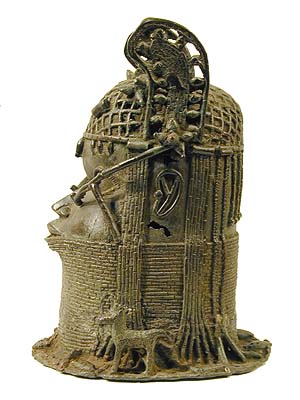
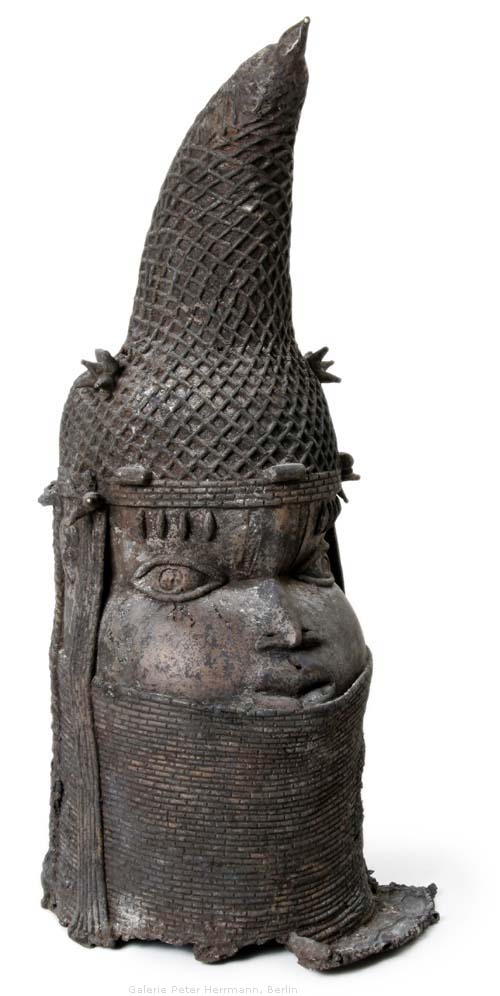
| Culture › Re: Benin Art And Architecture by ezeagu(m): 3:32pm On May 29, 2011 |
[center]https://www.hamillgallery.com/BENIN/BeninHeads/BeninHead12l.JPG[/center] |
| Culture › Re: Benin Art And Architecture by ezeagu(m): 3:31pm On May 29, 2011 |
| Culture › Re: Delta Igbo, Bendel Igbo: What Does That Even Mean. by ezeagu(m): 3:28pm On May 29, 2011 |
I think Igbo originated in what is now Anambra, I think they say it's the name of a person. I don't know the story. |
| Culture › Re: Igbo Art (Nka Igbo) by ezeagu(m): 3:22pm On May 29, 2011 |
PhysicsMHD:This looks like a mud version of the 'false doors' in Egyptian buildings. |




1 2 3 4 5 6 7 8 ... 200 201 202 203 204 205 206 207 208 (of 349 pages)