Ezeagu's Posts
Nairaland Forum › Ezeagu's Profile › Ezeagu's Posts
1 2 3 4 5 6 7 8 ... 49 50 51 52 53 54 55 56 57 (of 349 pages)
 Politics › Re: What Does The South West Offer Nigeria by ezeagu(m): 12:12pm On Oct 22, 2015 Politics › Re: What Does The South West Offer Nigeria by ezeagu(m): 12:12pm On Oct 22, 2015 |
omonnakoda:So what have we established on this thread: European policies affected the way certain parts of Africa developed. Europeans could choose to educate one part of a colony and deliberately hold back another to play to their advantage. In Nigeria, the first major industry (after slavery) started off in eastern Nigeria and led to the formation and (industrial) development of wider Nigeria. Before the Europeans arrived with their education, the eastern Nigerians were already writing down their language. |
| Politics › Re: What Does The South West Offer Nigeria by ezeagu(m): 12:01pm On Oct 22, 2015 |
omonnakoda:Which just shows the ever shifting theory of origin of nsibidi. Which just shows how the Cross River communities have been interacting with each other for thousands of years, bouncing ideas off of each other like how Arochukwu and some other Igbo towns took nsibidi and simplified it from its more pictographic origin on the ukara cloths, the main medium of nsibidi from Igboland to south west Cameroon. You do now there is little difference in genes between the Cross River people. 1 Like |
| Politics › Re: What Does The South West Offer Nigeria by ezeagu(m): 11:10am On Oct 22, 2015 |
omonnakoda:Because the Igbo language picked up nsibidi after Ajayi Crowther, or the idea of writing names was of European origin, not that the characters were simply corrupted which is why you can't read that Igbo name. Or maybe combining the two, Ajayi Crowther spread nsibidi with his Ibo primer? https://s11.postimg.org/y6g05xks3/800px_Ikpe_nsibidi.jpg "Nsibidi was used in judgement cases known as 'Ikpe' in some Cross River communities. Macgregor was able to retrieve and translate an nsibidi record from Enyong of an ikpe judgement." A court case written in 'crude' nsibidi in the 19th century. I'm laughing. 1 Like |
| Politics › Re: What Does The South West Offer Nigeria by ezeagu(m): 10:54am On Oct 22, 2015 |
omonnakoda:It was only known in Arochukwu, so what are these guys in Ebonyi doing? "Ùkárá cloth is sold in markets in Ohafia, Umuahia, Abiriba, Aro, Aba and in Calabar, but all this cloth is created in Nkalagu junction village. Formerly, were three producers of Ùkárá in Nkalagu, but the others passed away, and their children abandoned this practice because it is not lucrative enough." Cross River Cultural Heritage http://www.crossriverheritageafricandiaspora.com/p/blog-page.html http://altoonsultan..co.uk/2015/07/at-hood-secret-patterns-of-ukara-cloth.html "Every people have some kind of symbol/s with which they can communicate ideas whether in art" Why aren't there any others you can show? Because nsibidi is the first known writing system in West Africa. Look, an Igbo name, Onuaha, in nsibidi recorded in the early 1900s. I'm laughing. https://s17.postimg.org/fjqjy6bzz/Onuaha.jpg "The name of a boy called 'Onuaha' as recorded by J. K. Macgregor in 1909. Macgregor interpreted the first two symbols as corruptions of the English letters 'N' and 'A' and the last symbol a generic nsibidi. Macgregor noted the growing European influence on nsibidi." https://en.wikipedia.org/wiki/Nsibidi (Check the references) "J.K. Macgregor's view was that "The use of nsibidi is that of ordinary writing. I have in my possession a copy of the record of a court case from a town of Enion [Enyong] taken down in it, and every detail ... is most graphically described". Nsibidi crossed ethnic lines and was a uniting factor among ethnic groups in the Cross River region." https://en.wikipedia.org/wiki/Nsibidi (Check the references) 1 Like |
| Politics › Re: What Does The South West Offer Nigeria by ezeagu(m): 10:23am On Oct 22, 2015 |
actoor:Onitsha Main Market in the colonial era was the biggest and probably most expensive market in West Africa and patronised by Africans from all over. I don't know what these other pop up arguments are about. In case you missed it: https://s28.postimg.org/ytebpcsm5/books_1.png https://books.google.co.uk/books?id=j_0VAQAAIAAJ&dq=%22West+Africa%27s+Largest+Market%22+onitsha&q=%22West+Africa%27s+largest+market.%22&redir_esc=y 2 Likes |
| Politics › Re: What Does The South West Offer Nigeria by ezeagu(m): 10:14am On Oct 22, 2015 |
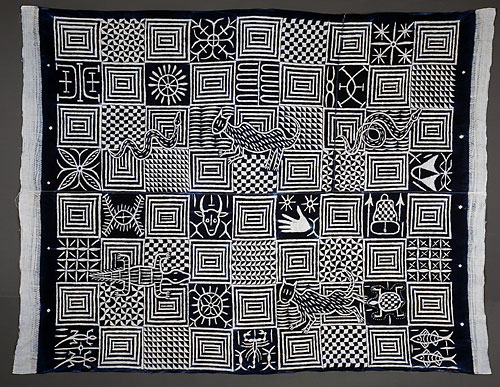
omonnakoda:Crowther was the first to create an all Igbo (Latin script) book, but wasn't the first to transcribe Igbo, preceded by people such as Olaudah Equiano. But moving on to nsibidi. Nsibidi is writing that originated from Ejagham people but had already spread throughout the region before Europeans came. If you're bragging about a colonial taught Crowther, then you're going to give credit for the spread of nsibidi hundreds of years before any European taught any African any writing. This is the nsibidi cloth, the main medium of nsibidi. It's made and designed between Ebonyi state and Abia state but used throughout the Cross River. [img]http://africa.si.edu/exhibits/inscribing/images/30-Ukara-clothLG.jpg[/img] http://africa.si.edu/exhibits/inscribing/power.html It's similar to uli which also has some meaning attached to the symbols, although that's mostly just a motif. https://s27.postimg.org/nqjfb2rwz/ijele02.jpg https://sm76626./2013/01/08/898/ Nsibidi may be crude or whatever, but it's the first recognised writing system in West Africa with no outside influence whatsoever. I thought we were talking about firsts? 3 Likes 1 Share |
| Politics › Re: What Does The South West Offer Nigeria by ezeagu(m): 3:52am On Oct 22, 2015 |
omonnakoda:Oh. Was that before or after the nsibidi writing system and John Crows dictionary and a plethora of other indigenous writing systems and dictionaries? https://archive.org/details/memoirsoflatecap00crow "pre-1500s == A form of writing called nsibidi, using formalized pictograms, existed among the Igbo and neighboring groups. It died out, probably because it was popular among secret societies whose members did not want to discuss it publicly. In 1904, T. D. Maxwell, Acting District Commissioner in Calabar, was the first European to learn about the existence of nsibidi. Apart from nsibidi writing, the Igbo acculturated themselves effectively by informal methods (Oraka pp. 13,17). " "1841 == Another Norris expedition on the Niger. He took two missionary linguists from the staff of the CMS (Church Missionary Society) in Freetown, J. F. Schon and Samuel Ajayi Crowther (the latter a Yoruba-born ex-slave and teacher), along with twelve interpreters, including Igbo who came from emancipated slave families settled in Freetown. John Christopher Taylor and Simon Jonas were among these. No permanent mission was founded. Schon was interested in Igbo and Hausa. At a stopover in Aboh, he tried to communicate in Igbo but was disappointed that people did not understand him. He then abandoned Igbo study for some twenty years (Oraka p. 23)." http://www.columbia.edu/itc/mealac/pritchett/00fwp/igbo/igbohistory.html Your tried though. What does a railway have to do with the discussion about the first partly modernised industry? 3 Likes |
| Politics › Re: What Does The South West Offer Nigeria by ezeagu(m): 3:35am On Oct 22, 2015 |
omonnakoda:And what made up the rest of the economy of the 1850s? What was the deficit on brass imports in the 1850s? You tried though. Here's a palm oil factory in 1890s Calabar: https://exhibitions.nypl.org/africanaage/photos/colonization/1232507.jpg 2 Likes |
| Politics › Re: What Does The South West Offer Nigeria by ezeagu(m): 3:16am On Oct 22, 2015 |
omonnakoda:Yeah, but we're talking about firsts. And the first major economy using industrial methods, although crude, was in eastern Nigeria. 2 Likes |
| Politics › Re: What Does The South West Offer Nigeria by ezeagu(m): 3:12am On Oct 22, 2015 |
omonnakoda:Guy, you need to stop these kind of jokes. 2 Likes
|
| Politics › Re: What Does The South West Offer Nigeria by ezeagu(m): 3:03am On Oct 22, 2015 |
omonnakoda:Southern Nigeria or 'Eastern Nigeria', 1899, 1900 "and of palm oil, amounting to 8,650,226 imperial gallons valued at £420,680 8s. 10rf., as against 8,113,820 gallons valued at £397,869 10s. 10rf. for the preceding year." http://libsysdigi.library.illinois.edu/ilharvest/Africana/Books2011-05/3064634/3064634_1899_1900_southern_nigeria/3064634_1899_1900_southern_nigeria_opt.pdf Lagos Colony or 'Western Nigeria' 1898 Palm oil: £97,337 http://libsysdigi.library.illinois.edu/ilharvest/Africana/Books2011-05/3064634/3064634_1898_lagos/3064634_1898_lagos_opt.pdf 2 Likes |
| Politics › Re: What Does The South West Offer Nigeria by ezeagu(m): 2:58am On Oct 22, 2015 |
omonnakoda:No, they invested the palm oil industry in Nigeria, even if the British came and overran them. 2 Likes |
| Politics › Re: What Does The South West Offer Nigeria by ezeagu(m): 2:54am On Oct 22, 2015 |
Go East. https://books.google.com/books?id=AGuri9TP5kgC&pg=PA71&dq=palm+oil+industry+eastern+nigeria&hl=en&sa=X&ved=0CEYQ6AEwBmoVChMIo9eXi_zUyAIVhc0UCh0A-AAh#v=onepage&q=palm%20oil%20industry%20eastern%20nigeria&f=false 2 Likes
|
| Politics › Re: What Does The South West Offer Nigeria by ezeagu(m): 2:49am On Oct 22, 2015 |
omonnakoda:Shrieking unclad with an industrialised economy how many times the size of other parts? Because the oil industry is putting palm fruits in drums and then magically getting perfect grades of oil. Hehe. https://www.msh.org/sites/msh.org/files/ffield_image_cropped/node/story/11c._sorting_the_bye-products_to_separate_the_palm_kernel_from_the_chaff-web.jpg https://eandt.theiet.org/magazine/2011/01/images/640_oil-transport.jpg Lagos received electric and phone lines because of European quarters and its administrative position, same as Calabar. Eastern Nigeria is the industrial nucleus of West Africa and probably tropical Africa judging from the biggest markets. Asaba has always been a counterpart to Onitsha than anywhere else. 2 Likes |
| Politics › Re: What Does The South West Offer Nigeria by ezeagu(m): 2:38am On Oct 22, 2015 |
omonnakoda:Eastern Nigeria is the home of the palm oil industry. Malaysia is the king of palm oil today. The first manufacturing industrialisation happened in eastern Nigeria form Asaba across to Calabar. I'm not talking about luxuries in GRA, also know as European quarters. https://exhibitions.nypl.org/africanaage/photos/colonization/1232507.jpg Calabar, 1890. 2 Likes |
| Politics › Re: What Does The South West Offer Nigeria by ezeagu(m): 2:29am On Oct 22, 2015 |
2 Likes |
| Politics › Re: What Does The South West Offer Nigeria by ezeagu(m): 2:24am On Oct 22, 2015 |
omonnakoda:And the River Niger to Aboh, Asaba, and Onitsha. Hence the Ekumeku movement in the 1880s-1910s. Eastern Niger kicked off this industry. Industrialisation happened first in eastern Nigeria. Do you have sources for the oil gap closing? 2 Likes |
| Politics › Re: What Does The South West Offer Nigeria by ezeagu(m): 2:13am On Oct 22, 2015 |
omonnakoda:Okay Southern Nigeria, 1899, 1900 "and of palm oil, amounting to 8,650,226 imperial gallons valued at £420,680 8s. 10rf., as against 8,113,820 gallons valued at £397,869 10s. 10rf. for the preceding year." "The export of rubber rose more than 65 per cent., and amounted to 1,450,567 lbs. valued at £105,116 14s. 10d. as compared with 874,298 lbs. of the value of £60,607 17*.'9rf. for the previous year. " http://libsysdigi.library.illinois.edu/ilharvest/Africana/Books2011-05/3064634/3064634_1899_1900_southern_nigeria/3064634_1899_1900_southern_nigeria_opt.pdf 2 Likes |
| Politics › Re: What Does The South West Offer Nigeria by ezeagu(m): 2:00am On Oct 22, 2015 |
omonnakoda:Are you sure Southern Nigeria was only the Eastern Region then? 2 Likes |
| Politics › Re: What Does The South West Offer Nigeria by ezeagu(m): 1:39am On Oct 22, 2015 |
omonnakoda:Okay, Calabar was the capital of Oil Rivers Protectorate and then Southern Nigeria until the Lagos colony was added as an administrative centre in 1906. The point remain, Calabar was the first capital of Southern Nigeria which is where the palm oil trade was based and hence the point about the capital of the oil trade and so on. Oh, and look where the Oil River Protectorate, the precursor to Nigeria, was based. [img]http://www.nigeriainfo.fm/lagos/media/k2/items/cache/d26f2d3a8ff5583681ac68eec63fdc44_XL.jpg[/img] 2 Likes |
| Politics › Re: What Does The South West Offer Nigeria by ezeagu(m): 1:35am On Oct 22, 2015 |
omonnakoda:Can't you read, this quote references the restricted link, I'll post it again so you can read it properly https://s15.postimg.org/ox2o6j6xn/oil.jpg https://books.google.com/books?id=AMmPAgAAQBAJ&pg=PA67&lpg=PA67 I don't believe Olivier Pétré-Grenouillea is an eastern Nigeria or Routledge is an eastern Nigerian company, you may have heard of it though. No. I already addressed the 'best agriculture' statement when I said I was referring to different regions in Nigeria, go back and read that original post because it did not say anything in direct reference to only eastern Nigeria. The bone of contention is not agriculture, the facts here are about palm oil being the first industrialised trade in Nigeria, which it was, and this fact was under the questioning of what were the 'firsts' in eastern Nigeria, and the palm oil industry started in eastern Nigeria which was the first industrialised trade and main economic pull of foreigners to Nigeria, I mean, it matched the slave trade. Your source on Lagos exports shows that, with inflation checked, Lagos wasn't half of what either Bonny or Calabar was processing and exporting individually (not palm kernels, oil) and that Bonny and Calabar 'monopolised' the trade to Britain at least. So now that we know this fact, you're now trying to question the sources, which is ridiculous because one is a Routledge published book (available here) that references a Cambridge Academic book specifically based on the palm oil industry in west Africa. You can simply say you do not trust Cambridge University and Routledge because they are eastern Nigerian sympathisers or something. I don't know. 2 Likes |
| Politics › Re: What Does The South West Offer Nigeria by ezeagu(m): 1:17am On Oct 22, 2015 |
actoor:An expensive joke with the largest markets in Africa which is soon to be larger, and the economy that birthed industrial Nigeria. An joke that will continue growing until you all have nothing left to say. 2 Likes |
| Politics › Re: What Does The South West Offer Nigeria by ezeagu(m): 1:08am On Oct 22, 2015 |
aresa:https://s29.postimg.org/vor93jsgn/books.png Ministry of Information of Nigeria: https://books.google.com/books?id=Txo0AQAAIAAJ&q=onitsha+530,000&dq=onitsha+530,000&hl=en&sa=X&ved=0CCUQ6AEwAWoVChMIjYS8uN7UyAIVQVYUCh1ClAtk https://s28.postimg.org/ytebpcsm5/books_1.png https://books.google.co.uk/books?id=j_0VAQAAIAAJ&dq=%22West+Africa%27s+Largest+Market%22+onitsha&q=%22West+Africa%27s+largest+market.%22&redir_esc=y You want more "dreams"? 1 Like |
| Politics › Re: What Does The South West Offer Nigeria by ezeagu(m): 1:05am On Oct 22, 2015 |
https://s15.postimg.org/ox2o6j6xn/oil.jpg https://books.google.com/books?id=AMmPAgAAQBAJ&pg=PA67&lpg=PA67 http://www.cambridge.org/us/academic/subjects/history/regional-history-after-1500/commerce-and-economic-change-west-africa-palm-oil-trade-nineteenth-century 1 Like |
| Politics › Re: What Does The South West Offer Nigeria by ezeagu(m): 12:57am On Oct 22, 2015*. Modified: 1:20pm On Oct 22, 2015 |
omonnakoda:So you didn't know Calabar was the first capital of Southern Nigeria? I'm not even going to bother posting a source because it's a basic fact. Lagos was the biggest slave market before the British Navy collaborated with Yoruba whos whos to end the trade and they took the land as a colony. They then made it the capital of Nigeria after amalgamation and years after the palm oil trade in 1914. 1 Like |
| Politics › Re: What Does The South West Offer Nigeria by ezeagu(m): 12:54am On Oct 22, 2015 |
omonnakoda:Yeah, you're now bullshitting. I guess a researched work specifically on the oil industry in Nigeria published by Cambridge University is now unreliable because you didn't see what you like. http://www.cambridge.org/us/academic/subjects/history/regional-history-after-1500/commerce-and-economic-change-west-africa-palm-oil-trade-nineteenth-century I dey laugh o!!! And when I reply with sources on the cost of Onitsha's Main Market and how they paid for it, that also won't be reliable. https://books.google.com/books?id=xfHsJMBLWlsC&pg=PA145&dq=onitsha+530,000&hl=en&sa=X&ved=0CCAQ6AEwAGoVChMIjYS8uN7UyAIVQVYUCh1ClAtk#v=onepage&q=onitsha%20530%2C000&f=false https://s29.postimg.org/vor93jsgn/books.png By the way this is from the Ministry of Information of Nigeria: https://books.google.com/books?id=Txo0AQAAIAAJ&q=onitsha+530,000&dq=onitsha+530,000&hl=en&sa=X&ved=0CCUQ6AEwAWoVChMIjYS8uN7UyAIVQVYUCh1ClAtk 1 Like |
| Politics › Re: What Does The South West Offer Nigeria by ezeagu(m): 12:33am On Oct 22, 2015 |
actoor:Yes, largest market then, largest market now. 1 Like |
| Politics › Re: What Does The South West Offer Nigeria by ezeagu(m): 12:21am On Oct 22, 2015 |
omonnakoda:I guess you missed the part where it was said the Onitsha Main Market was built for £530,000 pounds in 1955. That's the equivalent of 10 million pounds today according to inflation calculators. That's one expensive "yam market". You're talking about pre-colonial now, do we want to go there? Isn't it more impressive that Igbo people who supposedly never had markets or towns now have some of the biggest markets and industries in tropical Africa? Yes, oil was produced in other areas of the south, but, I don't know who was taking oil from Lagos then because Bonny and Calabar together accounted for at least 60% of Britain palm oil imports in the 19th century with a total value of over £350,000 in 1850, 50 years before Lagos £100,000 and that's without considering inflation which makes Calabar and Bonny's palm economy in the 1850s roughly four times the size. And that's just palm oil. 1 Like |
| Politics › Re: Nnamdi Kanu 'Free' - IB Times by ezeagu(op): 11:48pm On Oct 21, 2015 |
What will be next? 1 Like |
| Politics › Re: What Does The South West Offer Nigeria by ezeagu(m): 11:46pm On Oct 21, 2015 |
omonnakoda:Miele is an author and that book was published by the University of Wisconsin. They listed out the goods sold and the size of the market. Read it again maybe. Here's more 1959 - https://books.google.com/books?id=DghXAAAAMAAJ&dq=%22West+Africa%27s+Largest+Market%22+onitsha&focus=searchwithinvolume&q=%22West+Africa%27s+largest+market%22 1960 - https://books.google.com/books?id=j_0VAQAAIAAJ&dq=%22West+Africa%27s+Largest+Market%22+onitsha&focus=searchwithinvolume&q=%22West+Africa%27s+largest+market.%22 1966 - https://books.google.com/books?id=geFXAAAAIAAJ&dq=%22West+Africa%27s+Largest+Market%22+onitsha&focus=searchwithinvolume&q=%22+Onitsha%2C+West+Africa%27s+largest+market+city+and+the+center+of+its%22 https://s15.postimg.org/ox2o6j6xn/oil.jpg Although I don't know how much palm oil prices dropped and what inflation did in the 50 years, but that should give you an example of the size of the industry when the pound was much more than in 1835 than in 1900. 1 Like |
| Politics › Re: What Does The South West Offer Nigeria by ezeagu(m): 11:29pm On Oct 21, 2015 |
WIZGUY69: https://www.youtube.com/watch?v=1IRZ30waSXo I dey laugh oh!!! Just kidding. 2 Likes |
| Politics › Re: What Does The South West Offer Nigeria by ezeagu(m): 11:19pm On Oct 21, 2015 |
omonnakoda:It had nothing to do with them, only the engineers and the people who Edith E. Melie answers your question in 1977. https://s11.postimg.org/crz3ny1rn/books.png https://s11.postimg.org/3y876uesz/books_1.png https://books.google.com/books?id=iqZbAAAAMAAJ&q=onitsha+largest+market+1955&dq=onitsha+largest+market+1955&hl=en&sa=X&ved=0CCsQ6AEwAWoVChMI6vTP6MrUyAIVxLoUCh0llw8i And I was referring to groundnut empire of northern Nigeria when I said agriculture. Although palm oil is an eastern industry which is what started Nigeria, and the just like cocoa is a western thing. 1 Like |


 When people get old they have difficulty learning new stuff
 Nothing !! It only tells us about goods that are of economic interest to a single customer. That is all so if for example the level of export was at a ratio of 1: 100 we cannot deduce size of economy as you are so ignorantly trying to do.




1 2 3 4 5 6 7 8 ... 49 50 51 52 53 54 55 56 57 (of 349 pages)