Lukgaf's Posts
Nairaland Forum › Lukgaf's Profile › Lukgaf's Posts
1 2 3 4 5 6 7 8 ... 51 52 53 54 55 56 57 58 59 (of 98 pages)
 Islam › Instilling the Spirit Of Observing Solah In Children by Lukgaf(op): 5:36pm On Oct 10, 2019 Islam › Instilling the Spirit Of Observing Solah In Children by Lukgaf(op): 5:36pm On Oct 10, 2019 |
Every mother knows that it is impermissible for a child to breastfeed after the age of two. At the same time, mothers understand that their infant children cannot progress from a purely milk-based diet to a diet of solids overnight. If this drastic, unfamiliar change is thrust upon the child in an instant, he will struggle to adapt and his digestive system will suffer.In exactly the same way, we all know that once a child becomes baaligh (reaches the age of maturity), it is compulsory for him to perform all the five daily salaah on time. Furthermore, in the case of a male, these salaah will have to be performed in the masjid. Just as a mother begins weaning her breastfeeding child in advance, and gradually introduces solids to him, so that when he is two years of age, he is already accustomed to solids and can easily make the transition, the parents should adopt the same approach for their children’s salaah. The hadeeth teaches us that we should commence teaching and training our children to perform their salaah when they reach the age of seven. Thereafter, when they reach the age of ten, they should be disciplined for showing laziness in regard to salaah. (Sunan Tirmizi #407) In other words, by the time they reach the age of ten, the concern for salaah should be firmly embedded in their hearts and punctuality on salaah should be their second nature. As parents, it is really an injustice and unkindness on our side that we fail to teach our children the importance of salaah when they are young, and thereafter, when they are teens, we suddenly expect them to have perfect punctuality on their salaah. Although they are responsible and answerable for their own actions at this time, we will undoubtedly have a share in their sin of neglecting salaah as we are partially to blame. The effort must be made to teach the children the importance of salaah. This is easily achieved through reading the chapter ‘Virtues of Salaah’ to our children in our daily home ta’leem of Fazaail-e-Aa’maal. Mothers should make their daughters and small sons perform salaah with them so that they learn the concept of salaah and develop eagerness for it. Once a son reaches the age of seven, his father should begin taking him to the musjid. However, before doing so, the father must ensure that his son understands the sanctity of the masjid and knows how to conduct himself correctly. Thereafter, he must monitor his son and discipline him appropriately so that his son does not disturb others and become a nuisance in the masjid. In this regard, small children that do not understand the sanctity of the masjid should not be taken to the masjid. Training our children in this manner is not only compulsory – it is a highly-rewarding investment and one of the ultimate acts of kindness that we can show them. Every single time our child performs salaah, until the day he or she passes away, we will be rewarded, as we taught them to perform salaah. May Allah Ta‘ala bless us all to be punctual on our salaah and train our children correctly. Source: http://uswatulmuslimah.co.za 7 Likes 2 Shares |
| Islam › Re: Suggest Threads For Frontpage Here by Lukgaf(m): 5:31pm On Oct 10, 2019*. Modified: 6:05pm On Oct 10, 2019 |
Humility https://www.nairaland.com/5463900/humility#83017068 Five before five https://www.nairaland.com/5463922/five-before-five#83017341 Instilling the spirit of observing Solah in children https://www.nairaland.com/5464021/instilling-spirit-observing-solah-children#83018574 The Fast Of Al-ayaamul-ul-beed (13th, 14th And 15th) Of the month Sofar 1441AH https://www.nairaland.com/5464058/fast-al-ayaamul-ul-beed-13th-14th-15th#83019252 |
| Islam › Re: Five Before Five by Lukgaf(op): 4:59pm On Oct 10, 2019 |
[quote author=Lukgaf post=83017341][/quote]Youth before old age One of the things that most people take for granted is their youth. When people are young, they are full of energy and are capable of doing so many things for the sake of Allah Ta’ala, but often we see that this energy is wasted in one way or another. When people lose their youth, they inevitably find it harder to do those deeds and acts of worship that they found somewhat easier to do at a younger age. With old age, people find it harder to keep fard (obligatory) fasts, they may not be able perform wudhu properly or to pray properly, and they may not have the energy to recite the Qur’an very often. It is common to hear young people claim that they will start ‘practising’ Islam when they get older. We should always be mindful of the fact that ‘older’ may never come round for us. We have no guarantee that we will even be alive tomorrow, let alone be alive to see our pensions, or our grandchildren. And even if we are blessed with a long life, how can we be sure that we have the health – physical and mental – to practise Islam? On top of all this, we should remember that people do not just magically become ‘good’ overnight; often, we find that bad habits are hard to shift – what if we can’t get rid of our bad habits when we get old? Health before sickness As with our youth, we often take for granted our health. We are advised to take advantage of our good health before we are overcome with illness or disability. What we often don’t realise is that our health is a blessing from Allah Ta’ala. When we are in good health, we take it for granted and don’t always appreciate what we have. It is only when we fall ill that we realise what a great thing we had and how we let it go to waste by not doing as much ‘ibadah (worship) as we know we could – and should – have done. Wealth before poverty Wealth is another blessing granted to us by Allah. Wealth in this context does not necessarily mean that we have large amounts of savings, or the fact that we can afford a huge house, a top-of-the-range car and a state-of-the-art media system. The simpler things such as a roof over our heads, clothes on our backs and food in our fridges make us amongst the world’s wealthiest people – a fact that we, more often than not, seem to overlook, particularly when we see people that have a lot more worldly possessions than we do. There are millions of people in the world today that don’t even have a drop of clean water to drink, and they don’t know where their next meal will be coming from. These are the people that we need to be helping with our wealth. Even a small donation can go a long way. We should give as much as we can in the way of Allah, and we are assured of the rewards for doing so by Allah: ‘The likeness of those who spend their money for Allah’s sake, is as the likeness of a grain (of corn), it grows seven ears, every single ear has a hundred grains, and Allah multiplies (increases the reward) for whom He wills, and Allah is All-Sufficient for His creatures needs, All Knower’. (Al-Baqarah: 261) Free time before preoccupation Islam always encourages us to make the most of our time, and to spend as much of it as possible in the way of Allah. We should utilise the time we have available to do as much good as we can, because before we know it, this time will have passed. As mentioned above, we should use the time we have in our youth to do as much in the way of Allah as possible, because as time passes, as well as having to contend with old age and all that entails, we will inevitably have a lot more things to worry about, like jobs, homes and families – things that most of us at this present moment aren’t necessarily worried about. If we think that finding the time to practise Islam is difficult now, what will we do when life really starts to pick up pace? There is nothing wrong with getting married and having a family, but we should appreciate the relative freedom that we have now, and spend as much of it as we can on good deeds. The concept of time is so important in Islam that Allah swears by it in the Qur’an: ‘By Time. Verily Man is in loss, except such as have faith and do good deeds, and in the mutual teaching of truth, of patience and constancy.’ (Surah Al-‘Asr) In line with the above aayaat (verses), we have to discipline ourselves by giving value to the importance of time. We should be prompt in doing good deeds, which will increase our faith and subsequently enable us to gain Allah’s pleasure and mercy. Life before death The last thing that we have been advised to take advantage of is our life before our death. Every night when we go to sleep, we enter a state where our soul leaves us. When we wake up, it is only because Allah has blessed us by returning our souls and granting us the opportunity to worship Him for at least one more day. Upon waking up in the morning, the Prophet (Peace Be Upon Him) used to say (and we are also encouraged to do the same): ‘Praise be to Allah who gave me life after death, and to Him is the final return.’ (Bukhari) Often we do not fully appreciate how great a blessing it is to be given another chance. We become relaxed about death, and we don’t fully comprehend or appreciate that at some point – and only Allah Ta’ala knows when – our life will be taken away from us for good, leaving no second chance, no opportunity to make up for the wrongs we have done, and no turning back time. We must not forget what a mercy life is. We should savour every moment and use it to our best advantage. This means pleasing Allah in order to achieve our ultimate goal – Jannah. I’ll end with a final hadith that I feel sums up the importance of all these issues: ‘A man shall be asked concerning five things on the Day of Resurrection: concerning his life, how he spent it; concerning his youth, how he grew old; concerning his wealth, how he acquired it and how he spent it; and what he did with the knowledge he had.’ (Tirmidhi) I pray that Allah Ta’ala grant us the tawfiq to make the most of all that He has blessed us with, and that He accepts all our efforts. Source: https://jamiat.org.za/five-before-five/ 3 Likes |
| Islam › Five Before Five by Lukgaf(op): 4:57pm On Oct 10, 2019 |
The Prophet (Peace Be Upon Him) said:https://i1.wp.com/razamovement.com/wp-content/uploads/2015/08/22.jpg 6 Likes |
| Islam › Humility by Lukgaf(op): 4:49pm On Oct 10, 2019 |
Abu Hurairah (may Allah be pleased with him) reported Allah’s Messenger (peace and blessings be upon him) as saying: There was a dispute between Hell and Paradise and it (Hell) said: “The haughty and the proud would find abode in me”. And Paradise said: “The meek and the humble would find their abode in me.” Thereupon Allah, the Exalted and Glorious, (addressing Hell) said: “You are (the means) of My punishment by which I punish those of My servants whom I wish.” (And addressing Paradise) He said: “You are only My Mercy by means of which I shall show mercy to those whom I wish, but each one of you would be full.” (Sahih Muslim: Book 40, Number 6818)From the above hadith, we can deduce that when a believer is humble Allah bestows his mercy upon him/her. SubhanAllah! What a beautiful guarantee! What better news can there be for a believer who is humble? Isn’t this what we desire at all times? Allah’s mercy and his blessings! As Muslims, we believe that the right to be ‘supremely’ proud belongs to Allah alone. He is Al-Mutakkabir! Meaning, that Allah is supremely great, possessor of all rights, and the perfection of greatness. Allah is above all others, He is Mighty and Supreme. Living examples of humility Prophet Muhammad (peace and blessings be upon him) is the finest example of humility for all of the humanity. Narrated Abu Masood (may Allah be pleased with him) said: “A man came to the Prophet (peace and blessings be upon him) and he began to speak to him, and he was seized by fear (of the Prophet). Upon witnessing his demeanor the Prophet (peace and blessings upon him) said to him: “Take it easy and calm down, for verily I am not a king, but instead I am only the son of a woman from the Quraish who used to eat dried salted meat strips”. (Ibn Majah) Subhanallah! Prophet Muhammad (peace and blessings be upon him) forbade people from praising him too much and also from exaggerating about him. He was the humblest of all and always submissive to his Lord. Narrated Umar (may Allah be pleased with him), I heard the Prophet saying: https://jamiat.org.za/wp-content/uploads/2016/02/Humility1.jpg “Do not exaggerate about me as the Christians have exaggerated about the son of Maryam, for I am no more than His slave, so say, (that I am merely) the slave of Allah and His messenger.” (Sahih Bukhari, Volume 4, Book 55, Number 654) Prophet Muhammad (peace and blessings be upon him) would sit on the ground and eat and drink with his Companions. He would visit the sick, console and pray for them. He would accept the invitation of a slave to eat bread with him who worked for him. If anyone accompanied him on a journey, he would never let them walk on foot while he rode his mount. They would take turns. In addition to all this, the Prophet (peace and blessings be upon him) was well known for his humble character amongst his family. Narrated by Al-Aswad that he asked Aishah (may Allah be pleased with her), “What did the Prophet use to do in his house?” She replied, “He used to keep himself busy serving his family and when it was time for prayer he would go for it.” (Sahih Bukhari, Volume 1, Book 11, Number 644) He would joke with his friends and family, offer help to the poor and needy, play with children and lie down and sleep on sand and ground. (And we often complain about the type of mattresses we have that give us backaches. Sad indeed! ) Prophet Muhammad (peace and blessings be upon him) could have lived a luxurious life… living in palaces, eating tasty food, wearing expensive clothes BUT he chose the life of a slave. Mu`adh bin Anas (may Allah be pleased with him) reported: The Messenger of Allah (peace and blessings be upon him) said, “Whoever gives up wearing elegant and expensive garments out of humbleness, when he can do so, Allah will call him on the Day of Resurrection and before all the creations, He will give him the choice to wear whichever garment of Iman he would like to wear.” (At-Tirmidhi) SubhanAllah! The second Caliph, Umar ibn Khattab was known for his strong personality. Urwah ibn Zubair (may Allah be pleased with him) said: ‘I saw Umar carrying a large leather water canteen on his shoulder. I said to him, ‘O Amir-ul-Mu’mineen, you shouldn’t be carrying that’. Umar replied by saying, ‘A delegation came to Madinah and I saw their obedience to me, and some ‘nakwah’ (pride) entered into my heart and I wanted to destroy it’. Allahu Akbar! Such was the humility of great people. On the other hand, Allah has provided us with an example of the preserved body of Pharaoh who turned arrogant (he considered himself the king of the world) and rejected the signs of Allah and Prophet Musa (may Allah be pleased with him) as the prophet of Allah and even tried to kill him. Allah says in the Qur’an: “So this day We shall deliver your (dead) body (out from the sea) that you may be a sign to those who come after you! And verily, many among mankind are heedless of Our Ayat (proofs, evidences, verses, lessons, signs, revelations, etc.) (Qur’an 10:92) Pharaoh and his people had an overbearing sense of pride which caused their downfall. Allah punished them and saved Prophet Musa (may Allah be pleased with him) from such a corrupt nation. Allah says in the Qur’an: “And We did certainly send Moses with Our signs and a clear authority to Pharaoh and his establishment, but they followed the command of Pharaoh, and the command of Pharaoh was not [at all] discerning.He will precede his people on the Day of Resurrection and lead them into the Fire; and wretched is the place to which they are led.And they were followed in this [world] with a curse and on the Day of Resurrection. And wretched is the gift which is given.” (Qur’an 11: 96-99) Words of Advice Various scientific studies have concluded that a sense of arrogance develops when someone suffers from inferiority. But WHY suffer from inferiority? Why not count your blessings? One should try not to compare themselves with others. Allah has gifted all of us with something or the other and we should be thankful to Him. Try to recognize your own faults instead of trying to find errors in others; this will help you in cultivating a sense of humility within yourself. Appreciate others and give them credit for their good deeds. Accept your own abilities and be thankful to your Lord. Stop neglecting the truth and others by being over confident. One should try not to refuse the possibility that others can be right. It’s not necessary for you to have the final word in everything. However, one should also bear in mind, that when trying to be humble, one should do it from the heart and not for praise. Thus, even humility should be in moderation, DO NOT become a doormat! Allah says in the Qur’an: “Know that the life of this world is but amusement and diversion and adornment and boasting to one another and competition in increase of wealth and children – like the example of a rain whose [resulting] plant growth pleases the tillers; then it dries and you see it turned yellow; then it becomes [scattered] debris. And in the Hereafter is severe punishment and forgiveness from Allah and approval. And what is the worldly life except the enjoyment of delusion.”(Qur’an 57:20) I sincerely pray that Allah bestows His blessings upon the entire Muslim ummah and may HE make us the most humble human beings, guide us to the straight path and make Jannat ul firdous our final abode. Ameen. Source: https://jamiat.org.za/humility/ 2 Likes |
| Islam › Re: Islamic Rulings On Buying And Selling Akube/okirika Clothes by Lukgaf(m): 9:37am On Oct 04, 2019 |
Sure Venddetta: 2 Likes 1 Share |
| Islam › Telling Your Brothers And Friends You Love Them Is A Sunnah by Lukgaf(op): 10:11am On Oct 03, 2019 |
Praise be to Allaah. Saying that you love your brothers and friends is part of the etiquette of keeping righteous company, and is a noble and good characteristic. Telling people that you love them increases the bonds of love and strengthens the ties among Muslims. It was narrated from Anas ibn Maalik (may Allaah be pleased with him) that a man was with the Prophet (peace and blessings of Allaah be upon him) when another man passed by and he said: O Messenger of Allaah, I love this man. The Prophet (peace and blessings of Allaah be upon him) said to him: “Have you told him?” He said: No. He said: “Tell him.” So he caught up with him and said: I love you for the sake of Allaah. He said: May the one for Whose sake you love me also love you. Narrated by Abu Dawood (no. 5125) and classed as saheeh by al-Nawawi in Riyadh al-Saaliheen (183) and classed as hasan by al-Albaani in Saheeh Abi Dawood. In some reports of the hadeeth it says: “Tell him for it will strengthen the love between you.” Narrated by Ibn Abi’l-Dunya in al-Ikhwaan (69). Shaykh Ibn ‘Uthaymeen (may Allaah have mercy on him) said: That is because this word will instil love in his heart, because if a person knows that you love him, he will love you, even though hearts may recognize and love one another without actually speaking, as the Prophet (peace and blessings of Allaah be upon him) said: “Souls are like conscripted soldiers; those whom they recognize, they get along with, and those whom they do not recognize, they will not get along with.” But if a person says it with his tongue, this will increase the love in the heart, so you should say: “I love you for the sake of Allaah.” End quote. Sharh Riyadh al-Saaliheen. It was narrated that al-Miqdaam ibn Ma’di Yakrib (may Allaah be pleased with him) said: The Messenger of Allaah (peace and blessings of Allaah be upon him) said: “If one of you loves his brother, let him tell him.” Narrated by al-Tirmidhi (2392) and classed as hasan by al-Albaani in al-Silsilah al-Saheehah (417). It was narrated from ‘Ali ibn al-Husayn ibn ‘Ali ibn Abi Taalib (may Allaah be pleased with him) that the Messenger of Allaah (peace and blessings of Allaah be upon him) said: “If one of you loves his brother for the sake of Allaah, let him tell him, for it does good and makes the love last.” Shaykh al-Albaani said in al-Silsilah al-Saheehah (1199): It was narrated by Wakee’ in al-Zuhd (2/67/2) with a saheeh isnaad from ‘Ali ibn al-Husayn in a marfoo’ report. I (al-Albaani) say: ‘Ali ibn al-Husayn is the grandson of ‘Ali ibn Abi Taalib; he is thiqah jaleel (honest and great man) one of the men of the two Shaykhs (al-Bukhaari and Muslim). So it is mursal with a saheeh isnaad. There is corroborating evidence in the hadeeth of Mujaahid which is also mursal; this was narrated by Ibn Abi’l-Dunya in Kitaab al-Ikhwaan and in al-Fath al-Kabeer (1/67). There is another corroborating report from Yazeed ibn Na’aamah al-Dubbi, which I narrated in the other book (1726). When all the isnaads are taken into account, the hadeeth is hasan, in sha Allaah. End quote. What is meant here is that it is mustahabb; it is not obligatory. Al-Manaawi (may Allaah have mercy on him) said: “Let him tell him that he loves him for the sake of Allaah” means, it is mustahabb for him to tell him, by saying I love you for the sake of Allaah, i.e., not for any other reason such as kindness and so on, because it ensures that the bond will last longer and makes love stronger, and it increases and multiplies love, and brings people together, thus the Muslims will be united, and troubles and grudges will be dispelled. This is one of the good features of Islam. End quote. Fayd al-Qadeer (1/319). And Allaah knows best. Source: IslamQA 3 Likes 1 Share |
| Islam › Re: Suggest Threads For Frontpage Here by Lukgaf(m): 10:01am On Oct 03, 2019 |
Superstition And The Month Of Safar https://www.nairaland.com/5450275/superstition-month-safar Telling Your Brothers And Friends You Love Them Is A Sunnah https://www.nairaland.com/5450294/telling-brothers-friends-love-sunnah |
| Islam › Superstition And The Month Of Safar by Lukgaf(op): 9:59am On Oct 03, 2019 |
Rasulullah Sallallahu Alayhi wa Sallam has stated: “There is nothing evil about the month of Safar.” (Bukhari) Believing that the month of Safar is inauspicious and particularly that its first 13 days are ill-fated or that it is harmful to marry, propose or travel, etc. during these days are superstitions which are contrary to the teachings of Islam. Such superstitions have no basis in Islam and stem from the beliefs of idol-worshippers and pagans. Stemming from the same erroneous belief system are horoscopes, astrological predictions and consulting fortune-tellers. It is likely that many of us have not realised how abhorred a practice this is in Islam, nor the extent of Rasulullah’s Sallallahu Alayhi wa Sallam condemnation of it. Rasulullah Sallallahu Alayhi wa Sallam has stated: “He who consults with a fortune-teller, his Salaah will not be accepted for forty days.” (Muslim) Rasulullah Sallallahu Alayhi wa Sallam has further stated: “He who goes to a soothsayer or a fortune-teller and believes in his predictions, has disbelieved in the revelation sent to Muhammad Sallallahu Alayhi wa Sallam.” (Targhib) https://jamiat.org.za/wp-content/uploads/2014/11/safar-feat-eng250.png A true Muslim firmly believes that all conditions, whether they are adverse or favourable, come directly from Allah Ta'ala. Specific days, months or phenomena do not control our lives. Source: https://jamiat.org.za/the-month-of-safar-2/ 3 Likes 1 Share |
| Politics › Re: Aisha Buhari’s Long Absence Not Due To Infighting In Aso Villa – Presidency by Lukgaf(m): 11:15am On Sep 29, 2019 |
Baba Buhari should consider taking Thanniyah (second wife) |
| Islam › Re: Suggest Threads For Frontpage Here by Lukgaf(m): 8:10am On Sep 27, 2019 |
Prayer before sexual intercourse https://www.nairaland.com/5439612/prayer-before-sexual-intercourse |
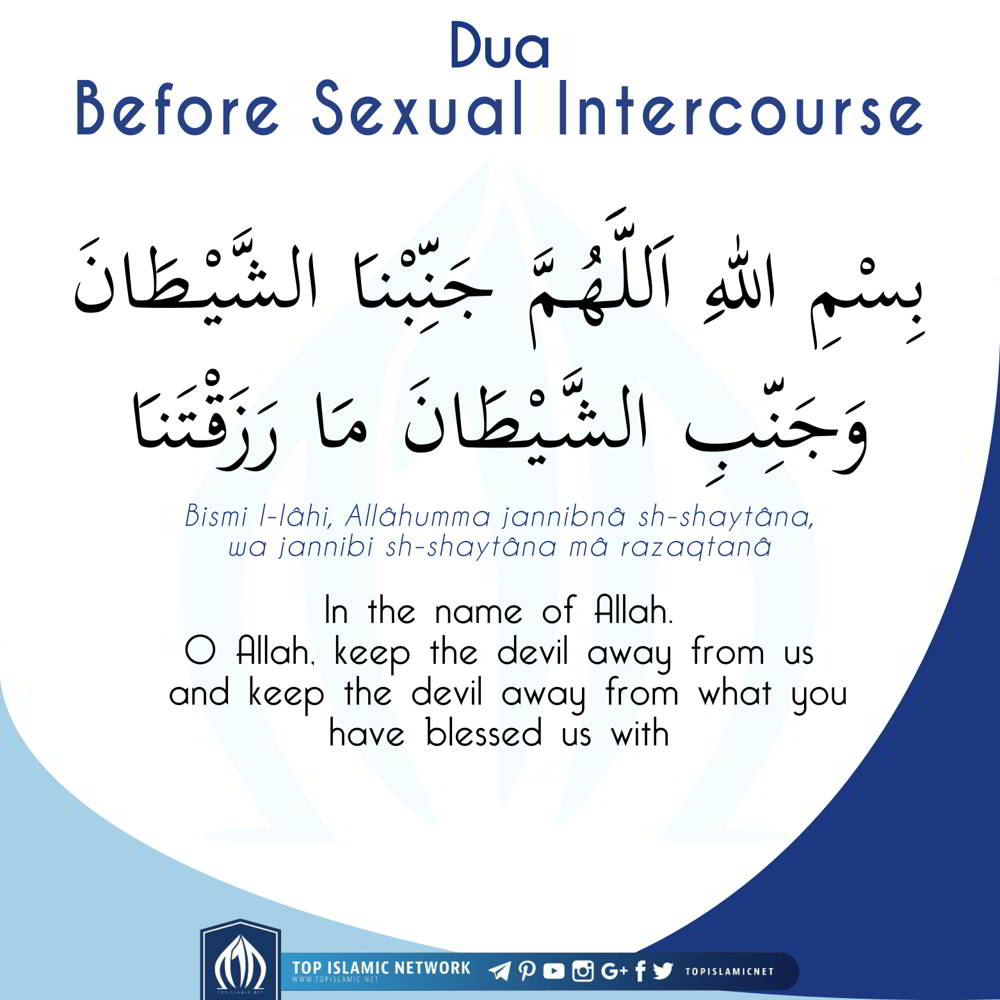
| Islam › Prayer Before Sexual Intercourse by Lukgaf(op): 8:09am On Sep 27, 2019 |
Islam is beautiful religion as it touches all aspect of human life. Among the manners prescribed by the shari’ah is that the Muslim should say when he commences intercourse with his wife: "bismillaah, oh Allaah, shield us from Satan and keep him away from us and from what You [may] bestow upon us (i.e. children)" narrated by Al-Bukhari, Fath ul-Baari # 138 [transliteration: "bismillaah, allaahumma jannibnash-shaytaana wa jannib-ash-shaytaana maa razaqtana"] https://pbs.twimg.com/media/DsHLMyhVsAA6Obq.jpg This opening invocation is useful in that if Allaah blesses the husband and the wife with a child, this child will not be harmed by Satan. Reference: IslamQA 24 Likes 3 Shares |
| Islam › Re: Women And Depression (for Muslim Women) by Lukgaf(m): 10:17pm On Sep 26, 2019 |
May Allah be with our mother, wives and sisters. 7 Likes |
| Islam › Re: Suggest Threads For Frontpage Here by Lukgaf(m): 3:01pm On Sep 19, 2019 |
What Does Miserliness Means In Islam? https://www.nairaland.com/5425854/what-does-miserliness-means-islam Harms Of Spreading Misinformation, What Says Islam. https://www.nairaland.com/5425954/harms-spreading-misinformation-what-says#82376784 |
| Islam › Harms Of Spreading Misinformation, What Islam Says by Lukgaf(op): 2:55pm On Sep 19, 2019 |
Modern devices, social media and the internet provide us with breaking news almost as it happens. Never before was it so easy to be in touch with the world. Sadly, the benefits of such advancement have been overshadowed by its misuse. The same technology that brings us news in a flash is also used to spread misinformation, hoax messages, lies, slander, gossip and deception. These messages in turn create anxiety, panic, rage, protests, violence and a whole host of problems in society. Spreading misinformation through lies, gossip, slander and deception is a major sin. The chief weapon of Dajjal (The great deceiver) will be lies, misinformation and deceit. The real challenge of the information age is to be truthful. Many of us can relate to receiving messages from well-meaning family members or friends with dubious content or that are unverified. Many of us are also guilty of forwarding such information with 'good intentions', only to find out later that the information was false and potentially disruptive. https://cruxnow.com/wp-content/uploads/2017/09/fake-news-1024x578.png At times, Shaytan misguides people by engaging them in a 'cause' they assume to be noble but in reality causes tremendous harm by peddling false information about families, scholars, organisations and their representatives. This entails cynism, disrespect, untruths, assumptions and false information – all in the name of 'truth'. The Noble Qur'an condemns spreading information without verification. O you who believe! If an evil-doer comes to you with important news, verify it, lest you should harm people in ignorance [out of haste in belief and making decision], and afterwards you become regretful for what you have done. (Hujrat Verse 6) Rasulullah (Sallallahu Alaihi Wasallam) said, “Deliberation and forethought should go into everything except for deeds pertaining to the Hereafter.” (Abu Dawud) Another Hadith states: “Deliberation is from Allah and haste is from Shaytan.” (Tirmizi) May Allah Ta'ala help us to guard what we say and protect us from spreading information that is harmful. Source: https://www.darulihsan.com/index.php/social-etiquette/item/8459-harms-of-spreading-misinformation 7 Likes |
| Islam › What Does Miserliness Mean In Islam? by Lukgaf(op): 2:05pm On Sep 19, 2019 |
In Islam, Miserliness is a blameworthy characteristic, and what disease can be worse than miserliness? The scholars have differed concerning its definition.Ibn Muflih (may Allah have mercy on him) said: The scholars mentioned a number of opinions concerning the definition of miserliness, including the following: 1. Withholding zakaah; the one who gives it cannot be described as a miser. 2. Withholding obligatory spending, such as zakaah and maintenance. Based on that, if a person gives zakaah but withholds other kinds of obligatory spending, then he is regarded as miserly. (This view was favoured by Ibn al-Qayyim and others). 3. Doing that which is obligatory in terms of spending as well as (extra) acts of generosity and charity. If a person does not do the latter, then he is regarded as miserly. (This view was favoured by al-Ghazali and others). End quote from al-Aadaab ash-Shar‘iyyah (3/303). Ibn al-Qayyim (may Allah have mercy on him) said: The miserly person is the one who withholds what he is required to give. The one who gives all that he is obliged to give cannot be called miserly; rather the miserly person is the one who withholds what is due from him to give. End quote from Jalaa’ al-Afhaam (p. 385). Al-Qurtubi (5/193) said something similar. Al-Ghazali (may Allah have mercy on him) said: The miserly person is the one who withholds when he should not withhold, either according to Islamic teaching or according to common decency. This is not something that can be quantified. End quote from Ihyaa’ ‘Uloom ad-Deen (3/260). Shaykh Ibn ‘Uthaymeen (may Allah have mercy on him) said something similar: Miserliness is withholding what is obligatory and what should be given. End quote from Sharh Riyaadh as-Saaliheen (3/410). Secondly: A man is obliged to spend on his wife and children on a reasonable basis. That includes providing food, drink, clothing, shelter, and everything the wife and children need that is essential, such as medical treatment, education and so on. That spending should be according to the husband’s means and his financial situation, because Allah, may He be exalted, says (interpretation of the meaning): “Let a man of wealth spend from his wealth, and he whose provision is restricted - let him spend from what Allah has given him. Allah does not charge a soul except [according to] what He has given it” [at-Talaaq 65:7]. The obligatory spending on one’s wife and children varies according to how well off or otherwise the husband is. Whoever is well off should spend as one who is well off spends on his wife and children; if he imposes constraints on them in terms of spending, then he is regarded as miserly, because he is failing to do what is enjoined upon him. The one who is not well off should spend as one who is not well off spends. Whoever is of moderate means should spend according to his situation, and Allah does not burden any soul with more than He has given it. There is no set limit for that according to Islamic teaching; rather reference should be made to what is customary among the people. See the answer to question no. 3054. Conclusion:Source: https://islamqa.info/en/answers/238938/definition-of-miserliness-according-to-islamic-teachings 5 Likes 1 Share |
| Travel › Re: General South Africa Visa Enquiries by Lukgaf(m): 8:21pm On Sep 15, 2019 |
You have said the truth. I know someone whose visa was denied on the basis that the office for foreign students could not pick calls. In fact, you are talking with fact. I can attest to all what you wrote here sir. tosintonero: 3 Likes |
| Islam › Re: Is Allah A Moon God And Other Questions From A Non-muslim by Lukgaf(m): 10:37am On Sep 13, 2019 |
I tell u sir Rashduct4luv: 1 Like |
| Islam › Re: Evidence That Muhammad Was A Prophet by Lukgaf(m): 9:00am On Sep 13, 2019 |
May peace and blessing of Allah be upon him, his households and companions 2 Likes |
| Islam › Re: Is Allah A Moon God And Other Questions From A Non-muslim by Lukgaf(m): 8:59am On Sep 13, 2019 |
Shayk. Jazakumlah khaeran sir. To include this, I have even met some people who thinks Islam is a religion of Indian people alone. |
| Islam › Re: Freedom Or Destruction? by Lukgaf(op): 8:57am On Sep 13, 2019 |
Ameen. Prof, the issue of all these absolutely freedom should be curbed. Some people are getting mad with it. Imagine a male marrying male? is that not weird? Rashduct4luv: 1 Like |
| Islam › Re: Quiz : Where Is Allah ( God )? by Lukgaf(op): 8:55am On Sep 13, 2019 |
Maa sha Allah my ustadh. barokaLah fee sir Rashduct4luv: |
| Islam › Re: Suggest Threads For Frontpage Here by Lukgaf(m): 6:36am On Sep 13, 2019 |
Freedom or destruction https://www.nairaland.com/5414386/freedom-destruction#82184295 Q&A: Paying Recorded Qur'an In An Unclean Places https://www.nairaland.com/5414380/q-paying-recorded-quran-unclean Quiz: Where is Allah ( God )? https://www.nairaland.com/5414408/quiz-where-allah-god#82184608 |
| Islam › Quiz : Where Is Allah ( God )? by Lukgaf(op): 6:34am On Sep 13, 2019 |
In sha Allah, we hope to be having a quiz henceforth every week in order to refresh our knowledge about Islam. Today, we start with simple question many people will fail. Let us see how versed are you in the basic knowledge of Islam! The question of this week is: Where is Allah (God)? |
| Islam › Freedom Or Destruction? by Lukgaf(op): 6:16am On Sep 13, 2019 |
IntroductionThe demand for freedom has further progressed into the sphere of religion. No longer do people wish to be ‘restrained’ by religion. Instead, there is a general crave for freedom. At times, it is a desire for total freedom from religion, whilst in other cases the demand is for some form of ‘relaxation’ in some aspects of religion. Statements like, ‘orthodox’, ‘old fashioned’, ‘backwards ‘ etc are all the products of this drive towards freedom. Deen is not the invention of any human. It is not something that can be fashioned according to a person’s taste. Allah Ta`ala declared the Deen of Islam to be perfect. Hence, demanding some form of relaxation means that –Allah forbid- Deen is incomplete. Careful reflection will reveal that this world has been designed in such a way that it is impossible to enjoy total freedom. No government or organisation advocates complete freedom. Instead, there is and will always be some degree of restriction in order to have a balanced society. Today, the promoters of freedom themselves hold their heads in bewilderment over the ‘monster’ they have created. The thirst for freedom can never be quenched. It goes on until the individual demands complete freedom- freedom to do whatever he or she pleases. Freedom from marital obligations, from morals, modesty, freedom from everything including-Allah Forbid- even religion and God! Let us take a cursory glance at those communities that have embraced this ‘free culture’. What is the result? Daughter impregnated by her own biological father. Mother mercilessly murdered by her own child for a few pennies of life insurance. Innocent children abused for the satisfaction of desires. Why? All this is the result of the ‘free culture’ wherein there is absolutely no restriction as to what an individual may do in order to gratify himself. Over and above all of this is the effort made, again in the name of ’freedom’, to justify some of these heinous, hair rising, despicable acts! Perhaps this drive has been fuelled by the passion for entertainment and desire for enjoyment. The focal point of people’s lives has become entertainment. A holiday barely comes to an end when the next is already planned. Families are sacrificed for the sake of entertainment. Problems creep into a new marriage when the husband is too busy with his friends entertaining himself. Children are discarded in day care centres because their parents ‘need’ to have some time to themselves. Jobs are jeopardised because of entertainment, etc, etc. Complete freedom will be enjoyed only in the hereafter. Every person, in his or her capacity, has some level of responsibility in this world. A husband has the responsibility of his wife. Parents have the responsibility of the correct upbringing of their children. Children have the responsibility of taking care of the parents. Teachers shoulder the responsibility of the students. An employee has the responsibility of performing as per the demands of the job. Thus there is no escape from responsibility. Nabi ṣallallāhu 'alayhi wa sallam (peace and blessings of Allāh be upon him) is reported to have said, “Each one of you is a shepherd and each one of you will be questioned regarding his flock”. Whilst there is no objection to entertainment when it is within the parameters of Shariah, the culture of fun and entertainment which has erupted is in NO way justifiable. Likewise, the ‘free culture’ as well is in contradiction with the teachings of our pure and pristine Sharia`h. Nabi sallallahu alaihi wasallam is reported to have said, “The world is a prison for the Believer and paradise for the disbeliever”(Muslim). Just as a prisoner cannot behave as he wishes, likewise a mu`min cannot do whatever he pleases in this world. He is bound and restricted by the command of his loving Master, Allah Ta`ala. Source: alhaadi.org.za via https://jamiat.org.za/freedom-or-destruction/ 4 Likes 1 Share
|
| Islam › Playing Recorded Qur'an In Unclean Places by Lukgaf(op): 6:08am On Sep 13, 2019 |
QuestionAnswer Praise be to Allah. Firstly: Part of the etiquette of interacting with the Holy Qur’an is not to recite it in filthy places, or in places where people relieve themselves. Ibn Katheer (may Allah have mercy on him) said in Fadaa’il al-Qur’an (p. 149): With regard to reciting Qur’an in the lavtory , it is obviously makrooh (disliked), and if we say that it is haraam, out of respect for the Qur’an, that would be a sound view. End quote. Shaykh Ibn ‘Uthaymeen (may Allah have mercy on him) said, explaining the etiquette of reading or reciting the Holy Qur’an: Part of that etiquette is not to read or recite Qur’an in filthy places, or in gatherings where no one will listen to it, because reciting it in such places is disrespectful towards it. It is not permissible to recite Qur’an in lavatories and the like, which are prepared for the purpose of urination or defecation, because that is not befitting to the Holy Qur’an, End quote from Majmoo‘ Fataawa ash-Shaykh Ibn ‘Uthaymeen (20/277). Secondly: This ruling does not apply to a room in which a sick or elderly person urinates into a bottle, because this room cannot be described as being unclean or impure (najis); rather it is pure (taahir), and the impurity is limited to the bottle only. It is proven in the hadith that the Prophet (blessings and peace of Allah be upon him) had a vessel that he would keep with him in his room, and urinate into it if he woke up at night. This is similar to the bottle mentioned in the question. It was narrated by Abu Daawood in his Sunan (24), an-Nasaa’i in his Sunan (32), Ibn Hibbaan in his Saheeh (1426), and al-Haakim in al-Mustadrak (594) from Hukaymah bint Umaymah bint Ruqayqah from her mother that she said: The Prophet (blessings and peace of Allah be upon him) used to have a vessel made of wood under his bed into which he would urinate at night. This hadith was classed as hasan by an-Nawawi in al-Eejaaz fi Sharh Sunan Abi Daawood (p. 155); it was classed as saheeh by Shaykh al-Albaani in Saheeh Abi Daawood (19). It is known that the Prophet (blessings and peace of Allah be upon him) used to remember Allah and recite Qur’an before going to sleep, and he would recite Qur’an when he woke up, and he would pray in his room. He did not refrain from doing any of those things because of this vessel. So there is a difference between places that are set up for dealing with impurity, such as lavatories and places where animals are slaughtered, and clean, pure (taahir) places in which there happens to be some transient impurity. The former are places where the Holy Qur’an should not be recited; as for the latter, the presence of some transient impurity in them does not mean that Qur’an cannot be recited there. Based on that, there is nothing wrong with playing Qur’an in this room. And Allah knows best. Source: https://islamqa.info/en/answers/309244/playing-a-recording-of-quran-in-an-unclean-najis-place 9 Likes 1 Share |
| Islam › Re: The Fast Of The 9th (tasu'a) And 10th Day(asuuroh) Of Muharram by Lukgaf(op): 4:52am On Sep 06, 2019 |
And who among our pious predecessors hold this your position? AlBaqir: |
| Islam › Re: Suggest Threads For Frontpage Here by Lukgaf(m): 4:15pm On Sep 05, 2019 |
The Fast Of The 9th (tasu'a) And 10th Day(asuuroh) Of Muharram https://www.nairaland.com/5400497/fast-9th-tasua-10th-day#81949884 Abuse Of Women And Children: What Says Islam? https://www.nairaland.com/5400471/abuse-women-children-what-says#81949401 |
| Islam › The Fast Of The 9th (tasu'a) And 10th Day(asuuroh) Of Muharram by Lukgaf(op): 4:13pm On Sep 05, 2019 |
By counting of the Sultan and Nigeria National Moon Committe, today; 5th September, 2019 is equivalent to the 5th of Muharram, 1441AH. By implication, next week Monday and Tuesday are the blessed day of Tasu'a and Asuuroh respectively when Fasting is of great benefit.First of all, it is very important to make it clear that fasting on the day of `Ashura’ – the 10th of Muharram- is of great merits in Islam. The Prophet (peace and blessings be upon him) said, “Fasting the day of `Ashura’ (is of great merits), I hope that Allah will accept it as an expiation for (the sins committed in) the previous year” (Muslim) in Also, fasting the 9th of Muharram is highly recommended by the Sunnah. Imam At-Tirmidhi reported that Ibn `Abbas (may Allah be pleased with them both) used to say: We should fast on two days: the 9th and 10th of Muharram to distinguish ourselves from the Jewish community. (At-Tirmidhi) Explaining the virtue of fasting on the 9th and the 10th of Muharram, Dr. Muzammil H. Siddiqi, former President of the Islamic Society of North America, states: https://i.pinimg.com/originals/f2/cb/64/f2cb64e0167cad1b272d84d87c47c6f3.jpg It is the Sunnah of the Prophet (peace and blessings be upon him) to fast on the 9th and 10th of Muharram. The Prophet (peace and blessings be upon him used to fast on the day of `Ashura’. When he came to Madinah, he found out that the Jews of Madinah were also fasting on this day remembering Prophet Musa (peace and blessings be upon him). The Prophet (peace and blessings be upon him) admired this tradition and said to the Jews, “I am closer to Musa than you are.” He fasted and he also told his Companions to fast on this day. Later, before the end of his life, the Prophet (peace and blessings be upon him) told Muslims to add the 9th day also. Thus, it is recommended to fast on both the 9th and 10th of Muharram. Moreover, in the well-known book, Fiqh As-Sunnah, the late Sheikh Sayyed Sabiq states: Abu Hurayrah reported: “I asked the Prophet: ‘Which Prayer is the best after the obligatory Prayers?’ He said: ‘Prayer during the mid of the night.’ I asked: ‘Which fasting is the best after that of Ramadan?’ He said, ‘The month of Allah that you call Muharram’”(Ahmad, Muslim, and Abu Dawud). Mu`awiyyah ibn Abi Sufyan reported that he heard the Messenger of Allah say:“Concerning the day of `Ashura’, it is not obligatory upon you to fast on it as I do. Whoever wishes may fast and whoever does not wish to is not obliged to do so” (Al-Bukhari and Muslim). It is noteworthy that Muslim scholars have stated that fasting of `Ashura’ is of three levels as follows: 1. fasting for three days, i.e., on the 9th, 10th, and 11th of Muharram, 2. fasting the 9th and 10th of Muharram, and 3. fasting only the 10th of Muharram. see here for reference In conclusion, kindly save the date on your calendar so that you can fast on these days to follow the Sunnah of our noble Prophet (May peace and blessings of Allah be upon him, his households and companions), seek reward, forgiveness and all that you want from Almighty Allah. May Allah make it easy for us. Kindly remind others too to get plenty reward 4 Likes 1 Share |
| Islam › Abuse Of Women And Children: What Says Islam? by Lukgaf(op): 3:57pm On Sep 05, 2019 |
In reality, everyday of a Muslim's life should be a day of activism against the abuse of women and children. Abuse of women and children is condemned in Islam. Abusive men show complete disregard to the Islamic teachings of kindness, mercy, and compassion. They totally ignore the example of Rasulullah (Sallallahu Alaihi Wasallam) , who never hit a woman or child and was extremely gentle and compassionate with his entire family. https://zululandobserver.co.za/wp-content/uploads/sites/56/2018/08/woman-abuse_17913_tn.jpg The Noble Quran contains several verses extolling good treatment of women, and makes it clear that the relationship between men and women is to be one of kindness, mutual respect and caring, and not one of oppression, violence and abuse. Islam has enshrined the sanctity of chastity and the protection of women at all times. A woman’s honour and chastity is to be respected under all circumstances. Rasulullah (Sallallahu Alaihi Wasallam) vehemently disapproved of men ill-treating their wives, and led by example by never ill-treating anyone, including any woman or child in his entire life. He exhorted men thus saying, "Treat your women well and be kind to them, for they are your partners and committed helpers"; and at another instance he said, "The strong man is not the one who can use the force of physical strength, but the one who controls his anger." (Bukhari) Rasulullah (Sallallahu Alaihi Wasallam) is reported to have stated, "(Is it not a shame that) one of you beats his wife like a slave and then sleeps with her at the end of the day." (Riyadh-us-Saliheen) As Muslims, we must stop covering up abuse, in the name of "preserving family honour" for verily, the honour of Allah I, is above all honour. Violence against women and children has hurt many, destroyed families, and weakened the society. How much longer can we afford to look the other way? https://st.depositphotos.com/3091161/3926/v/950/depositphotos_39265487-stock-illustration-stop-sign.jpg Let there be zero tolerance for violence against women and children!!! Source: Darul Ihsan 7 Likes |





1 2 3 4 5 6 7 8 ... 51 52 53 54 55 56 57 58 59 (of 98 pages)