PhysicsMHD's Posts
Nairaland Forum › PhysicsMHD's Profile › PhysicsMHD's Posts
1 2 3 4 5 6 7 8 ... 52 53 54 55 56 57 58 59 60 (of 67 pages)
 Politics › Re: 1966 Coup Executed To Make Awo PM – Dr Emma Okocha by PhysicsMHD(m): 11:55pm On Jan 27, 2011 Politics › Re: 1966 Coup Executed To Make Awo PM – Dr Emma Okocha by PhysicsMHD(m): 11:55pm On Jan 27, 2011 |
Dede1:I don't know where you read in there that Biafra was sold a Panhard AML or any other armored car. It clearly states that before fighting broke out, Panhard armored cars were already on order to Nigeria and that the sales were completed. How can you interpret that as anyone claiming Biafra was sold armored cars? It then goes on to state that for all the other sales to either Nigeria or Biafra, private French arms dealers (such as Pierre Laureys) - occasionally sponsored or supported by the government - made sales and that the vast majority of these French sales were to Biafra and not Nigeria. The Corporal Nwafor was a captured Saladin armored car (British), not a Panhard, to the best of my knowledge. Dede1:That quote was referring to 1968. Dede1:Who says anybody "slipped heavy weapons into" Biafra? This is really getting too far into semantics. I said slipped weapons (where did I say heavy weapons?) to Biafrans, anyways. That should be easy to understand. Nowhere is anyone claiming Israel was directly transporting anything to any country. And yes, both Nigeria and Biafra used hired pilots after Biafra took the war to the skies. The Rhodesian mercenary pilot Jack Malloch (sometimes spelled Mallock), for example, transported arms into Biafra while working for the French secret service. And then of course there was von Rosen. http://www.terryaspinall.com/03merc/biafra/index.html http://www.acig.org/artman/publish/printer_351.shtml http://napoleon130.tripod.com/id307.html ^^^^ Some pieces on the Biafran use of mercenaries and aircraft and the locally manufactured weaponry of Biafra. The last link talks at length about one Jean Zumbach, a mercenary who went by the name Johnny Brown or Kamikaze Brown (and it also mentions Willy Achukwe, the Biafran bomb guru). [quote author=Negro_Ntns link=topic=590997.msg7614963#msg7614963 date=1296145830]I sympathise with the Biafran cause but I am not a fan when it comes to the forceful and arrogant blasphemy of Nigerian history. In the past and on many occasions here in NL we have discussed the pre and post-independence periods of our history and in each instance when revelations are made about atrocities, cowardice and betrayals of Biafran nationals your people find it hard to swallow. I need one or two of your people who are interested in digging up the root of this conflict so we can make true assessment and pinpoint (1) where your folks went wrong; (2) where you are now; (3) where you wantto go and (4) how to get there. I have always maintained that Igbo is a wrong majority in Nigerian politics. I still believe and hold firmly onto that claim. In geopolitical dimension and in time marker for African history, Igbo has no majority or milestone relevance. Your emergence is after the arrival of the colonialists. Prior to that other tribes in the East dominated over you. If you or other Ndigbo here dispute this point then I am open to discuss it and present the facts.[/quote]  What are you talking about? This really threw me. I think you just want to fight somebody. |
| Politics › Re: 1966 Coup Executed To Make Awo PM – Dr Emma Okocha by PhysicsMHD(m): 6:31am On Jan 27, 2011 |
alex101:Glad to hear it. Some dishonest people aren't really discerning enough to admit who the true aggressors and responders are in a conflict and like to drag irrelevant groups into it to fit their skewed world view. Some true revisionists on this board won't admit such and like to blame imaginary "betrayers" rather than bad luck, bad numerical odds, bad diplomatic strategy, and unrealistic perceptions of one's self and one's opponents for outcomes of events. Hopefully any future conflicts allow all groups to remain inconsequential that desire to remain so. Anyway, this thread was not even supposed to be about the Biafran war, but about a very real attempt at complete historical revision by one Dr. Okocha. |
| Politics › Re: Secession - Option B - Creation Of Southern Nigerian State by PhysicsMHD(m): 4:52am On Jan 27, 2011 |
Obiagu1:Secession is not negotiated. It's declared and discussion or agreements about who goes where and who gets what do not come into play. My prediction is that if such discussions do not take place, permanent or long lasting hostility between the countries coming out of the original country would ensue and make politics/economics/peace more difficult in the region. |
| Politics › Re: 1966 Coup Executed To Make Awo PM – Dr Emma Okocha by PhysicsMHD(m): 4:48am On Jan 27, 2011 |
Dede1: Portugal and Spain were the only western European countries involved in any form of purchase of arms for Biafra. Sweden mounted heated diplomatic flurries in UN on behalf of Biafra and took offence against Nigeria information commissioner Anthony Enahoro on the use of starvation as a weapon of war. Ireland might have diplomatically assisted Biafra in order to spite British politically.Israel shipped nothing. I never said they did. How can you ship anything to a blockaded country, anyways? I said they slipped (as in, transferred covertly) captured Soviet weapons – weapons that couldn't be directly claimed as evidence of Israeli military support - to the Biafrans. Or are you suggesting that weapons were not transported into Biafra aerially? That's not even up for debate. It would only be Israel's best option since they couldn’t engage in direct military support or compete in spending of resources, financial or otherwise, with two larger powers. If you don’t believe they did, fine, but I wouldn't call it revisionism. For example, technically, Israel has [b]no [/b]nuclear weapons, since they deny the existence of such, but nobody would call somebody a revisionist for pointing out that they do indeed have a nuclear weapons program and nuclear weapons. |
| Politics › Re: 1966 Coup Executed To Make Awo PM – Dr Emma Okocha by PhysicsMHD(m): 4:44am On Jan 27, 2011 |
Dede1:Concerning China, I said they supported in words/propaganda. Of course that is almost insignificant when food/medical aid and military support are what are really needed, so it may not have left a permanent memory of support, but they clearly identified which side (Biafra or Nigeria) they supported. There was a reason Nigerian federal troops were on the lookout for Chinese. Read on: “Of the other Communist powers only Czechoslovakia and China are relevant or interesting. (The East Germans were later alleged to have replaced the Egyptians on the MiGs and Ilyushins but this turned out to be as mythical as the allegation – by Count von Rosen – that the Nigerians were employing regular British R.A.F. Crews.) Czechoslovakia, traditionally a large armament manufacturer and an aggressive salesman to non-Communist countries, was selling arms to both sides before the war began. Then, on Moscow's orders, the Czech government delivered the Delphin jet fighters to the Nigerians and continued supplying the Federal side with a variety of weapons until the liberal Dubcek regime, responding to the growing outcry over Biafra's plight, banned all arms sales in May 1968. Three months later the Russian invasion – Biafra really did have the worst luck in every conceivable field – led to a reversal of the ban and Nigeria continued to get its Delphins and other weapons. Peking first began supporting Biafra when it was clear that the Russians were backing Nigeria. This was undoubtedly the main motive for Communist China's unwavering support for the Biafrans throughout the war, riding roughshod over the unrevolutionary, even bourgeois, nature of the Biafran regime and state, and the O.A.U.'s support for Lagos. Later, radical Tanzania's and Zambia's recognition of Biafra allowed the Chinese to rationalize their policy a little though the concurrent recognitions of 'bourgeois' and 'neo-colonial' Ivory Coast and Gabon did not help. In the broader picture, the civil war was an ideological gift to the Chinese: there, for the first time in history, were the 'running dogs of imperialism' (America and Britain) demonstrably shoulder-to-shoulder with the Soviet 'revisionists' for the whole world to see. The Biafrans were not slow to make the point even though it sounded more than a little bizarre coming from the pen of Ojukwu, son of a millionaire and an ex-public school and Oxford man. 'It is with pleasure,' he wrote in a message to Mao Tse-Tung, 'that I send you and our dear comrades, the Chinese people, in my name and that of the government and people of Biafra, our profound gratitude for the understanding and sympathy you have manifested for our struggle against Anglo-American imperialism sustained by Soviet revisionism.' [Quoted during a broadcast by Radio Ougadougou (Upper Volta) in French, September 30, 1968.] But, again, the Biafrans were out of luck. Despite many stories about Chinese aid, 'instructors', and arms flooding into Biafra from Dar-es-Salaam, there was never any evidence to show that Peking's backing went beyond a torrent of jargon over the air waves. It did, however, produce several 'Chinese scares' in Federal Nigeria which sent the small Formosan-oriented Chinese community of Lagos (there are two excellent Chinese restaurants in the city) scuttling round to the government to declare its undying loyalty to the Federal cause. For others it was more confusing than worrying. An American journalist friend of mine – an austere Bostonian – was traveling close to the front one day and was stopped by a Nigerian soldier manning a roadblock. 'Hey, you dere' – the soldier shouted, shoving his rifle in through the car window – 'are you Chinese?' 'Do I look like a Chinese?' replied the American. 'I don't know, I've never seen a Chinese.' " -John de St. Jorre, The Nigerian Civil War. So I actually had it wrong, the Chinese supported Biafra in words only to spite Russia after the Sino-Soviet split, and not for economic reasons. |
| Politics › Re: 1966 Coup Executed To Make Awo PM – Dr Emma Okocha by PhysicsMHD(m): 4:42am On Jan 27, 2011 |
“A week before the summit, on 7th September, in the Hotel Napoléon, along Avenue de Friedland, a small and discreet hotel in the heart of Paris, a crucial meeting took place. Present were top French officials from Jacques Foccart's office, 'Zik', Michael Okpara, former premier of the Eastern Region and Ojukwu's special political adviser, two top emissaries – Dr. Kenneth Dike, vice-chancellor of Nsukka University, and Francis Nwokedi – and a couple of Biafran officials. It was a long and thorough meeting, the all-absorbing subject being the extent of French military and financial assistance to Biafra in the future. By the time it was over, one thing was crystal clear: French support would be maintained at its current substantial level, which would enable Biafra to survive, given a little luck, but it could not be increased until more states, especially African nations, had recognised Biafra. The Biafran leaders held their own meeting after the French officials had left and decided with one dissenting voice (that of Nwokedi) that the time had come to try and genuinely come to terms with the Nigerians. A cable was drafted and sent off to Ojukwu suggesting that in the light of the limitations of French assistance, the precarious military situation – Aba had just fallen and Owerri was under siege – and the appalling suffering of the Biafran civil population a new initiative was imperative. The course of action they proposed was cautious and tentative. A secret approach, before the Algiers summit began, should be made to Haile Selassie with the hypothesis that if the Biafran government were prepared to give way on sovereignty and accept the principle of 'One Nigeria' what could the Nigerians offer in return in terms of a special arrangement for Biafra. The Emperor, who was known to have a personal interest in bringing the war to an end, should, they suggested, be taken completely into their confidence and the whole matter should be treated with the maximum secrecy. There was also a suggestion that Britain, the U.S.A. And Canada should guarantee any eventual settlement. This was not, by any stretch of the imagination, a revolutionary or treacherous step to take and it committed Biafra to nothing: the proposals amounted to an Aburi-style confederal solution. But Ojukwu's reaction was that of a king who suddenly feels his crown slipping. A furious telegram came back (I have seen it) accusing the group of treason, stressing with an almost hysterical emphasis that Biafra's sovereignty was not negotiable under any circumstances, and peremptorily ordering them all back to Biafra forthwith. Meekly, rather like naughty schoolboys who had been caught talking after lights out, they obeyed – except for 'Zik' who decided that this was the turning point. He went to London and laid low for several months, eventually re-emerging on the federal side. Another leading Biafran, Ralph Uwechue, the Paris envoy, resigned on the same grounds in the following December.” - John de St. Jorre, same book. |
| Politics › Re: 1966 Coup Executed To Make Awo PM – Dr Emma Okocha by PhysicsMHD(m): 4:39am On Jan 27, 2011 |
Dede1: This is another attempt on revision of history or outright distortion. There were announced recognition, silent recognition and diplomatic support for Biafra.The purpose of my post was not to compile some list of supporters and opponents of Biafra but to contrast those who supported for malicious reasons with those who supported for more noble reasons or for non-malicious reasons and to highlight that some countries viewed Nigeria and Biafra in exactly opposite terms from the assumption some have that there was some conspiracy against Biafa for being a promising African country. That should be pretty easy to grasp. The countries that openly recognized Biafra were Tanzania, Zambia, Ivory Coast, Gabon and Haiti.Ok. And? This contradicts nothing I wrote. I stated reasons for support. I’m not all that interested in compiling lists. France or China never helped Biafra militarily or otherwise. Israeli government did not help as it has war to fight. However, the some individuals in Israel had tendered good words for Biafra in countries such Czechoslovakia and Romania.I'm really stunned at this France claim and kind of wonder whether you even believe it yourself. It's true that France didn't formally (“announced recognition”) recognize Biafra, but to deny military support from France is just ridiculous. Frederick Forsyth asserted in his biography of Ojukwu, Emeka, that France didn’t supply any weapons to Biafra, however multiple sources state otherwise. Of course this is one of multiple unsupportable claims/distortions by Forsyth, so it should come as no surprise that it is coming from this same author. Who believes France supplied Biafra with some weapons? 1. The writer Kurt Vonnegut, who went into Biafra during the war as a sympathizer and left Biafra as a Biafra supporter/sympathizer and spoke personally with Ojukwu and Effiong and also confirmed from Ojukwu that Biafra received tangible (not just diplomatic) support from Rhodesia and South Africa at some point. This can be seen in “Biafra: A People Betrayed,” a very moving piece Vonnegut published in 1979. 2. The journalist John de St. Jorre, who went into Biafra as a sympathizer and was an eyewitness to a great deal of the inner workings of Biafra. Who claims France didn’t? 1. Frederick Forsyth, who made numerous other errors in his books on Biafra/Ojukwu. Now let's approach this logically: “At the outbreak of war, the French government, unlike the United States, did not take a formal stand on arms sales. It was only a year later (June 1968) that the foreign minister, Michel Debré, announced an arms embargo. In the meantime, several Panhard armoured cars, already in the pipeline to Nigeria when the war began, had been delivered, and supplies negotiated by private dealers in France had continued either with the explicit permission or the 'blind eye' connivance of the government. Most of these went to Biafra but the occasional planeload was also sold to the Nigerians. The French did, however, refuse Federal requests to buy jet fighters and heavy weapons. The African recognitions charged the emphasis but not the rationale of France's arms policy. From May 1968 until the end of the war, the French government took a direct hand in supplying weapons to Biafra, routing them through the Ivory Coast and Gabon. Until de Gaulle's pro-Biafran statement of September, the supply was an uncertain trickle [The student revolution in France in May 1968 and the subsequent election presumably deflected much of the French government's attention from Biafra and other foreign problems.] but after that it grew to massive proportions, reaching an estimated peak of 200 tons a week in the autumn of 1969. As a simple 'cover' the Ivory Coast and Gabon governments supplied the Biafrans from their own stocks which the French then replenished. On other occasions, weapons destined for French army units based in these two countries were sent to the Biafrans. This helped the French government to maintain the fiction that it was not aiding the Biafrans. Some consignments were paid for, others were gifts. But neither the amount nor the nature of the arms – few heavy weapons were supplied – was adequate to ensure that the Biafrans stood the remotest chance of winning the war. It almost seemed as if the French did not want Biafra to win the war. 'Semi-recognition' and half-hearted assistance hardly reflected total commitment. The truth was that France decided to play the game both ways, partly because of the unexpected solidarity and strength of Nigeria's allies and partly due to innate caution. There were other pressures deterring a complete alienation of the Nigerians. Francophone Africa, France's primary interest in the the continent, was deeply riven by the crisis. Niger and Cameroon, two of Nigeria's French-speaking neighbours were as warmly pro-Federal as the Ivory Coast and Gabon were pro-Biafran. The General's Arab friends were, to a man, behind the Federal government. The French were beginning to find themselves out on a highly precarious limb, in the bizarre and not entirely congenial company of Portugal, South Africa, Rhodesia, Communist China and - oddest of all – Israel. Biafra's four African friends provided some comfort but as the war dragged on and the expected recognition landslide did not come, France's isolation increased. [De Gaulle's 9th September statement suggested that French recognition of Biafra was possible 'if Africa willed it', implying that more African recognitions would enable France itself to take the plunge.] In the later stages, Federal lobbies at home began to make themselves felt, greatly helped by a marked improvement in the quality of the staff in the Nigerian embassy in Paris. French military intervention in Chad on the side of the government against the Northern rebellion in May 1969 showed signs of being a long-drawn-out, messy affair and pointed up the dangers of open-ended military commitments in Africa. So, having radiated all sorts of positive vibrations indicating an imminent recognition of Biafra, the French began to pull back and hedge their bets. They were greatly helped in this back-tracking operation by the Nigerians who, throughout this episode, had shown a remarkable sangfroid and refused to be rushed into a hasty or emotional reaction. They took none of the obvious reprisals: breaking off diplomatic relations, confiscating French property, harassing French nationals. The main reason for this was that the Nigerian External Affairs Ministry feared that such a reaction would push France over the brink to full recognition of Biafra. The Nigerians also had a healthy – and possibly exaggerated – respect for the French government's capacity for ruthlessness in pursuing its African policies. The memory of French paratroopers fluttering down over Libreville and swiftly crushing an attempted coup against President Bongo's predecessor in 1964 was never far from their minds. The Chad intervention – this time by the even tougher Foreign Legion – merely confirmed these fears. If France recognized, they argued, there was no knowing what an irascible de Gaulle might do; massive shipments of heavy armaments, jet planes, Legionaires and mercenaries, money and diplomatic support – nothing could be ruled out, everything would be possible. And Nigeria's allies – Britain and Russia – could not be counted on to match such an escalation. French recognition would also, it was felt, finally break the diplomatic log-jam which the four African recognitions of Biafra had so far failed to do. Another factor was Nigeria's exports to the E.E.C. Countries which are considerable, the latter together representing a larger market than Britain; France takes almost half of Nigeria's groundnut crop. Therefore, the Federal government limited the expression of its pent-up rage to formal notes of protest to the Quai d'Orsay, the occasional demonstration in Lagos and a lot of wishful thinking. But it worked. The Quai d'Orsay, with some relief since it was fundamentally pro-Federal in politics and sentiment, played the game. This stylish but essentially hypocritical arrangement had the added advantage of leaving a door open for the French if and when they decided to make their peace.“ - John de St. Jorre, The Nigerian Civil War Do you actually believe that Gabon and Ivory Coast were/are some kind of weapons manufacturing Meccas, with huge military caches stuffed into some mysterious black box somewhere? It was all French. Step back, drop the emotional sword and shield and think for a minute. The French were opportunists, just like the Russians, and for a while their opportunism did translate to tangible support (though not nearly enough). |
| Politics › Re: An Ijaw Man Wants To Rule Delta State By Force by PhysicsMHD(m): 4:35am On Jan 27, 2011 |
Ok. Well do post it if you find that it's working again. It would be kind of funny to me to read the claim that the original PH was very much sourced from Okrika land being rubbished three quarters of a century ago, considering how adamantly it is asserted sometimes today. |
| Foreign Affairs › Re: The West Finally Agrees That Mugabe Was Right by PhysicsMHD(m): 4:31am On Jan 27, 2011 |
Nothing. Don't worry about it. |
| Foreign Affairs › Re: The West Finally Agrees That Mugabe Was Right by PhysicsMHD(m): 4:28am On Jan 27, 2011 |
I knew it was only a matter of time before commandante cap28 stormed this thread talking about imperialism. Seun:Basically. |
| Politics › Re: Secession - Option B - Creation Of Southern Nigerian State by PhysicsMHD(m): 4:23am On Jan 27, 2011 |
Obiagu1:It's not that. Nigeria probably needs to split. I've seen the light and when Biafra is a reality I'll be the first to wish you congratulations. It's just that "secession" is not preferable to a negotiated divorce and that all this pretentious online posturing and grandstanding kind of irks me. |
| Politics › Re: Sudan Home To The Largest Nigerian Population Of Any Destination Country? by PhysicsMHD(m): 4:15am On Jan 27, 2011 |
SEFAGO:Not really, there's just not much on this board right now. But if you don't correct people's made up notions, then you see stuff like 200,000 Igbos and only 80,000 Yorubas in the U.S. and some dummy reading such might take that as a reasonable estimate. I am sure if there is a market for it in italy, there is one in spainAnd if there are avenues for credit card and insurance fraud in the U.K., I am sure there are some in the U.S.  Maybe that explains other emigration patterns. Maybe that explains other emigration patterns. On a serious note, it would be a shame if drug pushing, pros titution, and credit and insurance fraud dictated Nigerian emigration patterns. |
| Politics › Re: An Ijaw Man Wants To Rule Delta State By Force by PhysicsMHD(m): 4:06am On Jan 27, 2011 |
Ok, then. But do elaborate on Lugard's objection to the Okrika claims (what claims were these, anyways?). |
| Politics › Re: Sudan Home To The Largest Nigerian Population Of Any Destination Country? by PhysicsMHD(m): 4:03am On Jan 27, 2011 |
Like Igbo outnumber Edo in Malaysia and South Africa. I can comment on Spain. Lot of Edos there. |
| Politics › Re: Sudan Home To The Largest Nigerian Population Of Any Destination Country? by PhysicsMHD(m): 3:57am On Jan 27, 2011 |
ezeagu:I suspect Edo equal or outnumber Igbo in Spain. |
| Politics › Re: An Ijaw Man Wants To Rule Delta State By Force by PhysicsMHD(m): 3:51am On Jan 27, 2011 |
I don't need a specific figure do I? I'm not the one that's going to be taking this to court, after all.  I should have been clearer. I don't mean the present, full Port Harcourt. The original Port Harcourt, not the expanded, growing Port Harcourt, was situated largely in Okrika land and in Ikwerre land, and the Okrika supplied a disproportionately (relative to their size) large part of the land that was sold. |
| Politics › Re: Sudan Home To The Largest Nigerian Population Of Any Destination Country? by PhysicsMHD(m): 3:27am On Jan 27, 2011 |
Like I said before, from my experience the Igbos edge out the Yorubas but not by some large margin. Ezeagu's 3:2 ratio seems most plausible to me. I haven't somehow lived in all the major cities or states with a large Nigerian immigrant population though so I can't say definitively. Also Yorubas have been going to Howard University for a long time, since the 1930s or so. |
| Politics › Re: Sudan Home To The Largest Nigerian Population Of Any Destination Country? by PhysicsMHD(m): 3:10am On Jan 27, 2011 |
Northern Nigeria is an independent center of fundamentalist Islam and has been so since the 1800s and does not need to copy Sudan for anything or go to there to get Boko Haram tendencies. Sudan had jihadism since Muhammad Ahmad, but even he was actually a small small boy in political achievements compared to Uthman dan Fodio, but people assume otherwise nowadays because Ahmad was immortalized by his defeat of the colonials/Westerners in Khartoum. In fact, Northern Nigerian Islamic fundamentalism through dan Fodio even inspired some jihadists in Mali (Seku Ahmadu) and Senegambia (Umar Tall) I would say that on the entire African continent, with the exception of Somalia, Northern Nigeria would be the epicenter of black African radical Islamists if it had not been kept in Nigeria to (attempt to) develop along Western capitalist lines and in line with some of southerners' interests. So the Sudan thing is just birds of a feather flocking together, not some conversion or influence thing. |
| Politics › Re: An Ijaw Man Wants To Rule Delta State By Force by PhysicsMHD(m): 2:41am On Jan 27, 2011 |
[quote author=EzeUche_ link=topic=591992.msg7610620#msg7610620 date=1296089727]If I remember correctly, the Itsekiri were given preferential treatment by British middlemen to spite the Ijaws, who had allied themselves with the Portuguese. Maybe that was the beginning of the neglect of the Ijaws by different administration. Even during colonial times, the Ijaws who feared Igbo domination, asked to have a separate region created out of the Eastern region, but the British did not want to hear anything about it. They said their rights will be protected in the Constitution. Any people who want a country with the Ijaws should be care. These people are warlike. That cannot be denied. Their belief in Egbesu has foolishly allowed some of these people to believe they are invincible when they are on the warpath. But one thing they must realize, that the wider Igbo will not allow them to control Iguocha. We will stop them with or without the Ikwerre blessing who don't know any better.[/quote]Doubtful. The Ijaw have a legitimate claim to original ownership of large percentage of Port Harcourt. Can't say the same about the "wider Igbo." Of course, if worst comes to worst, the Ikwerre will realize they are Igbo and call for backup. |
| Politics › Re: Secession - Option B - Creation Of Southern Nigerian State by PhysicsMHD(m): 2:29am On Jan 27, 2011 |
This Shango Thor is starting to spam. What's the point of raving about secession all over nairaland? Are forumites going to storm Aso Rock? Are all these on-line political manifestos going to reach anybody in a position to do anything in real life. Find work, buddy . |
| Politics › Re: A Nigerian Revolution by PhysicsMHD(m): 2:05am On Jan 27, 2011 |
Diplomacy and discussions are preferable, young Nzeogwu. That is all. |
| Politics › Re: An Ijaw Man Wants To Rule Delta State By Force by PhysicsMHD(m): 1:49am On Jan 27, 2011 |
I am kind of sad to see some Ijaws claiming parts of Edo state. This is extremely disappointing. I don't want to be enemies with anyone but stuff like this is why the whole settler/indigene dichotomy will never go away. Imagine a bunch of Edos moving to Anambra and Kogi today and 100 or 150 years from now trying to carve out part of those states that they occupy in significant numbers away into additional Edo states (whether or not Nigeria is still around 100 or 150 years from now). Those Ijaws in Edo state are quite different from say, the Igbanke Igbos or the Igarra in Edo state. When the Edos first met those groups, they were already in their present locations. http://www.edo-nation.net/2006okpa5.htm http://www.facebook.com/topic.php?uid=13789408570&topic=16348 ^^^^^ The Ijaws in Gele-Gele and other areas are basically farmers and fishermen who moved there and were permitted to settle by the then Benin Empire. The Benin empire extended far beyond the lands they are claiming can be incorporated into this Beni-Ebe thing, and they (Ijaws) were never peoples that were conquered over or anything like that. Rather, they moved there after the expansion had already taken place. Anyways, for Edo state, the matter has already been decided in court, so any Ijaw uprising in the area will get nobody's sympathy. I would be interested in seeing how Port Harcourt turns out if a similar dispute arises. (The people there are too intermingled culturally and intermarried though, not like Edo state, so I don't think such a situation could arise.) Also this move to make 4 more states to give the Ijaws 5 states in order to elevate Ijaws to the same political level as the major three (Yoruba, Igbos, Hausa-Fulani) is so glaringly obvious and unsubtle it's surprising they have the gall to call for it openly instead of trying to negotiate for it through backroom deals with politicians. |
| Politics › Re: An Ijaw Man Wants To Rule Delta State By Force by PhysicsMHD(m): 1:25am On Jan 27, 2011 |
There was an Itsekiri Kingdom of Warri that included parts of the current city of Warri. It was sufficiently powerful from trade to be free of Benin control. It was allied with Benin and either "paid tribute" or "sent gifts" to Benin, depending on one's particular historical interpretation. I'll post a quote describing the Warri Kingdom in a while. Some (but not all) Ijaws claim to be the aboriginal inhabitants of that (Warri) area. The Urhobos diverged from other "Edoid" groups and migrated south, where apparently they met the Ijaws already living there. I'm skeptical of the whole "aboriginal"/indigenous claim though. Anyways, without the Itsekiri, Warri could never have been a big city like it is today because it is a historical fact that they were the ones who made it into a commerce center in earlier times. So regardless of claims of some Ijaws and regardless of whether it is Olu of Warri or only Olu of Itsekiri, they have an unshakable stake in that city. |
| Foreign Affairs › Re: Obama Killed It Yesterday At The State Of The Union Speech. Is This Guy A Genius by PhysicsMHD(m): 1:05am On Jan 27, 2011 |
superboi:Those mini bows are customary/traditional Chinese greetings. Can't vouch for Obama's other bows though. |
| Politics › Nigeria: Oil Wealth Flows, Hunger Persists by PhysicsMHD(op): 4:24am On Jan 26, 2011 |
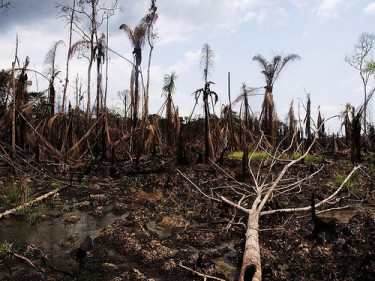
http://globalvoicesonline.org/2010/09/13/nigeria-oil-wealth-flows-hunger-persists/print/ Nigeria: Oil Wealth Flows, Hunger Persists Posted By Juhie Bhatia On 13 September 2010 @ 18:36 pm In Agriculture,Development,English,Environment,Feature,Food,Industry,Nigeria,Sub-Saharan Africa,Weblog | 1 Comment This post was commissioned as part of a Pulitzer Center/Global Voices Online series on Food Insecurity [1]. These reports draw on multimedia reporting featured on the Pulitzer Gateway to Food Insecurity [2] and bloggers discussing the issues worldwide. Share your own story on food insecurity here [3]. Niger Delta Oil Disaster [4] https://globalvoicesonline.org/wp-content/uploads/2010/09/nigerdeltaoil-375x281.jpg Niger Delta Oil Disaster, Photo by Socialist Youth League of Norway on Flickr (CC-BY-ND) As the BP oil spill in the U.S. Gulf of Mexico and its aftermath continue to make headlines, the catastrophe has also brought a little global media attention to the oil-related woes in another country—Nigeria. Africa's most populous country, Nigeria is among the 10 biggest exporters [5] of oil globally and the largest oil producer in Africa. Since oil was discovered off Nigeria's coast in the 1970s, it has become a major source of wealth. Oil accounts for 90 percent of Nigeria's exports [6] and over 80 percent of government revenue. But these oil riches have not been accompanied by economic prosperity nor food security for the majority of the country's population. Earlier this year, preparations took place in northern Nigeria for anticipated food shortages [7], due to severe water shortages, plummeting livestock prices and rising grain costs. On his blog, Nigerian Joachim Ibeziako Ezeji, a sustainable development professional, elaborates on those impacted by these types of shortages [8]. “Nigeria, a former agrarian nation, abandoned agriculture in the early 1980s when the government refocused the economy on oil exploration… Sadly, the bulk of this revenue is stolen by politicians and their cronies. The consequence is that today, according to the agriculture ministry, 91 million Nigerians representing 65 percent of the country's population are food insecure.” Nigeria had a strong agricultural base before the oil boom, but throughout the years its big farms and plantations have been neglected. Journalist David Hecht, who wrote a series on the hunger crisis in Nigeria [9] supported by the Pulitzer Center on Crisis Reporting, says that about 90 percent of Nigeria's agricultural output today [10] comes from inefficient small farms. Most farmers have little or no access to modern technology like fertilizers and irrigation. As a result, Nigeria has become one of the world's biggest importers of food staples, particularly rice and wheat. Even with these imports though, more than a quarter [11] of Nigerians younger than 5 suffer from malnutrition. The country's oil industry, which is primarily located in the Niger Delta, has also become a source of conflict, corruption and human rights abuses. An Amnesty International report [12] released last year examined these consequences, as well as the environmental fallout from the industry. The Deepwater Horizon [13] explosion earlier this year has also drawn attention to the environmental damage caused by oil spills, including spills in the Niger Delta. Some media report that more oil is spilled in the Niger Delta every year [14] than has been lost in the Gulf of Mexico. These spills cause pollution that severely affects surrounding communities by decreasing fish stocks and contaminating water supplies and arable land. A post on the blog Niger Delta Unrest chronicles a protest last year [15] against the lack of action by Shell [16] and the Nigerian government following a large offshore spill. People from the affected community in Bodo spoke of their grievances: “They detailed how there was widespread hunger and thirst in the community: all the fish had been killed, the water contaminated, access to the creeks blocked and the ground-soil polluted and crops poisoned. One woman presented a meager basket of cassava meant to feed her family for a week. It was only enough for one person. Another woman pushed forward and said her eight year old son had died of hunger… A higher up in the Youth Council, the same one who had been interpreting, told of his frustrations and how he felt control slipping out of his hands. He said it was getting impossible to calm the youth in the town and that he was sure some of them would slip into militancy and armed action. ‘A hungry man is an angry man,’ he said.” Randal Maurice Jelks, blogging on The Black Bottom Blog in the United States, says that people in Nigeria and the Gulf coast of Louisiana have more in common [17] than many would think: “For years, the state of Louisiana has permitted oil companies to have the loosest of regulation–a wink and a nod instead of enforced laws. As result many African Americans, like the Ogoni people of Nigeria, who live in the Gulf region have been most affected by what is called Cancer Alley. The pollutants from chemical and oil production have poisoned both their lands and bodies for years, like the Ogoni people these Black and poor people were ignored. The Louisiana state government like the Nigerian government left the oil companies to their own devices–laissez faire.” An analysis in the Nigerian newspaper Vanguard by Peter Osadalor says that the World Bank coined the term “Nigerian Paradox” [18] specifically to describe the extreme underdevelopment and poverty in a country brimming with resources and potential. Bloggers have proposed various solutions to this paradox, from stricter regulation of oil companies [19] to better leadership [20] to decreasing reliance on imported crops [21]. Hecht, in his article series, says that even though Nigeria faces a serious food security threat, the country has enough fertile land to feed itself [9] and much of the region if its oil wealth is invested more wisely. Afolabi Taiwo Okunola, in a post submitted for a youth essay competition [22] on the Youngstars Foundation's blog, comes to a similar conclusion, saying that refocusing on agriculture is key [23]: “If the Nigerian government can be dedicated and devoted to the course of agricultural, many problems like inadequate supply of food, high expenses of the food supply will become outdated. The level of unemployment among Nigerian graduates will reduce because many graduates will be gainfully employed. In this vein, agricultural produce will increase because mechanized farming will be used and Nigerian exporting earnings will increase…The quest for power, gross looting of the national treasury by the greedy politicians will reduce to a certain extent because many people will realize that it is not only oil that can give a nation money but that agriculture too is important in that aspect. Therefore, the wicked struggle, killing and wanton destruction of lives and property in order to get to the position of authority in Nigeria will reduce. In a very short time, Nigeria will become a citadel in which other countries will have to come and learn from.” Thanks to Eremipagamo Amabebe [24] for help finding Nigerian blogs. Article printed from Global Voices in English: http://globalvoicesonline.org URL to article: http://globalvoicesonline.org/2010/09/13/nigeria-oil-wealth-flows-hunger-persists/ URLs in this post: [1] series on Food Insecurity: http://pulitzercenter.org/projects/global-voices-food [2] Pulitzer Gateway to Food Insecurity: http://pulitzercenter.org/food-insecurity [3] Share your own story on food insecurity here: http://pulitzercenter.org/share-your-story/8086 [4] Image: http://www.flickr.com/photos/sosialistiskungdom/4560583670/in/set-72157623938759668/ [5] 10 biggest exporters: https://www.cia.gov/library/publications/the-world-factbook/rankorder/2176rank.html?countryName=Nigeria&countryCode=ni®ionCode=af&rank=7#ni [6] 90 percent of Nigeria's exports: http://www.state.gov/r/pa/ei/bgn/2836.htm [7] anticipated food shortages: http://www.irinnews.org/Report.aspx?ReportId=89759 [8] on those impacted by these types of shortages: http://joachimibeziakoezeji..com/2010/06/travails-of-nigerian-rice.html [9] the hunger crisis in Nigeria: http://pulitzercenter.org/projects/africa/nigeria-oil-rich-hungry [10] Nigeria's agricultural output today: http://pulitzercenter.org/articles/little-keeps-nigeria-crisis-hunger [11] a quarter: http://www.globalhealthfacts.org/country.jsp?i=48&c=162&cat=4&sn=1 [12] Amnesty International report: http://www.amnesty.org/en/news-and-updates/news/oil-industry-has-brought-poverty-and-pollution-to-niger-delta-20090630 [13] Deepwater Horizon: http://en.wikipedia.org/wiki/Deepwater_Horizon_oil_spill [14] more oil is spilled in the Niger Delta every year: http://www.guardian.co.uk/world/2010/may/30/oil-spills-nigeria-niger-delta-shell [15] a protest last year: http://nigerdeltaunrest..com/2009/03/bodo-community-report.html [16] Shell: http://en.wikipedia.org/wiki/Royal_Dutch_Shell [17] people in Nigeria and the Gulf coast of Louisiana have more in common: http://theblackbottom.com/?p=5862 [18] the World Bank coined the term “Nigerian Paradox”: http://allafrica.com/stories/201007191601.html [19] stricter regulation of oil companies: http://methodismadness..com/2010/05/effect-of-oil-spill-on-health.html [20] better leadership: http://www.africanexecutive.com/modules/magazine/articles.php?article=5118 [21] decreasing reliance on imported crops: http://ojesweet..com/2008/05/global-food-crisis-and-nigerias.html [22] youth essay competition: http://youngstars-foundation.org/blog/category/nigeria-pride-essay/ [23] refocusing on agriculture is key: http://youngstars-foundation.org/blog/agriculture-the-future-of-nigeria-as-a-leading-nation/ [24] Eremipagamo Amabebe: http://globalvoicesonline.org/author/eremipagamo-amabebe/ |
| Politics › Re: 1966 Coup Executed To Make Awo PM – Dr Emma Okocha by PhysicsMHD(m): 3:45am On Jan 26, 2011 |
"Where were all the Soviet thermonuclear arsenals during the '67 Arab/Israeli war?" That can't possibly be a serious question. Using that bizarre logic, where were Britain's nuclear bombs during any war where it supported one side over the other? Where were the U.S.'s nuclear bombs during the same six-day war and during other wars? Don't be ridiculous. There's a clear difference between giving allied support of a belligerent in a war and fighting on your own behalf. No country is going to pull out the most powerful equipment in their arsenal for groups other than themselves and when the situation does not necessitate it. I was simply illustrating the reality that the Soviet military machine was long established and at its heights while what would later become the Israeli military machine was a rookie, with little more than Uzi machine guns to its name, and only just starting to be weaned off dependence on other countries. I'm not trying to get anybody to take my words as fact. But the truth is you completely distorted my post into something it was not. I clearly discussed intentions and motivation for support and you went off into some tangent about scale of military support. If this opens some old wounds for you or others then that was not my intention, but the truth is that I never even said anything like what you're talking about now in my earlier post. |
| Politics › Re: 1966 Coup Executed To Make Awo PM – Dr Emma Okocha by PhysicsMHD(m): 3:24am On Jan 26, 2011 |
Onlytruth:Ok? And? What do all these hypotheticals have to do with supposed revisionism of my posts? This isn't about U.S military capability. I said Israel. Israel was highly dependent on foreign countries for its weapons until much later than Biafra. That's just reality. A small power (Israel) is not going to get involved in a tussle involving large powers (Britain, Soviet Union) on the opposing side without a declaration of support from another large power. Get it? They did not have the military capability. The Soviet machine was moving past thermonuclear bombs and developing intercontinental ballistic missiles and you're comparing them with a country (Israel) that had only just started attempts to manufacture its own pistols and missiles. You need a reality check. |
| Politics › Re: Emergence Of Jonathan Legally, Morally Wrong – Acf by PhysicsMHD(m): 3:15am On Jan 26, 2011 |
They were so intent on acting like the North had done some huge favor that they made themselves look confused. They said "against our will" we allowed Obasanjo to take the presidency in 1999 in the name of rotation. Meaning that in 1999 it was actually their collective preference to be "legally and morally wrong." |
| Politics › Re: 1966 Coup Executed To Make Awo PM – Dr Emma Okocha by PhysicsMHD(m): 3:06am On Jan 26, 2011 |
Onlytruth:? Israel slipped non-Israeli (Soviet, actually) weaponry to Biafra that they captured during the Six Day War. Don't tell me you didn't know this. Also, I didn't demarcate into military and non-military support. Otherwise I would have explicitly said or put in parentheses that Ireland didn't support Biafra militarily and I would have done the same for Haiti and Tanzania. Even France did not begin "SCANTY" military support until much later in the war. Too late in the day.I didn't speak of French support as being on the same scale as British support. There was no way the 1967 French could have afforded to engage in a competition of supplies/resources with Britain. They would lose outright. In addition, there was no way they would go to such lengths over other people's conflicts. I gave the reason for French support. Quite a different thing than alleging that they were throwing stacks and boatloads of weaponry into Biafran hands. If France and Israel supported Biafra fully, there is for instance no way Cameroon could have blockaded Biafra from the eastern border.Where did I say fully? Most discerning folks would feel insulted at emphasis on so called French and Israeli support.Are you under the impression that the Israeli military capability could be compared to Soviet military capability? Surely even you don't believe that. And Haiti, like China, supported in words, not in any major acts, to the best of my knowledge. |
| Politics › Re: 1966 Coup Executed To Make Awo PM – Dr Emma Okocha by PhysicsMHD(m): 2:55am On Jan 26, 2011 |
Lol, thanks. Reading up on Nigerian history got me intrigued and depressed and then more intrigued and then finally disappointed and depressed again. I wish Nigeria's history were a more positive history. (Not a boring one though, like some African countries, but just a more positive one. Most of the interesting/dynamic European and Asian countries have somewhat turbulent/troubled histories.) I think Nigeria could have been a great country. Now I'll be happy if it even becomes a decent or good country. Who knows though. . .they say time heals all wounds. If this country survives, it could still be something great. |
| Politics › Re: 1966 Coup Executed To Make Awo PM – Dr Emma Okocha by PhysicsMHD(m): 2:40am On Jan 26, 2011 |
I could actually have written more, but I think that's about all that needs to be said. |
| Politics › Re: Christians Hoist The Largest Flag In The World In Abuja by PhysicsMHD(m): 2:39am On Jan 26, 2011 |
And the point of this is? |


1 2 3 4 5 6 7 8 ... 52 53 54 55 56 57 58 59 60 (of 67 pages)