PhysicsQED's Posts
Nairaland Forum › PhysicsQED's Profile › PhysicsQED's Posts
1 2 3 4 5 6 7 8 ... 111 112 113 114 115 116 117 118 119 (of 154 pages)
 Culture › Re: Benin Art And Architecture by PhysicsQED(m): 1:10am On Mar 05, 2012 Culture › Re: Benin Art And Architecture by PhysicsQED(m): 1:10am On Mar 05, 2012 |
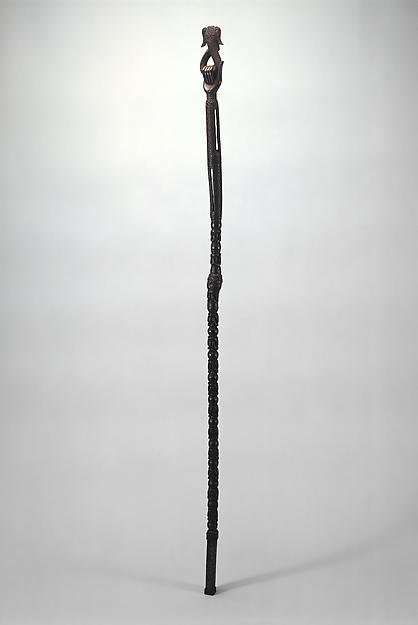
https://images.metmuseum.org/CRDImages/ao/web-large/vs1991_17_97.jpg Staff for Oba's Representative Date: 18th–19th century Geography: Nigeria, Court of Benin Culture: Edo peoples Medium: Brass Dimensions: Height 33-1/2 in. Classification: Metal-Sculpture |
| Culture › Re: Benin Art And Architecture by PhysicsQED(m): 1:08am On Mar 05, 2012 |
https://images.metmuseum.org/CRDImages/ao/web-large/DT6586.jpg Rattle Staff: Hand Holding Mudfish (Ukhurhe) Date: 16th–19th century Geography: Nigeria, Court of Benin Culture: Edo peoples Medium: Brass Dimensions: H. 59 1/4 in. (150.5 cm) Classification: Metal-Sculpture |
| Culture › Re: Benin Art And Architecture by PhysicsQED(m): 1:05am On Mar 05, 2012 |
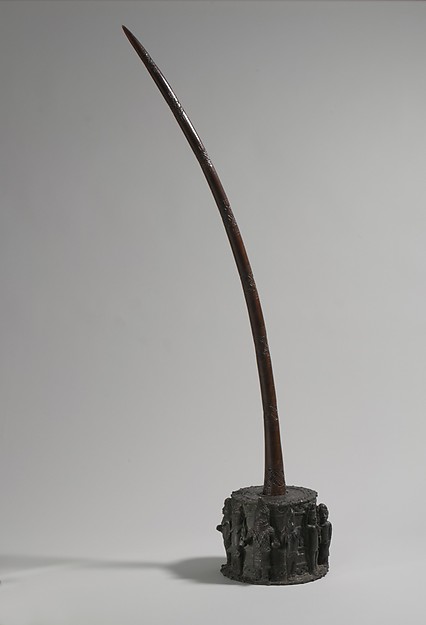
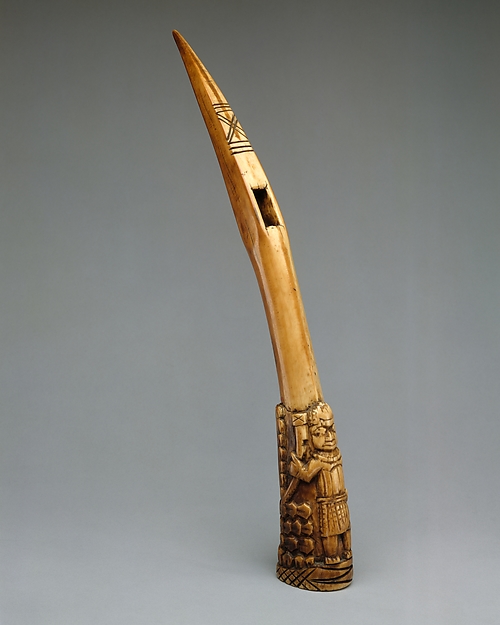
https://images.metmuseum.org/CRDImages/ao/web-large/vs1979_206_265.jpg Altar Tusk Date: 18th century Geography: Nigeria, Court of Benin Culture: Edo peoples Medium: Ivory Dimensions: H. 74 x Diam. 6 1/2 in. (188 x 16.5 cm) Classification: Bone/Ivory-Sculpture |
| Culture › Re: Benin Art And Architecture by PhysicsQED(m): 1:02am On Mar 05, 2012 |
https://images.metmuseum.org/CRDImages/ao/web-large/DP110726.jpg Altar Tusk Date: 18th–19th century Geography: Nigeria, Court of Benin Culture: Edo peoples Medium: Ivory Dimensions: H. 45 9/16 x W. 2 1/8 x D. 5 1/4 in. (115.8 x 5.4 x 13.3 cm) Classification: Bone/Ivory-Sculpture |
| Culture › Re: Benin Art And Architecture by PhysicsQED(m): 1:01am On Mar 05, 2012 |
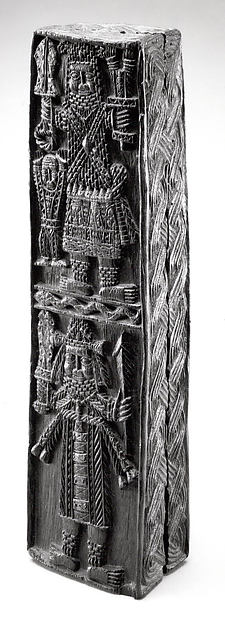
https://images.metmuseum.org/CRDImages/ao/web-large/vs1991_17_69.jpg Box: Oba Ozolua and Unidentified Oba Date: 19th century Geography: Nigeria, Court of Benin Culture: Edo peoples Medium: Wood, sheet metal Dimensions: H. 14 3/4 x W. 3 7/8 x D. 2 5/8 in. (37.5 x 9.9 x 6.7 cm) Classification: Wood-Container |
| Culture › Re: Benin Art And Architecture by PhysicsQED(m): 12:52am On Mar 05, 2012 |
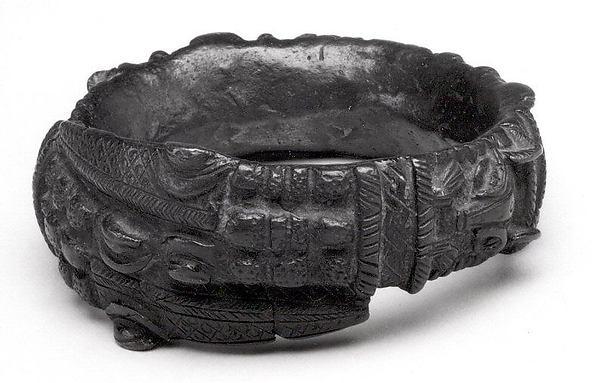
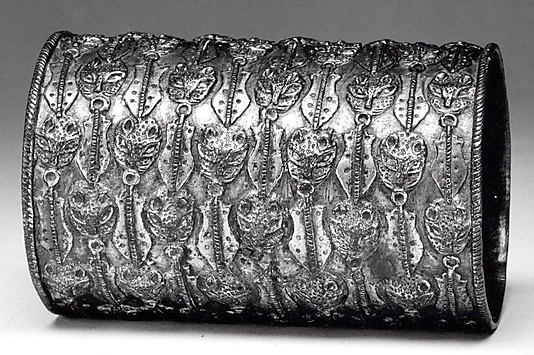
https://images.metmuseum.org/CRDImages/ao/web-large/vs1991_17_75.jpg Bracelet: Crocodile and Leopard Heads Date: 16th–19th century Geography: Nigeria, Court of Benin Culture: Edo peoples Medium: Brass Dimensions: H. 1 3/4 x Diam. 4 in. (4.4 x 10.2 cm) Classification: Metal-Ornament |
| Culture › Re: Benin Art And Architecture by PhysicsQED(m): 12:50am On Mar 05, 2012*. Modified: 5:00pm On Apr 21, 2012 |
https://images.metmuseum.org/CRDImages/ao/web-large/vs1991_17_74.jpg Bracelet: Leopard Heads and Ceremonial Swords Date: 17th–19th century Geography: Nigeria, Court of Benin Culture: Edo peoples Medium: Brass, gilt Dimensions: Length 5-3/8 in. Classification: Metal-Ornament [Edit: I see that the image is no longer showing so here's another direct link: http://www.metmuseum.org/collections/search-the-collections/50009212] |
| Culture › Re: Benin Art And Architecture by PhysicsQED(m): 12:44am On Mar 05, 2012*. Modified: 4:59pm On Apr 21, 2012 |
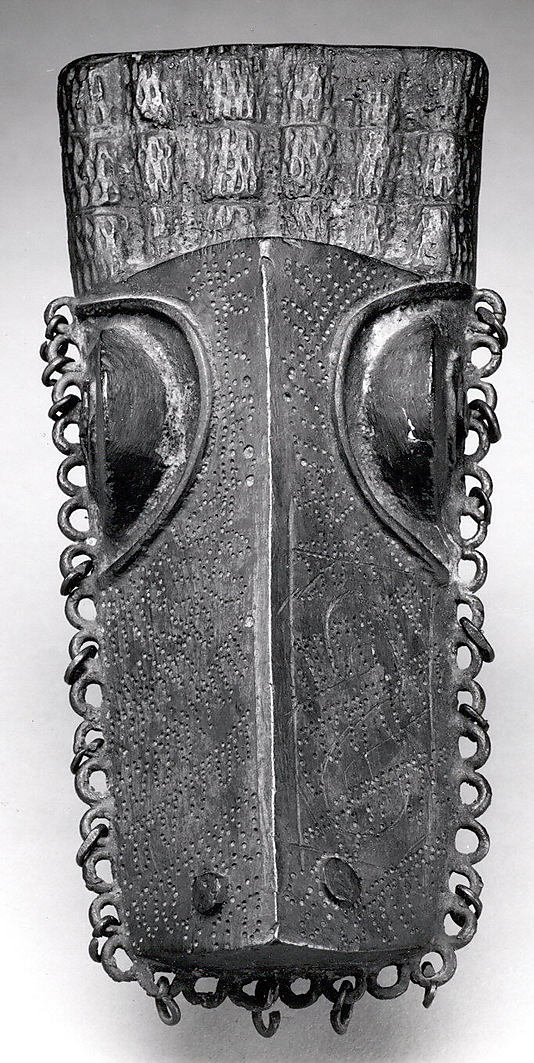
https://images.metmuseum.org/CRDImages/ao/web-large/vs1991_17_51.jpg Waist Pendant: Crocodile Head Date: 16th–19th century Geography: Nigeria, Court of Benin Culture: Edo peoples Medium: Brass, copper alloy Dimensions: Height 7-1/2 in. Classification: Metal-Ornament [Edit: I see that the image is no longer showing so here's a direct link: http://www.metmuseum.org/Collections/search-the-collections/50009189?rpp=20&pg=8&ft=Court+of+Benin&pos=159] |
| Culture › Re: Benin Art And Architecture by PhysicsQED(m): 12:39am On Mar 05, 2012*. Modified: 5:01pm On Apr 21, 2012 |
[img]http://images.metmuseum.org/CRDImages/ao/web-large/1978.412.334a,b_a.JPG[/img] [img]http://images.metmuseum.org/CRDImages/ao/web-large/1978.412.334a,b_c.JPG[/img] [img]http://images.metmuseum.org/CRDImages/ao/web-large/1978.412.334a,b_b.JPG[/img] Vessel: Ram's Head Date: 18th–19th century Geography: Nigeria, Court of Benin Culture: Edo peoples Medium: Wood Dimensions: H x W x D: 6 9/16 x 4 1/4 x 11 13/16in. (16.7 x 10.8 x 30cm) Classification: Wood-Container [Edit: I see that the images are no longer showing. Here's a link to the source: http://www.metmuseum.org/Collections/search-the-collections/50003356?rpp=20&pg=4&ft=Court+of+Benin&pos=76] |
| Culture › Re: Benin Art And Architecture by PhysicsQED(m): 12:30am On Mar 05, 2012 |
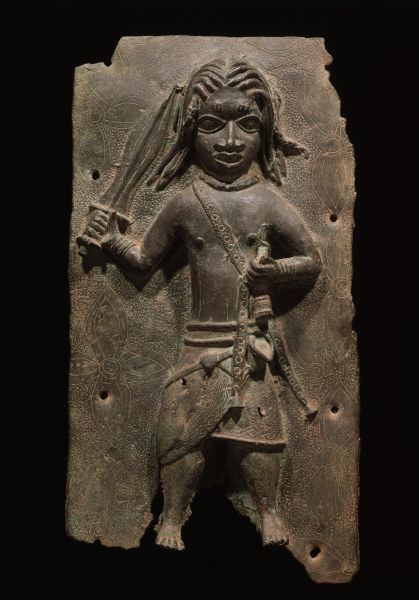
https://images.metmuseum.org/CRDImages/ao/web-large/DT6558.jpg Plaque: Warrior Date: 16th–17th century Geography: Nigeria, Court of Benin Culture: Edo peoples Medium: Brass Dimensions: H. 17 in. (43.2 cm) Classification: Metal-Sculpture Credit Line: Gift of Mr. and Mrs. Klaus G. Perls, 1991 Accession Number: 1991.17.12 |
| Culture › Re: Benin Art And Architecture by PhysicsQED(m): 12:27am On Mar 05, 2012 |
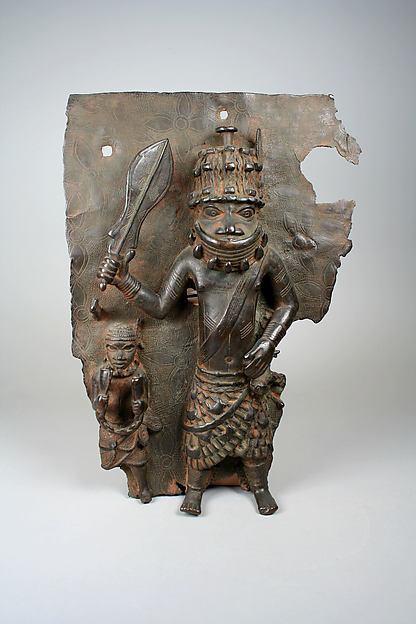
https://images.metmuseum.org/CRDImages/ao/web-large/1978.412.320.jpg Plaque: Iyase with Sword and Attendant Date: 1550–1680 Geography: Nigeria, Court of Benin Culture: Edo peoples Medium: Brass Dimensions: H. 15 3/4 x W. 7 1/4 x D. 2 1/2 in. (40 x 18.4 x 6.4 cm) Classification: Metal-Sculpture Credit Line: The Michael C. Rockefeller Memorial Collection, Gift of Nelson A. Rockefeller, 1972 Accession Number: 1978.412.320 |
| Culture › Re: Benin Art And Architecture by PhysicsQED(m): 12:25am On Mar 05, 2012 |
https://images.metmuseum.org/CRDImages/ao/web-large/1978.412.473.JPG Plaque Fragment: Warrior Date: 1550–1680 Geography: Nigeria, Court of Benin Culture: Edo peoples Medium: Brass Dimensions: H. 16 1/2 x W. 11 15/16 x D. 2 1/2 in. (42 x 30.3 x 6.4 cm) Classification: Metal-Sculpture Credit Line: The Michael C. Rockefeller Memorial Collection, Gift of Samuel Rubin, 1962 Accession Number: 1978.412.473 [note: the "Warrior" figure of this plaque, is a past Iyase of Benin] |
| Culture › Re: Benin Art And Architecture by PhysicsQED(m): 12:21am On Mar 05, 2012 |
https://images.metmuseum.org/CRDImages/ao/web-large/vs1991_17_82.jpg Bracelet: Three Heads Date: 18th–19th century Geography: Nigeria, Court of Benin Culture: Edo peoples Medium: Brass, copper alloy Dimensions: Diameter 4-5/8 in. Classification: Metal-Ornament Credit Line: Gift of Mr. and Mrs. Klaus G. Perls, 1991 Accession Number: 1991.17.82 |
| Culture › Re: Benin Art And Architecture by PhysicsQED(m): 12:18am On Mar 05, 2012 |
https://images.metmuseum.org/CRDImages/ao/web-large/vs1991_17_86.jpg Altar Bell: Fish-Legged King Date: 18th–19th century Geography: Nigeria, Court of Benin Culture: Edo peoples Medium: Brass Dimensions: H. 5 3/4 x W. 2 5/8 x D. 2 5/8 in. (14.6 x 6.7 x 6.7 cm) Other: W. 2 5/8 x D. 2 5/8 in. (6.7 x 6.7cm) Classification: Metal-Musical Instrument Credit Line: Gift of Mr. and Mrs. Klaus G. Perls, 1991 Accession Number: 1991.17.86 |
| Culture › Re: Benin Art And Architecture by PhysicsQED(m): 12:14am On Mar 05, 2012 |
https://images.metmuseum.org/CRDImages/mi/web-large/DT1530a.jpg Eroro Date: 19th century Geography: Nigeria Culture: Benin Medium: Brass Dimensions: H. 17.8 cm (7 in.); Base; 10.3 cm (4 in. square) Classification: Idiophone-Struck Credit Line: The Crosby Brown Collection of Musical Instruments, 1889 Accession Number: 89.4.2604 |
| Culture › Re: Benin Art And Architecture by PhysicsQED(m): 12:12am On Mar 05, 2012 |
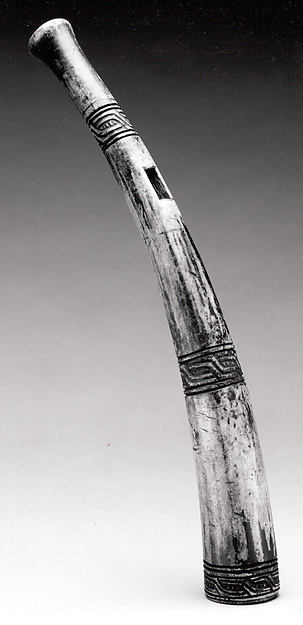
https://images.metmuseum.org/CRDImages/ao/web-large/DT6590.jpg Side-Blown Trumpet (Oko) Date: 19th century Geography: Nigeria, Court of Benin Culture: Edo peoples Medium: Ivory Dimensions: Length 14-1/2 in. Classification: Bone/Ivory-Musical Instrument Credit Line: Gift of Mr. and Mrs. Klaus G. Perls, 1991 Accession Number: 1991.17.107 |
| Culture › Re: Benin Art And Architecture by PhysicsQED(m): 12:10am On Mar 05, 2012 |
https://images.metmuseum.org/CRDImages/ao/web-large/vs1991_17_109.jpg Side-blown Trumpet (akohen) Date: 18th–19th century Geography: Nigeria, Court of Benin Culture: Edo peoples Medium: Ivory Dimensions: Length 14-1/2 in. Classification: Bone/Ivory-Musical Instrument Credit Line: Gift of Mr. and Mrs. Klaus G. Perls, 1991 Accession Number: 1991.17.109 |
| Culture › Re: Benin Art And Architecture by PhysicsQED(m): 11:59pm On Mar 04, 2012 |
https://images.metmuseum.org/CRDImages/ao/web-large/DT10214.jpg Figure: Horn Player Date: 1550–1680 Geography: Nigeria, Court of Benin Culture: Edo peoples Medium: Brass Dimensions: H. 24 13/16 x W. 11 9/16 x D. 6 3/4 in. (63 x 29.4 x 17.2 cm) Classification: Metal-Sculpture Credit Line: The Michael C. Rockefeller Memorial Collection, Gift of Nelson A. Rockefeller, 1972 Accession Number: 1978.412.310 |
| Culture › Re: Benin Art And Architecture by PhysicsQED(m): 11:52pm On Mar 04, 2012 |
| Culture › Re: Benin Art And Architecture by PhysicsQED(m): 11:46pm On Mar 04, 2012 |
| Culture › Re: Benin Art And Architecture by PhysicsQED(m): 11:44pm On Mar 04, 2012 |
| Culture › Re: Nigeria Has Over 500 Languages by PhysicsQED(m): 11:15pm On Mar 04, 2012 |
^^^^^ Saying that Nigeria does not have more than 50 languages is incorrect. Maybe whoever said that should have said that Nigeria does not have more than 50 distinct "cultures", which is more plausible. Much of the linguistic diversity leading to the "250" or "500" claim probably has to do with languages in the Northern part of the country. 2 Likes |
| Culture › Re: Benin Art And Architecture by PhysicsQED(m): 10:57pm On Mar 04, 2012 |
https://farm6.staticflickr.com/5128/5254826510_8320e04c0b_z.jpg ^^^ Probably either a depiction of Oranmiyan of Ife/Oyo or of the Atta of Igala. Or it could be somebody else entirely. |
| Culture › Re: Benin Art And Architecture by PhysicsQED(m): 10:54pm On Mar 04, 2012 |
| Culture › Re: A Summary Of Southern Nigeria From 900 Ce To 1900 Ce (in Maps) by PhysicsQED(m): 9:09am On Mar 04, 2012 |
Your "900 CE" map pretty much excludes Ife and it excludes whatever polity made Sungbo's Eredo (maybe the predecessor of the Ijebu kingdom?). A little more familiarity with even the limited archaeological work that has been done in southern Nigeria would be useful before anybody made a thread like this. Also the "1500 CE" map is definitely not an accurate account of the territorial extent of some polities. Among other things, if you (or whoever made the map) were familiar with the existence of Igala political suzerainty up as far as Nupe, you (or whoever made the map) might have drawn the map differently. Don't know how accurate the "1700 CE" map really is either. Apart from the fact that multiple kingdoms were excluded, there are also the extremely questionable "influence range" borders drawn for each of the states for all of the different maps. If I were to elaborate on all of my objections to each of the maps, it would be a very long post, so I'm not going to bother seeing as how this is nothing official. This single post is as much as I'm going to say on this topic because I don't really see the purpose of this thread except maybe to revise history or provoke controversy. Adios. 1 Like |
| Culture › Re: Igbos In Bini by PhysicsQED(m): 7:46pm On Mar 03, 2012 |
NRI PRIEST:Not to join sides here, as I don't agree with the slant of patriot's argument (trying to claim some influxes of Edo people into other groups actually means the entire ethnic group is connected as blood relatives to Edo) but the population of Binis is well beyond a million and the Benin empire did, in fact, extend into Dahomey (Benin Republic) at one point. "On the West, Benin rule undoubtedly extended, at least from the 16th century, to Lagos, Badagry, and Wydah . . . Lander, who visited Badagry in 1830, reported that the corpse of the late chief of that town had been sent to Benin and Landolphe reported that Wydah (Juda) was tributary to Benin in his day. (Landolphe, 1823, vol. II, p. 62)" - R.E. Bradbury, The Benin kingdom and the Edo-speaking peoples of south-western Nigeria (1957), pp. 21-22 The thing to remember is that the borders of Dahomey/Benin Republic are not really that far from Badagry (less than 20 miles, I think), so it wouldn't take too much effort for an organized military force to extend even further westward if they used Badagry as a base. What some over-claimers do that could be annoying, is claiming that "Dahomey" derives from an Esan general of the Benin empire named Isidahome, which is completely spurious. Benin penetrated west of Badagry, establishing some authority over the kingdom of Whydah, but it did not have any connection to the actual kingdom of Dahomey. 1 Like |
| Politics › Re: Afro-asiatic Languages And Nigerian Peoples by PhysicsQED(m): 3:57am On Mar 03, 2012 |
Negro Ntns, Africans are entirely capable of deciding their own origins and the distributions of cultures around the continent independent of others. But I think you're getting a bit too hung up on terminology. I noticed your use of the phrase "Congo classification" in one of your responses earlier. Igbo, Edo, and Yoruba were at one time called "Western Sudanic Langauges", and the so-called "Kwa" group was claimed to be a subgroup of the "Western Sudanic" language group. The terminology changed from "Western Sudanic" (a geographical area) to "Niger-Congo" on the premise that the "Western Sudanic" languages were part of a larger super group which included Bantu languages. Some other linguists have also suggested that these "Western Sudanic" languages are, on the contrary, actually part of a larger super group or "macro phylum" called Niger-Saharan on the premise that the so-called "Nilo-Saharan" languages (rather than the "Bantu" languages) and the "Western Sudanic"/"Niger-Congo" languages formed a larger super group. I personally think "Western Sudanic" was a more accurate label, but now that the terminology was changed (by Joseph Greenberg), I don't see what is gained by reverting back to "Western Sudanic". Afro-asiatic is a name for a group of related languages, not a cultural group. That there are some shared cultural elements between the speakers of these languages is understandable. If "Niger-Congo" or "Western Sudanic" languages were at one time closer to "Afro-asiatic" languages (and other language groups, as well) than they are today, as would obviously be the case, then there are going to be some shared remnants of that common origin in the languages and cultures of both groups. That's all I'm saying. I don't need to read the patently ridiculous articles of Dierk Lange or the works of hyperdiffusionist historians or linguists to reach the conclusion that "foundational" (with respect to ethnic groups and communities) migrations into West Africa from elsewhere in Africa probably happened much much earlier than the hyperdiffusionists would find acceptable for their theories. What I would like to see is much more convincing evidence than just what Odudoye has written (and I have now read his book (Words and Meaning in Yoruba Religion: Linguistic Connections in Yoruba, Ancient Egyptian & Semitic)). I think if you're serious about this, you and like-minded people (like Odudoye) should get together and compose a real tome on this, arguing over hundreds of pages for your viewpoints, and promoting the theory seriously in academic circles so that it is open to criticism or review by other researchers, whether these researchers are Yoruba, Hebrew, Egyptian, German, or from elsewhere. |
| Foreign Affairs › Re: Russian Scientists Aim At Making Human Beings Live Forever In The Next 10 Years by PhysicsQED(m): 2:29pm On Mar 02, 2012 |
alagbatomoye:I didn't state, suggest, or even imply that it was in any way impossible. My point is that a) when this breakthrough is made it certainly won't be achieved by a group whose boss is an obscure media entrepreneur with no background in the area of science he's trying to initiate a revolution. and b) merely having "100 scientists" doesn't mean anything. It's quality, not quantity, that matters. I could, if I were a multimillionaire, hire 100 new Ph.D's from various fields, give them a lot of money to play with and a directive ("make this or that specific scientific breakthrough happen"  and it doesn't mean that they would actually get anything significant done without 1) some of them being very highly gifted/talented in their field beyond what is required to get their degrees 2) having a lot of time to think and significant experience researching in the field (neuroscience) beyond just what was necessary to get their degrees and 3) having connections or access to ideas from some of the leading researchers around the world in that field of science. and it doesn't mean that they would actually get anything significant done without 1) some of them being very highly gifted/talented in their field beyond what is required to get their degrees 2) having a lot of time to think and significant experience researching in the field (neuroscience) beyond just what was necessary to get their degrees and 3) having connections or access to ideas from some of the leading researchers around the world in that field of science.People with the ability to initiate the kind of scientific breakthrough that Itskov wants are drawn to more reputable institutions like universities, research institutes affiliated with universities (or at least led by prominent academics that were formerly at universities), or at the very least, companies like IBM or Bell Labs. and c) the very fact that he thinks that this is achievable in only 10 years suggests that he doesn't understand anything about the current state of the field he's trying to revolutionize (neuroscience). Scientists are still trying to figure out exactly how memory and thought works. You have scientists like Eric Kandel, Earl Miller, or V.S. Ramachandran at the forefront of figuring out how the brain works, and they and other researchers whose work is of similar quality are nowhere near being able to do what this Itskov guy suggested. Yet merely by hiring "100 scientists" he's going to figure out in 10 years much more than they have in their entire careers? Highly improbable. |
| Foreign Affairs › Re: Russian Scientists Aim At Making Human Beings Live Forever In The Next 10 Years by PhysicsQED(m): 12:10am On Mar 02, 2012 |
Itskov, a 31-year-old media entrepreneur, says that he aims to transplant a human brain into a robot body within 10 years  claims to have hired 100 scientists to reach this goal - and is now looking for other scientists to help with the project.lol, a regular Manhattan Project for the brain huh? These scientists are scamming the pants off this guy and he's totally oblivious. |
| Business › Re: FBN Capital MD, Osaze Osifo Is Dead by PhysicsQED(m): 8:35pm On Mar 01, 2012 |
Rest in peace. |
| Politics › Re: Derivation Formula: North Fishing For Trouble – S-south by PhysicsQED(m): 4:53am On Mar 01, 2012 |
koruji:Truth. |











1 2 3 4 5 6 7 8 ... 111 112 113 114 115 116 117 118 119 (of 154 pages)