For his denial to be believable Fayemi needs to show the inflow and outflow of campaign funds. This is not too much to ask of a man with high ethical standards, who holds dear the tenets of financial discipline and accountability in his public service engagements, methinks
Our resident ethno-nationalists at it again, pumping their chests over claims of superiority at a time when our total output as a nation is woefully abysmal.
What benefits our youth who refuse to evolve their mindset beyond puerile ethnic sentiments, I wonder
If Jesus Never Called Himself God, How Did He Become One? "If Jesus had not been declared God by his followers, his followers would've remained a sect within Judaism, a small Jewish sect," says historian Bart Ehrman.
When Bart Ehrman was a young Evangelical Christian, he wanted to know how God became a man, but now, as an agnostic and historian of early Christianity, he wants to know how a man became God.
When and why did Jesus' followers start saying "Jesus as God" and what did they mean by that? His new book is called How Jesus Became God: The Exaltation of a Jewish Preacher from Galilee.
"In this book I actually do not take a stand on either the question of whether Jesus was God, or whether he was actually raised from the dead," Ehrman tells Fresh Air's Terry Gross. "I leave open both questions because those are theological questions based on religious beliefs and I'm writing the book as a historian."
Ehrman is the author of several books about early Christianity, including Misquoting Jesus and Jesus Interrupted.
Interview Highlights On a major difference between the first three gospels — Matthew, Mark and Luke — and the last gospel, John
During his lifetime, Jesus himself didn't call himself God and didn't consider himself God, and ... none of his disciples had any inkling at all that he was God. ...
You do find Jesus calling himself God in the Gospel of John, or the last Gospel. Jesus says things like, "Before Abraham was, I am." And, "I and the Father are one," and, "If you've seen me, you've seen the Father." These are all statements you find only in the Gospel of John, and that's striking because we have earlier gospels and we have the writings of Paul, and in none of them is there any indication that Jesus said such things. ...
I think it's completely implausible that Matthew, Mark and Luke would not mention that Jesus called himself God if that's what he was declaring about himself. That would be a rather important point to make. This is not an unusual view amongst scholars; it's simply the view that the Gospel of John is providing a theological understanding of Jesus that is not what was historically accurate.
On how Roman emperors were called "God" Right at the same time that Christians were calling Jesus "God" is exactly when Romans started calling their emperors "God." So these Christians were not doing this in a vacuum; they were actually doing it in a context. I don't think this could be an accident that this is a point at which the emperors are being called "God." So by calling Jesus "God," in fact, it was a competition between your God, the emperor, and our God, Jesus.
When Constantine, the emperor, then converted to Christianity, it changed everything because now rather than the emperor being God, the emperor was the worshipper of the God, Jesus. That was quite a forceful change, and one could argue that it changed the understanding of religion and politics for all time.
On the emergence of the Trinity Christians had a dilemma as soon as they declared that Christ was God. If Christ is God and God the Father is God, doesn't that make two gods? And when you throw the Holy Spirit into the mix, doesn't that make three gods? So aren't Christians polytheists? Christians wanted to insist, no, they're monotheists. Well, if they're monotheists, how can all three be God?
So there are various ways of trying to explain this, and one of the most popular ways ... was called modalism. It's called modalism because it insisted that God existed in three modes — just as I myself at the same time am a son, and a brother and a father, but there's only one of me — well these theologians said: That's what God is like. He's manifest in three persons, but there's only one of him, so he's at the same time father, son and spirit. So he's in three modes of existence, so there's only one of him.
On the difference between history and the past What I try to teach my students is that history is not the past. ... There are a lot of things in the past that we cannot show historically. For example ... you simply cannot show what my grandfather ate on March 23, 1956. I mean, he ate something for lunch that day, I'm sure, but there's no way we have access to it. So it's in the past, but it's not part of history. History is what we can show to have happened in the past.
One of the things that historians cannot show as having happened in the past is anything that's miraculous. Because to believe that a miracle has happened, to believe that God has done something in our world, requires a person to believe in God. It requires a theological belief, but historians can't require theological beliefs to do their work. ...
[Historians] don't invoke miracle because it's beyond what historians can prove. Miracles may have happened in the past, but they're not part of history. So that applies to the resurrection of Jesus. Historians acting as historians — whether they're believers or nonbelievers — acting as historians, they simply cannot say Jesus was probably raised by God from the dead. But historians can look at other aspects of the resurrection traditions and see whether they bear up, historically.
On the empty tomb and the resurrection Was Jesus put in a tomb and three days later that tomb was found empty? Well, that's a historical question. And to answer it, it doesn't require any set of religious beliefs; you can simply look at the sources and draw some historical conclusions. ...
Before I wrote this book and did the research on it, I was convinced, as many people are, that Jesus was given a decent burial, and on the third day the women went to the tomb, found it empty, and that started the belief in the resurrection.
Apart from the fact that I don't think Jesus was given a decent burial — that he was probably thrown into a common grave of some kind — apart from that, I was struck in doing my research by the fact that the New Testament never indicates that people came to believe in the resurrection because of the empty tomb. This was a striking find because it's just commonly said that that's what led to the resurrection belief.
But if you think about it for a second, it makes sense that the empty tomb wouldn't make anybody believe. If you put somebody in a tomb and three days later you go back and the body's not in the tomb, your first thought isn't, "Oh, he's been exalted to heaven and made the son of God." Your first thought is, "Somebody stole the body." Or, "Somebody moved the body." Or, "Hey, I'm at the wrong tomb." You don't think he's been exalted to heaven. In the New Testament it's striking that in the Gospels the empty tomb leads to confusion but it doesn't lead to belief. What leads to belief is that some of the followers of Jesus have visions of him afterward.
On why he's interested in studying Jesus' transformation If Jesus had not been declared God by his followers, his followers would've remained a sect within Judaism — a small Jewish sect, and if that was the case it would not have attracted a large number of gentiles. If they hadn't attracted a large number of gentiles, there wouldn't have been this steady rate of conversion over the first three centuries to Christianity; it would've been a small Jewish sect.
If Christianity had not become a sizable minority in the empire, the Roman emperor Constantine almost certainly would not have converted, but then there wouldn't have been the masses of conversions after Constantine, and Christianity would not have become the state religion of Rome. If that hadn't happened, it would never have become the dominant religious, cultural, political, social, economic force that it became so that we wouldn't have even had the Middle Ages, the Renaissance, the Reformation or modernity as we know it. ... It all hinges on this claim the early Christians had that Jesus was God.
If the EFCC continues going after historical crimes like this, it is only a matter of time before certain presidential aspirants are brought to book.
I see the optics here
The former speaker was said to have received N130m through her personal account from Phil Jin Project Limited, a firm which was awarded a N240m contract by the NDDC in 2011.
Officials of the EFCC told The PUNCH that Etteh had been unable to explain why the firm transferred N130m to her out of the money.
A top EFCC official said, “Etteh is currently in our custody. What happened was that in 2011, the NDDC awarded a contract of N240m to Phil Jin Project Limited for the supply of solar powered street lights in some communities in Akwa Ibom.
In just a few days, the EFCC has moved on cases involving Orji Kalu, Fayose, FFK, Patricia Etteh, Ahmed Idis (the nation's Accountant General), and more. Is there something I should know?
Pacesetterz: This facebook post by Anonymous has been circulating round social media recently. Is there really something we don’t know about Simon Ekpa and his mode of Biafra?
This is not the FaceBook page of Anonymous.
If you are going to piss in the wind, make sure you gauge its strength and direction of travel first
Lawyer: SSS Detaining Blogger ‘for Exposing Criminal Activities of Dapo Abiodun in the US’
16.05.2022
The State Security Service (SSS), Ogun State, has arrested Olamikan Hammed, a blogger and publisher of EaglesForeSight, for undisclosed charges.
Festus Ogun, activist and counsel for the blogger who has been in detention for three days, made a statement on the detention on Sunday.
“The Ogun State Command of the State Security Service (SSS) has arrested and detained blogger and publisher of EaglesForeSight, Prince Olamilekan Hammed (Lahbash), for reasons yet to be disclosed,” Ogun wrote.
The State Security Service in Ogun invited Hammed for questioning on Friday, according to Ogun, and he honoured the invitation, only to be detained in relation to articles about Dapo Abiodun, the Governor of Ogun State, on his website.
“The supposed invitation bordered on reports published by the blogger exposing the criminal activities of Dapo Abiodun in the United States,” Ogun wrote.
“Mr Hammed, since arrested, has continued to face unjust harassment, torture and intimidation for merely doing his job as a citizen journalist after being forced to pull down the story from his website. “Given that journalism is not a crime in this country, the earlier invitations, recent arrest and subsequent detention of Prince Olamilekan Hammed by the SSS is completely illegal and a naked abuse of power. Sections 34, 35 and 39 of the 1999 Constitution are clear on this.
Ogun believes the governor is abusing his powers to silence his client who only did his job by “amplifying publicly available records”.
Also, Ogun faulted the SSS and claimed it had served as a tool of intimidation by Abiodun.
“This naked abuse of power stands condemned. The willingness of lawless SSS to be used as tools of intimidation and state repression also stands condemned. For how long will this daylight fascism continue?” He asked.
“The SSS must release Prince Olamilekan Hammed immediately and unconditionally. We will stop at nothing to enforce his media and human rights if our modest demands are not met immediately.”
FIJ made several calls to the SSS, but they were not answered. A text message sent to them had also not been responded to at press time.
Senoye: The way the call this money sef. 80billion naira in a land where the minimum wage is 30k. For context, they will pay 80,000 people 100k each with this money. Our collective wealth!
The Commission’s verified intelligence showed that the AGF raked off the funds through bogus consultancies and other illegal activities using proxies, family members and close associates.
Her resume, which she presented to the Senate as a ministerial nominee in 2011, indicated she obtained a Master's degree in Business Administration (MBA) from St. Paul’s College Lawrenceville, Virginia, United States.
But SaharaReporters has learned from the President of the college that it has never in its 125-year history had a graduate school or graduate program.
Rupertek: Ngige was not at the farewell meeting. Malami was there as part of his job, as the chief legal officer. Go check the records again
You don't see our diminutive minister (of no regret) in the photo I posted earlier?
For the record, the only one who failed to turned up was Emeka Nwajuba.
Mohammed listed the former ministers who attended the session as Rotimi Amaechi (Transportation), Chris Ngige (Labour and Employment), Godswill Akpabio (Niger Delta Affairs), Dr. Ogbonnaya Onu (Science and Technological Innovation), Timipre Sylva (State, Petroleum Resources), Tayo Alasoadura (State, Niger Delta Affairs), Dame Tallen Paulen (Women Affairs), Uche Ogar (State, Mines and Steel Development), Abubakar Malami (Attorney General of the Federation and Minister of Justice) and Emeka Nwajuba (State for Education) who was absent but with a permission.
Rupertek: But the 2 ministers never resigned at anytime. There was no single report anywhere that they resigned. If there is, post it, let's see. The legal luminary just jumped the gun.
You are only correct on one count.
The ministers are those seeking various elective offices in the 2023 general election. They include transportation minister Rotimi Amaechi, justice minister Abubakar Malami and labour minister Chris Ngige.
Not all of them have, however, submitted their resignation letters, information minister Lai Mohammed told journalists.
Also, Mr Malami, who earlier on Friday had tweeted that he had submitted his resignation letter, later deleted the tweet, sparking speculations that he had withdrawn the letter
Rupertek: But the fact remains that the 2 ministers never resigned. Go check the records.Even the valedatery meeting, they were not there. So, Falana jumped the gun. He didn't produce any evidence to suggest the 2 ministers resigned, they didn't. They bought presidential forms and never returned them, that means they are not aspirants
Cantonese: But you did not answer the question by seunmg.
Did they resign in the sense of it? Did they tender their resignation letters? If they did and they were accepted by the president, which offices would they walk into and in what capacities?
Please respond.
Cogent questions
Mohammed, while speaking, said: “You will recall that on Wednesday, Mr. President directed and I informed you that all ministers and other political appointees who aspire to contest for elective offices in 2023 general elections should resign their current appointments.
“This morning, there was a valedictory service for 10 members of the Federal Executive Council who have indicated their desire to aspire for higher offices. Nine of them were present the 10th was absent with apology.
fyneguy: They did not resign. They had up till 16th May to do so.
Malami lead us to believe he did.
...Also, Mr Malami, who earlier on Friday had tweeted that he had submitted his resignation letter, later deleted the tweet, sparking speculations that he had withdrawn the letter
Ngige has decided it is best to help resolve the ASUU imbroglio instead.
Make una come see magnanimity
I took this momentous decision firstly in the overall interest of the nation, in order to enable me concentrate on my job, and assist the President and the Government, weather the difficult last lap, in the life of the administration and secondly for other family reasons.
kettykings: Most of the anti Igbo anti ipob comment is just riled up with lack of information, thought, intelligence and awareness, this is a process that was carried out by an igbo minister yet some ignorant folks are painting an ignorant pictures of igbos not willing to take the plunge and resign. This is the typical scenario that shows only ignorant morons role up anti igbo sentiments and anti ipobs sentiment.
It is not often that I find myself in agreement with ya
More than half of black children in the UK are now growing up in poverty, a new analysis of official data has revealed.
Black children are also now more than twice as likely to be growing up poor as white children, according to the Labour party research, which was based on government figures for households that have a “relative low income” – defined as being below 60% of the median, the standard definition for poverty.
And over the last decade the total number of black children in poor households more than doubled – although that increase is partly explained by the overall size of the cohort increasing too. The proportion of black children living in poverty went up from 42% in 2010-11 to 53% in 2019-20, the most recent year for which the data is available.
The figures were released to the Guardian by the Labour party, which described them as evidence of “Conservative incompetence and denialism about the existence of structural racism”.
Latest figures estimate about 14.5 million people in the UK are in relative poverty after housing costs (22%), including about 4.3 million children
The Labour leader, Keir Starmer, has already committed the party to passing a new race equality act, if elected, to tackle structural racism. Further details of what this would entail are expected to be fleshed out in 2022.
The party produced its figures by cross-referencing data from the Department for Work and Pensions’ reports on households below average income with population statistics.
In 2019-20 4.3 million children (defined as people under 16, or aged 16 to 19 and in full-time education) were living in households in poverty. They accounted for 31% of the UK’s 14 million children.
But there was a wide variation among ethnic groups. The Labour research covered nine categories and it said Bangladeshi children are the poorest, with 61% of them living in a poor household.
The figures for the other groups were: Pakistani children (55%); black African or Caribbean or black British (53%); other ethnicity (51%); other Asian (50%); mixed ethnicity (32%); Indian (27%); white (26%); and Chinese (12%).
There are 2.9 million white children living in poverty, making them by far the largest ethnic cohort, comprising 68% of all children living in poverty. Black children are the next biggest group: with more than 400,000 living in poverty, they comprise 10% of the child poverty total.
The Labour figures show that, among some ethnic groups, children are just as likely now to be living in poverty as they were a decade ago. In 2010-11, 61% of Bangladeshi children were living in poor households – exactly the same figure as at the end of the decade.
For Indian children, the chances of living in a poor household have fallen from 34% a decade ago to 27%. For Chinese children, the figure has fallen from 47% to 12%.
But for white children, the figure has risen from 24% to 26%; for Pakistani children, it has gone up from 50% to 55%; and for black children it has increased from 42% to 53%.
Overall, 27% of all children were living in poor households in 2010-11; the latest figure is 31%.
Anneliese Dodds, the shadow secretary of state for women and equalities, whose office produced the figures, said the Conservatives should be ashamed of what they revealed.
“There is little wonder that child poverty has skyrocketed over the last decade when Conservative ministers have done so little to tackle the structural inequalities driving it,” she said.
“Conservative incompetence and denialism about the existence of structural racism are driving black children into poverty. Labour has a plan to lift them out of it, with a new race equality act to tackle structural racial inequality at source.”
Labour announced its commitment to a race equality act as it published a review last year by Doreen Lawrence, the peer, into the disproportionate impact of Covid on minority ethnic communities.
The party has not said exactly what its act would contain, but the Lawrence recommendations, which the party has accepted, would shape its contents.
Although much of the Lawrence report focused on Covid-specific issues, it also said the virus had “thrived on structural inequalities that have long scarred British society”. Its recommendations included forcing large employers to publish data on ethnicity pay gaps, having clear targets to close the attainment gap for children and implementing a race equality strategy that has the support of minority ethnic communities.
Halima Begum, chief executive at the Runnymede Trust, the race equality thinktank, said the Labour figures, although not surprising, were nevertheless “cause for considerable concern”.
She said: “These are not cyclical inequalities that are being flagged, but systemic shortcomings that must be reversed quickly.
“But the problems are nuanced. Black children face racism and poverty. But poverty is not defined exclusively by race. So, for more than a decade, the Runnymede Trust has argued that you can’t simply solve the issue of racial inequality without also addressing socio-economic disparities.”
In response to Labour claims that the figures were an indictment of its record, a government spokesperson highlighted separate figures showing that in 2019-20 there were 300,000 fewer children living in absolute low income, after housing costs, than there were in 2010.
Absolute low income is defined as below the figure for 60% of median income for 2010, adjusted for inflation. People can fall out of absolute low income if their incomes rise by more than inflation, but can remain in relative low income – the more commonly used benchmark – if other people’s incomes rise by proportionally more.
The spokesperson said: “The latest official figures show there were 300,000 fewer children of all backgrounds in poverty after housing costs than in 2010 and we continue to provide extensive support to reduce this number further.
“This includes putting £1,000 more per year on average into the pockets of the lowest earners through changes to universal credit, increasing the minimum wage next April to £9.50 per hour and helping with the cost of fuel bills.”
"I'm trapped," says Caroline, one of the tens of thousands of people in work who have to use food banks in the UK.
The classroom assistant and single mother describes it as a "circle I can't get out of".
Over the past year, millions of food parcels have been distributed to people like Caroline, the Trussell Trust says.
The charity, which runs more than half of UK food banks, says it expects food poverty to worsen in the UK as the cost of living crisis deepens.
Caroline, who lives and works in County Fermanagh in rural Northern Ireland, would like to get a job with better pay, but to do that she would have to move away from her family and community.
She would also like to stop claiming Universal Credit, but her budget won't allow it.
As her living costs rise, she is trying to make savings, but it's hard.
She puts the central heating on only occasionally and uses coal fires to keep herself and her 11-year-old daughter warm. But she needs her car for work, and the recent hikes in fuel prices have hit her hard.
Her grocery bills are also rising, but in her small community there are only local convenience shops, and big supermarkets where she might find better deals are too far away.
And so she sometimes finds herself falling back on food banks.
The Trussell Trust gave out some 1.9 million food parcels in 2019-2020, to an estimated 370,000 households.
But a record 2.5 million parcels were distributed during during the height of the pandemic in 2020-21, and that only fell back to 2.1 million parcels last year.
The charity is concerned that the situation is only going to get worse again as benefits fail to keep pace with inflation.
The majority of people who use food banks have benefits as their only income, but a significant minority - historically about 14% - are in work.
"What we are witnessing is an accelerating crisis across the country," Trussell Trust boss Emma Revie tells the BBC.
Tim, 36, had seasonal work at Christmas in north-west London, but has been out of a job since then.
The Chelsea fan has been studying part-time but has been unable to get a job in retail, where he has previous experience.
He says "it is not an extremely good feeling" to have to use food banks, and he feels "slightly apprehensive and anxious" about the cost of living crisis getting worse.
His electricity bill has doubled since the energy price cap rose in April, with another rise expected later this year.
A government spokesperson said: "We recognise the pressures on the cost of living and we are doing what we can to help, including spending £22bn across the next financial year to support people with energy bills and cut fuel duty."
They also said it had given many workers on Universal Credit a tax cut, lifted the minimum wage and provided extra funds to councils to help the hardest hit.
'Heating and eating'
However, Ms Revie says the charity has been "disappointed" in the government's actions. In particular she criticises a decision to reverse a £20 a week uplift for all Universal Credit claimants last year.
Ms Revie is also concerned that if energy prices continue to rise, people will be forced to choose between "heating and eating".
"There are health implications from not being able to stay warm, just as there are health implications of not being able to eat," she says.
"People need a safety net so they can bounce back, not fall into destitution."
Labour is calling for the government to set out an emergency budget to offer "real solutions" to the cost-of-living crisis.
"Food Banks are a symptom of economic failure and ministers must now offer real help to working people, disabled people, families and pensioners struggling to feed themselves," shadow work and pensions secretary Jonathan Ashworth said.
For Caroline in Northern Ireland, her situation remains "a bit of a nightmare".
She had to use all of her savings recently to get her car fixed, and she hasn't had a holiday away for five years.
"It's just like a balancing act," she says. "You never know what's going to come at the other end of the scale to tip you off".
More than 2 million adults in the UK have gone without food for a whole day over the past month because they cannot afford to eat, according to a survey revealing the “catastrophic” impact of the cost of living crisis.
The latest survey of the nation’s food intake shows a 57% jump in the proportion of households cutting back on food or skipping meals over the first three months of this year, with one in seven adults (7.3 million) estimated to be food-insecure, up from 4.7 million in January.
The shadow work and pensions secretary, Jonathan Ashworth, described the findings as devastating, saying they exposed how families were being left in desperate hardship. “Boris Johnson is responsible for this crisis and has no solutions to fix it,” he said.
The survey came as one of Britain’s biggest energy suppliers called for urgent government action to help households cope with an anticipated £1,000 rise in bills this winter. The London fire brigade, meanwhile, was forced to issue an urgent safety warning against improvising fires at home, after a man set fire to his house by burning timber in his living room to keep warm.
The research by the Food Foundation thinktank found millions more people – including 2.6 million children – report they now have smaller meals than usual, regularly skip meals altogether or do not eat when they are hungry, as food insecurity returns to levels last seen at the start of the first national lockdown.
However, while many reported missing out on meals or eating irregularly during the first months of the pandemic because of food scarcity caused by panic buying and supply problems, the latest increase is put down to rising costs and poverty.
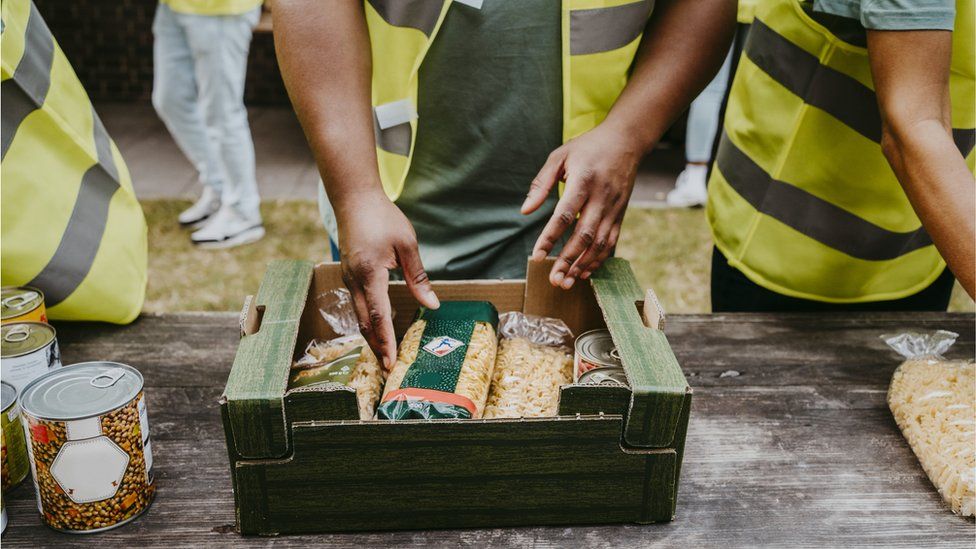
Food banks are reporting that energy costs are so prohibitive for some people they request that charity food parcels that contain no food that has to be cooked using a cooker or that needs to be stored in a fridge or freezer.
The rapid deterioration in food security reflects soaring energy, food and petrol prices coupled with below-inflation benefit rises. The Food Foundation said it was so shocked by its initial findings that it reran the survey on a wider basis, only to get the same results.
It predicted food insecurity figures were likely to get worse over the next few months as inflation continues to rise and the full impact of April’s national insurance rise hits family budgets along with the lifting of the energy price cap.
Anna Taylor, the foundation’s executive director, said: “The extremely rapid rise in food insecurity since January points to a catastrophic situation for families. Food insecurity puts families under extreme mental stress and forces people to survive on the cheapest calories, which lead to health problems.”
Prof Sir Michael Marmot, a public health expert at University College London, said: “If one household in seven is food insecure, society is failing in a fundamental way. These figures on food insecurity are all the more chilling because the problem is soluble, but far from being solved it is getting worse.”
There is little expectation that ministers will raise benefits or expand free school meals anytime soon, despite rising public concern over the cost of living. Last week, George Eustice, the environment, food and rural affairs secretary, urged consumers to switch to value brands to save on grocery spending in response to rising food prices.
“Bless him [Eustice], he’s actually aware there are cheaper brand foods in the world. The poor man, who has lived such a sheltered life he thought 10p off a tin of beans would solve the problem,” said Kathleen Kerridge, an office manager and food activist from Portsmouth.
On the food poverty frontline, charities are warning that demand for food is rising as budgets get tighter. Ellen-Scarlett Ryan, of Bassetlaw food bank in Worksop, said it supplied 24 households with food parcels on the day after Easter last month, way ahead of its previous record of 16.
Many of these clients had never before used food banks and were struggling with their newfound reliance on charity to feed their families, Ryan said. “We are finding people in floods of tears. They are so scared, they are at their wits’ end. It is such a difficult and emotional time.”
Households were making the food go further, she said, putting smaller portions on the table and bulking out dishes with lentils and rice. A growing number were asking for food that did not require cooking with the gas on, as they could not afford to put cash in the meter.
On Monday Keith Anderson, the chief executive of Scottish Power, said a fresh support package would be vital before a further dramatic increase in the cost of gas and electricity bills due in October.
A government spokesperson said: “We recognise the pressures on the cost of living and we are doing what we can to help, including spending £22bn across the next financial year to support people with energy bills and cut fuel duty.
“For the hardest hit, we’re putting an average of £1,000 more per year into the pockets of working families on universal credit, have also boosted the minimum wage by more than £1,000 a year for full-time workers and our household support fund is there to help with the cost of everyday essentials.”
Nigerialabalaba: "Mary Slessor stopped the killing of twins in NigeriaCalabar and she achieved this by saving a lot of twins either left in the bush to die or from their homes where their mothers hid them."
For Yorubaland, twins are given special courtesies and endearment so tey dem dey pray for every new bride to born twins. So many Yoruba songs, oriki and proverbs praise ibeji (twins) so tey dey are regarded as dieties to be worhipped for fertility.
Some families get up to 4 generations of twins for Yorubaland and na Yorubaland even get the highest rate of multiple births for the whole world. For the Yoruba, Twins be like gods and prized gift from orisha ibeji. To maltreat dem sef go fear you let alone kill dem. You touch dem,ur own don cast finish be dat!
Abeg replace the Nigeria with calabar
cc seun lalasticlala dominique mynd44
You head dey there. @All, don't we have a community in Abuja where the killing of twins is still practiced in 2022?
The Secret Killings Of Twins in Abuja Communities 21st Century
It is interesting to see how none of those who have responded, hitherto, bothered to counter Farooq Kperogi's article with veritable #facts. Mind you, to be fair, I also understand how provocative they would have found the descriptor applied to our urbane VeePee here.
Do I agree with his characterisation? Absolutely not! Do I, Talawaka, consider many of the points he raised to be correct. The answer is 'yes'.
Nigeria is too diverse a country to be headed by someone who plays a pivotal role in any faith-based institution. The diktats of Erastus Akingbola (CEO of defunct International Bank), who insisted on prayer-days, are still fresh in the mind.
 Politics › Re: Chartered Flights: Daily Trust Got It Wrong - Fayemi by Talawaka: 4:39pm On May 20, 2022