Ezeagu's Posts
Nairaland Forum › Ezeagu's Profile › Ezeagu's Posts
1 2 3 4 5 6 7 8 ... 67 68 69 70 71 72 73 74 75 (of 349 pages)
 Culture › Re: Japanese Culture Share So Much With Igbo Culture by ezeagu(op): 12:32pm On Jul 27, 2015 Culture › Re: Japanese Culture Share So Much With Igbo Culture by ezeagu(op): 12:32pm On Jul 27, 2015 |
| Culture › Re: Japanese Culture Share So Much With Igbo Culture by ezeagu(op): 12:29pm On Jul 27, 2015 |
The old Japanese language sounds so much like Igbo. (Did the child say apapa, groundnut? Lol.) https://www.youtube.com/watch?v=Wn1VaremXV0 1 Like |
| Culture › Re: Japanese Culture Share So Much With Igbo Culture by ezeagu(op): 12:27pm On Jul 27, 2015 |
Old practices: Twin killing in old Japan and Igboland. Science: Japanese Twins "Anthropologists have long suspected that in Japan twins are born less frequently than among whites. Confirmation has been difficult because Japanese mothers believe that to bear more than one child at a time is a bestial act, frequently try to hide multiple births by separate registry of offspring, even by infanticide. Investigators Taku Komai and Goro Fukuoka of Kyoto Imperial University pierced this veil of obscurantism, sifted hospital figures and midwives' records, found that Japanese twins are indeed scarce: One pair in 160 births, as against one in 87 among U. S. whites." http://content.time.com/time/magazine/article/0,9171,770452,00.html does this sound familiar? "In West Africa’s pre-colonial period, the Igbo people believed twins were a bad omen. Single births were considered “human,” but multiple births belonged to the realm of animals. When a mother delivered two healthy babies instead of one, the parents would leave one newborn to die in the ojoo ofia (“bad bush”) outside the town, or simply suffocate one." http://www.nationalreview.com/corner/274844/twin-killings-are-back-nancy-french "The representation of Igbo peoples as practitioners of twin abomination is very much part of a historical process in which missionary and colonial interest in twin killing as a sign of African atavism played a significant role. This article explores the historical record for information about twin abomination and twin murder, taking into account the paradoxical nature of twinship not only for Igbo-speakers but for the missionaries who wished to convert the Igbo and stamp out what they called "the demon superstition." http://www.jstor.org/stable/3773886 |
| Culture › Re: Japanese Culture Share So Much With Igbo Culture by ezeagu(op): 12:22pm On Jul 27, 2015 |
AME-NO-MINAKA-NUSHI-NO-KAMI "The highest deity of the shinto pantheon and the first to emerge in Takama-No-Hara (the plain of high heaven) when heaven and earth were fashioned. He was born alone, reside in the ninth heaven and has always hidden himself from mortal eyes. A remote and vague figure of whom no images are ever made and toward whom no cult is directed. His name only appears once in the Kojiki and never in the Nihongi. Originally his identity may have been strongly influenced by Chinese religion. His name is linked closely with those of two other lesser primordial beings, TAKA-MI-MISUBI-NO-KAMI and KAMI-MISUBI-NO-KAMI." https://books.google.com/books?id=aqDC5bwx4_wC&pg=PA14 does that sound familiar? The High God: Chineke “Chineke molded the world; then Eke divided the world. Eke came out of the hands of Chi, so they became the same. They are the same mother. It is like the creation of the world: the world is one. That is the way Eke came out of the hands of Chineke. But they are the same. If it were only for the hands of Chineke no one would die a violent death. It is Eke who divided the world and after that people died in power [probably transliterated from ‘ọ́nwụ́ íké’, literally meaning “powerful death”, but metaphorically a painful suffering death]. Eke is the tricky one who portioned out these things. Chineke is straight and long, and he [no gendered pro-nouns in Igbo] made the lives of the people upright and good. Eke played this trick we are now inside.” [in notes: (Parts of creation stories related by the cult priest of Afo at Umuoye Etche)] [Igbo group in southern Imo, northern Rivers states of Nigeria]. [Cole:] Chineke (or Chukwu) [in notes: (In many parts of Igboland, as in Owerri, the high god is also called Chukwu, an ellision of chi and ukwu (“great”), but in Owerri Chineke is the more common usage.)] is the creator, the high god. Though distant and not the object of images or direct sacrifices in Owerri, he is often addressed by name in prayer and does receive offerings indirectly. He knows what people are doing but does not himself intervene or punish. The etymology of his name suggests that he is both a deity and a concept, for “Chineke” is a contraction of chi, na (“and”), eke: chi apparently meaning “god” or “soul”, with eke approximating “creation” or “division”. Chi and eke are also personifications, as suggested by the quotations above and the words of another informant: “Chi and Eke represent male and female. Chineke—I don’t know if he is a man or a woman. He is up, up, up, and we don’t see him.” Herbert M. Cole. MBARI: Art and Life among the Owerri Igbo (1982). p. 54. Indiana University Press. http://talesofthestarshipregeneration.tumblr.com/post/71320668007/the-high-god-chineke |
| Culture › Re: Japanese Culture Share So Much With Igbo Culture by ezeagu(op): 12:11pm On Jul 27, 2015 |
Let's start with spirituality, the pantheon of gods in Japanese Shinto is quite similar to the Igbo gods, in fact you can find counterpart deities with similar powers and even back stories, and even Igbo sounding names. The first and obvious one is Aji-Suki-Taka-Hi-Kone https://en.wikipedia.org/wiki/Ajisukitakahikone "The Japanese god of thunder, one of several. He was born noisy, and when grew up he became even more noisier. To quiet him, the gods carried him up and down a ladder (this explains the approaching and receding sound of thunder)." And he's related to the goddess of the sun Amaterasu http://www.pantheon.org/articles/a/aji-suki-taka-hi-kone.html does that sound familiar? Amadioha "Amadioha ("free will of the people"  is a God of thunder and lightning. He is known as a god of justice who speaks through thunder and strikes with lightning. He is often associated with Anyanwu, the Igbo goddess of the Sun. Oaths are often sworn to him, which can carry deadly penalties when broken." is a God of thunder and lightning. He is known as a god of justice who speaks through thunder and strikes with lightning. He is often associated with Anyanwu, the Igbo goddess of the Sun. Oaths are often sworn to him, which can carry deadly penalties when broken."Amaterasu "Amaterasu (天照?), Amaterasu-ōmikami (天照大神/天照大御神?) or Ōhirume-no-muchi-no-kami (大日孁貴神?) is a part of the Japanese myth cycle and also a major deity of the Shinto religion. She is seen as the goddess of the sun, but also of the universe. The name Amaterasu derived from Amateru meaning "shining in heaven." The meaning of her whole name, Amaterasu-ōmikami, is "the great august kami (god) who shines in the heaven".[N 1] According to mythological stories by the Kojiki and Nihon Shoki, the Emperors of Japan are considered to be the direct descendants of Amaterasu." https://en.wikipedia.org/wiki/Amaterasu does that sound familiar? Anyanwu "Anyanwu (Igbo: Eye of the Sun) is an Igbo goddess that is believed to dwell in the sun. Anyanwu was one of the principal spirits for the Igbo, often associated with Agbara, the holy spirit as they both dwelled in the sun. This deity was seen as the perfect image of what a human should be. Anyanwu is a surname given to people the Ibo, Igbo ethnic group in Nigeria." https://en.wikipedia.org/wiki/Anyanwu "Amongst Ndi Igbo, the Sun was referred to as Anyanwu (An-yan-wew). This is a combination of two different words. The first word, anya means eye. The second word, anwu, means light. Together, the phrase reads as “eye of light.”" http://igbocybershrine.com/2011/08/17/anyanwu-the-eye-of-light/ |
| Culture › Japanese Culture Share So Much With Igbo Culture by ezeagu(op): 11:59am On Jul 27, 2015 |
My main reasoning for starting this thread is to demonstrate that two completely separate cultures can have have striking similarities which could be cause by a variety of reasons. We could use these similarities and start wacky theories like the popular one we have for Igbo, but Christian stories isn't set in Japan so that probably won't happen. 3 Likes |
| Culture › Re: Igbo Architecture | Ụlọ omé n'Ìgbò by ezeagu(op): 5:27am On Jul 27, 2015 |
DikeOha882:Oh, and if ever get a chance, maybe you can take a picture and post it here. 1 Like |
| Culture › Re: Igbo Architecture | Ụlọ omé n'Ìgbò by ezeagu(op): 1:27am On Jul 27, 2015 |
DikeOha882:Thanks a lot. |
| Politics › Re: General Murtala Mohammed's Burial And Corpse (Photos) by ezeagu(m): 6:30pm On Jul 26, 2015 |
zendy:You're forgetting the country you're talking about. |
| Politics › Re: General Murtala Mohammed's Burial And Corpse (Photos) by ezeagu(m): 2:44am On Jul 26, 2015*. Modified: 6:32pm On Jul 26, 2015 |
amaben2020:https://vimeo.com/71894404 https://www.youtube.com/watch?v=IEaX9lVVrCM 5 Likes 3 Shares |
| Politics › Re: Yoruba Say SW And North Saved N/delta From Igbos - Tweet by ezeagu(m): 2:43am On Jul 26, 2015 |
Truly, this is the testing ground for the Eastern unity incentive, and congratulations you're all passing so far. 7 Likes |
| Politics › Re: What happened to BBC Hausa by ezeagu(m): 8:59pm On Jul 25, 2015 |
| Politics › Re: Radio B1afra Is To APC What Saharareporters Was To PDP. by ezeagu(m): 7:47pm On Jul 25, 2015 |
Except one is attempting the blow the whole of Nigeria up and the other is a tabloid. 2 Likes |
| Politics › Re: Yoruba Say SW And North Saved N/delta From Igbos - Tweet by ezeagu(m): 7:45pm On Jul 25, 2015 |
1 Like |
| Politics › Re: Caught In The Act: Meet The Man Defacing Port Harcourt by ezeagu(m): 7:17pm On Jul 25, 2015 |
feldido:I already showed you several people who become millionaires for "such". |
| Politics › Re: Crack In Militants’ Camp Forces Cancellation Of Tompolo’s Meeting by ezeagu(m): 1:36pm On Jul 25, 2015 |
LKO:Sorry, but how does this concern 2 Likes |
| Politics › Re: Igbos Were Actually Described As Practising Jews. by ezeagu(m): 1:17pm On Jul 25, 2015 |
OfoIgbo:You kept records, they were oral, let's stop this we kept records thing as an excuse because we know well that these Nri kings came from families who have descendants today, or at the least people who were affiliated with those family's. Each family keeps records, that's how it works in societies like the Igbo. The kings list Onwuejeogwu did not make any reference to any missing kings, in fact, it gave very detailed accounts of each kings rule and the conditions of their death. Yes, Igbo Ukwu may have been in lands formally owned by Oraeri, but that still does not solidify the claim the Igbo Ukwu findings are part of an Nri dynasty, it could have been left overs from a civilisation before Nri, and many of those items were probably made by people in Awka anyway. |
| Politics › Re: Caught In The Act: Meet The Man Defacing Port Harcourt by ezeagu(m): 1:10pm On Jul 25, 2015 |
[color=orange]What is the point of pointing all this out?[/color] People who create art have been called 'mad' and stupid and a nuisance by ignorant people for a long time, don't be surprised when this guy gets noticed by some white people and shipped off to gallery's in the west where he'll possibly make millions. Nigeria's do not value anything if it ain't food or money or nyash. 2 Likes |
| Politics › Re: Caught In The Act: Meet The Man Defacing Port Harcourt by ezeagu(m): 1:09pm On Jul 25, 2015 |
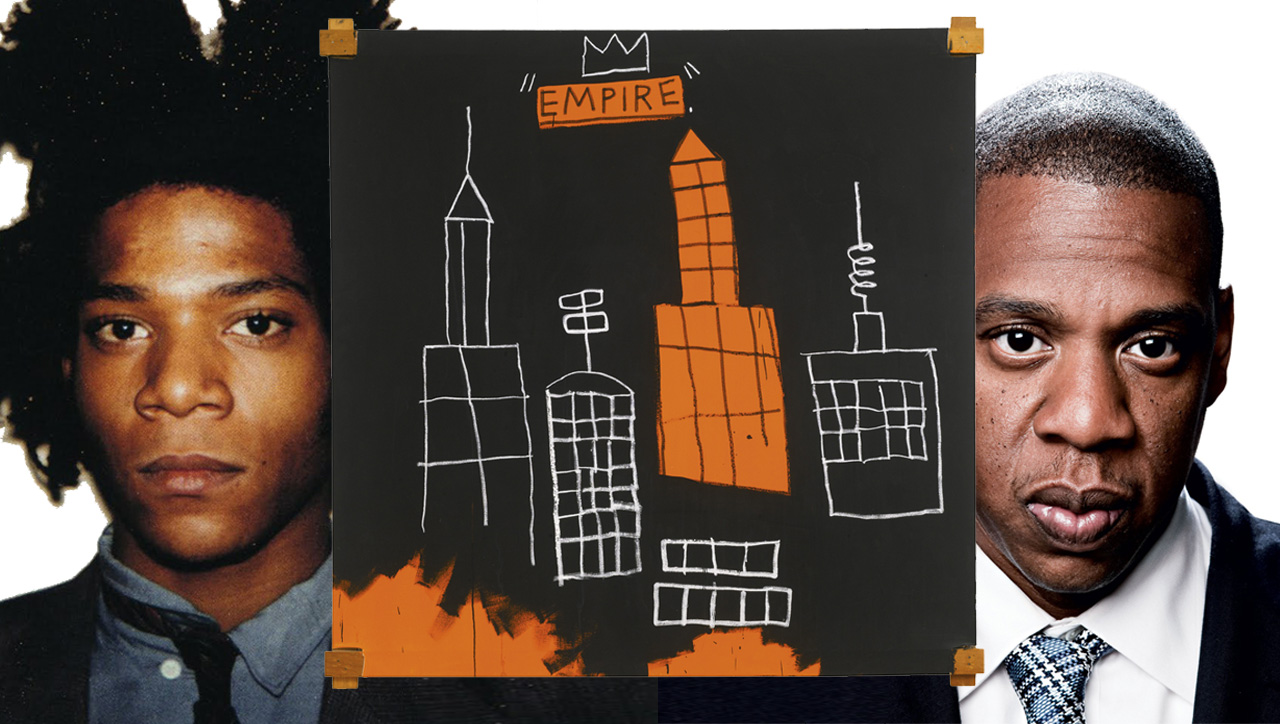
Jean-Michels artwork now goes for nothing under 1 million dollars, Jay Z popularly bought one of his pieces for upwards of $4 million (over 800 million naira). https://cdn.hiphopsince1987.com/wp-content/uploads/2013/11/jay-z-purchases-a-4-5-million-dollar-painting-by-jean-michel-basquiat-HHS1987-2013.jpg |
| Politics › Re: Caught In The Act: Meet The Man Defacing Port Harcourt by ezeagu(m): 1:06pm On Jul 25, 2015 |
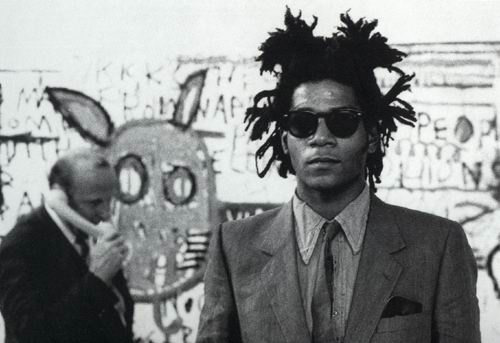
Jean-Michel's artworks were also exhibited in gallery's. https://www.artquotes.net/masters/basquiat/untitled-82-skull.jpg https://annieferris.com/wp-content/uploads/2014/05/jean-michel-basquiat.jpg |
| Politics › Re: Caught In The Act: Meet The Man Defacing Port Harcourt by ezeagu(m): 1:04pm On Jul 25, 2015 |
SAMO was later revealed to be a young man named Jean-Michel Basquiat, who later become in association with Andy Warhol and entered legend status after he died in his 20s (from drugs). https://www.blog.stripart.com/wp-content/uploads/2013/04/basquiat.jpg |
| Politics › Re: Caught In The Act: Meet The Man Defacing Port Harcourt by ezeagu(m): 1:02pm On Jul 25, 2015 |
| Politics › Re: Caught In The Act: Meet The Man Defacing Port Harcourt by ezeagu(m): 1:02pm On Jul 25, 2015 |
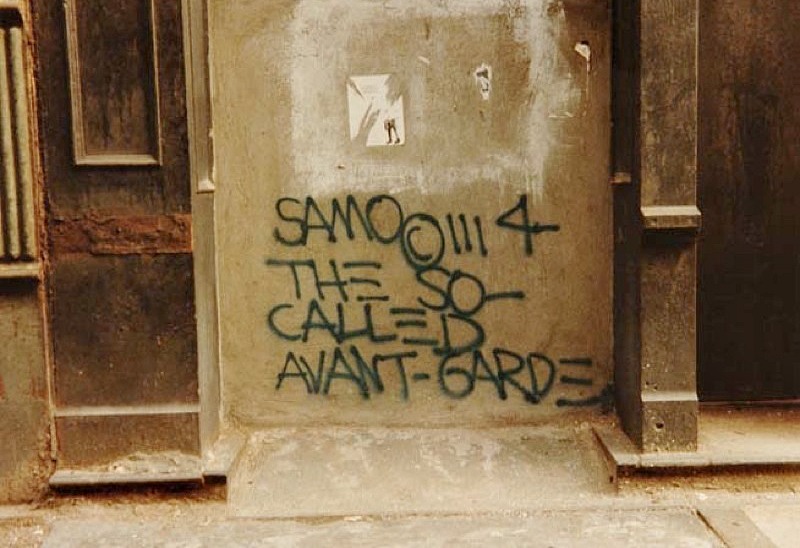
This is by the artist SAMO in the 80s. https://blog.soton.ac.uk/rcs/files/2014/12/Graffiti-SAMO-de-Jean-Michel-Basquiat-nos-anos-80-Estados-Unidos-31.jpg |
| Politics › Re: Caught In The Act: Meet The Man Defacing Port Harcourt by ezeagu(m): 1:01pm On Jul 25, 2015 |
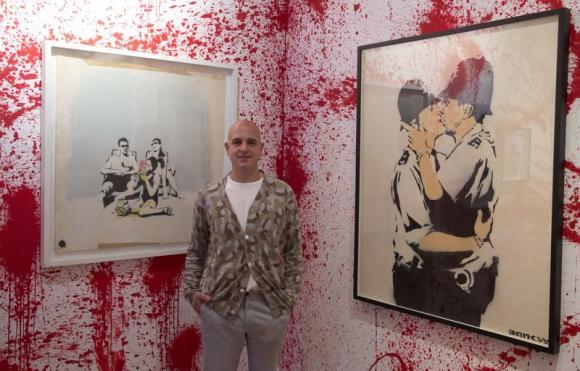
Banksy's wacky art has been accepted into the art world and he's been exhibited in art gallery's around the world. https://www.themiamiartscene.com/wp-content/uploads/2014/06/Banksy_Lazarides.jpg |
| Politics › Re: Caught In The Act: Meet The Man Defacing Port Harcourt by ezeagu(m): 12:59pm On Jul 25, 2015 |
This is an example of messages in graffiti in London, it's suspected to have been created by the famous artist Banksy. [img]http://www.yourlocalguardian.co.uk/resources/images/4036761/[/img] |
| Politics › Re: Caught In The Act: Meet The Man Defacing Port Harcourt by ezeagu(m): 12:58pm On Jul 25, 2015 |
ckenneths: Bigcake: SouthernBreeze: feldido: feldido:Any time someone does something different in Nigeria, they're mad. What he's doing is a public art from known as tagging, it's popular throughout the world and although it was initially seen as vandalism, and still is somewhat today, the art form has birthed many famous artists and it has become more appreciated. Let me educate you 'local' people. 1 Like 1 Share |
| Politics › Re: Caught In The Act: Meet The Man Defacing Port Harcourt by ezeagu(m): 12:55pm On Jul 25, 2015 |
He's creative and thinks out he box, something Nigerians don't understand and are allergic to. |
| Politics › Re: Do You Identify As Black? by ezeagu(op): 11:57am On Jul 25, 2015 |
Lovesdaisied:That's a good point, plus the classification of black is very diverse, maybe too diverse. |
| Politics › Re: Igbos Were Actually Described As Practising Jews. by ezeagu(m): 11:55am On Jul 25, 2015 |
OfoIgbo:I was referring to European estimates, I was referring to the kings list as per Nri customs as published by Onwuejeogwu, it's a very sketchy list and some researchers have suggested that Nri started in the 13th century instead because the kings on the Nri list had too much of a suspiciously long reign. Stretching that further to the 5th century would mean giving each king something like 100 years of rule each which is unbelievable. Again, Igbo Ukwu isn't confirmed to be part of the wealth of the Nri state, even if it may have influenced it or was part of its establishment. |
| Politics › Re: Igbos Were Actually Described As Practising Jews. by ezeagu(m): 3:33am On Jul 25, 2015 |
carnegiefan:I'm not a teacher. First of all ask yourself what do the words 'iko' and 'enyi' mean in a pre-20th century Igboland. After that ask yourself who Ahebi Ugbagbe is. If you're still lost, try: https://www.google.com/search?tbm=bks&hl=en&q=igbo+iko+sex Which yields results like: "There is no emphasis among the Igbo on sexual services being exclusive and confined to husband and wife. All that the culture demands is that sex be institutionalized. Iko mbara is one such institution." The Igbo, as seen by others, F. Chidozie Ọgbalụ 1988 and: "Suffice it to say that Igbo law of the family did not have the same categorical view of the limits to sexual activity within and outside marriage as it did under the laws of the Christian Church." New Dimensions in African Linguistics and Languages, Michael J C Echeruo, 1999 https://books.google.com/books?id=ETWcs9nplAEC&pg=PA296 or: "The iko practice is a sexual tolerance that spreads all over the Igboland and some parts of Nigeria." The Igbo family life and cultural change, Starling E. Nlemchukwu Anyanwu, 1976 maybe: "Going beyond the various influences of colonialism, religion, and modernity is crucial in understanding Igbo sexual attitudes prior to their assimilation of norms that were designed to instill passivity in women and constrain their sexual autonomy." Sex from Plato to Paglia, Alan Soble, 2006 https://books.google.co.uk/books?id=IMTEiTtqqPcC&pg=PA39 You can look for more under 'iko mbara' if you want, there's plenty. |
| Foreign Affairs › Re: Content Removed by ezeagu(m): 2:08am On Jul 25, 2015 |
amtalkin:You're not a racist, you're useless black African. |





1 2 3 4 5 6 7 8 ... 67 68 69 70 71 72 73 74 75 (of 349 pages)