Kingston277's Posts
Nairaland Forum › Kingston277's Profile › Kingston277's Posts
1 2 3 4 5 6 7 8 9 10 11 12 13 14 (of 14 pages)
 Culture › Re: "Africa - Most Of It - Wasn't Great [photo] by kingston277(m): 10:12pm On Jul 04, 2014 Culture › Re: "Africa - Most Of It - Wasn't Great [photo] by kingston277(m): 10:12pm On Jul 04, 2014 |
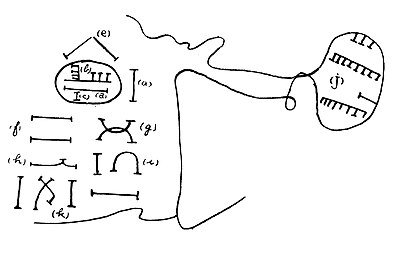
juwoonn: Ok... I can see your point.That wasn't really directed at you. Most of these are painting work. Very easy to fake.Only two of those are paintings and only one is a modern rendition. The other three are from first hand experiences so I have no clue are coming from. Now I know your problem. You have a psychiatric problem and you think you know more than you actually know bcs that your big head is deceiving you.You are accusing me of psychiatric problems but Rossike and I debunked your argument and you still didn't answer my question? What is this Op. kingston277: https://upload.wikimedia.org/wikipedia/commons/thumb/0/00/Ikpe_nsibidi.jpg/400px-Ikpe_nsibidi.jpg |
| Culture › Re: "Africa - Most Of It - Wasn't Great [photo] by kingston277(m): 9:12pm On Jul 04, 2014 |
ROSSIKE: Abeg make we hear something. The white man is the EXACT SAME. Very greedy and thoughtless for tomorrow. Look at the state of the planet. The environment is almost irreversibly damaged, meaning the next few decades could be catastrophic for all of us. Why? Because out of sheer monopolistic greed, the white man promoted the use of toxic fossil fuels for energy production, rather than use free and renewable energy resources. He built hideous nuclear weapons, more than enough to destroy the planet hundreds of times over. He invades and destroys countries, killing millions, to steal their resources, forgetting that he's creating generations of future terrorists hell-bent on getting even. He creates unsustainable economic systems featuring monstrous inequality, forgetting that anything built on sand will crumble like a pack of cards. I mean, if the Africans are foolish, the white man is 1000 times more foolish because his thoughtlessness is actually leading the entire globe to hell.I second this. I will also add this quote to support the above. RandomAfricanAm: That sh*t is sad man. sad |
| Culture › Re: Why Do Nigeria Men Prefer Male Child To Female Child by kingston277(m): 9:10pm On Jul 04, 2014 |
frankben: silliest quote i've ever gottenCome on, you know what you wrote was funny.  |
| Foreign Affairs › Re: Without Colonialism Sub-Saharan Africa Still Be In The Stone Age by kingston277(m): 8:37pm On Jul 04, 2014 |
Another bad troll. Poor, poor lowlife. smh. |
| Culture › Re: Why Do Nigeria Men Prefer Male Child To Female Child by kingston277(m): 8:32pm On Jul 04, 2014 |
all4naija: How is that trolling?Your posts are veering to parity with ayanle's posts with of abnormal font and tons of negativity for anything African. ..and why is this thread 117 pages long? I think it was even well over 1000 pages long prior to the attack. https://www.nairaland.com/897396/where-south-africa-without-white |
| Culture › Re: African Script by kingston277(m): 8:28pm On Jul 04, 2014 |
Bassa script This is the updated version https://nigerianwiki.com/images/thumb/f/f0/Bassa_script.jpg/600px-Bassa_script.jpg HISTORY of the Bassa Script, 500+ BC (Liberia, West Africa) Many people today are unaware of the genius of the African. Although they might admit to a complex verbal language structure, it may come as quite a surprise to many that African people have a multitude of written languages. In Liberia the Bassa people have a written script. The Kpelle, Gola, Lorma, Grebo, Vai and Kissi also are known to have their own written language. Most of these scripts have diminished over time, as a result of abandonment. Had Hanibal visited Liberia in 500 B.C., particularly Kpowin(Tradetown) and Bassa Cove, he would have witnessed the Bassa script in use. The script is called Vah by the Bassas, which is translated to the phrase: To throw sign. Not to be confused with the Vai ethnic group, who also have their own written script as mentioned above. Vah was initially the throwing of sign or signals utilizing the natural environment. Teeth marks would be left on leaves and placed in a discrete location for the intended reader. Messages where also carved in the barks of trees. Eventually this evolved into a complex written language. During the era of the Trans-Atlantic slave trade, many Bassas avoided slave traders by utilizing Vah(Bassa Script). During the colonial, and on through to the neo-colonial period in Africa, a decline in the usage of Vah script caused by external cultural forces, almost brought this written portion of the Bassa language to extinction. Dr. Flo Darvin Lewis in the 1900s would re-discover the script in South America. Bassas that were sold into slavery now living in Brazil and the West Indies; kept the tradition of writing alive, passing it from generation to generation. Through his travels, Dr. Lewis was astonished to find out that he, being a Bassa himself, knew nothing of any such writing amongst his people back in Liberia. This discovery put Dr. Lewis on a determined path to learn, teach and revive the script in Liberia. Lewis attended Syracuse University and earned a doctorate in Chemistry, where he was known as the African Prince. Dr. Lewis returned to Liberia by way of Dresden, Germany where a company manufactured the first printing press for the Bassa alphabet. In Liberia, he established an institution for learning Vah. Among his students were, former Senator Edwin A. Morgan, Counselors Zacharia Roberts and Jacob Logan. Fear, mis-trust, sabotage and colonial thinking Liberians would lead to Dr. Lewis’ untimely death; leaving an open legacy yet to be completed. [6] [7] http://nigerianwiki.com/wiki/African_Writing_Systems#Bassa_Script |
| Culture › Re: African Script by kingston277(m): 8:26pm On Jul 04, 2014 |
| Culture › Re: African Script by kingston277(m): 8:24pm On Jul 04, 2014 |
Dogon Ideograms [img]http://africa.uima.uiowa.edu/assets/Allen-Roberts/JPEGS/_resampled/SetRatioSize10001000-AFR004.jpg[/img] Besides dramatizing the epic struggles of cultural heroes, initiation educates boys about the precepts of social life, as situated in the greater universe of nature. Dogon boys from the region of Songo in Mali undergo phases of their initiation in a rock shelter high in a steeply rising butte. Dogon hold that this is where human life began. The shelter wall has been painted with ideograms, which generations of boys have learned to read. Circumcision is practiced at the foot of the wall, dramatizing the loftiness of the place and the information it imparts. The ideograms refer to “the life of the world”: astronomy, masks and sacred paraphernalia, spirit figures, totemic prohibitions, and ritual specialists and cycles. “The designs are mnemonic devices recalling local legends and histories; they teach adult behavior and responsibility. Historically, the site is a classroom full of practical knowledge, a visual narrative depicting the ‘social organization of truth’” (Hoffman 1993: 231). Conversion to Islam may be changing these places and practices for at least some Dogon people. |
| Culture › Re: African Script by kingston277(m): 8:21pm On Jul 04, 2014 |
Kikuyu Symbols Symbol on the right https://s2.hubimg.com/u/4250051_f260.jpg This first method of memory aids is referred to by experts as mnemotechnic writing. Here the writer intends to either communicate with self or with others. Notched sticks for the recognition of debts is one example. In the case of the Kikuyu as I was informed by Michael Waweru (mutigairi), one was able to follow the history of his herd by such notches on a stick. A certain notch on a stick that identified a specific cow would signify insemination; another notch would record the birth of the calf and by such records the cattle breeder was able to estimate the amount of milk from his herd. It is noteworthy that the word for letters or numerals in Kikuyu is ndemwa, which translates to those that have been cut. Father Cangolo of the consolata fathers who lived among the Kikuyu in the 1930's recorded that: "Recently an old Kikuyu took to a public meeting a wooden stick on which he was able to read the amount of tax paid by him to government on each year since it began being collected (Cagnolo) Another example of mnemotechnic writing is the knotted chord such as the complex quipus of the incas. Waweru told me that the Kikuyu used the knotted chord to count down the days towards an appointment or major event. If for example there was a meeting in seven days, seven knots would be made on a string. On the morning of each new day, a knot would be untied until the last knot was untied and the record keeper punctually attended his appointment. http://emmanuelkariuki.hubpages.com/hub/Kikuyu-Scripts |
| Culture › Re: African Script by kingston277(m): 8:19pm On Jul 04, 2014 |
Aroko (yoruba/edo?) www.nairaland.com/attachments/954660_YorubaCrown33rd_jpegbbb174add4dc3bb501cbe06820410063 http://books.google.ca/books?id=NYU4AQAAMAAJ&pg=PA297&lpg=PA297&dq=aroko+knots&source=bl&ots=ffWFO6xFsB&sig=Zxz7wc_58C6hLjffSwx2jarZpTM&hl=en&sa=X&ei=mfy2U6eYDIqtyASKmICADw&sqi=2&ved=0CDQQ6AEwAw#v=onepage&q=aroko%20knots&f=false This is similar to the Inca Quipu system expect partilliy phonetic. http://en.wikipedia.org/wiki/Quipu http://www.slate.com/articles/life/the_good_word/2011/07/questioning_the_inca_paradox.html 1 Like |
| Culture › Re: African Script by kingston277(m): 8:09pm On Jul 04, 2014 |
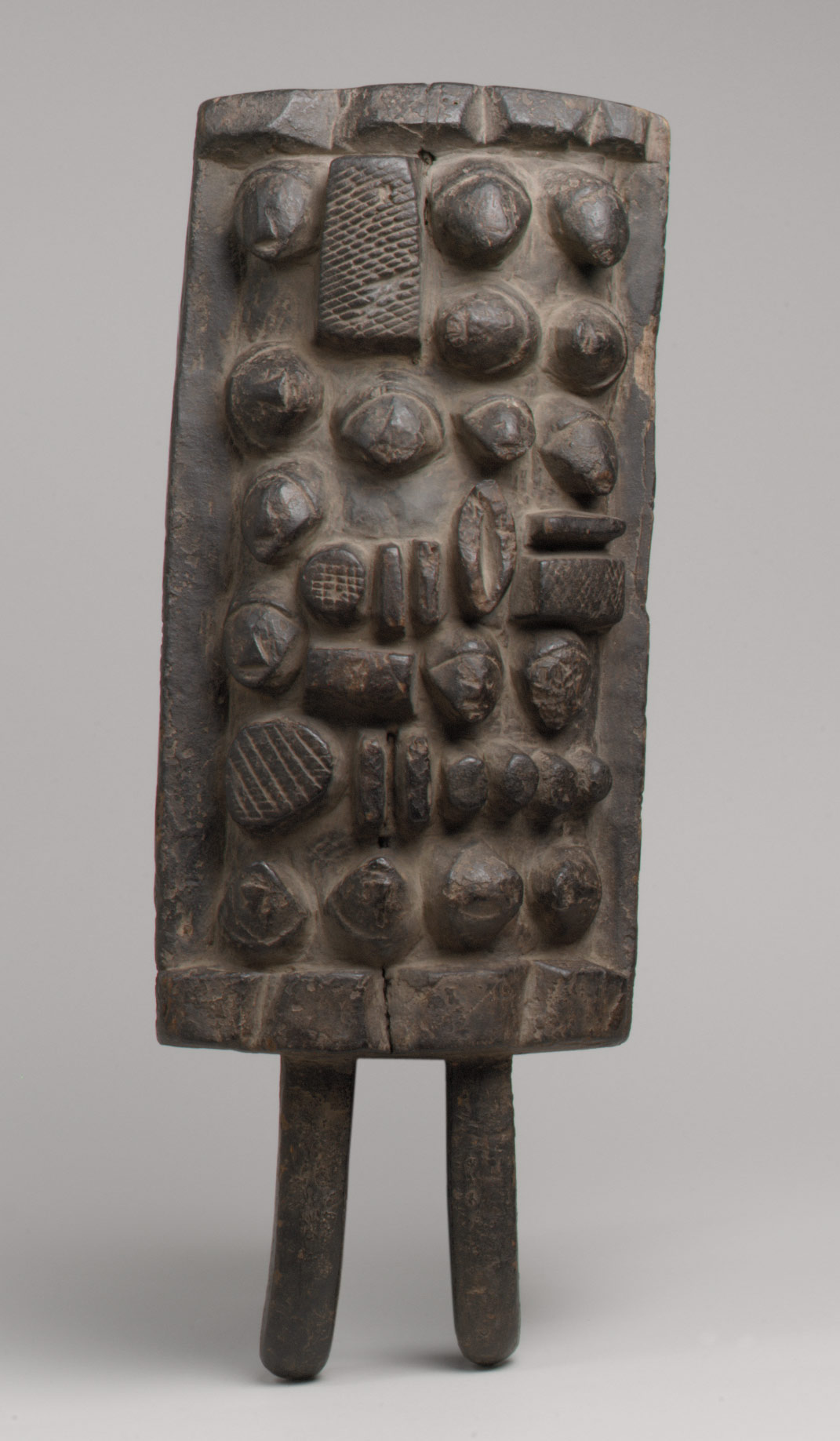
Lukasa Board (Luba) https://www.metmuseum.org/toah/images/h2/h2_1977.467.3.jpg Lukasa, or memory boards, are hand-held wooden objects that present a conceptual map of fundamental aspects of Luba culture. They are at once illustrations of the Luba political system, historical chronicles of the Luba state, and territorial diagrams of local chiefdoms. Each board's design is unique and represents the divine revelations of a spirit medium expressed in sculptural form. While many lukasa utilize a system of denotation based on masses of shells and beads affixed to their wooden surfaces, this example communicates its content through incised designs and images carved in relief. Lukasa belong to regional chapters of the Luba mbudye association. Mbudye is a council of men and women charged with sustaining and interpreting the political and historical principles of the Luba state. As authorities on the tenets of Luba society, mbudye provide a counterbalance to the power of kings and chiefs, checking or reinforcing it as necessary. Members of mbudye proceed through a series of stages within the society as they master successive levels of arcane knowledge. Only those at the apex of the association can decipher and interpret the lukasa's intricate designs and motifs. Mbudye members call the twin projections sprouting along the board's outer edge the "head" and "tail" of the lukasa, zoomorphic elements that are meant to evoke the crocodile. An animal equally at home on land and in water, the crocodile's dual nature is suggestive of Luba political organization, whose existence relies on the interdependence of the kikungulu (the head of the mbudye) and the kaloba (the "owner of the land," or chief). More detailed information is conveyed on the front and back of the board. On the lukasa's "inside" surface (the front), human faces represent chiefs, historical figures, and mbudye members. The rectangular, circular, and ovoid elements denote organizing features within the chief's compound and the association's meeting house and grounds. Its "outside" surface displays incised chevrons and diamonds representing the markings on a turtle's carapace. These are a reference to Lolo Ina Nombe, the founding ancestress who exists in the form of a turtle, and constitute a symbol of the vaunted lineage of the Luba peoples. The motifs are said to evoke kitenta, spirit capitals that house the tombs of divine kings, so that the same surface also provides a map of the physical and religious geography of the region. |
| Culture › Re: "Africa - Most Of It - Wasn't Great [photo] by kingston277(m): 8:02pm On Jul 04, 2014*. Modified: 10:10pm On Jul 04, 2014 |
ROSSIKE: How do we even know that the traditional African elite's refusal to share their knowledge or popularize writing, record keeping etc, wasn't borne out of thousands of years of cold hard experience in which these seeming ''advances'' have actually led to the disastrous decimation and decline of earlier civilizations? African civilization is thousands of years old, stretching into prehistory. Africa gave the world writing. The sciences.There are ruins of stone cities like Kerma in modern day Sudan, built with stunning geometry, which have been dated at over 10,000 years old! By comparison, the first voice from Europe was Homer of Greece, in 800 BC, less than 3,000 years ago. How do we know the African's decision to simplify life isn't actually an advancement based on human experience, and that he is right to deny high knowledge to the majority, seeing that they would inevitably make a mess of it? I mean, look at the world today. Knowledge has spread, and we're on the brink of annihilation from environmental, economic, and military catastrophes. Everyone can read and write. But the world is a lot less safe, secure and stable than it was in the time of our fathers. The whites - relative newcomers to civilization - wouldn't know the ancient histories of the earth... It's ancient cataclysms. Maybe our ancestors WERE RIGHT afterall. Maybe keeping records is actually a bad thing. As it reminds people of ancient wrongs... locking them into a cycle or negative recollection and action.... Maybe writing is actually an attractive but double-edged sword...leading to the spread of knowledge capable of destroying the planet.....Maybe the ancestors were right that simplicity was the antidote for another round of planetary/continental destruction.Weren't schools wide spread in the pre-colonial times? One article I read said nsibidi was taught to igbo children in schools in that era. And didn't the "African script" thread prove that they did keep written records all over the continent? |
| Culture › Re: Overcoming Stereotypes by kingston277(m): 7:25pm On Jul 04, 2014 |
This is a good start at overcoming rampant ignorance and prejudice. http://queergiftedblack.tumblr.com/post/25413962820/100-things-you-probably-didnt-know-about-africa 1 Like |
| Culture › Re: Why Do Nigeria Men Prefer Male Child To Female Child by kingston277(m): 7:22pm On Jul 04, 2014 |
all4naija: It is basically a cultural thing. Nigerians are culturally blinded to the extent they have to accord more rights to a male child than a female one. It is totally a biased thing to do.Why do you keep trolling on every thread, man. |
| Culture › Re: Why Do Nigeria Men Prefer Male Child To Female Child by kingston277(m): 7:20pm On Jul 04, 2014 |
frankben: @OP, you're right in your observation... Male child preference is subject to inheritance and is rampant in the south eastern part of this country(igbos to be precise)... I think it's an overlooked form of discrimination in certain families... Mother inlaws are always the ones orchestrating this idea/belief and executing it by persuading the son to chase out the wife for not giving birth to a Son...Funniest thing I've heard today |
| Culture › Re: Why Do Nigeria Men Prefer Male Child To Female Child by kingston277(m): 7:17pm On Jul 04, 2014 |
Danielotuya: Of cos yes! The African society gives a difference status to a male child than a female. Bt westernizatn has help a little to cushion d effect of dis belief. Bt truth be said,na person wen see pikin dey select. Tell a barren couple for 15yrs if they wld take a boy or gal child,if they will nt tel u anyone as long it's a childSure, thats why women were protesting about anti-female laws during colonial rule http://www.postcolonialweb.org/nigeria/precolwon.html |
| Culture › Re: Why Do Nigeria Men Prefer Male Child To Female Child by kingston277(m): 7:12pm On Jul 04, 2014 |
myspnigeria: Blame it on our rich traditionAlways blaming something, eh? |
| Culture › Re: Why Do Nigeria Men Prefer Male Child To Female Child by kingston277(m): 5:03pm On Jul 04, 2014 |
hensben: because our culture made it so and you know, we still have those generation around, they pass it to their children but thank God for civilization, that believe is on the decrease.Strange, civilization began 300 years ago with the nok people but that didn't cease. So much ignorance on this thread. smh. |
| Culture › Re: Oba Of Ikeja Is Dead: Computer Village and Other Markets Shut Down! by kingston277(m): 4:55pm On Jul 04, 2014 |
Only a corrupt Oba would dabble in human head burial. Good thing it was looked down on in the pre-colonial times. |
| Culture › Re: "Africa - Most Of It - Wasn't Great [photo] by kingston277(m): 1:28am On Jul 04, 2014*. Modified: 7:33pm On Jul 04, 2014 |
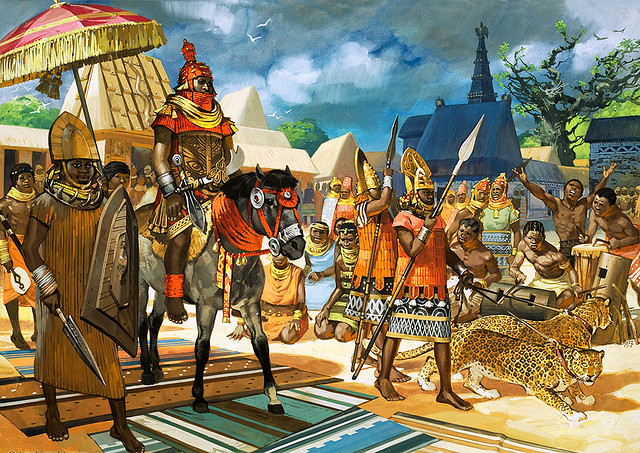
@OP Op, why do people like you delight in spreading your ignorance and turning poor, unsuspecting Africans away from scholarly sources. Where in these pictures do you see unclothed people? https://i.imgur.com/kpfww1T.jpg?1 https://s2.hubimg.com/u/6000759_f520.jpg https://atlantablackstar.com/wp-content/uploads/2013/12/Benin-Oba-King.jpg https://i.imgur.com/QpTDdgx.png?1 And OP, What is this? https://upload.wikimedia.org/wikipedia/commons/thumb/0/00/Ikpe_nsibidi.jpg/400px-Ikpe_nsibidi.jpg 1 Like |
| Culture › Re: African Script by kingston277(m): 11:08pm On Jul 02, 2014 |
Bantu Symbols https://www.anotherafrica.net/wp/wp-content/gallery/afrikan-alphabets/01_aa_afrikanwriting.jpg Included here are eighty-one colourful examples of Bantu symbol writing. The Bantu symbol-language of South Africa was developed for communication exclusively between medicine men; it is not taught to the common people. Yet an estimated 30 percent of the Bantu people can write in this language. Apart from medicine men and the elders and wise ones, it is mostly women who employ it: after a newly married couple have built their home, the husband’s mother, or any of his friends, may decorate the house’s walls with blessing symbols. In the symbol-language, each symbol represents not a single character or letter, but a whole word or, more often, a complete idea (much like Chinese and Japanese symbols). The characters are arranged in sequence to communicate: Man + sees + lion. Lion + eats + ox. 61cm x 91cm (24" x 36"  |
| Culture › Re: African Script by kingston277(m): 11:00pm On Jul 02, 2014*. Modified: 6:13am On May 31, 2015 |
Abomey(Dahomey) Bas-reliefs [img]http://raai.library.yale.edu/web/art/4/61933_images_image_467_medium.jpg[/img] Publication: 1894. Verneau, R. "Statues des rois de Dahomé. Le trône de Béhanzin et les portes des palais d'Abomé, par Maurice Delafosse" [book review]." l'Anthropologie, Vol. 5. Original language: French Caption translation: Other bas-reliefs from the palaces of Abomé. (According to the watercolors of Captain Fonssagrives.) Text translation: “These bas-reliefs, written in a language and with known ideographic and symbolic characters of the only priests of Afa, hold the annals of the Dahomé. It is very curious to find, in a black country, a system of historic hieroglyph that had been thought to have been located in Egypt and in America. The deciphering of these inscriptions, beginning with Captain Fonssagrives, has been continued by one of his colleagues with the aid of the priests of Afa and the princes of the royal family.” (p. 365) Illustrator: Dietrich; Fonssagrives, signed in LR; Dietrich (engraver), Fonssagrives (artist) Illustration technique: studio engraving; after watercolor more images here: https://www.nairaland.com/1249503/interesting-images-precolonial-early-colonial/6 Edit: [quote author=user Ighayere on Historum]Dahomean symbols have been compared to hieroglyphs in the past: RAAI - Ross Archive of African Images And more recently: "The Récade of King Dakodonu or Dokodonu. . .shows even more clearly the principle of the Dahomey hieroglyph. The text on the axe blade can be read as follows: there is a pictographic symbol representing the silex 'da', with below the symbol of the earth, 'ko', having a hole in the middle, 'donon'. These signs are pictograms used here as picto-phonograms. By combining them. . .we get the name of the Dahomey king Dokodunu." - P. Diagne, "History and Linguistics," in Methodology and African Prehistory (1981)[/quote]http://historum.com/middle-eastern-african-history/90116-blacks-had-no-history-before-slavery-16.html (page 16) |
| Culture › Anybody Know of any Elderly People Born in the Pre-colonial Times? by kingston277(op): 10:36pm On Jul 02, 2014*. Modified: 10:11pm On Jul 10, 2014 |
I was reading an article on an unrelated topic and noticed it mentioned the birth and death of a researcher from the 19th century (1868-1954 making him about 86 yo). I knew people lived between the transition between the 19th and the 20th centuries, and I've always known colonialism was a very recent phenomenon, but it never really hit me how useful it could be for historians if Africans who had grandparents or great grandparents whom for example may have died for example, around the 1950s/1960s who have told about their childhood in the pre-colonial times. This would eliminate the need for extensive archaeology and oral traditions if we simply interview the elderly who have observed these societies in the flesh in their youth. So have any nairalanders with (great)grandparents born in the pre-colonial era heard them talk about their childhood in those times, particularly in the cities such as Ile-Ife, Benin city, Oyo, Kano, etc(or do you know anyone who has)? If so, have they told you(or your parents)stories about events going on at the time? What did the architecture of the cities look like? Were the people friendly or rude? How frequent were conflicts? What technology was employed to do everyday things? How influential were the ruling elites? |
| Culture › Re: Traditional African Boat Designs by kingston277(op): 10:03pm On Jul 02, 2014*. Modified: 7:03pm On Jul 10, 2014 |
. |
| Culture › Re: Africa: Is It Time To Put An End To Traditional Wedding Rites? by kingston277(m): 9:50pm On Jul 02, 2014 |
CongoleseQueen: As an individual who was raised in a home centered around culture, I fully understand the importance of traditional practices. However, I have struggled with grasping the reasoning behind some of these practices. I recall having a conversation with a friend about the process of traditional marriage. She once told her mom that she was not interested in receiving a bride price. She is all for having a traditional wedding, but refuses to participate in a ceremony that she feels is unnecessary. Her mom was certainly not pleased with her request. In fact, she informed her that it wasn’t a decision that lied in her hands. It had already been decided for her the moment she was born. While I do see where her mother is coming from, I don’t think she should be forced to adhere to a custom that doesn’t apply to her as an individual. If anything, it should be a choice.Great, because according to scholarly sources, traditional African human right concepts have always been about choice and access to basic human needs, anything deviating from that is cultural corruption, so go ahead. In 2004, activists from Nigeria, Uganda, Kenya, Tanzania, Senegal, Ghana, Rwanda and South Africa gathered in Kampala for the International Bride Price Conference to discuss ways of eliminating its practice in Africa. Quite frankly, I don’t think it is a good idea to get rid of it completely. I simply think that people should not be forced to participate. It should be optional.I agree. A single African country can have anywhere from five to two hundred tribes, and each tribe carries its own customs. With so many rituals in place, individuals who come from the same country, but belong to different tribes, are not encouraged to marry. This is not a progressive way of thinking. If these traditions aren’t creating unified sense of belonging, why are Africans still holding on to them?I agree, but... If historical traditions weren't about creating a sense of belonging, then how did the pre-colonial kingdoms that spanned several tribes survive for so many centuries? For many Africans, the rise of inter-tribe and inter-Africa marriages is a sign that tribal disputes have ended. That’s like saying, inter-religion marriages have ended religious wars and disputes. It couldn’t be further from the truth. Tribal fighting is still an ongoing problem in Africa. Africans are still committing atrocious acts of violence towards one another due to tribal differences. A friend of mine once said that Africans are always complaining about how badly they were treated by Europeans, but refuse to acknowledge the fact that they are doing the same thing to each other.Tribal conflicts exist for many different reasons around the world, so it is not wise to place all cause in the same box. Historically, tribes & kingdoms usually went to war over the same reasons today's nations go to war. Not many wars were based on racial-esque lines. However, sudden changes in government structure, culture, religion, politics, (and yes,)colonialism, etc can polarize societies along tribal lines even if they've co-existed for centuries such as the HUtu. Inter-tribe and inter-Africa marriages are becoming more popular due to Western influence. Most Western societies encourage cultural diversity and tolerance. Africans who have been exposed to it tend to become more open. The average African, living within the borders of Africa, would prefer to marry a person from their tribe. In fact, they have zero interest in knowing what goes on in other regions.Huh? Inter-tribal marriages have always been with Africans. Many sources online state that tribes are generally not rigid and members can follow the politicians of another tribe freely, speak the language of neighboring tribes as their 1st language, practice the customs of neighboring tribes, etc. Tribes are fluid systems so I'm not sure where you got your ideas from. South Africa was listed as one of the world’s most multilingual countries. The average South African can speak or understand all of the country’s main languages. This is a great strategy towards creating a sense of unity and belonging within its frontier. It is a fantastic way of promoting cultural diversity.Thats wonderful that that works for them but will it work for us, we really need to start looking inward and examining and fixing our issues. Our ancestors left us with several ways to create a functioning society like they did but we continue to ignore them and look outward. This non-progressive thinking will soon be our downfall. Plz red this: https://www.nairaland.com/1796388/tradition-progress In conclusion, before we start advocating for a “united Africa”, let’s first encourage a “united Congo”, “united Nigeria”, “united Sudan” and so forth. Africans love culture. That is what makes our continent so beautiful. However, it’s very difficult to genuinely appreciate the culture when it is playing key role in dividing our people. Africans hold traditional practices very close to their hearts, as they have been passed on from generation to generation. Change is not something most of us are quick to accept, but if we are working towards a unified and progressive Africa, accepting cultural diversity and tolerance is the right way forward.Agree, we should only hold on to aspects of culture that helped us build great civilizations like Benin, Oyo, Asante(all multi-tribal), etc, so that hopefully one day our society may return to their level of sophistication. But we should not adopt/stick with customs, foreign or local, that are not here to fix our current issues, this is part of being rational and enlightened, also something that has been with our ancestors(some of whom were atheist) but not with us. 1 Like |
| Culture › Re: Traditional African Boat Designs by kingston277(op): 8:29pm On Jul 02, 2014 |
The most interesting difference, however, was in the construction of the stem and sternpost. The mtepe had fairly conventional timber posts, except that the stem was in two pieces joined by an unusual mortise-and-tenon joint open at the front and rear. The dau al mtepe's was even stranger: it consisted of a series of stacked, V-shaped breasthooks, each one about as tall as a strake, tapering aft, and pegged to one another. In some cases, a solid timber was fastened outboard of this stacked construction. It is not known how planks were fastened to the stems/sternposts in either case, or if the timbers were rabbeted.http://indigenousboats..ca/2012/09/the-mtepes-of-kenya.html |
| Culture › Re: Traditional African Boat Designs by kingston277(op): 8:29pm On Jul 02, 2014 |
The sail was made from many strips of plaited palm leaves, sewn together. There were two or three sets of reef points near the head of the sail. The sail was supported by a yard and a boom of delicate appearance. The yard was equipped with parrels; the boom with a simple loop of rope to perform that function. In addition to a halyard, the yard was supported by two "lift braces," which served both functions implied by that name. As I don't understand how this could work, I'll copy my source and perhaps a reader can explain: |
| Culture › Re: Traditional African Boat Designs by kingston277(op): 8:28pm On Jul 02, 2014 |
Most reports indicate that after the strakes were sewn together, pegs were inserted by drilling obliquely upward into the outboard face of a plank so that the drill exited the plank on the edge and penetrated the plank above it also on its edge. Others disagree, claiming that the strakes were first edge-drilled on their matching faces, "dowel tenons" set into the holes, and the upper strake then pounded down onto the lower one. Only then were the planks through-drilled and sewn together. |
| Culture › Re: Traditional African Boat Designs by kingston277(op): 8:27pm On Jul 02, 2014 |
With their deep V-shaped hulls and flexible sewn construction, mtepes were not stiff enough to lie on their sides. They were never allowed to take the ground unless supported by props. |
| Culture › Re: Traditional African Boat Designs by kingston277(op): 8:26pm On Jul 02, 2014 |
Mtepes varied considerably in size. Most seem to have been between 40 and 75 feet (I presume that the measurements were taken on deck, and did not include prow extensions, bowsprits or outboard rudders) and of 12 to 50 tons burthen, but one recorded in the 19th century was 30 meters long and 186 tons. All references report them to have been very fast and able sailors, easily able to out-point settee-rigged dhows. This is surprising considering their rig, which consisted of a single square sail of palm leaf matting. |
| Culture › Re: Traditional African Boat Designs by kingston277(op): 8:25pm On Jul 02, 2014 |
Mtepe: an indigenous Bantu invention [img]http://4.bp..com/-wf9AdKhLKps/UEpdOWfSaEI/AAAAAAAAHAE/21l4tJF7P_8/s1600/800px-House_of_wonders_inside_zanzibar.jpg[/img] The mtepe is a sewn ship. It is associated with the Swahili people (the word "boat" in the Bantu Swahili language being mtepe). The mtepe's planks are held together by wooden pegs and coconut fibers. [img]http://kandilivilla.files./2011/11/house-of-wonders11mtepe.jpg[/img] The Mtepes of Kenya |