richmanrichard: give us one example of a muslim school in kwara state that did a similiar thing. You ve to go abroad to find one and that one was still a christian school. Na only christians sabi accomodate? Wetin do una(muslims) for hand?
BELOW IS THE SUMMARY OF WHAT WE SHOULD DO UPON HEARING THE ADHAN 1. Respect the adhan by stopping the conversation. 2. Stay focus on the adhan. Repeating what the muadhin say except for the hayya alas-solah and hayya-ala-falah. Instead say la hawla walakuata illa bila 3. After adhaan sends salaah to the prophet (s.a.w) 4. Then read the dua’ wasilah 5. Make dua between Adhaan and Iqaamah.
How many of us today's Muslims stop all work and listen to the Adhaan and reply to its wordings even when it is recommended in Sunnah? SubhanaLaah! President Uhuru, a non-muslim, pauses his speech during Adhaan. This is a wake-up call for you and me.
President Uhuru Kenyatta was on Monday forced to cut his speech at the Jamhuri Stadium in Dodoma, Tanzania after the Muslim call to prayer during the funeral mass of John Magufuli.
Uhuru who was eulogizing the late president John Magufuli temporarily stopped his speech for two minutes from 12.53 pm to 12:55 pm in honor of the Adhaan in a nearby mosque in Dodoma.
The adhan is the Islamic call to prayer, recited by a muezzin at prescribed times of the day.
Adhan is called out by a muezzin from the mosque five times a day, a whole day long in the event of religious holidays traditionally from the minaret, summoning Muslims for obligatory prayer.
"Poleni wacheni niendelee kwa kusema..." he said after he resumed his speech amid claps.
Uhuru sent his condolences to the people of Tanzania saying the two countries will work together.
"He was a respected leader in EAC and the world. For several years, he has shown that Africans have the capacity to be independent," he said.
"I am here to mourn a friend, a close friend, we used to talk on a daily basis and we exchanged ideas regarding Kenya and Tanzania and EAC."
Uhuru said he was shocked by Magufuli's death and had to make it to the funeral.
"We will work together, and bring EAC together and I have no doubt that my sister [President] Suluhu, you have been shown the road, it has been opened, go ahead," Uhuru said.
"Lágbájá, a man, covers his face in a way we could like to our own niqab and no one finds anything wrong with that. Millions listen to his songs without seeing or knowing who is behind the mask, for years, and it's cool. Oh, it's his style. "
I was having a conversation today with my Layla and at a point she asked "anything for me?" and what came to mind subconsciously, in a snap was: Lágbájá nothing for you.
I paused as I re-examine what I just said, not because my sense of humour was wrong but I wonder how LÁGBÁJÁ crept into the line. I recall Lágbájá the popular masked musician. Most people don't even know his real name. Google says it is Bisade Ologunde. I believe he was very intentional about his public image and the name he chose - Lágbájá, meaning "Somebody" Lágbájá was a sensational musician back then popular for his satirical songs against the government's oppression.
You see why environment is one of the BIGGEST influence in our lives. We never owned his album nor played it at home but we had an Audio-Cassette seller, more like a Disk Joker who plays all sorts of music like 25metres from our house. From his regular Friday Quranic plays I memorised Surah Yasin and some portion of Kahf.
As James Clear said in his book, Atomic Habits, "Environment is the invisible hand that shapes human behaviour."
Now imagine if what I've been listening to was the Qur'an or Hadith. Please pay attention to what your children consume (subconsciously) in your environment. Remembering Lágbájá made me realise how some people dislike Islam and anything associated with it.
Lágbájá, a man, covers his face in a way we could like to our own niqab and no one finds anything wrong with that. Millions listen to his songs without seeing or knowing who is behind the mask, for years, and it's cool. Oh, it's his style. I heard he's 60+ now. How time flies!
Yet, our little girls can't even wear their hijab in peace. And our ladies options are limited because they don the hijab. They've not even covered their faces. Even if you graduate with a First Class in this country, you'd still be discriminated against by majority of companies because of your hijab. That hijab that didn't stop you from being the best of the best. What a World we live in.
Unlike Lágbájá, Awọn Lágbájá have to tell us how to look and be to satisfy their irritant and malodorous angst. And for this we grovel and hassle just to observe our religious identity in a country whose soil was tilled by our fathers' sweat.
Baptist College Changes Dress Code to Accommodate Hijabi Student
A Singaporean father’s worry about his girl going to a Baptist college quickly vanished after the school authorities said they were changing the dress code to accommodate his hijabi daughter, World Of Buzz reported.
“When Sumaiyah joined the local Baptist College, we were informed that she was the first hijabi student in the middle high school college,” Syahrom Rahmad, a Singaporean Muslim father who is currently living in Australia, said.
“The principal of the college took the effort to prepare a praying area for Sumaiyah.”
He elaborated further his wife had a discussion with the principal and they proposed to the board members that hijab and clothing that cover aurat (private parts) be included as part of the school uniform.
The board members agreed on the proposal and starting 2020, modest clothing like black leggings, white long sleeve tops, and white or black hijab will be included as part of the school uniform.
Islam sees hijab as an obligatory code of dress, not a religious symbol displaying one’s affiliations.
According to the 2016 Australian Census, the number of Muslim in Australia constituted 604,200 people, or 2.6% of the total Australian population, an increase of over 15% of its previous population share of 2.2% reported in the previous census 5 years.
"Bringing happiness to a Muslim is a Sunnah and an act of great merit. There are many ways in which this can be achieved. Many people find themselves in distress and difficulty. By cheering someone up, it lightens their difficulty and gives hope."
This little act of goodness could be a means of someone changing their life. This could be achieved by speaking in a polite manner, an invitation to a meal or presenting a gift, etc. Any action of this nature would entitle one to great benefits which are found in the Ahadith.
Umar narrates from Rasulullah (Sallallahu Alaihi Wasallam), “The best action is to bring happiness to a fellow Muslim, either by concealing his faults, satiating his hunger or fulfilling his need.” (Al Mu'jamul Awsat lit Tabrani)
Anas (R) narrates that Nabi (Sallallahu Alaihi Wasallam) said: “Whoever meets his Muslim brother and makes him happy with something that Allah likes, Allah will make him happy on the Day of Qiyamah.” (Al Mu'jamus Saghir lit Tabrani)
Hazrat Hasan bin Ali (R) narrates that Nabi (Sallallahu Alaihi Wasallam) said, “Bringing happiness to a fellow Muslim is one of those actions which make the forgiveness of Allah binding upon a person.” (Al Mu'jamul Kabir wal Awsat lit Tabrani)
Hazrat Ibn Abbas (R) narrates that Rasulullah (Sallallahu Alaihi Wasallam) said, “Verily the most beloved of actions to Allah after the Fardh duties is bringing happiness to a fellow Muslim.” (Al Mu'jamul Kabir wal Awsat lit Tabrani)
There has always been tension in some parts of the country when female Muslims want to exercise their right and perform their duties as described by their faith. Some Muslim/ non-Muslims see Hijab as just ceremonial wear and thus comparing it with other religious dresses wear on a particular day. So what is the position of hijab in Islam? This thread seeks to provide an answer
Praise be to Allah.
Hijaab in Arabic means covering or concealing. Hijaab is the name of something that is used to cover. Everything that comes between two things is hijaab.
Hijaab means everything that is used to cover something and prevent anyone from reaching it, such as curtains, door keepers and garments, etc.
Khimaar comes from the word khamr, the root meaning of which is to cover. For example, the Prophet (peace and blessings of Allaah be upon him) said: “Khammiru aaniyatakum (cover your vessels).” Everything that covers something else is called its khimaar.
But in common usage khimaar has come to be used as a name for the garment with which a woman covers her head; in some cases this does not go against the linguistic meaning of khimaar.
Some of the fuqahaa’ have defined it as that which covers the head, the temples and the neck.
The difference between the hijaab and the khimaar is that the hijaab is something which covers all of a woman’s body, whilst the khimaar in general is something with which a woman covers her head.
Niqaab is that with which a woman veils her face (tantaqib)…
The difference between hijaab and niqaab is that the hijaab is that which covers all the body, whilst niqaab is that which covers a woman’s face only.
The woman’s dress as prescribed in sharee’ah (“Islamic dress”) is that which covers her head, face and all of her body.
But the niqaab or burqa’ – which shows the eyes of the woman – has become widespread among women, and some of them do not wear it properly.Some scholars have forbidden wearing it on the grounds that it is not Islamic in origin, and because it is used improperly and people treat it as something insignificant, demonstrating negligent attitudes towards it and using new forms of niqaab which are not prescribed in Islam, widening the opening for the eyes so that the cheeks, nose and part of the forehead are also visible.
Therefore, if the woman’s niqaab or burqa’ does not show anything but the eyes, and the opening is only as big as the left eye, as was narrated from some of the salaf, then that is permissible, otherwise she should wear something which covers her face entirely.
Shaykh Muhammad al-Saalih al-‘Uthaymeen (may Allaah have mercy on him) said:
The hijaab prescribed in sharee’ah means that a woman should cover everything that it is haraam for her to show, i.e., she should cover that which it is obligatory for her to cover, first and foremost of which is the face, because it is the focus of temptation and desire.
A woman is obliged to cover her face in front of anyone who is not her mahram (blood relative to whom marriage is forbidden). From this we learn that the face is the most essential thing to be covered. There is evidence from the Book of Allaah and the Sunnah of His Prophet (peace and blessings of Allaah be upon him) and the views of the Sahaabah and the imams and scholars of Islam, which indicates that women are obliged to cover all of their bodies in front of those who are not their mahrams.
The correct view as indicated by the evidence is that the woman’s face is ‘awrah which must be covered. It is the most tempting part of her body, because what people look at most is the face, so the face is the greatest ‘awrah of a woman. This is in addition to the shar’i evidence which states that it is obligatory to cover the face.
For example, Allaah says (interpretation of the meaning):
“And tell the believing women to lower their gaze (from looking at forbidden things), and protect their private parts (from illegal sexual acts) and not to show off their adornment except only that which is apparent (like both eyes for necessity to see the way, or outer palms of hands or one eye or dress like veil, gloves, headcover, apron), and to draw their veils all over Juyoobihinna (i.e. their bodies, faces, necks and bosoms)…”
[al-Noor 24:31]
Drawing the veil all over the juyoob implies covering the face.
When Ibn ‘Abbaas (may Allaah be pleased with him) was asked about the aayah (interpretation of the meaning):
“O Prophet! Tell your wives and your daughters and the women of the believers to draw their cloaks (veils) all over their bodies”
[al-Ahzaab 33:59] –
he covered his face, leaving only one eye showing. This indicates that what was meant by the aayah was covering the face. This was the interpretation of Ibn ‘Abbaas (may Allaah be pleased with him) of this aayah, as narrated from him by ‘Ubaydah al-Salmaani when he asked him about it.
In the Sunnah there are many ahaadeeth, such as: the Prophet (peace and blessings of Allaah be upon him) said: “The woman in ihraam is forbidden to veil her face (wear niqaab) or to wear the burqa’.” This indicates that when women were not in ihraam, women used to cover their faces.
This does not mean that if a woman takes off her niqaab or burqa’ in the state of ihraam that she should leave her face uncovered in the presence of non-mahram men. Rather she is obliged to cover it with something other than the niqaab or burqa’, on the evidence of the hadeeth of ‘Aa’ishah (may Allaah be pleased with her) who said: “We were with the Prophet (peace and blessings of Allaah be upon him) in ihraam, and when men passed by us, we would lower the khimaar on our heads over our faces, and when they moved on we would lift it again.”
Women in ihraam and otherwise are obliged to cover their faces in front of non-mahram men, because the face is the center of beauty and it is the place that men look at… and Allaah knows best.
Fataawa al-Mar’ah al-Muslimah, 1/396, 397
He also said:
It is OK to cover the face with the niqaab or burqa’ which has two openings for the eyes only, because this was known at the time of the Prophet (peace and blessings of Allaah be upon him), and because of necessity. If nothing but the eyes show, this is fine, especially if this is customarily worn by women in her society.
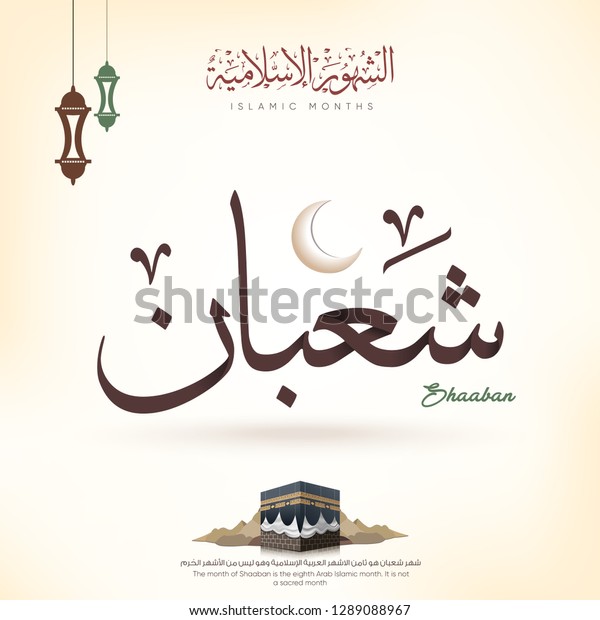
Alhamdulilah, the Glorious month of Shaaban is here. By the counting of the Sultan, today is the 27th of Rajab 1442AH. By implication, Sha'aban starts next week and thus it is imperative we revise the virtue of the month. For an update on the Hijri calendar, see here
What is Shaaban?
Sha’bān is the eight-month of the Islamic lunar calendar; the month that precedes Ramadan. The literal meaning of the word Shaban is something that is successively developing or uninterruptedly increasing. This is a month in which the Prophet incessantly fasted.
‘A’ishah, the wife of the Prophet (pbuh) said, “I never saw the Prophet fasting (voluntary) fast more in any other month than that of Shaban. He used to fast throughout the month.” [Al-Bukhāri]When the Prophet was asked why fasted so much in Sha’bān; the Prophet replied; “There is a month between Rajab and Ramadān of which many people are neglectful; it is the month in which deeds are raised (for evaluation) to the Lord of the universe, and I love to be in a state of fasting when my deeds are taken up for evaluation.” [an-Nisā’i]
From this hadith we learn that …
The Prophet fasted consistently in Shaban. The reason for that fast being that deeds are elevated for evaluation, and the best condition to have one’s deeds evaluated in in a state of fasting.
Here we keep in mind the words of the Prophet pertaining to the special nature of the ‘ibādah of siyām/fasting; “Every deed of a human being is for himself except fasting; it is for me and I will personally reward that”. [al-Bukhāri]
Importantly, this month, let us avoid argumentation, harbor no hate and rather be more loving. Wise ones have said; “imbue yourselves with the qualities of Allah”. The qualities of the Divine and those characteristics pleasing to the Divine are indeed the best qualities to imbibe and to nurture. Allah is al-Wadūd /Most Loving and a believer should imbibe these qualities and manifest it at a human level. It is in this spirit that our beloved Prophet (pbuh) advised; The Prophet said, The peak of reasoning after accepting faith in the Divine is being affectionate towards people, and doing good to others, irrespective of their being pious or sinful. [Bayhaqi]
Finally,
Take heed of the lessons of Shaban Our learned admonish us;
قد مضى شهر رجب، ودخل شعبان، وفاز من فاز بالتقرب والاستعداد في رجب لرمضان، ودخل شعبان والناس عنه غافلة
Rajab has passed and Shaban has entered; successful are those who successfully prepared themselves with proximity to Allah in Rajab for Ramadān; but now that Shaban has entered, people are heedless/neglectful.
On the night of Nisf Shaban, leading to the special month of Ramadan; let us acknowledge that the right thing to do is always the best thing to do. Let us do all forms of good with the best of intentions; and avoid any form of evil in all of its dimensions. Realize that our deeds are evaluated and that we will be held accountable. Let us not be argumentative and hateful, let us rather be loving and compassionate. In keeping with the name of Shaban, the ever-increasing, May Allah increases us in goodness and heed the Prophetic advice (as documented by Tibrani); “Do not engage in any act unless it is good; do not say anything unless it is beneficial.”
What are the lessons learned from the miraculous journey of the Holy Prophet (peace be upon Him)
There are many life lessons to be learned from the miraculous night journey of Israa and Miraj. During the Israa, Prophet Muhammad (peace be upon him) was carried on a white animal that was smaller than a horse yet larger than a donkey and it had wings and was called Al-Buraq. Prophet Muhammad (peace be upon him) rode Al-Buraq to Jerusalem, where he met the Prophets and led them in prayer in Al-Aqsa Mosque.
The Miraj is the ascension of Prophet Muhammad (peace be upon him) on Al-Buraq and with the company of Angel Jibreel to the Heavens.
If we look at when this night journey occurred, we will realize that this journey was a gift to Prophet Muhammad (peace be upon him).
The Israa and Miraj took place shortly after the year of grief, the year that Prophet Muhammad (peace be upon him) received two painful blows when he lost two of his closest supporters: his beloved wife, Khadija and his uncle, Abu Talib. It was also after the incident of Al-Taif when Prophet Muhammad (peace be upon him) went to Taif to call people to the message of Islam but he was met with mockery and rejection, to the extent that the tribes released their children to throw stones at him (peace be upon him).
To lighten the Prophet’s burden and relieve his distress after these painful events, Allah invited the Prophet (peace be upon him) to the journey of Israa and Miraj, as if to show the Prophet (peace be upon him) and all believers that after pain comes relief and after suffering comes ease. And sometimes, it takes patience through difficult times before we can achieve inner peace and nearness to Allah.
As Muslims, we are also reminded of the importance of Al-Aqsa Mosque in our faith. Prophet Muhammad (peace be upon him) visited Al-Aqsa during his night journey and he prayed there with all the prophets of Allah. Al-Aqsa Mosque was mentioned in the Holy Qur’an as a blessed place. Jerusalem is a holy land, in its vicinity many prophets have lived and died, and were buried there. In several sayings of Prophet Muhammad (peace be upon him), he encouraged Muslims to visit the three sacred mosques in Islam: the Holy Mosque in Makkah, the Prophet’s Mosque in Madinah, and Al-Aqsa Mosque in Jerusalem. We must make it a priority to pray for those people in Palestine, to call for justice, to donate for their cause, and to visit Al Aqsa Mosque.
In Al Alqsa Mosque, Prophet Muhammad (peace be upon him) met all the prophets, from Adam to Jesus may Allah’s peace be upon them all. It is a pillar of faith to believe in all the prophets and to love them. The seal of all the prophets is Muhammad (peace be upon him), and he led the prophets in prayer, which was a great honor for him. And on the Day of Judgment, Prophet Muhammad (peace be upon him) will be given precedence over the other prophets as he will be the first to intercede for mankind. On the Day of Judgment, the believers will be worried and they will go to the prophets to ask them to intercede on their behalf. None of the prophets will accept this task, except Prophet Muhammad (peace be upon him).
Prophet Muhammad (peace be upon him) said of his people, “So they will come to me, and I will ask my Lord’s permission to enter His presence and then I will be permitted. When I see Him I will fall down in prostration before Him, and He will leave me (in prostration) as long as He wills, and then He will say, ‘O Muhammad, lift up your head and speak, for you will be listened to, and intercede, for your intercession will be accepted, and ask (for anything) for it will be granted.’” (Sahih Al-Bukhari) That is why we make this supplication between every adhan and iqama for prayer: “O Allah, Lord of this perfect call and the prayer to be offered, grant Muhammad the privilege (of intercession) and also the eminence, and resurrect him to the praised position that You have promised.”
Another vital lesson to be drawn from the night journey is the significance of the five daily prayers in a believer’s life. The obligatory prayers were ordained by Allah to Prophet Muhammad (peace be upon him) when he was in the Heavens and in close presence to Allah. This indicates that the prayer is in essence an elevation of the spirit. When we pray, we detach ourselves from this world and all of its troubles and pleasures. We focus on our Creator, draw near to Him, and pray to Him. It is imperative to get the message across to our youth that the prayer is no trivial matter and that when performed correctly and with concentration, it is an uplifting, comforting, spiritual experience.
Finally, when reading about Israa and Miraj, we learn yet again, what we probably already knew before, and that is the virtue of the Prophet’s best friend and confidant, Abu Bakr.
Some scholars said that the entire Israa and Miraj journey took about one third of the night. The following day, the Prophet (peace be upon him) told the people what had happened. The disbelievers ridiculed the Prophet (peace be upon him). They went to Abu Bakr and said to him, “Look at what your companion is saying. He says he went to Jerusalem and came back in one night.”
Abu Bakr confidently responded, “If he said that, then he is speaking the truth.”
From this incident, Abu Bakr was given the title of As-Siddiq, because of how strongly he believed in the Prophet (peace be upon him). Part of our faith is to love Abu Bakr, one of the most faithful of companions.
The Israa and Miraj journey is full of signs to make our faith stronger and lessons that we continue to learn from to this day
Illegal dumping has become a major concern in many areas. What does Islam say about this?
Among the various challenges facing civil society, illegal dumping has become a major concern in many areas. Some residents dump their refuse illegaly in a public space causing pollution and inconvenience to fellow neighbours and residents.
Rasulullah (Sallallahu Alaihi Wasallam) said, “Verily Allah is pure and loves purity. He is clean and loves cleanliness. He is generous and loves generosity. He is hospitable and loves hospitality. So clean your courtyards …” (Tirmizi)
Islam teaches cleanliness. This is a fundamental lesson and trait of a Muslim. Dumping causes inconvenience to others. Rasulullah (Sallallahu Alaihi Wasallam) said three times, “By Allah, he does not have faith!” It was said, “Who is it, O Messenger of Allah?” Nabi (Sallallahu Alaihi Wasallam) said, “He whose neighbour is not safe from his harm.” (Sahih Bukhari)
A Muslim should be cognisant of the severe warnings have been sounded for those who cause inconvenience to others, especially neighbours. It is sad and regrettable that Muslim residents are guilty of dumping in their areas thereby causing inconvenience to others and creating a poor example of Muslims and Islam. Not following the proper procedure/days in removing the refuse also causes inconvenience to fellow neighbours and residents.
Muslims should be setting an example by helping to keep our streets clean.
If a Muslim intends to fast one day and starts to fast, then he decides to break the fast, he may do so, because completing a voluntary fast is not obligatory, but it is mustahabb for him to complete it if there is no excuse. If there is an excuse or an interest to be served by breaking the fast, there is nothing wrong with doing so in this case, and the fasting person who broke his fast will be rewarded – in sha Allah – for what he intended of serving a shar‘i interest, such as if he wanted to be kind to a friend of his who would be offending by his not eating food offered when visiting him or not accepting his invitation, or if he wanted to do an act of worship that fasting made him too weak to do, and it could bring him more reward than observing the naafil fast, and so on.
But we have not come across anything to indicate that he will be given the reward in full like one who actually fasted; rather what seems to be the case is that he will be rewarded for his intention, and the reward is according to the intention; it is not the same as the reward of one who had the intention and did the action.
Secondly:
The more correct view is that the intention of breaking the fast to accept an invitation the next day means that one cannot form the intention to fast that day.
Based on that, it is not valid for one who has decided to accept an invitation to eat on a particular day to form the intention of fasting on that day from the night before.
Fasting does not prevent one from accepting an invitation; rather it is permissible for one who receives an invitation when he is fasting to offer du‘aa’ for the one who invited him and not break his fast. Thus the fasting person will maintain his habitual fast whilst also accepting his friend’s invitation. But if he knows that the one who is inviting him has gone to some effort for his sake and that if he does not eat when visiting him it will upset his friend, then it is mustahabb for him to break his naafil fast and eat with his friend.
Cleaning the fingers after eating by licking them is a Sunnah of Rasulullah (Sallallahu Alaihi Wasallam). Ka'b bin Malik (Rodiyallahu Anihu) narrates that Rasulullah (Sallallahu Alaihi Wasallam) used to eat with three fingers and when he (Sallallahu Alaihi Wasallam) completed eating he (Sallallahu Alaihi Wasallam) would lick his (blessed) fingers. (Sahih Muslim).
In another Hadith, Abu Hurayrah (R) narrates that Nabi (Sallallahu Alaihi Wasallam) said, “When you partake of meals, lick your fingers (after eating) because you do not know in which of them is the Barakah.” (Sahih Muslim).
The method of doing this has been outlined in the Hadith. Certain narrations indicate that Nabi (Sallallahu Alaihi Wasallam) used to lick his (blessed) fingers in the following order: First the middle finger, then the index finger and lastly the thumb.
"Racism and Tribalism are against the teachings of the Prophet peace and blessings of Allaah be upon him. The Prophet peace and blessings of Allaah be upon him would rebuke his companions if they ever denigrated people because of their race, lineage, or status. He said: Behold! Verily, you have no virtue over one with white skin or black skin, except by favor of righteousness. Musnad Aḥmad 20885."
What is tribalism?
Tribalism means loyalty to one’s tribe or family over the principles of justice. This is haram in Islam. Jubair ibn Mut’im reported: The Messenger of Allah, peace and blessings be upon him, said: He is not one of us who calls to tribalism. He is not one of us who fights for the sake of tribalism. He is not one of us who dies following the way of tribalism. Sunan Abi Dawood 5102
African Muslims felt the same sincerity that Arab, American, European felt and vice versa. So, we were truly all the same. Aljannah is not meant for Arabs only likewise bounties of this world is not meant for Americans only; the righteous will enter Aljannah irrespective of his/her lineage, language etc
It is our belief in one Allaah that remove " I'm white, he is black" from minds, behavior, and attitude. Oneness of Allaah, the Oneness of Man, and cease to measure and hinder and harm others in terms of differences in color in accordance with teaching of Islam determine the level of faith that breads tolerance.
When Scholars are silent about Racism and Tribalism…
The nuisance of racism and tribalism exists and persisted, despite the Prophet’s (peace and blessings be upon him) clear guidance but the Prophet (peace and blessings of Allaah be upon him) disavowed it whenever a companion call to it. There are scholars that still have the craving of racism and tribalism, hence, misled people against innocents. It was not in the tradition of Prophet (peace and blessings of Allaah be upon him) to keep mum about racism and tribalism. He sternly criticized his companion Abu Dharr for disrespecting Bilal because he was of African descent and had dark skin color.
Abu Umamah reported: Abu Dharr reproached Bilaal about his mother, saying, “O son of a black woman!” Bilaal went to the Messenger of Allah, peace and blessings be upon him, and he told him what he said. The Prophet became angry and then Abu Dharr came, although he was unaware of what Bilal told him. The Prophet turned away from him and Abu Dharr asked, “O Messenger of Allah, have you turned away because of something you have been told?” The Prophet said: Have you reproached Bilaal about his mother? By the one who revealed the Book to Muhammad, none is more virtuous over another except by righteous deeds. Shu’ab al-Imaan 4760. There are denigrate words or adjectives that a tribe used to qualify another, and to them, they know it mockery whilst unknown to the victim. Verily, actions are (judged) according to their intentions, it is against Prophetic teachings to mock other irrespective of whether they understand or not.
Islam advises us to treat neighbours kindly, even if they are not Muslim. Al-Qurtubi (may Allah have mercy on him) said: I say: based on that, kind treatment of neighbours is enjoined and is recommended, whether they are Muslim or not. And this is the right thing to do. Kind treatment may be in the sense of helping or it may be in the sense of being kind, refraining from annoyance and standing by them. Al-Bukhaari narrated from ‘Aa’ishah that the Prophet (blessings and peace of Allah be upon him) said: “Jibreel kept urging me to treat neighbours kindly until I thought that he would make them heirs.” And it was narrated from Abu Shurayh that the Prophet (blessings and peace of Allah be upon him) said: “By Allah, he does not believe; by Allah, he does not believe; by Allah, he does not believe.” It was said: O Messenger of Allah, who is that? He said: “The one whose neighbour is not safe from his annoyance.” This is general in meaning and applies to all neighbours, and the Prophet (blessings and peace of Allah be upon him) affirmed that the neighbour should not be annoyed by swearing three times and stating that the one who annoys his neighbour is not a believer in the complete sense. So the believer should avoid annoying his neighbour and refrain from doing what Allah and His Messenger have forbidden; he should strive to do that which pleases Him and encourage others to do likewise.
Many Muslims know nothing about the Islamic Calendars and their countings. This thread provides a summary.
The Islamic calendar is based on a lunar year of 12 full lunars (monthly) cycles, taking 354 days. Each new year in the Islamic calendar thus falls 10 or 11 days earlier according to the 364 day solar calendar. The 12 months of the Islamic year are:
The first day of Year One of the Islamic calendar was set as the first day of the Hijrah, the Prophet’s migration from Makkah to Madinah on July 26, 622 C.E. The western convention in designating Islamic dates is thus by the abbreviation AH, which stands for the Latin Anno Hegirae, or ‘Year of the Hijrah’.
CONVERSION
To roughly convert an Islamic calendar year (AH) into a Gregorian equivalent (A.D./C.E.), or vice versa, use one of the following equations. AD = 622 + (32/33 x AH) AH = 33/32 x (AD – 622)
Many Muslims plan their journey to the Holy land to observe Umrah during the month of Rajab. Is there any special virtue associated with performing it this month?
Praise be to Allah.
Firstly:
There is no report from the Prophet (peace and blessings of Allaah be upon him) – as far as we know – to suggest that there is any particular virtue in performing ‘Umrah in the month of Rajab, or that it is encouraged. Rather it is proven that there is a particular virtue in performing ‘Umrah in the month of Ramadaan, and in the months of Hajj, which are Shawwaal, Dhu’l-Qa’dah and Dhu’l-Hijjah.
There is no report to prove that the Prophet (peace and blessings of Allaah be upon him) performed ‘Umrah in Rajab, rather that was denied by ‘Aa’ishah (may Allaah be pleased with her), who said: The Messenger of Allaah (peace and blessings of Allaah be upon him) never performed ‘Umrah in Rajab. Narrated by al-Bukhaari, 1776; Muslim, 1255.
Secondly:
Something that has been introduced into the religion is what some people do, namely singling out the month of Rajab for ‘Umrah, because no one should single out a specific time for doing an act of worship unless that has been prescribed in sharee’ah.
Ibn al-‘Attaar, the student of al-Nawawi (may Allaah have mercy on them both) said:
What I have heard about the people of Makkah, may Allaah increase it in honour, is that they are accustomed to performing ‘Umrah a great deal in Rajab. This is something for which I know of no basis, rather it is proven in the hadeeth that the Prophet (peace and blessings of Allaah be upon him) said: “ ‘Umrah in Ramadaan is equivalent to Hajj.” End quote.
Shaykh Muhammad ibn Ibraaheem (may Allaah have mercy on him) said in his Fataawa (6/131):
With regard to singling out some days of Rajab for any kinds of ziyaarah etc, there is no basis for that. Imam Abu Shaamah stated in his book al-Bida’ wa’l-Hawaadith that performing acts of worship at specific times which were not prescribed by Islam is not right, because no time is better than any other, except times when it is prescribed to perform a certain kind of worship, or a time when all kinds of good deeds are better than at other times. Hence the scholars denounced the singling out of the month of Rajab for performing ‘Umrah a great deal. End quote.
But if a person goes for ‘Umrah during Rajab without believing that there is any special virtue in that, but it just so happens that it is easy for him to travel at that time, there is nothing wrong with that.
Today, the 11th of February is the 28th day of Jumada Thanni 1442AH. In Sha Allah, we might start counting Rajab from Saturday if the crescent is sighted. Rajab is one of the sacred months in Islam. So are there any special virtue in fasting during this glorious month?
Praise be to Allah.
Firstly:
The month of Rajab is one of the sacred months of which Allaah says (interpretation of the meaning):
“Verily, the number of months with Allaah is twelve months (in a year), so was it ordained by Allaah on the Day when He created the heavens and the earth; of them four are Sacred (i.e. the 1st, the 7th, the 11th and the 12th months of the Islamic calendar). That is the right religion, so wrong not yourselves therein”
[al-Tawbah 9:36]
The sacred months are: Rajab, Dhu’l-Qa’dah, Dhu’l-Hijjah and Muharram.
Al-Bukhaari (4662) and Muslim (1679) narrated from Abu Bakrah (may Allaah be pleased with him) that the Prophet (peace and blessings of Allaah be upon him) said: “The year is twelve months, of which four are sacred: three consecutive months, Dhu’l-Qa’dah, Dhu’l-Hijjah and Muharram, and Rajab Mudar which comes between Jumaada and Sha’baan.
These months are called sacred for two reasons:
1-Because fighting therein is forbidden unless initiated by the enemy
2-Because transgression of the sacred limits therein is worse than at other times.
Hence Allaah has forbidden us to commit sins during these months, as He says (interpretation of the meaning):
“wrong not yourselves therein”
[al-Tawbah 9:36]
Although committing sins is haraam and forbidden during these months and at other times, in these months it is more forbidden.
Al-Sa’di (may Allaah have mercy on him) said (p. 373):
In the phrase “wrong not yourselves therein”, the pronoun may be understood as referring to twelve months. Allaah states that He has made them a measure of time for His slaves, which they may use for worshipping Him, and thank Allaah for His blessings, and they serve the interests of His slaves, so beware of wronging yourselves therein.
The pronoun may also be understood as referring to the four sacred months, and this forbids them to wrong themselves in those months in particular, as well as it being forbidden to do wrong at all times, because it is more forbidden at this time, but it is worse at this time than at others. End quote.
Secondly:
With regard to fasting the month of Rajab, there is no saheeh hadeeth to indicate that there is any special virtue in fasting all or part of this month.
What some people do, singling out some days of Rajab for fasting, believing that they are better than others, has no basis in sharee’ah.
But there is a report from the Prophet (peace and blessings of Allaah be upon him) which indicates that it is mustahabb to fast during the sacred months (and Rajab is one of the sacred months). The Prophet (peace and blessings of Allaah be upon him) said: “Fast some days of the sacred months and not others.” Narrated by Abu Dawood, 2428; classed as da’eef by al-Albaani in Da’eef Abi Dawood.
Even if this hadeeth were saheeh, it indicates that it is mustahabb to fast during the sacred months. So if a person fasts during Rajab because of this, and he also fasts in the other sacred months, there is nothing wrong with that. But singling out Rajab for fasting is not right.
Shaykh al-Islam Ibn Taymiyah (may Allaah have mercy on him) said in Majmoo’ al-Fataawa (25/290):
As for fasting in Rajab in particular, the ahaadeeth concerning that are all da’eef (weak), and in fact mawdoo’ (fabricated). The scholars do not rely on any of them. They are not among the da’eef ahaadeeth which have been narrated concerning virtues, rather most of them are fabricated and false. In al-Musnad and elsewhere there is a hadeeth which says that the Prophet (peace and blessings of Allaah be upon him) enjoined fasting the sacred months, namely Rajab, Dhu’l-Qa’dah, Dhu’l-Hijjah and Muharram, but this has to do with fasting during all of them, not just Rajab. End quote.
Ibn al-Qayyim (may Allaah have mercy on him) said:
Every hadeeth which mentions fasting in Rajab and praying during some of its nights is false and fabricated.” End quote from al-Manaar al-Muneef, p. 96
Al-Haafiz ibn Hajar said in Tabyeen al-‘Ajab (p. 11)
There is no saheeh hadeeth that would count as evidence which speaks of the virtue of the month of Rajab, or that speaks of fasting this month or part of it, or of spending any particular night of it in prayer.
Shaykh Sayyid Saabiq (may Allaah have mercy on him) said in Fiqh al-Sunnah (1/282):
Fasting in Rajab is no better than fasting in any other month, except that it is one of the sacred months. There is no report in the saheeh Sunnah to suggest that there is anything special about fasting in this month. Whatever has been narrated concerning that is not fit to be quoted as evidence. End quote.
Shaykh Ibn ‘Uthaymeen (may Allaah have mercy on him) was asked about fasting on the twenty-seventh of Rajab and spending that night in prayer. He replied:
Fasting on the twenty-seventh of Rajab and spending that night in prayer is a bid’ah (innovation), and every bid’ah is a going astray. End quote.
Every 14th of February is marked for the celebration of Valentine's day. What does Islam say about this? Can Muslims celebrate a Valentine's day?
Praise be to Allaah.
Firstly:
Without doubt, Valentine’s Day is a jaahili Roman festival, which continued to be celebrated until after the Romans became Christian. This festival became connected with the saint known as Valentine who was sentenced to death on 14 February 270 CE. The kuffaar still celebrate this festival, during which immorality and evil are practised widely.
Secondly:
It is not permissible for a Muslim to celebrate any of the festivals of the kuffaar, because festivals come under the heading of shar’i issues which are to be based on the sound texts.
Shaykh al-Islam Ibn Taymiyah (may Allaah have mercy on him) said: Festivals are part of sharee’ah, clear way and rituals of which Allaah says (interpretation of the meaning):
“To each among you, We have prescribed a law and a clear way”
[Al-Quran al-Maa’idah 5:48]
In essence, Mulsims should not do any of their rituals at the time of their festivals; rather the day of their festival should be like any other day for the Muslims. The Muslims should not do anything specific in imitation of them. ( Majmoo al-Fataawa (25/329). )
Also, many scholars have issued fatawah stating that it is haraam to celebrate Valentine’s Day. Among them is our noble Sheikh:
Shaykh Ibn ‘Uthaymeen (may Allaah have mercy on him) who was asked:
In recent times the celebration of Valentine’s Day has become widespread, especially among female students. It is a Christian festival where people dress completely in red, including clothes and shoes, and they exchange red flowers. We hope that you can explain the ruling on celebrating this festival, and what your advice is to Muslims with regard to such matters; may Allaah bless you and take care of you.
He replied:
Celebrating Valentine’s Day is not permissible for a number of reasons.
1- It is an innovated festival for which there is no basis in Islam.
2- It promotes love and infatuation.
3- It calls for hearts to be preoccupied with foolish matters that are contrary to the way of the righteous salaf (may Allaah be pleased with them).
It is not permissible on this day to do any of the things that are characteristic of this festival, whether that has to do with food, drinks, clothing, exchanging gifts or anything else.
The Muslim should be proud of his religion and should not be a weak character who follows every Tom, Dick and Harry. I ask Allaah to protect the Muslims from all temptations, visible and invisible, and to protect us and guide us.
End quote from Majmoo’ Fataawa al-Shaykh Ibn ‘Uthaymeen (16/199)
Say no to Valentine!
May Allah grant us beneficial understanding (Ameen).
If you have some weaknesses in terms of your inter-personal relationship, there is a high probability you know this. Likewise, if one has some traits of greediness, one might definitely be aware.
So, how do we cure this malady - greediness?
Allah says: “Do not cast your eyes on those things which We bestowed as an enjoyment to different kinds of people.” (Suratul Hijr , verse 88)
Rasulullaah Sallallaahu alaihi wasallam said: “Man becomes old, while two things of his increase: greed for wealth and greed for [longer] life.” (Bukhaari and Muslim)
The Nature of Greed
The engrossment of the heart with wealth, etc. is hirs or greed. Greed is the root of all ailments. It is therefore proper to describe it as the mother of all maladies. This is because all disputes and strife are the consequences of this greed. It is because of greed that court cases and counter court cases take place. If people did not have the greed for wealth, no one would trample the rights of others. Even the cause of immorality is the greed for pleasure. The root of Akhlaaq-e-radheelah (base and despicable qualities) is also this very greed.
Those who have truly recognized Allah maintain that the source of these qualities is pride. And pride is synonymous to the greed for name and fame/position/power . Thus, the source of pride is greed as well.
It is the natural temperament of man that even if he possesses two valleys filled with wealth, wherein gold and silver are flowing like water, he will still desire a third. The more the demands of greed are satisfied, the greater will be its demands – like a person afflicted with a rash. The more he scratches, the worse the rash becomes. Allah Ta’aala says: “Does man ever receive whatever he desires?” (Suratun Najm, verse 24)
In other words, it is not possible for man to fulfil all his desires. It is for this reason that the greedy person has no peace of mind. Nothing but the soil [grave] will satiate his greed. This is because before a wish can attain fulfilment, another develops. When he is not content with his lot, his heart desires that this should be fulfilled and that should be fulfilled, and so on. It is obvious that it is most difficult to fulfil all these desires and wishes. The result of non-fulfilment of a desire is frustration and worry. Although the greedy person may outwardly have children, wealth and everything else, his heart is perpetually afflicted with anxiety.
Treatment
1. Reduce expenditure so that there is no concern to earn more. 2. Do not concern yourself with the future and as to what would happen. 3. Bear in mind that the greedy and covetous person is always in need and held in contempt.
It is without a doubt that COVID-19 is still with us. Many lives and jobs are lost as a result of this. How can we be relieved of the pandemics? This thread provides an answer in accordance to Islam and Sunnah
Praise be to Allah.
In the event of a calamity or epidemic, the remedy is to repent to Allah, may He be exalted, and humble oneself before Him and beseech Him, and to right any wrongs that have been done, and also to seek forgiveness a great deal, glorify Allah a great deal, send blessings upon the Prophet (blessings and peace of Allah be upon him), ask Allah for well-being, and take measures to protect oneself and treat sickness, such as quarantine, and vaccinations and medical treatment if they are available.
1 – with regard to repenting and humbling oneself before Allah:
Allah, may He be exalted, says (interpretation of the meaning):
“And We have already sent [messengers] to nations before you, [O Muhammad]; then We seized them with poverty and hardship that perhaps they might humble themselves [to Us].
Then why, when Our punishment came to them, did they not humble themselves? But their hearts became hardened, and Satan made attractive to them that which they were doing”
[al-An‘aam 6:42-43].
Ibn Katheer (may Allah have mercy on him) said in his Tafseer (3/256):
“And We have already sent [messengers] to nations before you, [O Muhammad]; then We seized them with poverty” that is, impoverishment and destitution
“and hardship” – this refers to disease, sickness and pain
“that perhaps they might humble themselves [to Us]” that is, that they might call upon Allah, humble themselves before Him, and fear Him.
Allah, may He be exalted, says: “Then why, when Our punishment came to them, did they not humble themselves?” That is, why, when We tested them with that, did they not beseech Us and show humility before Us?
“But their hearts became hardened” and never softened and became humble“and Satan made attractive to them that which they were doing” namely shirk (associating others with Allah) and committing sins. End quote.
Allah, may He be exalted, says (interpretation of the meaning):
“Do they not see that they are tried every year once or twice but then they do not repent nor do they remember?”
[at-Tawbah 9:126].
Calamities only come down because of sin, and cannot be removed except by repentance, as al-‘Abbaas (may Allah be pleased with him) said in his du‘aa’ when he prayed for rain (istisqaa’).
Al-Haafiz Ibn Hajar (may Allah have mercy on him) said in al-Fath (2/497): az-Zubayr ibn Bakkaar described in al-Ansaab the du‘aa’ (supplication) that al-‘Abbaas offered during this event and the time during which it occurred. He narrated, with his isnaad (chain of narrators) that when ‘Umar prayed for rain by virtue of the supplication of al-‘Abbaas, he said: O Allah, no calamity comes down except because of sin and it cannot be removed except by means of repentance. End quote.
2 – with regard to seeking forgiveness: it is a means of attaining good health, strength and well-being.
Allah, may He be glorified and exalted, says (interpretation of the meaning):
“And [saying], Seek forgiveness of your Lord and repent to Him, [and] He will let you enjoy a good provision for a specified term and give every doer of favor his favor”
[Hood 3:11]
“And O my people, ask forgiveness of your Lord and then repent to Him. He will send [rain from] the sky upon you in showers and increase you in strength [added] to your strength. And do not turn away, [being] criminals”
[Hood 11:52].
3 – with regard to glorifying Allah (tasbeeh), Allah tells us that by virtue of tasbeeh He saved Yoonus (peace be upon him) from distress, and stated that in like manner He will save the believers.
Allah, may He be glorified, says (interpretation of the meaning):
“And [mention] the man of the fish, when he went off in anger and thought that We would not decree [anything] upon him. And he called out within the darknesses, ‘There is no deity except You; exalted are You. Indeed, I have been of the wrongdoers.’
So We responded to him and saved him from the distress. And thus do We save the believers”
[al-Anbiya’ 21:87-88].
And Allah, may He be exalted, says (interpretation of the meaning):
“And had he not been of those who exalt Allah,
He would have remained inside its belly until the Day they are resurrected”
[as-Saafaat 37:143-144].
Ahmad (1462) and at-Tirmidhi (3505) narrated that Sa‘d said: The Messenger of Allah (blessings and peace of Allah be upon him) said: “The supplication of Dhu’n-Noon, when he was in the belly of the fish: Laa ilaaha illa anta subhaanaka inni kuntu min az-zaalimeen (There is no deity except You; exalted are You. Indeed, I have been of the wrongdoers) – no Muslim man ever says these words in supplication concerning anything, but Allah will respond to him.” Classed as saheeh by al-Albaani.
Ibn al-Qayyim (may Allah have mercy on him) said: Ibn Mas‘ood said: No Prophet was ever afflicted by calamity but he sought Allah’s help by glorifying Him (tasbeeh).
End quote from al-Jawaab al-Kaafi, p. 14.
4 – with regard to sending blessings upon the Prophet (blessings and peace of Allah be upon him), it is one of the greatest means of relief from distress and calamity.
Ahmad (21242) and at-Tirmidhi (2457) narrated that Ubayy ibn Ka‘b said: When one third of the night had passed, the Messenger of Allah (blessings and peace of Allah be upon him) get up and say: “O people, remember Allah, remember Allah; the first Trumpet-blast is imminent and will be followed by the second; death, with all that it entails, is imminent; death, with all that it entails, is imminent.” Ubayy said: I said: O Messenger of Allah, how much of my du‘aa’ (supplication) should I allocate to sending blessings upon you? He said: “Whatever you wish.” I said: One quarter. He said: “Whatever you wish, and if you do more, that is better for you.” I said: One half. He said: “Whatever you wish, and if you do more, that is better for you.” I said: Then two thirds. He said: “Whatever you wish, and if you do more, that is better for you.” I said: I will make all of my du‘aa’ for you. He said: “Then your worries will be taken care of and your sins will be forgiven.”
According to the version narrated by Ahmad: Ubayy ibn Ka‘b, from his father, who said: A man said: O Messenger of Allah, what do you think if I allocate all of my du‘aa’ to sending blessings upon you? He said: “Then Allah will suffice you against whatever worries you in this world and the hereafter.”
The hadith was classed as hasan by al-Albaani and the commentators on al-Musnad.
Shaykh al-Islam Ibn Taymiyah was asked about what Ibn al-Qayyim narrated in Jalaa’ al-Afhaam (p.79) regarding the explanation of this hadith. He said: Ubayy ibn Ka‘b had a du‘aa’ (supplication) that he used to say for himself, and the Prophet (blessings and peace of Allah be upon him) asked him if he would make one quarter of it sending blessings upon him, and he said: “If you do more, it will be better for you.” [Ubayy] said: One half? He said: “If you do more, it will be better for you,” until Ubayy said: I will make all of my du‘aa’ for you – meaning: I will make all of my du‘aa’ sending blessings upon you. [The Prophet (blessings and peace of Allah be upon him) said: “Then your worries will be taken care of and your sins will be forgiven.” That is because whoever sends blessings upon the Prophet (blessings and peace of Allah be upon him) once, Allah will send blessings upon him tenfold, and when Allah sends blessings upon a person, He will take care of his worries and forgive him his sins. End quote.
5 – with regard to asking for well-being, it is prescribed to do so morning and evening, and is emphasized more when an epidemic is spreading.
Ahmad (4785), Abu Dawood (5074) and Ibn Maajah (3871) narrated that ‘Abdullah ibn ‘Umar said: The Messenger of Allah (blessings and peace of Allah be upon him) never failed to say these supplications when evening came and when morning came: “Allahumma inni as’aluka al-‘aafiyah fi’l-dunya wa’l-aakhirah. Allahumma inni as’aluka al-‘afwa wa’l-‘aafiyah fi deeni wa dunyaaya wa ahli wa maali. Allahumm astur ‘awraati wa aamin raw‘aati. Allahumm ihfazni min bayni yadayya wa min khalfi wa ‘an yameeni wa ‘an shimaali wa min fawqi wa a’oodhu bi ‘azamatika an ughtaala min tahti (O Allah, I ask You for well-being in this world and in the Hereafter. O Allah, I ask You for forgiveness and well-being in my religious and worldly affairs, and my family and my wealth. O Allah, conceal my faults and keep me safe from the things that I fear. O Allah, protect me from in front and from behind, and on my right and on my left and from above, and I seek refuge in Your greatness from receiving unexpected harm from beneath me).” He said: That [the last phrase] means being swallowed up by the earth.
Ahmad (20430) and Abu Dawood (5090) narrated from ‘Abd ar-Rahmaan ibn Abi Bakrah that he said to his father: O my father, I hear you saying in supplication every morning: “Allahumma ‘aafini fi badani, Allaahumma ‘aafini fi sam‘i, Allahumma ‘aafini fi basari, laa ilaaha illa anta (O Allah, grant me soundness in my body; O Allah, grant me soundness in my hearing; O Allah, grant me soundness in my sight, there is no god but You),” and you repeat it three times in the morning and three times in the evening. He said: I heard the Messenger of Allah (blessings and peace of Allah be upon him) say (these words) in supplication and I like to follow his Sunnah.
Other supplications that are beneficial in this situation include those which were narrated in the following hadiths:
At-Tirmidhi narrated that Abu Hurayrah said: The Messenger of Allah (blessings and peace of Allah be upon him) used to offer supplication (du‘aa’) by saying: “Allahumma matti‘ni bi sam‘i wa basari waj‘alhuma al-waaritha minni, wa’nsurni ‘ala man yazlimuni wa khudh minhu bi tha’ri (O Allah, let me benefit from my hearing and my sight, and make them my heirs; support me against anyone who wrongs me and wreak vengeance upon him for me).”
“make them my heirs” means: keep them both safe and sound until I die.
Ahmad (13004), Abu Dawood (1554) and an-Nasaa’i (5493) narrated from Anas that the Prophet (blessings and peace of Allah be upon him) used to say: “Allahumma inni a‘oodhu bika min al-barasi wa’l-junooni wa’l-judhaam wamin sayyi’ al-asqaam (O Allah, I seek refuge with you from vitiligo, and from insanity, and from leprosy, and from bad diseases).”
Ahmad (528), Abu Dawood (5088), at-Tirmidhi (3388) and Ibn Maajah (3869) narrated that ‘Uthmaan ibn ‘Affaan said: I heard the Messenger of Allah (blessings and peace of Allah be upon him) say: “Whoever says ‘Bismillah illadhi la yadurru ma‘a ismihi shay’un fi’l-ardi wa la fi’l-sama’i wa huwa as-samee‘ ul-‘aleem (In the name of Allah with Whose name nothing can harm on earth or in heaven, and He is the All-Hearing, All-Knowing)’, three times, will not be stricken with a sudden affliction until morning comes, and whoever says that when morning comes will not be stricken with a sudden affliction until evening comes.”
6 – with regard to taking measures such as quarantine and seeking medical treatment, this is indicated by the teachings and practice of our Prophet (blessings and peace of Allah be upon him), as he instructed us to seek medical treatment, and highlighted the importance of taking precautions against infection; he instructed us not to put sick camels with healthy camels, and not to travel to a land where a plague is occurring.
The Prophet (blessings and peace of Allah be upon him) said: “Seek medical treatment, for Allah, may He be glorified and exalted, has not created any disease but He has also created a remedy for it, except for one disease: old age.” narrated by Ahmad (17726) and the authors of as-Sunan, Abu Dawood (3855), at-Tirmidhi (2038), and Ibn Maajah (3436). Classed as saheeh by al-Albaani in Saheeh Abi Dawood.
And the Prophet (blessings and peace of Allah be upon him) said: “Whoever eats seven ‘ajwah dates in the morning, will not be harmed by any poison or witchcraft that day.” Narrated by al-Bukhaari (5769) and Muslim (2057).
Al-Bukhaari (5771) and Muslim (2221) narrated that Abu Hurayrah (may Allah be pleased with him) said: The Prophet (blessings and peace of Allah be upon him) said: “No sick camel should be put with a healthy one.”
And the Prophet (blessings and peace of Allah be upon him) said: “If you hear of the plague in some land, do not enter it, and if it occurs in a land where you are, do not leave it.” Narrated by al-Bukhaari (5728) and Muslim (2218).
We ask Allah, may He be exalted, to relieve us of this calamity and epidemic.
Muslims - especially a nursing mother would want to know if their infants' vomit is pure or impure. Whether they have to clean, if their kids vomit on their clothing, neck, and so on and it touches where they lie. This thread seeks to clarify this.
All perfect praise be to Allaah, The Lord of the Worlds. I testify that there is none worthy of worship except Allaah, and that Muhammad, sallallaahu ‘alayhi wa sallam, is His slave and Messenger.
The scholars may Allaah have mercy upon them differed in opinion in regard to vomit whether or not it is impure; the majority of the scholars are of the view that it is impure while the Maaliki School of jurisprudence is of the view that vomit is not impure unless it comes out while its state is different from the state of food; this opinion is considerable and it is a way of removing difficulty and hardship.
However, some scholars are of the view that it is pure and not impure and this is the view chosen by Shaykh Ibn ‘Uthaymeen may Allaah have mercy upon him who was questioned as to whether the vomit is pure or impure and he answered saying: “Vomit is not impure whether it is from a young or old person.” Besides, little vomit is something that is pardoned.
On the other hand, if one wants to pray, he has to clean his clothes from impurity and to clean the ground or the furniture from impurity if he wants to pray on them, so you should know that the matter is easy. If the vomit is small in quantity, then this does not harm; the same thing applies if its state has not changed from the state of food, as it does not harm according to the Maaliki School of jurisprudence. However, if the vomit is large in quantity and its state is different from that of food, then it is better in order to be on the safe side to clean one's clothes or place from it if one wants to pray.
Meanwhile, some groups in the South West are still taking the Government to court for allowing Hijab for Muslim students. Naija and hypocrisy... That is one of the reasons we remain backward in Africa.
I use to wonder if the Hijab is forced on the head of the children of those who take the case to the court. I don't know! Where is the tolerance?
Some offices forced our brothers to remove their beards before they could get a job appointment as if that would not allow them to write very well. What of the forces, the beard will not allow them to shoot? Na waoo
Despite the less population of Muslim in South Africa (of about <10%), Hijab has been approved as part of the army uniform for Muslim women.
"Army says it has amended its dress policy to allow Muslim women to wear headscarves as part of their uniform."
The South African military has amended its dress policy to allow Muslim women to wear headscarves as part of their uniform, an army spokesperson said on Thursday.
In January last year, a military court dropped charges against an officer who had been indicted for wearing a hijab under her military beret.
A military court at the Castle of Good Hope near Cape Town withdrew all charges in January 2020, making an exception for Isaacs to wear a tight black wrap on her head on duty as long as it did not cover her ears.
But the military did not amend its dress policy, prompting Isaacs to mount a challenge in South Africa’s equality court over regulations restricting religious wear.
The South African Defence Force (SANDF) eventually agreed to amend its policy this week and allow all Muslim women to cover their heads while on duty.
“The SANDF dress regulation was updated to allow the wearing of headscarves by Muslim (women) according to stipulations in the dress regulations,” spokesman Mafi Mgobozi told the AFP news agency on Thursday.
The South Africa-based Legal Resources Centre, which represented Isaacs, welcomed the decision via Twitter on Wednesday and said it was withdrawing the equality court case.
We must accept what has decreed whether they are things we like or detest. If you are sick and reflect on the following benefits and rewards associated with your sickness, then you are going to accept the decree of Allah in good faith. We pray Allah to grant all the sick people complete shifaa and make us be patient with affliction.
As Muslims we seek the best of this world and the Hereafter. Every person desires good health and seeks protection from illness as taught to us in the Quran and Hadith. However, Allah Ta'ala in His Wisdom decides what is better for a person. At times, Allah Ta'ala afflicts a person with illness that becomes a means of forgiveness, cleansing and elevation.
Seek protection from harm and illness
A companion who had become ill was suffering due to a Dua which he made asking Allah to give him all the punishment due to him in this world so he will not suffer any pain in the Hereafter. Nabi r advised him not to make such a Dua, and taught him to say, “O Allah grant me the best of this world and the best of the Hereafter and save me from the punishment of the fire.” (02:201) The Sahabi t recovered from his illness.
Illness – a subtle and concealed bounty
Outwardly, illness is seen as an adversity due to the pain and difficulty that is brought about by it. The wisdom and benefit of every bounty is not apparent to us, but we have firm conviction in the words of Nabi r who said, “How wonderful is the state of a Believer! Every condition is good for him, and this is for no one except the Believer; if he finds himself in a favourable situation, he expresses gratitude and this is good for him; and if he is afflicted with adversity, he exercises patience and this is good for him.” (Sahih Muslim)
Gratitude and patience
Good health and illness are both bounties for a Muslim, for one we express gratitude and the other we bear patiently. The one enjoying good health should be grateful to Allah Ta'ala and use the health to do good and be obedient. One who suffers illness should exercise patience and have hope in Allah Ta'ala for cure. In essence, we ask Allah Ta'ala to remove the 'bounty' of illness and replace it with the bounty of good health.
Glad tidings for exercising patience when afflicted
Allah Ta'ala says, “…And give glad tidings to those who exercise patience, those who, when any difficulty befalls them say: Indeed, we belong to Allah, and to Him shall we return. Those are the ones upon whom are the (special) blessings from their Rabb, and mercy; and those are the ones who are rightly guided.” (02:155 & 157)
Tremendous virtues of illness
Nabi(Sallallahu Alaihi Wasallam) said, “The person for whom Allah desires goodness, he is afflicted (with hardship).” (Sahih Bukhari)
Nabi (Sallallahu Alaihi Wasallam) said, “Do not speak ill of fever, for it washes away the sins of the children of Adam, just as the furnace expels impurities from iron.” (Sahih Muslim)
Nabi (Sallallahu Alaihi Wasallam) said, “The one who dies due to an illness in the stomach is a martyr, and the one who dies due to a plague (pandemic) is a martyr.” (Sahih Bukhari)
Allah Ta'ala says, “Indeed, those who observe patience will be given their reward in full, without measure.” (39:10)
In principle, we should pray for the removal of the illness, spend in charity and also resort to medicine, and thereafter accept the decree of Allah Ta'ala and focus on the benefits of this bounty.
May Allah Ta'ala grant complete Shifa to all those who are unwell and help us to be patient with affliction.
call button to the web version of the app. It is now believed that the feature is being slowly rolled out to some of the web users. Users took to Twitter to share the screenshot of the new feature.
A verified Twitter user by the name of Guillermo Tomoyose shared the screenshot of the latest WhatsApp feature. In the picture, you can spot the voice and video call buttons with beta written over that have appeared on the web version of the app. He said that the feature is available in Argentina.
Wabetainfo confirmed the claims of Tomoyose and reported that some users have spotted Beta Voice and Video Calls in the chat header on WhatsApp Desktop because the feature is being slowly rolled out. But the features tracker also confirmed that being a beta feature, it will only be available to very few people.
“WhatsApp is rolling out beta calls for specific users but unfortunately, being a beta feature, it’s available for very few people. We hope you’re lucky but, if it doesn’t, don’t worry: every day more users receive that activation and, at present, WhatsApp Desktop has a higher priority,” the Wabetainfo read.
Wabetainfo had earlier shared details about how the feature is going to look when it is officially rolled out. The screenshots shared by the WhatsApp features tracker show that a new window will open up every time you receive a call or try to make a call through the WhatsApp web.
In October 2020, WhatsApp was first reported to be working on this feature.“We have already announced that WhatsApp was working on Calls. Today we are happy to announce new details, provided from the WhatsApp Web 2.2043.7 update!WhatsApp is considering the idea to offer Voice and Video Calls in the next few weeks, even if the development is in a beta-stage,” the report by Wabetainfo read. However, WhatsApp is yet to officially announce the new feature.
Apart from this, WhatsApp is working on a new read later feature, and the traces of which has appeared several times during beta updates. As per Waberainfo, WhatsApp is developing the Read Later feature which is an improved version of Archived chats. “When a chat is added in your archive, the user doesn’t receive notifications from it because all archived chats will be automatically muted, in order to reduce interruptions. We already showed the new Read Later cell, added at the top of your chat list. Opening “Read Later” we find a presentation banner that introduces the changes. In this update, even if the feature isn’t natively available yet, WhatsApp is improving this section, indicating what’s the purpose of Read Later with a persistent message,” the report read.
AntiChristian: Assalamu 'alaikum bro, Leave him. They lied to be here to derail the thread.
His Mum was not a Muslim. She died when he was still young. And almost nothing was revealed to him about his mother.
And a whole chapter was named after Maryam unlike your Bible. You don't own Jesus son of Maryam. He is one of the greatest Messenger in our Books and his mother the best woman of her time.
"Sister of Aaron" as used in the Qur'an by Abuaminaelias
The Quran refers to Mary, upon her be peace, as the “sister of Aaron” in reference to her descent from the lineage of the Prophet Aaron, upon him be peace. This type of reference is common in ancient Semitic languages and in the Bible.
O sister of Aaron, your father was not a man of evil, nor was your mother unchaste. Surah Maryam 19:28
The Christians at the time of the Prophet objected to this verse on the grounds that it was meant literally, but the Prophet answered their question.
Mughira ibn Shu’ba reported: When I came to Najran, the Christian monks asked me, “You recite the verse: O sister of Aaron (19:28), whereas Moses was born long before Jesus by such-and-such years.” When I came back to the Messenger of Allah, peace and blessings be upon him, I asked him about it and he said:
Verily, they would name people with the names of prophets and righteous people who had gone before them. Source: Sahih Muslim 2135, Grade: Sahih
Ibn Kathir reported:
علي بن أبي طلحة والسدي قيل لها يٰأُخْتَ هَـٰرُونَ أي أخي موسى وكانت من نسله
Alli ibn Abu Talha and As-Suddi said: It was said to her: O sister of Aaron (19:28), meaning the brother of Moses because she was from among his descendants.
Ibn Kathir added:
كما يقال للتميمي يا أخا تميم وللمضري يا أخا مضر
This is like saying to somebody from the Tamimi tribe: O brother of at-Tamim, or to somebody from the al-Mudari tribe: O brother of Mudar. Source: Tafseer Ibn Kathir, verse 19:28
Muhammad Asad comments on the verse, saying:
In ancient Semitic usage, a person’s name was often linked with that of a renowned ancestor or founder of the tribal line. Thus, for instance, a man of the tribe of Banu Tamim was sometimes addressed as “son of Tamim” or “brother of Tamim.” Since Mary belonged to the priestly caste, and hence descended from Aaron, the brother of Moses, she was called a “sister of Aaron,” in the same way as her cousin Elizabeth, the wife of Zachariah, is spoken of in Luke 1:5 as one of “the daughters of Aaron.”
Source: Message of the Quran
Therefore, the verse is not a historical mistake, but rather it is in perfect agreement with the Semitic languages and ancient custom.
Success comes from Allah, and Allah knows best.
Compare Luke 1:5 There was in the days of Herod, the king of Judaea, a certain priest named Zacharias, of the course of Abia: and his wife was of the daughters of Aaron, and her name was Elisabeth.
Can I dye my hair or beard when they become grey and with colour? Below is what Islam says about that?
All praise belongs to Allah.
Firstly, Islam permits that one whose all hair on his head has turned grey, or whose all hair on his chin has turned grey to dye it. But what type of dye? That dye must not be black. It would be brown like the colour of henna (laali).
If it were that some parts are grey on our head or chin, and some parts is not grey, we would be patient till everything becomes grey. Do not be in a haste, when all of it becomes grey is when you apply dye to it — a dye that is made from henna is that which you will apply.
What if I leave everything grey such that I do not dye it? There is nothing wrong with that.
But Allah bestowed me black hair, so I want to turn it to white; He bestowed me black hair, I want to change it to blue; He bestowed me with black hair but I want to change it to green — Islam does not accept these. This is because it is from what the believers use in imitating the disbelievers. And Islam says ' Whoever imitates a people is one of them'. May Allah have mercy on us.
By Dr Sharaffudeen Gbadebo Raji Extracted from Radio Fiqhu fid-deen and transcribed by Amuletola
 Islam › Re: Baptist College Changed Dress Code To Accomodate Hijab In Australia by Lukgaf(op): 3:00pm On Mar 26, 2021