Islam › Merits Of Reconciliation In Islam by Lukgaf(op): 5:00pm On Aug 12, 2021 Islam › Merits Of Reconciliation In Islam by Lukgaf(op): 5:00pm On Aug 12, 2021 |
“Verily the believers are brothers, so reconcile between your brothers.” (Surah Hujarat – Verse 10)Living in harmony is important for a stable society. The Noble Quran encourages believers to unite their ranks and work towards mutual harmony.
Allah Ta'ala calls on Muslims in the following verses to reconcile with each other:
“Verily the believers are brothers, so reconcile between your brothers.” (Surah Hujarat – Verse 10)
“There is no good in most of their secret consultations (due to their sinful nature) except in him who enjoins charity, a good deed or reconciliation between people …” (Surah Nisa – Verse 114)
“So, fear Allah and reform your relationships …” (Surah Anfaal – Verse 1)
When two Muslim individuals, families, or groups break ties or behave acrimoniously towards each other, then it is the duty of Muslims to attempt reconciliation between the disputing parties. There is great merit in reconciliation, as it prevents a host of evils which surface as a result of discord. Unresolved disputes, friction and acrimony lead to deadly spiritual maladies of jealousy, enmity, malice, rancour, vengeance and many other evils.
One harm of unresolved discord and disunity in families is that future generations may continue this legacy of disunity, based on the unresolved disputes of their elders.
Abu Darda (R) narrates that Nabi (Sallallahu Alaihi Wasallam) asked the Sahabah (R), “Should I not inform you of an action that is more superior than (Nafl) Salah, (Nafl) fasting and (Nafl) charity?” The Sahabah (R) replied, “Surely, O Rasulullah (Sallallahu Alaihi Wasallam).” Nabi (Sallallahu Alaihi Wasallam) replied, “Reconciling between two parties…” (Abu Dawood)
Note: Attempting to reconcile between two parties is more superior to optional Salah, fasting and charity due to the benefits attributed to this action.
Let us work on uniting people and strive to remove disunity and discord. https://darulihsan.com/index.php/social-etiquette/item/9280-merits-of-reconciliation |
| Islam › "6 Days Of Bonanza": The Fast Of 9th, 10th & Other Days Of Muharram by Lukgaf(op): 4:46pm On Aug 12, 2021 |
Today (12th of August, 2021) is the 3rd day of Muharram, 1443AH. Next week (starting from Wednesday) is a full week of fasting. Wednesday and Thursday are respectively the 9th and 10th day of Muharram (Tasu'a and A'suroh) - the.prophet said in an Hadith reported by Muslim that he hopes Allah will accept the fast as an e expiation for the sins committed in the previous year. Also, it is also Sunnah to fast 11th day of Muharram for those who couldn't combine the 9th day with A'suroh while 13th, 14th and 15th days (Aayamul need) of Muharram are also days in every month when fasting is of great benefit. These days are summarized in the attached image.
It is recommended to fast these days. Please save in your calendar and remind your family too.
This is Awoof! 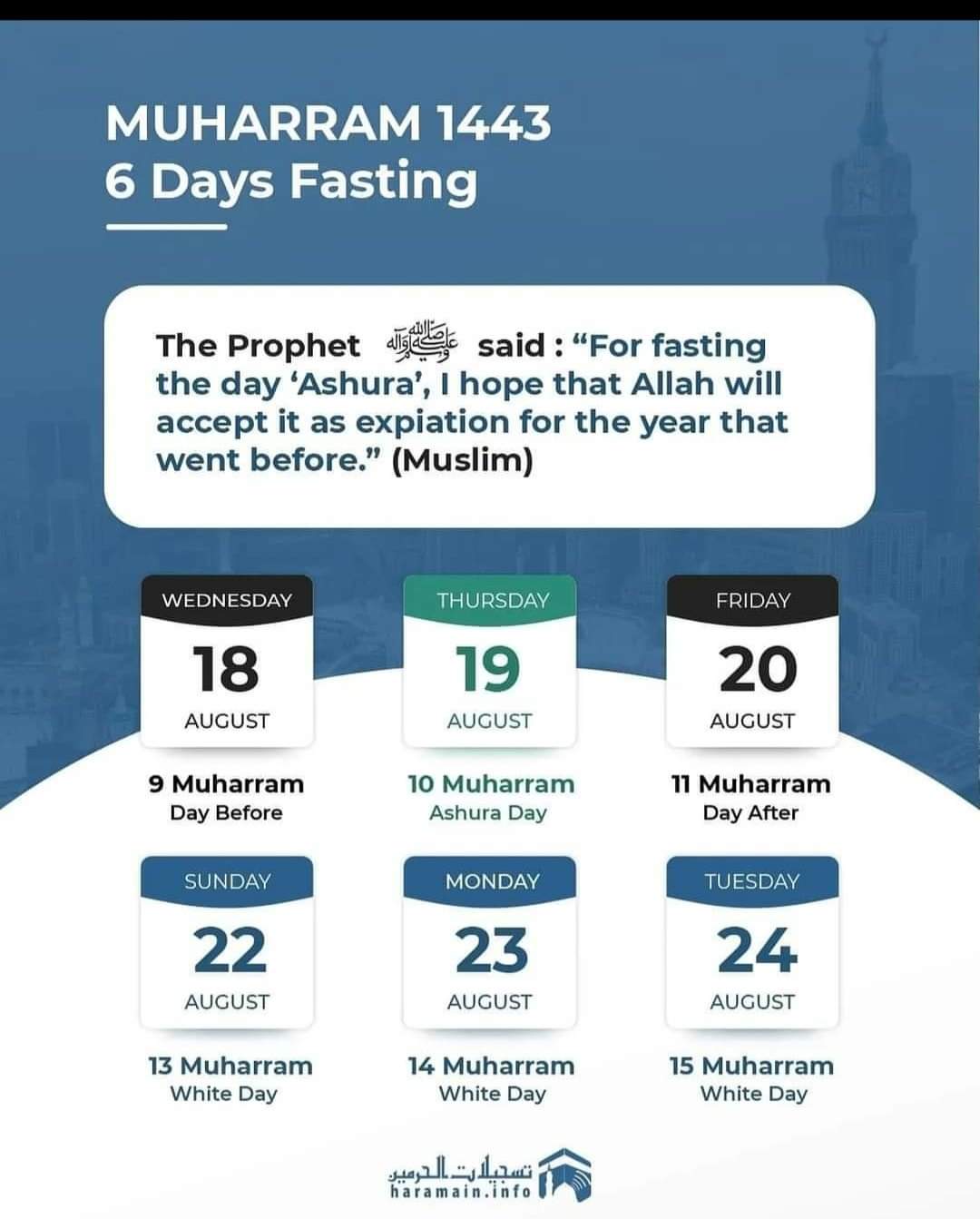
|
| Christianity Etc › Re: How Do I Explain To My Parents That I Don't Want To Belong To Any Religion by Lukgaf(m): 12:13pm On Aug 09, 2021 |
You want to be an aithest? |
| Islam › Hijrah 1443AH: Ruling On Offering Congratulations At The Beginning Of The Year by Lukgaf(op): 6:28am On Aug 06, 2021 |
By the counting of the NSCIA, today is the 27th day of DhulHijjah, 1442AH. Consequently, we have just few days to the Islamic new calendar. In this thread, we discuss wa whether or not is permissible to offer congratulations at the beginning of the new Islamic year calendar? Shaykh Muhammad ibn Saalih al-‘Uthaymeen (may Allaah have mercy on him) was asked: What is the ruling on congratulating people on the occasion of the Hijri new year, and how should one reply to a person who offers congratulations? He replied: If someone offers you congratulations, then respond to him, but do not initiate such greetings. This is the correct view concerning this matter. So if a person says to you, for example, “Happy New Year”, then you can say, “May Allaah make it a good and blessed year for you.” But you should not initiate such a greeting, because I do not know of any report that the salaf [early generations of Islam] congratulated one another on the occasion of the new year, rather the salaf did not regard the first of Muharram as the first day of the new year until the caliphate of ‘Umar ibn al-Khattaab (may Allaah be pleased with him. Shaykh ‘Abd al-Kareem al-Khudayr said concerning offering congratulations on the occasion of the hijri new year: Praying for another Muslim in general terms, in phrases that are not meant as a kind of ritual on special occasions such as Eid, is acceptable, especially if what is meant by this greeting is friendship and to show a friendly face to one’s fellow Muslim. Imaam Ahmad (may Allaah have mercy on him) said: “I do not initiate the greeting but if someone greets me I return the greeting, because responding to the greeting is obligatory. But being the first to offer congratulations is neither Sunnah nor forbidden. https://islamqa.info/en/21290 |
| Islam › Ruling On Watching BBN And Porn by Lukgaf(op): 6:20am On Aug 06, 2021 |
Islamically, watching Big Brother Nigeria (BBN) is sinful as it is similar to watching porn which may lead to masturbation and Zina. Muslims are enjoy to marry and refrain from committing all these sinful acts because a great punishment is associated with them. Shaykh ‘Abdullah Ibn Jibreen (May Allah Have Mercy On Him) was asked about the ruling on watching these kind of movies and replied: "Praise be to Allah. Every Muslim is obliged to keep away from these images and movies which provoke desire and push one to do sinful actions such as masturbation or zina, so that this avoidance will be means of protecting oneself against haraam things. There is no doubt that watching them and persisting in doing so is a major sin, because there is no minor sin if one persists in doing it. The one who persists in doing it is regarded as having fallen into major sin because of his persistence, unlike the one who sees it just once, such as an accidental glance and the like; in that case it is regarded as a minor sin. The same applies to masturbation; if it happens just once in order to reduce the pressure of desire, Allah may pardon that because it is a minor sin, but persisting in it is a major sin." https://islamqa.info/en/answers/130711/persisting-in-a-minor-sin-makes-it-a-major-sin |
| Islam › 1443 Hijri New Year: Tracing The Roots Of The Islamic Calendar by Lukgaf(op): 6:10am On Aug 06, 2021 |
According to the Nigeria Supreme Council of Islam, today, Friday 6th of August, 2021 is the 27th day of Dhulhijjah, 1442AH. In sha Allah, this week marks the end of the Hijrah calendar and beginning of another calendar. Below we provide the history of how Islamic Calendar came into existence. First established in the year 622 AD, the Islamic calendar consists of 12 lunar months, totaling 354 or 355 days per year.
In most countries, the calendar’s main use is now in determining the dates of religious events, such as Eid al-Fitr, Eid al-Adha, and the holy month of Ramadan. However, several countries, such as Saudi Arabia, use it as an official calendar.
The Hijra
The first year of the Islamic calendar marks the “Hijra” (migration) of Islam’s prophet Muhammad in 622 AD from his birthtown, Mecca, to Yathrib, currently called Medina.
The event holds special significance for Muslims, as it was after Hijra that Islam gained many followers.
According to Muslim tradition, Prophet Muhammad fled Mecca after God warned him of an assassination plot against him. The prophet only told his closest companions, Abu Bakr and Ali, of his plan to escape.
After a miraculous nocturnal escape from the tribe of Quraysh, Prophet Muhammad and his companion Abu Bakr hid in a cave outside Mecca. With a bounty on his head, the prophet stayed in the cave for three days before resuming his journey to Yathrib.
After the Hijra, Prophet Muhammad gained more supporters and Islam began to expand on a large scale in the Arabian Peninsula, as well as in Persia and Africa.
Pre-Islamic calendar
Muslims began using the Islamic calendar in the 17th year after the Hijra, approximately seven years after Prophet Muhammad died.
Prior to the establishment of the Islamic calendar, Muslims used a lunar calendar, with similar month appellations as the Islamic one. However, they did not numerically track years and only referenced them based on the occurrence of major events.
The most famous example of the years’ names is “A’am al-Fil” (The year of the elephant), which coincided with 571 AD and is commonly known as Prophet Muhammad’s birth year.
The year’s name derives from the story, mentioned in the Quran, of Abraha, a Christian ruler of Yemen. He marched upon Mecca with a large army, including war elephants, intending to demolish the Kaabah—Islam’s most sacred site.
However, according to the story, the elephants refused to destroy the holy site and a flock of birds dropped clay stones on the army to protect Mecca.
Establishment of the Islamic calendar
Muslims established the Islamic calendar under the reign of the second Muslim Caliph, Umar Ibn al-Khattab. The main reason behind the establishment of the calendar was the unprecedented expansion of the Islamic Caliphate, pushing Muslims to adopt a unified calendar for counting years.
Caliph Umar Ibn al-Khattab suggested the adoption of the Hijra as the start of the Islamic calendar, which all the prophet’s companions approved.
Another suggestion for the beginning of the Islamic calendar was the year Prophet Muhammad received his first revelations, in approximately 610 AD. However, the companions preferred the first option because the Hijra represented the actual birth of an Islamic nation.
When establishing the Islamic calendar, the companions had different opinions about what the first month should be. Many suggested the month of Safar, as it was the month when Prophet Muhammad migrated from Mecca to Yathrib.
In the end, they agreed on the month of Muharram because it comes right after the Hajj season—one of the most important annual rituals for Muslims.
Difference with the Gregorian calendar
Hijri years are 354 days, eight hours, and 48 minutes long—the duration it takes the moon to circle the Earth 12 times. This makes the Islamic calendar 11 to 12 days shorter than the solar Gregorian calendar.
The difference in duration makes the Islamic and Gregorian calendars unsynchronized. The two calendars mark a new year on approximately the same day only once every 33 years.
The difference also gradually pushes the Islamic calendar closer to the Gregorian calendar year-wise. While 622 years separated the two calendars at the establishment of the Islamic calendar, today, only 578 years separate them.
Through its over 14 centuries of existence, the Islamic calendar has documented wars and truces, births and deaths, and celebrations and mournings across the Muslim world. Today, in a multicultural context, it coexists with the civil calendar and connects Muslims with their eventful history and most sacred rituals. https://www.moroccoworldnews.com/2020/08/316090/1442-hijri-new-year-tracing-the-roots-of-the-islamic-calendar/ |
| Islam › Re: Don’t Sell Your Deen! by Lukgaf(op): 10:33am On Jul 30, 2021 |
Rashduct4luv:
May Allah grant us istiqama (patience and steadfastness) like the best of those pious predecessors.
Aamin. Allahumo Aameen |
| Islam › Don’t Sell Your Deen! by Lukgaf(op): 8:00pm On Jul 29, 2021 |
When a man’s priority is his worldly assets, then to compromise on his religion is not considered serious anymore! The increasing number of such opportunities is scary. Among the most compelling contemporary challenges, are the alarmingly increasing temptations to compromise on one’s basic beliefs.
When a person loses focus of what is important in his/her life, then selling off the most valuable asset becomes easy. In so doing, he/she is the biggest loser.
In a Hadith of Sahih Muslim, Rasulullah (ﷺ) warned the ummah of a time when people would put their worldly aspirations ahead of their religious obligations.
Sayyiduna Abu Hurayrah (رضي الله عنه) reports that Rasulullah (ﷺ) said:
‘Be quick in increasing your good deeds, before such trials arrive, in which a person who was a believer in the morning will become a kafir (non-believer) by the evening, or he who was a believer in the evening would become a non-believer by the morning; because of him selling his din (religion) in exchange of the acquisitions of the world.’ (Sahih Muslim, Hadith: 309)
The different forms
‘Selling one’s religion has two forms’, says the Grand Mufti; Muhammad Rafi’ ‘Uthmani (may Allah protect him):
‘Formally renouncing one’s religion for another because of the temptation of wealth etc.
To forgo/compromise a deed of Islam in exchange of worldly gain. Such a person doesn’t necessarily become a non-believer, but he is guilty of a very serious sin.’ (Dars Muslim, vol.1 pg.402)
This Hadith is actually a diagnosis of the current state of the world. This epidemic has engulfed all facets of society, the learned and the layman.
When a man’s priority is his worldly assets, then to compromise on his religion is not considered serious anymore! The increasing number of such opportunities is scary.
For this reason, we find it has become so easy for people to say (or do) the wrong just to satisfy certain individuals, or merely to attain particular positions/possessions etc. We may not realise it, but this is actually a form of ‘selling one’s religion’.
These are people who were actually given a subtle choice; either stick to your religious practice and be deprived of the worldly gain that’s on offer, or vice-versa. Those who choose wisely will not regret their decision.
One should be scared at the thought of being in such a situation, for very few in these days will pass the test! May Allah Exalted and High save me and all from such trials. Amin.
Allah Most High says regarding those who chose unwisely:
‘Those are the ones who have purchased misguidance in exchange of guidance. Their trade was not profitable, and neither were they guided.Their example is like that of a person who lights a fire. When it brightens his surroundings, Allah removes their light and leaves them in darkness, unable to see.’ (Surah: 2, Ayah: 16-17)
A Lesson from History
There are countless inspirational anecdotes on the subject, of which I chose to quote the following only:
Imam ‘Affan ibn Muslim As-Saffar (رحمه الله) was a reliable Muhaddith (Hadith Master) but he possessed little of this world.
His condition was so dire, that he once had to ask his associate; Imam ‘Amr Al-Fallas (رحمه الله) for some food as he had nothing to feed his household; who numbered close to forty!
When this illustrious Imam was asked to support the innovated view of the then leader regarding the Holy Quran, he refused. He was threatened that his monthly pension from the public treasury –which was a hundred silver coins-, would be withheld.
He responded by reciting the verse:
‘And in the sky is your sustenance and whatever you are promised’ (Surah: 51, Ayah: 22)
When he returned home, his family (who were nearly 40 in number) reproached him for this.
A few moments later, he heard a knock on the door. It was a person who seemed to be a hard labourer that had come to hand him a bag of one hundred silver coins saying:
‘O Abu ‘Uthman! May Allah preserve you like you preserved the din (religion). I will be giving this to you every month.’ (Adabul ikhtilaf of Al-Muhaddith Shaykh Muhammad ‘Awwamah, pg.105)
Moral
Those who value their religion are actually valued by their creator.
Who forsakes his religion in any way, may be forsaken by his Creator when he needs Him the most.
History is filled with proofs for both of the above.
We ask Allah Most High to save us from such trials, but in the event that they cannot be avoided, may He inspire us with the strength to withstand the temptations of this world, especially when it results in serious damage to our din. https://jamiat.org.za/dont-sell-your-deen/ |
| Islam › Is It Permissible To Throw Grains Of Corn After Prayer? by Lukgaf(op): 7:37pm On Jul 29, 2021 |
Question:
Does throwing grains of corn conform with Islam after prayers?
Answer
All praise belongs to Allah.
He asked that after we have supplicated, can we throw corn or guinea corn — like (what they call) "garri adua"? This is not part of Islam. It is not part of Islam. It is the person that does it that you will ask where he found it. You know we do not instruct you to do it. So, it is the person who does that you will ask where he found it. It is not part of Islam.
What Allah says is: "O you who believe! Do your duty to Allah and fear Him. Seek the means of approach to Him, and strive hard in His Cause as much as you can. So that you may be successful." (Surah Al-Maeda, Verse 35
As regard implementing this verse, you may have given something out in charity (before making supplication) or you may first observe fast or first give alms to the poor, then you will now supplicate that "O Allah, consider these good deeds that I have done, do this specific thing for me".
This is what conforms with the Sunnah of the prophet — may the peace and blessings of Allah be upon him. We call that "At-tawasul bi-Ala'mmal solihat" — using our good deeds as a means to approach Allah.
So it is not that after supplication, you will now start throwing maize. We are Muslims. So there are lot of laws and evidences. We will not just innovate lies with our brains. Dr Sharafuddeen Gbadebo Raji Extracted from Radio Fiqhu fid-deen (Episode 98) by Amuletola |
| Islam › Doing Wudoo’ When Wearing Lipstick by Lukgaf(op): 7:28pm On Jul 29, 2021 |
Is lipstick regarded as a barrier to wudoo’? Usually when one does wudoo’, the lipstick is reduced but it is not removed entirely. Should the previous prayers pray with it be repeated?. Praise be to Allah.
In order for wudoo’ to be valid, it is essential to remove anything that will prevent the water from reaching the skin, whether it is lipstick or anything else. But if the colour or trace of it is left, even if the water touches the skin and runs off it without sticking, then wudoo’ is valid.
Al-Nawawi said in al-Majmoo’ (1/492):
If there is wax, dough, henna and the like on one of his limbs, which prevents water from reaching any part of it, then his tahaarah is not valid, whether the amount is large or small. If there are traces of henna and its colour left on the hand, without there being any solid material left, or elsewhere, or traces of liquid grease whereby water flows over the limb but does not stay there, his tahaarah is valid. End quote.
Based on this, you should remove the lipstick before you do wudoo’, so that there will be nothing left that could prevent the water from reaching the skin, but if the colour or a trace of grease is left, that does not matter.
And Allaah knows best. https://islamqa.info/en/answers/81685/doing-wudoo-when-wearing-lipstick |
|
| Islam › Re: Merits Of Memorizing The Qur'an by Lukgaf(m): 9:50am On Jul 23, 2021 |
JazaakumLlohu khaeran |
| Islam › Eid Ul Adha: When Is The Time For Udhiyah (sacrifice)? by Lukgaf(op): 11:45pm On Jul 19, 2021 |
When is the appropriate timing for Udhiyah? Praise be to Allah.
The time for offering the sacrifice begins after the Eid prayer on Eid al-Adha and ends when the sun sets on the thirteenth of Dhu’l-Hijjah. So there are four days of sacrifice: the day of Eid al-Adha and the three days after it.
It is better to hasten to offer the sacrifice after the Eid prayer, as the Messenger (peace and blessings of Allaah be upon him) used to do, then the first thing he would eat on the day of Eid would be meat from his sacrifice.
Ahmad (22475) narrated that Buraydah (may Allaah be pleased with him) said: The Messenger of Allaah (peace and blessings of Allaah be upon him) did not go out on the day of (Eid) al-Fitr until he had eaten, and he did not eat on the day of (Eid) al-Adha until he came back, then he would eat from his sacrifice.
Al-Zayla’i narrated in Nasb al-Raayah (2/221) that Ibn al-Qattaan classed it as saheeh.
Ibn al-Qayyim (may Allaah have mercy on him) said in Zaad al-Ma’aad (2/319):
‘Ali ibn Abi Taalib (may Allaah have mercy on him) said: “The days of sacrifice are the Day of Sacrifice (yawm al-nahr) and the three days after it.” This is the view of the imam of the people of Basra, al-Hasan; the imam of the people of Makkah, ‘Ata’ ibn Abi Rabaah; the imam of the people of Syria, al-Awzaa’i; and the imam of the fuqaha’ of hadeeth, al-Shaafa’i (may Allaah have mercy on him). It was also the view favoured by Ibn al-Mundhir. The three days are specified because they are the days of Mina, the days of stoning (the Jamaraat) and the day of al-Tashreeq. It is forbidden to fast on these days. It was narrated via two isnaads, one of which supports the other, that the Prophet (peace and blessings of Allaah be upon him) said: “All of Mina is the place of sacrifice, and all the days of al-tashreeq are days of sacrifice.” End quote.
The hadeeth was classed as saheeh by al-Albaani in al-Silsilah al-Saheehah, 2476
Shaykh Ibn ‘Uthaymeen said in Ahkaam al-Udhiyah, concerning the time for offering the sacrifice:
It is from after the Eid prayer on the Day of Sacrifice until the sun sets on the last of the days of al-tashreeq, which is the thirteenth of Dhu’l-Hijjah. So there are four days of sacrifice: the day of Eid after the prayer, and three days after that. Whoever slaughters his sacrifice before the Eid prayer is over, or after the sun sets on the thirteenth, his sacrifice is not valid … but if he has an excuse for delaying it until after the days of al-tashreeq, such as if the animal ran away with no negligence on his part, and he did not find it until after the time was over, or if he delegated someone to do it on his behalf and his deputy forgot until the time was over, then there is nothing wrong with offering the sacrifice after the time has ended, because there is an excuse, by analogy with the fact that one who sleeps and misses a prayer or forgets it should offer the prayer as soon as he wakes up or remembers it.
It is permissible to offer the sacrifice during that time by night or by day, but it is better during the day, and the day of Eid after the two khutbahs is the best time. Each day is better than the following day, because that is hastening to do good. End quote.
It says in Fataawa al-Lajnah al-Daa’imah (11/406):
The days of sacrifice for pilgrims performing qiraan or tamattu’, and for offering the sacrifice (udhiyah) are four: the day of Eid and the three days after that. The time for sacrifice ends when the sun sets on the fourth day, according to the soundest scholarly opinion. End quote. https://islamqa.info/en/answers/36651/the-time-for-udhiyah-sacrifice |
| Islam › Eid Ul Adha 1442AH (2021): Wishing You And Your Family A Blessed Eid by Lukgaf(op): 10:55pm On Jul 19, 2021 |
|
| Islam › Rulings And Etiquettes Of Eid-ul-adha by Lukgaf(op): 10:14pm On Jul 19, 2021 |
AlhamduLilah, tomorrow is Eid (may Allah count us among those that will witness Eid in good health, wealth, and sound faith). Below is what Eid means, its ruling and etiquettes. https://static.toiimg.com/photo/msid-82606298/82606298.jpg?179654What does Eid means
Eid, in Islam, is a day of joy, thanksgiving, worship, brotherhood, solidarity, and morality. A Muslim should take the advantage of this day to bring himself nearer to Allah, Most High.
The Prophet (peace and blessings be upon him) said, “Every nation has its festival, and this is your festival.” Here, he referred to the fact that these two Eids are exclusively for the Muslims.
The Muslims have no festivals apart from Eid al-Fitr and Eid al-Adha Anas ibn Malik (may Allah be pleased with him) said: “The Messenger of Allah came to Madinah, the people of Madinah used to have two festivals.
On those two days, they had carnivals and festivities. The Prophet Muhammad (peace and blessings be upon him) asked the Ansar (the Muslims of Madinah) about it.
They replied that before Islam, they used to have carnivals on those two joyous days. The Prophet Muhammad (peace and blessings be upon him) told them, “Instead of those two days, Allah has appointed two other days which are better, the days of Eid al-Fitr and Eid al-Adha.” (Abu Dawud)
These two Eids are among the signs of Allah, to which we must show consideration and understand their objectives. Below, we will elaborate on the rulings and etiquette of Eid.
Rulings of Eid
1- Fasting: It is haram to fast on the days of Eid because of the hadith of Abu Sa`id Al-Khudri (may Allah be pleased with him) in which he said that the Messenger of Allah (peace and blessings be upon him) forbade fasting on the day of Fitr and the day of Adha. (Muslim)
2- Offering Eid Prayers: Some of the scholars say that Eid Prayers are obligatory – this is the view of the Hanafi scholars and of Ibn Taymiyyah. Some scholars say that Eid Prayer is Fard Kifayah (a communal duty, binding on the Muslims as a group, and it is fulfilled if a sufficient number of people perform it, thereby absolving the rest of sin). This is the view of the Hanbalis. A third group says that Eid Prayer is Sunnah Mu’akkadah (confirmed sunnah). This is the view of the Malikis and Shafi`is.
3- Offering Supererogatory Prayers: There are no Supererogatory Prayers to be offered either before or after the Eid Prayer, as Ibn `Abbas reported that the Prophet (peace and blessings be upon him) used to come out on the day of Eid and pray two rak`ahs, with nothing before or after them. This is the case if the Prayer is offered in an open area. If, however, the people pray the Eid Prayer in a mosque, then they should pray two rak`ahs for Tahiyat Al-Masjid.
4- Women attending the Eid Prayers: According to the Sunnah of the Prophet (peace and blessings be upon him), everyone is urged to attend Eid Prayer, and to co-operate with one another in righteousness and piety. The menstruating woman should not forsake the remembrance of Allah or places of goodness such as gatherings for the purpose of seeking knowledge and remembering Allah – apart from mosques. Women, undoubtedly, should not go out without the Hijab.
Etiquettes of Eid
1- Ghusl (taking a bath): One of the good manners of Eid is to take a bath before going out to the Prayer. It was reported that Sa`id ibn Jubayr said: “Three things are Sunnah on Eid: to walk (to the prayer-place), to take a bath, and to eat before coming out (if it’s Eid al-Fitr).”
2- Eating before coming out: One should not come out to the prayer-place on Eid al-Fitr before eating some dates, because of the hadith narrated by Al-Bukhari from Anas ibn Malik who said: “The Messenger of Allah (peace and blessings be upon him) would not go out in the morning of Eid al-Fitr until he had eaten some dates… and he would eat an odd number.” On Eid al-Adha, on the other hand, it is recommended not to eat until after the Prayer, when one should eat from the meat of one’s sacrifice.
3- Takbir on the day of Eid: This is one of the greatest Sunnahs of this day. Al-Daraqutni and others reported that when Ibn `Umar came out on Eid al-Fitr and Eid al-Adha, he would strive hard in making Takbir until he reached the prayer-place, then he would continue making Takbir until the Imam came.
4- Congratulating one another: People may exchange congratulations and good greetings on Eid, no matter what form the words take. For example, they may say to one another, “Taqabbal Allahu minnaa wa minkum (May Allah accept, from us and from you, our good deeds!)”.
Jubayr ibn Nufayr said: “At the time of the Prophet (peace and blessings be upon him) when people met one another on the day of Eid, they would say, ‘Taqabbal Allahu minnaa wa minka.’” (Ibn Hajar)
5- Wearing one’s best clothes for Eid: Jabir (may Allah be pleased with him) said: “The Prophet (peace and blessings be upon him) had a Jubbah (cloak) that he would wear on Eid and on Fridays.” Al-Bayhaqi reported that Ibn `Umar used to wear his best clothes on Eid, so men should wear the best clothes they have when they go out for Eid.
6- Changing route on returning from Prayer-place: Jabir ibn `Abdullah (may Allah be pleased with him) reported that the Prophet (peace and blessings be upon him) used to change his routes on the day of Eid. (Al-Bukhari)
Allah Almighty knows best. https://aboutislam.net/counseling/ask-the-scholar/arts-entertainment/eid-etiquette-and-rulings/www.islamqa.info |
| Islam › Tomorrow Is The Day Of Arafaah, Fast! by Lukgaf(op): 12:06pm On Jul 18, 2021 |
It was reported from Abu Qutaadah (may Allaah be pleased with him) that the Messenger of Allaah (peace and blessings of Allaah be upon him) was asked about fasting on the Day of ‘Arafaah. He said, “It expiates for the sins of the previous year and of the coming year.” Narrated by Muslim. https://i.pinimg.com/originals/0d/0d/d7/0d0dd76af97f5ce2783cda577308e9dc.jpgThis (fasting) is mustahabb for those who are not on Hajj. In the case of the one who is on Hajj, it is not Sunnah for him to fast on the Day of ‘Arafaah, because the Prophet (peace and blessings of Allaah be upon him) did not fast on this day in ‘Arafaah. It was narrated that he forbade fasting on the Day of ‘Arafaah in ‘Arafaah. May Allah accept our good deeds (Ameen) 
|
| Islam › Hajj Without A Visa? by Lukgaf(op): 6:28pm On Jul 15, 2021 |
You'd all agree with me that Hajj is one of the pillars of Islam and compulsory for whoever is capable health and wealth-wisely. Even if you satisfy these two requirements, you may still require visa depending on whether you are from part of the countries that need visa to travel to Saudi Arabia. Below are some of the deeds that are equal to performing Hajj in reward Since Haj is among the most virtuous deeds in Islam, and not everyone can afford it (especially on a continuous basis) Allah Subhanahu wa Ta’ala has attached the reward of optional Haj to certain other deeds for the benefit of all.
Now that the Hujjaj have begun to depart, those who have been left behind can take consolation from the following narrations which promise of various other deeds yielding Haj rewards:
1. Wudhu at home before proceeding for Salaah with Jamaat.
عن أبي أمامة رضي الله عنه أن رسول الله صلى الله عليه وسلم قال
من خرج من بيته متطهرا إلى صلاة مكتوبة فأجره كأجر الحاج المحرم ومن خرج إلى تسبيح الضحى لا ينصبه إلا إياه فأجره كأجر المعتمر وصلاة على إثر صلاة لا لغو بينهما كتاب في عليين
رواه أبو داود (559)
Sayyiduna Abu Umaamah (radiyallahu’anhu) reports that Rasulullah (sallallahu ‘alaihi wa sallam) said: “One who purifies himself (i.e, makes wudhu) and leaves his home to attend the fardh salaah in congregation receives the reward of a Haji in the state of Ihram,
And if he leaves for the salaatu-Dhuhaa (Chaast) he gets the reward of ‘Umrah…
(Sunan Abi Dawud, hadith:559)
2. Salatul Ishraaq.
عن أنس بن مالك رضي الله عنه قال قال رسول الله صلى الله عليه وسلم
من صلى الغداة في جماعة ثم قعد يذكر الله حتى تطلع الشمس ثم صلى ركعتين كانت له كأجر حجة وعمرة قال قال رسول الله صلى الله عليه وسلم : تامة تامة تامة
رواه الترمذي وقال حديث حسن غريب (586)
Sayyiduna Anas Ibn Maalik (radiyallahu ‘anhu) reports that Rasulullah (sallallahu ‘alaihi wa sallam) said: “Whoever offers his Fajr salaah in congregation, and then remains seated making the dhikr (remembrance) of Allah until (approximately 15 mins after) sunrise after which he offers two rak’aats of salaah (Ishraaq), will receive the reward of one complete Haj and one complete ‘Umrah”
(Sunan Tirmidhi, hadith:586 with a sound chain)
N.B. Rasulullah (sallallahu ‘alaihi wa sallam) repeated the words: “complete” thrice.
3. Going to the Masjid to acquire Knowledge.
عن أبي أمامة رضي الله عنه عن النبي صلى الله عليه وسلم أنه قال
من غدا إلى المسجد لا يريد إلا أن يتعلم خيرا أو يعلمه، كان له كأجر حاج تاما حجته.
رواه الطبراني في الكبير(7473) بأسناد لابأس به. كذا في الترغيب 1/104، وقال العراقي في تخريج الإحياء(4253): وإسناده جيد. وانظر المستدرك للحاكم 1/91.
Sayyiduna Abu Umaamah (radiyallahu’anhu) reports that Rasulullah (sallallahu ‘alaihi wa sallam) said: “Whoever goes to the Masjid for the purpose of learning or teaching Knowledge, receives the reward of a Haji whose Haj was perfect.
(Tabarani, hadith:7473 with a sound chain. See Targheeb vol.1 pg.104 & Takhreejul Ihyaa, hadith:4253)
4. Umrah in Ramadhan.
عن ابن عباس أَنَّ النبى -صلى الله عليه وسلم- قال لاِمرأة من الأنصار يقال لَهَا أُمُّ سِنَان « ما منعكِ أَنْ تَكُونِى حَجَجْتِ معنا ». قالت ناضحان كانا لأَبى فلاَنٍ – زَوْجِهَا – حج هو وابْنُهُ على أحدهما وكان الآخر يسقى عليه غلامنا. قال « فعمرة فى رمضان تقضى حجة. أو حجة معى ».
رواه مسلم (1256)
Sayyiduna ‘Abdullah Ibn ‘Abbas (radiyallahu’anhuma) has reported that Rasulullah (sallallahu ‘alaihi wa sallam) passed by Ummu sinan while on his way to haj. “Why didn’t you accompany me for Haj?” he enquired. She said: “We only have 2 camels, one my husband has used to be with you in Haj, and the other is needed for transporting water.” Rasulullah (sallallahu ‘alaihi wa sallam) said: “ ‘Umrah in Ramadhan equals the reward of Haj with me”. (Sahih Muslim, hadith:1256)
5. To recite “Subhaanallah” 100 times in the morning and evening.
عن عبد الله بن عمرو رضي الله عنهما قال قال رسول الله صلى الله علي وسلم:
من سبح الله مائة بالغداة ومائة بالعشي كان كمن حج مائة مرة…الخ
رواه الترمذي (3471) وقال: حسن غريب.
Sayyiduna ‘Abdullah ibn ‘Amr (radiyallahu’anhuma) reported That Rasulullah said: “He who recites Subhaanallah 100 times in the morning and another 100 times in the evening is like one who performed Haj 100 times!”
(Sunan Tirmidhi, hadith:3471 with a sound chain)
6. Serving one’s Parents:
عن أنس رضي الله عنه قال أتى رجلٌ رسولَ الله صلى الله عليه وسلم فقال إني أشتهي الجهاد ولا أقدر عليه قال هل بقي مِن والديك أحدٌ قال أمي قال فاَبْلِ الله في برها فإذا فعلت ذلك فأنت حاج ومعتمر ومجاهد.
رواه أبو يعلى(2760) والطبراني في الصغير والأوسط، وإسنادهما جيد. كذا في الترغيب. 3/315، ومختصرالإتحاف للبوصيري (5721)
Sayyiduna Anas (radiyallahu’anhu) reports that a man came to Rasulullah (sallallahu ‘alaihi wa sallam) and said: “I wish to participate in Jihaad, but I cannot afford it” Rasulullah (sallallahu ‘alaihi wa sallam) enquired if any of his parents were alive, to which he said: “Yes! My mother is alive” Rasulullah (sallallahu ‘alaihi wa sallam) said: “Show Allah how you serve her. If you do so (duly) you will be like a: Haaji, a Mu’tamir (one doing ‘Umrah) and a Mujaahid (One striving in Allah’s way).”
(Abu Ya’la, hadith:2760, and Tabarani with good chains.-Targheeb, vol.3, pg. 315 & Mukhtasar Ithaaf, hadith:5721)
Hafidh Ibn Rajab Al-Hambali (rahimahullah) has quoted other deeds that yield the reward of Haj from various Predecessors (i.e, not necessarily from the hadith). All of the following have been extracted from his priceless work: Lataaiful Ma’aarif, pgs.357-359.
7. Attending the Jumu’ah Salaah.
Sa’eed ibnul Musayyab (rahimahullah) said: “Attending the Jumu’ah is better according to me than a nafl (voluntary) Haj.”
Hafidh Ibn ‘Asaakir (rahimahullah) has quoted a similar virtue via Imam Al-Awza’ie (rahimahullah)[1]
8. Attending the Eid Salaah.
Some of the Sahabah y have said: “Attending the Eidul Fitr Salaah equals the reward of ‘Umrah, and the Eidul Adha Salaah equals that of Haj.”
9. Esha Salaah in Congregation.
A reliable Tabi’e, Uqbah ibn ‘Abdil Ghaafir (rahimahullah) said: “Offering the Esha salaah[2] in congregation equals the reward of Haj, and the Fajr in congregation equals ‘Umrah”
10. Fulfilling the need of a fellow Muslim.
Imam Hasan Al-Basri (rahimahullah) said: “Your proceeding to fulfil the need a fellow muslim is better for you than one Haj after another!” (Also quoted By Zabeedi (rahimahullah) in Sharhul Ihyaa, vol.6 pg.292)
The fulfilment of all obligations.
After citing the above, Hafidh Ibn Rajab (rahimahullah) writes:
“The fulfilling of all obligatory deeds is considered better than Nafl (voluntary) Haj and ‘Umrah. This is due to (the Hadith in Sahih Bukhari which states that) the best way of attaining nearness to Allah is via the obligatory acts. However many people find it easy to carry out nafl Haj and ‘Umrah, but feel it difficult to fulfil the other responsibilities (Wajib acts) like repayment of debts and other such duties.
Abstinence from the haraam (forbidden) acts are also more virtuous than Nafl Haj etc.
Some of the Pious predecessors said: “To abstain from an iota of wrong is better than five hundred (Nafl) Haj”
Fudhail ibn ‘Iyadh (rahimahullah.) –the great sage of his age- said: “There is no Haj or Jihad that is more important than protecting one’s tongue” i.e, against sin.
Any act of Good during the first 10 days of Dhul Hijjah.
Hafidh Ibn Rajab (rahimahullah) has rightly pointed out:
“If the hadith has promised that any act of good done in these 10 days supersedes even the reward of Jihad, which is considered better than optional Haj too, that means all good done in these days will also supersede the reward of optional Haj.” (Pg.390)
Note:
1. The promises of “gaining the same reward as Haj” that are mentioned above, are restricted to the reward only. It does not mean that one upon whom Haj is obligatory can merely suffice on these deeds. (Sharh-Nawawi ‘ala muslim, hadith:1256 & Fathul Mulhim, vol.6, pg.123)
2. Imam Tirmidhi (rahimahullah) has quoted Imaam Is-haq Ibn Rahuyah (rahimahullah) as saying that this reward should be understood in the light of the hadith that explains surah ikhlaas to be equal to one third of the Quraan. (Sunan Tirmidhi, after hadith:939) i.e, one who recites it will receive the reward of reciting one third, but since he hasn’t physically done so the reward will not be multiplied. (Sharh Nawawi, vol.1 pg.271) The reward for physically doing an act is multiplied ten times and more in accordance to the sincerity, and sacrifice that accompanies it.
Mufti Mahmudul Hasan Gangohi (rahimahullah) has also highlighted this in his Malfuzat.
Furthermore, by memorizing/reciting surah ikhlas thrice, one does not become a hafidh of the entire Quran..!
3. The purpose here is not to discourage one from the actual Haj. (That is why it is being circulated now, when the Hajis have already begun to depart) Like they say: “There’s nothing like the real thing..”
Allah Ta’ala knows best, and may He grant us all the tawfeeq (ability) to practice on the above, as well as afford us the opportunity to perform the real Haj repeatedly. Ameen.
[1] Hafidh Ibn Rajab (rahimahullah) also supported this content with 2 ahadith.
[2] A narration of Baihaqi’s Shu’abul Iman states: Sayyiduna Anas (radiyallahu ‘anhu) reports that Rasulullah (sallallahu’alaihi wa sallam) said: “Whoever offers his Maghrib Salah in congregation, receives the reward of one accepted Haj and ‘Umrah” (Shu’abul Iman, hadith:9304 & Ad-Dailami, hadith:5676. ‘Allamah ‘Iraqi (r.a.) has classified the chain as weak. (Takhreejul Ihyaa, hadith:1168) However, when viewed in the light of the above narrations and the explanation of Hafidh Ibn Rajab (rahimahullah) which follows, it acquires enough support. Also see Sharhul Ihyaa, vol.5, pg.127. https://jamiat.org.za/haj-without-a-visa/ |
| Islam › MURIC To Law School: "Do Not Sandwich Salah Day For Us" by Lukgaf(op): 11:39am On Jul 15, 2021 |
An Islamic human rights organisation, the Muslim Rights Concern (MURIC) has kicked against the dates picked by the Nigerian Law School for the screening of its call-to-bar candidates. The Law School had picked 19th and 21st to screen the fresh law graduates. MURIC described the dates as anti-Muslim.
This was contained in a statement issued by the group’s director, Professor Ishaq Akintola on Thursday, 15th July, 2021.
The statement reads:
“The Nigerian Law School has scheduled the screening exercise for its fresh graduates for 19 th and 21 st July, 2021. This is in spite of the widely publicised dates of the Muslim festival of Id Al-Adha (Salah) which are 19th, 20th and 21st July, 2021. The message on the Law School portal showed that 19th and 21st July 2021 are the screening dates while 28th and 29th July are for call to bar.
“Considering the fact that 20th is now known to be the real date of Salah and the Federal Government is certain to declare two days as holidays, the two screening dates (19th and 21st July) picked by the Law School are too close to call. Afterall, Muslim faithfuls are expected to travel to their home states inorder to meet members of their families just as Christians do during Christmas.
“By sandwiching Salah day between its two screening dates, Law School has deliberately created inconvenience for its fresh Muslim graduates as well as its Muslim staff. The school has also encroached upon the public holiday declared by the Federal Government.
“It is a most unfriendly, uncharitable and unhospitable act. It is undisguised manifestation of malice and an open declaration of hostility against Nigerian Muslims. How on earth are Muslims involved in the screening exercise expected to join their families to mark the Salah, particularly those who have to travel long distances?
“But are there no other options? Were those options explored at all? Must the screenings be done on 19th and 21st July unfailingly? Were there no Muslims among those who fixed the date? Did anyone call attention to the implications of the chosen dates for the Nigerian Muslim population?
“These are questions begging for answers and only the Council of Legal Education can provide answers. We therefore appeal to the Council to do its findings and call the Law School to order.
“The action of the Law School constitutes a gross violation of Allah-given fundamental human rights of Muslim candidates who are expected to attend the screening. It is unlawful, illegal, illegitimate and unconstitutional to fix any official function, exercise, examination or screening on a public holiday. Law School can be challenged in a court of competent jurisdiction by any Muslim candidate who missed the screening, particularly on 21st July, 2021 because it is a public holiday. Any screening done on a recognised public holiday can be declared null, void and of no validity whatsoever.
“We therefore call on Muslim candidates affected by this draconian screening schedule not to panic. We advise them to simply ignore the screening of 21st July and enjoy their Salah holiday. It is their right and their right is their right. Nobody, not even ‘almighty’ Law School, can deprive them of it. We charge the Muslim lawyers to dust their law books and be prepared for a long legal battle on this matter. MURIC may have to challenge Law School in court if any Muslim candidate is illegally disqualified.
“Gone are those days when Nigerian Muslims were led by their noses. Today, we refuse to be intimidated. We will no longer kowtow to the pooh-pooh of our oppressors. We will use every legitimate means available to secure freedom for millions of Nigerian Muslims wallowing under the repression of their religious freedom.
“Law School must know where Nigerian Muslims are coming from. Our Salah days were taken from us by the colonial master. No holidays were declared for Muslim festivals during the days of Christian British colonial rule. But Christmas was marked with holidays, funfare, pomp and pageantry, all at the expense of tax payers and from our common patrimony.
“What Nigerian Muslims suffered under the Christian British imperialists is akin to what the blacks went through in apartheid South Africa. Nigerian Muslims went to school on Salah days. Public offices were opened for work and no Muslim civil servant dared to be absent. We began to secure our civil liberties gradually after independence.
“The struggle for liberty for Nigerian Muslims is the greatest test for democracy in contemporary Nigeria. Meanwhile, the genuineness of our democratic claims will depend on whether or not, and the extent to which, Nigerian elites are willing to allow Muslims to enjoy the dividends of democracy.
“We, therefore, urge the Law School to join hands with us in the struggle for freedom, equal rights, justice and equity. This can only be done if all stakeholders in the Nigerian Project jettison all vestiges of colonial mentality. Anything else will not fly. Our message to the Law School is ‘Don’t sandwich Salah day. Let the Muslims go’.” Professor Ishaq Akintola http://muslimrightsmuric..com/2021/07/muric-to-law-school-dont-sandwich-salah.html?m=1
|
| Islam › Re: 19th And 20th Of July Are Days For Arafah And Eid Respectively by Lukgaf(op): 11:40am On Jul 10, 2021 |
islamics:
Based on the second picture, since Sunday is 1st of Dhul Hijjah, Saturday should be the last day for cutting nail/hair.
The picture is kind of contradictory. I think there is no contradiction. The post mentioned "before" the first day of Dhulhijjah which is now confirmed to be on Sunday. The latter image was designed before Saudi announcement |
| Islam › Re: 19th And 20th Of July Are Days For Arafah And Eid Respectively by Lukgaf(op): 5:16pm On Jul 09, 2021 |
To those performing Udiyah 
|
| Islam › 19th And 20th Of July Are Days For Arafah And Eid Respectively by Lukgaf(op): 5:13pm On Jul 09, 2021 |
The Saudi Government has announced the 9th and 10th day of Dhulhijjah equivalently 19th and 20th day of July as the day of Arafah and Eid Adha respectively.
May Allah count us among those that will witness this year Eid in good health, wealth and sound faith.
Happy Eid Kabeer in advance 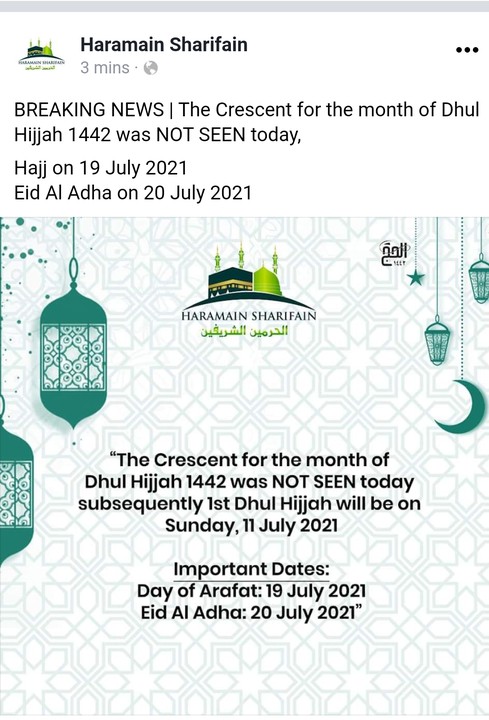
|
| Culture › Re: Female Infertility Treatment In Hyderabad by Lukgaf(m): 10:59am On Jul 09, 2021 |
Philip4564:
@Lukgaf pls what did the prophet say about the five fundamentals of Islam especially on hajj and Zakat? I'm not a Muslim so I cannot comment on that your hadith thread. I'm a Religious studies student and I have exam next week "Textual study of Hadith". So I'll be happy if you can enlighten me thanks What would you like to know about them? The last two pillars you asked about (Zakah and Hajj) are obligatory for Muslims (those who are capable): Zakah: those whose wealth has reached a certain threshold - they must give 1/40 of it to the needy as mentioned in the holy Quran Hajj: those who are capable in terms of health And wealth Read more about the two and other three pillars here: https://islamqa.info/en/answers/13569/the-pillars-of-islamTrust this helps |
| Islam › The Virtues Of The First Day Of Dhulhijjah by Lukgaf(op): 7:48pm On Jul 08, 2021 |
According to the counting of the Sultan, today is the 27th day of DhulQaddah translating that the first day of Dhulhijjah might likely commence this weekend In Sha Allah. This article from IslamQA provides answer to the following: 1. What are the virtues of the first ten days of Dhu’l-Hijjah? 2. What are the righteous deeds that it is recommended to do a lot of during these ten days? The virtues of the first ten days of Dhu’l-Hijjah
Among the great seasons of worship are the first ten days of Dhu’l-Hijjah, which Allaah has favoured over other days. It was narrated from Ibn ‘Abbaas (may Allaah be pleased with him) that the Prophet (peace and blessings of Allaah be upon him) said: “There are no days on which righteous deeds are more beloved to Allaah than these ten days.” They said: “Not even jihad for the sake of Allaah?” He said: “Not even jihad for the sake of Allaah, unless a man goes out himself for jihad taking his wealth with him and does not come back with anything.” Narrated by al-Bukhaari, 2/457
It was also narrated from Anas (may Allaah be pleased with him) that the Prophet (peace and blessings of Allaah be upon him) said: “There is no deed that is better before Allaah or more greatly rewarded than a good deed done in the (first) ten days of al-Adha.” It was said: “Not even jihad for the sake of Allaah?” He said: “Not even jihad for the sake of Allaah, unless a man goes out himself for jihad taking his wealth with him and does not come back with anything.” Narrated by al-Daarimi, 1/357; its isnaad is hasan as stated in al-Irwa’, 3/398.
These texts and others indicate that these ten days are better than all other days of the year, with no exception, even the last ten days of Ramadaan. But the last ten nights of Ramadaan are better than the first ten nights of Dhu’l-Hijjah, because they include Laylat al-Qadr, which is better than a thousand months. See Tafseer Ibn Katheer, 5/412.
What are the righteous deeds that it is recommended to do a lot of during these ten days?.
So the Muslim should start these days with sincere repentance to Allaah, then he should do a lot of righteous deeds in general, then he should pay attention to doing the following deeds:
1 – Fasting
It is Sunnah for the Muslim to fast on the first nine days of Dhu’l-Hijjah, because the Prophet (peace and blessings of Allaah be upon him) encouraged us to do righteous deeds in the first ten days of Dhu’l-Hijjah, and fasting is one of the best of deeds, which Allaah has chosen for Himself as it says in the hadeeth qudsi: “Allaah says: ‘All the deeds of the son of Adam are for him, except fasting, which is for Me and I shall reward for it.” Narrated by al-Bukhaari, 1805.
The Prophet (peace and blessings of Allaah be upon him) used to fast on the first nine days of Dhu’l-Hijjah. It was narrated from Hunaydah ibn Khaalid from his wife, that one of the wives of the Prophet (peace and blessings of Allaah be upon him) said: The Prophet (peace and blessings of Allaah be upon him) used to fast on the first nine days of Dhu’l-Hijjah and the day of ‘Ashoora’, and three days each month, the first Monday of the month and two Thursdays. Narrated by al-Nasaa’i, 4/205 and by Abu Dawood; classed as saheeh by al-Albaani in Saheeh Abi Dawood, 2/462.
2 – Reciting tahmeed, tahleel and takbeer a great deal
It is Sunnah to recite takbeer (saying Allaahu akbar (Allaah is most great)), tahmeed (saying al-hamdu Lillah (praise be to Allaah)), tahleel (saying Laa ilaaha ill-Allaah (There is no god but Allaah)) and tasbeeh (saying Subhaan-Allaah (Glory be to Allaah)), during the first ten days of Dhu’l-Hijjah, saying these words out loud in the mosques, homes, streets and every place in which it is permissible to remember Allaah, to perform this act of worship openly and proclaim the greatness of Allaah.
Men should recite out loud and women should recite quietly.
Allaah says (interpretation of the meaning):
“That they may witness things that are of benefit to them (i.e. reward of Hajj in the Hereafter, and also some worldly gain from trade), and mention the Name of Allaah on appointed days, over the beast of cattle that He has provided for them (for sacrifice)” [al-Hajj 22:28]
The majority are of the view that the “appointed days” are the first ten days of Dhu’l-Hijjah, because it was narrated from Ibn ‘Abbaas (may Allaah be pleased with him) that the appointed days are the first ten days of Dhu’l-Hijjah.
It was narrated from ‘Abd-Allaah ibn ‘Umar (may Allaah be pleased with him) that the Prophet (peace and blessings of Allaah be upon him) said: “There are no days that are greater before Allaah or in which good deeds are more beloved to Him, than these ten days, so recite a great deal of tahleel, takbeer and tahmeed during them.” Narrated by Ahmad, 7/224; its isnaad was classed as saheeh by Ahmad Shaakir.
The takbeer is as follows:
Allaahu akbar, Allaahu akbar, laa ilaaha ill-Allaah, Allaahu akbar, wa Lillaah il-hamd (Allaah is Most Great, Allaah is Most Great, there is no god but Allaah; Allaah is Most Great and to Allaah be praise).
And there are other versions.
This takbeer has become a forsaken Sunnah nowadays, especially at the beginning of these ten days. You can hardly hear it except from a few. It should be recited out loud, so as to revive the Sunnah and remind the heedless. It was proven that Ibn ‘Umar and Abu Hurayrah (may Allaah be pleased with them both) used to go out to the marketplace during the first ten days of Dhu’l-Hijjah, reciting the takbeer out loud, and the people would recite takbeer when they heard them, i.e., the people would remember the talkbeer and each one would recite it by himself; it does not mean that they recited in unison – that is not prescribed in sharee’ah.
Reviving Sunnahs that have been forgotten brings a great deal of reward, as is indicated by the words of the Prophet (peace and blessings of Allaah be upon him): “Whoever revives one of my Sunnahs that has died out after I am gone, will have a reward like that of everyone who does it, without that detracting from their reward in the slightest.” Narrated by al-Tirmidhi, 7/443; this hadeeth is hasan because of corroborating reports.
3 – Doing Hajj and ‘Umrah
One of the greatest deeds that can be done during these ten days is Hajj to the sacred House of Allaah. Whoever Allaah helps to go on Hajj to His House and do the rituals in the required manner will – in sha Allaah – be included in the words of the Messenger of Allaah (peace and blessings of Allaah be upon him): “An accepted Hajj brings no less a reward than Paradise.”
4 – Udhiyah (sacrifice)
One of the righteous deeds that bring a person closer to Allaah in these ten days is to slaughter the sacrifice and to look for a good, fat animal and to spend money on it for the sake of Allaah.
Let us hasten to make the most of these great days, before the negligent regrets what he did, and before he asks to go back and receives no response. |
| Islam › The Foundation Of Islam Revolves Around Three Ahadith, See Them by Lukgaf(op): 3:51pm On Jul 07, 2021 |
Following what transpired this week with some Yoruba "Nason" (  ) agitators and how DSS invaded the house of their leaders, Ustadh Sanusi Lafiagi (May Allah reward him) wrote a nice article on what Muslims among this agitator (and all Muslims in general) must know about their Islam. According to Imāms Ahmad and Ash-Shāfi'ī, the foundation of Islām revolves around three Ahādīth:
1. "Actions are judged by the intentions..." إنما الأعمال بالنيّات
2. "Whoever introduces into this affairs of ours, what is not a part of it will have it rejected" مَن عمِل عملاً ليس عليه أمرنا فهو ردّ
3. "What is permissible is clear and what is impermissible is clear..." إنّ الحلال بيّن وإنّ الحرام بيّن
https://cdn.punchng.com/wp-content/uploads/2021/07/02000409/WhatsApp-Image-2021-07-01-at-10.56.44-PM-2.jpeg
The first Hadīth emphasises the centrality and significance of intention to the validity and acceptance of deeds. In other words, it teaches ikhlās (purification of intention). The second establishes the importance of المُتابعة "compliance, consonance, conformity" of one's actions to the dictates of the Sharī'ah. That is, intention alone does not suffice to validate an action or make it acceptable, unless such action conforms to the express teachings of the Sharī'ah as contained in the Qur'ān and Sunnah of the Prophet ﷺ.
This is where the people of Bid'ah are greatly mistaken. They emphasise on the first Hadīth, while watering down the second. As for the third Hadīth, it establishes the clear injunctions of the Sharī'ah. Halāl and Harām are not matters of conjectures or ambiguity. They have been well spelt out by the Lawgiver- Allāh.
Sometimes, people with zilch or very little knowledge of the Sharī'ah beyond what they read on the internet or pamphlets tend to make terrible submissions on the fundamentals of the Dīn, by overstretching the first Hadīth. For instance, a man who's in seclusion with a woman who he can legally marry as far as the Sharī'ah is concerned may argue that it's his intention that we should consider and not his action, since he has no such intention of committing Zinā with her.
A married woman who's in constant phone contact with another man other than her husband and without his knowledge, let alone permission may equally claim that intention is what matters. This is a WRONG and DANGEROUS application of that Hadīth. The Prophet ﷺ had clearly condemned and prohibited two strange persons of opposite sex from being in seclusion with each other, whether or not Zinā is intended!
On the issue of Shirk, there's no ambiguity at all in the Sharī'ah. Shirk is the greatest and worst form of major sins. It's a clear Harām deed. Sadly, some people have very limited knowledge of what constitutes Shirk. To them, so long as one is not bowing to idols, he's not committing Shirk. Such people are likely not to know that believing in horoscope and the likes are very clear Shirk. Subhānallāh!
"Associating partners with Allāh in worship" goes beyond bowing to idols. It's a complex concept that permeates every aspect of our faith and action. To believe that other than Allāh can create, provide and protect from harm is SHIRK. To invoke other than Allāh is SHIRK. The least form of Shirk is Riyā' (showing off). The Prophet ﷺ called it الشرك الأصغر (the minor Shirk). Who would imagine that showing off one's beautiful recitation and memorization of the Qur'ān could amount to Shirk?!!! Who would imagine that ostentation with one's wealth or knowledge, et cetera is Shirk?!! The Prophet ﷺ said:
إن أخوف ما أخاف عليكم الشرك الأصغر، قالوا: وما الشرك الأصغر يا رسول الله؟ قال: الرياء
"What I fear for you most is the minor Shirk. They (the Sahābah) said, and what is the minor Shirk o Messenger of Allāh? He said, "showing off".
Al-Imām Ahmad and At-Tirmidhī narrated through Abū'l-Layth al-Wāqidī that the Prophet ﷺ and his companions while returning from Hunayn passed by a particular tree known as "dhāt anwāt" on which the idolators hang their swords for good luck and victory in battle. Some of the Companions of the Prophet ﷺ suggested to him to replicate such for them, but the Prophet ﷺ condemned it, and compared their request to that of SHIRK made by the Children of Israel to Mūsā after crossing the red sea! (See Q.7:138-140)
If the Prophet ﷺ could condemn and compare the request to hang swords to a tree meant to bring good luck to Shirk, then, it's clear that those who do not see wearing of talisman and charm vests as Shirk have no knowledge of Shirk. The problem with such vests is not just about what's inscribed on it (lest anyone claims that they contain Qur'ān verses), but the fact that preparing and hanging/wearing them amounts to SHIRK!
Abū Dāwud and At-Tirmidhī narrated from Ibn Mas'ūd رضي الله عنه that the Prophet ﷺ said:
إِنَّ الرُّقَى، وَالتَّمَائِمَ، وَالتِّوَلَةَ شِرْكٌ.
"Spells (ruqyah), amulets and love-charms are shirk."
Imām Ahmad narrated on the authority of 'Uqbah bn Āmir that once, ten men came to the Prophet ﷺ to pledge allegiance to him. He accepted that of nine and rejected the tenth man. So they said, "O Messenger of Allāh, you accepted the pledge of allegiance of nine but not of this one.” He said, “He is wearing an amulet.” The man put his hand (in his shirt) and took it off, then he (the Prophet ﷺ accepted his pledge. He said, ‘Whoever wears an amulet has committed shirk.”
Some people may want to hide under the disagreement among the Salaf on wearing amulets on which ONLY verses of the Qur'ān have been written to advance their argument. I say, this is a false premise. Majority of the 'Ulamā' from the early centuries down to the contemporary time have established the generality of application of the ahādīth condemning wearing amulets, irrespective of their content. Moreso, this is where the third Hadīth earlier quoted comes in, "whoever do away with ambiguous matters has protected his religion and dignity, and whoever falls into the ambiguous matters, falls into Harām"!
By their logic, a bulletproof vest isn't different from an amulet, just as a pregnancy scan isn't different from Ifa divination or a ruqyah (with Qur'ān) and ofo/ayajo/ogede. So why would the former be permitted and not the latter?
I say, an intensive course in Tawhīd and 'Aqīdah is seriously needed. The Islamic Online University of Dr Abū Ameenah Bilal Philips حفظه الله or interaction with Shaykh Āssim Al-Hakīm is highly recommended. 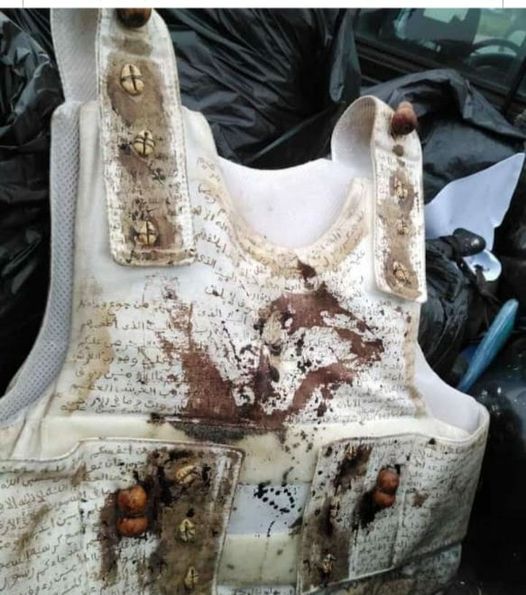
|
| Islam › How Many Times Was Hajj Cancelled In History? by Lukgaf(op): 3:31pm On Jul 07, 2021 |
Are you aware it is not only this and last year Hajj was canceled? Do you know Hajj was canceled in the past majorly because of pandemics? "Though Hajj has been canceled several times over the centuries, since the Kingdom of Saudi Arabia's foundation in 1932, Hajj has been restricted twice in 2020 and 2021" Below article from Haramain Shariffain detailed the number of time Hajj was canceled in History. The current COVID-19 pandemic has caused the restriction on the number of pilgrims for Hajj for the second time.
This restriction has caused an unusual rise in “false informations” and senseless “conspiracy theories” surrounding the restriction, even though it was taken after careful review over months and seeing the latest information on the spread of the pandemic to safeguard the pilgrims and eventually the world.
https://ichef.bbci.co.uk/news/640/cpsprodpb/9DC6/production/_118909304_gettyimages-1228878564-594x594.jpg
In this article, we have compiled the number of times the Hajj was restricted over many reasons but the majority of them were because of disease outbreaks or pandemics.
865: Massacre on Arafat Mountain
During his conflict with the Abbasid Caliphate based in Baghdad, Ismail bin Yousef, known as Al-Safak, launched an attack on the holy Arafat Mountain overlooking Mecca in 865, massacring pilgrims there. The raid forced Hajj to be cancelled.
930: Qarmatian attack
In 930, Abu Taher al-Janabi, the chief of the Qarmatians heterodox sect based in Bahrain, launched an attack on Mecca.
Historical accounts say the Qarmatians killed 30,000 pilgrims in the holy city and dumped bodies in the sacred Zamzam well. They also looted the Grand Mosque and stole the Black Stone from its Kaaba, taking it to the island of Bahrain.
Hajj was then suspended for a decade until the Black Stone was returned to Mecca.
The Qarmatians were an Ismaili Shia sect who believed in an egalitarian society and considered pilgrimage a pagan ritual.
983: Abbasid and Fatimid Caliphates
Politics, too, has disrupted Hajj. In 983 political disputes between the rulers of two caliphates - the Abbasids of Iraq and Syria and the Fatimids of Egypt - got in the way of Muslims travelling to Mecca for pilgrimage. It would be eight years until Hajj was held again, in 991.
1831: Plague
Not only conflicts and massacres have cancelled Hajj. A plague from India hit Mecca in 1831 and killed three-quarters of the pilgrims there, who had endured weeks of travel through dangerous and barren lands to perform Hajj.
1837-1858: Series of epidemics
In a span of almost two decades, Hajj was halted three times, leaving pilgrims unable to head to Mecca for a total of seven years.
In 1837, another plague hit the holy city, putting things on hold until 1840.
Then in 1846 a bout of cholera hit Mecca, killing more than 15,000 people, and plagued its inhabitants until 1850. Outbreaks returned in 1865 and 1883.
In 1858, another global cholera pandemic arrived in the city, prompting Egyptian pilgrims to run away en masse to Egypt's Red Sea shores, where they were held in quarantine. Content courtesy of Middle East Monitor via Haramain Shariffain |
| Islam › Ages Of Animals That Can Be Used For Eid Sacrifice by Lukgaf(op): 3:10pm On Jul 07, 2021 |
Below images, from DawahNigeria detail the ages (and conditions) of animals that can be used for Eid sacrifice. May Allah provide for us and let us witness Eid (Ameen). 


|
| Islam › Eid-ul-adha Preparation: How Much Is Udiyah/Qurbani Near You? by Lukgaf(op): 12:53am On Jul 02, 2021 |
Assalam Alaekum WaramotuLah Wabarakatuh,
AlhamduLilah, we are few days to Eid-ul-Adha, one of the two major Islamic festival. Those who plans to make Udhiya (Qurbani) this year would have been keeping themselves updated about the price of these animals permissible to be slaughtered. Some of these animals include a goat, sheep, cow, bull, buffalo or camel, male or female if they meet the condition (see other thread, for further information on the type of animal and the condition they should meet).
“There is nothing dearer to Allâh during the days of Qurbâni than the sacrificing of animals. The sacrificed animal shall come on the Day of Qiyamah with its horns, hair and hooves (to be weighed in reward). The sacrifice is accepted by Allâh before the blood reaches the ground. Therefore, sacrifice with an open and happy heart.” (Hadith-Ibn Majah).
“Whoever has the capacity to sacrifice and does not do so, should not come to the place where the Eid prayer is offered.” (Hadith-Ibn Majah).
To encourage those who, thinks it is very expensive to make Udiyah, could you inform us the price of these animals at your location?
May Allah make it easy for us |
| Islam › How To Calculate Time For Each Daily Solat by Lukgaf(op): 12:43am On Jul 02, 2021 |
Praise be to Allah.
Allaah has enjoined upon His slaves five prayers throughout the day and night at specific times decreed by the wisdom of Allaah so that the slave may be in contact with his Lord in these prayers throughout all of these times. They are for the heart like water for a tree, given to it time after time, not all in one go and then it stops.
Part of the wisdom behind doing the prayers at these times is so that people will not get bored or find it too difficult, which would happen if they all had to be done at once. Blessed be Allaah, the Wisest of judges.
(From the Introduction to Risaalat Ahkaam Mawaaqeet al-Salaah (Essay on the Rulings on the Times of the Prayers) by Shaykh Muhammad ibn ‘Uthaymeen, may Allaah have mercy on him).
The times of the prayers were mentioned by the Prophet (peace and blessings of Allaah be upon him) in the hadeeth: “The time for Zuhr is from when the sun has passed its zenith and a man’s shadow is equal in length to his height, until the time for ‘Asr comes. The time for ‘Asr lasts until the sun turns yellow. The time for Maghrib lasts until the twilight has faded. The time for ‘Isha’ lasts until midnight. The time for Subh (Fajr) prayer lasts from the beginning of the pre-dawn so long as the sun has not yet started to rise. When the sun starts to rise then stop praying, for it rises between the two horns of the Shaytaan.” (Narrated by Muslim, 612).
This hadeeth explains the timings of the five daily prayers. As for defining them by the clock, that varies from one city or country to another. We will define each in more detail as follows:
1 – The time of Zuhr
The Prophet (peace and blessings of Allaah be upon him) said: “The time for Zuhr is from when the sun has passed its zenith and a man’s shadow is equal in length to his height (this is the end time), until the time for ‘Asr comes.” So the Prophet (peace and blessings of Allaah be upon him) defined the start and the end of the time for Zuhr:
The start of the time for Zuhr is when the sun has passed its zenith i.e., has passed the highest part of the sky and started to descend towards the west.
Practical way of knowing when the zenith has been passed (and the time for Zuhr has begun):
Put a stick or pole in an open place. When the sun rises in the east, the shadow of this stick will fall towards the west. The higher the sun rises, the shorter the shadow will become. So long as it keeps growing shorter, the sun has not yet reached its zenith. The shadow will keep on growing shorter until it reaches a certain point, then it will start to increase, falling towards the east. When it increases by even a small amount, then the sun has passed its zenith. At that point the time for Zuhr has begun.
Knowing the time of the zenith by the clock: divide the time between sunrise and sunset in half, and that is the time of the zenith. If we assume that the sun rises at 6 a.m. and sets at 6 p.m., then the zenith is at 12 noon. If it rises at 7 a.m. and sets at 7 p.m., then the zenith is at 1 p.m., and so on.
See al-Sharh al-Mumti’, 2/96
The end of the time for Zuhr is when the shadow of everything is equal in length to the object itself, plus the length of the shadow of the object at the time of the zenith.
Practical way of knowing when the time for Zuhr has ended: go back to the stick or pole which we described above. Let us assume that its length is one meter. We will notice that before the sun reached its zenith, the shadow decreased gradually until it reached a certain point (make a mark at this point), then it started to increase, at which point the time for Zuhr began. The shadow will continue to increase, falling towards the east until the length of the shadow is equal to the length of the object itself, i.e., it will be one meter long, starting from the point marked at the zenith). As for the shadow before the mark, that is not counted, and it is called fay’ al-zawaal (the shadow of the zenith). At this point the time for Zuhr ends and the time for ‘Asr begins straight away.
2 – The time of ‘Asr
The Prophet (peace and blessings of Allaah be upon him) said: “The time for ‘Asr lasts until the sun turns yellow.”
We know that the time for ‘Asr begins when the time for Zuhr ends, i.e., when the length of an object’s shadow becomes equal to the length of the object itself. There are two times for the end of ‘Asr.
(1) The preferred time: this lasts from the beginning of the time for ‘Asr until the sun begins to turn yellow, because the Prophet (peace and blessings of Allaah be upon him) said: “The time for ‘Asr lasts until the sun turns yellow.” Defining this time by the clock varies according to the season.
(2) The time of necessity. This lasts from the time the sun turns yellow until sunset, because the Prophet (peace and blessings of Allaah be upon him) said: “Whoever catches up with one rak’ah of ‘Asr before the sun sets has caught up with ‘Asr.” (Narrated by al-Bukhaari, 579; Muslim, 608)
Question: what is meant by the time of necessity?
Necessity here refers to when a person is distracted from praying ‘Asr by some essential and unavoidable work, such as dressing wounds, and he is able to pray before the sun turns yellow but it is difficult, then he prays just before sunset. In this case he has prayed on time and has not sinned, because this is the time of necessity. If a person is forced to delay the prayer, there is no sin so long as he prays before the sun sets.
3 – The time of Maghrib
The Prophet (peace and blessings of Allaah be upon him) said: “The time for Maghrib lasts until the twilight has faded.”
i.e., the time for Maghrib starts immediately after the time for ‘Asr ends, which is when the sun sets, until the twilight or red afterglow has faded. When the red afterglow has disappeared from the sky, the time for Maghrib ends and the time for ‘Isha’ begins. Defining this time by the clock varies according to the season. When you see that the red afterglow has disappeared from the horizon, this is a sign that the time for Maghrib has ended.
4 – The time of ‘Isha
The Prophet (peace and blessings of Allaah be upon him) said: “The time for ‘Isha’ lasts until midnight.”
So the time for ‘Isha’ begins immediately after the time for Maghrib ends (i.e., when the red afterglow disappears from the sky) until midnight.
Question: how do we calculate when midnight is?
Answer: if you want to calculate when midnight is, then calculate the time between sunset and the break of true dawn (when Fajr begins) then divide it in half; that halfway point is the end of the time for praying ‘Isha’ (and that is midnight).
So if the sun sets at 5 p.m., and Fajr begins at 5 a.m., then midnight is 11 p.m. If the sun sets at 5 p.m. and Fajr begins at 6 a.m., then midnight is 11.30 p.m., and so on.
5 – The time of Fajr
The Prophet (peace and blessings of Allaah be upon him) said: “The time for Subh (Fajr) prayer lasts from the beginning of the pre-dawn so long as the sun has not yet started to rise. When the sun starts to rise then stop praying, for it rises between the two horns of the Shaytaan.”
The time for Fajr begins with the onset of the “second dawn” (al-fajr al-thaani) and ends when the sun starts to rise. The “second dawn” is the brightness that appears along the horizon in the east and extends north to south. The “first dawn” (al-fajr al-awwal) occurs approximately one hour before this, and there are differences between the two:
(1) In the “first dawn” the brightness extends from east to west, and in the “second dawn” it extends from north to south.
(2) The “first dawn” is followed by darkness, i.e., the brightness lasts for a short period then it becomes dark. The “second dawn” is not followed by darkness, rather the light increases.
(3) The “second dawn” is connected to the horizon, with no darkness between it and the horizon, whereas the “first dawn” is separated from the horizon with darkness between it and the horizon.
See al-Sharh al-Mumti’, 2/107 https://islamqa.info/en/answers/9940/times-of-the-five-daily-prayers |
| Islam › Re: Islam For Muslims: Side Talk Station by Lukgaf(m): 11:46pm On Jun 29, 2021 |
Empiree:
Lukgaf,
Please could you copy my post above and send it to funny page this Friday.
Thanks Which funny page Empiree? |
| Islam › Re: Review: Clearing Some Misconceptions And Doubts Against Islam by Lukgaf(op): 12:45pm On Jun 25, 2021 |
ANTIlSLAM:
According to what the guy said in quote "When God sent the prophets, He supported them with miracles and evidence which proved that they were truly prophets sent by God and hence that the religion they came with is true. " end of quote
It means to be able to identify a true and genuine prophet, God supported them with miracles which proves them as true God sent.
So I asked to tell us miracles performed by muhammad while alive Could you kindly download the book (the link shared above). You'll find on page 36 of the book. Also, in sha Allah, I hope to cover that aspect in this series too. May Allah spare our lives |
| Islam › Re: Review: Clearing Some Misconceptions And Doubts Against Islam by Lukgaf(op): 12:21pm On Jun 25, 2021 |
chillychill:
I'll b glad if u can also share d book.. . Honored sis, I've shared the link above. You can download the pdf |
| Islam › Re: Review: Clearing Some Misconceptions And Doubts Against Islam by Lukgaf(op): 10:49am On Jun 25, 2021 |
ANTIlSLAM:
You know what, just summarize or better still list them out here. I am only after the miracles he performed while alive Check page 36 of the book |