Islam › Re: #EndSARS: Protests, Demonstrations And Civil Disobedience In The Light Of Islam by Lukgaf(op): 6:40am On Oct 16, 2020 Islam › Re: #EndSARS: Protests, Demonstrations And Civil Disobedience In The Light Of Islam by Lukgaf(op): 6:40am On Oct 16, 2020 |
In the context of Nigeria, one of the evils is also that many lives are lost as a result of protest and revolt against rulers. In another news
"Police have killed at least 10 people since the start of protest against callous operations of SARS"
Amnesty International |
| Islam › Re: #EndSARS: Protests, Demonstrations And Civil Disobedience In The Light Of Islam by Lukgaf(op): 6:30am On Oct 16, 2020 |
One can see the evil effects of following a methodology that opposes the Quran and Sunnah in the “Arab Spring” which began in Tunisia (in 2011) with an Islamically forbidden act of suicide (a man burned himself alive as an act of protest) and then these protests spread to Egypt, Libya, Syria, Yemen and other countries that resulted in anarchy, mass killing of civilians and the general collapse of Muslim societies. People were deceived into thinking they were doing a religious act approved of by the Quran and Sunnah. Since then, hundreds of thousands have died (and continue to do so), millions are homeless, schools and hospitals are bombed, and thousands imprisoned. Knowledgeable Muslims say: This is a clear proof that abandoning the guidance of the Prophet (peace be upon him) and resorting to direct public protests only brings about greater harm. One can see the many terrorist groups have arisen in the wake of the “Arab Spring” such that no right-minded person looks upon those protests except with sadness and regret. https://www.abukhadeejah.com/protests-demonstrations-and-civil-disobedience-in-the-light-of-islam-ethics-3-8/ |
| Islam › Re: #EndSARS: Protests, Demonstrations And Civil Disobedience In The Light Of Islam by Lukgaf(op): 6:28am On Oct 16, 2020 |
As for the duty of forbidding evil and how it is to be carried out, then the principle is as follows:
1. Forbidding evil with the hand is for the rulers and those in authority such as the courts and the police appointed by the ruler.
2. Forbidding evil with speech is for the scholars of Sunnah and those with knowledge (and not pretenders who claim they know!).
3. Hating evil with one’s heart is for everyone to whom the truth has reached from the general folk.
As for boycotting products and goods, then one should only do so if the ruler has commanded with that or the great scholars of Sunnah with the authority given to them by the Muslim rulers. Writing to advise the oppressive ruler should be done in private whilst showing gentleness and concern, free from rude and wicked speech. Also one may approach a government minister or scholar who can in turn advise those in authority. A worker may approach his employer directly, or complain to the leaders in government about mistreatment. This is the balanced and orderly method of rectification whilst maintaining patience and supplicating to Allah. |
| Islam › Re: #EndSARS: Protests, Demonstrations And Civil Disobedience In The Light Of Islam by Lukgaf(op): 6:24am On Oct 16, 2020*. Modified: 6:58am On Oct 16, 2020 |
Islamic viewpoint:
Muslims must be guided by the Quran and Sunnah in all their activities from the mundane to the most serious. Allah’s Messenger (peace be upon him) taught his Ummah (nation) every affair that would bring them closer to success in this life and Paradise in the next, and he warned them from every affair that would harm them and bring them closer to Hell.
When a Muslim sees injustice, he has been guided by the revealed texts to act appropriately. The Prophet (peace be upon him) said: “Help the oppressed and the oppressor.” When it was said to him that it is correct that the oppressed should be helped, but how does one help the oppressor?! He responded: “Stop him and prevent him from oppression, and that is helping him.”
He also said: “Whoever among you sees an evil, let him stop it with his hand. If he is not able, let him stop it by speaking. If he is not able, let him at least hate it with his heart for that is the weakest of faith (Imaan).”
However, there are some mighty principles that go along with these Prophetic narrations to avoid anarchy and disorder in societies. For example, if one’s mother and father are involved in drinking wine or smoking and gambling, it is not permitted to physically assault them or to harm them under the guise that one is forbidding evil!
Another example is that if a burglar breaks into one’s house, it is not permissible to pursue him and imprison him in a homemade prison or carry out the prescribed punishment upon him.
On the other hand, a father and mother may physically withhold their children from taking drugs, stealing or smoking, by rebuking them. Likewise, a ruler and his appointed courts may sentence criminals and punish them because they have an Islamic duty to do so. Many Muslims and non-Muslims misunderstand the Islamic texts and think that any person can do whatever they wish to correct wrongs in society by “any means necessary”. This is wrong and in contradiction to other explanatory texts.
The Messenger of Allah said: “If one of you sees something from the ruler that he hates, let him not publicise it.” This is a clear hadeeth forbidding openly protesting (even publicly speaking) against the ruler. Then he gave the Muslims a method of correcting the ruler: “Rather you should take the ruler by his hand and advise him. If he accepts the advice, then that is good. If he refuses, then you have fulfilled your duty.” In another narration, he said: “The martyr is the one who speaks a word of truth in the presence of the tyrannical ruler for which he is killed.”
These authentic narrations make it very clear that the ruler should only be advised in his presence and NOT in public. So, one may write to the ruler with gentle words advising him with correct conduct. The Messenger (peace be upon him) never ever protested in the streets of Makkah though he and his companions were oppressed and persecuted for 13 years in Makkah. They never once blocked the streets, participated in sit-ins, or plotted assassinations. However, the Prophet would constantly advise them and remind them of their duty to their Lord and the impending Day of Judgement wherein Allah would call them to account.
So to oppose this methodology is to oppose the Prophet (peace be upon him) as he himself said: “Whoever turns away from my Sunnah is not from me.” He also said: “You will have rulers over you who will not follow my Sunnah, nor my guidance. There will be amongst them men who will have the hearts of devils in the bodies of humans.” When asked how one is to behave towards such oppressive Muslim rulers, he responded: “Listen and obey the ruler, even if he takes your wealth and beats you in your back. Listen and obey.”
So patience is very important in times of hardship. There is tremendous wisdom behind this because of the great bloodshed and anarchy that results in standing up against those in authority. Furthermore, it is a reminder that the Muslims are only ruled by those they deserve and the leaders are merely a reflection of society. So Allah gives good people a good ruler and wicked people a wicked ruler as the great scholars such as Ibnul-Qayyim, Ibn Bāz and Al-Albāni have stated. So protests, demonstrations and rising up against the rulers and those in authority are not allowed in Islam. |
| Islam › #EndSARS: Protests, Demonstrations And Civil Disobedience In The Light Of Islam by Lukgaf(op): 6:23am On Oct 16, 2020 |
After reading this thread, you should be able to understand protest and Muslim attitudes to protest.
What is protest?
Protest is an action to show disagreement with something, for example, government policy.
Why people protest?
A protest is any action an individual or group may take to draw attention to an issue or cause in which they believe. Protests usually arise when people feel an injustice has occurred.
People protest against injustice in many different ways. This ranges from writing letters, boycotting products and joining protest groups to even breaking the law and going to prison. People may decide on some kind of public protest because they feel they have no other way to make their voices heard. It is a way to attract media attention and make other people aware of the issue. Protestors may think that it is right to stand up for what they believe. Sometimes people may believe that it is the only way to bring about change or correct something that is wrong.
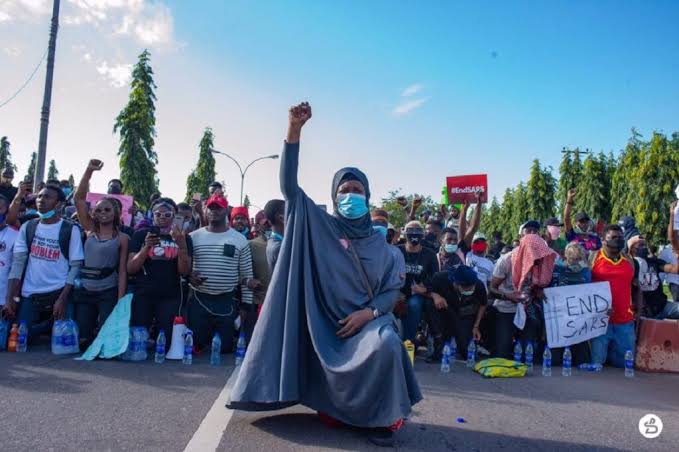
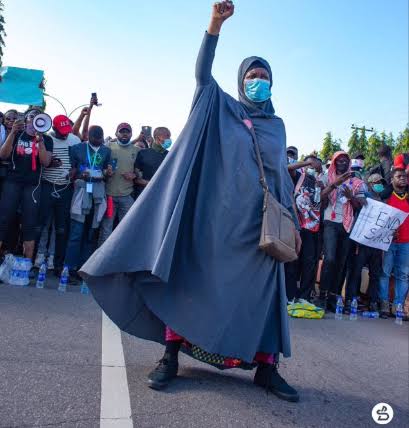
Non-violent protests involve methods of protesting that do not cause harm to others or damage to property. These can be simple actions such as signing a petition, writing to an MP or opting not to buy goods and services from a particular company or country. Other forms of non-violent protests may involve more direct action: street marches, sit-ins (occupying a building or space), refusing to work such as strike action or causing disruption such as blocking roads. These actions can be frustrating for individuals and companies who are affected by protests, but no direct physical harm to people is caused.
Some protestors feel that non-violent actions such as these are not enough. They believe that they the only way their concerns will be heard is if they use more extreme forms of protest. This can include methods that are intended to intimidate others and force change. They believe direct violence against others and property will change public opinion. However, this change may only be achieved due to fear of violence, not because the people necessarily agree. 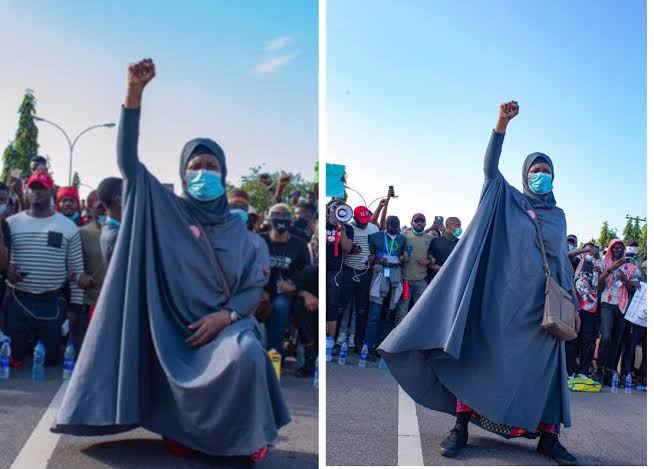
|
| Islam › Re: Suggest Threads For Frontpage Here by Lukgaf(m): 8:07am On Oct 09, 2020 |
|
| Islam › Prayer For Settling One's Debts by Lukgaf(op): 8:03am On Oct 09, 2020 |
Without doubt, we all depend on one another. By implication, we all have some debts to pay which often create grief and sadness in the heart. Meanwhile, it is recommended for a Muslim to say the following prayer to ease one of debts.
اللَّهُمَّ إِنِّي أَعْوذُ بِكَ مِنَ الهَمِّ وَالْحَزَنِ، والعَجْزِ والكَسَلِ، والبُخْلِ والجُبْنِ، وضَلْعِ الدَّيْنِ وغَلَبَةِ الرِّجَالِ
Allaahumma 'innee 'a'oothu bika minal-hammi walhazani, wal'ajzi walkasali, walbukhli waljubni, wa dhala'id-dayni wa ghalabatir-rijaali.
O Allah, I seek refuge in You from grief and sadness, from weakness and from laziness, from miserliness and from cowardice, from being overcome by debt and from being overpowered by men
Al-Bukhari 7/158.
Source: Doa & Zikr (Hisnul Muslim)
May Allah settle our debts and provide for our needs (Ameen) 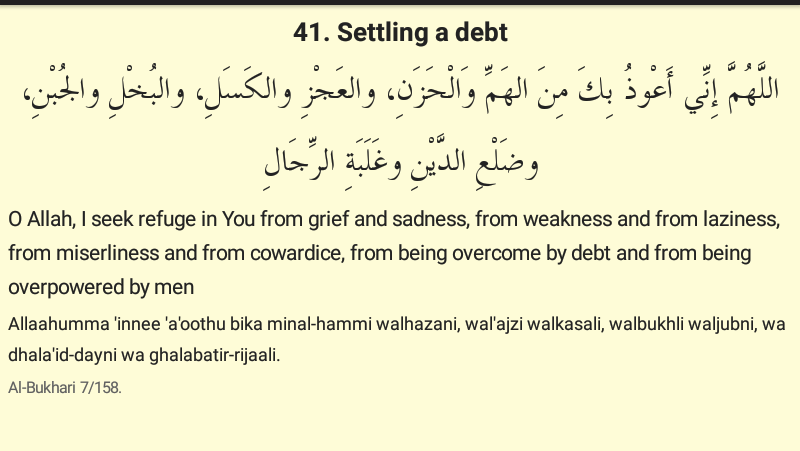
|
| Islam › Keeping A Clean Heart... by Lukgaf(op): 7:49am On Oct 09, 2020 |
Harbouring malice, ill feelings and bad thoughts about another Muslim is a major sin.
To disagree, differ and, at times, experience discord with another person is normal and expected. However, a Muslim is prohibited from allowing these issues to cause him to sever his relationship with the next person.
Irrespective of the level of conflict or disagreement that may exist between two parties, it is prohibited for them to hate, spite or grudge each other or harbour ill feelings and hatred. Such an approach will be detrimental spiritually and can also affect one's physical health.
Harbouring enmity leads to distress, anxiety and restlessness. The one who holds grudges and gives vent to his anger tortures himself with the fire of jealousy and hatred. Such a person loses respect and self-esteem. The evil effect of these actions engulf his heart, causing him to become miserable and depressed.
In upholding relationships, the Qur'an advises us to take a higher moral ground,
"The good deed and the evil deed cannot be equal. Repel (the evil) with (an approach which is better) then verily (the one) with whom there was enmity, will become as though he was a close friend." (Fussilat: 34)
Thus Allah orders the faithful believers to be patient and tolerant at the time of anger, and to take to pardon those who treat you badly.
Hazrat Anas (R) narrates that Rasulullah (Sallallahu Alaihi Wasallam) said to me, 'O My Beloved son! If you are able to pass the morning and the evening in such a condition where there are no ill-feelings in your heart for anyone, then do so.'
Then Rasulullah (Sallallahu Alaihi Wasallam) said, 'O My Beloved son! That is from my Sunnah. Whoever loves my Sunnah loves me. Whoever loves me will be with me in Jannah.' (Tirmizi)
We should develop ourselves to be tolerant with others, and overlook the weaknesses of others by displaying good character. https://www.darulihsan.com/index.php/social-etiquette/item/8556-keep-a-clean-heart |
| Phones › Systematic Way Of Telling People Your Phone's Pattern Virtually - Lukgaf by Lukgaf(op): 11:41am On Oct 05, 2020 |
Systematic way of telling people your phone's pattern virtually - Lukgaf
When your phone is stolen or you are away from home, you may need someone to access your smart phone to harvest some important information for you. You do not need to worry at all. We provide a systematic way of doing this below:
Replace in order all the 9 pattern points
. . .
. . .
. . .
with respectively
1 2 3
4 5 6
7 8 9
After doing this, provide the person with the following instruction given in the example below;
Example:
If your pattern is L-like shape, you will instruct the person to swipe from 1 through 7 up to 9 (1 4 7 8 9 ) and that is all.
Warm up:
If you are instructing a friend to unlock your phone with a lower case "d" letter pattern, which code are you going to give him?
Thanks
Cc:
Lalasticlala |
| Islam › Re: Suggest Threads For Frontpage Here by Lukgaf(m): 6:36am On Oct 02, 2020 |
|
| Islam › Six Rights Of The Muslim by Lukgaf(op): 6:32am On Oct 02, 2020 |
Abu Hurayrah RA narrated that the Messenger of Allaah [SAW] said:
“The rights of the Muslim upon the Muslim are six.” It was said, “And what are they Oh Messenger of Allaah?” He [SAW] replied, “When you meet him, give him the greeting of peace, when he invites you, respond to his invitation, when he seeks your advice, advise him, when he sneezes and praises Allaah, supplicate for mercy upon him, when he becomes ill, visit him, and when he dies follow him (i.e. his funeral).”
This hadeeth was reported by Muslim. These six rights, whoever establishes them in dealing with the Muslims, then his establishing things other than them (from the obligations) are even more important (or necessary). And his doing these things results in him fulfilling these obligations and rights, which contain an abundance of good and tremendous reward from Allaah .
The First Right
“When you meet him, give him the greeting of peace.” For verily the greeting of peace is a cause of love, which results in producing faith (Al-Eemaan), which results in the person entering the Paradise. This is as Prophet said:
“By the one in Whose Hand is my soul, you all will not enter into the Paradise until you believe, and you will not believe until you love each other. Shall I not direct you to something that if you do it, you will love each other? Spread the greeting of peace amongst yourselves.”
The greeting of peace is from the virtuous characteristics of Islaam. For verily each of the two people who meet each other supplicates for the other for safety from evils, and mercy, and blessing that brings about every good. And what follows this is a cheerful face and appropriate words of greeting which result in unity and love, and it removes feelings of estrangement and cold disassociation. Thus, giving the greeting of peace is the right of the Muslim, and it is obligatory upon the person who is greeted to return greeting with a similar greeting or one that is better than it. And the best of the people are those who start the greeting of peace first.
The Second Right
“When he invites you, respond to his invitation.” This means that when he invites you with an invitation to some food and drink, then fulfil the request of your brother who has drawn near to you and honoured you with the invitation. Respond to his invitation (i.e. accept it), unless you have an excuse.
The Third Right
His statement, “And when he seeks your advice, advise him.” This means that if he seeks consultation with you regarding some action, as to whether he should do it or not, then advise him with that which you would like for yourself. Thus, if the action is something that is beneficial in all aspects, then encourage him to do that, and if it is something harmful, then warn him against it. And if the action contains both benefit and harm, then explain that to him and weigh the benefits against the harms. Likewise, if he consults with you concerning some dealing with someone among the people, or whether he should marry a woman off to someone, or whether he should marry someone, then extend your pure and sincere advice to him, and deal with him from the view point of what you would do for you own self. And avoid deceiving him in any matter of these things. For verily whoever deceives the Muslims, then he is not of them, and indeed he has left off the obligation of being sincere and advising. And this sincerity and advising is absolutely obligatory, however it becomes more emphasized when the person seeks your advice and he requests from you that you give him a beneficial opinion. For this reason the Prophet specifically mentioned it in this important situation. The explanation of the hadeeth, “The religion is sincerity”, has already been mentioned previously (in this book) in a manner that suffices without us having to repeat the discussion here.
The Fourth Right
“And when he sneezes and praises Allaah, then pray for mercy upon him.”
This is due to the fact that sneezing is a favour from Allaah , in the expelling of this congested air that is blocked in certain parts of the body of the human being. Allaah makes it easy for this air to have a passage out where it can exit, and thus the sneezing person feels relief. Thus, the Prophet legislated that the person praise Allaah for this favour, and he legislated for his (Muslim) brother to say to him, “May Allaah have mercy upon you.” He also commanded the person who sneezed to answer his (Muslim) brother by saying to him, “May Allaah guide you and set right your affairs.” Therefore, whoever does not praise Allaah , then he does not deserve for others to pray for mercy upon him, and in this case he cannot blame anyone except himself. For he is the one who has caused himself to lose the two blessings: the blessing of praising Allaah , and the blessing of his brother’s supplication for him that is a result of the praising.
The Fifth Right
His statement, “And when he becomes ill, visit him.” Visiting the sick is from the rights of the Muslim, and especially for the person who has a highly stressed and emphasized right upon you, like the relative, and the friend, and so forth. It is from the best of the righteous deeds. And whoever visits his Muslim brother, he remains engulfed in the mercy (of Allaah ), and when he sits with him the mercy (of Allaah
) covers him. And whoever visits the sick Muslim at the beginning of the day, the Angels send prayers of blessing upon him until evening comes, and whoever visits him at the end of the day, the Angels send prayers of blessing upon him until morning comes. It is desired for the person who visits the sick to supplicate for him to be cured and to make him feel at ease. He should ease his worries by giving him glad tidings of well-being and recovery (i.e. be positive). He should remind him of repentance and turning to Allaah, and he should give him beneficial admonition. He should not sit with him too long (i.e. over staying his welcome), rather he should only sit with him long enough to fulfil the right of visiting, unless the sick person is positively effected by many people coming in to see him and many people coming to sit with him. Thus, for each situation there is a different statement (i.e. advice on how to deal with it).
The Sixth Right
His statement, “And if he dies, follow him (his funeral).” For verily whoever follows the funeral until the deceased’s body is prayed over, then he will receive a Qeeraat of reward.
(Translator’s note: A Qeeraat is an amount equivalent to the size of the Mountain of Uhud in Madinah.) And if he follows the funeral procession until the body is buried, then he will receive two Qeeraats of reward. And following the funeral procession contains (fulfilment of) a right for Allaah, a right for the deceased, and a right for the living relatives of the deceased.
Almighty Allah knows best https://jamiat.org.za/6-rights-of-the-muslim/ |
| Islam › Ruling On Taking Salaries Without Working by Lukgaf(op): 6:22am On Oct 02, 2020 |
Question: I am a mother. I worked as a teacher in a school near our house, then I was appointed to work in another school that is far away, which is mixed as well as being far from my house. I refused to go, but my salary continued and was not stopped. What is the ruling on the money that is in my account? Can I give it to my husband – knowing that he is not working for security reasons, because his brother belongs to an Islamic party – and we, praise be to Allaah, are in genuine need, and this money as is well known will not go back to the state but to those whoa re working in the bank?. Answer:
Praise be to Allah.
We appreciate your keenness to adhere to the sacred limits of Allaah, and we ask Allaah to increase the numbers of Muslim women who are like you and to reward you greatly for your refusal to work in a mixed school, because working there would involve transgressions against sharee’ah and falling into sin.
With regard to the salary that has come into your account without you working, you should note that one of two scenarios must apply to it.
Either that has happened with their knowledge until the matter is sorted out, or it has happened without their knowledge. If it is the former, then the money that is coming to you is halaal and there is no doubt that it is permissible. But if it is the latter, then it is not permissible for you to take it, whether it is for yourself or your husband, rather you must return it to the place that transferred it to you.
It should be understood that between you and the state that appointed you to this job there is a work contract, and this is what you must adhere to so long as it does not involve going against the laws of Allaah, may He be exalted. One of the implications of such contracts is that the worker takes a salary in return for his work. If he refuses to work then his salary ceases, unless the reason is an action on the part of the department, ministry or boss. It may be that the clauses of the contract state that the salary will continue to be deposited in the employee’s account until matters are sorted out. If that is the case, then you are entitled to the salary and there is nothing wrong with taking it.
It may say in the contract between you and the state – for example – that you have to stay in the place which they think is suitable for you to work in, and that if you refuse to work there, then you are not entitled to the salary. If that is the case, then this salary is not permissible for you, and you have the choice of trying to stay in the place where it is Islamically acceptable for you to teach, or leaving this job.
Shaykh Muhammad ibn Saalih al-‘Uthaymeen (may Allaah have mercy on him) was asked:
The regular hours of work are the opening hours of the government department, but there are some people who come half an hour late, or they leave half an hour early, and sometimes they are an hour or more late. What is the ruling on that?
He replied:
It seems that there is no need for an answer to this, because the payment should be given in return for something. Just as the employee would not be happy if the state deducted something from his salary, he should not detract from the rights of the state. It is not permissible for a person to come to work late, or to leave early.
The questioner said:
But some of them say that they don’t have any work at all because there is not much work.
The Shaykh said:
What matters is the time, not the work, i.e. you are told that this salary is in return for being present from this time until this time, whether there is any work or not. So long as the salary is connected to the time, then you must give them this time, otherwise taking money for hours when we were not present is wrong.
Al-Baab al-Maftooh (9/ question no. 3).
The Shaykh was also asked:
I am a government employee, and I am sometimes asked to do extra work. The department where I work has asked me and some of my colleagues to do some work outside of regular hours for 45 days, and I was keen to attend with my colleagues at work, but they did not tell me about that. When I asked one of them he said to me: Your turn has not come yet. Then when that period ended, my colleagues and I were paid for that work. I am confused – is this money halaal or haraam? Please note that my boss and the head of the department were pleased with my work and they regard me as a good employee, and this money may be a reward for my keenness and good work, because my salary is low. If this money is not halaal, what should I do with it?
He replied:
This question comes up often. I ask you now: is this true or false? i.e., if a person got paid for a certain task, did he do the job or not? If he did not do the job, then he has taken this money unlawfully, and taking money unlawfully comes under the heading of consuming wealth unlawfully, as well as being a betrayal of the trust, and if the boss agreed to this action then he is also betraying the trust. The money is not his, even if he disposes of it as he wishes; the money belongs to the state and I think that the one who is asking this question has repented from what he has done.
Al-Baab al-Maftooh (114/ question no. 15).
The Shaykh (may Allaah have mercy on him) was also asked:
I was working in the administration of a town that is 75 km from my home via a desert road. When I commuted this distance I found it hard, so I said to the boss: Let me come two days a week. He gave me permission some days but not on other days, and that went on for two years. What is the ruling on the days when I was absent without the permission of the boss?
He replied:
With regard to the days on which you were absent from work without permission, it is not permissible for you to take the salary you got for them, because the salary is given in return for work. If you did the work in full then you are entitled to payment in full, but if you fell short then you are not entitled to full payment. If you have taken the salary in full without any deduction, then you must return it to the one from whom you took it, if you can. If you are afraid of being asked questions, then give it in charity in order to get rid of it, or give it to the mosque, or to repair roads, so that you will be free of sin.
The questioner said:
I asked for permission from the same official. What is the ruling?
The Shaykh replied:
If you asked him – i.e., the official who is in charge of you – for permission when you knew that the work required you to be present, then you should not accept his permission and you must attend even if he gives you permission to be absent. But if the work does not require you to be present and your boss gives you permission, then we hope that there is nothing wrong with that.
Al-Baab al-Maftooh (14/ question no. 17).
And Allaah knows best. https://islamqa.info/en/answers/93579/should-she-take-her-salary-without-working |
| Islam › Re: Suggest Threads For Frontpage Here by Lukgaf(m): 4:41am On Sep 25, 2020*. Modified: 5:22am On Sep 25, 2020 |
|
| Islam › How Tashahhud Is Performed In Solat by Lukgaf(op): 4:37am On Sep 25, 2020 |
First Tashahhud(i) Once you finish the second Rak'ah, hold your right hand closed with its thumb and middle finger touching each other like in a circle while pointing the index finger straight in the direction of the Qiblah and moving it through the recitation of the Tashahhud (in Arabic): التَّحِيَّاتُ لِلَّهِ وَالصَّلَوَاتُ وَالطَّيِّبَاتُ السَّلَامُ عَلَى النَّبِيُّ وَرَحْمَةُ اللَّهِ وَبَرَكَاتُهُ السَّلَامُ عَلَيْنَا وَعَلَى عِبَادِ اللَّهِ الصَّالِحِين. أَشْهَدُ أَنْ لا إِلَهَ إِلَّا اللَّهُ وَأَشْهَدُ أَنَّ مُحَمَّدًا عَبْدُهُ وَرَسُولُهُ Transliteration: Attahiyyaatu lillaahi wassalawaatu wattayyibatu. Assalaamu 'alayka ayyuhan-Nabiyyi warahmatullaahi wabarakaatuh. Assalaamu 'alyna wa 'ala 'ibaadillaahis saaliheen. Ash-hadu an laa ilaaha illallaah wa ash-hadu anna Muhammadan 'abduhu wa rasooluh. “All compliments [Allaah is free of all imperfection, His is the dominion, Magnificence, Endless existence belongs to Him], prayers, and pure words and deeds, are due to Allaah. May Allaah grant the Prophet safety from all defects and imperfections and keep his message safe from all evil; [may Allaah grant him] mercy and honor. May safety and security be granted to us and to all the righteous slaves of Allaah. I bear witness that none has the right to be worshipped except Allaah, and I bear witness that Muhammad is His slave and Messenger.” Full Tashahhud(i) At the end of the last Rak'ah, recite the first Tashahhud and follow it with the following recitation known as As-Salaatul Ibraaheemiyyah: اللَّهُمَّ صَلِّ عَلَى مُحَمَّدٍ وَعَلَى آلِ مُحَمَّدٍ كَمَا صَلَّيْتَ عَلَى إِبْرَاهِيمَ وَعَلَى آلِ إِبْرَاهِيمَ إِنَّكَ حَمِيدٌ مَجِيدٌ. اللَّهُمَّ بَارِكْ عَلَى مُحَمَّدٍ وَعَلَى آلِ مُحَمَّدٍ كَمَا بَارَكْتَ عَلَى إِبْرَاهِيمَ وَعَلَى آلِ إِبْرَاهِيمَ إِنَّكَ حَمِيدٌ مَجِيدٌ Transliteration: Allaahumma salli 'ala Muhammad wa 'ala aali Muhammad kama sallaita 'ala Ibraaheem wa 'ala aali Ibraaheem innaka Hameedun Majeed, wabaarik 'ala Muhammad wa 'ala aali Muhamaad kama baarakta 'ala Ibraaheem wa 'ala aali Ibraaheem innaka Hameedun Majeed. “O Allaah! Praise Muhammad, and on the family of Muhammad, as You Praised Ibraaheem, and the family of Ibraaheem; You are indeed Worthy of Praise, Full of Glory. And send blessings on Muhammad, and on the family of Muhammad, as you sent blessings on Ibraaheem, and the family of Ibraaheem; You are indeed Worthy of Praise, Full of Glory.” Looking at the finger while pointing in prayer Abdullah ibn al-Zubayr reported: When the Messenger of Allah, peace and blessings be upon him, would sit in prayer, he would place his left foot between his thigh and shin, stretch his right foot, place his left hand on his left know, place his right hand on his right thigh, and point with his finger. In another narration, Abdullah said: The gaze of the Prophet would not go beyond his index finger. Source: Ṣaḥīḥ Muslim 579 Grade: Sahih (authentic) according to Muslim Al-Nawawi said, “The Sunnah is for one’s gaze to not go beyond his index finger.” Source: Sharḥ al-Nawawī ‘alá Ṣaḥīḥ Muslim 5/71 https://en.islamway.net/article/13815/step-by-step-guide-to-the-prayer |
| Islam › COVID-19: International Umrah To Resume Starting November 1st by Lukgaf(op): 11:03pm On Sep 22, 2020*. Modified: 4:33am On Sep 25, 2020 |
It was explicitly announced tonight on the facebook page of the Haramain Sharifain that the International Umrah will resume from 15 Rabi Al Awwal 1442 ( 1st November 2020) subject to Coronavirus pandemic situation at various countries after people have been restricted because of the outbreak of Coronavirus. The Ministry of Interior has announced the gradual resumption of Umrah starting from 21 Safar 1442 (4 October 2020) for domestic pilgrims in the following phases:
The first phase: allowing citizens and residents to perform Umrah from inside the Kingdom, starting from Sunday 17 Safar 1442 AH, at a rate of 30% (6 thousand pilgrims per day) of the capacity that takes into account the sanitary precautionary measures of the Grand Mosque.
The second phase:
Allowing the performance of Umrah, visiting and prayers for citizens and
residents from within the Kingdom, starting on Sunday 1 Rabi al-Awwal 1442 AH,
at 75% (15,000 pilgrims per day, 40,000 worshipers per day) of the capacity that
takes into account the sanitary precautionary measures of the Grand Mosque.
The third phase: Permission to perform Umrah, visit, and prayers for citizens and residents from inside and outside the Kingdom, starting from Sunday 15 Rabi Al-Awwal 1442 AH, until the official announcement of the end of the Corona pandemic or the disappearance of the danger, by 100% (20 thousand pilgrims / day, 60 thousand Worshipers/day).
The conditions being that the intending pilgrim has a valid permit from the application which will be launched on 10 Safar and the pilgrim is free from coronavirus
The Ministry of Hajj and Umrah will make mechanisms and centers in Makkah to transport pilgrims from/ to Masjid Al Haram https://www.haramainsharifain.com/2020/09/umrah-to-reopen-for-local-pilgrims.html?fbclid=IwAR3F-BHxsLHJTqJW4pSoxW6eBiQrtHbwtbe8j55K1WcPQNyUR3-WUILum_8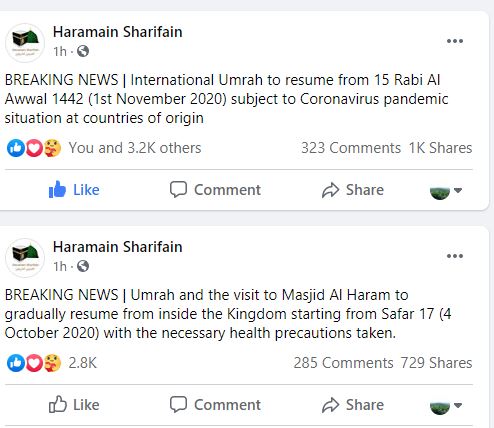
|
| Islam › Conditions For Permissible Joke by Lukgaf(op): 4:42am On Sep 18, 2020 |
The Prophet (peace and blessings of Allaah be upon him) said: “Woe to the one who tells lies to make people laugh, woe to him.” (Narrated by Abu Dawood). It is to be noted from the above Hadith that is permissible to make jokes with people, however, what you are joking about should not be based on lies. Below, we provide conditions to be met before a joke is permissible in Islam. Praise be to Allah.
1 – It not should not involve any element of making fun of Islam.
That is one of the things that nullify a person’s Islam. Allaah says (interpretation of the meaning):
“If you ask them (about this), they declare: ‘We were only talking idly and joking.’ Say: ‘Was it at Allaah, and His Ayaat (proofs, evidences, verses, lessons, signs, revelations, etc.) and His Messenger that you were mocking?’
Make no excuse; you disbelieved after you had believed”
[al-Tawbah 9:65-66]
Ibn Taymiyah (may Allaah have mercy on him) said: “Making fun of Allaah, His Signs and His Messenger is kufr (disbelief) and the one who does that disbelieves thereby after he had believed.”
The same applies to making fun of some Sunnahs, an action which is widespread, such as making fun of the beard and the hijaab, or of shortening one’s garment, etc.
Shaykh Muhammad ibn ‘Uthaymeen said in al-Majmoo’ al-Thameen, 1/63:
“The matters of Divine Lordship, Prophethood, Revelation and religion are sacred matters which are to be venerated. It is not permissible for anyone to show disrespect towards them, whether by mocking them to make others laugh or to poke fun at them. If anyone does that, he is a kaafir, because this is indicative of his disrespect towards Allaah and His Messengers, Books and Laws. Whoever does that has to repent to Allaah for what he has done, because that is a kind of hypocrisy. So he has to repent to Allaah, seek His forgiveness, mend his ways and develop fear of Allaah, veneration towards Him and love for Him in his heart. And Allaah is the Source of strength.
2 – The jokes should only be truthful.
The Prophet (peace and blessings of Allaah be upon him) said: “Woe to the one who tells lies to make people laugh, woe to him.” (Narrated by Abu Dawood).
The Prophet (peace and blessings of Allaah be upon him) said, warning against this kind of behaviour which some jokers are accustomed to: “A man may say something to make his companions laugh, and he will fall into Hell as far as the Pleiades because of it.” (Narrated by Ahmad).
3 – Not scaring people
Especially those who are very energetic or strong, or who are holding a weapon or a piece of iron, or who take advantage of the darkness and people’s weakness to use that as a means of scaring and alarming them. It was narrated that Abu Layla said: “The companions of Muhammad (peace and blessings of Allaah be upon him) said that they were travelling with the Prophet (peace and blessings of Allaah be upon him), and a man among them fell asleep. Some of them got a rope and tied him up, and he got scared. The Messenger of Allaah (peace and blessings of Allaah be upon him) said: ‘It is not permissible for a Muslim to frighten another Muslim.’” (Narrated by Abu Dawood).
4 – Mocking people by winking behind their backs or making snide remarks
People vary in their ability to understand things and in their characters. Some weak people, those who like to make fun of others and wink behind their backs or make snide remarks, may find a person to be an object of fun for them and the butt of their jokes – Allaah forbid. Allaah has forbidden such behaviour in the aayah (interpretation of the meaning):
“O you who believe! Let not a group scoff at another group, it may be that the latter are better than the former. Nor let (some) women scoff at other women, it may be that the latter are better than the former. Nor defame one another, nor insult one another by nicknames. How bad is it to insult one’s brother after having Faith”
[al-Hujuraat 49:11]
Ibn Katheer said in his Tafseer: “What is meant here is looking down on them, belittling them or making fun of them. This is haraam and is counted as one of the characteristics of the hypocrites.”
Some people make fun of a person’s appearance, manner of walking or vehicle. But there is the fear that Allaah may requite the one who makes fun of others because of that. The Prophet (peace and blessings of Allaah be upon him) said, “Do not express malicious joy towards your brother’s misfortune, for Allaah may have mercy on him and you may be stricken by the thing you made fun of.” (Narrated by al-Tirmidhi).
The Prophet (peace and blessings of Allaah be upon him) warned against mocking people and hurting their feelings, because that is the path that leads to hatred and grudges. He (peace and blessings of Allaah be upon him) said: “The Muslim is the brother of another Muslim, he does not wrong him, let him down or look down upon him. Taqwa (piety, awareness and fear of Allaah) is here” – and he pointed to his chest three times – “It is sufficient evil for a man to look down upon his Muslim brother. Every Muslim is sacred to another Muslim, his blood, his property and his honour.” (Narrated by Muslim)
5 – The jokes should not be excessive.
Some people joke too much and it becomes a habit for them. This is the opposite of the serious nature which is the characteristic of the believers. Joking is a break, a rest from ongoing seriousness and striving; it is a little relaxation for the soul. ‘Umar ibn ‘Abd al-‘Azeez (may Allaah have mercy on him) said: “Fear joking, for it is folly and generates grudges.”
Imaam al-Nawawi (may Allaah have mercy on him) said: “The kind of joking which is forbidden is that which is excessive and persistent, for it leads to too much laughter and hardening of the heart, it distracts from remembrance of Allaah, and it often leads to hurt feelings, generates hatred and causes people to lose respect and dignity. But whoever is safe from such dangers, then that which the Messenger of Allaah (peace and blessings of Allaah be upon him) used to do is permissible for him.”
6 – Acknowledging people’s status
Some people may joke with everyone indiscriminately, but scholars and the elderly have rights, so you have to be aware of the character of the person with whom you are dealing. You should not joke with ignorant people, fools or people whom you do not know.
With regard to this matter, ‘Umar ibn ‘Abd al-‘Azeez said: “Fear joking, for it undermines chivalry and manliness.”
Sa’d ibn Abi Waqqaas said: “Set a limit to your jokes, for going to extremes makes you lose respect and incites the foolish against you.”
7 – The amount of joking should be like the amount of salt in one’s food.
The Prophet (peace and blessings of Allaah be upon him) said: “Do not laugh too much, for laughing too much deadens the heart.” (Saheeh al-Jaami’, 7312)
‘Umar ibn al-Khattaab (may Allaah be pleased with him) said: “Whoever laughs too much or jokes too much loses respect, and whoever persists in doing something will be known for it.”
So beware of joking, for it “causes a person to lose face after he was thought of as respectable, and it brings him humiliation after esteem.”
8 – It should not involve backbiting.
This is a foul sickness. Some people think that they can talk about others, and say that this is by way of joking, but it is included in the hadeeth of the Prophet (peace and blessings of Allaah be upon him), “[Backbiting is] your mentioning about your brother something that he dislikes.” (Narrated by Muslim)
9 – Choosing appropriate times for joking.
Such as when you are taking a trip in the countryside, or attending a party in the evening, or when meeting a friend, you may relax and enjoy some gentle anecdotes, nice stories or light jokes, in order to generate friendship and instill happiness in the heart; or when family problems are taking their toll and one of the spouses is angry, some gentle joking may relieve the tension and cheer people up.
O Muslim,
A man said to Sufyaan ibn ‘Uyaynah (may Allaah be pleased with him), “Joking is not right, it is to be denounced.” He replied, “Rather it is Sunnah, but only for those who know how to do it and do it at the appropriate time.”
Nowadays, although the ummah needs to increase the love between its individual members and to relieve itself of boredom, it has gone too far with regard to relaxation, laughter and jokes. This has become a habit which fills their gatherings and wastes their time, so their lives are wasted and their newspapers are filled with jokes and trivia.
The Prophet (peace and blessings of Allaah be upon him) said: “If you knew what I know, you would laugh little and weep much.” In Fath al-Baari it says: “What is meant by knowledge here has to do with the might of Allaah and His vengeance upon those who disobey Him, and the terrors that occur at death, in the grave and on the Day of Resurrection).
Muslim men and women have to be inclined to choose righteous and serious friends in their lives, who will help them to make good use of their time and strive for the sake of Allaah with seriousness and steadfastness, good and righteous people whose example they can follow. Bilaal ibn Sa’d said: “I saw them [the Sahaabah] jokingly pretending to fight over some goods, and laughing with one another, but when night came they were like monks.”
Ibn ‘Umar (may Allaah be pleased with him) was asked, “Did the Companions of the Prophet (peace and blessings of Allaah be upon him) laugh?” He said, “Yes, and the faith in their hearts was like mountains.”
So you have to follow the example of such people, who were knights by day and monks (i.e., devoted worshippers) by night.
May Allaah keep us, you and our parents safe on the Day of the Greatest Terror, those to whom the call will go out on that great Day:
“Enter Paradise, no fear shall be on you, nor shall you grieve”
[al-A’raaf 7:49 – interpretation of the meaning]
May Allaah bless our Prophet Muhammad and all his family and companions. Sheikh ‘Abd Al-Malik Al-Qaasim https://islamqa.info/en/answers/22170/conditions-of-permissible-jokingTo conclude, Abu Hurayrah relates that Allah's Messenger, may the mercy and blessings of Allah be upon him, said: “Whoever believes in Allah and the Last Day should speak a good word or remain silent. And whoever believes in Allah and the Last Day should show hospitality to his neighbor. And whoever believes in Allah and the Last Day should show hospitality to his guest.” |
| Islam › Qiyaam Al-layl, Tahajjud And Witr Prayer by Lukgaf(op): 4:27am On Sep 18, 2020 |
Praise be to Allah. Firstly: Qiyaam al-layl means spending the night, even if it is only for a short time, in prayer, reading Qur’an, remembering Allah (dhikr), and other acts of worship. It is not stipulated that it should take most of the night. With regard to tahajjud, it is (voluntary) prayers at night. Some scholars stipulate that it is prayers at night that are offered after having slept. However the view of most of the fuqaha’ is that it refers to any prayers offered at night. Secondly: What is prescribed with regard to prayers at night is that the prayers should be offered two rak‘ahs by two, then the worshipper should end his prayers with one rak‘ah, so as to make the prayers odd-numbered. It was narrated from Ibn ‘Umar that a man asked the Messenger of Allah (blessings and peace of Allah be upon him) about the prayers offered at night. The Messenger of Allah (blessings and peace of Allah be upon him) said: “The night prayers are two by two, then if one of you fears that dawn may come, he should pray one rak‘ah, which will make what he has prayed odd-numbered.” Narrated by al-Bukhaari (946) and Muslim (749). From that it is clear that the Sunnah with regard to tahajjud and Witr includes several things:
1. The worshipper should offer his prayers two (rak‘ahs) by two, so he should separate each two rak‘ahs of his prayer with the tasleem.
2. He should start with tahajjud first, and pray as much as Allah wills that he should pray.
3. Witr should be the last of his prayers at night. The Prophet (blessings and peace of Allah be upon him) said: “Make the last of your prayers at night Witr (lit. odd-numbered).” Narrated by al-Bukhaari (953) and Muslim (751).
4. The worshipper should not delay any of his tahajjud or Witr until the break of dawn; rather he should try to make sure that he has done all of that before the adhaan of Fajr.
An-Nawawi (may Allah have mercy on him) said: The words of the Prophet (blessings and peace of Allah be upon him),” then if one of you fears that dawn may come, he should pray one rak‘ah, which will make what he has prayed odd-numbered” – and according to another hadith, he said, “Pray Witr before dawn” – indicates that the Sunnah is to make Witr the last of the prayers offered at night, and that the time for it ends with the break of dawn. This is the well-known view in our madhhab, and it is the view of the majority of scholars. It was also said that the time lasts after dawn has broken, until the obligatory prayer is offered. End quote from Sharh Saheeh Muslim (6/30-32). Thirdly:The Muslim may offer whatever prayers he wishes at night, from after ‘Isha’ prayer until dawn, depending on whatever he is able to to, whether at the beginning of the night, or in the middle of the night, or at the end thereof, with any number of rak‘ahs. The best time for offering the prayers at night is the end of the night, for it is the time when Allah descends to the first heaven, and the time when the gates of heaven are opened. It was narrated that Jaabir (may Allah be pleased with him) said: The Messenger of Allah (blessings and peace of Allah be upon him) said: “Whoever fears that he will not get up at the end of the night, let him pray Witr at the beginning. Whoever is sure that he will get up at the end of the night, let him pray Witr at the end, for prayer at the end of the night is witnessed, and that is better.” Narrated by Muslim (755). If he prays at the beginning of the night, then prays Witr, then he decides to pray at the end of the night whatever he wishes, two rak‘ahs by two, he should not repeat Witr, for there should not be two Witrs in one night. And Allah knows best. Source: Islam Q&A ( https://islamqa.info/en/answers/216236/witr-is-the-last-prayer-of-the-night) |
| Travel › Why Is The COVID-19 Test For Passengers Arriving Nigeria Expensive? by Lukgaf(op): 12:40pm On Sep 15, 2020 |
Kaduna State Government this morning made an estimate of the amount spent to treat each people infected with COVID-19.
Also, Ogun State Government before they reverse the statement asked private secondary school students to pay 25k for COVID-test.
Before the international boarder was opened this month, the COVID-19 presidential task force mandated people arriving Nigeria to do a repeat COVID-19 test upon arriving the country. The test is roughly 21k according to the estimate given by Kaduna Government (and assumed to be 25k based on the Ogun State Government said then), wheareas on NCDC website/portal, passengers arriving the country are expected to pay between 40-50k for the same test depending on the lab they choose.
Isn't it suppose to be reduced instead? Why the increase please?
Who knows why the amount paid by the passengers arriving Nigeria is doubled the amount released by the Kaduna State Government?
Lalasticlala why? 


|
| Islam › Re: Suggest Threads For Frontpage Here by Lukgaf(m): 5:43am On Sep 11, 2020 |
|
| Islam › Prayer Before Halaal Sexual Intercourse by Lukgaf(op): 5:19am On Sep 11, 2020 |
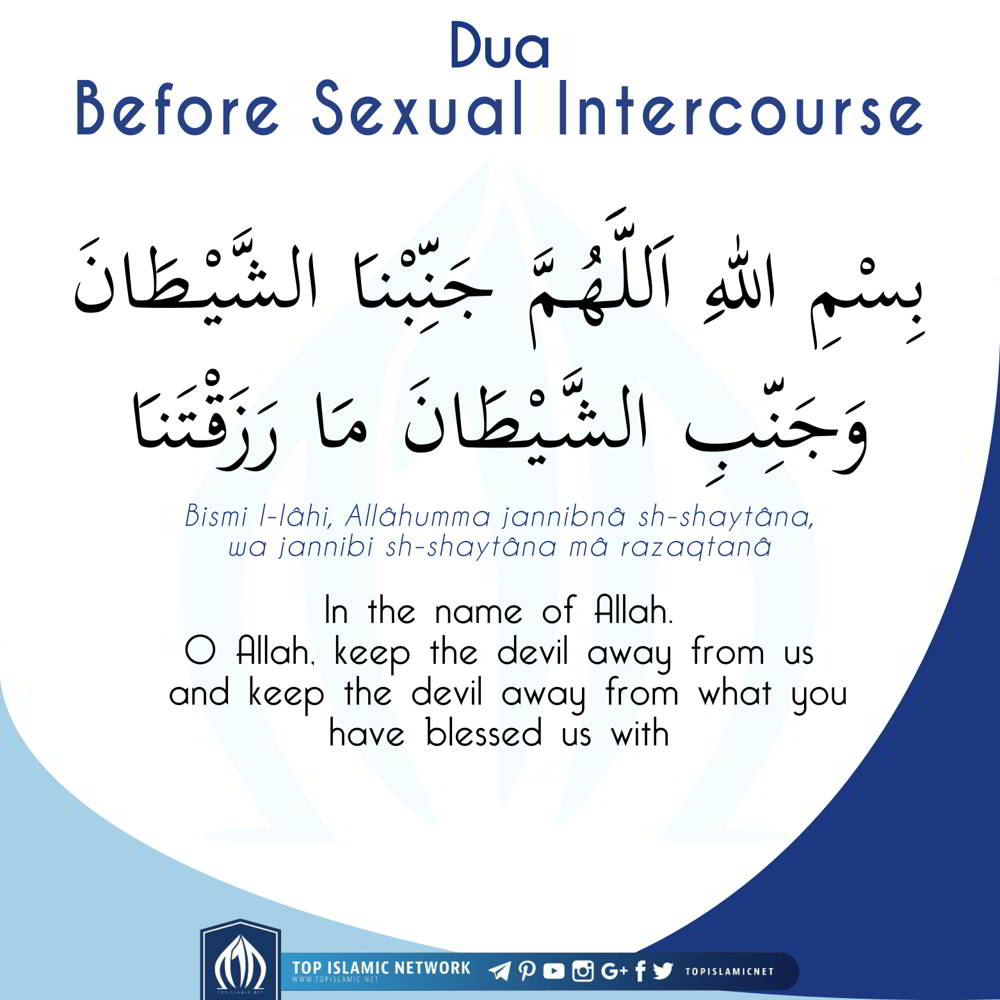
Islam is a beautiful religion because it touches all aspects of human life. Among the manners prescribed by Islam is that the Muslim should say when he commences intercourse with his wife ( not girlfriend - Islam frowns at having sex before marriage. Note that please!): (The dua is very useful in that if Allaah blesses the husband and the wife with a child, this child will not be harmed by Satan.) "bismillaah, oh Allaah, shield us from Satan and keep him away from us and from what You [may] bestow upon us (i.e. children)" narrated by Al-Bukhari, Fath ul-Baari # 138
[transliteration: "bismillaah, allaahumma jannibnash-shaytaana wa jannib-ash-shaytaana maa razaqtana"] https://pbs.twimg.com/media/DsHLMyhVsAA6Obq.jpgReference: IslamQA |
| Islam › Re: Biography Of Ibn Taymiyyah by Lukgaf(m): 5:13am On Sep 11, 2020*. Modified: 5:43am On Sep 11, 2020 |
May Allah reward and forgive all the scholars of Islam |
| Islam › How To Instill The Spirit Of Performing Solah In Your Children? by Lukgaf(op): 5:09am On Sep 11, 2020 |
"Every mother knows that it is impermissible for a child to breastfeed after the age of two. At the same time, mothers understand that their infant children cannot progress from a purely milk-based diet to a diet of solids overnight. If this drastic, unfamiliar change is thrust upon the child in an instant, he will struggle to adapt and his digestive system will suffer. In exactly the same way, we all know that once a child becomes baaligh (reaches the age of maturity), it is compulsory for him to perform all the five daily salaah on time. Furthermore, in the case of a male, these salaah will have to be performed in the masjid." Just as a mother begins weaning her breastfeeding child in advance, and gradually introduces solids to him, so that when he is two years of age, he is already accustomed to solids and can easily make the transition, the parents should adopt the same approach for their children’s salaah.
The hadeeth teaches us that we should commence teaching and training our children to perform their salaah when they reach the age of seven. Thereafter, when they reach the age of ten, they should be disciplined for showing laziness in regard to salaah. (Sunan Tirmizi #407) In other words, by the time they reach the age of ten, the concern for salaah should be firmly embedded in their hearts and punctuality on salaah should be their second nature.
As parents, it is really an injustice and unkindness on our side that we fail to teach our children the importance of salaah when they are young, and thereafter, when they are teens, we suddenly expect them to have perfect punctuality on their salaah. Although they are responsible and answerable for their own actions at this time, we will undoubtedly have a share in their sin of neglecting salaah as we are partially to blame.
The effort must be made to teach the children the importance of salaah. This is easily achieved through reading the chapter ‘Virtues of Salaah’ to our children in our daily home ta’leem of Fazaail-e-Aa’maal. Mothers should make their daughters and small sons perform salaah with them so that they learn the concept of salaah and develop eagerness for it.
Once a son reaches the age of seven, his father should begin taking him to the musjid. However, before doing so, the father must ensure that his son understands the sanctity of the masjid and knows how to conduct himself correctly. Thereafter, he must monitor his son and discipline him appropriately so that his son does not disturb others and become a nuisance in the masjid. In this regard, small children that do not understand the sanctity of the masjid should not be taken to the masjid.
Training our children in this manner is not only compulsory – it is a highly-rewarding investment and one of the ultimate acts of kindness that we can show them. Every single time our child performs salaah, until the day he or she passes away, we will be rewarded, as we taught them to perform salaah.
May Allah Ta‘ala bless us all to be punctual on our salaah and train our children correctly. Source: http://uswatulmuslimah.co.za |
| Islam › Take Advantage Of "5" Before "5" by Lukgaf(op): 4:49am On Sep 11, 2020 |
The Prophet (Peace Be Upon Him) said: “Take benefit of five before five: 1. your youth before your old age, 2. your health before your sickness, 3. your wealth before your poverty, 4. your free-time before your preoccupation, 5. and your life before your death.” (Hakim) https://i1.wp.com/razamovement.com/wp-content/uploads/2015/08/22.jpgYouth before old age
One of the things that most people take for granted is their youth. When people are young, they are full of energy and are capable of doing so many things for the sake of Allah Ta’ala, but often we see that this energy is wasted in one way or another.
When people lose their youth, they inevitably find it harder to do those deeds and acts of worship that they found somewhat easier to do at a younger age. With old age, people find it harder to keep fard (obligatory) fasts, they may not be able perform wudhu properly or to pray properly, and they may not have the energy to recite the Qur’an very often.
It is common to hear young people claim that they will start ‘practising’ Islam when they get older. We should always be mindful of the fact that ‘older’ may never come round for us. We have no guarantee that we will even be alive tomorrow, let alone be alive to see our pensions, or our grandchildren. And even if we are blessed with a long life, how can we be sure that we have the health – physical and mental – to practise Islam? On top of all this, we should remember that people do not just magically become ‘good’ overnight; often, we find that bad habits are hard to shift – what if we can’t get rid of our bad habits when we get old?
Health before sickness
As with our youth, we often take for granted our health. We are advised to take advantage of our good health before we are overcome with illness or disability. What we often don’t realise is that our health is a blessing from Allah Ta’ala. When we are in good health, we take it for granted and don’t always appreciate what we have. It is only when we fall ill that we realise what a great thing we had and how we let it go to waste by not doing as much ‘ibadah (worship) as we know we could – and should – have done.
Wealth before poverty
Wealth is another blessing granted to us by Allah. Wealth in this context does not necessarily mean that we have large amounts of savings, or the fact that we can afford a huge house, a top-of-the-range car and a state-of-the-art media system. The simpler things such as a roof over our heads, clothes on our backs and food in our fridges make us amongst the world’s wealthiest people – a fact that we, more often than not, seem to overlook, particularly when we see people that have a lot more worldly possessions than we do. There are millions of people in the world today that don’t even have a drop of clean water to drink, and they don’t know where their next meal will be coming from. These are the people that we need to be helping with our wealth. Even a small donation can go a long way.
We should give as much as we can in the way of Allah, and we are assured of the rewards for doing so by Allah:
‘The likeness of those who spend their money for Allah’s sake, is as the likeness of a grain (of corn), it grows seven ears, every single ear has a hundred grains, and Allah multiplies (increases the reward) for whom He wills, and Allah is All-Sufficient for His creatures needs, All Knower’.
(Al-Baqarah: 261)
Free time before preoccupation
Islam always encourages us to make the most of our time, and to spend as much of it as possible in the way of Allah. We should utilise the time we have available to do as much good as we can, because before we know it, this time will have passed. As mentioned above, we should use the time we have in our youth to do as much in the way of Allah as possible, because as time passes, as well as having to contend with old age and all that entails, we will inevitably have a lot more things to worry about, like jobs, homes and families – things that most of us at this present moment aren’t necessarily worried about. If we think that finding the time to practise Islam is difficult now, what will we do when life really starts to pick up pace? There is nothing wrong with getting married and having a family, but we should appreciate the relative freedom that we have now, and spend as much of it as we can on good deeds.
The concept of time is so important in Islam that Allah swears by it in the Qur’an:
‘By Time. Verily Man is in loss, except such as have faith and do good deeds, and in the mutual teaching of truth, of patience and constancy.’
(Surah Al-‘Asr)
In line with the above aayaat (verses), we have to discipline ourselves by giving value to the importance of time. We should be prompt in doing good deeds, which will increase our faith and subsequently enable us to gain Allah’s pleasure and mercy.
Life before death
The last thing that we have been advised to take advantage of is our life before our death. Every night when we go to sleep, we enter a state where our soul leaves us. When we wake up, it is only because Allah has blessed us by returning our souls and granting us the opportunity to worship Him for at least one more day. Upon waking up in the morning, the Prophet (Peace Be Upon Him) used to say (and we are also encouraged to do the same):
‘Praise be to Allah who gave me life after death, and to Him is the final return.’
(Bukhari)
Often we do not fully appreciate how great a blessing it is to be given another chance. We become relaxed about death, and we don’t fully comprehend or appreciate that at some point – and only Allah Ta’ala knows when – our life will be taken away from us for good, leaving no second chance, no opportunity to make up for the wrongs we have done, and no turning back time. We must not forget what a mercy life is. We should savour every moment and use it to our best advantage. This means pleasing Allah in order to achieve our ultimate goal – Jannah.
I’ll end with a final hadith that I feel sums up the importance of all these issues:
‘A man shall be asked concerning five things on the Day of Resurrection: concerning his life, how he spent it; concerning his youth, how he grew old; concerning his wealth, how he acquired it and how he spent it; and what he did with the knowledge he had.’
(Tirmidhi)
I pray that Allah Ta’ala grant us the tawfiq to make the most of all that He has blessed us with, and that He accepts all our efforts. Source: https://jamiat.org.za/five-before-five/ |
| Islam › Re: Why An Apostasy A Grievous Sin In Islam? by Lukgaf(op): 2:03pm On Sep 05, 2020 |
Unfortunately your questions did not seem to be from someone that wish to learn. Even if I answer all of these your questions, you will still not be objective in your judgement. So, why should I waste my precious time engaging you? Canberra55:
If your religion is not from Satan the devil and the same religion allows the killing of a person that leaves Islam, I want you to give simple, clear answers to these questions: 1) How do you explain what the Quran says "There is no compulsion in religion (Sarah 2:256)"? Please don't tell me the message in that verse is taken out of context or the verse only applies to Mohammed times because the Islam of his era remains the same today and appatates are still being killed in Islamic countries today.
(2) In the world today we have Christians, Hindus, bhuddists etc leaving their religions to join Islam. My question : if their respective religions had laws that say THEY MUST BE KILLED FOR LEAVING THEIR ORIGINAL RELIGIONS, how would they have had the chance to become Islams if they were killed ?
(3) The Quran, in Surah 48:2 clearly says "...Allah may forgive Mohammed's PAST AND FUTURE SINS .... "
clearly lets us know that Mohammed was a man that committed sins during his lifetime while Sarah 19:19 also tells us that JESUS IS SINLESS.
QUESTION : WHY DO MUSLIMS STILL BELIEVE THAT MOHAMMED WAS THE GREATEST MAN TO EVER WALK THIS PLANET ?
ALSO, WHY do Muslims choose to follow a sinful man ( Mohammed) as an example to model their lives after when they could have chosen A SINLESS MAN in Jesus?
thank you and God bless. Please make sure you use your brain : think before answering. |
| Islam › Re: Why An Apostasy A Grievous Sin In Islam? by Lukgaf(op): 12:50pm On Sep 04, 2020 |
Yes, there is no compulsion in religion before joining. But immediately you join the religion, you have accepted all the rulings including to be punished when you commit apostasy blackjack21:
I don't think this is a about wether Islam is the true religion or not, that's entirely a different matter.
Think of the apostasy law as "treason", and Islam as a "state"; you can see that most countries justifies death as punishment for treason because of the danger it pose to their nation.
Those who come into your home, pledge allegiance to you, learn your way of life, then leave you (apostate) can be considered the most dangerous persons against you.
When you make people afraid of their life and livelihood they are most likely to kill you.
I have always seen Islam as very practical religion, not necessarily righteous.
plus what about there's no compulsion in religion? |
| Islam › Re: Why An Apostasy A Grievous Sin In Islam? by Lukgaf(op): 9:56am On Sep 04, 2020 |
We do not think so. That is the truth. Islam is the true religion. Do your research wellaXmuslim:
But people are free to leave other religion for Islam right? How do you guys think?
Self Righteousness is one of the problems of abrahamic religions. You always think your own religion is the ultimate truth |
| Islam › Re: Suggest Threads For Frontpage Here by Lukgaf(m): 5:32am On Sep 04, 2020 |
|
| Islam › What To Do Upon Hearing The Adhan (the Call For Solah)? by Lukgaf(op): 5:31am On Sep 04, 2020 |
Below are the summary of five things to say/do upon hearing the call for Solah (Adhaan) 1. The Sunnah recommends that while the adhan (call to prayer) is being called, one should listen attentively and repeat every line silently after the Mu’adhin (the one who calls to prayer), but when he says “Hayya ‘ala-Salah” (come to prayer) and “Hayya ‘ala-l-falah” (come to success) one should say:
La hawla wa la quwwata illa billah (There is no might or power except with Allah)
Prophet Muhammad said:
“When you hear the adhan, repeat what the Mu’adhin says.” (Imam Malik – Muwatta)
2. Invoke Blessings to the Prophet (peace be upon him)
The Prophet (peace and blessings be upon him) said:
“When you hear the Mu’adhin calling for the prayer, repeat his words then ask Allah’s blessings upon me, because the one who asks Allah’s blessings upon me once will be rewarded ten blessings by Allah.” (Muslim, The Book of Prayer, Hadith 384)
The text of As-Salawat Al-Ibrahimiah is:
Allahumma salli ala Muhammadin wa ala ali Muhammadin, kama sallayta ala Ibrahima wa ala ali Ibrahima innaka Hameedun Majeed. Allahumma Barik ala Muhammadin wa ala aali Muhammadin kama barakta ala Ibrahima wa ala aali Ibrahima innaka Hameedun Majeed.
N.B: Not Salatul-fatih. Muslims are refrain from invoking blessings to the prophet of Allah through innovated dua'a. So, invoke only with As-Salawat Al-Ibrahimiah and others Sunnah recommend
(i.e. O Allah, bestow your favor on Muhammad and on the family of Muhammad as You have bestowed Your favor on Ibrahim and on the family of Ibrahim, You are Praiseworthy, Most Glorious. O Allah, bless Muhammad and the family of Muhammad as You have blessed Ibrahim and the family of Ibrahim, You are Praiseworthy, Most Glorious). (Al-Bukhari, The Book of Stories of the Prophet, Hadith 3370)
3. After the Adhan, it is Recommended to Say this Dua (supplication):
Allahumma rabba hadhihi-d-da’awati-t-tammati wa-s-Salati-l-qa’imati, ati Muhammadan il-wasilata wa-l-fadilata (wa-d-darajata-r-rafi’ati) wa-b‘ath-hu maqamam mahmudan illadhi wa‘adtahu (innaka la tukhliful mi’ad).
(O Allah, Lord of this most perfect call, and of the Prayer that is about to be established, grant to Muhammad the favor of nearness (to You) and excellence and a place of distinction, and exalt him to a position of glory that You have promised him.)
This du’a has variations which include ‘wa-d-darajata-r-rafi’ati’ and ‘innaka la tukhlifu’l mi’ad’.
The addition of “innaka la tukhlifu’l mi’ad” in the supplication was narrated by Imam Bayhaqi in his Sunan, and accepted for action by the scholars, as mentioned by Ibn Abidin in Radd al-Muhtar, quoting Shurunbulali’s Imdad al-Fattah and Ibn al-Humam’s Fath al-Qadir.
Narrated by Jabir bin ‘Abdullah: Allah’s Messenger (peace and blessings be upon him) said:
“Whoever after listening to the adhan says (dua is given above) then intercession for me will be permitted for him on the Day of Resurrection“. (Sahih Bukhari – Book 11:588)
Abdullah bin `Amr bin Al-`As reported: I heard the Messenger of Allah (peace be upon him) saying:
“When you hear the Adhan, repeat what the Mu’adhin says. Then ask Allah to exalt my mention because everyone who does so will receive in return ten rewards from Allah. Then beseech Allah to grant me Al-Wasilah (which is said in the dua above), which is a high rank in Jannah, fitting for only one of Allah’s slaves; and I hope that I will be that man. If anyone asks Al-Wasilah for me, it becomes incumbent upon me to intercede for him.” (Sahih Muslim)
4. The Hearer should Say after Hearing Adhan:
Wa anaa ‘ash-hadu ‘an laa ‘ilaaha ‘illallaahu wahdahu laa shareeka lahu wa ‘anna Muhammadan ‘abduhu wa Rasooluhu, radheetu billaahi Rabban, wa bi-Muhammadin Rasoolan wa bil’islaami deenan.
(And I also bear witness that there is no deity has the right to be worshipped but Allah alone, Who has no partner, and that Muhammad is His slave and His Messenger. I am pleased with Allah as my Lord, with Muhammad (peace be upon him) as my Messenger and with Islam as my religion.)
(To be recited in Arabic after the Mu’aththin’s Tashahhud or the words of affirmation of Faith) (Muslim, The Book of Prayer, Hadith 386).
5. Make Dua to Allah in between the Adhan and Iqamah
Finally, you can ask Allah the Almighty anything for yourself and ask the grace of Allah because your supplication will be answered this time.
The Prophet Muhammad (peace and blessings be upon him) said:
“Repeat the words of the Muadhin and when you finish, ask Allah what you want and you will get it” (Abu Dawud, The Book of Prayer, Hadith 524)
(“Kitab As salat” Dawud :: Book 2 : Hadith 521) Narrated Anas ibn Malik:
“The supplication made between the adhan and the iqamah is not rejected”.
Summary of What We Should Do upon Hearing the Adhan
1. Stay focused on the adhan.
2. Repeat what the muadhin say except for the hayya alas-salah and hayya-ala-falah. Instead say la hawla walakuata illa billah.
3. After adhan sends salah to Prophet Muhammad (peace and blessings be upon him)
4. Then say the dua’ wasilah
5. Make dua between azan and iqamah.
https://aboutislam.net/reading-islam/finding-peace/remembering-allah/what-to-say-upon-hearing-the-adhan-5-things/ |
| Islam › Why An Apostasy A Grievous Sin In Islam? by Lukgaf(op): 5:12am On Sep 04, 2020 |
The ruling of execution because of a word that somebody utters is what the Muslim scholars call al-riddah (apostasy). What is apostasy and what constitutes apostasy? What is the ruling on the apostate (al-murtadd)? "Islam is a true religion not like a shop or store which a person can enter when he wants and leave when he wants, thus encouraging others to forsake the truth." 1 – Riddah (apostasy) refers to when a Muslim becomes a disbeliever by saying a clear statement to that effect, or by uttering words which imply that (i.e., which imply kufr or disbelief), or he does something that implies that (i.e., an action which implies kufr or disbelief).
2 – What constitutes apostasy
The matters which constitute apostasy are divided into four categories:
(a)Apostasy in beliefs, such as associating others with Allaah, denying Him, or denying an attribute which is proven to be one of His attributes, or by affirming that Allaah has a son. Whoever believes that is an apostate and a disbeliever.
(b)Apostasy in words, such as insulting Allaah or the Messenger (peace and blessings of Allaah be upon him).
(c)Apostasy in actions, such as throwing the Qur’an into a filthy place, because doing that shows disrespect towards the words of Allaah, so it is a sign that one does not believe. Other such actions include prostrating to an idol or to the sun or moon.
(d)Apostasy by omission, such as not doing any of the rituals of Islam, or turning away from following it altogether.
3 – What is the ruling on the apostate?
If a Muslim apostatizes and meets the conditions of apostasy – i.e., he is of sound mind, an adult and does that of his own free will – then his blood may be shed with impunity. He is to be executed by the Muslim ruler or by his deputy – such as the qaadi or judge, and he is not to not be washed (after death, in preparation for burial), the funeral prayer is not to be offered for him and he is not to be buried with the Muslims.
The evidence that the apostate is to be executed is the words of the Prophet (peace and blessings of Allaah be upon him): “Whoever changes his religion, execute him.” (Narrated by al-Bukhaari, 2794). What is meant by religion here is Islam (i.e., whoever changes from Islam to another religion).
The Prophet (peace and blessings of Allaah be upon him) said: “It is not permissible to shed the blood of a Muslim who bears witness that there is no god except Allaah and that I am His Messenger, except in one of three cases: a soul for a soul (i.e., in the case of murder); a married man who commits adultery; and one who leaves his religion and splits form the jamaa’ah (main group of Muslims).” (Narrated by al-Bukhaari, 6878; Muslim, 1676)
See al-Mawsoo’ah al-Fiqhiyyah, 22/180.
Thus it will be clear to you that execution of the apostate is something that is commanded by Allaah, when he commanded us to obey the Messenger (peace and blessings of Allaah be upon him), as He says (interpretation of the meaning):
“O you who believe! Obey Allaah and obey the Messenger (Muhammad), and those of you (Muslims) who are in authority”
[al-Nisa’ 4:59]
And the Messenger of Allaah (peace and blessings of Allaah be upon him) has commanded us to execute the apostate as in the hadeeth quoted above: “Whoever changes his religion, execute him.”
It may need some time for you to be convinced about this matter, and for you to think about it. Perhaps you think that if a person follows the truth and enters into it and embraces the one true religion which Allaah has enjoined, then we allow him to leave it quite easily whenever he wants and to utter the words of kufr (disbelief) that put him outside of Islam, so he can reject Allaah, His Messenger, His Books and His religion, and there is no punishment as deterrent, how will that affect him and others who enter the religion?
Do you not see that this would make the one true religion, that everyone should follow, like a shop or store which a person can enter when he wants and leave when he wants, and it may encourage others to forsake the truth.
Moreover, this is not someone who has never known the truth and practiced it and worshipped in accordance with it; rather this is a person who has known the truth, and practiced the religion and done the rituals of worship, so the punishment is no greater than he deserves. Moreover, such strong rulings as this are only applied to such a person whose life is no longer considered to be useful, because he knew the truth and followed the religion, then he left it and forsook it. What soul can be more evil than the soul of such a person?
In conclusion, the answer is that Allaah is the One Who revealed this religion and enjoined it. He is the One Who ruled that the one who enters it and then leaves it is to be executed. This ruling does not come from the Muslims’ ideas or suggestions. As this is the case, then we must follow the ruling of Allaah so long as we are content to accept Him as our Lord and God.
May Allaah help us and you to do that which He loves and which pleases Him. We thank you once again.
Peace be upon those who follow true guidance. https://islamqa.info/en/answers/20327/why-is-the-apostate-to-be-executed-in-islam |
| Islam › The Types Of Speech Muslim Needs To Refrain From by Lukgaf(op): 4:57am On Sep 04, 2020*. Modified: 5:14am On Sep 04, 2020 |
"‘Not a word does he (or she) utter but there is a watcher by him ready (to record it).’ [50:18] " Praise be to Allah.
The Muslim has to control his tongue and not speak unless he says something good.
Al-Bukhari and Muslim narrated from Abu Hurayrah (may Allah be pleased with him) that the Messenger of Allah (peace and blessings of Allah be upon him) said: “Whoever believes in Allah and the Last Day, let him speak good or else keep silent …”
Al-Nawawi (may Allah have mercy on him) said: “If he wants to speak, then if what he wants to say is good and he is confident that he will be rewarded for it, whether it is obligatory or praiseworthy, then let him speak, but if it does not seem to him that it is good and he will be rewarded for it, then let him refrain from speaking, whether he thinks it is haram (impermissible) or makrooh (disliked) or permissible. Based on this, it is recommended to refrain from saying permissible words and we are enjoined to avoid this, lest it lead us into something that is haram or makrooh, which is what happens in many cases or in most cases. Allah says (interpretation of the meaning):
‘Not a word does he (or she) utter but there is a watcher by him ready (to record it).’ [50:18]
Al-Imam al-Shafi’i understood the hadeeth (narration) to mean that if a person wants to say something, he should think about it: if it seems to him that it will not do any harm, then he should speak, but if he thinks that it will do some harm or he thinks that this is most likely, then he should refrain from speaking.”
The Prophet (peace and blessings of Allah be upon him) commanded us to control our tongues in more than one hadeeth, such as that narrated by al-Tirmidhi from ‘Uqbah ibn ‘Amir (may Allah be pleased with him) who said: “I said, ‘O Messenger of Allah, what is salvation?’ He said, ‘Control your tongue, keep to your house and weep over your sin.’” Classed as saheeh (authentic) by al-Albani.
Al-Tirmidhi also narrated that the Prophet (peace and blessings of Allah be upon him) said to Mu’adh (may Allah be pleased with him), after teaching him some of the laws of Islam, “Shall I not tell you what is the foundation of all that?” I [Mu’adh] said: “Of course, O Prophet of Allah.” He took hold of his tongue and said, “Control this.” I said, “O Prophet of Allah, will we be held responsible for what we say with it?” He said, “May your mother be bereft of you, O Mu’adh! Will the people be thrown into Hell on their faces or on their noses for anything other than the harvest of their tongues?” Classed as saheeh by al-Albani.
The hadeeth enjoins refraining from indulging in specific things, because this is something that is of no benefit to a person, and indeed it may cause him a great deal of harm in his spiritual and worldly affairs.
It was narrated from Ibn Mas’ood (may Allah be pleased with him) that the Prophet (peace and blessings of Allah be upon him) said: “If my Companions are mentioned, then keep quiet; if the stars are mentioned, then keep quiet; and if the divine decree is mentioned, then keep quiet.” (Narrated by al-Tabarani and classed as saheeh / authentic).
This hadeeth indicates that it is not permissible for a person to speak badly of the Companions of the Prophet (peace and blessings of Allah be upon him), and that he should keep quiet about the disputes that occurred among them, because speaking badly of them or criticizing them implies that one is rejecting what Allah said about them in the Quran, where He praised them by saying (interpretation of the meaning):
“And the foremost to embrace Islam of the Muhajiroon (emigrants) and the Ansar (helpers) and also those who followed them exactly (in faith). Allah is well-pleased with them as they are well-pleased with Him. He has prepared for them gardens under which rivers flow (Paradise), to dwell therein forever. That is the supreme success.” [9:100]
And Allah says (interpretation of the meaning):
“Muhammad is the Messenger of Allah. And those who are with him are severe against disbelievers, and merciful among themselves. You see them bowing and falling down prostrate (in prayer), seeking bounty from Allah and (His) good pleasure. The mark of them (i.e. of their faith) is on their faces (foreheads) from the traces of prostration (during prayers).”
[48:29]
This is how Allah has described them in His Book, so no doubt they are of just character and are the best and greatest of mankind. So no one hates them but a hypocrite and no one loves them but a believer.
Shaykh al-Islam Ibn Taymiyah (may Allah have mercy on him) said:
“One of the basic principles of Ahl al-Sunnah wa’l-Jama’ah (followers of prophetic tradition) is that they think and say nothing to criticize the Companions of the Messenger of Allah (peace and blessings of Allah be upon him), as Allah has described them in the verse in which He says (interpretation of the meaning):
‘And those who came after them say: Our Lord! Forgive us and our brethren who have preceded us in faith, and put not in our hearts any hatred against those who have believed. Our Lord! You are indeed full of kindness, Most Merciful.’
[69:10]
And they obey the command of the Messenger of Allah (peace and blessings of Allah be upon him): ‘Do not curse my Companions, for by the One in Whose hand is my soul, if any one of you were to spend the equivalent of Mount Uhud in gold, he would not reach the status of one of them, nor even come half way.’ (Agreed upon).” Majmoo’ al-Fataawa, 3/152.
Abu Zar’ah (may Allah have mercy on him) said:
“If you see a man criticizing any one of the sahabah (Companions), then know that he is a heretic, because the Quran is true, and the Messenger is true, and what he brought is true, and no one conveyed all of that to us but the sahabah. So whoever criticizes them means, in effect, to say that the Quran and Sunnah (prophetic teachings) are false, so it is more appropriate that he should be criticized and ruled to be a heretic who is misguided.”
Al-Sawa’iq al-Muhriqah ‘ala Ahl al-Rafd wa’l-Dalal wa’l-Zandaqah.
With regard to the second part of the hadeeth, which enjoins refraining from speaking about the stars, what is referred to by that – and Allah knows best – is seeking guidance by the stars concerning matters that are unseen, as the people of the jahiliyyah (pre-Islamic days of ignorance) used to do by means of astrology, such as using the movement of heavenly bodies to indicate when certain earthly events would occur, such as the blowing of the wind, rainfall, changes in prices, and other matters which they claimed to know from the movements of heavenly bodies. They used to say that whoever got married under a particular star, then such and such would happen to him, or whoever traveled under a particular star, such and such would happen to him, and whoever was born under a particular star would be lucky or unlucky, etc.
(See Kitab al-Tawheed by al-Shaykh Salih al-Fawzan. See also Fatawa al-‘Aqeedah by al-Shaykh Ibn ‘Uthaymeen, where he makes some very useful comments).
With regard to the third part of the hadeeth, which refers to refraining from speaking about the divine decree (al-qadar), Abu Ja’far al-Tahhawi (may Allah have mercy on him) said:
“The divine decree is a secret known which Allah has hidden from His creation. No angel who is close to Him and no Prophet whom He sent knows that. Pursuing such matters only leads to failure and deprivation of the mercy of Allah, and it leads to injustice, so beware of looking into the matter, thinking about it and wondering about it. Allah has kept knowledge of His decree from His slaves, and has forbidden them to pursue the matter, as He says in His Book (interpretation of the meaning):
‘He cannot be questioned as to what He does, while they will be questioned.’
[21:23]
So whoever questions what Allah does has rejected the ruling of the Book, and whoever rejects the ruling of the Book is a kafir (disbeliever).” Sharh al-‘Aqeedah al-Tahhawiyyah.
So the Muslim has to submit to Allah in all His affairs, and know that whatever happens to him could never have missed him, and what misses him could never have happened to him. There is a lot that may be said on this topic. May Allah bless the man who believes in the will and decree of Allah without indulging in philosophical discussion about the matter. https://islamqa.info/en/answers/9410/types-of-speech-to-refrain-from |
| Islam › Re: Who Is Your Favourite Qur'an Reciter? by Lukgaf(m): 9:26am On Aug 28, 2020 |
Sudais |
| Islam › Ruling On Observing Recommended Siyaam (fasting) When They Fall On Saturday by Lukgaf(op): 5:20am On Aug 28, 2020 |
In sha Allah, Ta'asuha (the 9th day of Muharram) this year falls on Saturday (see here for the benefit of fasting on this day and that of Aasuroh). Based on the hadith which prohibits the fast on Saturday, should we fast on this day? Praise be to Allaah.
It is makrooh to single out Saturday for fasting, because of the report narrated by al-Tirmidhi (744), Abu Dawood (2421) and Ibn Maajah (1726) from ‘Abd-Allaah ibn Busr, from his sister, that the Messenger of Allaah (peace and blessings of Allaah be upon him) said:
“Do not fast on Saturdays apart from days when you are obliged to fast. If any one of you cannot find anything other than grape stalks or the twigs of a tree, let him chew it (to make sure that he is not fasting).”Classed as saheeh by al-Albaani in al-Irwa’ (960). Abu ‘Eesa al-Tirmidhi said: This is a hasan hadeeth. What is makrooh in this case is for a man to single out Saturday for fasting, because the Jews venerate Saturday. End quote.
Ibn Qudaamah (may Allaah have mercy on him) said in al-Mughni (3/52): Our companions said: It is makrooh to single out Saturday for fasting … what is makrooh is singling out that day. If he fasts another day along with it, then it is not makrooh, because of the hadeeth of Abu Hurayrah and Juwayriyah. If it coincides with a day that a person regularly fasts, it is not makrooh.
What is meant by the hadeeth of Abu Hurayrah is the report narrated by al-Bukhaari (1985) and Muslim (1144) from Abu Hurayrah (may Allaah be pleased with him) who said: I heard the Prophet (peace and blessings of Allaah be upon him) say: “No one of you should fast on Friday, unless he fasts (a day) before it or after it.”
The hadeeth of Juwayriyah was narrated by al-Bukhaari (1986) from Juwayriyah bint al-Haarith (may Allaah be pleased with her), that the Prophet (peace and blessings of Allaah be upon him) entered upon her on a Friday and she was fasting. He said; “Did you fast yesterday?” She said, “No.” He said: “Do you intend to fast tomorrow?” She said: “No.” He said: “Then break your fast.”
This hadeeth and the one before it clearly indicate that it is permissible to fast on a Saturday at times other than Ramadaan, for the one who fasts the Friday before.
It is proven in al-Saheehayn that the Prophet (peace and blessings of Allaah be upon him) said: “The most beloved of fasting to Allaah is the fast of Dawood; he used to fast one day and not the next.”
In this case it is bound to happen that he will sometimes fast on a Saturday on its own. So it may be understood from this that if Saturday coincides with a day that he habitually fasts, such as ‘Arafah or ‘Ashoora’, there is nothing wrong with fasting on that day, even if it is on its own.
Al-Haafiz stated in al-Fath that an exception to the prohibition on fasting on Friday is made if a person habitually fasts on a certain day, such as ‘Arafah, and it coincides with Friday.
The same applies to Saturday. We have quoted the words of Ibn Qudaamah concerning that above.
Shaykh Ibn ‘Uthaymeen (may Allaah have mercy on him) said:
It should be noted that different scenarios may apply with regard to fasting on a Saturday.
1 – It may be obligatory, such as observing a Ramadaan fast during Ramadaan or making it up later on, or observing a fast as expiation (kafaarah), or instead of offering a sacrifice when performing Hajj tamattu’, and so on. There is nothing wrong with that so long as he does not single it out deliberately thinking that there is some virtue in that.
2 – If he fasts on the Friday before, there is nothing wrong with it, because the Prophet (peace and blessings of Allaah be upon him) said to one of the Mothers of the Believers who was fasting on a Friday: “Did you fast yesterday?” She said: “No.” He said: “Are you going to fast tomorrow?” She said, “No.” He said: “Then break your fast.” The words, “Are you going to fast tomorrow?” indicate that it is permissible to fast Saturday along with Friday.
3 – If it happens to be one of the days when it is prescribed to fast, such as Ayyaam al-Beed (the 13th, 14th and 15th of each hijri month), ‘Arafah, ‘Ashoora’, six days of Shawwaal for one who has fasted Ramadaan, and the ninth of Dhu’l-Hijjah. There is nothing wrong with that, because he is not fasting because it is Saturday, rather it is because it is one of the days when it is prescribed to fast.
4 – When it happens to be a day when he habitually fasts, such as a person whose habit is to fast alternate days, and the day that he fasts happens to be a Saturday, then there is nothing wrong with it, as the Prophet (peace and blessings of Allaah be upon him) said when he forbade fasting one or two days before Ramadaan begins: “except a man who (habitually) observes a fast, in which case let him fast.” This is similar.
5 – If he singles it out to observe a voluntary fast for one day only. This is what is forbidden, if the hadeeth forbidding it is proven to be saheeh.
End quote from Majmoo’ Fataawa wa Rasaa’il al-Shaykh Ibn ‘Uthaymeen (20/57)
And Allaah knows best. https://islamqa.info/en/answers/81621/ruling-on-fasting-on-saturdays |