Lukgaf's Posts
Nairaland Forum › Lukgaf's Profile › Lukgaf's Posts
1 2 3 4 5 6 7 8 ... 45 46 47 48 49 50 51 52 53 (of 98 pages)
 Islam › Ruling On Bonus Offered By MTN, Glo, Airtel, 9mobile E.t.c by Lukgaf(op): 5:31am On Jul 24, 2020 Islam › Ruling On Bonus Offered By MTN, Glo, Airtel, 9mobile E.t.c by Lukgaf(op): 5:31am On Jul 24, 2020 |
"Praise be to Allah. The relationship between the customer and the phone company is a relationship between a seller and a buyer, and the product being sold is the phone service. The money that the buyer pays is in return for the phone service, and does not come under the heading of buying money with money. Hence there is no stipulation that the amount paid and the credit added to the phone be equal. So there is nothing wrong with this credit being less or more than the amount paid, because the matter is based on mutual consent between the two parties to the transaction. What the company offers of extra credit, in addition to the usual price, may be one of two things: Either it is by way of lowering the price, so what is worth twenty is sold by the company for ten, and so on. Or it comes under the heading of a gift that is given to the user in order to encourage him to buy more. There is nothing wrong with either of these two things. And Allah knows best." https://islamqa.info/en/answers/132581/ruling-on-extra-credit-offered-by-phone-companies 15 Likes 1 Share
|
| Islam › Memorisation Of The Book : Hisnul Muslim (the Fortress Of The Believer) by Lukgaf(op): 3:47pm On Jul 20, 2020 |
MEMORIZATION OF THE BOOK HISNUL MUSLIM (THE FORTRESS OF THE BELIEVER) on WhatsApp Invocation from the Qur’an and Sunnah. BismiLahi ArRahman ArRoheem Without a doubt, there are many problems facing Mankind – spiritual and physical. These problems such as evil eye, magic and physical ailments, if Allah wills often turn wealthy ones to poor, healthy to sick and most especially believers to non-believers (May Allah protect us from that). Meanwhile, Islam offers perfect solace to the believers through the verses of the Holy Qur'an and invocations from Sunnah as prescribed by the Messenger of Allah (May the peace and blessings of Allah be upon him) providing cure to these problems. Unfortunately, many are ignorant of these. This group seeks to provide good methods to memorize these useful adhkaar from the book of Hisnul Muslim by Shaykh Said bin Ali bin Wahaf Al-Qahtani on Whatsapp in a formal and structured setting free of charge. About the book The book contains daily supplication on a daily basis and on special occasions. When is the class starting? From Monday, August 3rd, 2020 In Sha Allah. Application Deadline: ⚠️ Friday, 31st of July, 2020. HOW THE GROUP OPERATES ❓ a. The Admin will post from Monday to Friday (revision on Saturday) after Magreeb (7-10pm West African Time): 1. IMAGE: of the Adhkaar to be memorized in Arabic with transliteration and translation (including references) from the book of Hisnul Muslim (screenshotted from an “Hisnul Muslim v3.1.4” app), 2. AUDIO RECITATION: provided from the app credited to Abu Sa’ad Bhuiya 3. INSTRUCTION: how to memorize them using scientific method. b. The Admin through the help of volunteered class governors take the daily attendance of students which shall be used certify active students and filter non-active ones. c. The Admin would organize quiz from time to time to check if people are truly doing their memorization. However, the group is not meant for you if: ❌ - You are not active on Whatsapp. - Your phone is spoiled and have no internet, - You can’t give 15-30 minutes per day. Pre-requisite: No knowledge of Arabic is required, and it is for people of all ages. N.B: This group does not in any way replaces formal Arabic school. It is just an avenue to help those who are unable to enroll themselves yet. TERMS AND CONDITION By expressing interest to take part in the Group, you have taken Amonah (promise) to devote 15-30 minutes daily to memorise/revise posted lesson and follow all the instructions that will aid your memorization on the group. To join the group, please register using the link. https://docs.google.com/forms/d/e/1FAIpQLSdDoywNQXq8j_WOhth8zLJ_OyjwdgmvNRZIg4EXX0yWZkVrIA/viewform?vc=0&c=0&w=1 Please share with friends and family. JazakumLlohu Khayron. |
| Islam › Re: The Virtues Of The Month Of Dhul-hijjah by Lukgaf(op): 12:33pm On Jul 17, 2020 |
Yes. Only Islam is the way Britzdon: |
| Islam › Re: Preparation For Eid-ul-adha: How Much Is Ram In Your Area? by Lukgaf(op): 9:12am On Jul 17, 2020 |
Rashduct4luv:JazakumLlohu khayron Abu AbdLah 8 Likes |
| Islam › The Virtues Of The Month Of Dhul-hijjah by Lukgaf(op): 6:29am On Jul 17, 2020 |
Today, Friday, 17th July 2020 is equivalent to the 25th of DhulQodah, 1441AH (#Counting of Sultan) (click here, for the daily update). As a consequence, starting next week Wednesday/Thursday(before next Friday), we would be in the month of Dhul Hijjah In sha Allah and so the need to explore some of the virtues of the glorious month of Dhulhijjah in advance is very important. This month marks the end of the Islamic calendar and hosts the greatest gathering of mankind - the Hajj. Rasulullah (Salallahu Alaihi Wasallam) said: “There are no days in which Ibadah is more beloved to Allah Ta’ala than the first ten days of Dhul-Hijjah. The fast of each day is equivalent to the fast of one year and the Ibadah of each night is equivalent to the Ibadah of Laylatul Qadr.” (Tirmizi) Recommended for those making Udhiyah (Qurbani) It is Mustahab (recommended - not compulsory) for those making Udhiya (Qurbani) to abstain from removing any hair of the body and from clipping the nails from the first of Zul-Hijjah until completing the Udhiya. Takbeer-e-Tashreeq It is Wajib (compulsory) to recite the Takbeer once after every Fard Salah beginning from Fajr of the 9th Dhul-Hijjah (Day of Arafah) till Asr of the 13th Dhul-Hijjah. NB: Women should also read the Takbeer (in a soft voice). https://jamiat.org.za/wp-content/uploads/2017/08/1st-10-days-dhul-hijjah-600x330.jpg Fasting on the 9th (Day of Arafah) It is highly rewarding to fast during the first nine days of Zul-Hijjah, especially the 9th (Day of Arafaat). May Allah count us and family among those that will witness more of these months in good health, wealth and sound faith (Ameen). Reference: 1. Nigeria National Moon Sighting Committe, Facebook page 2. Darul Ihsan, South Africa 12 Likes 3 Shares |
| Islam › Re: Suggest Threads For Frontpage Here by Lukgaf(m): 6:14am On Jul 17, 2020*. Modified: 6:30am On Jul 17, 2020 |
Preparation For Eid-ul-adha: How Much Is Ram In Your Area? https://www.nairaland.com/5996676/preparation-eid-ul-adha-how-much-ram#91795092 Interest: Nigeria Muslim And The Intervention Of the CBN https://www.nairaland.com/5996657/interest-nigeria-muslim-intervention-cbn#91794708 The Virtues Of The Month Of Dhul-hijjah https://www.nairaland.com/5996693/virtues-month-dhul-hijjah |
| Islam › Preparation For Eid-ul-adha: How Much Is Ram In Your Area? by Lukgaf(op): 6:12am On Jul 17, 2020 |
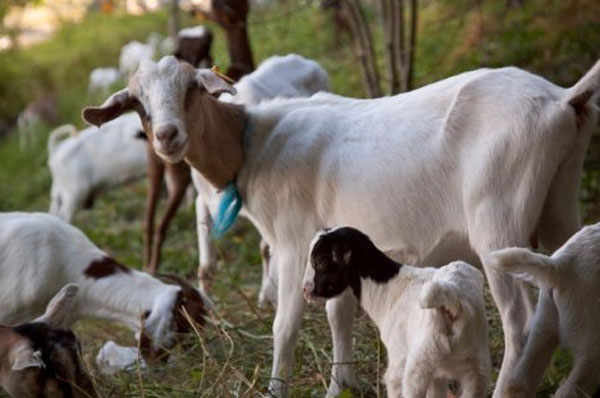
Assalam Alaekum WaramotuLah Wabarakatuh, AlhamduLilah, we are few days to Eid-ul-Adha, one of the two major Islamic festival. Those who plans to make Udhiya (Qurbani) this year would have been keeping themselves updated about the price of these animals permissible to be slaughtered. Some of these animals include a goat, sheep, cow, bull, buffalo or camel, male or female if they meet the condition (see here, for further information on the type of animal and the condition they should meet). https://www.islamicity.org/global/images/photo/IC-Articles/goatfield__600x398.JPG “There is nothing dearer to Allâh during the days of Qurbâni than the sacrificing of animals. The sacrificed animal shall come on the Day of Qiyamah with its horns, hair and hooves (to be weighed in reward). The sacrifice is accepted by Allâh before the blood reaches the ground. Therefore, sacrifice with an open and happy heart.” (Hadith-Ibn Majah). https://thesecretofthetarot.com/wp-content/uploads/2019/03/ram-spirit-animal-1024x682.jpg “Whoever has the capacity to sacrifice and does not do so, should not come to the place where the Eid prayer is offered.” (Hadith-Ibn Majah). In order to encourage our brethren who, thinks it is very expensive to make Udiyah, can you please tell us the price of these animals at your location? For people in Oke-ogun area of Oyo-state, the price is #25000 and above depending on the size of the animal. May Allah make it easy for us 12 Likes |
| Islam › Interest: Nigeria Muslim And The Intervention Of the CBN by Lukgaf(op): 5:42am On Jul 17, 2020 |
"For decades, Nigerian Muslims have been grossly marginalized in the country’s financial sector and other growth triggering financial interventions of the CBN due largely to the interest element that is usually involved in the schemes. For Muslims, who constitute well over half of the country’s population, the question of avoiding interest is non-negotiable, and the majority of Muslims would opt to live in poverty rather than devour interest and face the wrath of their Creator. " The Central Bank of Nigeria (CBN) has released the guidelines for the non-interest version of all its intervention programmes. The initiative covers the Anchor Borrowers Programme (ABP), Agri-Business, Small and Medium Enterprises Investment Scheme (AGSMEIS), Creative Industry Financing Initiative, Micro, Small and Medium Enterprise Development Fund, Real Sector Support Facility (RSSF) and Credit Support for the Healthcare Sector. |
| Islam › Re: Suggest Threads For Frontpage Here by Lukgaf(m): 6:06am On Jul 10, 2020 |
Through Thick And Thin: A Great Lesson From Prophet Ayoob https://www.nairaland.com/5981765/through-thick-thin-great-lesson "Death Is The Gift Of The Believer" https://www.nairaland.com/5981754/death-gift-believer |
| Islam › Through Thick And Thin: A Great Lesson From Prophet Ayoob by Lukgaf(op): 6:04am On Jul 10, 2020 |
"Undergoing tests is an unavoidable occurrence in life. We cannot choose the nature or time of our tests – but we can choose to pass the tests. To do so, we will have to hold firmly to sabr (patience) and remain pleased with the decision of Allah Ta‘ala. " The incident of Prophet Ayyoob (‘alaihis salaam) is well known to one and all. Initially, Prophet Ayyoob (‘alaihis salaam) was enjoying great prosperity. He had abundant animals and crops, many children and numerous homes. Allah Ta‘ala then decided to test Nabi Ayyoob (‘alaihis salaam). Hence, he lost all his wealth and even his children. Allah Ta‘ala even tested Nabi Ayyoob (‘alaihis salaam) with an illness that afflicted his entire body. The only two limbs of his body that were spared from this illness were his tongue and his heart. Nevertheless, even in this condition, he would keep his heart and tongue engaged in the remembrance of Allah Ta‘ala.Source: uswatulmuslimah.co.za via JamiahUlamaKZN 20 Likes 3 Shares |
| Islam › "Death Is The Gift Of The Believer" by Lukgaf(op): 5:46am On Jul 10, 2020 |
"Death is not the end of joy, it is the beginning of everlasting enjoyment – Jannah." ‘Amr bin ‘Aas (radhiyallahu ‘anhu) reports that Rasulullah (sallallahu ‘alaihi wasallam) said, “Death is the gift of a believer.” (Tabraani – Majma‘uz Zawaaid #3940)https://jamiat.org.za/a-gift-in-disguise/ 13 Likes |
| Islam › Re: Importance Of Reading And Acting Upon Qur'an by Lukgaf(op): 3:41pm On Jul 03, 2020 |
motayoayinde:Ameen wa antum fajazakumLah khaeran Sir 2 Likes |
| Islam › Importance Of Reading And Acting Upon Qur'an by Lukgaf(op): 5:54am On Jul 03, 2020 |
Undoubtedly the one who reads the Qur’an, acts upon its meanings, puts it into practice and recites it correctly, and constantly recites it, will attain the pleasure of Allah and His Paradise, and he will reach the highest levels of Paradise, with the honourable noble scribes, and it will be an intercessor and advocate for its companions who act in accordance with it, whether they memorized the Qur’an and learned it by heart, or read it from the Mus-haf without memorizing it. This is indicated by the report narrated by Imam Muslim and Ahmad from Abu Umaamah al-Baahili, who said: I heard the Messenger of Allah (blessings and peace of Allah be upon him) say: “Read (or recite) the Qur’an, for it will come on the Day of Resurrection as an intercessor for its companions.” End quote.https://islamqa.info/en/answers/230021/what-is-meant-by-the-prophets-words-read-or-recite-the-quran-for-it-will-come-as-an-intercessor-for-its-companions 6 Likes 2 Shares
|
| Islam › Re: Suggest Threads For Frontpage Here by Lukgaf(m): 5:34am On Jul 03, 2020*. Modified: 5:55am On Jul 03, 2020 |
Q&A: Islamic Guide To Writing Will https://www.nairaland.com/5966284/q-islamic-guide-writing Is Shayton Also Whispering In Your Ear? Read This And Beware! https://www.nairaland.com/5966297/shayton-also-whispering-ear-read How Can We Rectify The People Of Innovation? - Dr Sharoff Gbadebo https://www.nairaland.com/5951687/how-rectify-people-innovation-dr Importance Of Reading And Acting Upon Qur'an https://www.nairaland.com/5966318/importance-reading-acting-upon-quran |
| Islam › Is Shayton Also Whispering In Your Ear? Read This And Beware! by Lukgaf(op): 5:33am On Jul 03, 2020 |
"For two weeks this question has been haunting me and I cannot find an answer to it, but in sha Allah you will have the answer: What is the evidence that Allah does not lie, or what is the evidence that He always tells the truth, and why will He never lie? I know that this is a strange question, and I felt too embarrassed to ask anyone about it for a while, but I looked for an answer and I feel a kind of anxiety even when praying" Praise be to Allahhttps://islamqa.info/en/answers/98295/beware-of-the-whispers-of-the-shaytan-about-allah 8 Likes 3 Shares |
| Islam › Q&A: Islamic Guide To Writing Will by Lukgaf(op): 5:20am On Jul 03, 2020 |
"I am a married woman, living with my husband only, and I do not have any children. Praise be to Allah in all circumstances. My parents are both deceased, and I have brothers and sisters who are married. My grandfathers and grandmothers are also deceased. I have uncles and aunts on both my father’s and mother’s sides. I own some gold and silver, and personal belongings such as clothing and books, including the Book of Allah, and my bank account where I receive my monthly pension. I want to write my will, but in a situation such as mine, I do not know how, or who my heirs are. Can I make my husband (may Allah preserve him) the executor of my will? [  ??]; in other words, can I write it in his name, and can he open it and read it? Because I want to write some other things in addition to the estate, such as things that I cannot tell him right now, like asking him to think well of me if he discovers or hears something after I die, because he complains about my being very quiet, not talking much, and being mysterious. This is because sometimes I hide from him things that I think it is better to hide in order to avoid troubles or problems with other family members, and Allah knows best about my intention. I hope that I have explained my questions well, and that I will have a clear answer from you." ??]; in other words, can I write it in his name, and can he open it and read it? Because I want to write some other things in addition to the estate, such as things that I cannot tell him right now, like asking him to think well of me if he discovers or hears something after I die, because he complains about my being very quiet, not talking much, and being mysterious. This is because sometimes I hide from him things that I think it is better to hide in order to avoid troubles or problems with other family members, and Allah knows best about my intention. I hope that I have explained my questions well, and that I will have a clear answer from you."Praise be to Allah.https://islamqa.info/en/answers/269124/she-is-asking-how-she-can-write-her-will 21 Likes 2 Shares |
| Islam › Re: Ruling On Raping by Lukgaf(op): 2:17pm On Jun 26, 2020 |
Akinbahm:It was narrated that Abu Bakrah (may Allaah be pleased with him) said: The Messenger of Allaah (peace and blessings of Allaah be upon him) said: “Shall I not tell you of the greatest of major sins?” We said, “Yes indeed, O Messenger of Allaah.” He said, “Associating others with Allaah (shirk) and disobedience towards parents.” He was reclining, but then he sat up and said, “And false speech and false witness, and false speech and false witness,” and he kept on saying it until I thought he would never stop. (Narrated by al-Bukhaari, 5631; Muslim, 87). |
| Islam › Re: Suggest Threads For Frontpage Here by Lukgaf(m): 5:45am On Jun 26, 2020 |
How Can We Rectify The People Of Innovation? - Dr Sharoff Gbadebo https://www.nairaland.com/5951687/how-rectify-people-innovation-dr Hunting In The Sacred Months https://www.nairaland.com/5951678/hunting-sacred-months |
| Islam › How Can We Rectify The People Of Innovation? - Dr Sharoff Gbadebo by Lukgaf(op): 5:43am On Jun 26, 2020 |
"The Prophet said, ‘Calmness does not get into anything except that it beautifies it and it is not removed from anything except that the thing becomes destroyed" You should teach them. Condemnation won’t rectify their affairs. All the people that the Prophet met in his residence were disbelievers. He wasn’t condemning them. He was patiently teaching them. When they accepted Islaam, they became the companions of the Prophet. Most of the people who condemn others today are not free from evil acts, yet they condemn others.. [SOURCE: “QUESTION AND ANSWER SESSION DURING THE EXPLANATION OF MA’AARIJUL QABUUL”; VENUE: “IBADAN”; TIME: “36 minutes 27 seconds to 43 minutes 09 seconds”] Transcribed by Aboo Aaishah Al Odeomeey 3 Likes 1 Share |
| Islam › Hunting In The Sacred Months by Lukgaf(op): 5:24am On Jun 26, 2020 |
We are now in the Month of Dhu'l-Qa'dah, this month and the next two are refered as sacred months in Islam. Can we hunt in this month? Praise be to Allaah.https://islamqa.info/en/answers/97216/is-hunting-in-the-sacred-months-haraam 3 Likes 1 Share |
| Islam › Re: Can Rape Be Proven By Modern Method In Islam? by Lukgaf(op): 12:36pm On Jun 19, 2020 |
Codec:Lol. Ameen Wa antum fajazakum llahu khaeran sir. ISF, we are moving...  1 Like |
| Islam › Re: Suggest Threads For Frontpage Here by Lukgaf(m): 5:53am On Jun 19, 2020 |
Ruling On Raping https://www.nairaland.com/5936203/ruling-raping#90827590 Can A Rape Be Proven By Modern Method In Islam? https://www.nairaland.com/5936209/rape-proven-modern-method-islam Ruling On Wealth Acquired From Lotteries https://www.nairaland.com/5936193/ruling-wealth-acquired-lotteries |
| Islam › Can Rape Be Proven By Modern Method In Islam? by Lukgaf(op): 5:50am On Jun 19, 2020 |
"The accusation made by non-Muslims is that the man’s word is always given precedence and there is no way for the woman to prove that she was raped, and hence the man gets away with his action. How can we prove that the man or woman is guilty, and if she was raped or committed fornication willingly? Is there any role for technology in this matter? How can we prove the crime so that the man will not get away with his action and avoid punishment?" Praise be to Allah.https://islamqa.info/en/answers/158282/what-is-the-difference-between-the-ruling-on-rape-and-the-ruling-on-fornication-or-adultery-can-rape-be-proven-by-modern-methods 8 Likes |
| Islam › Ruling On Raping by Lukgaf(op): 5:39am On Jun 19, 2020 |
And if we could follow Islamic ruling on raping, there would be no/insignificant case in Nigeria again. Read what Islam says about it: Praise be to Allaah.https://islamqa.info/en/answers/158282/what-is-the-difference-between-the-ruling-on-rape-and-the-ruling-on-fornication-or-adultery-can-rape-be-proven-by-modern-methods 5 Likes 2 Shares |
| Islam › Ruling On Wealth Acquired From Lotteries by Lukgaf(op): 5:24am On Jun 19, 2020 |
Is the wealth acquired from lotteries, lucky draws, and the likes lawful Islamically? Praise be to Allah.https://islamqa.info/en/answers/128963/wealth-acquired-from-lotteries 15 Likes 1 Share |
| Islam › Re: COVID-19: Ruling On Praying With Gaps In The Rows For Fear Of Catching The Virus by Lukgaf(op): 1:06pm On Jun 12, 2020 |
Nice, JazakumLohu khaeran Abu Abdlah Rashduct4luv: 3 Likes 2 Shares |
| Islam › Re: COVID-19: Ruling On Praying With Gaps In The Rows For Fear Of Catching The Virus by Lukgaf(op): 5:42am On Jun 12, 2020 |
...With regard to interrupting the row by leaving a gap, sometimes the gap may be the size of three men or more, and sometimes it may be less than that. The one who leaves a gap may sometimes be one person, or sometimes there may be several people. With regard to this matter, there are twelve scenarios, ten of which are valid, and in two of which the prayer of the one who leaves the gap is rendered invalid. These two scenarios are: when the gap is in a row that is to the left of the imam and the gap is the size of three men or more. In this case, the prayer of the one who leaves the gap is rendered invalid, whether that is one person or more. The author referred to all of these scenarios. See: Sharh al-Muntaha (1/283); Kashshaaf al-Qinaa‘ (1/488). The two scenarios in which the prayer is rendered invalid, according to the Hanbalis, are: When the members of the congregation are standing to the left of the imam, and their row has a gap the size of three men or more, and the one who left a gap is just one person. When the members of the congregation are standing to the left of the imam, and their row has the size of three men or more, and those who left the gap in the row are more than one person. But if they are standing behind the imam or to his right and there is a gap, even if it is the size of three men or more, then it does not render their prayer invalid. They did not regard that is coming under the heading of standing on one’s own behind the row, because there are others standing in the same row as the worshipper, even if they are at a distance. This is contrary to the view of al-‘Allaamah Mur‘i in al-Ghaayah, which was refuted by ar-Ruhaybaani in al-Mataalib, as noted above. As for the majority of scholars, they regard the prayer of one who is on his own behind the row as being valid, even though this is disliked (makrooh), if there is no excuse for that, so it is more appropriate that his prayer should be valid if he stands in the row but leaves a gap. In al-Mawsoo‘ah al-Fiqhiyyah (23/183) it says: The basic principle with regard to prayer in congregation is that those who are praying behind the imam should form tight rows, as explained above. Hence it is makrooh (disliked) for one person to pray on his own behind the rows with no excuse, and his prayer is valid although it is makrooh. It is not regarded as makrooh if he has an excuse, according to what will be explained below. This is according to the majority of fuqaha’ – the Hanafis, Maalikis and Shaafa‘is. The basis for that is the report narrated by al-Bukhaari from Abu Bakrah, according to which he came to the Prophet (blessings and peace of Allah be upon him) when he was bowing, so he bowed before he reached the row. He mentioned that to the Prophet (blessings and peace of Allah be upon him) and he said: “May Allah increase you in keenness; Do not do it again.” The fuqaha’ said: From this it may be understood that it is not required to repeat the prayer, and that the instruction that was mentioned in the hadith of Waabisah ibn Ma‘bad – which was narrated by at-Tirmidhi and says that the Prophet (blessings and peace of Allah be upon him) saw a man who was praying behind the row, so he instructed him to repeat the prayer – was only by way of recommendation, so as to reconcile between the two reports. According to the Hanbalis, the prayer of one who prays an entire rak‘ah on his own behind the row, with no excuse, is rendered invalid, because of the hadith of Waabisah ibn Ma‘bad, according to which the Prophet (blessings and peace of Allah be upon him) saw a man praying on his own behind the row, so he instructed him to repeat his prayer. It was narrated from ‘Ali ibn Shaybaan that the Prophet (blessings and peace of Allah be upon him) led them in prayer, then he finished. There was a man who prayed on his own behind the row, so the Prophet of Allah (blessings and peace of Allah be upon him) noticed him when he finished, and said: “Repeat your prayer, for there is no prayer for the one who stands behind the row [on his own].” [Narrated by Ibn Maajah] With regard to the hadith of Abu Bakrah, the Prophet (blessings and peace of Allah be upon him) told him: “Do not do that again.” This prohibition implies that the prayer was invalid, but he could be excused for what he had done because he was unaware of the prohibition, and not knowing has an impact in that the action may be overlooked and forgiven. End quote. Fourthly: According to the view that the prayer of one who prays on his own behind the row is invalid, is the prayer valid for one who did not find someone to stand with him in the row? Shaykh Ibn ‘Uthaymeen (may Allah have mercy on him) said: If someone prays behind the row on his own, because the row in front of him is full, there is no blame on him and his prayer is valid, and he will be rewarded because Allah, may He be blessed and exalted, says (interpretation of the meaning): “So keep your duty to Allah and fear Him as much as you can” [at-Taghaabun 64:16]. But if the row was not complete, then he must repeat his prayer, because the Prophet (blessings and peace of Allah be upon him) said: “…for there is no prayer for the one who stands behind the row [on his own].” Moreover, the Prophet (blessings and peace of Allah be upon him) saw a man praying behind the row on his own, so he instructed him to repeat the prayer. What we have stated here is the most likely view, that the prayer of one who prays on his own behind the row is valid, if the row in front of him was full. End quote from Fataawa Noor ‘ala ad-Darb by al-‘Uthaymeen (8/2). And he (may Allah have mercy on him) said: The correct view is that prayer offered by a person on his own behind the row is not valid, unless it was not possible for him to stand in the row, as the row was full, so he prays on his own behind the row, following the imam. In that case, he is excused, for nothing is to be regarded as obligatory when one is not able to do it, as the scholars (may Allah have mercy on them) said. Moreover, the Messenger (blessings and peace of Allah be upon him) made a woman stand behind the row, away from the men, for a legitimate reason according to Islamic teachings, which is that she cannot stand with the men. If there is a physical reason (for not standing in the row), then the obligation to stand in the row is waived. End quote from Majmoo‘ Fataawa wa Rasaa’il al-‘Uthaymeen (15/193). Imam Ibn Taymiyah (may Allah have mercy on him) said: The issue of a woman (not standing in the same row as the men) indicates two things. It indicates that if there is no one to stand with a person behind the row, and it is not possible for him to insert himself in the row, he may pray standing on his own (behind the row) because he has no other choice. This is by way of analogy, because obligatory acts may be waived when there is a valid reason for not doing them. The instruction that he should stand in line with others is one of the obligatory parts of the prayer, but if it is not possible, then it is waived because there is a reason, as in the case of other obligatory parts of the prayer which may be waived if there is a reason. [tweak]]] For example, the fear prayer [and the way in which it is performed], for the purpose of maintaining the prayer in congregation. That may also be applied to the case when it is not possible to pray with the congregation unless one stands ahead of the imam, in which case he may do that, because there is a reason for it. This is the view of a number of scholars, and it is one of two views in the madhhab of Ahmad, although those who follow him do not regard it is permissible to stand ahead of the imam if it is possible to avoid doing that. To sum up, standing in the row is not more obligatory than other issues (in the prayer). As other matters may be waived if there is a reason to do so when praying in congregation, it is more appropriate that this [standing in the row] should be waived. One of the general principles [in Islam] is that what one is unable to do of Islamic teachings is no longer obligatory, and that what one is compelled to do, without sinful intent, is not prohibited. For Allah does not make obligatory on a person that which he is not able to do, and He does not forbid to a person that which he is compelled to do. End quote from Majmoo‘ al-Fataawa (20/559). And he (may Allah have mercy on him) said: Similar to that is the case where someone cannot find anywhere to stand except behind the row [on his own], which is an issue concerning which there is disagreement between those who regard as invalid the prayer of one who stands on his own [behind the row] and the more correct view, which is that his prayer is still valid in this situation, because all the obligatory parts of the prayer may be waived when one is unable to do them. Another such example is regarding as valid the prayer of one who stands ahead of the imam for a reason, as suggested by a group of scholars, and it is one of the views in the madhhab of Ahmad. End quote from Majmoo‘ al-Fataawa (23/396). Therefore the correct view is that there is no blame on the one who prays behind the row on his own because the row is full, and his prayer is valid. Fifthly: What appears to be the case is that prayer in congregation is valid even though there are gaps between the worshippers, if that is something that will help to protect them from contagion and limit the transmission and spread of the epidemic, by Allah’s leave. But with regard to the view of the majority of scholars, who say that filling the gaps is recommended but not obligatory, the matter is clear. However, according to the view that filling the gaps is obligatory, the prayer is still valid and the ruling is not different. That is for several reasons: 1. Forming tight rows is obligatory, according to Imam Ibn Taymiyah, and the prayer is not valid without it. Nevertheless, he regarded the prayer of one who stands on his own behind the row as valid, if there is no space in the row, and he regarded this as better than not joining the congregation at all. Our issue may be discussed by analogy with this view; in fact that ruling is more appropriate in our case. Ibn Taymiyah (may Allah have mercy on him) said: If there is no one with whom he can stand in a row, and he does pull someone back to pray next to him, then he may pray on his own behind the row, and not forsake the congregation. This is like the case of the woman who does not find another woman to stand with her; she should stand on her own behind the row, according to the consensus of leading scholars. That is because the instruction to stand in rows only applies when doing so is possible, not when it is not possible to stand in a row with others. End quote from Majmoo‘ al-Fataawa (23/406). 2. It may be compared to all the other obligatory parts, conditions and essential parts of the prayer, which may be waived when it is not possible to do them, such as purification, facing towards the qiblah, covering the ‘awrah, and so on. All of these things are more obligatory than forming tight rows. Imam Ibn Taymiyah (may Allah have mercy on him) said: If standing, reciting Qur’an, bowing properly, prostrating properly, purifying oneself with water and other matters may all be waived when one is not able to do them, then the same applies to standing in rows and not standing ahead of the imam. That also applies to other issues having to do with forming rows, such as the issue of one who prays and cannot see the imam or the row immediately behind the imam, but is able to hear the takbeer and so on. End quote from Majmoo‘ al-Fataawa (23/396). 3. All issues having to do with forming rows are waived when it is not possible to do that, as Shaykh al-Islam Ibn Taymiyah explained in the text quoted above. One of the issues having to do with forming rows is forming tight rows; in fact that is less serious than standing on one’s own behind the row, because with regard to the latter, there are two hadiths which state that the prayer is rendered invalid in that case, in contrast to the former, concerning which there is nothing except an instruction only. Hence Shaykh Ibn ‘Uthaymeen favoured the view that the prayer is valid even if there are gaps between the worshippers – although he favoured the view that it is obligatory to make the rows tight – and the prayer is rendered invalid if one prays on his own behind the row. His words are quoted above. This indicates that not forming tight rows is less serious than praying on one’s own behind the row. 4. The issue may be compared to the issue of it being permissible to pray when standing ahead of the imam. This is the view favoured by Shaykh al-Islam Ibn Taymiyah. So all those who stood ahead of the imam will have stood in a place where it is not permissible to stand when there is the option of not doing that. He (may Allah have mercy on him) said: The point here is that the congregation acts according to what is possible. So if the worshipper cannot follow the imam except by standing ahead of him, the most that can be said is that he did not stand (where he should have) for the purpose of catching up with the congregation. This is less serious than other matters. End quote from Majmoo‘ al-Fataawa (23/406). 5. The scholars stated that if the worshipper is sick, if he prays with the congregation he should pray sitting, and if he prays on his own at home, he should pray standing. The Hanbalis gave him the choice, because in either case he will be omitting something obligatory. The second view is that he should pray at home, because the obligation of standing [in the prayer] is more important. The third view is that to which Shaykh Ibn ‘Uthaymeen was inclined, which is that he must attend the prayer in congregation in the mosque, and pray sitting if he is not able to stand. See: ash-Sharh al-Mumti‘ ‘ala Zaad al-Mustaqni‘ (4/339). Our issue is like that, if not more so, because we are not speaking about just one worshipper, for the prayer in the mosque will not be affected (by his absence). Rather we are talking about the closure of the mosques and their not being used. Undoubtedly prayer in the mosque in which there is something lacking due to a valid excuse is better than not praying in congregation at all. 6. The Sunnah is to put two prayers together when there is rain. The reason for that is to avoid suspension of prayers in congregation in the mosque, because it is possible for each man to pray in congregation at home with his family, but establishing the congregational prayer in the mosque is something very important in Islamic teachings. Therefore putting the prayers together so that they may both be offered in the mosque is better than offering the prayers on time whilst leaving the mosques empty and closed. 7. It is possible to compare this issue with the wording of Shaykh al-Islam, because he regarded it as more likely that standing in rows is more important than filling gaps, as it says in al-Ikhtiyaaraat: If two people come to pray, and there is one gap in the row, which is better: for them to stand together in a separate row, or for one of them to fill the gap and the other to stand on his own? Abu’l-‘Abbaas regarded it as better for them to stand together in one row and leave a gap, because filling the gap is recommended, whereas standing in a row with someone else is obligatory. Al-Fataawa al-Kubra by Ibn Taymiyah (5/348). Ibn Taymiyah regarded it as permissible to leave gaps for the purpose of forming a row, even though he regarded it as permissible for someone to pray on his own behind the row when there is a reason for that. This indicates that leaving a gap is less serious, in his view. Our issue is akin to leaving a gap, so it is permissible when there is a need or a reason for doing it. Conclusion: What appears to be the case is that it is permissible to offer prayers in congregation in the mosques with gaps between worshippers in the rows for fear of spreading contagion and sickness, and that is better than closing the mosques. Not forming tight rows in this case is for a valid reason, and there are similar cases in Islamic teachings with regard to the obligatory parts, conditions and essential parts of the prayer that may be waived when there is a reason to do so, even when they are more important than the issue under discussion here. Shaykh ‘Abd ar-Rahmaan al-Barraak (may Allah preserve him) was asked: When we pray in congregation at home, we leave gaps between the rows for fear of spreading contagion and coronavirus among ourselves. Is that permissible? He replied: Praise be to Allah, and blessings and peace of Allah be upon our Prophet Muhammad. To proceed: It is permissible to leave gaps between the rows when offering prayers in congregation if there is a reason for that, because making the rows close together is not obligatory. In fact, what is required is to make the rows straight and tight. But if there is the fear that making them tight may lead to the spread of disease in this case, then there is nothing wrong with not doing that, in sha Allah. And Allah knows best. [Dictated by ‘Abd ar-Rahmaan ibn Naasir al-Barraak, 21 Sha‘ban 1441 AH]. https://sh-albarrak.com/article/18038 But it may be noted that this applies in the case when there is no instruction from the health authorities to refrain from praying in congregation in the mosque and to close the mosques temporarily until the pandemic is over, as has happened in many Muslim countries during this coronavirus [Covid-19] pandemic. In that case, it is obligatory to comply with these instructions until the pandemic is over and people are told to resume normal life, in accordance with what is in the public interest. And Allah knows best." Source: https://islamqa.info/en/answers/333882/ruling-on-praying-with-gaps-in-the-rows-for-fear-of-catching-coronavirus-covid-19 7 Likes 1 Share |
| Islam › COVID-19: Ruling On Praying With Gaps In The Rows For Fear Of Catching The Virus by Lukgaf(op): 5:40am On Jun 12, 2020 |
Summary"Firstly: The instruction in the Sunnah is to perform the prayer with the rows tight and close together, to fill the gaps, and to complete the first row, then the next and the next. Ahmad (12352), Abu Dawood (671) and an-Nasaa’i (818) narrated from Anas that the Messenger of Allah (blessings and peace of Allah be upon him) said: “Complete the first row, then the next, and if there is to be any shortcoming, let it be in the last row.” The version narrated by Abu Dawood says: “Complete the front row, then the next, and if there is to be any shortcoming, let it be in the last row.” Classed as saheeh by al-Albaani in Saheeh Abi Dawood. It was narrated by Ahmad (5724) and Abu Dawood (666) from ‘Abdullah ibn ‘Umar that the Messenger of Allah (blessings and peace of Allah be upon him) said: “Straighten your rows, make your shoulders level, fill the gaps, be gentle in the hands of your brothers, and do not leave any space for the Shaytaan. Whoever completes a row, Allah will grant him His mercy, and whoever makes a gap in a row, Allah will cut him off (from His mercy).” This hadith was classed as saheeh by al-Albaani in Saheeh Abi Dawood. Abu Dawood (667) and an-Nasaa’i (815) narrated from Anas (may Allah be pleased with him) that the Prophet (blessings and peace of Allah be upon him) said: “Form tight rows and make them close together, and make your necks in line with one another.” Classed as saheeh by al-Albaani in Saheeh Abi Dawood. What is meant by forming tight rows is: As-Sindi (may Allah have mercy on him) said: The words “Form tight rows” refer to standing close to one another in straight rows. “Make them close together” means: make the space between rows small, so that the rows are close to one another. End quote. Ibn al-Mundhir (may Allah have mercy on him) said: ‘Ali narrated that Abu ‘Ubayd said: al-Kisaa’i said: Forming tight rows (at-taraass) means that the people stand very close to one another, so that there are no gaps between them. One example of a word from the same root may be seen in the verse in which Allah, may He be glorified and exalted, says (interpretation of the meaning): “as though they are a [single] structure joined firmly [bunyaan marsoos]” [as-Saff 61:4]. End quote from al-Awsat by Ibn al-Mundhir (4/19-20). An-Nawawi (may Allah have mercy on him) said: What is meant by straightening the rows is completing the first row, then the next, filling the gaps, and standing in line with one another, so that no person’s chest sticks out in relation to the one next to him. The second row should not be started until the first row is complete, and no one should stand in a row [by himself] until the row in front of it is complete. End quote from al-Majmoo‘ by an-Nawawi (4/123). Shaykh Ibn ‘Uthaymeen said: Straightening the row means standing in a straight line, so that no one is ahead of anyone else. But is what matters the front of the feet? Answer: What matters is the shoulders at the top of the body, and the heels at the bottom of the body… Moreover, the straightening of the rows concerning which there is a warning against not doing it refers to straightening the row by being next to and in line with others… There is another meaning of taswiyah as-saff (translated here as straightening the row) which is perfection or making the row perfect; this is like when Allah, may He be exalted, says (interpretation of the meaning): “And when he attained his full strength and was [mentally] mature [astawa]” [al-Qasas 28:14], that is, he attained perfection. If we refer to straightening the row in the sense of making it perfect, that is not limited to the worshippers being in a straight line only; rather it includes a number of things: Being in a straight line, which according to the correct view is obligatory, as mentioned above. Forming tight rows. This is part of making the rows perfect. The Prophet (blessings and peace of Allah be upon him) used to enjoin that, and recommend his ummah to make their rows like the rows of the angels before their Lord, as they form tight rows and complete the first row, then the next. But what is meant by forming tight rows is not leaving gaps for the devils; it does not mean jostling one another and pushing and shoving, because there is a difference between forming tight rows and jostling one another… End quote from ash-Sharh al-Mumti‘ (3/10). Secondly: An-Nawawi (may Allah have mercy on him) said: Our companions and others are agreed that it is mustahabb (recommended) and encouraged to be in the first row. There are many hadiths in as-Saheeh which speak of that. It is also recommended to be on the right of the imam, to fill gaps in the rows, to complete the first row, then the next, until the last row, and not to start a new row until the row in front of it is complete. End quote from al-Majmoo‘ (4/301). In fact, the apparent meaning of the command to straighten the rows and the Prophet’s emphatic enjoining to do that indicates that it is obligatory, as is the apparent meaning of the words of Imam Ibn Taymiyah (may Allah have mercy on him) when he said: Prayer in congregation (jamaa‘ah) is so called because the Muslims come together (ijtimaa‘) in time and place to do this action. … In fact they are enjoined to form rows, and in fact the Prophet (blessings and peace of Allah be upon him) instructed them to straighten the rows, with everyone standing in a straight line, to form tight rows, to fill gaps, and to complete the first row, then the next, by way of striving to make their gathering in the best manner possible. Were it not that forming straight rows is obligatory, it would be permissible for people to stand behind one another, and so on. This is something that is common knowledge, that that is not how the Muslims pray. If that were something permissible, the Muslims would have done it at least once.… According to the teachings of Islam, it is obligatory to form rows. End quote from Majmoo‘ al-Fataawa (23/394). This is the view that was favoured by Shaykh Ibn ‘Uthaymeen (may Allah have mercy on him) when he said: Hence the correct view is that it is obligatory to straighten the row, and that if the congregation does not straighten the rows, then they are sinning. This is the apparent meaning of the words of Shaykh al-Islam Ibn Taymiyah (may Allah have mercy on him). But if they do not comply and do not make their rows straight, does the prayer become invalid because they fail to do something that is obligatory? Answer: there is that possibility. It may be said that the prayer is invalidated because they failed to do something that is obligatory [waajib], but the possibility that their prayer is not invalidated, although they are still sinning, is more likely, because straightening the row is obligatory for the prayer but it is not obligatory in the prayer. In other words, it is not part of performing the prayer. What is obligatory [waajib] for the prayer leads to the person sinning if he omits it, but his prayer is not rendered invalid thereby. One example is the adhaan (call to prayer): it is obligatory for the prayer, but the prayer is not rendered invalid if it is omitted. End quote from ash-Sharh al-Mumti‘ (3/10). Thirdly: With regard to the validity of the prayer, it is valid, even according to the Hanbalis who regard as invalid the prayer of one who prays on his own in the last row. It says in Mataalib Ooli an-Nuha Sharh Ghaayat al-Muntaha (1/695): The prayer is not invalidated if there is a gap in the row, regardless of where the row is, whether it is behind the imam or to his right, unless the row is to his left – that is, to the left of the imam – if the one who is standing by himself is standing at a distance of three men. In that case, his prayer is rendered invalid. This was stated by Ibn Haamid, and he stated that it is the correct view in ar-Ri‘aayah al-Kubra. … That also applies to one who drifts away from the row, even though he is in line with it, and the distance between him and it is the same, that is the distance of three men between him and others; his prayer is rendered invalid. This is not quite sound, because as we noted above, there is nothing wrong with interrupting the row behind the imam or to his right. That applies whether there is one person or a group of people. End quote. Al-‘Allaamah ‘Uthmaan an-Najdi said, in his commentary on Sharh al-Muntaha (1/318): 5 Likes |
| Islam › Re: Suggest Threads For Frontpage Here by Lukgaf(m): 5:21am On Jun 12, 2020*. Modified: 5:43am On Jun 12, 2020 |
8 Or 9 Days To Go: Have You Completed The Six Fast Of Shawwal? https://www.nairaland.com/5920221/8-9-days-go-completed What Happens If The One Praying Behind An Imam Says The Tasleem Before Him? https://www.nairaland.com/5920216/what-happens-one-praying-behind COVID-19: Ruling On Praying With Gaps In The Rows For Fear Of Catching The Virus https://www.nairaland.com/5920225/covid-19-ruling-praying-gaps-rows#90573801 |
| Islam › 8 Or 9 Days To Go: Have You Completed The Six Fast Of Shawwal? by Lukgaf(op): 5:19am On Jun 12, 2020 |
According to the NSCIA, today is 20th day of Shawwal which means there is only 8 or 9 days left to the end of Shawwal."Fasting six days of Shawwaal after the obligatory fast of Ramadaan is Sunnah Mustahabbah, not waajib. But it is recommended for the Muslim to fast six days of Shawwaal, and in this there is great virtue and an immense reward. Whoever fasts these six days will have recorded for him a reward as if he had fasted a whole year, as was reported in a saheeh hadeeth from the Prophet (peace and blessings of Allaah be upon him). Abu Ayyoob (may Allaah be pleased with him) reported that the Messenger of Allaah (peace and blessings of Allaah be upon him) said: “Whoever fasts Ramadaan and follows it with six days of Shawwaal, it will be as if he fasted for a lifetime.” Brethren, you still have the opportunity to complete these six fasts if you have not done so. May Allah make it easy for us! 10 Likes 1 Share |
| Islam › What Happens If The One Praying Behind An Imam Says The Tasleem Before Him? by Lukgaf(op): 5:05am On Jun 12, 2020 |
"QuestionPraise be to Allah. His prayer is not rendered invalid, but he should say the tasleem again after the imam says it. End quote. Shaykh ‘Abd al-‘Azeez ibn Baaz (may Allah have mercy on him) Fataawa Noor ‘ala ad-Darb (2/936)." https://islamqa.info/en/answers/132471/if-the-one-who-is-praying-behind-an-imam-says-the-tasleem-before-the-imam 18 Likes |
| Islam › Marriage In The Month Of Shawwal by Lukgaf(op): 5:44am On Jun 05, 2020 |
Can we marry in the month of Shawwal? Is the month regarded as ill-omen?"The month of Shawwal is the tenth month of the Hijri (lunar) calendar. During the pre-Islamic era the month of Shawwal was regarded as a month of ill-omen. Some people avoided marriage during the month of Shawwal believing that marriages during this month would not be blessed. The reality is that all months are blessed – The prophet of Allah prayed for every month to be a month of goodness and guidance. Among the merits of this month is that the blessed day of Eidul Fitr is celebrated on the 1st of Shawwal. Shawwal also represents the onset of the season of Hajj. Aishah Rodiyyah Allah Aneeha: “Rasulullah (Sallallahu Alaihi Wasallam) married me in Shawwal and consummated the marriage with me in Shawwal, and which of his wives was more beloved to him than me?” - Ayesha (RA) preferred that the women (of her family) marry in the month of Shawwal. (Sahih Muslim) It is mentioned in Al-Bidayah wan Nihayah: “The fact that Nabi (Sallallahu Alaihi Wasallam) married and consummated his marriage with Ayesha (RA) during Shawwal was a refutation of the notion that it was disliked to consummate a marriage between the two Eids, as it would result in the separation of the spouses.” (Al-Bidayah wan Nihayah)." source: https://www.darulihsan.com/index.php/did-you-know1/item/8327-nikah-in-shawwal 6 Likes |



1 2 3 4 5 6 7 8 ... 45 46 47 48 49 50 51 52 53 (of 98 pages)