Lukgaf's Posts
Nairaland Forum › Lukgaf's Profile › Lukgaf's Posts
1 2 3 4 5 6 7 8 ... 46 47 48 49 50 51 52 53 54 (of 98 pages)
 Islam › Re: Suggest Threads For Frontpage Here by Lukgaf(m): 5:36am On Jun 05, 2020 Islam › Re: Suggest Threads For Frontpage Here by Lukgaf(m): 5:36am On Jun 05, 2020 |
Have you completed the six fasts of Shawwal? https://www.nairaland.com/5904582/completed-six-fast-shawwal#90325243 Marriage in the month of Shawwal https://www.nairaland.com/5904593/marriage-month-shawwal |
| Islam › Have You Completed The Six Fast Of Shawwal? by Lukgaf(op): 5:29am On Jun 05, 2020 |
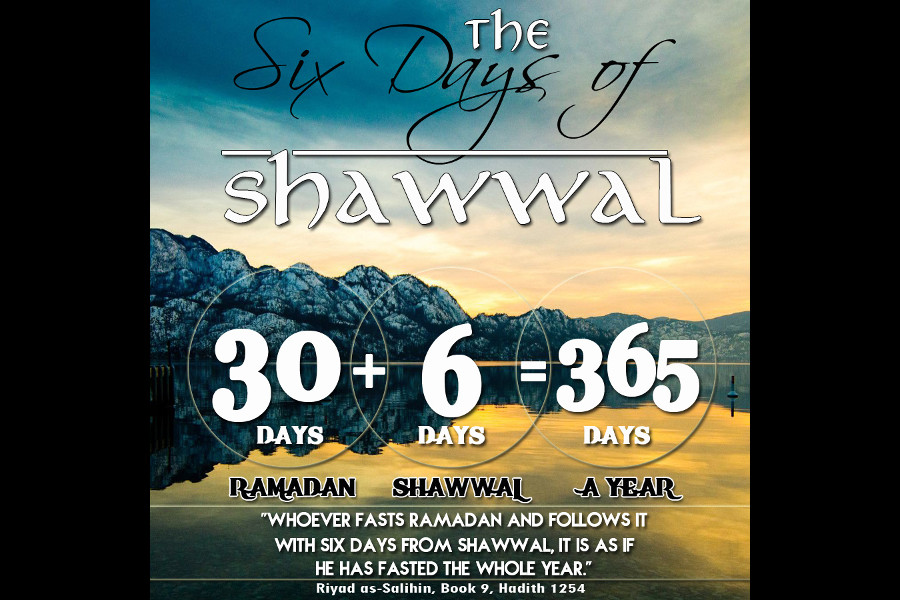
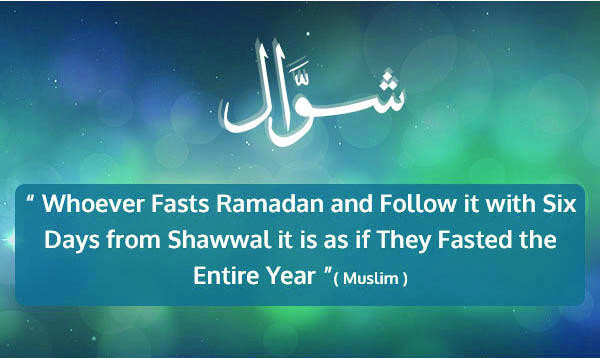
Fasting six days of Shawwaal after the obligatory fast of Ramadaan is Sunnah Mustahabbah, not waajib. But it is recommended for the Muslim to fast six days of Shawwaal, and in this there is great virtue and an immense reward. Whoever fasts these six days will have recorded for him a reward as if he had fasted a whole year, as was reported in a saheeh hadeeth from the Prophet (peace and blessings of Allaah be upon him). Abu Ayyoob (may Allaah be pleased with him) reported that the Messenger of Allaah (peace and blessings of Allaah be upon him) said: “Whoever fasts Ramadaan and follows it with six days of Shawwaal, it will be as if he fasted for a lifetime.” https://muslimvillage.com/wp-content/uploads/2018/06/shawwal-fast.jpg Another of the important benefits of fasting six days of Shawwaal is that is makes up for any shortfall in a person's obligatory Ramadaan fasts, because no one is free of shortcomings or sins that have a negative effect on his fasting. On the Day of Resurrection, some of his naafil deeds will be taken to make up the shortcomings in his obligatory deeds, as the Prophet (peace and blessings of Allaah be upon him) said: “The first thing for which people will be brought to account on the Day of Resurrection will be their salaah (prayer). Our Lord, may He be glorified and exalted, will say to His angels – although He knows best – ‘Look at the salaah of My slave, whether it is complete or incomplete.’ If it is perfect, it will be recorded as perfect, and if something is lacking, He will say, ‘Look and see whether My slave did any voluntary (naafil) prayers.’ If he did some voluntary prayers, [Allaah] will say, Complete the obligatory actions of My slave from his voluntary actions.’ Then all his actions will be dealt with in a similar manner.” (Narrated by Abu Dawood). So, have you completed yours? Source: IslamQA 4 Likes |
| Islam › Do The Six Days Of Shawwaal Have To Be Fasted Consecutively? by Lukgaf(op): 5:51am On May 29, 2020 |
Praise be to Allaah. It is not a necessary condition that they should be fasted consecutively. If you fast them separately or consecutively, it is OK. The sooner you do them, the better, because Allaah says (interpretation of the meanings): so compete in good deeds [al-Maaidah 5:48] And march forth in the way (which leads to) forgiveness from your Lord [Aal Imran 3:133] [Moosa peace be upon him said:] and I hastened to You, O my Lord, that You might be pleased [Ta-Ha 20:84] And (you should hasten to fast these six days) because delaying may cause problems. This is the view of the Shaafa is and some of the Hanbalis, but it is OK if you do not hasten it and you delay it until the middle or end of the month. https://www.arabnews.com/sites/default/files/styles/n_670_395/public/07/07/2016//1467898023454267300.jpg?itok=p1yCQ5Ml Al-Nawawi (may Allaah have mercy on him) said: Our companions said: it is mustahabb to fast six days of Shawwaal. Because of this hadeeth they said: it is mustahabb to fast these days consecutively at the beginning of Shawwaal, but if one separates them or delays them until after Shawwaal, this is permissible, because he will still be following the general guidelines of the hadeeth. We have no dispute regarding this matter, and this was also the view of Ahmad and Dawood. Al-Majmoo Sharh al-Muhadhdhab Source: https://islamqa.info/en/answers/7858/do-the-six-days-of-shawwaal-have-to-be-fasted-consecutively |
| Islam › Re: Suggest Threads For Frontpage Here by Lukgaf(m): 5:45am On May 29, 2020 |
The virtues of fasting six days of Shawwal https://www.nairaland.com/5889219/virtues-fasting-six-days-shawwal Missed Fasts From Ramadaan First Or The Six Days Of Shawwaal? https://www.nairaland.com/5230887/missed-fasts-ramadaan-first-six Do The Six Days Of Shawwaal Have To Be Fasted Consecutively? https://www.nairaland.com/5889224/six-days-shawwaal-fasted-consecutively Can I read 3 “ ‘Qul Huwa Allaahu Ahad” & claim completion of the Holy Qur'an? https://www.nairaland.com/5858684/read-3-qul-huwa-allaahu |
| Islam › The Virtues Of Fasting Six Days Of Shawwal by Lukgaf(op): 5:41am On May 29, 2020 |
Praise be to Allaah. Fasting six days of Shawwaal after the obligatory fast of Ramadaan is Sunnah Mustahabbah, not waajib. It is recommended for the Muslim to fast six days of Shawwaal, and in this there is great virtue and an immense reward. Whoever fasts these six days will have recorded for him a reward as if he had fasted a whole year, as was reported in a saheeh hadeeth from the Prophet (peace and blessings of Allaah be upon him). Abu Ayyoob (may Allaah be pleased with him) reported that the Messenger of Allaah (peace and blessings of Allaah be upon him) said: “Whoever fasts Ramadaan and follows it with six days of Shawwaal, it will be as if he fasted for a lifetime.” https://ukdlrqco1d-flywheel.netdna-ssl.com/wp-content/uploads/2018/06/shawwal-fast-600x400.jpg (Narrated by Muslim, Abu Dawood, al-Tirmidhi, al-Nisaa’i and Ibn Maajah). The Prophet (peace and blessings of Allaah be upon him) explained this when he said: “Whoever fasts for six days after (Eid) al-Fitr has completed the year: (whoever does a good deed (hasanah) will have ten hasanah like it).” According to another report: “Allaah has made for each hasanah ten like it, so a month is like fasting ten months, and fasting six days completes the year.” (al-Nisaa’i and Ibn Maajah. See also Saheeh al-Targheeb wa’l-Tarheeb, 1/421). It was also narrated by Ibn Khuzaymah with the wording: “Fasting for the month of Ramadaan brings the reward of ten like it, and fasting for six days brings the reward of two months, and that is the fasting of the whole year.” https://www.arabnews.com/sites/default/files/styles/n_670_395/public/07/07/2016//1467898023454267300.jpg?itok=p1yCQ5Ml The Hanbali and Shaafa’i fuqaha’ explained that fasting six days of Shawwaal after fasting Ramadaan makes it as if one has fasted for an entire year of obligatory fasts, because the multiplication of the reward applies even to naafil fasts, because each hasanah brings the reward of ten like it. Another of the important benefits of fasting six days of Shawwaal is that is makes up for any shortfall in a person's obligatory Ramadaan fasts, because no one is free of shortcomings or sins that have a negative effect on his fasting. On the Day of Resurrection, some of his naafil deeds will be taken to make up the shortcomings in his obligatory deeds, as the Prophet (peace and blessings of Allaah be upon him) said: “The first thing for which people will be brought to account on the Day of Resurrection will be their salaah (prayer). Our Lord, may He be glorified and exalted, will say to His angels – although He knows best – ‘Look at the salaah of My slave, whether it is complete or incomplete.’ If it is perfect, it will be recorded as perfect, and if something is lacking, He will say, ‘Look and see whether My slave did any voluntary (naafil) prayers.’ If he did some voluntary prayers, [Allaah] will say, Complete the obligatory actions of My slave from his voluntary actions.’ Then all his actions will be dealt with in a similar manner.” (Narrated by Abu Dawood). And Allaah knows best. Source: https://islamqa.info/en/answers/7859/the-virtue-of-fasting-six-days-of-shawwaal 3 Likes |
| Islam › Re: The Difference Between Zakaah On Wealth And Zakaatul L-fitri (photo) by Lukgaf(op): 12:40pm On May 22, 2020 |
amania:If you are salary earners and you are expecting money soon, then it is fine. Otherwise, you are also eligible to take 1 Like |
| Islam › Re: The Difference Between Zakaah On Wealth And Zakaatul L-fitri (photo) by Lukgaf(op): 12:38pm On May 22, 2020 |
olasaad:Wa alekum Salam Waramotulah wabarakatuh, some says 3kg and 2.25kg (difference of opinion perhaps because the error in conversion). It is thus better if you can use a Saa'. Also you can use your hand alternatively. 1 Like |
| Islam › Re: The Difference Between Zakaah On Wealth And Zakaatul L-fitri (photo) by Lukgaf(op): 12:37pm On May 22, 2020 |
olasaad:Wa alekum Salam Waramotulah wabarakatuh, some says 3kg and 2.25kg (difference of opinion perhaps because the error in conversion). It is thus better if you can use a Saa'. Also you can use your hand alternatively. 1 Like |
| Islam › Re: The Difference Between Zakaah On Wealth And Zakaatul L-fitri (photo) by Lukgaf(op): 12:32pm On May 22, 2020 |
seedorfg:Allah does not charge a soul except for what is within its except 2 Likes |
| Islam › The Difference Between Zakaah On Wealth And Zakaatul L-fitri (photo) by Lukgaf(op): 6:04am On May 22, 2020 |
Praise be to Allaah.By the way, have you given out your Zakaatul fitri? remember, you can only do that before Eid. May Allah accept it from me and you (Ameen). Eid Mubaarak in advance 7 Likes 2 Shares
|
| Islam › Is Giving Gifts During Eid An Innovation (bid'ah)? by Lukgaf(op): 5:47am On May 22, 2020 |
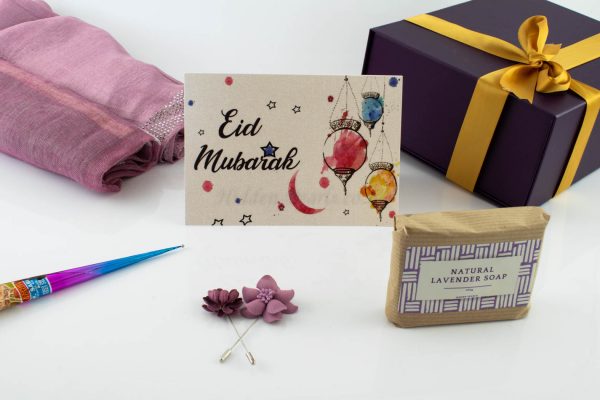
Is it permissible to give my family members some gifts on Eid al-Adha and Eid al-Fitr, and to do that every year, or is it an innovation (bid‘ah)?https://www.hidden-pearls.co.uk/wp-content/uploads/2018/05/Small-Eid-Gift-box-3-600x400.jpg Praise be to Allah. There is nothing wrong with giving gifts on Eid al-Fitr and Eid al-Adha to family and relatives, because these are days of joy and happiness on which it is mustahabb to uphold ties, show kindness, and eat and drink plenty. This is not bid‘ah; rather it is something that is permissible and a good custom that is one of the symbols of Eid. Hence it is not allowed to give gifts and express joy and happiness on innovated occasions on which it is not prescribed to celebrate, such as New Year, the Mawlid (Prophet’s birthday) and the fifteenth of Sha‘baan (an-nusf min Sha‘baan), because this makes them like Eids. Shaykh Ibn ‘Uthaymeen (may Allah have mercy on him) said: On this Eid people also exchange gifts, i.e., they make food and invite one another to come and eat, and they get together and celebrate. There is nothing wrong with this custom because these are days of Eid. When Abu Bakr (may Allah be pleased with him) entered the house of the Messenger of Allah (blessings and peace of Allah be upon him) and found with him two young girls who were singing on the days of Eid, he rebuked them, but the Prophet (blessings and peace of Allah be upon him) said: “Let them be.” And he did not say it because they were young girls. Rather he said: “Let them be, for these are the days of Eid.” This indicates that Islam, with its tolerant and easy-going attitude, allows people to express joy and happiness on the days of Eid. End quote from Majmoo‘ Fataawa Ibn Uthaymeen, 16/276 And he (may Allah have mercy on him) said: It is well known that there are no festivals in Islam except those which are proven in sharee‘ah, namely Eid al-Fitr and Eid al-Ahda, and Friday which is the weekly “Eid”. As for the fifteenth of Sha‘baan (an-nusf min Sha‘baan), there is no proof in Islam is that it is an Eid. If it is taken as an occasion on which charity is distributed or gifts are given to neighbors, then this is taking it as an Eid. End quote from Fataawa Noor ‘ala ad-Darb And he said concerning Mother’s Day: Once this is understood, it is not permissible, on the occasion mentioned in your question, which is called Mother’s Day, to introduce any of the symbols of Eid on this day, such as expressing joy and happiness, giving gifts, and so on. End quote from Majmoo‘ Fataawa ash-Shaykh Ibn ‘Uthaymeen, 2/301 And Allah knows best. Source: https://www.google.com/amp/s/islamqa.info/amp/en/answers/130948 5 Likes 2 Shares |
| Islam › Re: Suggest Threads For Frontpage Here by Lukgaf(m): 5:43am On May 22, 2020*. Modified: 6:05am On May 22, 2020 |
The Difference Between Zakaah On Wealth And Zakaatul L-fitri (photo) https://www.nairaland.com/5874234/difference-zakaah-wealth-zakaatul-l-fitri COVID-19: Ruling On Offering Eid At Home During Pandemics https://www.nairaland.com/5874211/covid-19-ruling-offering-eid-home#89821146 Is Giving Gifts During Eid An Innovation (bid'ah)? https://www.nairaland.com/5874221/giving-gifts-during-eid-innovation#89821227 |
| Islam › Re: COVID-19: Ruling On Offering Eid At Home During Pandemics by Lukgaf(op): 5:40am On May 22, 2020 |
Secondly: According to the view of the Shaafa‘i madhhab, it is Sunnah for the one who is praying on his own to offer the Eid prayer in his house. According to their view, that is not the same as the case of the one who missed it.Al-Muzani narrated that ash-Shaafa‘i (may Allah have mercy on him) said in Mukhtasar al-Umm (8/125): The one who is praying alone may offer the Eid prayers in his house; the same applies also to travellers, slaves and women. End quote. An-Nawawi (may Allah have mercy on him) said in al-Majmoo‘ (5/26): With regard to rulings, is the Eid prayer prescribed for slaves, travellers, women and one who is praying on his own in his house or elsewhere? There are two views concerning that, the sounder and more well-known of which is that it is definitely prescribed for them. End quote. In their view, it is Sunnah to give the khutbah for any of these categories who is offering the prayer in congregation. It says in Mughni al-Muhtaaj (1/589): It is Sunnah to deliver the two khutbahs after [the prayer] to the group, following the example of the Prophet (blessings and peace of Allah be upon him) and the Rightly-Guided Caliphs who succeeded him, and it makes no difference whether the members of the congregation are travellers or otherwise. End quote. It says in Tuhfat al-Muhtaaj (3/40): And it is prescribed for the one who is praying on his own, but there is no khutbah in his case. The same applies to slaves and women. As for free women and slave women going out for the prayer, all that is mentioned about them going out for other congregational prayers is also applicable in this case. And the traveller may offer it, like all other naafil prayers. It is recommended for the imam of a group of travellers to deliver a khutbah to them. End quote. Then he said (3/45): The khutbah is not Sunnah for one who is praying on his own. End quote. The view of the Maalikis is that it is mustahabb, not Sunnah, for one who is praying on his own, and for women and travellers. Al-Khurashi (2/98) said: It is prescribed to pray two rak‘ahs for Eid in the case of one for whom Jumu‘ah prayer is obligatory, as soon as offering naafil prayers becomes permissible after sunrise, until the sun passes the meridian. That is, there was a difference of opinion regarding the Eid prayer, but the well-known view, as he said, is that it is an individual Sunnah; it was also said that it is a communal Sunnah. It is obligatory for the one for whom Jumu‘ah prayer is obligatory, and slaves, minors, women and travellers are excluded from that. For those who live three miles away from the city, it is not Sunnah in their case, but it is mustahabb, as we shall see below. End quote. It says in (2/104): It is mustahabb to offer the Eid prayer, for one for whom Jumu‘ah is not obligatory, or who missed it That is, it is mustahabb for the one for whom Jumu‘ah prayer is not obligatory, or one who missed the Eid prayer with the imam, to offer this prayer. But should he pray it in congregation, or on his own? There are two views. End quote. Some of the scholars thought it more likely that this prayer should be offered individually. See: Haashiyat ad-Daasooqi (1/401). According to the Maalikis also, if they offer this prayer in congregation, they should pray it without a khutbah. Al-Hattaab said in Mawaahib al-Jaleel (2/198): It is permissible for those who live in the city to offer this prayer in congregation, for those who have missed it, and no khutbah is required. There is no difference of opinion concerning that. The same applies to one who missed it because of an excuse, and also to slaves and travellers. There was a difference of opinion regarding those who live in small villages, and there are two views. And Allah knows best. End quote. Based on that, if someone leads his family in offering the Eid prayer, it is Sunnah for him to give two khutbahs, according to the view of the Shaafa‘is, but he does not need to give a khutbah, according to the view of the Maalikis. Both madhhabs quoted as evidence for it being permissible to offer this prayer at home the mu‘allaq majzoom report narrated by al-Bukhaari, who said: Anas ibn Maalik instructed his freed slave Ibn Abi ‘Utbah to gather his family and sons together. End quote. Anas had not missed the prayer; rather he lived outside Basra, several miles from the city. Ibn Rajab said in Fath al-Baari (9/76): When Anas missed the Eid prayer, he was not in the city; rather he lived outside the city, far from it, therefore he came under the ruling on those who live in villages. Imam Ahmad referred to that in a report from him. End quote. Thirdly: Al-‘Allaamah Shaykh ‘Abd ar-Rahmaan al-Barraak has issued a fatwa stating that if it is not possible to offer the Eid prayer in any land because of the epidemic and lockdown, then the ruling is the same ruling as applies to one who misses the Eid prayer. So this prayer may be offered at home without a khutbah. He (may Allah preserve him) was asked: At a time like the present, when prayers are being offered at home, because of the coronavirus epidemic – may Allah relieve the Muslims of it – what is your view concerning Eid prayer? Can it be offered at home, and if so, how is it to be done? Answer: Praise be to Allah, and blessings and peace be upon our Prophet Muhammad, and upon his family and all his companions. To proceed: If it is not possible to hold the Eid prayers because of some impediment, as is the case at present, then the ruling on that is the same as the ruling on one who misses this prayer – meaning the Eid prayer. There are several scholarly views concerning that. Some said that he should offer this prayer with two rak‘ahs, and others said that it should be four rak‘ahs. And some said that it should be offered in the usual manner, which is the correct view. What that means is that it should be offered with two rak‘ahs and the extra takbeeraat, the recitation should be done out loud, and there should be no khutbah, as is the case with every act of worship that is being made up: it should be made up in the manner in which it is usually done, and it may be offered individually or in congregation. The evidence for that is what Anas ibn Maalik (may Allah be pleased with him) used to do. If he missed the Eid prayer, he would gather his family and his sons, then his freed slave ‘Abdullah ibn Abi ‘Utbah would lead them in praying two rak‘ahs, saying the takbeeraat, like the prayer and takbeeraat of the people of the city. With regard to the view that the Eid prayer cannot be made up, that is not applicable in this case, because in the current situation the Eid prayer cannot be offered in the first place, so the obligation to offer it has not been carried out. Rather in this situation we may draw an analogy for the Eid prayer with the one who missed it, as noted above. And Allah knows best. End quote from the Shaykh’s website: https://sh-albarrak.com/article/18234 Conclusion: Whoever offers the Eid prayer on his own, should do so without a khutbah. Whoever offers it in congregation, then according to the view of the Shaafa‘is, it is sunnah for him to give two khutbahs after it. What supports the view that he should give the two khutbahs is the comment made by the Shaykh in his answer, that the prayer has not been offered at all in the first place, and no khutbah has been given for it in public gathering places. According to the view of the Maalikis and Hanbalis, and those who think that the one who is excused today is like the one who has missed the prayer, this prayer should be offered in congregation without a khutbah. And Allah knows best. Source: https://islamqa.info/en/answers/337550 1 Like |
| Islam › COVID-19: Ruling On Offering Eid At Home During Pandemics by Lukgaf(op): 5:38am On May 22, 2020 |
Praise be to Allah. Firstly: If someone misses the Eid prayer or it is not possible for him to attend it due to some impediment, it is permissible for him to offer this prayer in his house, even if he prays on his own. This is the view of the majority.Ibn Qudaamah said in al-Mughni (2/289): Whoever misses the Eid prayer does not have to make it up, because it is a communal obligation, that has been undertaken by those who have discharged the communal duty. But if he wants to make it up, then he has the choice. If he wishes, he may offer this prayer with four rak‘ahs, either with one salaam or with two salaams. This was narrated from Ibn Mas‘ood, and it is the view of ath-Thawri. That is because of the report narrated by ‘Abdullah ibn Mas‘ood, who said: Whoever misses the Eid prayer let him pray it with four rak‘ahs, and whoever misses Jumu ‘ah, let him pray it with four rak‘ahs. It was narrated from ‘Ali (may Allah be pleased with him) that he said: If I instruct a man to lead the physically weak people in prayer, I instruct him to pray four rak‘ahs. Both reports were narrated by Sa‘eed. Ahmad (may Allah have mercy on him) said: That view is supported by the hadith of ‘Ali, according to which he instructed a man to lead the physically weak people in praying four rak‘ahs, and not to give a khutbah. Moreover, it is making up the Eid prayer, so it should be four rak‘ahs, like [when making up] Jumu‘ah prayer. And if he wishes, he may pray two rak‘ahs, like a voluntary prayer. This is the view of al-Awzaa ‘i, because this is a voluntary prayer. And if he wishes, he may offer it like the Eid prayer with (extra) takbeers. That was narrated from Ahmad Ismaa‘eel ibn Sa‘eed; this view was favoured by al-Jawzjaani, and is also the view of an-Nakha‘i, Maalik, ash-Shaafa‘i, Abu Thawr and Ibn al-Mundhir, because of the report narrated from Anas, that if he had not attended Eid prayer with the imam (governor) in Basra, he would gather his family and his freed slaves, then his freed slave ‘Abdullah ibn Abi ‘Utbah would lead them in praying two rak‘ahs, saying the (extra) takbeers in both rak‘ahs. Because it is making up for a missed prayer, it is offered in the same manner as that prayer, like all other prayers. The individual has the choice: if he wishes, he may offer this prayer on his own, and if he wishes, he may offer it in congregation. It was said to Abu ‘Abdillah: Where should he pray? He said: If he wishes, he may go to the prayer place [musalla], and if he wishes, he may pray wherever he likes. End quote. Thus it becomes clear that the prayer should be offered in the manner of the Eid prayer with the imam; this is the view of the majority of scholars. So he should offer this prayer as it is usually done, that is, two rak‘ahs with the extra takbeeraat, and without the khutbah. It is definitely to be done in the manner in which it is usually done, unless one is offering it as a missed prayer, as there are different views concerning that. But if he is offering it as a regular Eid prayer, so as to fulfil his duty or fulfil the communal obligation – as is the case at present, when the Eid prayer will not be offered in the prayer places or in the mosques, which is the case in most countries – it does not seem, in this situation, that it should be done in a manner different from the regular Eid prayer; rather if a man offers this prayer in his house and the like, then he should offer it in the same manner as the regular Eid prayer. 1 Like |
| Islam › Recommended Dua On Laylatul Qodr by Lukgaf(op): 5:42am On May 15, 2020 |
Laylatul Qadr - The Night of Power is a great and powerful night that is better than a 1000 months (83 years and 4 months).For the virtues of the night of power and in particular the last ten days of Ramadan, see here. To know how to seek the great night and suggested practices for this night, check here. Aaisha (RA) reports: "I said: 'O Rasulullah (Sallallahu Alaihi Wasallam) should I find myself the "Laylatul Qadr", what shall I pray ? Rasulullah (Sallallahu Alaihi Wasallam) replied: say, “Allaahumma innaka afuwwun tuhibbul afwa fa'fu anni” "O Allah, You are most forgiving, You love forgiveness, so forigve me." (Tirmizi). 9 Likes 2 Shares
|
| Islam › Re: Suggest Threads For Frontpage Here by Lukgaf(m): 5:23am On May 15, 2020*. Modified: 5:44am On May 15, 2020 |
Can I read 3 “ ‘Qul Huwa Allaahu Ahad” & claim completion of the Holy Qur'an? https://www.nairaland.com/5858684/read-3-qul-huwa-allaahu#89560901 Recommended dua on Laylatul Qodr https://www.nairaland.com/5858710/recommended-dua-laylatul-qodr Does Undertaking Covid-19 Test Whilst Fasting Affect The Validity Of The Fast? https://www.nairaland.com/5843221/does-undertaking-covid-19-test-whilst Laylatul Qodri: What can a woman menstruating do? https://www.nairaland.com/5858690/laylatul-qodri-what-woman-menstruating |
| Islam › Laylatul Qodri: What Can A Woman Menstruating Do? by Lukgaf(op): 5:22am On May 15, 2020 |
A woman who is menstruating may do all acts of worship apart from praying, fasting, circumambulating the Ka’bah and doing i’tikaaf in the mosque.Staying up at night is not only for prayer, rather it includes all kinds of acts of worship. This is how the scholars interpreted it. Al-Haafiz said: “Staying up at night” means staying up to do acts of worship. Al-Nawawi said: spending the night staying up to pray etc. He said in ‘Awn al-Ma’bood: i.e., in prayer, dhikr and reciting the Qur’aan. Praying qiyaam is the best act of worship that a person can do on Laylat al-Qadr. Hence the Prophet (peace and blessings of Allaah be upon him) said: “Whoever spends the night of Laylat al-Qadr in prayer out of faith and in hope of reward, his previous sins will be forgiven.” (Narrated by al-Bukhaari, 1901; Muslim, 760). Because the woman who is menstruating is not allowed to pray, she can spend the night in doing other acts of worship apart from prayer, such as: 1-Reading or reciting Qur’aan. See question no. 2564. 2-Dhikr – such as saying Subhaan-Allaah, La ilaaha illa-Allaah, al-Hamdu Lillaah, etc. She can repeat the words “Subhaan-Allaah wa’l-hamdu Lillaah, wa laa ilaaha ill-Allaah, wa Allaahu akbar (Glory be to Allaah, praise be to Allaah, there is no god but Allaah and Allaah is Most Great)” and “Subhaan Allaah wa bi hamdihi, subhaan Allaah il-‘Azeem (Glory and praise be to Allaah, glory be to Allaah the Almighty)” etc. 3-Istighfaar (praying for forgiveness), by repeating the phrase “Astaghfir-Allaah (I ask Allaah for forgiveness).” 4-Du’aa’ (supplication) – she can pray to Allaah and ask Him for what is good in this world and in the Hereafter, for du’aa’ is one of the best acts of worship. The Prophet (peace and blessings of Allaah be upon him) said, “Du’aa’ is ‘ibaadah (worship).” (Narrated by al-Tirmidhi, 2895; classed as saheeh by al-Albaani in Saheeh al-Tirmidhi, 2370). The woman who is menstruating can do these acts of worship and others on Laylat al-Qadr. We ask Allaah to help us to do that which He loves and which pleases Him. May Allaah accept our righteous deeds. https://islamqa.info/en/answers/26753/what-can-a-woman-who-is-menstruating-do-on-laylat-al-qadr 12 Likes 2 Shares |
| Islam › Can I read 3 “ ‘Qul Huwa Allaahu Ahad” & claim completion of the Holy Qur'an? by Lukgaf(op): 5:13am On May 15, 2020 |
Praise be to Allaah.With regard to the meaning of the hadeeth: There is a difference between jaza’ (reward) and ijza’ (what is sufficient). Jaza’ means the reward which Allaah gives for obeying Him. Ijza’ means what is sufficient and takes the place of something else. Reciting Qul Huwa Allaahu Ahad brings a reward equivalent to reciting one-third of the Qur’aan, but it does not take the place of reading one-third of the Qur’aan. If a person vows – for example – to read one-third of the Qur’aan, it is not sufficient for him to read Qul Huwa Allaahu Ahad, because it is equivalent to one-third of the Qur’aan in reward, but not in terms of being sufficient or taking the place of reading one-third of the Qur’aan. The same may be said of reciting it three times. If a person recites it three times in his prayer, that does not mean that he does not have to recite al-Faatihah, even though he will be given the reward of reciting the whole Qur’aan. A similar example is the reward given by the Lawgiver to one who offers a single prayer in the Sanctuary of Makkah, and that he will have the reward of one hundred thousand prayers. Does anyone take this divine bounty to means that he does not have to pray for decades because he offered a single prayer in the Haram that is equivalent to one hundred thousand prayers? Rather this has to do with reward; as for what is sufficient, that is another matter altogether. Moreover, none of the scholars has ever said that there is no need for us to read the Qur’aan or that Qul Huwa Allaah Ahad is sufficient and takes the place of that. The correct scholarly view is that this soorah has this great virtue because the Qur’aan deals with three topics: one-third for rulings, one-third for promises and warnings, and one-third for the Divine names and attributes. This soorah combines names and attributes. This is the view of Abu’l-‘Abbaas ibn Surayj, and Shaykh al-Islam Ibn Taymiyah stated that it was good in Majmoo’ al-Fataawa, 17/103. The Muslim cannot do without the two other issues, which are the rulings and the promises and warnings. His knowledge cannot be complete unless he looks at the Book of Allaah as a whole. The one who stops at Soorat al-Ikhlaas cannot know the other two matters. Shaykh al-Islam (Ibn Taymiyah – may Allaah have mercy on him) said: Rewards are of different types, just as wealth is of different types, such as food, drink, clothing, houses, money and so on. If a man possesses one type of wealth, to the value of one thousand dinars, that does not mean that he can do without the other types. Rather if he has wealth in the form of food, he also needs clothing and a place to live, etc. Similarly if it is a type other than money, he still needs other things. If he has nothing but money, he will need all kinds of wealth that are usually needed. In al-Faatihah there are the benefits of praise and du’aa’ which people need, and Qul Huwa Allaahu Ahad cannot replace it in that sense. Although its reward is very great, he cannot benefit from it unless he also recites the Opening of the Book (al-Faatihah) in his prayer. Hence if a person recites only Qul Huwa Allaahu Ahad in his prayer, without al-Faatihah, his prayer is not valid. Even if he recited the whole of the Qur’aan without al-Faatihah, his prayer would not be valid, because the al-Faatihah refers to the basic needs that people cannot do without. Majmoo’ al-Fataawa, 17/131. And he said: The people need the commands, prohibitions and stories that are in the Qur’aan, even though Tawheed is greater than that. Man needs to know what he is enjoined to do and what he is forbidden to do; he need to know what is enjoined upon him and the stories and promises and rewards. These cannot be replaced by anything else, and Tawheed cannot be replaced by these. The stories cannot take the place of the commands and prohibitions, and the commands and prohibitions cannot take the place of the stories. Rather everything that was sent down by Allaah is beneficial and people need it. If a person recites Qul Huwa Allaahu Ahad, he earns a reward equivalent to the reward of one-third of the Qur’aan, but that does not mean that the reward is of the same kind as that earned by reading the rest of the Qur’aan. Rather he may need the kind of reward that comes from reading the commands and prohibitions and stories, so Qul Huwa Allaahu Ahad cannot take the place of all that. And he said: The knowledge that is to be gained by reading the rest of the Qur’aan cannot be gained by reciting this soorah only. So whoever reads the whole Qur’aan is better than one who simply recites this soorah three times in the sense that he earns different kinds of reward, even though the one who recites Qul Huwa Allaahu Ahad earns a reward equivalent to that reward, but it is of one type and does not include all the types that a person needs. This is like a man who has three thousand dinars and another who has food, clothing, accommodation and money equivalent to three thousand dinars. The latter has that which will benefit him in all his affairs, whereas the former needs what the latter has, even though what he has is equivalent in value. Similarly, if he has the finest food, equivalent to three thousand dinars in value, he still needs clothing and accommodation, and weapons and tools that will ward off harm from him, and the like, which cannot be done with food alone. Majmoo’ al-Fataawa, 17/137-139 And Allaah knows best. Source: https://islamqa.info/en/answers/10022/the-meaning-of-the-hadeeth-qul-huwa-allaahu-ahad-is-equivalent-to-one-third-of-the-quraan 17 Likes |
| Islam › Re: . by Lukgaf(m): 1:00pm On May 11, 2020 |
Lukgaf: |
| Islam › Re: . by Lukgaf(m): 12:56pm On May 11, 2020 |
OsuIgboIpob:Alhamdulilah Robil Alameen. May Allah make it possible for you and grant you understanding of His deen. First, read the following instructions published on islamqa supervised by Sheikh Muhammad Salih Al-Munajid "Praise be to Allaah. Among the beauties of Islam is the fact that in this religion there are no intermediaries in the relationship between a person and his Lord. Entering this religion does not involve any special ceremonies or procedures that need to be done in front of any other person, nor does it require the consent of any specific people. Becoming Muslim is very easy and anyone can do it even if he is all alone in the desert or in a locked room. All it takes is to say two beautiful sentences which sum up the meaning of Islam and which include the statement that a person is the slave of his Lord and that he submits himself to Him and recognizes that He is his God and Helper and Protector Who decrees for him whatever He wills; and that Muhammad is the slave and Messenger of Allaah whom he must follow with regard to what was revealed to him from Allaah, for obeying the Messenger is part of obeying Allaah. Whoever utters these twin statements of faith, with conviction and believing in them, becomes a Muslim, sharing all the rights and duties that other Muslims have. After that he can start straight away to do the things that Allaah has made obligatory, such as the five daily prayers at the right times, fasting during the month of Ramadaan, and so on. From this it should be clear to you that you can become a Muslim straight away, so get up, have a shower and say: “Ash-hadu an laa ilaaha ill-Allaah wa ash-hadu anna Muhammadan ‘abduhu wa rasooluhu (I bear witness that there is no god except Allaah and I bear witness that Muhammad is His slave and Messenger).” those who want to become Muslim. May Allaah help you to do all that is good and guide your steps aright. May He decree for you happiness in this world and the next. Peace be upon those who follow true guidance." |
| Islam › Re: Listening To Music In Ramadan by Lukgaf(op): 2:47pm On May 08, 2020 |
Aremynart:Wa Alaekum Salam Waramotulah wabarakatuh. there are some ahaadeeth which indicate that it is permissible to beat the daff in some circumstances, which are: Eid, weddings, and when one who has been away returns. The evidence is given below. 1 – It was narrated from ‘Aa’ishah that Abu Bakr (may Allaah be pleased with him) entered upon her and there were two girls with her during the days of Mina beating the daff, and the Prophet (peace and blessings of Allaah be upon him) was covering himself with his garment. Abu Bakr rebuked them, and the Prophet (peace and blessings of Allaah be upon him) uncovered his face and said, “Leave them alone, O Abu Bakr, for these are the days of Eid.” That was during the days of Mina. Narrated by al-Bukhaari, 944; Muslim, 892 2 – It was narrated that al-Rubayyi’ bint Mu’awwidh ibn ‘Afra’ said: “After the consummation of my marriage, the Prophet (peace and blessings of Allaah be upon him) came and sat on my bed as far from me as you are sitting now, and our little girls started beating the daff and reciting verses mourning my father, who had been killed in the battle of Badr. One of them said, ‘Among us is a Prophet who knows what will happen tomorrow.’ On that the Prophet said, ‘Omit this (saying) and keep on saying the verses which you had been saying before.’” (Narrated by al-Bukhaari, 4852). 3 – It was narrated that Buraydah said: The Messenger of Allaah (peace and blessings of Allaah be upon him) went out on one of his military campaigns, and when he came back, a black slave woman came and said, “O Messenger of Allaah, I vowed that if Allaah brought you back safe and sound, I would beat the daff before you and sing. The Messenger of Allaah (peace and blessings of Allaah be upon him) said, “If you vowed that, then do it, otherwise do not do it.’” So she started to beat the daff, and Abu Bakr came in whilst she was doing so. Then ‘Ali came in whilst she was beating the daff, then ‘Uthmaan came in whilst she was beating the daff, then ‘Umar came in and she threw the daff beneath her and sat on it. The Messenger of Allaah (peace and blessings of Allaah be upon him) said, “The Shaytaan is afraid of you, O ‘Umar. I was sitting and she was beating the daff, then Abu Bakr came in when she was beating the daff; then ‘Ali came in when she was beating the daff; then ‘Uthmaan came in when she was beating the daff, but when you came in, O ‘Umar, she put the daff down.” Narrated by al-Tirmidhi, 3690; classed as saheeh by al-Albaani in Saheeh al-Tirmidhi, 2913. These ahaadeeth indicate that it is permissible to beat the daff in these three situations. Apart from that, the principle remains that it is haraam. Some scholars made the matter broader and said that it is permissible to beat the daff when a child is born and when he is circumcised; others take the matter further and say that it is permissible on all occasions that are a cause for expressing joy, such as the recovery of a sick person and the like. See al-Mawsoo’ah al-Fiqhiyyah, 38/169 But it is better to limit ourselves to what was narrated in the text. And Allaah knows best. Secondly: The correct view is that it is not permissible to beat the daff except for women. If a man does that, he is imitating women, which is a major sin. Shaykh al-Islam (Ibn Taymiyah – may Allaah have mercy on him) said: In general, it is a well known principle of the Islamic religion that the Prophet (peace and blessings of Allaah be upon him) did not prescribe that the righteous men, devoted worshippers and ascetics of this ummah should gather to listen to verses of poetry chanted to the accompaniment of handclapping, rhythm sticks or daffs. It is not permissible for anyone to go beyond the limits of Islam and follow something other than that which was narrated in the Qur’aan and Sunnah, whether that has to do with inward matters or outward, whether for the common man or the elite. But the Prophet (peace and blessings of Allaah be upon him) granted a concession for some kinds of entertainment on the occasion of weddings and the like, and he also granted a concession to women allowing them to beat the daff at weddings and on other joyous occasions. But with regard to the men of his time, none of them used to beat the daff or clap his hands, rather it was proven in al-Saheeh that he said, ‘Clapping is for women, and Tasbeeh is for men,’ and he cursed women who imitate men and men who imitate women. Because singing, beating the daff and clapping the hands are actions of women, the salaf used to call a man who did that mukhannath (effeminate), and they used to call male singers makhaaneeth (pl. of mukhannath). This is well known. Majmoo’ al-Fataawa, 11/565, 566 Ibn Hajar said: The strong (qawiy) ahaadeeth indicate that this is permissible for women, but that does not include men, because of the general meaning of the prohibition on men imitating women. Fath al-Baari, 9/226 Shaykh ‘Abd al-‘Azeez ibn Baaz (may Allaah have mercy on him) said: Rather the concession allowing women to use the daff is for them only. With regard to men, it is not permissible for them to do any of that, whether on weddings or on other occasions. Rather Allaah has prescribed for men to train in the instruments of war and skills needed for battle, such as shooting and horse riding, and competing in that. Majallat al-Jaami’ah al-Islamiyyah (Magazine of the Islamic University in al-Madeenah al-Munawwarah), 3rd edition, 2nd year, Muharram, 1390 AH, p. 185, 186 And he also said: With regard to weddings, it is prescribed to beat the daff and sing regular songs which do not call for or praise anything that is haraam. This is to be done at night, by women only, to announce the wedding and to emphasize the difference between this legitimate marriage and zina (adultery) which is done in secret, as was narrated in the saheeh Sunnah from the Prophet (peace and blessings of Allaah be upon him). Al-Tabarruj wa Khataruhu (Wanton display and its dangers) And Allaah knows best. https://islamqa.info/en/answers/20406/when-is-it-permissible-to-beat-the-daff 1 Like |
| Islam › Does Undertaking Covid-19 Test Whilst Fasting Affect The Validity Of The Fast? by Lukgaf(op): 5:35am On May 08, 2020 |
Our understanding of the Covid-19 test is that swabs of cottonwool at the end of what looks like a long cotton bud are inserted into the nasal cavity and the back of the mouth/upper throat, with a part of the apparatus outside the nose and mouth. It is then removed without anything apparently going down the throat. In this case, undertaking such a test whilst fasting will NOT affect the validity of the fast. And Allah Ta'ala Knows Best Source: Darul Ihsan Fatwa Department 9 Likes |
| Islam › The Virtues Of The Last Ten Days Of Ramadan by Lukgaf(op): 5:13am On May 08, 2020 |
AlhamduLilah we are heading towards the completion of 1441AH Ramadan - today is 15th day of Ramadan. (May Allah make the rest easy and spare our lives to witness more of it). In sha Allah, by this time of next week, we would be in the last ten days of the month. In what follows, it is imperative we inform you about the virtues of the last ten days of the month so as to prepare for it to earn the big rewards available in these days.The last ten days of Ramadan are blessed by Allah with unique virtues. Among such virtues is that Laylat Al-Qadr (the Night of Decree) is among them. About this Night, Allah, The Most Exalted, Says (what means): “Ha, Meem. By the clear Book. Indeed, We sent it down during a blessed night. Indeed, We were to warn [mankind]. On that night is made distinct every precise matter - [Every] matter [proceeding] from Us. Indeed, We were to send [a messenger]. As mercy from your Lord. Indeed, He is the Hearing, the Knowing.”[Quran 44:1-6] Allah sent down the Quran on this Night which He, The Most Exalted, described as blessed. It was reported from a group of the Salaf (righteous predecessors) – including Ibn ‘Abbaas, Qataadah, Sa’eed ibn Jubayr, ‘Ikrimah, Mujaahid and others , may Allah be pleased with them- that the night on which the Quran was sent down was Laylat Al-Qadr. The phrase (which means): “On that night is made distinct every precise matter,” indicates that on this night the destiny of all creatures for the coming year is decreed. On that night it is written who will live, who will die, who will be saved, who will be doomed, who will be destined for Paradise, who will be destined for Hell, who will be granted honour, who will be humiliated, where drought and famine will occur, and everything else that Allah Wills in that year. Ibn ‘Abbaas, may Allah be pleased with him, said: “You may see a man furnishing his home or plowing his field, and he is one of those who are going to die,” i.e., it has been decreed on Laylat Al-Qadr that he is one of those who are going to die (in the coming year). And it was said that on this night, the destiny of people is shown to the angels. The meaning of “Qadr” is veneration or honor, i.e. it is a night that is venerated because of its special characteristics, and because the one who stays up during this night becomes a person of honor. And it was said that Qadr means constriction, in the sense that the knowledge of precisely when this night is, is hidden. Al-Khaleel ibn Ahmad may Allah have mercy upon him said: “It was called Laylat Al-Qadr because the earth is constricted by the great numbers of angels on that night, and Qadr means constriction.” It was also said that Qadr means Qadar (decree), i.e., that on this night the decrees for the coming year are ordained, as Allah Says (what means): “On that night is made distinct every precise matter.” [Quran 44:4]and because the decrees of Allah are decided and written down on this night. So Allah has called it Laylat Al-Qadr, because of its great value and high status with Allah, and because so many sins are forgiven and so many faults are concealed during this night. For it is the night of forgiveness, as it was reported that the Prophet sallallaahu `alayhi wa sallam ( may Allah exalt his mention ) said: “Whoever stays up during Laylat Al-Qadr out of faith and in the hope of earning the reward of Allah, all his previous sins will be forgiven.” [Al-Bukhari and Muslim] Allah has given this night special characteristics which make it unique, such as: 1. It is the night on which the Quran was sent down, as we have stated above. Ibn ‘Abbaas, may Allah be pleased with him, said: “Allah sent down the Quran at one time from Al-Lawh Al-Mahfooth (the Preserved Tablet in the Seventh Heaven) to Bayt Al-‘Izzah (House of Pride) in the first Heaven, then it was revealed to the Messenger of Allah sallallaahu `alayhi wa sallam ( may Allah exalt his mention ) in stages according to events over twenty-three years.” [Ibn Katheer] 2. Allah described it as being better than a thousand months, as He Says (what means): “The Night of Decree is better than a thousand months.” [Quran 97:3] 3. Allah described it as being blessed, as He Says (what means): “Indeed, We sent it down during a blessed night.” [Quran 44: 3] 4. On this night, the angels and the Spirit [Jibreel (Angel Gabriel)] descend, “i.e., many angels descend on this night because it is so blessed, and the angels come down when the blessings and mercy of Allah come down, just as they come down when the Quran is recited, and they surround the circles of Thikr (gatherings where Allah is mentioned), and they spread their wings for the one who sincerely seeks knowledge, out of respect for him.” [Ibn Katheer] Jibreel is specifically mentioned as a sign of respect for him. 5. This night is described as peace, i.e., it is safe, for the devils cannot do any evil or cause any harm on this night, as Mujaahid may Allah have mercy upon him said: “On this night, many people are saved from punishment because of what they do to worship Allah, The Most Exalted.” 6. Allah Says (what means):“On that night is made distinct every precise matter.” [Quran 44:4], the affairs of that year are dispatched from the Preserved Tablet to the angels who record the decrees: who will live, who will die, what provision people will be given, what will happen until the end of that year, every matter of ordainments is decreed, and it cannot be altered or changed. [Ibn Katheer] All of this is already known to Allah before it is even written down, but He makes known to the angels what is to happen, and commands them to do whatever they are enjoined to do. 7. Allah revealed a Chapter concerning this night which will be recited until the Day of Resurrection, in which He mentions the honor and great value of this night. This is the Chapter in which Almighty Allah Says (what means): “Indeed, We sent the Qur'an down during the Night of Decree. And what can make you know what is the Night of Decree? The Night of Decree is better than a thousand months. The angels and the Spirit descend therein by permission of their Lord for every matter. Peace it is until the emergence of dawn.” [Quran 97:1-5] The verse (which means): “And what can make you know what is the Night of Decree?” [Quran 97:2]serves to draw attention to the importance and great significance of this night. The verse (which means): “The Night of Decree is better than a thousand months.”Means that worship during it is better than worship during a thousand months (which means over eighty three years). This is a great virtue, the value of which no one can fully understand except The Lord of the Worlds, The Most Exalted. Laylat Al-Qadr is in the last ten days of Ramadan, as stated in the narration of Ibn ‘Umar, may Allah be pleased with him, that the Prophet sallallaahu `alayhi wa sallam ( may Allah exalt his mention ) said: “Seek Laylat Al-Qadr in the last ten days of Ramadan.” [Muslim] It is more likely to be one of the odd-numbered nights, because of the narration of ‘Aa’ishah, may Allah be pleased with her, who said that the Messenger of Allah, sallallaahu ``alayhi wa sallam, had said: “Seek Laylat Al-Qadr in the odd-numbered nights of the last ten nights.” [Al-Bukhari] We should seek it especially in the odd-numbered nights, i.e., on the twenty-first, the twenty-third, the twenty-fifth, the twenty-seventh and the twenty-ninth. It was also reported that the Prophet sallallaahu `alayhi wa sallam ( may Allah exalt his mention ) said: “Seek it in the last ten nights, on the odd-numbered nights.” [Al-Bukhari and Muslim] It is most likely to be on the night of the twenty-seventh. This is according to the saying of the Prophet sallallaahu `alayhi wa sallam ( may Allah exalt his mention ): “Laylat Al-Qadr is the night of the twenty-seventh.” [Ahmad and Abu Daawood] The view that it is the night of the twenty-seventh is the opinion of most of the Companions, may Allah be pleased with them, and the majority of scholars. Ubayy ibn Ka’b, may Allah be pleased with him, used to assert, without saying “Inshaa Allah-God willing” that: “…it was the night of the twenty-seventh. Zurr ibn Hubaysh, may Allah be pleased with him, said to Ubayy, may Allah be pleased with him: ‘I said: What makes you say that, O Abu’l-Munthir (i.e. Ubay)?’ He, may Allah be pleased with him, said: ‘By the signs of which the Messenger of Allah, sallallaahu `alayhi wa sallam ( may Allah exalt his mention ) told us: that the sun rises that morning with no visible rays.’” [Muslim] The fact that it is more likely the night of the twenty-seventh –Allah knows best – does not mean that this is always the case. It could be any of the other odd-numbered nights of the last ten days of Ramadan. Some of the scholars ruled that it is more likely that it moves and does not come on a specific night each year. Allah has concealed this night so that His slaves will strive to seek it, and will strive hard in worship, just as He has concealed the blessed hour of Friday. Therefore, we should strive hard during the days and nights of these ten days, seeking Laylat Al-Qadr and following the example of our Prophet sallallaahu `alayhi wa sallam ( may Allah exalt his mention ) and we should strive in supplication and seeking to draw close to Allah Almighty not celebrating the night like our people do, what will use to see in our society is not Lailatul Qodri but Lailatul kowomi (The night of embezzling money). May Allah grant us the understanding of His deen (Aameen) Reposted. See the post history here: https://www.nairaland.com/5204280/virtues-last-ten-days-ramadan 17 Likes |
| Islam › Listening To Music In Ramadan by Lukgaf(op): 4:54am On May 08, 2020 |
Praise be to Allaah. Listening to music is haraam, whether in Ramadaan or at other times, but it is more forbidden in Ramadaan, and is a greater sin, because fasting does not only mean refraining from eating and drinking, rather it means attaining piety or fear of Allaah, and it means that all the physical faculties should refrain from disobeying Allaah. Allaah says (interpretation of the meaning): “O you who believe! Observing As-Sawm (the fasting) is prescribed for you as it was prescribed for those before you, that you may become Al-Muttaqoon (the pious)” [al-Baqarah 2:183] And the Prophet (peace and blessings of Allaah be upon him) said: “Fasting does not just mean (abstaining) from eating and drinking, rather fasting means (abstaining) from idle and obscene talk…” Narrated by al-Haakim who said: This hadeeth is saheeh according to the conditions of Muslim. The saheeh Sunnah of the Prophet (peace and blessings of Allaah be upon him) clearly indicates that listening to musical instruments is haraam. Al-Bukhaari narrated in a mu’allaq report that the Prophet (peace and blessings of Allaah be upon him) said: “There will be among my ummah people who regard adultery, silk, pork and musical instruments as permissible…” Al-Tabaraani and al-Bayhaqi said that this was a mawsool report. This hadeeth indicates that musical instruments are haraam in two ways: 1 – The Prophet (peace and blessings of Allaah be upon him) said, “[they] will regard… as permissible.” This clearly indicates that the things mentioned are haraam, but those people will regard them as permissible. 2 – Musical instruments are mentioned in conjunction with things that are definitely haraam, namely adultery (zina) and alcohol. If it were not haraam it would not have been mentioned alongside them. See al-Silsilah al-Saheehah by al-Albaani , hadeeth no. 91. The believer should make the most of this blessed month and turn to his Lord. He should repent to Allaah and give up haraam things that he was in the habit of doing before Ramadaan, so that Allaah might accept his fast and set his affairs straight. And Allaah knows best. Source: https://islamqa.info/en/answers/12647/listening-to-music-in-ramadaan 8 Likes 2 Shares
|
| Islam › Re: Suggest Threads For Frontpage Here by Lukgaf(m): 4:40am On May 08, 2020*. Modified: 5:36am On May 08, 2020 |
COVID-19: How Can Someone Wearing PPE Perform Ablution For Solah https://www.nairaland.com/5843182/covid-19-how-someone-wearing-ppe#89307864 Listening to Music in Ramadan https://www.nairaland.com/5843196/listening-music-ramadan The virtues of the last ten days of Ramadan https://www.nairaland.com/5843205/virtues-last-ten-days-ramadan Does Undertaking Covid-19 Test Whilst Fasting Affect The Validity Of The Fast? https://www.nairaland.com/5843221/does-undertaking-covid-19-test-whilst |
| Islam › COVID-19: How Can Someone Wearing PPE Perform Ablution For Solah? by Lukgaf(op): 4:22am On May 08, 2020 |
Can men and women pray when wearing PPE (personal protective equipment) that covers the entire body? How can a person do wudoo’ properly when wearing PPE, if he breaks his wudoo’ and cannot open the suit, especially doctors who are busy working?Praise be to Allah. Firstly: There is nothing wrong with praying whilst wearing PPE that protects against viruses, even if it covers the face and all of the body, so long as the worshipper is able to place his nose and forehead on the ground when prostrating, because of the report narrated by al-Bukhaari (812) and Muslim (490) from Ibn ‘Abbaas (may Allah be pleased with him) who said: The Prophet (blessings and peace of Allah be upon him) said: “I have been commanded to prostrate on seven bones: the forehead – and he pointed to his nose – the hands, the knees and the ends of the feet (i.e., toes).” Ibn Qudaamah (may Allah have mercy on him) said: It is not essential that these parts should touch the ground directly. Al-Qaadi said: If he prostrates on the edge of his turban, or his sleeve, or the hem of his garment, the prayer is valid, according to unanimous agreement. This is the view of Maalik and Abu Haneefah. Among those who granted a concession allowing prostration on a garment when it is very hot or very cold are: ‘Ataa’, Taawoos, an-Nakha‘i, ash-Sha‘bi, al-Awzaa‘i, Maalik, Ishaaq and ashaab ar-ra’y. A concession allowing one to prostrate on the edge of one’s turban was granted by al-Hasan, Makhool and ‘Abd ar-Rahmaan ibn Yazeed. Shurayh prostrated on his burnoose. End quote from al-Mughni (1/305). Shaykh Ibn ‘Uthaymeen (may Allah have mercy on him) was asked about someone who wears very large glasses or goggles and cannot prostrate fully on the seven parts, because they may prevent his nose from touching the ground. He replied: If the glasses or goggles prevent the tip of the nose from touching the ground, then the prostration is not valid. That is because the glasses or goggles are not on the edge of the nose; rather they are in line with the eyes, so on this basis the prostration is not valid. The one who is wearing glasses or goggles that prevent his nose from touching the place of prostration must take them off whilst prostrating. End quote from Majmoo‘ Fataawa ash-Shaykh Ibn ‘Uthaymeen (13/186). It is makrooh to cover the mouth whilst praying, but that ruling may be waived in the case of necessity. It says in ash-Sharh al-Mumti‘ (2/193): It is makrooh to wear a mask that covers the mouth and nose, such as using the turban or head cover to cover the mouth, or the nose, because the Prophet (blessings and peace of Allah be upon him) forbade covering the mouth when praying. [Narrated by Abu Dawood (643) and Ibn Maajah (966) with a hasan isnaad.] And because that may lead to stifling the voice and making the letters unclear when reciting Qur’an and dhikr. An exception to that is made in the case of yawning and covering the mouth in order to suppress the yawn; there is nothing wrong with that. As for doing that with no reason, that is makrooh. If there is an unpleasant smell bothering a person whilst he is praying, and he needs to cover his face, that is permissible, because it is done for a need. The same applies if he has a cold and will have an allergic reaction if he does not cover his face; this is also a need which makes it permissible for him to cover his face. End quote. Secondly: There is nothing wrong with a person doing wudoo’ whilst wearing PPE, if he is able to wash the parts that must be washed when doing wudoo’, and to wipe the head, even if that is by putting his wet hand under the PPE. It is permissible to wipe over the khuffayn and socks for one day and one night if one is not travelling, and for three days and nights if one is travelling. Al-Bukhaari (363) and Muslim (274) narrated that Mugheerah ibn Shu‘bah said: I was with the Prophet (blessings and peace of Allah be upon him) and he said: “O Mugheerah, take the vessel.” I took it, and the Messenger of Allah (blessings and peace of Allah be upon him) set out until he disappeared from my sight, and relieved himself. He was wearing a Syrian jubbah, and he tried to bring his arms out through the sleeves, but they were too narrow, so he brought his arms out from underneath and I poured water for him. He did wudoo’ as for prayer, then he wiped over his khuffayn, then he prayed. In a report narrated by Muslim, it says: He was wearing a Syrian jubbah with narrow sleeves. If someone is able to do wudoo’ whilst wearing PPE, there is nothing wrong with that. If he is not able to do that, then he must take it off in order to do wudoo’ properly. If it is too difficult, especially for doctors who have no choice but to wear it most of the time, it is permissible for them to put prayers together – Zuhr and ‘Asr, and Maghrib and ‘Isha’ – at the time of the earlier or later prayer, because one of the reasons for putting the prayers together is to alleviate hardship and difficulty, as the Prophet (blessings and peace of Allah be upon him) granted a concession to the woman suffering non-menstrual bleeding (istihaadah) to put prayers together, because of the difficulty in purifying herself for every prayer. Shaykh al-Islam Ibn Taymiyah (may Allah have mercy on him) said: The reason for shortening prayers is travelling only; it is not permissible to shorten one’s prayers when not travelling. With regard to putting the prayers together, the reason for that is necessity and valid excuses. So if a person needs to do so, he may put prayers together when travelling, whether the journey is short or long. The same applies to putting the prayers together in the event of rain and the like, or when one is sick and the like, and also for other reasons, because the aim is to relieve the ummah of hardship. End quote from Majmoo‘ al-Fataawa (22/293). And Allah knows best. Source: https://islamqa.info/en/answers/335623/how-can-someone-who-is-wearing-ppe-personal-protective-equipment-to-guard-against-viruses-do-wudoo-and-pray 14 Likes 2 Shares |
| Islam › Re: Masturbation Deprives Him Of Great Reward During This Ramadan. Refrain Too! by Lukgaf(op): 8:07pm On May 01, 2020 |
[quote author=Adavizeee post=89074192][/quote]If it is not intentional, then your fast is still valid. 1 Like |
| Islam › Masturbation Deprives Him Of Great Reward During This Ramadan. Refrain Too! by Lukgaf(op): 5:37am On May 01, 2020 |
QuestionAnswer Praise be to Allah. It is haraam to masturbate in Ramadan and at other times, but during the day in Ramadan the prohibition is more emphatic, because it is combining engaging in masturbation, which is haraam, with spoiling the fast and transgressing the sanctity of this obligatory duty. What the one who falls into that must do is repent to Allah, may He be exalted, and beware of His punishment. But if the maniy did not come out, or the individual suppressed it and nothing came out of him, not even a drop, at that moment or afterwards, then his fast is still valid. It says in Kashshaaf al-Qinaa‘ (2/318), discussing things that spoil the fast: … Or he masturbates and ejaculates, because if the fast is spoiled by kissing that leads to ejaculation, then it is more likely that it is spoiled by this, and even if he does not ejaculate, he has still committed a haraam action, although he has not spoiled his fast. End quote. Secondly: If someone suppresses the maniy and it is not emitted, then something comes out with the urine that may be maniy or madhiy, then he may distinguish between them based on the characteristics of each, as described by the scholars. What appears to be the case is that what came out of you is maniy [semen], because it is what is usually emitted due to masturbation, and because it is the one that may be described as “matter”. Maniy is thick, unlike madhiy, which is thin and looks more like water. Ibn Qudaamah (may Allah have mercy on him) said: Section: If someone senses the movement of maniy when feeling desire and takes hold of his penis so that it will not be emitted, he does not have to do ghusl according to the apparent meaning of the words of al-Khuraqi, one of the two reports narrated from Ahmad, and the view of most of the fuqaha’. The well-known view that was narrated from Ahmad is that he does have to do ghusl; he does not think that the water [semen] could go back, and his view is that the individual should do ghusl. Al-Qaadi did not mention any difference of opinion concerning the obligation to do ghusl. He said: Because janaabah occurs when semen moves from its original location, and that happened, so janaabah is present and ghusl must be done as a result. And because ghusl is connected to physical desires, and that occurred when it [the semen] moved, so that is similar to if it were emitted. We may say that the Prophet (blessings and peace of Allah be upon him) connected ghusl to seeing it and to its gushing by saying: “If you see water [semen],” and “If the water [semen] gushes, then do ghusl.” So the ruling of becoming junub does not come into effect without emission of semen. What he mentioned on the basis of the root meaning of the word janaabah is not valid, because the root meaning may refer to someone who is junub as a result of semen having departed from his body, and that does not happen except when it is emitted from his body, or it may refer to his avoiding or staying away (mujaanabah) from the prayer or the mosque, or other things that are not permitted when one is junub. If he is deemed to be junub when maniy is emitted, this description does not apply if maniy is not emitted, because when a description is derived from something, it is not necessarily applicable in all cases. The fact that desire should be present in order to deem the individual to be junub does not mean that the mere presence of desire should lead to that ruling, because it is one of the prerequisites for the ruling and is to be taken into consideration, but it cannot be the sole reason for the ruling. Moreover, touching women invalidates wudoo’ if it is accompanied by desire, but desire on its own does not the ruling applicable in either case, although this matter (desire) is still to be taken into consideration in order for the ruling to become applicable. What could be concluded from the words of Ahmad here is that if the semen moves (from its original place), it will inevitably be emitted, but that may be delayed; therefore ghusl should be delayed until it is emitted from the body. Based on that, if maniy is emitted after that, the individual must do ghusl, regardless of whether or not he already did ghusl before that, because it is maniy that was emitted as a result of desire, so ghusl is obligatory, just as is the case if it is emitted when it first moves from its original location. Ahmad (may Allah have mercy on him) said, concerning a man who had intercourse but did not ejaculate, then did ghusl, then emitted maniy: He has to do ghusl (again). He was asked about a man who dreamt that he was having intercourse, then he woke up and did not see anything, then when he walked, he emitted maniy. He said: He had to do ghusl. Ahmad stated that ghusl is obligatory for one who has intercourse, then sees water [semen] after doing ghusl; this is a similar case. We pointed out that the one who senses the maniy moving [from its original location], but it is not emitted, does not have to do ghusl. This implies that ghusl is obligatory when it is emitted, lest that lead anyone to conclude that it is not obligatory at all, when maniy moves because of desire and when it is emitted. End quote from al-Mughni (1/128-129). For more information on the characteristics of both maniy and madhiy, and the difference between them, please see the answers to questions no. 2458 and 111846. Based on that: If it is clear that what came out of you was maniy [semen], then it spoiled your fast, and you must, in addition to repenting to Allah, may He be exalted, make it up. Shaykh Ibn ‘Uthaymeen (may Allah have mercy on him) said: The words “if he masturbated” mean: if he caused maniy [semen] to be emitted by any means, whether with his hand, or by rubbing against the ground, and the like, until he ejaculated. In that case, his fast was spoiled by that. This is the view of the four imams (may Allah have mercy on them), Maalik, ash-Shaafa‘i, Abu Haneefah and Ahmad… End quote from ash-Sharh al-Mumti‘ (6/373). For more information, please see the answers to questions no. 2571 and 71213. And Allah knows best. https://islamqa.info/en/answers/312139/he-masturbated-during-the-day-in-ramadan-but-he-suppressed-the-maniy-semen-then-it-came-out-with-the-urine-did-he-spoil-his-fast 20 Likes 4 Shares |
| Islam › The Virtue Of Ramadan Is Attained By Fasting All Its Days by Lukgaf(op): 5:21am On May 01, 2020 |
QuestionAnswer Praise be to Allah. Firstly: It was narrated that Abu Hurayrah said: The Messenger of Allah (blessings and peace of Allah be upon him) said: “Whoever fasts Ramadan out of faith and in hope of reward, his previous sins will be forgiven.” Narrated by al-Bukhaari (38) and Muslim (759). Fasting Ramadan is only achieved by fasting all the days. If someone does not fast all of it, he cannot be described as having fasted Ramadan; rather he may be described as having fasted part of it, or having fasted the month except a few days. Al-Kermaani (may Allah have mercy on him) said: The words “fasted Ramadan” means in the month of Ramadaan. If you ask: Is it sufficient to do the least of what may be described as fasting, even if he fasted only one day, to be included in this hadith? I say: Customarily it cannot be said that someone fasted Ramadan unless he fasted the entire month. The context clearly indicates that. If you ask about the one who had an excuse, such as one who is sick, and did not fast during the month, and if he had not been sick he would have fasted, and his intention was that he would have fasted, were it not for that reason: is he included in this hadith? I say: Yes, just as the sick person who prays sitting because he has an excuse will have the reward of one who prays standing. This was stated by the leading scholars. End quote from al-Kawaakib ad-Daraari (1/159). Shaykh Mahmoud Khattaab as-Subki (may Allah have mercy on him) said: The words “The one who fasts Ramadan…” refer to one who fasts all the days of the month. With regard to the one who breaks the fast on some days with no excuse, he will not attain this reward. The one who breaks the fast due to a valid excuse will have the reward, if he does what he is obliged to do of making up the missed days or feeding the poor instead, just as the one who prays sitting because of an excuse will have the reward of one who prays standing. End quote from al-Manhal al-‘Adhb al-Mawrood Sharh Sunan Abi Dawood (7/308). Secondly: Anyone in the same position as this person should take note that if he has missed out on the opportunity to attain this great virtue (of fasting the entire month of Ramadan), there are other opportunities of attaining virtue that he should hasten to seek, the most important of which is repenting sincerely. In Ramadan, there are other righteous deeds that will expiate sins apart from fasting. One of these deeds is spending the last ten nights of Ramadan in prayer, out of faith and in hope of reward. Perhaps the one who spends these nights in prayer will be enabled to find Laylat al-Qadr; spending that night in prayer will bring the same forgiveness of sins as fasting Ramadan. It was narrated that Abu Hurayrah said: The Messenger of Allah (blessings and peace of Allah be upon him) said: “Whoever spends Laylat al-Qadr in prayer out of faith and in the hope of reward, his previous sins will be forgiven.” Narrated by al-Bukhaari (35) and Muslim (760). We also advise you to read the books al-Khisaal al-Mukaffirah li’dh-Dhunoob by al-Haafiz Ibn Hajar al-‘Asqallaani, and al-Khisaal al-Mukaffirah li’dh-Dhunoob by Shams ad-Deen ash-Sharbeeni. And Allah knows best. https://islamqa.info/en/answers/312009/the-virtue-of-fasting-ramadan-is-attained-by-fasting-all-of-its-days 6 Likes |
| Islam › Re: Suggest Threads For Frontpage Here by Lukgaf(m): 5:05am On May 01, 2020*. Modified: 5:44am On May 01, 2020 |
Ramadan Q&A series: What should he do? https://www.nairaland.com/5828116/ramadan-q-series-what-should#89048437 The virtue of fasting Ramadan is attained by fasting all its days https://www.nairaland.com/5828131/virtue-ramadan-attained-fasting-all This Grievous Act Deprives Him Of Great Reward During This Ramadan. Refrain Too! https://www.nairaland.com/5828143/grievous-act-deprives-him-great#89048840 |
| Islam › Ramadan Q&A Series: What Should He Do? by Lukgaf(op): 5:04am On May 01, 2020 |
QuestionAnswer Praise be to Allah. Firstly: It is obligatory to stop eating, drinking, having intercourse and doing anything else that may break the fast once the true dawn breaks, until the sun sets, because Allah, may He be exalted, says (interpretation of the meaning): “And eat and drink until the white thread of dawn becomes distinct to you from the black thread [of night]” [al-Baqarah 2:187]. So if someone becomes certain that the true dawn has broken, he must stop [eating], and if he has something in his mouth, he must spit it out. If the true dawn breaks whilst he is having intercourse and he withdraws immediately, his fast is valid and he does not have to do anything. It is not permissible for him to continue having intercourse after becoming aware that dawn has broken; if he continues, then he invalidates his fast – and there is no scholarly disagreement concerning that – and he must make up that day and also offer expiation. If his wife willingly went along with him, then she is subject to the same obligations as him: she must make up that fast and also offer expiation. If she refuses and he forces her to do that, then her fast is valid, and she does not have to do anything. Secondly: There are signs of the true dawn by which it is known; the mu’adhdhins must make efforts to find the correct time. Most mu’adhdhins nowadays rely on clocks and timetables, not on actually seeing the dawn, and they are not able to see it in cities because cities are filled with lights. The adhaan that is based on clocks and timetables is not regarded as being certain with regard to the break of dawn, because of the well-known difference of opinion concerning the accuracy of these timetables, and the well-known view of more than one scholar which says that the adhaan that is based on timetables happens before the proper time; the extent of this error varies from one timetable to another. Based on that, if someone eats or has intercourse at that time, thinking that there is still part of the night left, his fast is valid, because he was not certain that dawn had broken, especially if that happened shortly after the adhaan. Undoubtedly what the Muslim who is honest with himself should do is be cautious with regard to matters of worship, and not be like the one who grazes his flock around a sanctuary, and soon transgresses onto it, in accordance with the words of the Prophet (blessings and peace of Allah be upon him): “Leave that which makes you doubt for that which does not make you doubt” and “Whoever keeps away from dubious matters will have protected his faith and his honour.” What this implies is that he should stop eating, drinking, having intercourse, and doing anything else that breaks the fast, as soon as he hears the adhaan, even if he thinks that there is an error in the timetable, especially in the case of obligatory fasts. Making sure that acts of worship are correct and valid, and being keen to uphold them, is an important matter; the difference of opinion concerning timetables is something that is a well-known thorny issue. No one needs to put himself in such a situation; rather the wise person will be cautious with regard to his fast, and will stop eating, drinking and so on when he hears the adhaan; and he will be cautious with regard to his prayer, and will delay it until he knows for sure that the true dawn has broken. Conclusion: If the mu’adhdhins in your country rely on sighting the dawn for giving the adhaan – not on clocks and timetables, then it is obligatory to stop having intercourse when hearing the adhaan. If a person does not stop immediately, at that exact moment, then he has spoiled his fast, and he must make up the fast and offer expiation, even if he does not ejaculate. If he withdraws but continues after that to engage in some kind of intimacy other than vaginal intercourse until he ejaculates, then he has spoiled his fast and must make up that day, because he spoiled his fast by ejaculating, but he does not have to offer expiation, because expiation is required in the case of intercourse, but he stopped having intercourse when he heard the adhaan. If the mu’adhdhins rely on clocks and timetables, and he continued to have intercourse after hearing the adhaan for a short while during which he was not certain that dawn had broken, then his fast is valid, in sha Allah, but it would have been better to err on the side of caution regarding his fast. And Allah knows best. https://islamqa.info/en/answers/274588/what-should-he-do-if-he-heard-the-adhaan-for-fajr-and-was-having-intercourse-with-his-wife-and-did-not-withdraw |
| Islam › Re: Things That Do Not Invalidate Fasting by Lukgaf(op): 4:18pm On Apr 24, 2020 |
lebete3000:If you are lawfully married, yes! |



1 2 3 4 5 6 7 8 ... 46 47 48 49 50 51 52 53 54 (of 98 pages)