PhysicsMHD's Posts
Nairaland Forum › PhysicsMHD's Profile › PhysicsMHD's Posts
1 2 3 4 5 6 7 8 ... 16 17 18 19 20 21 22 23 24 (of 67 pages)
 Culture › Re: Benin Art And Architecture by PhysicsMHD(m): 8:25pm On Apr 15, 2011 Culture › Re: Benin Art And Architecture by PhysicsMHD(m): 8:25pm On Apr 15, 2011 |
https://img233.imageshack.us/img233/3873/beninfemalecourtofficia.png Two other female figures holding up a rectangular tablet/sheet. From the book Antique Works of Art from Benin (1900) by Pitt Rivers. The book displays "WORKS OF ART FROM BENIN, WEST AFRICA. OBTAINED BY THE PUNITIVE EXPEDITION IN 1897, AND NOW IN GENERAL PITT RIVERS'S MUSEUM AT FARNHAM, DORSET." (1900) |
| Culture › Re: Benin Art And Architecture by PhysicsMHD(m): 7:49pm On Apr 15, 2011 |
Ileke-IdI:Thanks. And yeah, you should make that thread after finals. There are a LOT of Yoruba art and architecture images out there, on and off the net. I could contribute to that as well when you make it. |
| Culture › Re: Benin Art And Architecture by PhysicsMHD(m): 7:47pm On Apr 15, 2011 |
ezeagu:lol, that's exactly what I thought. But another book says that it could be leopard skin or it could be an official designated to trade with Europeans coming to the king with a list (presumably in Portuguese) with items or amounts, etc., which I don't believe because there are at least two of these messenger figures that are women (maybe from the Queen mother's court at Uselu?), yet the Oba controlled all official trade and his agents were only male. The female messengers could not be traders and are unlikely to have been messengers for trade, so that tablet could be a message from the Queen mother's court to the Oba's court. According to European accounts, the Iyoba (Queen mother) and the Oba never saw each other after the Oba's coronation, so interpreting these figures as messengers between courts or between enogies and the Oba seems far more plausible to me than someone involved in trade with Europeans or randomly holding up a leopard skin rectangle. Here's a description of the Queen mother: As at many African courts, the Queen Mother is a woman of importance. Thus Dapper says : "The king's mother is held in great esteem and has a splendid court, at a little distance outside the town, beautifully and magnificently built, where she resides with many women and daughters. She is consulted in all state affairs ; but by dint of a special law the king and his mother are not allowed to see each other, as long as they live." Lieut. King "was introduced to the Queen Mother, who resides in a walled town which belonged to her, situated about three or four miles from Benin. After having passed through two courts, he was conducted into an apartment where all sorts of refreshments were offered him. The queen entered soon afterwards, her right arm supported horizontally by one of her suite. She was dressed in European silks and laden with coral ornaments, and wore a big festooned hat, like that of her son. Through her interpreter, she addressed several questions to Lieut. King, such as ' How do you do ?' ' What condition is your boat ?' ' How did you cross the dangerous bar ?' " Mr. Cyril Punch informs me that in his time the king's mother was called "lyoba ; she lived at a suburb called Iselu, about two miles north of Benin. She did everything the king did. From the day that he fulfilled the last rite which made him king, she never saw his face, but lived in her own quarter and practically had her own court." - H. Ling Roth, Great Benin (1903) So those female messengers are almost certainly officials of the Queen's court, and therefore are not likely to be traders. (Note: The claim that the Queen mother was dressed in "European silks" is an assumption on the part of Lieutenant King, and there are several other assumptions in that book which have no backing. It's entirely possible they were European garments from trade. However there was a royal weavers guild (Owina n'Ido) in Benin and multiple European visitors (Landolphe, Burton, Punch, and more) noted the indigenous cloth making industry and the high quality of the cloth and Burton specifically noted the court weavers, so it's likely that Lieutenant King confused high quality cloth made by the royal weavers for "European silks."  |
| Culture › Re: Benin Art And Architecture by PhysicsMHD(m): 7:18pm On Apr 15, 2011 |
ezeagu:I did acknowledge that it could be writing. I have seen about 6 or 7 other bronzes (brasses) depicting the same kind of thing and it always looked like the messenger was delivering a written message to me, but when I saw the circles, I bought the explanation of a leopard skin cloth/pouch written in a few of those art books. Though there was no explanation of what the function of such a leopard skin object was, or why it was rectangular and flat. When I remembered amazonia's post, it kind of put things in perspective and made me realize that it really could be writing. It kind of makes you wonder if there wasn't a stack of these somewhere in the Benin palace before the burning. I think this is the problem with keeping some things too secret. If the Benin priestly officials amazonia mentioned had published something about that writing system before the 1990s, that interpretation of these messenger figures would probably have also ended up in those art books in addition to claims about leopard skin objects. |
| Politics › Re: Ethnic Cleansing In Edo State: Oshiomhole Sacks All Esan Commissioners And Aides by PhysicsMHD(m): 7:10pm On Apr 15, 2011 |
Ethnic cleaning? Don''t be ridiculous. Edo central (Esan) came out in full force against ACN. PDP succeeded there so clearly his people responsible for those areas failed. |
| Culture › Re: Igbo Art (Nka Igbo) by PhysicsMHD(m): 7:02pm On Apr 15, 2011 |
https://images.imagestate.com/Watermark/2356866.jpg Ornate leaded bronze staff head, Igbo Ukwu, Nigeria, 9th-10th century |
| Culture › Re: Igbo Art (Nka Igbo) by PhysicsMHD(m): 6:58pm On Apr 15, 2011 |
https://images.imagestate.com/Watermark/2356869.jpg Bronze ceremonial wine bowl cast by the 'lost wax' method, Igbo Ukwu, Nigeria, 9th century. |
| Culture › Re: Igbo Art (Nka Igbo) by PhysicsMHD(m): 6:53pm On Apr 15, 2011 |
Here's a site with some really great Igbo-Ukwu images that you'd normally have to scan from books., as some of them aren't the ones most commonly shown: http://www.mcah.columbia.edu/dbcourses/publicportfolio.cgi?view=428 You can also click on each image to get a larger view. |
| Culture › Re: Benin Art And Architecture by PhysicsMHD(m): 6:39pm On Apr 15, 2011 |
https://www.brooklynmuseum.org/opencollection/images/objects/size2/1994.143_SL1.jpg Hip Ornament with Human Face Benin court officials wear a variety of brass ornaments as part of their elaborate regalia for ceremonial occasions. Hip ornaments such as this one are worn on the left hip, covering the closure of a wrapped skirt. The three inlaid metal scarification marks on either side of the forehead identify the individual portrayed as a royal Edo man. * Culture: Edo * Medium: Copper alloy, iron * Place Made: Benin, Edo State, Nigeria * Dates: 18th century (possibly) * Dimensions: 6 1/2 x 4 1/8 x 2 1/4 in. (16.5 x 10.5 x 5.7 cm) * Collections: Arts of Africa |
| Culture › Re: Benin Art And Architecture by PhysicsMHD(m): 6:35pm On Apr 15, 2011 |
https://www.brooklynmuseum.org/opencollection/images/objects/size2/56.6.31a-b.jpg Box in the Form of a Leopard's Head * Culture: Edo * Medium: Wood, metal * Place Made: Benin, Edo State, Nigeria * Dates: 19th century * Dimensions: 6 3/4 x 5 1/2 in. (17.2 x 13.9 cm) * Collections: Arts of Africa * Museum Location: This item is not on view * Accession Number: 56.6.31a-b * Credit Line: Gift of Arturo and Paul Peralta-Ramos * Catalogue Description: Box in form of feline head, wood with metal tacks over surface, ears protrude, teeth and fangs represented. Condition: generally good, slightly chipped. |
| Culture › Re: Benin Art And Architecture by PhysicsMHD(m): 6:24pm On Apr 15, 2011 |
[img]http://feastbowl.files./2010/10/nigeria-plaque.jpg?w=378&h=500[/img] Bronze plaque showing a central figure of an Oba or chief flanked by two attendants, made in Benin during the 17th century. |
| Culture › Re: Benin Art And Architecture by PhysicsMHD(m): 6:09pm On Apr 15, 2011 |
https://www.lessing-photo.com/p3/300401/30040110.jpg Memorial head, terracotta, from Benin. Such memorial heads to an Oba (king) or chieftain, were placed on altars. Offerings were put into the opening at the top of the head. H: 24 cm Private Collection (T.E.L.), Vienna, Austria |
| Culture › Re: Benin Art And Architecture by PhysicsMHD(m): 5:41pm On Apr 15, 2011 |
https://www.denverartmuseum.org/files/collection_object/1955.317_Benin_Large.jpg "The royal palace of the oba or king of Benin was adorned with hundreds of elaborately ornamented plaques, such as this one, telling the story of court life. Cast in the lost wax technique by a highly skilled artisan, this plaque has the figure of a court nobleman or possibly a chief showing details of his regalia, including his helmet, an elaborate coral necklace, embroidered skirt, belt, and anklets." A close up of one of the Benin bronzes depicting a messenger. The rectangular object in his right hand has been interpreted as a leopard skin pouch by some (which is possible, though there is not an accompanying explanation for what the use of leopard skin pouches was in the context of the Oba's court), but I noticed that the circles on the object could be like the aro-oko symbols amazonia mentioned earlier (although I don't see any x's). Note the similarity between the object in the messenger's hand and the one that the female court official is holding from an earlier post: https://www.nairaland.com/nigeria/topic-582176.288.html#msg8113567 There are several other bronzes which depict the same kind of flat, rectangular object being held up by different court officials and I may post some others. |
| Culture › Re: Benin Art And Architecture by PhysicsMHD(m): 5:34pm On Apr 15, 2011 |
| Romance › Re: What Does It Mean When A Stranger Stares At You With A Guilty Look On His Face? by PhysicsMHD(m): 1:05am On Apr 15, 2011 |
It means he just came. |
| Travel › Re: Eko Atlantic City. . Construction Update July 2010 by PhysicsMHD(m): 12:49am On Apr 15, 2011 |
jason123:Ok, thanks. |
| Travel › Re: Eko Atlantic City. . Construction Update July 2010 by PhysicsMHD(m): 12:44am On Apr 15, 2011 |
Horus:What do the blue flags indicate (as opposed to the Nigerian flags)? |
| Travel › Re: Eko Atlantic City. . Construction Update July 2010 by PhysicsMHD(m): 12:42am On Apr 15, 2011 |
Great project. Great pictures. How many skyscrapers can they really build there? (I'm looking at those future images) I didn't read through the thread and don't have much of an idea of the strength of the island, though I know they had experts build it. I ask because Nigerians have a tendency to overcrowd certain esteemed/lucrative/attractive areas. |
| Politics › Re: Request For The Creation Of An Urhobo State by PhysicsMHD(m): 11:42pm On Apr 14, 2011 |
ekt_bear:Thanks. No need to apologize to me, though, I've probably said more offensive things on here anyway. I just didn't want to see this discussion get too ugly, seeing as how you came in here genuinely wanting to know about Delta state and how it could be split to solve all the ethnic issues. |
| Politics › Re: Request For The Creation Of An Urhobo State by PhysicsMHD(m): 11:35pm On Apr 14, 2011 |
Beaf:Purchased land? Purchased from who? I guess the issue here is the name of the (larger) city, not the king. The king's title is indeed Olu of Warri and always has been, contrary to Obiomah and Ejoor's statements. I guess the confusion arises because the rest of the settlements around the smaller city that is the center of the historical kingdom of Warri just took the name of the kingdom that was the power in the area, instead of taking a different name for the large parts of (modern) Warri that were not tied to that kingdom. [img]http://t0.gstatic.com/images?q=tbn:ANd9GcQQ7EA4ona2qGaebL8cKcacCfbIFsbuDYjivHCn_EHkyN4KIuyQLw&t=1[/img] "Regnum Awerri" (Kingdom of Warri), 1743. |
| Politics › Re: Request For The Creation Of An Urhobo State by PhysicsMHD(m): 11:23pm On Apr 14, 2011 |
ekt_bear:Not to spoil a good fight, but this is really hitting below the belt in my opinion. He couldn't find anything to attack your state with other than it being more rural than his, or having less oil derived wealth than his, so you should hit back with something less objectionable than this. |
| Politics › Re: Request For The Creation Of An Urhobo State by PhysicsMHD(m): 11:16pm On Apr 14, 2011 |
Beaf, could you explain why Ejoor, Obiomah, and various other Urhobos keep up with this claim that the Olu of Warri, an Itsekiri king, was originally titled Olu of Itsekiri? I took it at face value originally, but after further reading, it's clear that the claim is patently false. So why do they persist with that claim? What's their basis? I just want to know as an outsider. Is it just political propaganda? |
| Culture › Re: Nigerians Are Very Rude by PhysicsMHD(m): 11:05pm On Apr 14, 2011 |
Some Nigerians may be rude now, but Nigerians in general were probably not rude in the past. The friendly and well mannered conduct of various Nigerian groups towards foreigners, strangers, and relatives was noted in the past by many visitors to Nigeria prior to the colonial era. Perhaps the gradual disappearance of the "natural" social structure with its class distinctions, rank distinctions, customs, and notions of propriety may have something to do with the apparent widespread rudeness you see today. |
| Culture › Re: Benin Art And Architecture by PhysicsMHD(m): 10:40pm On Apr 14, 2011 |
A description of part of the deliberate burning of Benin: "This compound consisted of about a hundred houses, whose roofs made a good blaze. Behind the buildings there was a huge garden, which we never had time to explore, but it must have been quite a hundred acres, surrounded by a high red wall. It is not unlikely that it was the walking place of the King, and formed part of his compound, which the Juju prevents him ever leaving. That afternoon began the demolition of houses near the King's House, so as to make that portion of the town defensible by the Houssas after we had left. The destruction of those mud houses was a matter of some difficulty, gunpowder could not be used except in small quantities, when the difficulty of tamping rendered the charge useless ; the danger of firing the thatch from large charges was a risk not to be run. It was wearisome work, the red dust from the hard mud irritating the nose and throat to an amazing extent. The same afternoon a large party under Captain Campbell proceeded to the Queen Mother's House and destroyed it, so burning one more of the headcentres of vice in the city." -R. H. Bacon, Benin: the City of Blood (1897) |
| Culture › Re: Pre-colonial Homosexuality by PhysicsMHD(m): 10:31pm On Apr 14, 2011 |
biina: 2. beastiality: Again, while not accepted by the mainstream society, bestiality has always been part of the rituals of some religious sects in AfricaSOURCE? I'm aware of pre-colonial homosexuality existing in Africa, but bestiality rituals? I think you need a source for that kind of statement. |
| Romance › Re: Why Do some younger People [especially Women] Always Feel Older Women Envy Them? by PhysicsMHD(m): 10:23pm On Apr 14, 2011 |
Ileke-IdI:^ Diick examiner? |
| Culture › Re: Benin Art And Architecture by PhysicsMHD(m): 10:09pm On Apr 14, 2011 |
A bridge in old Benin? "Just at Ikpoba it broadened out into a pool some twenty yards wide, quite shallow, but in the centre about six feet deep, with a nice sandy bottom, an ideal place for a bathe. There were the remains of a bridge which once had been a fine piece of native work, but had fallen into irretrievable disrepair. The water was excellent, in fact it is said that the Ikpoba water, carried down from the old city in demijohns, used to be sold in New Benin, sixty miles away, as a luxury" - R. H. Bacon, Benin: the City of Blood (1897) ^^^^ The book this quote is from has an exaggeratedly negative and low opinion of Benin owing to the attack on the intrusive and unwelcome expedition to Benin led by James Robert Phillips' party in January 4, 1897, that resulted in the death of Phillips and several European officers. For Bacon of all people (who uses extremely negative and sensational language against Benin throughout his book) to admit that the bridge was a fine piece of work means that even its remains were impressive. |
| Politics › Re: Request For The Creation Of An Urhobo State by PhysicsMHD(m): 9:49pm On Apr 14, 2011 |
ekt_bear:That's easier said than done. Based on the kind of claiming that was going on after the Warri crisis, I doubt that it wouldn't be hard to partition the city. See here for example: http://www.waado.org/Warri/Obiomah.html There are many more articles full of claims and counter claims about Warri. |
| Politics › Re: Ungrateful Igbos And Others Supporting Gej In Acn States by PhysicsMHD(m): 9:44pm On Apr 14, 2011 |
Hmmm. And all this time I thought Orikinla was Igbo based on his comments about Biafra and Igbos from way back. Because of those comments I still think he's Igbo. I don't know how people are getting that he's Ijaw or Yoruba when he hasn't identified as such. |
| Culture › Re: Raising Your Children The Nigerian Way When Married To A Foreigner by PhysicsMHD(m): 9:36pm On Apr 14, 2011 |
^^^^ You grew up in an African household?  You don't know how lax an African parent can or cannot get compared to their counterparts. If you don't know what that fundamental difference is, I'll give away a major part of it: deference to parents at all times and little room for disrespect. The African (actually, I'm only familiar with the Nigerian household based on my own experience and my own conversations with other Nigerians, I can't speak for the other parts of Africa - that's something the original poster might have taken for granted) household and system of child rearing is not necessarily superior but it's definitely distinct from the typical household in some other countries. You don't know how lax an African parent can or cannot get compared to their counterparts. If you don't know what that fundamental difference is, I'll give away a major part of it: deference to parents at all times and little room for disrespect. The African (actually, I'm only familiar with the Nigerian household based on my own experience and my own conversations with other Nigerians, I can't speak for the other parts of Africa - that's something the original poster might have taken for granted) household and system of child rearing is not necessarily superior but it's definitely distinct from the typical household in some other countries. |
| Culture › Re: Benin Art And Architecture by PhysicsMHD(m): 9:17pm On Apr 14, 2011 |
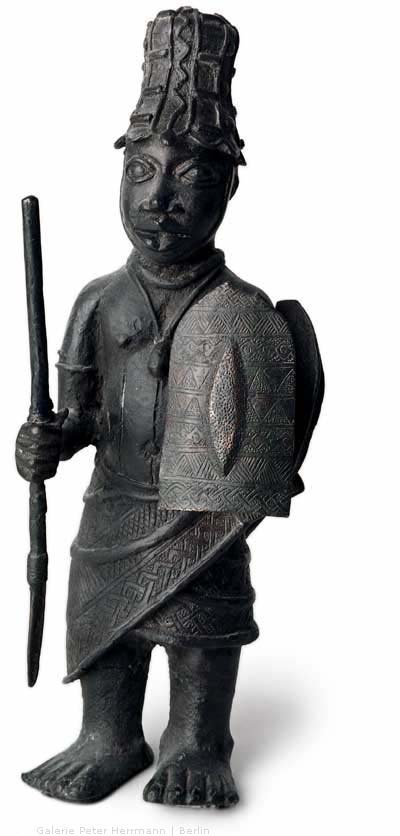
PhysicsHD:This is a depiction of an Iyase of Benin, apparently, going by the hat he's wearing. |
| Politics › Re: Dapolam Accepts Defeat, speaks to Nairalanders by PhysicsMHD(m): 9:14pm On Apr 14, 2011 |
Sarahluv:Who's this woman: [img]https://www.nairaland.com/nigeria?action=dlattach;id=420077;type=avatar[/img] That you're referring to as your "idol" in your profile? I need to know immediately. |


1 2 3 4 5 6 7 8 ... 16 17 18 19 20 21 22 23 24 (of 67 pages)