It is difficult to say exactly who introduced the George wrapper (traditionally known as Injiri in Ijo land) into Ijo land, while some scholars agree that it was an European merchant named GEORGE Goldie who was the founder of the Royal Niger Company in 1870s that first introduced this fabric into Ijo land, thus the wrapper was named after him as ''George wrapper''. Other scholars equally agree that the George Wrapper was first introduced into Bonny by King GEORGE Oruigbiji Pepple 1 of Bonny (reigned between 1866-1883) after his sojourn in England. From Bonny the wrapper became very popular and soon got to neighbouring Ijaw kingdoms until it even got as far as the heart of igbolands, thus the wrapper was named after him, yet another set of historians believe that neither of the above postulations are correct about the origin of George wrapper because the authentic origin of George wrapper into Ijaw land was in 1910 when King George of England visited southern Nigeria and women in ijaw land were given these wrappers by the British colonial government to wear and welcome the English King. My Ijaw people, have your say.
#IjawHistoryInPicturesDid you know?
It is difficult to say exactly who introduced the George wrapper (traditionally known as Injiri in Ijo land) into Ijo land, while some scholars agree that it was an European merchant named GEORGE Goldie who was the founder of the Royal Niger Company in 1870s that first introduced this fabric into Ijo land, thus the wrapper was named after him as ''George wrapper''. Other scholars equally agree that the George Wrapper was first introduced into Bonny by King GEORGE Oruigbiji Pepple 1 of Bonny (reigned between 1866-1883) after his sojourn in England. From Bonny the wrapper became very popular and soon got to neighbouring Ijaw kingdoms until it even got as far as the heart of igbolands, thus the wrapper was named after him, yet another set of historians believe that neither of the above postulations are correct about the origin of George wrapper because the authentic origin of George wrapper into Ijaw land was in 1910 when King George of England visited southern Nigeria and women in ijaw land were given these wrappers by the British colonial government to wear and welcome the English King.
My Ijaw people, have your say.
#IjawHistoryInPictures
Historically, it was the Itsekiris of Delta State that FIRST started wearing or using the George material centuries back via the Portuguese in what is now modern Nigeria and from there it spread to other locations.
jaybenugo: Minutes after an American businesswoman Anita called out Davido for allegedly impregnating her and asking her to abort it, his fans have linked it to the lyrics of Davido's popular song, 'Asssurance'
faceland: Yea, You know those people that charge 1k to turn your image to cartoon... You can do it automatically there by uploading the picture and asking it to do it's thing (chose anima effect). Just part of the AI revolution.
The image below, I personally instructed it to make (they call it prompt).
History and reality will never be the same again with AI.
MCentral: BUA Foods Plc came out of the blue to outperform peer rivals who had long been listed on the NGX index as the company weathered the storm by recording strong growth in financial metrics.
Of course, the consumer goods sector felt the pang of macroeconomic headwinds made worse by rising inflation and high interest rate that compounded the woes of consumers while the unexpected devaluation of the currency resulted in foreign exchange losses that undermined profit margins of most entities.
The ongoing crisis in Russian-Ukraine which caused commodity prices like wheat, maize, raw sugar, and Cocoa to rise to historic highs, have escalated industry cost of sales and shaved off margins.
It is important to note that manufacturers continue to groan under huge energy bills as electricity from the grid has been erratically unstable.
The headline inflation rate increased by 27.3 percent in October, according to the latest data from the National Bureau of Statistics (NBS).
It is important to note that Food and Non-Alcoholic Beverages remained the largest contributors to the increase in the CPI, accounting for 14.2 percent in October.
To tame inflation, the central bank has been raising interest rates and left the monetary policy rate at 18.75 percent as the Monetary Policy Committee (MPC) of the Apex bank has postponed two meetings.
Growth across divisions underpin BUA Foods’s earnings
Despite all of these challenges, BUA Foods Plc delivered strong top and bottom line returns across business portfolios, emerging as one of the largest companies by earnings in Nigeria.
BUA Foods’ revenue grew by 81 percent year on year (y-o-y) to N524.4 billion in the first nine months of 2023 (9M 2023) from N289.80 billion as at September 2022.
There were significant improvements at the divisions.
For instance, revenue from Flour division that contributed 29 percent to Group sales surged 126 percent to N149.9 billion in September 2023 from N66.2 billion in 2022.
This was driven by increase in sales volume and gradual commissioning of the company’s expansion plans as well as redesigned route to market distribution along the integrated supply value chain network.
It is interesting to note that volume sold increased by 73 percent to 238,785 tons within the period from 138,284 tons in September 2022. Revenue from bakery flour grew by 118.4 percent to ₦135.5 billion in September 2023 from N62.1 billion in 2o22.
Interestingly, revenue from the Pasta division contributed 11 percent to revenue increased by 37 percent to N58.3 billion in September 2023 from N42.70 billion in 2o22. This was driven by price adjustments and other innovative proactive sales initiatives within the year.
There was a 4 percent increase in the production volume to 91,305 tons in 2023 from 87,748 tons in 2022 within the period.
BUA Foods has been magnifying rice production as it continues to acquire and plough more lands, creating jobs and stamping its footprints across the country.
These investments are yielding fruit as the company’s new division Rice business contributed N995 million to the top line (sales) in the period under review (Nine months September). The largest consumer goods firm by profit said that across the business divisions there was significant growth in volume sold impacting the overall performance as well.
Due to the slight selling price adjustment and new market penetration for sales within the year, BUA Foods’ gross profit increased by 95.1 percent to N183.8 billion in September 2023 from N94.2 billion in 2022.
Operating profit grew by 94.5 percent to N156.9 billion in September 2023 from N80.7 billion, benefitting from top line growth driven by price adjustment, local market expansion and the company’s export sales and gradual commissioning of our ongoing expansion plans.
Profit before tax increased significantly by 50 percent to N111.4 billion in 2023 from N74.2billion in 2022.
Profit after tax grew by 53.6 percent to N105.6 billion in the period under review from N68.8 billion. The earning per share (EPS) followed the same growth trajectory as it grew by 53.6 percent to N5.87 in 2023 from N3.82 in the corresponding period.
“We are pleased to report a strong and successful fiscal YTD performance for BUA Foods having delivered strong top and bottom line returns across business portfolios and key financial metrics,” said Engr. Ayodele Abioye, the Managing Director of BUA Foods.
“We have experienced double-digit growth within the period with revenue YTD up by 81 percent and PAT by 54 percent, underscoring the strength of our business strategy, dedication of our exceptional team and support of our strategic partners.
These were achieved despite the complexities presented by rising inflation, high interest rate resulting in pressure on consumer income, and Naira depreciation which led to FX losses. Clearly, BUA Foods Plc has not only weathered the storm but has thrived.
“We have strategically navigated challenges by embracing change, doubling down on efficiency, and carefully optimizing costs without conceding our commitment to quality and service. Moreover, our focused investments in expansion projects is on course, providing a solid foundation for further growth and competitiveness,” summed Abioye.
Goose are kept in farms as security and to deter predators like snakes. I keep geese in my farm strictly for that purpose. Their strong sense of sight and hearing is impeccable.
The facilities managers have to sit up or get fired here. Folks on international flights cannot be exposed to enervating issues like this as a large Nigerian Diaspora community will be flying in and out from nearly all continents between now and January 2024.
Second, the original supplier of the conveyor belts too have to be investigated to ensure that it wasn't refurbished or used conveyor belts that they installed at the new MMIA terminal instead of new ones. The Minister of Aviation, Festus Keyamo has to crack the whip so as to unravel what's responsible for the constant disgraceful breakdown of the conveyor belts.
Napata77: . . My Submission that Yoruba, Igbo Have The Same Parent Language – Aremo
A retired Associate Professor of English and ex-Head, Department of English, Obafemi Awolowo University, Ile-Ife, Osun State, Dr. Bolaji Aremo, talks about his research findings that Yoruba and Igbo languages had the same parent language.
INTERVIEW
You stated in your book ‘How Yoruba and Igbo Became Different Languages’ published in 2009, that the two languages are historically from the same parent language. How is this so?
We can conclude that two or more languages are historically derived from the same parent language when we compare the languages and find in both of them very many basic vocabulary words that are similar in sound and in meaning. For example: Igbo imi/ Yoruba imu = ‘nose’; Igbo nti/Yoruba eti = ‘ear’; Igbo onu/ Yoruba enu = ‘mouth’; etc. Basic vocabulary words are essential words, such as words for body parts, for which every human language normally has its own native equivalents.
Thus, for instance, it is not likely that the Yoruba examples just given can originally have been borrowed from Igbo, or that the Igbo examples can originally have been borrowed from Yoruba. And so, the very many vocabulary words which are similar in sound and in meaning found across Igbo and Yoruba can only have resulted from the fact that the two languages are indeed from one and the same parent language.
What are some of the linguistic correlations manifest in the two languages to underscore the findings?
The most easily identified indication of genetic relationship between two languages is found at the vocabulary level. And as just explained, there must be a substantial number of basic vocabulary words similar in sound and in meaning which are found across the languages that are thought to be the daughter languages to a prehistoric parent language. Of course, we can also find additional manifestations of the genetic relationship elsewhere in the languages, especially at the sub-level of morphology, which deals with the structure or forms of the words.
Does it mean that the two tribes were of the same ancestral stock?
What can indeed be inferred from our historical linguistic findings is that they used to live in prehistoric times in the same community, in the same restricted culture area. But there are strong suggestions from both Igbo and Yoruba oral traditions that the two ethnic groups were of the same ancestral stock.
You further claimed that many West African languages such as Igbo, Yoruba, Bini, Ewe and Twi are genetically related. In what areas are the noticeable similarities since Yoruba is regarded as a highly tonal language?
It has, in fact, been the claim of linguists that Igbo, Yoruba, Bini, etc. are all tonal languages, and are all genetically related. That is to say, they are all languages in which word meanings are dependent on such voice pitch levels as High [/] and Low [\]. Thus, for instance, depending on the tones used, the Yoruba word ojo could mean ‘rain’, ‘cowardice’, or ‘name given to a type of male child’. Similarly, depending on the tones used, the Igbo word ala could mean (among other things) ‘madness’, ‘breast’, ‘ground’, or ‘bottom’. There must also be other similarities that can be found among them all, since the linguists’ claim is also that they are actually all genetically related. But until more thoroughgoing research like the one on Yoruba and Igbo is undertaken, we cannot say in quite concrete terms what the similarities are like between Igbo or Yoruba on the one hand and any one of the other West African languages on the other hand.
In the book, you noted that it would in fact be absolutely right to conclude not only that Igbo and Yoruba used to be one language, but also that the Igbo and the Yoruba people are brothers and sisters who used to live together as members of the same community. Historically, where did the two tribes inhabit before separation and what caused the division?
From the totality of the historical linguistic evidence available, the conclusion can be reached that they lived together in Ile-Ife. Then, of course, it cannot have been the case that some of the people living together in Ile-Ife were known as ‘’Igbo’’ and the others as ‘’Yoruba’’.
The terms ‘’Igbo’’ and ‘’Yoruba’’ were acquired not too long ago, i.e centuries after the separation had taken place. What caused the separation? The answer to that lies deep in prehistory, beyond the reach of our historical linguistic tools. What seems clear, however, is that those were times when a group of friends or relations could, from sheer love of adventure or freedom to do one thing or another their own way, decide to emigrate to some strange unoccupied lands and start off their own pet kingdom.
To what would you attribute the marked differences in the syntactic structure and the other linguistic variations in both languages if they used to be one?
Like other things which endure in time, language is constantly changing, though slowly. Therefore, if two or more groups of speakers of a language are separated and prevented in some way from communicating with one another, each of the groups will eventually develop its own version of the original language.
After a long period of time, the various versions of the original language developed by the different groups will become so different from one another that they will be mutually unintelligible, i.e. they will for all practical purposes become separate languages and there will be nothing like the original language in existence. It may be pointed out, however, that when the changes in the different versions are not so great as to block mutual intelligibility, they are just regarded as regional dialects of the original language.
Thus, Oyo, Ekiti, Egba, Owo, Ife, etc. are just regional Yoruba dialects, because their different speakers can still manage to understand one another, even when they speak the actual dialects and not the general, communicative norm (based mainly on the Oyo dialect). For the same reason, Ahoada, Bende, Ika (Western Igbo), Ikwerre, Owere (Owerri), Onicha (Onitsha), etc., are just regional dialects of Igbo. But Yoruba and Igbo, which were originally dialectal versions of the same language, are now different languages because they are no longer mutually intelligible. The original parent language, the proto-Yoruba/Igbo language, no longer exists.
Would you agree with the declaration of the Ooni of Ife, Oba Adeyeye Ogunwusi, during the 2019 Aje festival that the Igbo and the Yoruba are aboriginal to Ife?
Oh, absolutely! From the available historical linguistic evidence, the Ooni must be right. I understand a spokesperson for the Ohanaeze has said the Igbo were the first settlers in Ile-Ife, and that the Yoruba later came to join them there. ....
In the book, you advised the two ethnic groups to “for the good of all, try and jettison their patently counter-productive legacy of mutual distrust and once again relate with one another as real brothers and sisters.’’ How do you think this can be achieved considering the disturbing deepening distrust and disagreement between the two ethnic groups?
It is indeed a shame that two of the most highly educated and enlightened ethnic groups in the black world, the Yoruba and the Igbo, can allow themselves and their children to be hooked on the counter-productive legacy of mutual distrust. It is very unfortunate. I think it is all political rivalry of the self-defeating type.
And they have been at it right from the Zik/Awo election quarrel of 1951, working at cross purposes ever since, even at critical moments when their working together would have steered our country away from the murky depths in which we have all been wallowing till today. I would like to believe that common sense will soon prevail, and members of the two groups will once again be relating with one another as real brothers and sisters – for the good of all!
Without Aremo and others getting to understand the historical IGALA connection with the Yorubas who they share a major direct ancestry with, he and others like the current Ooni of Ife will NEVER get the answer right as to why a few very clear words of Yoruboid or Yoruba origins found their way into Central Ibo language usage.
It is an open secret that Igala (just like Itsekiri) is a Yoruboid language. The similarities are very uncanny and mind-blowing! The Igalas are indigenous [for over 500 years now] to several communities in Anambra, Enugu, and Delta States (Ebu where Agatha Amatha comes from, and other Igala communities in Delta North), so, the inflow of Yoruboid words along the ethnic borders was guaranteed to happen.
Napata77: Historians and anthropologists have long known that Igbo and Yoruba are just linguistic derivatives of an original shared super language. Other language groups in Nigeria and the West African sub-region may also be speaking derivatives of this ancient super language we once shared.
Nothing proves these connections more than the multiplicity of words and meanings shared by the two ethnic groups, Yoruba and Igbo.
It also proves that there was a time when these two groups were ONE, and that Igbos and Yorubas are brothers and sisters from deepest antiquity.
By Kelechi Wachuku
Linguist & Anthropologist
This isn’t a fully comprehensive list, but these include a fair number of words and other similarities. [1] The Igbo word comes first with the corresponding Yoruba word right after.
Other similar words that may be the result of borrowing (Animals):
toro toro = turkey tolotolo = turkey
Body Parts/Words Relating to the Body:
ọnụ = mouth ẹnu = mouth ire = tongue ede = tongue, especially in the sense of "language." ntị = ear eti = ear agba=chin agbọn=chin ụbụrụ = brain ọpọlọ = brain aka = hand ika = finger ikiaka = elbow ejika = elbow imi = nose imu = nose isi = head ori = head ụkwụ = foot, leg -kun in “orokun” = knee ezé = tooth eyin/ehin = tooth afọ = stomach ifun = intestines ike = buttocks, anus ikun = stomach ọkpụkpụ = bone/skeleton egungun = bone/skeleton olu = neck ọrun = neck ọdụ = tail iru = tail
Miscellaneous:
ri = eat jẹ = eat bịa = come wa = come ogo = height iga = height obi = heart, king ọba = king ume = breath, energy imi = breath also umi in central yoruba (same meaning) okwu = speech, word, utterance ohun = voice, utterance uche= mind ọkan = mind úgwù = circumcision egun = circumcision (seldom used) ọría = disease arun/aarun = disease also related to yoruba aarẹ and arirẹ ụra = sleep orun = sleep nso nso = menstruate osuosu = menstruate gba= shoot in igbo gba = kick in yoruba (used in certain expressions) ogwu = thorn ẹgun = thorn re = sell ra = buy
Similar Words (likely due to borrowing):
iba=fever iba=fever
Possible cognates:
ikiri ụkwụ = heel igigirisẹ = heel akụ́ = arrow (1 of 2 possible words for “arrow”). ọkọ = spear
Numbers:
atọ = three ẹta/(m)ẹta = three anọ = four ẹrin/(m)ẹrin = four Many Igbo words, especially numbers, are prefixed by a “ke-” or sometimes “nke” when they become adjectives. A similar process is seen in Yoruba numbers. nke atọ, keanọ, keise, nke isii, keọkara = 3rd, 4th, 5th, 6th, half in Igbo kẹta/ikẹta, kẹrin/ikẹrin, karun/ikarun, kẹfa/ikẹfa = 3rd, 4th, 5th, 6th in Yoruba
Possible Cognates:
abụọ = two (m)eji = two Words with “-j-“ in Yoruba (IPA: -dʒ-) frequently evolved from -b-“ in Yoruba as a result of palatalization. So, words like “eje (blood)” were once “ebye.” Thus, “-ji” in “eji” may have at one point been something like “ebye” or “ebyi,” which would be more similar to “abụọ.”
Pronouns:
ọ or o= he/she/it (3rd person subject pronoun) o or ó = he/she/it (3rd person subject pronoun) oun/ọ or also un = he/she/it m/mụ = I/me (1st person singular subject and object) also mean "my" if put after, say, a noun. aka m(ụ) = my hand mo = I (1st person singular subject) mi = me (1st person singular object) also mean "my" if put after, say, a noun. ika mi = my finger emi = 1st person singular emphatic. ha = they (a)wọn = they ụnụ = you (plural) ẹyin = you (plural) gini = what ki(ni) = what Land Features/Environment:
ala = land ile = land in yoruba okute/okwute = stone/rock okuta = stone/rock afufe = wind ifufe = wind oyi = cold oyii = wind in Central Yoruba osisi = tree/plant ose = fruit
Similar Words (likely due to borrowing):
ọka = corn ọkà = grain/wheat yoruba
Possible Cognates:
ji = yam iṣu = yam ụwa = earth in igbo yoruba cognates (iwa, wiwa, hardly used except for in names, like Oluwa); (oni/olu = owner, “oluwa=owner of the earth”), oduduwa (great one who created the earth) (odu=great or mighty one→ god sent down from heaven in ile ife) (pg 148)[2]
Above: Oduduwa
ebe = place ibi = place ugwu = moutain/hill oke = mountain (m)miri = water omi = water in Yoruba
Religious/Community Terms:
ute = mat itẹ=throne in yoruba ife = to worship, to wave, to adore ife = love, desire, affection in yoruba afa = divination, sorcery ọfọ = mourning, sorcery ifá = divination ụlọ=house in igbo ile/ule=house in yoruba ilu = city in yoruba ụlọ mmụọ/ụlọ nsọ = shrine ileumole/ileorisha = shrine mmụọ = spirit ụmọle = another word for any generic god in Central Yoruba ẹmi also means spirit, life, soul in yoruba ọlịsa = God in some Igbo dialects also alụshị/alụsị = minor god in standard Igbo orisha = god in yoruba uru = gain, profit ere = gain, profit efu = free (adverb) ofo = free, as in “ṣ’ofo” (yoruba) osi/isi/esi = cook in igbo ase = cook in yoruba apo=bag in yoruba akpa=bag in igbo
Possible Cognates:
ígwè = iron ogun = Yoruba god of iron (eke)le = greeting (iki)ni = greeting
Family/Interpersonal Words:
ụmụ = children ọmọ = child nwa=child ewe=child, youth in certain dialects oyi = companion, friend, lover aayo = favorite, preferable, beloved person, favorite person, favorite wife ọká=expert or distinguished indivual (oka mgba=wrestler) ọgá = boss ọgbọ = age-mate ẹgbẹ = age-mate “emeka bu ogbo m(ụ)” (Igbo) = Emeka’s my agemate “egbe mi ni emeka” or “emeka jẹ egbe mi” (Yoruba)= Emeka’s my age-mate
Note: egbe is now commonly used for group, association, or guild, and in igbo, ọgbọ can mean generation.
oru/ohu = job, labor, duty, employment, slave ẹru = slave oke = man, male, masculine akọ= man, male, masculine onye = one who, who, person eniyan = person, human also ẹni/ọni/ ọniyan in Central Yoruba ọni can mean “one who” in yoruba, as in “oniwaasu” (preacher/one who preaches) nwuye = wife -aya/iyawo = wife nwanyị = woman, female person, wife -aya/iyawo = wife iko = adultery ọkọ=husband nta = marksmanship/hunting ụta = bow in igbo ọta = marksman, shooter ịyaa = mother, aunt, term of deference for an elder cousin who was one’s nanny iya = mother, term of deference for an elderly woman agha = war ogun = war ebo = clan, kindred, lineage, tribe ẹbi = family
The few similar sounding words do NOT mean there is a direct ancestral split between Yorubas and the entire Iboland. There is also linguistic, religion, and food interactions along the border areas with the Ibibios by the Aros and their confederacy allies who borrowed a significant style of dressing, cooking, and the Ekpe from the Ibibios and Efiks.
The seemingly shared words between Yoruba and Ibos come from the IGALA land bridge in the Kogi State axis which also has the presence of Yoruba groups. Igala is classified as a Yoruboid language (just like Itsekiri) because Igalas have direct part Yoruba bloodlines or ancestral origins as clearly stated in a 2017 Punch interview by the King or Attah of Igalaland, HRM Micheal Ameh Oboni. The Attah stated in the interview that Igala came into existence as a result of the FUSION of migrants who moved from Wukari (Jukunland) in Taraba along the banks of the Benue River to the Benue and Niger Rivers confluence in today's Kogi State where they met and fused with a significant number of Yoruba and Edo people.
The Yoruboid words were definitely borrowed into Central Ibo language from majorly the Igalas and Bini-Edos (within the last 700 years) who had contact and settled to varying degrees in the centuries past in todays Anambra, Enugu, and Delta State axis with the primitive Ibo tribes of the SE area living side by side or ethnic border points.
I read excerpts from a history book which stated that clearly that centuries back, the Igalas and Yoruba hunters went on expeditions in the Nsukka area. The Igala presence in modern Enugu is 500 years old, so, Yoruba bloodlines had contact or reached the Northern Enugu State axis long before Nigeria came into existence.
Igala even has more recognizable Yoruba words in it and is closer to Yoruba than Bini-Edo language. Take words such as Ifa (Yoruba religion and divination), Ogede (plantains), Omi (water), Iba (fever), and more with NO changes in spelling between Yoruba and Igala. Then you have words with slight changes in spelling such as Egungun and Ogun in Yoruba VERSUS Egwugwu and Ogwu/Ogu in Igala. Egungun and Ogun both mean Masquerade and Medicine in both languages. "Obo" and "Oboni" in Yoruba and Igala have the same root meaning which has to do with the female reproductive organ.
So, the Igalas are direct relatives or cousins of the Yorubas, and they are also indigenous to Anambra, Enugu, Delta State [Ebu and other Igala-associated communities in Delta North]... In additional to indigenous Igalas of Kogi State. Igalas also have relationships linguistically with the Idomas, Ebiras, Nupes, etc.
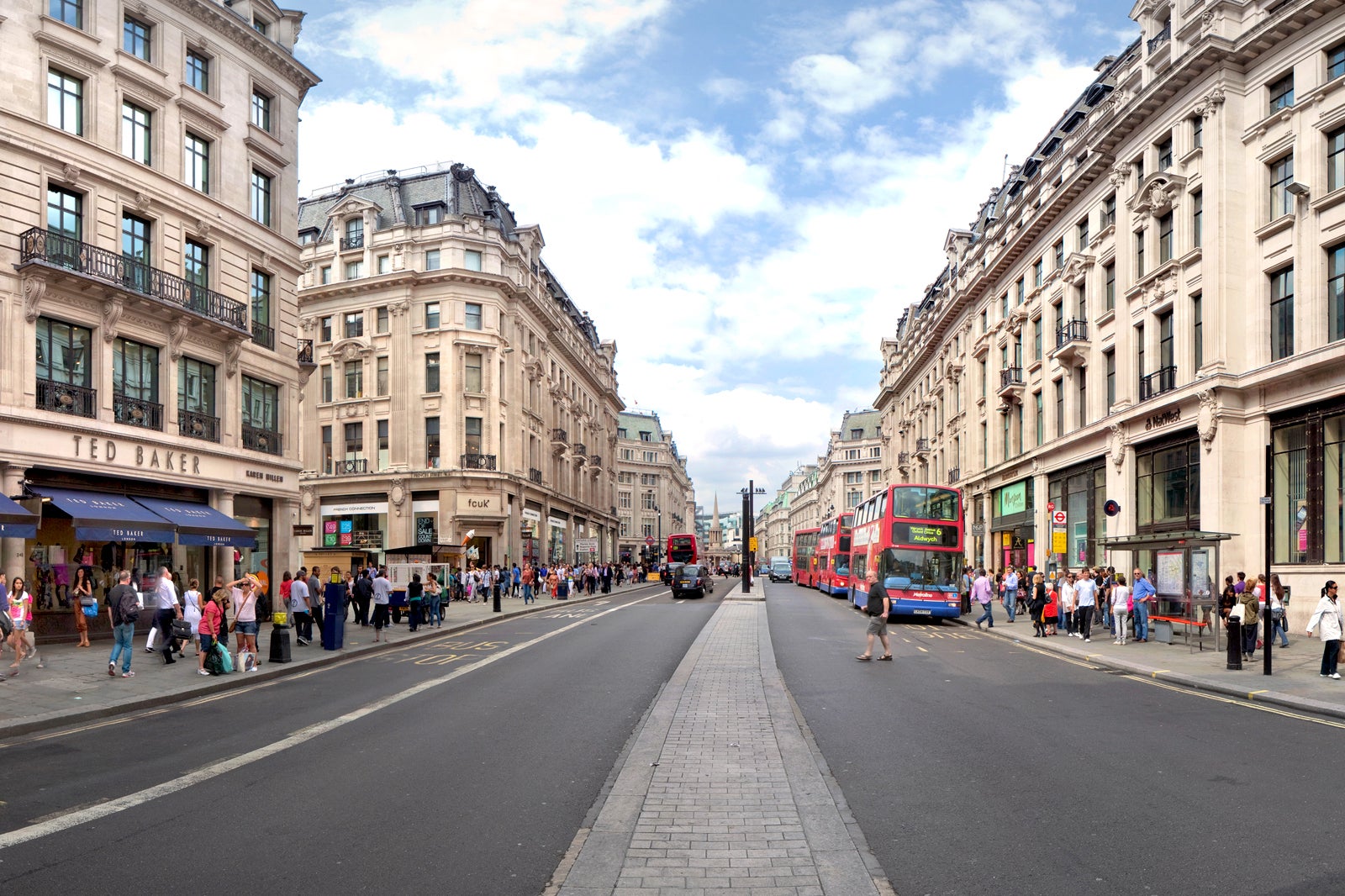
Napata77: Oxford street is not that wide, but it works.. Once we clear all those gates and fences on Allen, and demolish the odd building or two that are just too close to the road, there will be space.
Can you imagine if on both sides of this road was a big fat open gutter with no sidewalks, and just sand and mud on both sides of the road, that you would see all these people walking up and down the road like this?
How can?
We are seriously underselling our commercial spaces by not building our streets the RIGHT way.
This street is like the Oxford Street or Times Square of Lagos, with all kinds of fancy shops, restaurants, banks, companies, etc.
It is the sort of place that should be seeing HUNDREDS OF THOUSANDS of passers-by per day, including window shoppers, just like in Times Square in New York, or Oxford Street in London.
Impulse buying, whereby you just pass by and see something and buy on impulse without prior planning, accounts for a HUGE percentage of sales on those streets, leading to huge revenue for the sellers and huge tax income for the govt.
What makes all this possible in those places but not on ALLEN AVENUE?
Once you build Allen Avenue like this above, it will attract several thousands of pedestrians per day and TRANSFORM the volume of trade on that street by a minimum 600%, bringing greater tax revenue to the state govt.
The Lagos state govt should do this.
Indeed. I have also thought of this in the past as well.
Multistorey carparks can be built there because of space constraints and the widening of the walkways and roads for the further gentrification on Allen Avenue leading right into Opebi Street and Toyin Street in Ikeja would lead to the loss of existing land space.
Allen Avenue and environs in Ikeja (just like Adeniran Ogunsanya Avenue, Surulere), I remember were essentially residential areas until gradual commercialization took over from the early 1980s.
Now to the News: "Exactly as said on BBC 3 Months ago that if Nigeria can start exporting more in just few months time, Naira's value would speedily and massively increase against the Dollar. The Pigin BBC advice shows that as soon as we start exporting more than just Agro related and raw products Naira surge in value at the rate the Nigeria and the World have never witnessed before."
"From Portharcourt and Dangote Refinary, fuel and other petroleum products shall soon start being distributed all over the Nigeria. Kaduna Refinary and others are already seriously gearing up to follow suit."
WealthyNigerian: Awesome!!! Just as said by BBC, Forex would massively flow into Nigeria and strength the Value of Naira unprecedentedly. In the next 6 months, expect Naira to become N500 to $1 or even less, BBC said it is guaranteed to happen as Tinubu focuses efforts on: https://www.nairaland.com/7929097/why-naira-stengthen-against-dollar
ufotunang: Why did the Lagos State government do all this demolition in his first tenure...he has secured his 2 tenure...now demolishing houses and showing no care
It's very irritating to see the overt or open displays of pure ignorance and lack of attention to little details by some of you posters here on NL. It's obvious you did NOT read to comprehend the thread article posted by the OP. Contrary to what you posted up there, the Lagos State government had NOTHING to do with the Festac Phase 2 demolitions of illegally built houses!
Are you aware of the meaning of FHA (or Federal Housing Authority in full?) FHA is a Federal Government housing agency with offices in 6 zones of Nigeria. The Lagos and Abuja offices have under their control big estates on vast areas of developed and undeveloped lands. The Lagos State government or President Bola Tinubu have NOTHING to do with the demolitions because FHA is an INDEPENDENT Federal agency! The Federal Housing Authority (FHA), is a wholly owned agency of the Federal Government of Nigeria, and was established vide Decree 40 of 1973.
So, these illegally built houses in Festac Phase 2 were issued with several warnings by FHA to desist from building houses illegally for many years now going back to before the start of the PDP era at the Federal level in 1999. As the OP's article accurately indicates, they were WARNED in 2018 and 2021, and issued with orders to stop construction work on FG lands (got from the original indigenes of that area in the 1970s), but they continued construction on the illegally leased lands, and even built near NNPC pipelines, and on designated road layouts... and these are criminal offences!
okeysoninv: the reason why nnewi is developing more than other villages is because of huge economic activities , factories, manufacturing hubs , markets.your mansions in your village which you hardly stays is economic loss for us . Instead of building huge mansions why not build factories that can employ people and bring more development to our communities.
seanfer: There is nothing like Festac Phase 2. Those that sold the land to the victims are just land grabbers that are everywhere in lagos. This is a lesson to us all that before we make payment for any property let us go and fo our verification at both the Federal and State housing and urban ministries.... This same issue will happen around Port Harcourt airport in the nearest future because some agents have encroach the government land close to the airport selling recklessly
Just a quickly correct you and others here.
There is indeed a Festac Phase 2. It is the undeveloped part outside Festac Phase 1. The entire land was acquired during General Olusegun Obasanjo's military regime in the late 1970s from the original indigenes or families of that area.
I've had contact with FESTAC Town right from the late 1970s right through to the early 1980s when I lived there in an upscale, and serene, environment where things worked. Back in the early 1980s, I remember that the entire stretch of 5th Avenue had duplexes that had just been newly constructed but NOT yet been allocated to new tenants by the FHA.
Your observations of what is going on in Port Harcourt in terms of land encroachments is very apt.
Due diligence is key when leasing land anywhere in the world.
bestman09: You are trying. I've stopped buying yams because I discovered that rice seems cheaper. A N1700 tuber of yam will not serve my family twice whereas a kilo of rice at the same price will be cooked 2 times. We're all economists in this nation now
koboko69: I live in the United States, somethings here are double now too. High gas price, a 40 pack water case i get for $3.40 b4 is now almost $6, may car insurance was $2030 a year, they sent me a new bill, its 2788 for a new year now, never had an accident or a ticket. Inflation seems to be dealing with the world not just Nigeria. Stop calling your country a shithole.
I woke up early and I was hungry, I needed to step down before main food will be ready, the only small small food I've at home is cereal for my babies, I'm not really interested in that..
I checked home no milo again and we have few milk at home so I decided to go and but things I can quickly consume..
1. Bread×2 🍞 (₦2,000) 2. Milo =N1,800 3. Three crown milk = ₦450 4. Blue band butter = ₦1,000 5. Dangote sugar = ₦400
Behold ₦5,650 well spent, I took ₦6,000 in my pocket out and I came back with ₦350...
There should be cheaper substitutes for each of the 5 items listed without losing quality though.
Similarly, the Small-Scale LNG (SSLNG) Project agreement was signed by the Managing Director, NNPC Trading Ltd., Mr. Lawal Sade, on behalf of NNPC Prime LNG Ltd. while Mr. Abhinav Modi, Managing Director of SDP Services Ltd., signed on behalf of his company.
The SSLNG Project, which will be located at Ajaokuta in Kogi State, Central Nigeria, will ensure the efficient supply of LNG to the Autogas/Compressed Natural Gas (CNG) and industrial/commercial customers nationwide. The LNG Project is expected to be operational by December 2024.
rickleye: I would also . Which means she doesn’t wash her hands . If I invite a lady to my house and she wants to use the washroom, I listen for 1. Flush 2. Water running from faucet 3. Hand drying from towel If I hear flush and 5 secs you open the door. Whatever, I had in mind that evening will NEVER happen.
Social etiquette varies from culture to culture and from country to country. You have to learn as a young or older woman to conform with the culture wherever or whenever you find yourself on a date.
 Politics › Re: Who Introduced George Rapper In Nigeria by XAUBulls: 6:20pm On Dec 10, 2023