9jakool's Posts
Nairaland Forum › 9jakool's Profile › 9jakool's Posts
1 2 3 4 5 6 7 8 ... 17 18 19 20 21 22 23 24 25 (of 41 pages)
 Foreign Affairs › Re: Kenya Is Ahead of Nigeria In All Aspect (Facts Don't Lie) by 9jakool: 11:47pm On Jun 30, 2017 Foreign Affairs › Re: Kenya Is Ahead of Nigeria In All Aspect (Facts Don't Lie) by 9jakool: 11:47pm On Jun 30, 2017 |
Nowenuse:Yes, they did just like the many ethnic groups in Africa like Songhai, Oromo, and Somali all of whom modified the Arabic script and adapted it to their language. Ajami in Yoruba is known as Anjami or Anjemi. More specifically, it was Oyo empire that developed the use of Anjami. Even though conversion was slow, Yorubas have had contact with Islam for a very long term, perhaps since the time of the Malian empire. The religion of Islam in Yoruba is translated as Esin Male meaning the Malian religion. Oyo had link to the trans Saharan trade as well as Trans Atlantic trade. Ethnic groups throughout West Africa traded with Oyo and Islamic scholars beyond the boundaries of Nigeria were present in Oyo. Even though many ignorant or tribalist folks like to wrongly assume that the word "Yoruba" comes from Hausa, its true etymology goes back to the Songhais who were also present in Oyo. The first mentioning of Yoruba in writing goes back to a treatise written by a Songhai scholar named Ahmed Baba in the 16th century which was addressing Oyo. In the simplest way I can define it for you, Odu Ifa are series of codes that are interpreted by babalawos in the ifa divinition system. Nsibidi is a form of writing; no be so? That totally blew that myth that Hausas were the only Nigerians to develop a form of writing, which is just modified Arabic and here is a 100% indigenous form of writing that you are casting as side as insignificant. As for Igbos, they historically adopted it due to proximity to the Ejagham and the Ibibios, however they can't claim something that's not entirely theirs just like the British can't claim the Latin script. I feel like you have some wrongly assumed pre-concieved notion about certain ethnic groups. You don't have to go the ignorant route by saying Nsibidi is not developed enugh or scripted. One of the earliest evidence can be traced to the earliest Ikom monoliths which dates back to around 2,000 years ago. Sure, Nsibidi is used in decoration of objects like pottery, it also has at least historically far more practical use in Ikpe court cases in Cross River which are most definitely scripted. |
| Foreign Affairs › Re: Kenya Is Ahead of Nigeria In All Aspect (Facts Don't Lie) by 9jakool: 10:36pm On Jun 28, 2017 |
genieluv:Seeing that I've already addressed most of your points, I'm just going to adress this specific one. The Hausas are not the only present day Nigerians to develop a writing script or even the only one to do so from Arabic. The Yorubas of Nigeria also develop a writing script from Arabic and they also called it Ajami. The Swahili all the way in East Africa also did so and they called it Ajami. See any similarities? Ajami is not a term that is unique to the Hausas as it's just an Arabic word for the various modified Arabic scripts used to write African languages. And lastly, the modified Ajami scripts are not the only precolonial scripts used in Nigeria which is contrary to your claim. Odu Ifa of the Yorubas can be considered a form of writing, although it differs from the conventional modes of writing. If you are looking for that, then there is a so called minority ethnic group from the deep forests of central Cross River states that developed a form of ideograph writing called Nsibidi which dates back almost 2,000 years ago long before the Hausas even made contacts with Islam or Arabs. |
| Foreign Affairs › Re: Kenya Is Ahead of Nigeria In All Aspect (Facts Don't Lie) by 9jakool: 9:48pm On Jun 28, 2017 |
Nowenuse:And did I ever argue about Hausa foot soldiers? |
| Foreign Affairs › Re: Kenya Is Ahead of Nigeria In All Aspect (Facts Don't Lie) by 9jakool: 9:42pm On Jun 28, 2017 |
genieluv:Also, Ajami and Arabic were attributed to the Arabs and Islam. What's the indigenous writing system of Hausas? |
| Foreign Affairs › Re: Kenya Is Ahead of Nigeria In All Aspect (Facts Don't Lie) by 9jakool: 9:41pm On Jun 28, 2017 |
genieluv:What concern the Nupes, Okuns, and Auchi or extent of the Sokoto caliphate over the generalization you initially made with "Hausa-Fulani" tag as well as your unsound superiority claims. My claim from the beginning was that the Sokoto caliphate was created and led by Fulani. The Hausa Sarkins were disposed and replaced by Fulani leadership, hence a Fulani insurgency of course with some Hausa backings. Hausas and Fulanis fought a 4 year war known as the Fulani war. During the caliphate, the Fulani upper class were pretty much in charge. Also, I'm not really talking about foot soldiers because other ethnic groups not just Hausas were used by the Fulanis. Great Britain's army consisted of mostly non-British, but the conquests they made was still a British conquest. The Fulani became weaker beyond the Niger. The further South you go, the more treacherous the terrain gets. You have the thickets of the Nigerian rain forests(at the time) topped with the mangrove swamp and not to mention the tsetse fly which would have eliminated any approaching Fulani calvary in a swoop. See, this is why the Benins you regarded as not civilized enough for mostly traveling on foot did so. They knew of horses, they even depict horses in their plaques, but the horses were simply impractical. Horses were not ideal for the type of vegetation in the area and were only reserved for someone like the king. The capture of Ilorin specifically can't be attributed as a direct war between Oyo and Fulanis, but an internal rebellion of Afonja with the help of Northern slaves and the Fulanis who would later betrayed him. The Ilorin battle was an isolated case, this is why all the Yoruba towns North of Ilorin still have obas and not emirs till date. The Nupes and the Okun fought but that fight was always historic and predates the Fulani's Sokoto Caliphate, so the association you are trying to make is very weak. Also, what do you mean the Nupe almost conquered them, the Okuns are not a single entity you know, they are five major entities, be more specific. Some Okun groups were in the direct expansionist view of the Nupes. Others The Sokoto caliphate only made significant gains (in Northern Nigeria + Northern Cameroon) for only the initial 2-3 decades of its 100 year existence and for 7 decades, it stagnated. Those decades, it couldn't conquer much of Southern Nigeria. Why couldn't they make significant gains especially in the South in those decades? |
| Foreign Affairs › Re: Kenya Is Ahead of Nigeria In All Aspect (Facts Don't Lie) by 9jakool: 4:35pm On Jun 28, 2017 |
obaaderemi:The Trans-Saharan trade was longer, but its impact was slower than the Trans-Atlantic. The Yorubas participated in both. |
| Foreign Affairs › Re: Kenya Is Ahead of Nigeria In All Aspect (Facts Don't Lie) by 9jakool: 4:30pm On Jun 28, 2017 |
genieluv:Then differentiate them when appropriate. You were wrong when you started talking about Hausas-Fulanis conquering Northern Cameroon and parts of Nigeria, because it was the Fulanis who did, not the Hausas. To say, Hausa-Fulani conquered Northern Cameroon and parts of Nigeria will be historically inaccurate. Also, I am not removing Hausas from the Fulanis in Northern Nigeria's history, I am simply correcting the inaccurate info. **** Another thing is that, once the fulanis conquered the hausas, the fulanis heavily married hausa women due to shortage of fulani women creating highly mixed/hausanized fulanis and the fulanis also took more hausa soldiers with them to further conquer eastward n Southward territories. So, it was more of a mixed thing.No, during the Jihad, it wasn't more of a mixed thing as you put it. In Northern Cameroon, the Fulanis fought wars with the native, not the Hausa-Fulanis as you put it. The significant mixing in Nigeria among the Hausas happened AFTER the Hausas were conquered. >>>>Hausas n fulanis throughout their histories of the kingdoms n sultanate were always warring. The sultanate especially was more interested in conquest n expansion than trade n wealth unlike the Mali empire, so no surprise if they weren't so wealthy to travel on caravans, while the older hausa kingdoms were always fighting each other, fighting Kanem-bornu, Kwararafa, Southern pagan tribes e.t.c (This is why most hausas still feel grateful to Danfodio for uniting them).They were always warring, however here is a significant detail, the Hausa conquest happened in a matter of just 4 years from 1804-1808. The conquest of the Hausas was by the Fulanis. Most of the gains of conquest happened in the 2 decades following this. In fact one of the last, if not the last territorial gain of the Sokoto caliphate happened in 1824 after the capture of Ilorin. In the later decades, Sokoto caliphate was expansion was halted. ~~~~ Benins never learnt how to read n write and that set a huge blow to their claimed civilization. Human sacrifice, killing of twins n other abhorable practices were still the order of the day. N also, benins only travelled on foot. LolAnd what defines a civilization again? The Europeans called themselves civilized and yet committed genocides, practiced forced conversion, and slavery. The Sokoto practiced brutal execution methods like stoning and amputation. In fact the Sokoto caliphate was the state that had the most slaves per state in Africa on record in modern history and the second in the world only behind the American South. Benin traveled on foot, ok, so would a camel or a horse survive in the forest belt of Nigeria? 1 Like |
| Foreign Affairs › Re: Kenya Is Ahead of Nigeria In All Aspect (Facts Don't Lie) by 9jakool: 3:37pm On Jun 28, 2017 |
genieluv:Your argument is reminiscing to the European Supremacist who used the same argument to call Africans "savages." The writing argument is perhaps one of the oldest case in the book. I give the Hausas and Fulanis kudos for educating their citizens how to write Arabic and the modified Ajami, but to use this as a basis for supremacy arguments is far from wrong. |
| Foreign Affairs › Re: Kenya Is Ahead of Nigeria In All Aspect (Facts Don't Lie) by 9jakool: 12:02am On Jun 28, 2017 |
genieluv:Stop saying Hausa-Fulanis. First Hausas didn't conquer parts of Northern Nigeria and Cameroon, the Fulanis did just like they conquered the Hausas in Nigeria at the time. In Northern Cameroon, there is no Hausa-Fulani in reality. Hausas were not united until the Fulani conquered them. Before then, they were a collection of states. The Fulani also had the same Jihad throughout the rest of West Africa in Maasina, Fouta Djallon and Fouta Toro. The Hausas adopted the more conservative form of Islam adopted by the Hausas. I know of a Mandika from Mali named Mansa Musa who traveled to Mecca on a caravan. I wan't you to name prominent Hausas who did so on caravans, not that I don't believe you, I just want to know. Only thevery rich or prominent could afford to go on hajj back then. Also, I don't know what you are using as criteria for civilization. Must the Benins have a caravan to be considered "civilized" enough. They built the largest earthwork on the face of this planet, one of the largest walls in the world and the largest in Africa. They had a system of government/administration, they had a taxation system, they traded. What else must they have to be civilized enough? 3 Likes 1 Share |
| Foreign Affairs › Re: Kenya Is Ahead of Nigeria In All Aspect (Facts Don't Lie) by 9jakool: 11:33pm On Jun 27, 2017 |
genieluv:Yes they did in 1859. It was based in Abeokuta. It's the first newspaper in Nigeria. |
| Foreign Affairs › Re: Kenya Is Ahead of Nigeria In All Aspect (Facts Don't Lie) by 9jakool: 3:15am On Jun 27, 2017 |
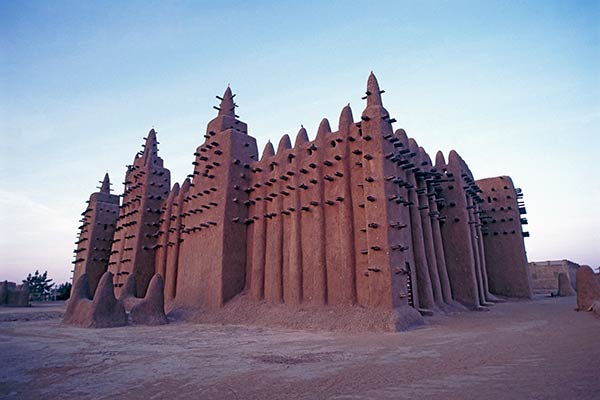
Hati13:The city of Jenne-Jeno is a ruin, so I think the walls is in ruins. Jenne-Jeno and Djenne are both in Mali.The Great Mosque was built originally in 1200s and rebuilt during colonization in 1907. Djenne is settled by the Songhai people. Dhar Tchitt is in Southern Mauritania. The people who built it were the Soninke people of the Mande people group. The city was abandoned and it fell into ruins. |
| Foreign Affairs › Re: Kenya Is Ahead of Nigeria In All Aspect (Facts Don't Lie) by 9jakool: 8:43pm On Jun 26, 2017 |
Nowenuse:Ok, I didn't say Kirdi could be 100 tribes. I said the ethnic groups in the Kirdi area could be 100. |
| Politics › Re: Ondo Is No Longer An Oil Producing State Just Like Crossriver by 9jakool: 5:23am On Jun 26, 2017 |
TheKingIsHere:Na so?..Because last I heard, most of Ondo's oil are offshore and only the Ilajes have open access to the sea in Ondo state. What Ijaw settlements in Ondo state have direct view of the sea and I'm not talking about riverine areas? I'm curious to know. |
| Politics › Re: Ondo Is No Longer An Oil Producing State Just Like Crossriver by 9jakool: 5:21am On Jun 26, 2017 |
Efewestern:Ondo is the 5th largest producer of oi in Nigeria. That "little oil" as you put it, in just that one Ilaje lga is more than what the entire SE produces. |
| Politics › Re: Ondo Is No Longer An Oil Producing State Just Like Crossriver by 9jakool: 5:11am On Jun 26, 2017 |
Amarabae:You don't have to be an Ijaw or Itsekiri to be bias or be an antagonist on this matter, you just need to have some resentment for Yorubas. In fact, the bolded takes away from your credibility. Oya, make we hear the names of the Ijaw and itsekiri communities in Ondo where the oil is found. I want a full blown list, of course since you know the area so well. 1 Like |
| Foreign Affairs › Re: Kenya Is Ahead of Nigeria In All Aspect (Facts Don't Lie) by 9jakool: 10:43pm On Jun 25, 2017 |
TayserMahiri:Yes it's in the region affected by Boko Haram during the 2015 insurgency. During the insurgency when the terrorists were capturing territories, Madagali LGA was captured as well as the LGAs surrounding it like Michika, Gwoza, Mubi, Cibok etc. The Fulani also targeted the area in the early 20th century. |
| Foreign Affairs › Re: Kenya Is Ahead of Nigeria In All Aspect (Facts Don't Lie) by 9jakool: 10:12pm On Jun 25, 2017*. Modified: 10:47pm On Jun 25, 2017 |
Nowenuse:No, the the ethnic group I'm talking about are not Higi(Kamwe). Yes, I'm talking about Adamawa, Southern Borno and Northern Cameroon ethnic groups since the Kirdi are interlaced in between these areas, that's why I say specifically Kirdi area not that those ethnic groups are actually all "Kirdi" because I never said that. Yes, I am very sure that not all of the ethnic groups are Kirdi. If you go back, you would find what I actually said "For example, there is a cultural region in parts of NE Nigeria and Northern Cameroon known as Kirdi with dozens of ethnic groups who adhere to their native ethnic religions." Go back to my earlier posts, because you are kind of quoting me out of context a little bit. Actually I don't want to use of "zone" because that word as a undertone of a bounded/administrated area because I'm talking about a cultural/natural region. You can also go back to my earlier post. I wasn't even the person who first used the word "kirdi zone." You can also go back to find out. Lastly Fali and Batta aren't the only ones. What about Guduf, Mafa, Gude, or Musgum? You do realize the border between Nigeria and Cameroon is mainly political. It's not like "Kirdi" on one side and non-kirdi on the other. There are dozens of trans border ethnic groups in Nigeria. |
| Foreign Affairs › Re: Kenya Is Ahead of Nigeria In All Aspect (Facts Don't Lie) by 9jakool: 9:15pm On Jun 25, 2017 |
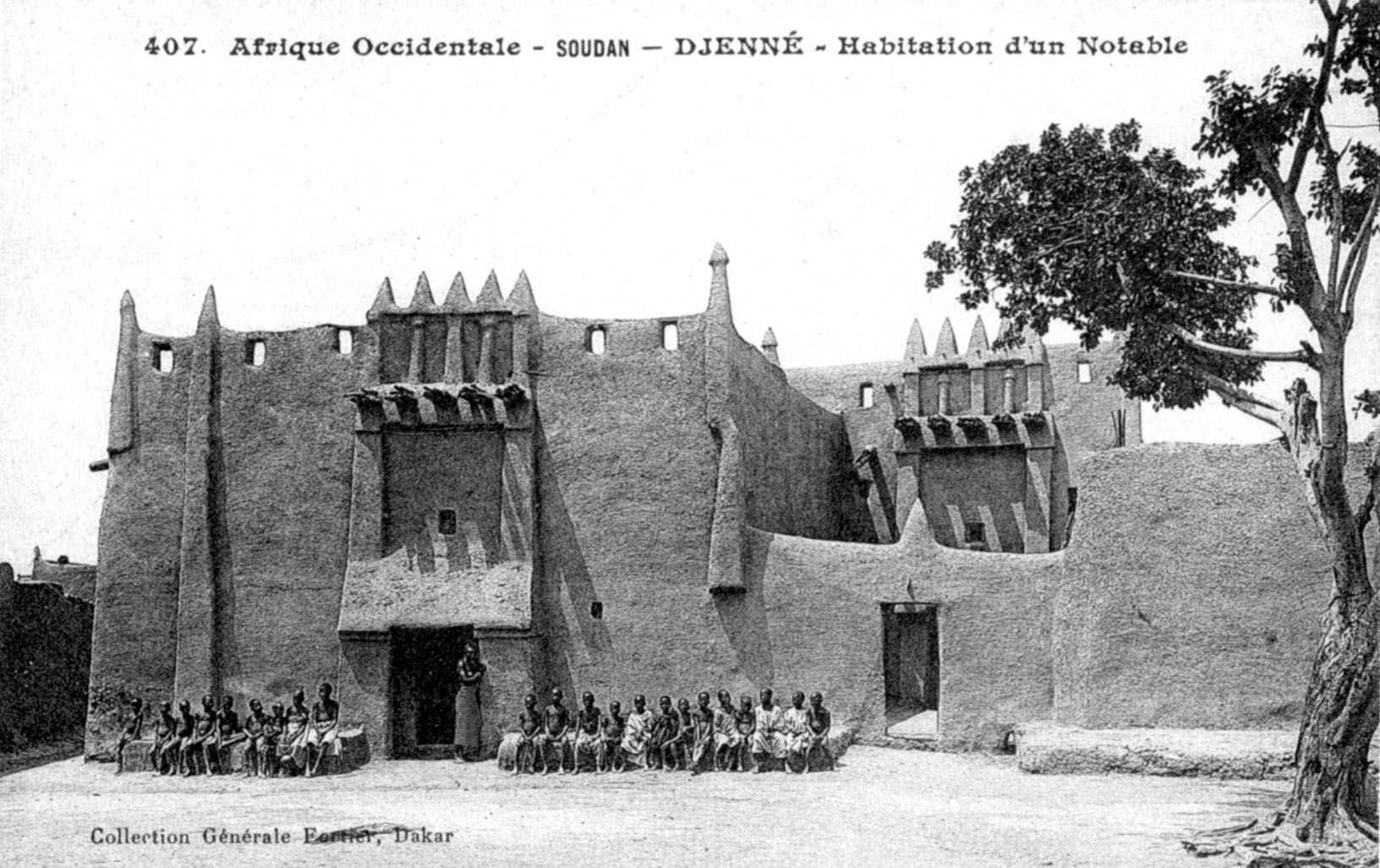
Hati13:There are perhaps a large number of Ancient cities in West Africa and I'm not talking about the medieval cities but the ancient cities that were Have you ever heard of Jenne-jeno or Dhar Tichitt? The ancient city of Jenne-jeno was settled along the fertile Niger river in 3 phases. It was first settled from 250 BC to 50 AD and then from 50 AD to 300 AD and last from 300AD to 900 AD. By 9th century AD, the city was protected by a wall. It was abandoned and later moved to the modern day city of Djenne. The modern day Djenne started out as a medieval city and hosted the great mosque of Djenne. Djenne-Djeno including the archaeology site and the old city with the mosque are recognized by UNESCO. Dhar Tchitt is even older and it was settled around 2000 BC to 500 BC. The city of Tchitt is also a UNESCO site. Here Djenne pictures depicting the terracotta art, pottery, and architecture of a mosque and a house. The last picture is from Tchitt. https://s-media-cache-ak0.pinimg.com/236x/62/68/9a/62689ab0169d695066e9811038c981f7--songhai-empire-african-culture.jpg https://i.ebayimg.com/images/i/330714132888-0-1/s-l1000.jpg https://upload.wikimedia.org/wikipedia/commons/5/5c/Djenne_Fortier_407.jpg https://sacredsites.com/images/africa/mali/mosque-of-djenne-600.jpg https://nda.revues.org/docannexe/image/1584/img-2.png |
| Foreign Affairs › Re: Kenya Is Ahead of Nigeria In All Aspect (Facts Don't Lie) by 9jakool: 6:10pm On Jun 25, 2017 |
.. |
| Foreign Affairs › Re: Kenya Is Ahead of Nigeria In All Aspect (Facts Don't Lie) by 9jakool: 6:09pm On Jun 25, 2017 |
--- |
| Foreign Affairs › Re: Kenya Is Ahead of Nigeria In All Aspect (Facts Don't Lie) by 9jakool: 6:09pm On Jun 25, 2017 |
TayserMahiri:Yes, culture is not about clothing. Clothing is just one aspect of culture. Yes, the Kirdi region is fascinating. It has perhaps maybe around one hundred ethnic groups in the area between NE Nigeria and Northern Cameroon. During the Fulani Jihad, the ethnic groups fled from the valley to the mountains. They are so diverse that you can spot like 10 ethnic groups in an area that is only 10 km squared. There was this story about one particular ethnic groups that fled to the mountains during the Jihad. They left the fertile lands in the valley to settle on the less fertile in the mountains. The geography of the area is in itself unique with plains dotted by rocky terrains, volcanic plugs or inselberg mountains. The area is very notable for it's diverse architectural styles. Some of the ethnic groups use stones in constructure due to its rocky terrains. This is contrast to many parts of Nigeria where adobe style or wooden styles are found. There is an archaeological site known as Sukur located in the area in Madagali LGA, Adamawa state. It's recognized as a UNESCO World heritage site. 1 Like |
| Foreign Affairs › Re: Kenya Is Ahead of Nigeria In All Aspect (Facts Don't Lie) by 9jakool: 6:08pm On Jun 25, 2017 |
Isahalbash:Thanks! I know it's in kanuri language, I actually meant to correct that. 1 Like |
| Politics › Re: Oduduwa Republic Map & Currencies At A Glance by 9jakool: 6:07pm On Jun 25, 2017 |
JoaquinElChapo:You should take your own advice. It'll help calm your bigotry. |
| Foreign Affairs › Re: Kenya Is Ahead of Nigeria In All Aspect (Facts Don't Lie) by 9jakool: 3:14pm On Jun 25, 2017 |
genieluv:My explanation was for the sake of simplicity, I didn't want to complicate things. It seems you are more interested in an in-dept analysis. Yes, I know Kirdi is a derogatory term especially among the Fulanis, but among others from the rest of the country, Kirdi just refers to the minority ethnic groups living in the North of Cameroon. As for the bolded, there was a Kirdi "zone" in parts of Adamawa and Taraba. The term Kirdi in the region dates back to around 19th century with the advent of the Fulani's Adamawa emirate and colonization. Parts of today Adamawa and Taraba state were the British Northern Cameroons before they were united with Nigeria. Also, "Kirdi" ethnic groups like the Fali are found in both Nigeria and Cameroon. Yes, fulanis might have called Gongola tribes 'Kirdi' in the past buh that name has probably died many decades ago due to the linguistic hausanization of the region, heavy christianization of the so called 'Kirdi' tribes n the political classifications of Nigeria.Yes, I know the term Kirdi is also not as common as it was. The Fulani became the dominant ethnic group and political force in Northern Cameroon, so the term stuck more. Even in Cameroon, many "Kirdis" have opted for Christianity or Islam like Nigeria. Many tribes that have converted to Christianity or Islam are still called Kirdi. The major difference between those in Cameroon and those in Nigeria is the popularization of the term in Cameroon as opposed to Nigeria. Lemme explain the 3 points further.Yes I am aware of the Christinizition trend among many historically "Kirdi" groups, but there are many who haven't been fully Christianize yet. Also, it's not just Christianity that's spreading to them, but also Islam. While those ethnic groups you listed are majority Christian, some have notable Islam minority like the Marghi for example. In and around Mubi, there are "historical" ethnic groups like Nzanyi and Gude who are mixed in terms of religion or majorly Muslim. There are some "Kirdi" who are predominantly traditional adherents like the Koma, who used the Mandara mountains as a sanctuary. |
| Foreign Affairs › Re: Kenya Is Ahead of Nigeria In All Aspect (Facts Don't Lie) by 9jakool: 5:39am On Jun 25, 2017 |
TayserMahiri:Kenya has culture just like Nigeria, so I am not here to argue that. I have heard if the Samburu before especially a few years back for the creation of all female village called Umoja. The truth is, there are a lot ethnic groups in Nigeria and Western Africa alike who predominantly practice their native religions. For example, there is a cultural region in parts of NE Nigeria and Northern Cameroon known as Kirdi with dozens of ethnic groups who adhere to their native ethnic religions. In fact, the word Kirdi means Pagan in Fulani because when the Muslim Toroobe Fulani settled in the region and attempted to convert the locals, they were very resistant to their Jihad. Also, there are many ethnic groups in Nigeria like Hausa or Igbo who are predominantly Christian or Muslim, However there are also many who are mixed in terms of religion like Yoruba, Igala, Etsako, Gbagyi, etc. Even among the Hausa and Igbos, you can till find notable indigenous element like Maguzawa or Odinani respectively. Similarly in Kenya, you have ethnic groups that are predominantly Muslim like Somali or Swahili and ethnic groups that are majority Christian like the Kikuyu. You can also find those who are mixed like Oromo and those that are majority traditional adherents like the Samburu. |
| Foreign Affairs › Re: Kenya Is Ahead of Nigeria In All Aspect (Facts Don't Lie) by 9jakool: 5:15am On Jun 25, 2017 |
Hati13:I'm just wondering, I've noticed that the rate of adherents of Ethiopia Tawedo Orthodoxy has declined with an upsurge in Pentay adherents looking at the census data. I've noticed a lot of the upsurge in Pentay and noticeable decline in Orthodoxy can be attributed to the Oromia region. Do you think this has to do with some resentment among the Oromo community due the association of the Orthodox church with Habesha if the church is actually associated with Habesha in Ethiopia since I don't really know the situation. I just want your view on this matter and I'll appreciate your feedback. |
| Politics › Re: Oduduwa Republic Map & Currencies At A Glance by 9jakool: 4:54am On Jun 25, 2017 |
JoaquinElChapo:So what? So because one man was a chairman of an Arewa council, the entire Okunland belongs with Arewa? Also, I guess that council was so significant among Okun, that Okun people haven't stop agitating for an Okun state and the unification with the SW. 1 Like |
| Foreign Affairs › Re: Kenya Is Ahead of Nigeria In All Aspect (Facts Don't Lie) by 9jakool: 4:40am On Jun 25, 2017 |
PissedYagami:In Nigeria, there are 3 main regional languages. I'm sure if I go to Kenya, I'll hear more Swahili than English likewise if you go to Nigeria, you'll hear the regional languages than you would English. In Nigeria, the National news are broadcasted in Yoruba, Igbo, Hausa and English. Even an int. org BBC recognize this, that's why they've officially list Hausa, Yoruba, Igbo, and Pidgin as their broadcast languages. What other African countries has 4 of its languages added to BBC? |
| Foreign Affairs › Re: Kenya Is Ahead of Nigeria In All Aspect (Facts Don't Lie) by 9jakool: 3:46am On Jun 24, 2017 |
Hati13:Don't think too much into it. It's simply genetics and nothing more or spectacular. |
| Foreign Affairs › Re: Kenya Is Ahead of Nigeria In All Aspect (Facts Don't Lie) by 9jakool: 7:30pm On Jun 23, 2017 |
Hati13:Don't be confused by those pictures. The people who are deemed one of the most lightest Igbos are from the Southeast. Hausas from the Northwest are deemed to be very dark in skin color. However, these are petty stereotypes. Among any ethnic group in Nigeria, you can find dark skin and light skin with dark skin being the most common. Even the Fulanis that are classed as having light skin in reality have more of a variety. |
| Politics › Re: Oduduwa Republic Map & Currencies At A Glance by 9jakool: 2:00pm On Jun 23, 2017 |
JoaquinElChapo:And is he an Okun from Kogi state? NO! You seriously need to go learn basic geography. I am done with this. 1 Like |
| Foreign Affairs › Re: Kenya Is Ahead of Nigeria In All Aspect (Facts Don't Lie) by 9jakool: 5:25am On Jun 23, 2017 |
ednited:You can't watch Youtube? How bad is the internet in Ethiopia? |


 madam sorry if I sound angry.. but just wanted to address some issues and how most people attribute everything to ijaw, even the ijaw man won't claim what he don't own.



1 2 3 4 5 6 7 8 ... 17 18 19 20 21 22 23 24 25 (of 41 pages)