9jakool's Posts
Nairaland Forum › 9jakool's Profile › 9jakool's Posts
1 2 3 4 5 6 7 8 ... 19 20 21 22 23 24 25 26 27 (of 41 pages)
 Foreign Affairs › Re: Kenya Is Ahead of Nigeria In All Aspect (Facts Don't Lie) by 9jakool: 5:55pm On Jun 15, 2017 Foreign Affairs › Re: Kenya Is Ahead of Nigeria In All Aspect (Facts Don't Lie) by 9jakool: 5:55pm On Jun 15, 2017 |
genieluv:I thought they were found in Dukku Local government. |
| Foreign Affairs › Re: Kenya Is Ahead of Nigeria In All Aspect (Facts Don't Lie) by 9jakool: 5:22pm On Jun 15, 2017 |
TayserMahiri:I think that tension is universal. |
| Foreign Affairs › Re: Kenya Is Ahead of Nigeria In All Aspect (Facts Don't Lie) by 9jakool: 5:13pm On Jun 15, 2017 |
ednited:There is still corruption in Nigeria under Buhari as under GEJ. The only difference is that more money is recovered due to the new corruption policies especially regarding whistle blowers getting 5% of the stake or something like that. I think people are more fearful to steal, but they still do it nonetheless. |
| Foreign Affairs › Re: Kenya Is Ahead of Nigeria In All Aspect (Facts Don't Lie) by 9jakool: 5:10pm On Jun 15, 2017 |
genieluv:Agreed, Kanuri's population is at most is around 65% |
| Foreign Affairs › Re: Kenya Is Ahead of Nigeria In All Aspect (Facts Don't Lie) by 9jakool: 5:07pm On Jun 15, 2017 |
Nowenuse:I know, just because you are born there, doesn't give you the right to indigineship because that's not your ancestral land. Yobe state is the buffer between Hausa groups in Jigawa and Bauchi and Kanuri in Borno and Yobe, that's why I was questioning the thought of Hausas being "native" to Yobe. The only state outside the Northwest that Hausa are native to is parts of Gombe and Bauchi states. |
| Foreign Affairs › Re: Kenya Is Ahead of Nigeria In All Aspect (Facts Don't Lie) by 9jakool: 5:00pm On Jun 15, 2017 |
obaaderemi:Woodabes are a type of Bororo. Bororo are just the nomadic/semi-nomadic Fulani. Torobe Fulani are the Fulanis that settled in towns and villages especially in Hausaland. |
| Foreign Affairs › Re: Kenya Is Ahead of Nigeria In All Aspect (Facts Don't Lie) by 9jakool: 6:24am On Jun 15, 2017 |
Isahalbash:Nice explanation. ok. if you say so, what are the names of Hausa towns in Borno? |
| Foreign Affairs › Re: Kenya Is Ahead of Nigeria In All Aspect (Facts Don't Lie) by 9jakool: 5:42am On Jun 15, 2017 |
Isahalbash:Ok, by "native" especially in the Nigerian context, I mean being indigene. Let's just differentiate between indegene and native. |
| Foreign Affairs › Re: Kenya Is Ahead of Nigeria In All Aspect (Facts Don't Lie) by 9jakool: 5:31am On Jun 15, 2017 |
Isahalbash:So by your definition, there are Igbos who are native to Kano? |
| Foreign Affairs › Re: Kenya Is Ahead of Nigeria In All Aspect (Facts Don't Lie) by 9jakool: 3:53am On Jun 15, 2017*. Modified: 4:23am On Jun 15, 2017 |
genieluv:Yes, Even the states isn't completely accurate like in Kaduna state when minority groups are under the domination of Hausa. Even though Kaduna state is supposed to be half and half, in the history of governors since civilian rule, the Hausa/Fulani have ruled a total of 4 times and a minority from Southern Kaduna has only been in office one time. That's why I support some form of federalism like Ethiopia that will remove minority groups from the domination of majority ones. The only minorities that will be grouped with majority groups are minority groups who are historically linked, have the same interest and would rather join the majority group. In my vision, Edo affiliated groups will be group together; groups that associate with Kwararafa in another; other minorities who are similar like the Kaje, Tyap, and other groups will be in another region; the Ijaw, Kanuri, Efik-Ibibio groups would also get a region of their own. It does not necessary have to be like this, but something similar to this nature. This form of regionalism would give each region some form of autonomy similarly to European countries like Italy, Spain, Germany, France, UK, etc. Take for example before the unification of Italy, there were many ethnic groups in Italy that have various culture and languages. A Veneto speaking from Venice will not understand a Sicilian speaking person from Palermo and neither would understand the German dialect spoken in Sud Tyrol, because the three cultures and languages are very different. A common lingua franca, the Italian language was adopted to booster a national identity and unify the country. The Italian language was actually based on the Florentine dialect of the Toscan language. Even with this national identity, there are regionalism that are created to give a sense of autonomy to the various historically different ethnic groups that make up Italy. The Sicilians, Sardinians, Lingurian, Lombards, etc have their own region govern by regional presidents. Italy which doesn't have close to the diversity and langauges of Nigeria is broken into 20 regions while Nigeria with far greater diversity was broken down by the British into 3 regions which are not representing. The fact that there are Yorubas and other groups that were never under the Sokoto caliphate or even linked historically in the North does not make sense, the fact that there are middle belts groups in the Northwest dominated by Hausa does not make sense as well. When the British carved up Nigeria, they weren't interested in representing the will of the people, otherwise they won't have take over and fought the local populations who didn't want their rule. If the European colonists weren't interested in representing the will or interest if the people, the Akan will be in the same country, the Hausa wouldn't have been split accross 2 countries, The Yorubas would have been in the same country, there won't even have been colonialism to begin with. |
| Foreign Affairs › Re: Kenya Is Ahead of Nigeria In All Aspect (Facts Don't Lie) by 9jakool: 3:34am On Jun 15, 2017 |
Isahalbash:Can you give the local government areas where Hausa dominate in Borno? Bro, Hausa aren't native to Borno. Just because you are born there doesn't mean you are an indigine of the land. Just like if you were born in Lagos doesnot mean Igbos or Hausas are native to Lagos? |
| Foreign Affairs › Re: Kenya Is Ahead of Nigeria In All Aspect (Facts Don't Lie) by 9jakool: 3:27am On Jun 15, 2017 |
genieluv:Not the Woodabe Fulanis, you should check them out. Do you know in Woodabe culture, the men wear makeup like the women? The men perform a special dance during the anual gerowol festival in which the women freely choose their husband. The wifes also have the right to divorce their husband and they get to keep the dowry afterwards. Woodabes uphold a very traditional Fulani nomadic culture. |
| Foreign Affairs › Re: Kenya Is Ahead of Nigeria In All Aspect (Facts Don't Lie) by 9jakool: 3:21am On Jun 15, 2017 |
TayserMahiri:Yes! There are some tensions. Take for example, many Hausa have settled in indigine(minority groups) towns and cities which has created tension in the past. In many instances, like during the Jos riots, the conflicts often take on a religious dimension because some ethnic groups are predominantly muslim and others are predominantly christians, and some have more religious diversity. Another form of tension that often takes place in the rural area between farmers who are the indigene of the land and Fulani herdsmen who are nomadic pastoralists. Many of the conflicts can be attributed to land/grazing rights. Some of the tension arose because the animals of the Fulanis often graze and temper near or over the farmer's field. This toxic mix leads to violence in some instances. |
| Foreign Affairs › Re: Kenya Is Ahead of Nigeria In All Aspect (Facts Don't Lie) by 9jakool: 3:08am On Jun 15, 2017 |
ednited:Better in quality of trains was what he was talking about, not in terms of scale. The Nigeria's train goes across the country, the train he was talking about was the Addis light rail. So the scale or size is different, however I think the government still spent a lot of money, a large sum probably going to corrupt officials. |
| Foreign Affairs › Re: Kenya Is Ahead of Nigeria In All Aspect (Facts Don't Lie) by 9jakool: 8:45pm On Jun 14, 2017 |
ednited:Nigeria's rail project goes across the country. The light rail in Ethiopia that he was refrencng was Addis. |
| Foreign Affairs › Re: Kenya Is Ahead of Nigeria In All Aspect (Facts Don't Lie) by 9jakool: 8:42pm On Jun 14, 2017 |
Hati13:my pleasure wenedem! 1 Like |
| Foreign Affairs › Re: Kenya Is Ahead of Nigeria In All Aspect (Facts Don't Lie) by 9jakool: 8:40pm On Jun 14, 2017 |
TayserMahiri:There are probably around 30 million or more in Nigeria. Even with this there is over 180 million people in Nigeria, so there are other large ethnic groups. Hausa are traders so they travel in Nigeria as well as across West Africa to trade. The Hausa language spread as a trade language. They form the majority or the largest ethnic groups in some states, those states is where they are native. There is a phenomenon that exist in many places in Nigeria, called indigene vs settler. In plateau state for instance, Hausas aren't native and in fact the few that settled in places like Jos are a small minority, however the Hausa language is widely spoken as a second or third language even though the state itself doesn't have native Hausa people and they are a minority. |
| Foreign Affairs › Re: Kenya Is Ahead of Nigeria In All Aspect (Facts Don't Lie) by 9jakool: 5:44am On Jun 14, 2017 |
fanficgirl:What's the difference between Nigeria's and America's? |
| Foreign Affairs › Re: Kenya Is Ahead of Nigeria In All Aspect (Facts Don't Lie) by 9jakool: 5:13am On Jun 14, 2017 |
fanficgirl:That's just impossible. I've never seen a naija party without food. How are you going to have a wedding and there be no food?  Amala is fine just saying. |
| Foreign Affairs › Re: Kenya Is Ahead of Nigeria In All Aspect (Facts Don't Lie) by 9jakool: 5:08am On Jun 14, 2017 |
fanficgirl:There is no wedding like naija. |
| Foreign Affairs › Re: Kenya Is Ahead of Nigeria In All Aspect (Facts Don't Lie) by 9jakool: 5:08am On Jun 14, 2017 |
Hati13:The men's clothing is known as agbada, which is the big jacket/tunic worn over the buba (the shirt) and with the sokoto(trouser) on the bottom. Women also wear buba on top (the shirt) and tie the iro (wrapper) on the bottom. The piece of clothing placed on the women's shoulder is known as ipele (sash). The hat won by men is known as fila(hat) with many variants of the hat like the abeti aja, tinko, gobi etc. There are a lot of clothing styles, these are just the few. In weddings the relatives of the husband wear similar wear/patterns (aso ebi) and the wife's relatives have wear their own style/patterns. Those clothing up there actually have history that goes back over a millennium ago. Centuries ago during the Oyo empire, the agbada was worn by royalty, the nobility or by commoners on special occasions. The name of the fabric used to weave the clothing is called aso oke meaning top attire. Aso oke is a very old pure cotton fabric that is made from spun cotton threads that are died and weaved on a loom. In most societies, the women usually do the weaving, however in Yoruba culture, the men traditionally weave aso oke. 1 Like |
| Foreign Affairs › Re: Kenya Is Ahead of Nigeria In All Aspect (Facts Don't Lie) by 9jakool: 4:51am On Jun 14, 2017 |
Isahalbash:How could I forget the food lol. Iyan, jollof, fish... |
| Foreign Affairs › Re: Kenya Is Ahead of Nigeria In All Aspect (Facts Don't Lie) by 9jakool: 4:48am On Jun 14, 2017 |
Muafrika2:If I use ethnologue's classification, then there are 68 languages. |
| Foreign Affairs › Re: Kenya Is Ahead of Nigeria In All Aspect (Facts Don't Lie) by 9jakool: 4:47am On Jun 14, 2017 |
TayserMahiri:Yes, but they are not they are not the majority. Bauchi is made up of dozens of ethnic groups and none is a majority, so all the ethnic groups are essentially minorities in Bauchi. |
| Foreign Affairs › Re: Kenya Is Ahead of Nigeria In All Aspect (Facts Don't Lie) by 9jakool: 8:25pm On Jun 13, 2017 |
TayserMahiri:Actually, Hausa has become the common lingua franca. |
| Foreign Affairs › Re: Kenya Is Ahead of Nigeria In All Aspect (Facts Don't Lie) by 9jakool: 8:22pm On Jun 13, 2017 |
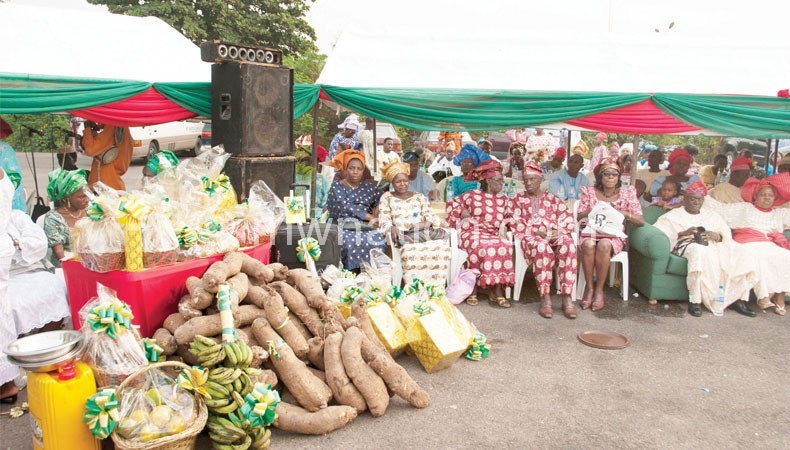
Isahalbash:Of course!  The carrying of the bride https://omgvoice.com/wp-content/uploads/2017/02/yoruba-couple.jpg The yams https://mwnation.com/wp-content/uploads/2014/10/Lobola.jpg The attire https://static.omgvoice.com/images/2016/03/03072242/Blessing-and-Fawaz_BBNWonderland-Love-Story_Abuja-Nigerian-Wedding-2016_BellaNaija-and-Baileys-Eevent_FAB_15_Eng-149.jpg https://loveweddingsng.com/wp-content/uploads/2015/01/LoveweddingsNG-Traditional-Wedding-Morenike-and-Dayo91.png And don't forget the traditional musicians [img]https://ajalayemi.files./2014/02/yoruba-people-culture.jpg[/img] 3 Likes |
| Foreign Affairs › Re: Kenya Is Ahead of Nigeria In All Aspect (Facts Don't Lie) by 9jakool: 7:41pm On Jun 13, 2017 |
TayserMahiri:There are many states that are diverse like Bauch in Nigeria. Bauchi is mostly comprised of mostly Afro-Asiatic(Chadic) speaking groups like Warji, Gera, Hausa, Geruma, Bole etc. along the southern border you have the Niger-Congo groups like Jarawa, Saya, etc . The larger ethnic groups have around 100,000 to 500,000 people. The smallest ethnic groups can have as low as 5,000 people. White parties aren't that extraordinary to me, don't get me wrong they are fine. That's just my own personal opinion. 1 Like |
| Foreign Affairs › Re: Kenya Is Ahead of Nigeria In All Aspect (Facts Don't Lie) by 9jakool: 6:45pm On Jun 13, 2017 |
TayserMahiri:I don't care for the white parties that much honestly, it's just western influence. You should go to a traditional Nigerian wedding one day, you will witness so much culture and get stuffed till your heart can no longer take it plus you get as much takeaway food as possible. For Nigerian weddings, it's very proper to slaughter cows for food. You get to pick the cows at the markets. Traditional weddings are usually done in the family/parent's family home and it's usually outside. There is also the court/mosque/church weddings in addition as well as the closing reception afterparty. The marriage rites are ancient and deeply rooted in culture. That's probably why you consider kneeling or prostrating primitive, which is not at all. When the first European explorers visited Nigeria, they had to adhere to the rules. In diversity, culture and history, Nigeria does not fall short even a little bit. It's very dense in culture and languages, so everywhere you look you are going to find something unique or different from the masquerades to the centuries old festivals to the traditional clothing, after all Nigeria is the most ethnically/linguistically diverse country in Africa and third most in the world. Kenya has 42 languages in Kenya by official account or 68 according to ethnologue. In comparison, the state of Bauchi has around 60 languages alone and there are 36 states in Nigeria. Every culture has their own cultural practices and that extends to marriage rites. |
| Foreign Affairs › Re: Kenya Is Ahead of Nigeria In All Aspect (Facts Don't Lie) by 9jakool: 9:06am On Jun 13, 2017 |
NairobiWalker:That picture of Ibadan looks better than Majengo honestly speaking. If you look closely at that building, you can see that it has a relatively sound structural foundation. That house is two storey tall meaning that whoever built it how many decades ago was financially well of relatively speaking. In Ibadan, houses that are very old are built and rented out by wealthy traders or farmers who are the landowners. Many of the old houses come into disrepair and mismanagement due to decades of neglect, the original landlord dying, and the decline in agriculture following oil. Even with the very poor condition that house is in, I can closely analyze the structural/architectural components. Architectural style is likely of 18th-20th century Nigerian modern colonial. That house in that particular picture is connected to the electric grid. It has a balcony in the base and top levels. The front of the house is supported by four concrete columns. The balcony is closed off by an intricately designed closure. The windows are wooden like many in Ibadan although there are many old houses with glass windows lined with wooden frames. The windows of the house has what looks like a carved top wooden frame or awning. The roof is tin roof which in the day carried a prestige as a sign of wealth. The roofing sheets have become corrugated over the years. Even the corrugated roofing sheets are placed in a more organized manner than that of Majengo. Also, Majengo is more crowded when compared Ibadan. Slums often result because poor people aren't able to compete in the property markets of a city so people would rather build makeshift houses on very small pieces of land. When you say Narobi is 6% slum, you also have to consider that the same source says 60% of the population live in that 6%. Why is this? The answer is land ownership. Rich/Wealthier people can afford to own more land, dirt poor people can't afford land so they are pushed to a very extreme limit. Since you compared the whole of Ibadan as slum to Majengo slum, I'll take you up on that. the population density figures for Majengo is a whopping 55,323 per square km which is no where near the population density of Ibadan at just around 985 per square km. I also heard of the high rate of HIV and prostitution in Majengo. See, if I was a dirt poor slum dweller, I won't start off by buying a piece of land and then building a two storey tall house with columns and balcony and even have the time to incorporate artistic features into my house. If I were a dirt poor slum dweller, I would focus on obtaining a very small piece of "illegal" land to set up an improvised shelter made from recycled materials that would simply protect me from the elements. Majengo is a shantytown within a city, Ibadan is a city with a lot of degraded infrastructure. Both have their problems, but their problems are on different scales. |
| Foreign Affairs › Re: Kenya Is Ahead of Nigeria In All Aspect (Facts Don't Lie) by 9jakool: 9:15pm On Jun 12, 2017 |
ednited:I'm not really buying that, I think they are just doing it for economic and political reasons which is fine I guess. |
| Foreign Affairs › Re: Kenya Is Ahead of Nigeria In All Aspect (Facts Don't Lie) by 9jakool: 9:09pm On Jun 12, 2017 |
Hati13:Do Agew get discriminated against in Ethiopia. A long time ago, I heard about the Agew living near lake Tana and how they have hippo in their diet. Someone was saying how other people use derogatory terms to refer to them. I can't really remember the details. Are there parts/towns of Ethiopia that are mostly Agew in population. Do you feel Agew have the original aspects of Amhara-Tigrayan cultures that are absent or have changed in modern-day Tigrays and Amhara? If yes, can you give me examples. Also, no I haven't listened to his album. I'll try to listen to some of his songs. |
| Foreign Affairs › Re: Kenya Is Ahead of Nigeria In All Aspect (Facts Don't Lie) by 9jakool: 8:57pm On Jun 12, 2017 |
ednited:I think it's a fine that they are joining and they left due to that Western Sahara saga, so maybe they are finally realizing something. The only thing I don't understand why they want to join ECOWAS. Sure they've economic agreements with Nigeria like the gas pipeline that will connect Nigeria to Morrocco. Other than that why do they want to join ECOWAS? |


 but you are correct. No food I'm not coming.



1 2 3 4 5 6 7 8 ... 19 20 21 22 23 24 25 26 27 (of 41 pages)