Ezeagu's Posts
Nairaland Forum › Ezeagu's Profile › Ezeagu's Posts
1 2 3 4 5 6 7 8 ... 144 145 146 147 148 149 150 151 152 (of 349 pages)
 Politics › Re: OPC Joins Calls For Sovereign National Conference by ezeagu(m): 1:01am On Dec 09, 2011 Politics › Re: OPC Joins Calls For Sovereign National Conference by ezeagu(m): 1:01am On Dec 09, 2011 |
sheyguy:[quote author=~Bluetooth link=topic=820854.msg9724424#msg9724424 date=1323373987]Na today ? Was is not this same boko boys that killed an ibo president like rat ?[/quote]What the fuck are you people talking about? |
| Foreign Affairs › Re: Beautiful Pre-colonial African Cities by ezeagu(m): 12:57am On Dec 09, 2011 |
It seems the Ashanti had the best traditional architecture. |
| Politics › Re: How Fear Of Japan Diminished Biafra – Nwokedi by ezeagu(m): 12:49am On Dec 09, 2011 |
Rossikk:Googoo, gaga, are you done with vomiting others' ideas? At the time, though, Biafra still seemed to offer the prospect of a country better run than most others in Africa, and the fears of genocide were certainly well founded.I knew this quote would come in handy. |
| Politics › Enugu And Ebonyi Borders Should Look Like This Right Now by ezeagu(op): 12:42am On Dec 09, 2011 |
| Politics › Re: Igbo Traders Count Losses After The Kaduna Bomb Blast by ezeagu(m): 12:36am On Dec 09, 2011 |
I wouldn't live up north if there was a giant magical leprechaun dashing gold to every non-Northerner he meets there. |
| Politics › Re: Igbo Traders Count Losses After The Kaduna Bomb Blast by ezeagu(m): 6:03pm On Dec 08, 2011 |
coogar:Have you heard of Jews moving in massive numbers to Afghanistan for business? |
| Culture › Re: The Acculturuation Bewteen Midwestern And Eastern Nigerian Cultures. by ezeagu(m): 5:43pm On Dec 08, 2011 |
Something I also find interesting is that Igbo boys grew their hair, while now it's looked down upon: [center][img]http://4.bp..com/-NP7lSgIM4Lk/TqSdoTiUxUI/AAAAAAAAAt0/jrUkXkraXU0/s1600/AN00058171_001_l.jpeg%2Bcopy[/img][/center] |
| Culture › Re: Alternate Igbo History by ezeagu(op): 2:25pm On Dec 08, 2011 |
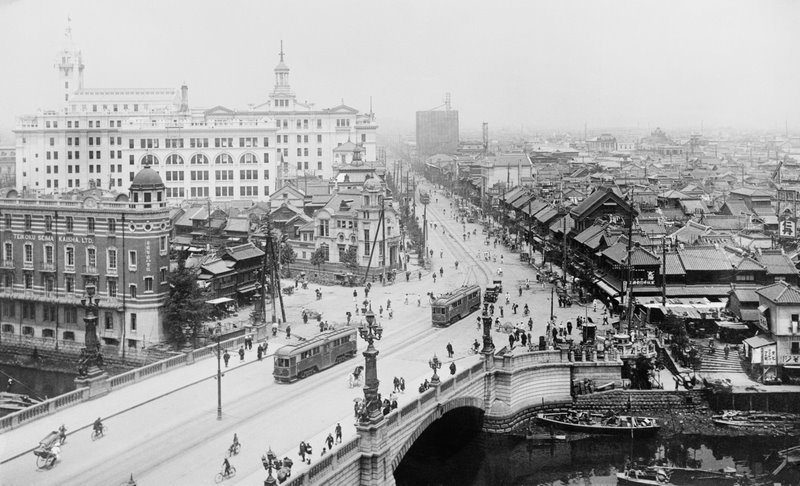
With WWI, Britain had to drop all engagements in the region which was already starting to strain the empire. The barrier of the Nun and Forcados was loosened up as a result, and Onicha gradually began to recover. With the capital at Onicha, several states in the region merged to form Ohazuru, or better known as Iboe state. Iboe was unrecognised by most European states, although trade was still established. The Aro state was also on it's own with some related groups, and also largely unrecognised. The oracle in Arochukwu had also declined, and the religion became fragmented. The leaders of Ungualand, Bendeland, and Ikwerriland saw this time as an opportunity to request sovereignty, and in 1916, the leaders met with the British to negotiate troops for the freedom of the states. The British agreed to sign a treaty promising the sovereignty of the three lands after each were to provide 500 soldiers each to help in the campaign against the Ottoman empire in North Africa. The treaty was also modified to ensure that Britain had an established base in the regions and that the countries would be part of the Commonwealth. The leaders agreed, and in 1919, Ungualand, Ikwerriland, and Bendeland became sovereign states in the region. [center]https://aboutjapan.japansociety.org/resources/content/2/3/4/7/images/U218257INP.jpg Port Victoria, 1918[/center] 1920 In Arochukwu, the earlier barricade had lead to the collapse of the Aro confederacy and Western missionaries had already started to reach the surrounding communities. But by now, the Aro people felt a deep resentment against Westerners and their ideas which lead to the collapse of their once prosperous empire. The missionaries efforts at conversion weren't very successful, although Western eduction began to rise in the region along with Onicha. With Western education, Arochukwu became even more modernised which was both a positive and negative. The positive was industrialisation, and the negative were the powerful organised crime groups that arose to replace the traditional lords of the land of old. The once powerful oracle was used by the crime families to intimidate the majority. A quarter of the Aro state had now become industrialised and Arochukwu grew from its traditional village structure to a booming city drawing immigrants from around the region to reach a population of 550,000. Onicha's monarchial structure was more intact than that of Arochukwu, but industrialisation was also present. [center]https://www.photographium.com/images/El-Mina-Port-of-Tripoli.-Tripoli-Lebonon.-1900-1920.-Photo-by-Matson-540x657.jpg Onicha port, 1917[/center] With WWI over the three states in the southern part of the region were sovereign nations in the Commonwealth. For economic reasons, the three states decide to form one sovereign state, with each state having its own parliament and capital. This became known as Biafra, after the Bight of Biafra which it was a part of. The Industrialisation witnessed by other regions was also present in these states, and a railway was created to link the regions major towns to Port Victoria. The oil palm trade in Onicha had declined after Ahaba in the British Beninland had taken up all the business. This was a major set back until the discovery of coal was made in the northern region of Iboe by expatriates working for the British. The area where this coal reserve was discovered was in an area known as Ngwo, and became the town of Enugwu after the village which the coal was discovered. The coal was exported through the Niger at first, but negotiations were made with Biafra to export through Port Victoria and so the railway, built with the help of the British, was extended to Enugu. As a result Enugu grew and the importance of Onicha was lessened. |
| Culture › Re: The Acculturuation Bewteen Midwestern And Eastern Nigerian Cultures. by ezeagu(m): 12:04pm On Dec 08, 2011 |
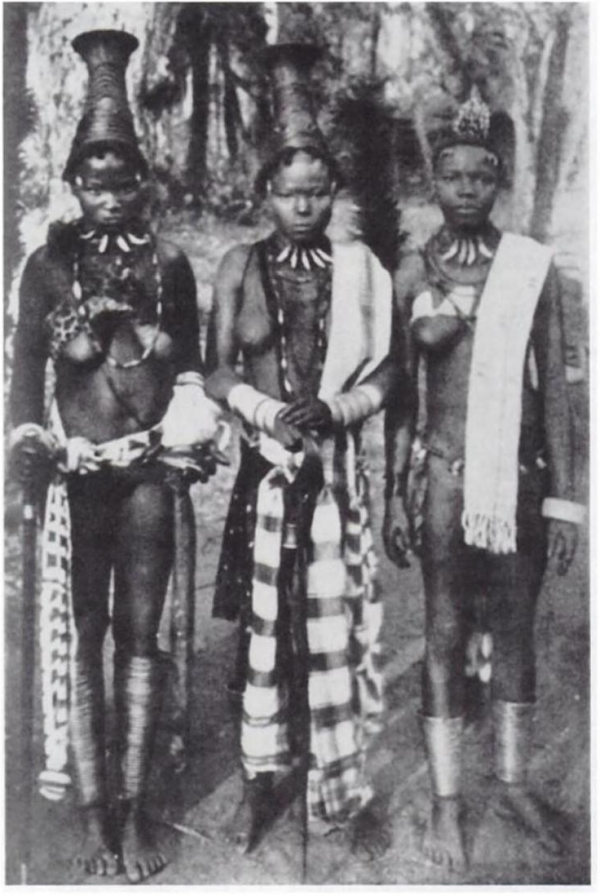
ChinenyeN:I think the three women and the women who is trying not to laugh are from Oka, I'm not sure of the others because it doesn't say from where I got them (ukpuru..com), but most of these pictures are from what is now Anambra. From what I've seen, I think people in what is now Abia were more likely to use threads for hair styles. PhysicsQED:I thought so, because I remember seeing a picture on the Benin art thread where most people were wearing white. |
| Culture › Re: The Acculturuation Bewteen Midwestern And Eastern Nigerian Cultures. by ezeagu(m): 7:11pm On Dec 07, 2011 |
There are many things that have become part of generic Igbo fashion, and generic Nigerian fashion which has wiped away many of the authentic traditional clothing. This includes all the blouses, lace, head ties, handbags and plastic beads. |
| Culture › Re: The Acculturuation Bewteen Midwestern And Eastern Nigerian Cultures. by ezeagu(m): 7:07pm On Dec 07, 2011 |
[center]Igbo cultural "alluding", modern clothes formed in the fashion of a time long forgotten. The modern traditional Igbo wear isn't a continuation of a tradition, but an effort, or even guess, of what traditions were. That's why you get all this confusion of what is Igbo attire when you see Igbo women dressed like Benin princesses to their weddings. Most of these people have no clue what their ancestors looked like apart from nollywood, which is almost 100% inaccurate all the time. The girl below is wearing something we now call George, obviously from its name we see it something foreign, and in all the photos of Igboland taken between the 1880s and 1920s we don't see anyone wearing the material, they only started spreading around the 1930s. [img]http://3.bp..com/_oC_NfFNkTFE/SRID4glYNpI/AAAAAAAAAII/M-i28hwO4IE/s400/lauretamaidenandsister.jpg[/img][/center] |
| Culture › Re: The Acculturuation Bewteen Midwestern And Eastern Nigerian Cultures. by ezeagu(m): 7:02pm On Dec 07, 2011 |
I'm even thinking what we now know as Edo attire was only for noble people back then, something about every common person wearing all those beads doesn't fit well with the image of old Benin. |
| Culture › Re: The Acculturuation Bewteen Midwestern And Eastern Nigerian Cultures. by ezeagu(m): 7:00pm On Dec 07, 2011 |
[center]Proper Igbo hairdos and attire. https://www.shmoop.com/media/images/large/igbo-women.png [img]http://4.bp..com/-fNydxPm9Qhk/TqSdzWooP3I/AAAAAAAAAuA/TWViy28nZMM/s1600/AN00058230_001_l.jpeg%2Bcopy[/img] [img]http://2.bp..com/_jeBv7EEofYQ/TLt7rOYUD0I/AAAAAAAAAJ4/u0a81Cdrd0Y/s1600/probably+igbo.jpg[/img]https://lamutamu.com/wp-content/uploads/2010/10/Igbo-woman.nigeria.jpg[/center] |
| Culture › Re: The Acculturuation Bewteen Midwestern And Eastern Nigerian Cultures. by ezeagu(m): 6:58pm On Dec 07, 2011 |
What I'm most interested in knowing is how this got to the other [center][img]http://4.bp..com/_jeBv7EEofYQ/TLtyt9anSWI/AAAAAAAAAJY/JaUonOlTJCM/s1600/awka_headdress.jpg[/img]https://farm4.static.flickr.com/3058/2601720558_aca35f614b.jpg[/center] I've hardly seen any Igbo person wearing authentic Igbo attire, apart from royalty. |
| Politics › Re: Thoughts On Delayed Enugu Int'l Airport "take Off" by ezeagu(m): 5:55pm On Dec 07, 2011 |
[quote author=Okija_juju link=topic=819368.msg9715333#msg9715333 date=1323275848]The proximity of Enugu to port-harcourt (3hrs) also does not help.[/quote]How? There can be international airports within 1 hour of each other if the air traffic permits. The isn't exactly an Autobahn route linking Enugu, and the rest of Nigeria, to Port Harcourt. |
| Culture › Alternate Igbo History by ezeagu(op): 4:07pm On Dec 07, 2011 |
[center]/////Everything below is ficiton/////[/center] It's Onicha and its the 1850s, Britain has established the Royal Niger Company only after the Obi of Onicha and other heads of surrounding communities sign a treaty limiting the amount of foreign personnel allowed inland. Missionaries are strictly forbidden and the lands after Onitsha and other coastal/riverside settlements are largely untouched by foreigners. The territorial restriction is enforced by the promise of instant death if the borders are breached, which is now at an area known as Otu Onicha. The Royal Niger Company grows only to include more native leadership and Onicha gradually opens up the rest of the lower Niger to Western technology. Many of the employees are members of prominent families with powerful titles, this makes them less likely to want to do away with traditional culture and religion in preference of Christianity. [center][img]http://1.bp..com/-2bjZv71sUOw/TdQ1tQ1dcsI/AAAAAAAAAXc/aksyYmR9Y9o/s400/Ibo%2BWarfare.jpg[/img] Guards at Otu Onicha[/center] 1870s Britain tries to force open the borders, but are defeated after Onicha successfully runs propaganda throughout the lower Niger about Britain's plan to destroy all traditional rulership to replace with British heads. The whole regions backs Onicha, and there is a 5 month stand off, mostly guerrilla, that leads to Britain's exhaustion, especially with the lack of troops and a base in the region. [center][img]http://4.bp..com/-UoQ1Lck0wmM/TqSeSV6QAuI/AAAAAAAAAuw/imbuxukq-pc/s1600/AN00054181_001_l.jpeg%2Bcopy[/img] British personnel are released after being captured by Onicha and allies in the 5 month stand off[/center] 1880s The Aro state, which continues slave trading and is in control of a powerful regional oracle, is threatened by the British now based in Calabar. The Aro heads decide to move towards incorporating all slaves into the Aro military and cancels all slave raiding, violent activities, and unnecessary trading in response to the threat of the British. Mid 1890s Through Onicha, Arochukwu acquires modern British technology, studies them and replicates them, although cheaply, using the imported materials brought from Aboh, Onicha, and Calabar. The surrounding communities of Arochukwu which were once enemies of the confederacy are no longer faced with the threat of invasion or slave raiding, but instead, economical dominance. This leads to the backing of the British by many prominent communities around the Imo, most notably the Ngwa state. Britain has since learnt about Aro's technological leap, and decides to sponsor the marginalised communities by providing them with even newer technology, and financial support. This leads to tension between the Ngwa state and supporting communities and the Aro. Meanwhile, the county-states in the middle of Igboland are recovering from the past slave raiding, they do not become entangled in the tension between the Ngwa and Aro, and are moving towards trade through Onicha with the West. 1900 Since the British have managed to establish a base into Ngwa territory, they soon find a suitable land for a port near an Ikwere community, Diobu. By now, the Igbo region is very familiar with laws and treaties. They decide that they will give Britain a portion of the land, and keep a boundary on their communities in a similar style to Onicha. By now, Britain has established good base in the region, and they force their way into the land, and establish a port which they named Port Victoria after the recently deceased queen. The Ngwa state and related regions are now under the British, although with many major revolts. The British decide to split the region into a Ungualand, with the capital at Aba, a Bendeland with capital in Ibaeku, and a Ikwerriland with the capital at Port Victoria. [center][img]http://1.bp..com/_jeBv7EEofYQ/TP719mL6-sI/AAAAAAAAAN4/p83-3Rwn_mc/s1600/ibekucoutxx.jpg.jpeg[/img] Treaty of Ibaekuland[/center] Mid 1900s There are two halves of Igboland, the part under the British, and the part breathing through Onicha. The British see Onicha's importance and close all contact with the outside world by barricading the Niger's Atlantic outlets, which they are now under control. Onicha struggles, as well as the rest of the Igbo communities, the regions between Agbor and Ahaba have already been unofficially incorporated by the British into the new Beninland stretching from Ahaba to French Dahomey. 1910 Onicha and Aro are no longer booming as before because of the cut off from other regions and the West. The British slowly enter the region, until the British have a much more important issue facing them, in fact an emergency. WWI. The rest after. . . . 2 Likes |
| Culture › Re: Are Igbos Culturally Fused ? by ezeagu(m): 3:01pm On Dec 07, 2011 |
Nnenna1:If you ask anyone in Igboland what a Northern Igbo is they'll be confused. The stereotype is that people from Anambra, particularly traders, are dominating and patronising. |
| Politics › Re: Thoughts On Delayed Enugu Int'l Airport "take Off" by ezeagu(m): 2:17pm On Dec 07, 2011 |
Dis Guy:Of course I meant the Nigerian attitude to cut corners on things, there's no reason why an international airport in Nigeria shouldn't be of the same standard or better than one in Germany, apart from incompetence. |
| Politics › Re: Tinubu Thank Nigerians For The Support & Solidarity During The CCT Tribunal by ezeagu(m): 1:58pm On Dec 07, 2011 |
lagcity:So you actually agree he's a gangster. Don't get angry when he starts flexing his gangster skills. |
| Politics › Re: Thoughts On Delayed Enugu Int'l Airport "take Off" by ezeagu(m): 1:48pm On Dec 07, 2011 |
Dis Guy:Are you sure: http://en.wikipedia.org/wiki/Berlin_Brandenburg_Airport I just don't like things being done half and half, anyway I know this is Nigeria. |
| Politics › Re: Thoughts On Delayed Enugu Int'l Airport "take Off" by ezeagu(m): 1:41pm On Dec 07, 2011 |
I don't think this airport will work as well as it is intended. Anyway, judging from the pictures and how little the entire construction is, and also from other airports in Nigeria, I really don't think this airport will be of international standard, apart from the runway, like the new Lagos terminal. It would probably be like the tiny Port Harcourt airport. When I say international standard, I mean several ramps and gates with bridges. Elevators, information desks, voice overs, lost and found, cafe's, restaurants, shops, several stories, taxi parking, general parking, several coaches to different gates, etc. [center]https://www.quality3dmodels.net/model_demo/602149990-airport-bridge.jpg[/center] |
| Politics › Re: A Suitable Statue For Ojukwu In Enugu (picture Sample) 300 Meters High. by ezeagu(m): 7:32am On Dec 06, 2011 |
Nairaland isn't really the place to make serious proposals, maybe if you post this topic on other serious Nigerian related websites, even if they're less popular. |
| Business › Re: Nigeria Hopes To Topple South Africa As Africa's Largest Economy by ezeagu(m): 12:24am On Dec 05, 2011 |
U.s.e.l.e.s.s |
| Politics › Re: Nigeria's Bill To Outlaw G.AY Marriage Threatens Hiv/Aids Assistance From West by ezeagu(m): 12:23am On Dec 05, 2011 |
DivideUs:"Can", "could", "would", "should", all bullshit when it come to Nigeria. Truth is that Nigeria needs the aid. |
| Politics › Re: Tinubu Thank Nigerians For The Support & Solidarity During The CCT Tribunal by ezeagu(m): 11:51pm On Dec 04, 2011 |
hustla242:Typical Nigerian bullshit. |
| Politics › Re: Senate Rejects State Burial For Ojukwu by ezeagu(m): 6:53pm On Dec 04, 2011 |
Ojukwu, the Time, Financial Times, and The Economist star. |
| Politics › Re: Tinubu Thank Nigerians For The Support & Solidarity During The CCT Tribunal by ezeagu(m): 5:45pm On Dec 04, 2011 |
There are always otimkpu's with Nigerian politicians, even for T.A. Orji, there is a dedicated following. |
| Politics › Re: Apart From The Civil War,what Else Did Ojukwu Do For His People? by ezeagu(m): 5:29pm On Dec 04, 2011 |
See how the original poster ignored my post and started challenging others. Desperation. |
| Politics › Re: Apart From The Civil War,what Else Did Ojukwu Do For His People? by ezeagu(m): 12:25pm On Dec 03, 2011 |
[quote author=alj_harem link=topic=816494.msg9681773#msg9681773 date=1322864067]LOL this is the question NO SE PERSON would answer, they would rather curse you than give u an answer. It is a case of being desperate for an[b] icon[/b] that is why someone like OJUKWU can be loved. Well at the end of the day, I guess since we are not SEerners, we cannot say much.[/quote]Desperate? Nope. Gracing the covers of Time, The Economist, and The Financial Times, was without effort. @Post. He has been keeping MASSOB in check. He has been a voice of reason in the east and the whole of Africa. He created APGA. He has been a source of inspiration for many Igbo people, inspiring many individuals. He has bargained with politicians in the best interest of his people. He has been speaking up about injustices against the Igbo people since he was head of the Eastern region. He risked his riches for his people. He gave Igbo people a sense of direction, and many other things like sponsoring individuals and keeping the Igbo in the federal consciousness. Ga juọ ndi Nnewi ihe Ihemba mẹrẹ ha, ka anyi le ma ha ghagi kụfụ gi ishi. |
| Business › Re: Banks On Strike In Ijebu, Sagamu & Abeokuta After Deadly Robberies by ezeagu(m): 10:56am On Dec 03, 2011 |
What ever you wish for others, will surely come back 10 times on your head, (as we've seen). |
| Politics › Re: Ojukwu - The Economist by ezeagu(m): 1:52am On Dec 03, 2011 |
No one is even looking to vindicate anybody for enwere's, okpangu's and ozodingba's. |
| Business › Re: Banks On Strike In Ijebu, Sagamu & Abeokuta After Deadly Robberies by ezeagu(m): 1:46am On Dec 03, 2011 |
[quote author=Ileke-IdI link=topic=815848.msg9679145#msg9679145 date=1322840438]Christmas in the SE will make this robbery look like a child's play. I beg all my bros and sisters a safe christmas sha.[/quote]And as you wish it will come back to you 20 times (as it always does looking at the trends). The more you curse, the more you curse yourself. |






1 2 3 4 5 6 7 8 ... 144 145 146 147 148 149 150 151 152 (of 349 pages)