Aljharem3's Posts
Nairaland Forum › Aljharem3's Profile › Aljharem3's Posts
1 2 3 4 5 6 7 8 ... 82 83 84 85 86 87 88 89 90 (of 227 pages)
 Politics › Re: Delta State Renovates 10 Schools With N933.5m by aljharem3: 11:01pm On Oct 01, 2011 |
jason123:shattap dai can't u see,or are u blind 933.5 million naira just for 10 schools 9 primary schools and 1 secondary school renovation just worth 200 thousand naira or so for each school unless he want to build a new one which is just worth about 10 million naira each |
| Culture › Re: The Art And Architecture Of Yorubaland! by aljharem3: 10:08pm On Oct 01, 2011 |
PhysicsQED:oh thanks i would delete now |
| Culture › Re: The Art And Architecture Of Yorubaland! by aljharem3: 10:00pm On Oct 01, 2011 |
PhysicsQED:http://www.eamb.org/tag/historical-figures/ |
| Culture › Re: The Art And Architecture Of Yorubaland! by aljharem3: 9:59pm On Oct 01, 2011 |
PhysicsQED:what ruler is he then  |
| Culture › Re: The Art And Architecture Of Yorubaland! by aljharem3: 9:58pm On Oct 01, 2011 |
| Culture › Re: The Art And Architecture Of Yorubaland! by aljharem3: 9:51pm On Oct 01, 2011 |
PhysicsQED:Ok  |
| Culture › Re: The Art And Architecture Of Yorubaland! by aljharem3: 9:51pm On Oct 01, 2011 |
. |
| Culture › Re: The Art And Architecture Of Yorubaland! by aljharem3: 9:46pm On Oct 01, 2011 |
https://www.markdefrates.com/images/changosm.jpg Shango (Xango, Shango), or Changó in Latin America, is perhaps the most popular orisha; he is a sky father and god of thunder and lightning. He is a royal ancestor of the Yoruba as he was the fourth king of the Oyo Kingdom. In the Lukumí religion of the Caribbean, Shango is considered the center point of the religion as he represents the Oyo people of West Africa. The Oyo Kingdom was sacked and pillaged and its residents brought in chains as slaves to the Caribbean and Brazil. All the major initiation ceremonies (as performed in Cuba, Puerto Rico and Venezuela for the last few hundred years) are based on the traditional Shango ceremony of Ancient Oyo. This ceremony survived the Middle Passage and is considered to be the most complete to have arrived on Western shores. This variation of the Yoruba initiation ceremony became the basis of all orisha initiations in the West. The energy given from this deity of thunder is also a major symbol of African resistance against an enslaving European culture. He rules the color red and white; his sacred number is 6; his symbol is the oshe (double-headed axe), which represents swift and balanced justice. He is owner of the Bata (3 double-headed drums) and of music in general, as well as the art of dance and entertainment. |
| Culture › Re: The Art And Architecture Of Yorubaland! by aljharem3: 9:45pm On Oct 01, 2011 |
https://www.markdefrates.com/images/yemaya_stonessm.jpg Yemaya (Africa: Yemoja, Brazil: Yemanjá, Cuba: Yemaya, Haiti: La Sirène) is an orisha, originally of the Yoruba religion, who has become prominent in many Afro-American religions. Africans from what is now called Yorubaland brought Yemaya and a host of other deities/energy forces in nature with them when they were brought to the shores of the Americas as captives. She is the ocean, the essence of motherhood, and a protector of children. |
| Culture › Re: The Art And Architecture Of Yorubaland! by aljharem3: 9:44pm On Oct 01, 2011 |
https://www.markdefrates.com/images/ogun3sm.jpg This is a Haitian style veve of Ogun. In Haitian Vodun and Yoruba mythology, Ogun presides over fire, iron, hunting, politics and war. Perhaps linked to this theme is the new face he has taken on in Haiti which is not quite related to his African roots: that of a powerful political leader. He gives strength through prophecy and magick. It is Ogun who is said to have planted the idea for the Haitian Revolution of 1804 in the minds of the slaves whom he then led and empowered. He is called on now to help the people obtain a government more responsive to their needs. 1 Like |
| Culture › Re: The Art And Architecture Of Yorubaland! by aljharem3: 9:43pm On Oct 01, 2011 |
PhysicsQED:Yes might be so but your link stated that The term "Lower Niger Bronze Industry" has been used by art historians to classify ancient copper-alloy sculpture discovered in the area of the Niger Valley that could not be traced directly to the famous metalworking centers of Benin and Ife. Since this label actually refers to a multitude of provincial casting sites, each with varying styles and techniques, one scholar has suggested that "Lower Niger Bronze Industries" would be a more apt description. Less is known of Lower Niger Bronze Industry works than those of Benin and Ife, but their existence suggests that copper-alloy casting was once widespread in what is now southern Nigeria." I do not think it is itsekiri, because ife and benin culture and heritage were interwoven back then and might be form either one of the two groups. Some say it was benin others say it was yoruba but itsekiri, no because itsekiri did not deal with iron or bronze but with woods.  anyway; one of the two |
| Culture › Re: The Art And Architecture Of Yorubaland! by aljharem3: 9:36pm On Oct 01, 2011 |
[img]http://3.bp..com/_9yNjJXtCrA8/S5WzmXn2rRI/AAAAAAAAANc/Sn47mhSe530/s320/agha+nima.jpg[/img] Ife Wooden Divination Tray, Areogun of Osi-Ilorin, Nigeria; Yoruba People, about 1880 - 1956.This is a fine example of African graphic design. The tray depicts some of the most important fortunes, that are at the heart of Yoruba philosophy: a healthy long life, wealth, love, children, wisdom and security. All these good fortunes are conveyed by the graphic designer of this tray .Eshu, the god who mediates between the world of the spirit and the human world symbolizes a healthy long life and is carved at the top of this tray. At the bottom, a kneeling woman with a child on her back, presenting offerings in a calabash represents children and fertility. In the left, a soldier stands in guard with a crossbow, he is a symbol of security or victory over the enemies. In the right, a priest of Osanyin, a god of healing and wisdom is depicted. He represents the health, and wisdom . At the lower left, love is represented by a couple making love, and at the lower right, a seated figure, probably a second representation of Eshu closes this circle of life . Representing wealth, a band of cowry shells, formerly used as money in West Africa, runs around the central part of the tray.The diviner sits with the tray in front of him, placed so that Eshu is opposite, facing him. 3 Likes |
| Culture › Re: The Art And Architecture Of Yorubaland! by aljharem3: 9:20pm On Oct 01, 2011 |
https://a1.sphotos.ak.fbcdn.net/hphotos-ak-snc6/183200_202557103089641_199101673435184_787550_6378881_n.jpg Esu Staff--OPA ESU. Esu is the Deity in Charge of Law Enforcement and/or Chief Justice (Neutrality-At-Its-Best) in Yoruba's Cosmology. ESU is neither Satan nor Devil. The Abramic faiths-- Christian and Islam have no equivalent for Esu in their theology or cosmology. 1 Like 1 Share |
| Culture › Re: The Art And Architecture Of Yorubaland! by aljharem3: 9:18pm On Oct 01, 2011 |
https://a4.sphotos.ak.fbcdn.net/hphotos-ak-snc6/189412_202556266423058_199101673435184_787536_8022293_n.jpg These door panels and lintel were carved for the royal palace at Ikere in Yorubaland. The door panels and lintel were chosen for display in 1924 at the British Empire exhibition at Wembley, London. The Ogoga refused to sell them to the British Museum but agreed to exchange them for a British carved throne. Olowe of Ise was subsequently commissioned to carve a replacement door for the Ogoga's palace. |
| Culture › Re: The Art And Architecture Of Yorubaland! by aljharem3: 9:17pm On Oct 01, 2011 |
| Culture › Re: The Art And Architecture Of Yorubaland! by aljharem3: 9:16pm On Oct 01, 2011 |
https://a1.sphotos.ak.fbcdn.net/hphotos-ak-snc6/189464_202556089756409_199101673435184_787531_28413_n.jpg The Epa masquerade of the Yoruba promotes the health and well-being of communities. It is an image of energy and authority, it embodies memories of at least three centuries of cavalry warfare in north-central Yoruba. |
| Culture › Re: The Art And Architecture Of Yorubaland! by aljharem3: 9:16pm On Oct 01, 2011 |
https://a7.sphotos.ak.fbcdn.net/hphotos-ak-snc6/189464_202556086423076_199101673435184_787530_3597508_n.jpg Gelede is to appease Iyami or 'My mothers' who control fertility and life. |
| Culture › Re: The Art And Architecture Of Yorubaland! by aljharem3: 9:15pm On Oct 01, 2011 |
https://a2.sphotos.ak.fbcdn.net/hphotos-ak-snc6/180992_202552153090136_199101673435184_787493_674245_n.jpg Yoruba warrior around the Oya river |
| Culture › Re: The Art And Architecture Of Yorubaland! by aljharem3: 9:14pm On Oct 01, 2011 |
https://a8.sphotos.ak.fbcdn.net/hphotos-ak-snc6/180992_202552149756803_199101673435184_787492_4720673_n.jpg This stone head of a woman is part of a group of over a thousand known sculptures identified with a site in the Yoruba town of Esie. There, an assemblage of soapstone figures of women, men, and animals were found lying in a forest grove, most showing signs of deliberate damage from an apparent act of organized defacement. |
| Culture › Re: The Art And Architecture Of Yorubaland! by aljharem3: 9:13pm On Oct 01, 2011 |
https://a6.sphotos.ak.fbcdn.net/hphotos-ak-snc6/180992_202552146423470_199101673435184_787491_6806964_n.jpg Three different identities have been suggested for this figure. The official may be a messenger from a ruler referred to as the Ogane, who today is identified as the leader, or Oni, of Ife. The present Benin dynasty claims descent from the Yoruba kingdom of Ife. According to a sixteenth-century Portuguese text, each new Oba, or King, of Benin had to be confirmed by the Ogane, whose messenger presented the Oba with a brass hat, staff, and cross necklace. Another interpretation suggests that he may represent a priest of Osanobua, the Benin creator god, who also wears a cross. Finally, the figure may depict a member of Ewua, a group of palace officials who wake the Oba each morning and perform a ceremony recalling the origin of the Benin dynasty. |
| Culture › Re: The Art And Architecture Of Yorubaland! by aljharem3: 9:12pm On Oct 01, 2011 |
https://a5.sphotos.ak.fbcdn.net/hphotos-ak-snc6/190081_202551883090163_199101673435184_787481_8154309_n.jpg This opulent ivory sword is an udamalore, literally a "sword of the well-born." It was carried by a high-ranking chief of Owo, a Yoruba state. |
| Culture › Re: The Art And Architecture Of Yorubaland! by aljharem3: 9:11pm On Oct 01, 2011 |
https://a3.sphotos.ak.fbcdn.net/hphotos-ak-snc6/190081_202551879756830_199101673435184_787480_2156928_n.jpg This opulent ivory sword is an udamalore, literally a "sword of the well-born." It was carried by a high-ranking chief of Owo, a Yoruba state. |
| Culture › Re: The Art And Architecture Of Yorubaland! by aljharem3: 9:10pm On Oct 01, 2011 |
https://a2.sphotos.ak.fbcdn.net/hphotos-ak-snc6/190081_202551876423497_199101673435184_787479_5444108_n.jpg Conical brass bells with flared lips and human or animal faces. They were employed as markers of rank, prestige, and spiritual authority. 1 Like 1 Share |
| Culture › Re: The Art And Architecture Of Yorubaland! by aljharem3: 9:10pm On Oct 01, 2011 |
https://a7.sphotos.ak.fbcdn.net/hphotos-ak-ash4/190081_202551869756831_199101673435184_787477_6668249_n.jpg Rings of this kind have been found throughout the Benin kingdom, as well as at Yoruba capitals such as Owo, Ife, and Ijebu. |
| Culture › Re: The Art And Architecture Of Yorubaland! by aljharem3: 9:09pm On Oct 01, 2011 |
https://a6.sphotos.ak.fbcdn.net/hphotos-ak-ash4/185807_202551613090190_199101673435184_787470_4002742_n.jpg Part of the courtly regalia of an Olowo Consisting of a bulky coat or shirt covered in red flannel scales, the orufanran was studded with ivory images of human faces and the heads of crocodiles, leopards, and rams. The outfit relates to the chief's military duties, and it is no coincidence that the animals depicted are those characterized by their strength and ferocity. |
| Culture › Re: The Art And Architecture Of Yorubaland! by aljharem3: 9:09pm On Oct 01, 2011 |
https://a1.sphotos.ak.fbcdn.net/hphotos-ak-snc6/185807_202551609756857_199101673435184_787469_2195815_n.jpg This spectacular ivory vessel was once the treasured possession of an Olowo, the ruler of the Yoruba kingdom of Owo. The imagery inscribed throughout the surface of this vessel suggests the Olowo's ability to link multiple realms—terrestrial and aquatic, human and divine—and draw power from those connections. An image of a human-faced bird with snakes for wings (a design found on royal items from throughout this region of West Africa) is yet another signifier of the king's capacity to combine potent attributes of different entities and domains. The final composition depicts an enormous python devouring a man while a witness watches impassively from the side. The python is a symbol of royalty, and this horrific display suggests how the Olowo dispenses with his adversaries. The great serpent's body forms a ring at the top of the vessel that unites the four images physically and thematically. |
| Culture › Re: The Art And Architecture Of Yorubaland! by aljharem3: 9:08pm On Oct 01, 2011 |
https://a2.sphotos.ak.fbcdn.net/hphotos-ak-ash4/185807_202551599756858_199101673435184_787466_1790793_n.jpg Found on the bank of the Oya River far north of Ife, the work shares the stylistic naturalism of other Ife metal and terracotta works. The naturalistic proportions of head and body and lifelike limbs, arms, and torso are some of the distinctive features of this style. Also characteristic of Ife culture, the figure wears a wrapper with a sash tied on the left hip. |
| Culture › Re: The Art And Architecture Of Yorubaland! by aljharem3: 9:07pm On Oct 01, 2011 |
very similar to the benin https://a6.sphotos.ak.fbcdn.net/hphotos-ak-snc6/185917_202551286423556_199101673435184_787458_3882813_n.jpg This brass helmet is used in the Oduduwa ritual, in honor of the father of Oranmiyan, the legendary founder of the ruling Edo dynasty. The dance is performed by seven masqueraders who wear brass helmets and carry ceremonial swords to signify their high status. They dance back and forth before the Oba seven times as a sign of their commitment and loyalty |
| Culture › Re: The Art And Architecture Of Yorubaland! by aljharem3: 9:06pm On Oct 01, 2011 |
| Culture › Re: The Art And Architecture Of Yorubaland! by aljharem3: 9:05pm On Oct 01, 2011 |
| Culture › Re: The Art And Architecture Of Yorubaland! by aljharem3: 9:04pm On Oct 01, 2011 |
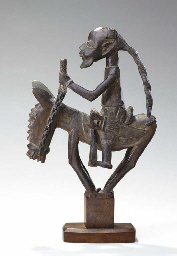
https://a4.sphotos.ak.fbcdn.net/hphotos-ak-ash4/183262_199681783377173_199101673435184_768460_5234572_n.jpg A Fine Yoruba Equestrian Figure |
| Culture › Re: The Art And Architecture Of Yorubaland! by aljharem3: 9:03pm On Oct 01, 2011 |
https://a3.sphotos.ak.fbcdn.net/hphotos-ak-snc6/183262_199681776710507_199101673435184_768458_5484097_n.jpg Ile Ori (House of the Head) |




1 2 3 4 5 6 7 8 ... 82 83 84 85 86 87 88 89 90 (of 227 pages)