Ezeagu's Posts
Nairaland Forum › Ezeagu's Profile › Ezeagu's Posts
1 2 3 4 5 6 7 8 ... 95 96 97 98 99 100 101 102 103 (of 349 pages)
 Culture › Re: What Is Preventing Africa From Experiencing A Cultural Renaissance? by ezeagu(m): 1:16pm On Sep 30, 2014 Culture › Re: What Is Preventing Africa From Experiencing A Cultural Renaissance? by ezeagu(m): 1:16pm On Sep 30, 2014 |
Omarbah: that is due to the history of political "conflicts". Fulanis and Maninkas do not get along in Guinea, but cross the border to Liberia or Cote d'Ivoire, they act as if they are one community.The argument is becoming convoluted. We've already established that we're talking about a common culture not mono-ethnicity or homogeneity. So to talk about Northern Nigeria doesn't hinder the point that people work better with a common culture. You seem to be in the 'what if' instead of focusing on what's happening now. Northern Nigeria's sense of cohesiveness away from wider Nigeria further serves the point that you generally need some sort of common culture to be cohesive. Lol. Liberia and Cote d'Ivoire are bloody war torn. |
| Culture › Re: What Year Is It In Your Ethnicity? by ezeagu(m): 7:26pm On Sep 29, 2014 |
I think the question is better asked as what year is it in your communities native calendar. The 1014-1015 year is from Nri since they were among the few that counted years with an annual feast. http://orientnewspaper.com/eze-nri-calls-for-rebuilding-of-odinani-museum/ |
| Culture › Re: What Is Preventing Africa From Experiencing A Cultural Renaissance? by ezeagu(m): 7:21pm On Sep 29, 2014 |
Fulaman198: I wouldn't necessarily agree with this, he knows hardly anything about his father's side of his culture. He was raised by his mother and his grandparents so his African side is completely absent.That's besides the point, he's still black. Besides even better examples are of the various European communities that came to America and had to adapt to an Anglo culture, many of them literally changed their names on Ellis island to a Anglicised (or Americanised) version. Neuman became Newman and so on. |
| Culture › Re: What Is Preventing Africa From Experiencing A Cultural Renaissance? by ezeagu(m): 7:18pm On Sep 29, 2014 |
Omarbah: A common culture is built in the long term with interactions from the different cultural groups. For this "mixing" to work, we first need a political system that represents everyone.That's the point, you can't force the mixing, either there's a general sense of oneness or at least cohesiveness, having a set goal in mind, or there isn't. Yugoslavia is a prime example. You're not going to get Kanuri people picking up actual Igbo culture or the versa. |
| Culture › Re: What Is Preventing Africa From Experiencing A Cultural Renaissance? by ezeagu(m): 1:44pm On Sep 29, 2014 |
Omarbah: Mainstream culture is built from the interaction of the different cultures in a society. What is truly important for people to live together in peace is for them to be subject to the same laws, for everyone to be represented in the institutions and have a voice. Mali has Bambara has common language used by almost everyone, but due to the exclusion of the Tuareg there has been frequent rebellions. In Senegal everyone is represented in the government. The Wolof are the majority but the first two presidents were Serer and the current one is Fulani. Only the third president was Wolof. Also did I mention that in a country of 94% Muslims, their first president was a Catholic? Now it is true that they have a mainstream culture borrowed from Serer, Wolof, Fulani/Toucouleur and Maninka. But that was possible because of their politics. But even there, the Jola that considered themselves "rejected" have a "rebellion" in their region. It's a mafia type thing though, it is considered a "low level" conflict.A common culture is obviously not the only way to build a successful society, but looking at all the examples we have it's obviously strongly linked with successful societies. The examples you have sent aren't really countries with a strong over arching culture. Better examples are Botswana, Tunisia, Cape Verde and to a certain extent Equatorial Guinea. The current president of the United States is of Luo descent, it really doesn't change America's Anglo based culture. 1 Like |
| Culture › Re: What Is Preventing Africa From Experiencing A Cultural Renaissance? by ezeagu(m): 11:38am On Sep 29, 2014 |
Omarbah: They do have their share of blame of course.I think someone already clarified that the argument is more to do with culture than ethnicity, a view that I've shared. All the states you listed obviously had an overarching culture, and many of them were even ruled by a single ethic group like the Fulani. A society needs some kind of cohesive mainstream culture to be successful in my opinion and many African countries don't have that. |
| Culture › Re: Igbo Architecture | Ụlọ omé n'Ìgbò by ezeagu(op): 9:46am On Sep 28, 2014*. Modified: 12:37am On Dec 17, 2015 |
Yep, omambala. 1 Like |
| Politics › Re: Ebonyi State You May Not Know. by ezeagu(m): 7:49pm On Sep 27, 2014 |
What am I even saying, these buildings are not even good/safe enough to be sheds. 1 Like |
| Politics › Re: Ebonyi State You May Not Know. by ezeagu(m): 7:47pm On Sep 27, 2014 |
While the world moves onto BREEAM rated buildings and moves to BIM for new houses, we're still impressed by sheds for houses in Nigeria. |
| Culture › Re: What Is Preventing Africa From Experiencing A Cultural Renaissance? by ezeagu(m): 7:42pm On Sep 27, 2014*. Modified: 11:31am On Sep 29, 2014 |
pleep: The first female billionaire on the planet earth was a black woman named Madame Walker, she lived in 1918 and made her fortune selling weaves, lye and other black haircare products. Now, the black hair industry is a $500 billion dollar market and it is owned by fucking KoreansMadam CJ Walker wasn't the first female billionaire, she never even was a billionaire. Besides, if you want to say African Americans were better off in 1918 than in 2014, especially in places like Louisiana where Madam Walker was from, then that's a case for reading up on world history in general. African Americans always had high incarceration rates, it comes with being a country's punching bag. 1 Like |
| Culture › Re: What Is Preventing Africa From Experiencing A Cultural Renaissance? by ezeagu(m): 7:38pm On Sep 27, 2014*. Modified: 12:46am On Sep 28, 2014 |
pleep: This is a truly horrible counter argument brother, you actually prove my point more then you refute it. Yes,the whole world was under European control at one point but they made it out, while africa could be colonized again tm if the white man decided. Japan Advanced from a Feudal system to being able to defeat a western power (russia) in the sino japanese war in a couple centuries. Another example are the arabs, who were blessed with oil and ,despite being a fanatical group of people, were able to turn many of their countries into paradises on earth.They haven't made it fully out! We're still under a global white-European hegemony. Look at the stats, look at the richest country in the world, look at the best living people in the most comfortable countries in the world. Look at basic world history of the last 40 years even. It's only recently that we're hearing of the emergence of China and BRICS and so on, but even then the Europeans are waging a cold proxy war against them, look at Africom, look at the various US bases around the world, especially in South Korea and Japan. Many of these countries had to compromise for their success or their success was especially beneficial to the US, like South Korea. The US could have easily lorded over the Japanese in the 1850s and the 1940s, but they saw it beneficial to trade with the 'naturally resourceless' Japan. LOL. Japan was forced out of a feudal system by Matthew Perry and his gun boats. The United States literally had to invade Japan in order for them to open up to Western trade. They didn't "advance" they were pushed. The Arab Gulf states are all ethnic based Hegemony's with heavy powers based on a monarchy, the same monarchy that wields unrelenting power over their resources. Sure, they splash a lot of money into showing off their various sultanates (with notorious lack of attention to detail built by virtual South Asian slaves), but how sustainable is that? Why would you want to copy states that rely and rule over South Asian and Philippine/south east Asian migrants who are sent home if jobless? Did you know many of these Gulf tribes were are at each others necks until the British literally had to draw their borders for them? These places do not have the same experience with white supremacy/European imperialism that Nigeria has had so you can keep the life expectancy unless you produce the life expectancy of a migrant worker in Kuwait. 1 Like |
| Culture › Re: What Is Preventing Africa From Experiencing A Cultural Renaissance? by ezeagu(m): 3:23pm On Sep 27, 2014 |
pleep: I am not saying black people are inferior ( the fact that you interpret it as that is a window into ur soul) just different from other races. These difference hinder our development in the same way a genius with ADD can make failing grades in school while being smarter than his teachers. I also acknowledge that colonization and other other outside involvement have also contributed to black failure. But ask yourself how did we end up at their mercy in the first place?Africa, just like Japan, China, India, the Americas, the Middle East, and so on, ended up under European hegemony due to historic geopolitical reasons. Europe had a better vantage point in terms of their climate, their proximity to cultural centres, particularly in the middle east, and because of inevitability and the fall of other powers. There are differing causes for each case that have been discussed by a plethora of sources. Africa in particular fell, after 400 years of European contact, because of depopulation, internal wars and the fall of states due a large part to the slave trade. Counter argument 1 to African "ADD": African states weren't the only ones subjugated by European powers, it was/is pretty much global. pleep: The downfall of the black race has always come down to the human element. Why did mansa musa coon away hundreds of millions of dollars in gold to the Arabs instead of using that wealth to conquer them? Why are Black Americans more degenerate now, then they were in 1950? Why cant Nigerians figure out how to produce stable electricity in 2014,... do we have a shortage of brilliant engineers? No, its the human element.Mansa Musa didn't conquer the Arabs, and neither did the Arabs conquer Mansa Musa. If there was no rebound then I hardly see this as a failure although the money could have obviously been better spent. Black Americans are obviously in far superior position now than in the 1950s, if you want to argue that, then list the amount of African American billionaires in the 1950s. I wouldn't call that 'degeneration'. pleep: Africa has been dealt a bad lot, by the environment and the actions of other races but she was been given alot of opportunities too, opportunities that are always destroyed by baser nature of the negro race. That is what we must first admit too, identify, and then destroy before we can see real advancement in black peopleThis racial characteristic thing is nonsense really, you just need to look at African examples from before the slave trade / colonisation to see that West Africans especially are capable of organisation. Everything else just sounds like racial hierarchy, and to be fair there are black countries doing better than many non-black. 3 Likes |
| Culture › Re: Igbo Architecture | Ụlọ omé n'Ìgbò by ezeagu(op): 10:30pm On Sep 21, 2014 |
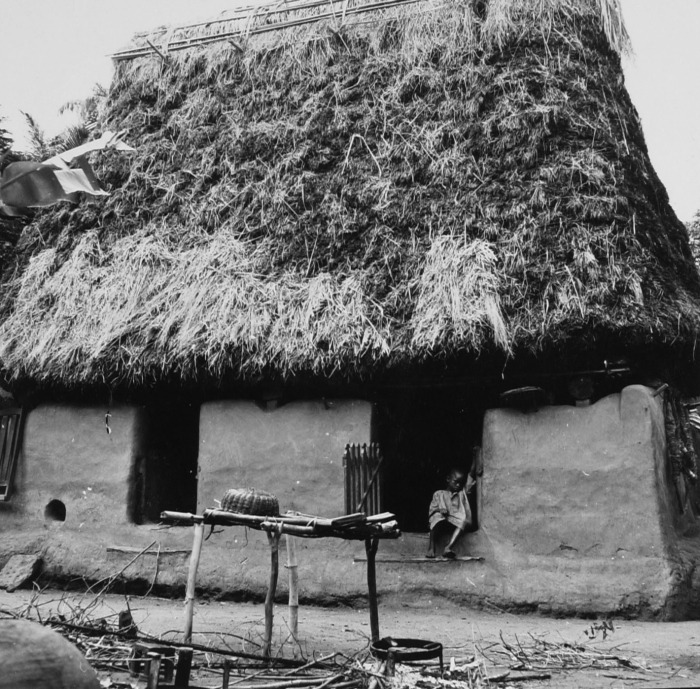
https://38.media.tumblr.com/e85ad66c0bc153b5976ea519514c1feb/tumblr_nc8y3q0Ib01qjh37to1_1280.jpg "Traditional Igbo house/room from the Anambra area, Drs. G.W. (Gerrit Willem) Grootenhuis, 1967." 2 Likes |
| Christianity Etc › Re: Recording Of TB Joshua Talking To Journalists (Audio) by ezeagu(m): 10:25pm On Sep 21, 2014 |
[size=18pt]"So what are you going to write now?"[/size] - T. B. Joshua, Renowned Scam Artist of the Penti-COST-ALL cult 1 Like |
| Culture › Re: Igbo In The 1700's by ezeagu(m): 8:03pm On Sep 19, 2014 |
Radoillo: In earlier comments we talked about the possibilty that some of the 'facts' that ended up in Olaudah's story came from people, Igbo and non-Igbo, that he encountered in the New World and in Europe. I agreed with that. And I would imagine that most of what he had to say about the political geography of his region of Africa outside of his own 'vale', as he called it, would certainly qualify as something he picked up outside of Africa. There's no way he heard the word 'Benin' in Africa, for example. The Bini of his time did not use that word, and their Igbo neighbours certainly did not.He was quite clear about Essaka being under Benin, if we believe what he says about 'Essaka', then we are going with his descriptions of Benin. He also mentions the "considerable" distance between Essaka and Benin and the sea coast, again, no mention of a massive river. It's also interesting to note that in Ika (Agbor) foreigner or white man is Ebo or Onye-Ebo. And he also makes reference to neighbouring chiefs who were 'incited to war', and he talks about Essaka's "enemy's Chief". These could easily be Obi, since chiefs do not exist in that fashion around Isseke. |
| Culture › Re: Igbo In The 1700's by ezeagu(m): 7:22pm On Sep 19, 2014*. Modified: 8:05pm On Sep 19, 2014 |
Radoillo: Olaudah didn't call Essaka a province or district. His exact words are: "This kingdom [Benin] is divided into many provinces or districts: in one of the most remote and fertile of which, called Eboe, I was born, in the year 1745, in a charming fruitful vale, named Essaka. The distance of this province from the capital of Benin and the sea coast must be very considerable...."That must be a later edition, I'm looking at the 1794 edition which is the second edition and he says the province is named Essaka. To be fair I don't know who added "called Eboe" since Vassa died three years later. Maybe he changed the province to Eboe, maybe it was taken from one of the letters that called his province Eboe and later editors went with that. So Isseke is a village group? Why would he identify with a village group as opposed to a village? And why would he call it a "fruitful Vale" if it was a group of villages? He would know that the "vale" was spilt into villages, no? |
| Culture › Re: Igbo In The 1700's by ezeagu(m): 6:05pm On Sep 19, 2014 |
Radoillo: Stories about 'Idu-na-Oba' were told deep in the Igbo hinterland.So, yea, he could have heard stories about Benin in his village. He wouldn't have known it by that name though ('Benin'). Which is why I believe (as some historians also do) that the Benin-reference bit was influenced by travellers' accounts that he probably read.Gustavus made reference to Essaka being a "province" and a "district" of Benin (although Benin here could mean the geographical term instead of the political). This means Essaka would have been quite larger than a hamlet or a small and recently established settlement. I'm talking about villages and village groups not lineages and precolonial towns. Many villages are exogamous in Igboland and many of them were created during or after the 18th century from what I can see, which is why I doubt whether Vassa's village or town exists in the same way it would have in his time. The fact that he called Essaka a province and district makes me think even more that his town was probably quite close to Benin. The Nri-Oka influence reaches Agbor and there is so much diversity and so much time between now and 1740's that there could easily be a town in Western Igboland that had similar rites to the Nri-Oka. Owa (near Agbor), Igbuzor, Ogwashi Ukwu (Ogwa Nri Ukwu) were mostly founded by Nri settlers. |
| Culture › Re: Igbo In The 1700's by ezeagu(m): 2:54pm On Sep 19, 2014 |
Radoillo: @ Ezeagu, given what historians now suspect to be the age of the younger settlements in the north-central Igbo area (younger settlements like the Aro colonies in Ndi Eni and the Aro Ndizuogu area), it's a little strange that you think Isseke would be very old if it existed in the early 18th century.I don't believe most Igbo villages including in Anambra are as old as the 18th century, or better yet were as populated and as well established as Essaka in the early 18th century. It's also word that Gustavus would live in Anambra and know about Benin but wouldn't have heard about the massive river dividing them, although this could be possible. |
| Foreign Affairs › Re: Scotland Scottish Referendum: Voters To Reject Independence - BBC by ezeagu(m): 2:52pm On Sep 19, 2014 |
Eldavido1: In one breath you said Scotland is independent in another you said it its not. Is Scotland an independent country?Where did I say that? Scotland is a recognised informer country to an extent. The referendum is evident of that. |
| Foreign Affairs › Re: Scotland Scottish Referendum: Voters To Reject Independence - BBC by ezeagu(m): 2:51pm On Sep 19, 2014 |
seunmsg: If scotland was an absolutely independent country, their won't be any need to conduct the referendum. And please, make no mistake about it, the scots wanted to be free from the united kingdom but majority of them knew that the pragmatic decision to make was to vote NO based on current economic situation. I have no problem with a similar referendum being conducted in Nigeria to satisfy those clamouring for break up but personally, I think the call for Nigeria's break up is more emotional than rational. Despite all the imperfections of Nigeria, I belief we are still better off as one country. My opinion though.Yeah, but I didn't say it was an absolutely independent country. |
| Foreign Affairs › Re: Scotland Scottish Referendum: Voters To Reject Independence - BBC by ezeagu(m): 7:39am On Sep 19, 2014*. Modified: 2:48pm On Sep 19, 2014 |
seunmsg: I hope those calling for the break-up of Nigeria can learn from this scottish referendum. Scotland is far more developed than most of the geo political zones clamouring for independence in Nigeria and still, they voted to remain part of the United Kingdom. If we put our acts together as a country, we are far better off as one big united country. Nigeria must remain a big, united and indivisible union. All we need to make it work is to vote for good leaders based on merit and not tribal/ religious sentiment.The Scottish independence movement has (or had) absolutely no resemblance to Nigeria's geopolitical landscape, to start with, Scotland is already its own country, that is in a union with the United Kingdom, they have their own parliament, capital, governance, and so on. Scotland is in a good deal with England and the UK already, whereas (most of) the component parts of Nigeria are actually not gaining anything from the Nigerian union. You see, you've based the benefits of staying in Nigeria on things that could/should/would happen unlike how Scotland has based it's unity with the UK with things that were already on ground. Do you think Scotland would have stayed in the UK if all it did was take its resources, tke away its independence (again Scotland is already an independent country Edit: although not fully), and bog it down with troubles that are not their own such as serious distant ethno-religious clashes/wars (like Boko Haram), polar-opposite political arrangements (a la Sharia law), bad governance, and tense ethno-religious shaped politics? No, they wouldn't. 8 Likes 1 Share |
| Culture › Re: Igbo In The 1700's by ezeagu(m): 9:25pm On Sep 17, 2014 |
Radoillo: I don't know if Isseke has/had such an alternative name. I do know however that they sometimes use the phrase 'Ise-na-Isseke' to describe themselves,and they have a tradition that the 'ise' in that phrase derives from the Five major Eke deities in Isseke from which the town derives it's name.So peeling off 20th century orthography (and even un-updated and earlier European spellings), Isseke is Ìsé-èké (ee-SAY-ay-KAY), I don't see why Vassa would write Ìsé-èké as Essaka, especially without seeing the modern spelling (this is directed to everyone in general). Rationally, Ìsé-èké, using Vassa's transliteration, would be E-say-kay. Why would he completely distort this Igbo word only when the others he wrote are clearly legible. This Essaka = Isseke thing to me has always been weak, I think it relies too heavily on modern spellings without looking into morphology and Vassa's efforts in transliterating. And if he was sold, why was his sister sold as well? And how did people get this knowledge and his 'over protective' mother didn't? And the age of this village needs to be known because this must be a very old village for it to have been continually populated since the early 18th century. |
| Culture › Re: Igbo In The 1700's by ezeagu(m): 11:32pm On Sep 14, 2014 |
Acholonu says Ah-ffoe = Aho? Okay. I wouldn't deny possibly being related to a 18th century self-made celebrity author from London either. I still maintain that Gustavus Vassa's origin remains unknown. 1 Like |
| Culture › Re: Igbo In The 1700's by ezeagu(m): 5:43pm On Sep 14, 2014 |
ChinenyeN: I'm actually disappointed that you had to make this post. I'd have like to think that they would have understood you meant Western Igbo geographical region, especially considering the context of the discussion at that particular time. Anyway..It's quite tiring. I believe Gustavus used the double 's' so it could be sounded as 'es-saka', if it were Isaka (in the current orthography), he would have used one 's' as in Esaka. There's an 'Isaka' in Rivers, right below Port Harcourt which is right around the slave trading zone. |
| Culture › Re: Igbo In The 1700's by ezeagu(m): 8:47am On Sep 14, 2014 |
That's Western Igbo not south western Nigeria. |
| Culture › Re: Igbo In The 1700's by ezeagu(m): 12:16am On Sep 14, 2014 |
bigfrancis21: @bold 1...i'd like you to quote the pages from his memoir he said that."Vassa did not claim that his description of the interior of the Bight of Biafra was entirely based on his own experiences. He did note that his account was an ‘‘imperfect sketch my memory has furnished me with the manners and customs of a people among whom I first drew my breath,’’ and acknowledged that he had gained information from some of the ‘‘numbers of the natives of Eboe’’ he encountered in London. His discussions in London influenced what he wrote, just as his quotations from Anthony Benezet and other sources did, but the weight of evidence still indicates that Vassa had firsthand knowledge of Africa." Olaudah Equiano or Gustavus Vassa - What’s in a Name? (2012) by Paul E. Lovejoy "At last I came to the banks of a large river, which was covered with canoes, in which the people [non Igbo speakers] appeared to live with their household utensils and provisions of all kinds. I was beyond measure astonished at this, as I had never before seen any water larger than a pond or a rivulet, and my surprise was mingled with no small fear when I was put into one of these canoes and we began to paddle and move along the river." The Life of Olaudah Equiano, Or Gustavus Vassa, the African (1837), Gustavus Vassa, pg 41 |
| Culture › Re: Igbo In The 1700's by ezeagu(m): 8:06pm On Sep 13, 2014 |
Radoillo: There is no evidence at all in the book to support an Ukwuani origin for Olaudah. Everyone is laying too much emphasis on his casual reference to the kingdom of Benin and ignoring everything else he said in the book about cultural practices among his people. Benin was a kingdom of far-reaching influence, and its influence (in some capacity) was also felt East of the Niger.Vassa was kidnapped around age 11 and wrote the book in his 40s, he openly admitted to having reconstructed parts of his description of 'Eboe' from the accounts of his fellow 'Eboe' 'countrymen'. It could have been that Vassa had unknowingly adopted some false memories from the tales of his comrades which is why it's so difficult to pinpoint where he could have come from. There could have been an Essaka that no longer exists because it was either wiped out or incorporated into another population and forgotten (by the wider world). It's also possible that it could have been a smaller hamlet than in Gustavus memory, or that he mispronounced the name or got the name wrong. My opinion is that he's from the West because he explained crossing a massive river that of which had a body of water he had never seen before, (which I believe is the Niger), and I believe his captors were travelling towards the south east and were coming down to the region between Brass and Bonny. I think it's even likely that he was held around the Abonnema/Buguma Kalabari people who were the ones that he stayed with and liked. From here he would have been taken to the coast. The people with 'harsh' scars were probably the people we now know as Ijo in the Yenagoa are. |
| Politics › Re: os by ezeagu(m): 10:46pm On Jan 08, 2014 |
Abagworo: @bolded. You are the one saying it. Here in Rivers State, everyone knows who Igbo is when the word is mentioned. Only Oyigbo and Egbema are Igbos in Rivers State and they consist barely 10% or less. When it comes to language then the population of Igbo speakers is clear majority.Still doesn't explain away igbo identifying non-Egbema/and Oyigbo people in Rivers State, many of them public figures. Internally in Rivers, there may be an Igbo-migrator/Igbo-speaking dichotomy, which is not unique to Rivers State or even Igbo groups, or even Africa. The same even happens in Anambra with Onitsha indigenes/migrators, and that's supposed to be the 'archetypal' Igbo state. Doesn't rule out the detail. 3 Likes |
| Politics › Re: The Best Dress-Code For Nigeria's Leaders And Politicians. by ezeagu(m): 9:42pm On Jan 08, 2014 |
Emisco3310: are u sure?I don't know. |
| Politics › Re: 11 Injured In MASSOB/ Traders Clash In Onitsha by ezeagu(m): 9:40pm On Jan 08, 2014 |
MASSOB members are best described as an extreme right-wing group. I could see many of the members forming a party and protesting against something or the other even if there were a Biafra. 1 Like |
| Politics › Re: os by ezeagu(m): 9:36pm On Jan 08, 2014 |
Abagworo: There's a problem here. Do you mean Igbo ethnic group or Igbo speaking population or Igbo related ethnic groups?Kind of a confusing statistic considering a good majority of any of those "Igbo related" groups identify as Igbo, and then there's the issue of what an "ethnic Igbo" even is. 4 Likes |
| Politics › Re: os by ezeagu(m): 11:58pm On Jan 07, 2014 |
Andre Uweh: Igbo 50%Land: Igbo 50% + OlayinkaKazeem: That is probably why Rivers people are useless. They have all that igbo blood in them. The most useless and dislike-able tribe in Nigeria.It's better to be disliked than to be a slave. 19 Likes 1 Share |


1 2 3 4 5 6 7 8 ... 95 96 97 98 99 100 101 102 103 (of 349 pages)