Ezeagu's Posts
Nairaland Forum › Ezeagu's Profile › Ezeagu's Posts
1 2 3 4 5 6 7 8 ... 61 62 63 64 65 66 67 68 69 (of 349 pages)
 Celebrities › Re: Tonto Dikeh-Churchill Flaunts Her Wedding Ring (Photo) by ezeagu(m): 11:29am On Aug 21, 2015 Celebrities › Re: Tonto Dikeh-Churchill Flaunts Her Wedding Ring (Photo) by ezeagu(m): 11:29am On Aug 21, 2015 |
Nice, how long can you keep that on though. 3 Likes |
| Culture › Re: Brave New World: Overhauling Igbo Grammar by ezeagu(m): 4:33am On Aug 20, 2015 |
scholti:I know English has a history with those languages, but I was talking about more recent words formed after the Normans had long gone. Words like physics, television, and telephone were all deliberately taken from Greek. And it took less than 50 years for English to go into the background when the Normans came. Anyway. I agree that Igbo needs new words. |
| Politics › Re: Do You Know Dim Chukwuemeka Odumegwu Ojukwu Understood &spoke Yoruba Fluently? by ezeagu(m): 2:57am On Aug 20, 2015 |
Bollove:You have killed me finish. 2 Likes |
| Politics › Re: Do You Know Dim Chukwuemeka Odumegwu Ojukwu Understood &spoke Yoruba Fluently? by ezeagu(m): 2:53am On Aug 20, 2015 |
Bollove:I dey laugh o! Which one is squeezing forehead? 3 Likes |
| Culture › Re: Brave New World: Overhauling Igbo Grammar by ezeagu(m): 2:42am On Aug 20, 2015 |
scholti:People can speak very good Igbo. 'Yes there was a civilization, but not as great as those in West Africa, or in and outside Africa.' What does this actually mean? You're not getting what diglossia, the importance of language as the language of instruction and what the widespread use of a language means which results in this back and forth about the status of English and Hausa's dominance in the north, and now Yoruba. So in that case, is Yoruba among the more 'advanced' languages? Did it borrow grammar from Arabic and English in order for readers to write newspapers as you've said? I've already alluded to it, but the majority of the scientific and medical terminology in English aren't even of English origin, they're loanwords deliberately taken from other Romance languages and Greek and Latin. So, yes, languages can take on massive amounts of loaning, just like I've said for Japanese: https://en.wikipedia.org/wiki/List_of_gairaigo_and_wasei-eigo_terms . All this was discussed because I did not see the need for certain affixes which were shoehorned in on certain words. If this is a discussion of the progression of Igbo language, then it should be a discussion on how to best mould it to the modern world while not completely alienating speakers, and if you think Igbo speakers don't learn or try to speak better Igbo now, it will be very hard to completely switch the grammar on them and others who speak Igbo very well and have been for more than half a century. |
| Politics › Re: Do You Know Dim Chukwuemeka Odumegwu Ojukwu Understood &spoke Yoruba Fluently? by ezeagu(m): 1:52am On Aug 20, 2015 |
Flets:You're wrong. |
| Culture › Re: Brave New World: Overhauling Igbo Grammar by ezeagu(m): 1:48am On Aug 20, 2015 |
Phut:Nkpebi is agreement or decision, so I guess it can work for verdict, although if you would want to get more specific maybe you would want something that goes around a verdict. Phut:N/m 'action of the verb' loosely means an object which the verb could be acted on, so ntụ 'nail' is something used to inflict. The connotations of the affixes are just being deciphered, though. I forgot to add 'o/ọ' which is he/she/it. |
| Culture › Re: Brave New World: Overhauling Igbo Grammar by ezeagu(m): 1:23am On Aug 20, 2015 |
Phut:I'd say ị/i is an infinite, a can be past-tense hence the verb has been attained, e is similar attainment depending on vowel harmony and the inherency of something, u is the perfect attainment of a verb, n/m is the action of the verb. Something like that. |
| Politics › Re: Eastern Nigeria Development Ideas by ezeagu(op): 12:20am On Aug 20, 2015 |
What I'm asking is why can't eastern Nigerians and whoever get rid of people like TA Orji now? These so called leaders have been the cause of the lack of progression and even unity, and if there were to ever be a secession they will be in the way, unless a bloody succession takes place. Also, who is going to be the leader of a Biafra. There are so many more extra problems that comes with secession. 1 Like |
| Celebrities › Re: Ooni Of Ife's Son, Prince Adegbite And Wife At Her Birthday Dinner (Pics) by ezeagu(m): 11:36pm On Aug 19, 2015 |
Is he in the running? MOORCHMOORE:Because they're out hunting. 2 Likes |
| Culture › Re: Igbo Architecture | Ụlọ omé n'Ìgbò by ezeagu(op): 11:32pm On Aug 19, 2015 |
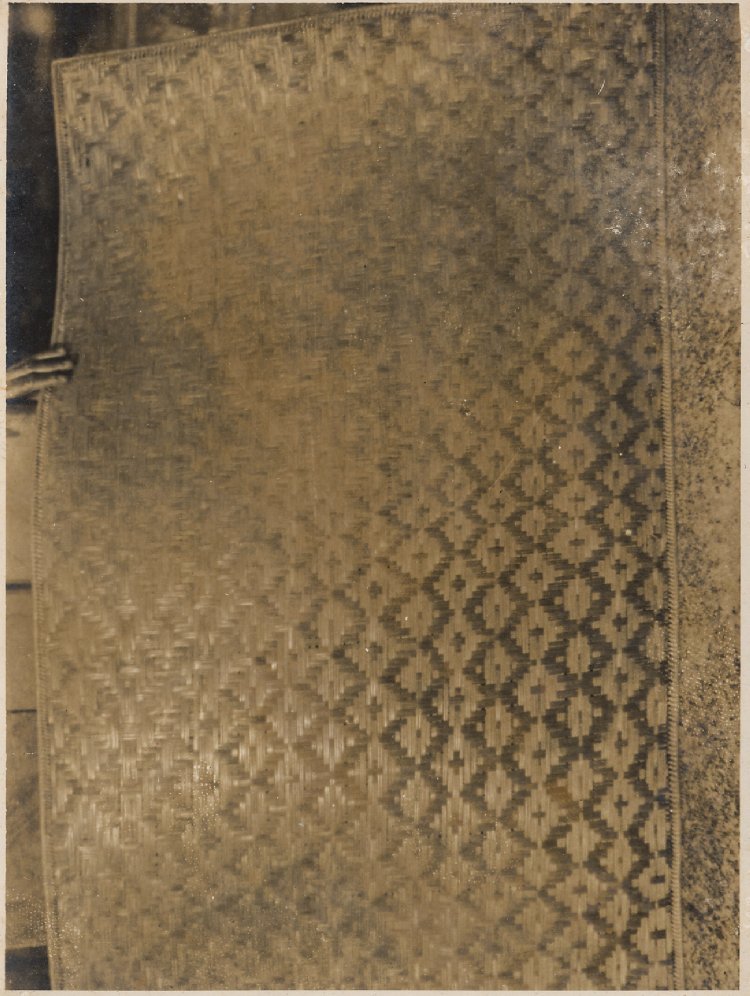
https://40.media.tumblr.com/fa43c88cdcbd1cc9847b65dc2c3cf68b/tumblr_nstss4CSwK1qjh37to1_1280.jpg "Close-up of basketry from the Niger Delta area. Photo by Edward Chadwick, 1930s." 1 Like |
| Culture › Re: Igbo Architecture | Ụlọ omé n'Ìgbò by ezeagu(op): 11:31pm On Aug 19, 2015 |
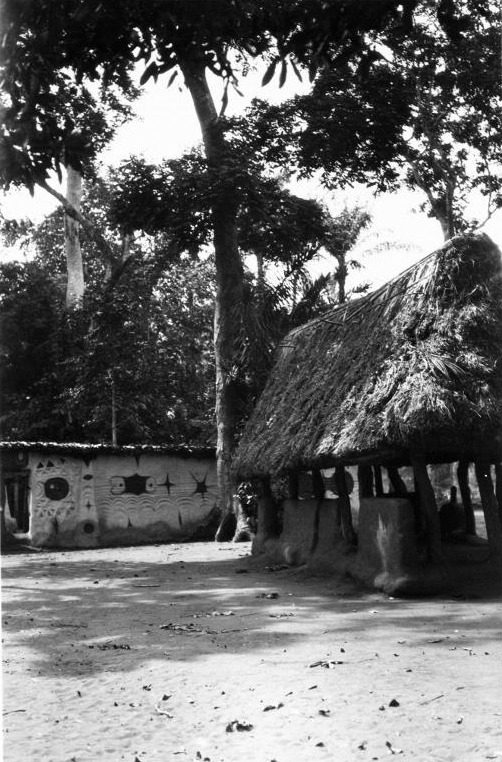
https://40.media.tumblr.com/7544b3b90ad63c81a1b93a8ef125857f/tumblr_nsy5f4jqvV1qjh37to1_540.jpg "Igbo shrine complex. Photo by Gustaf Bolinder, 1930-31." 1 Like |
| Culture › Re: Igbo Architecture | Ụlọ omé n'Ìgbò by ezeagu(op): 11:27pm On Aug 19, 2015 |
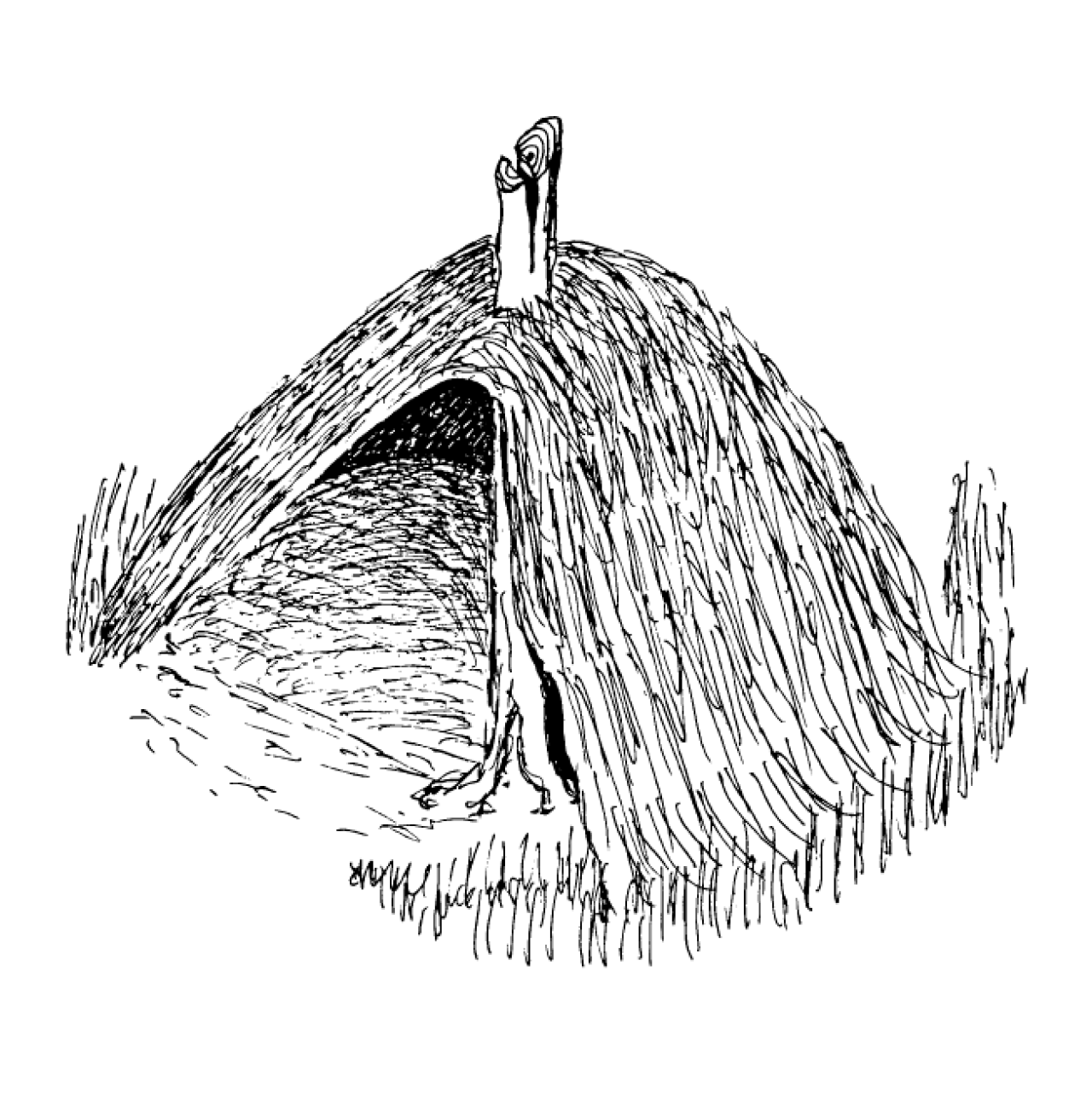
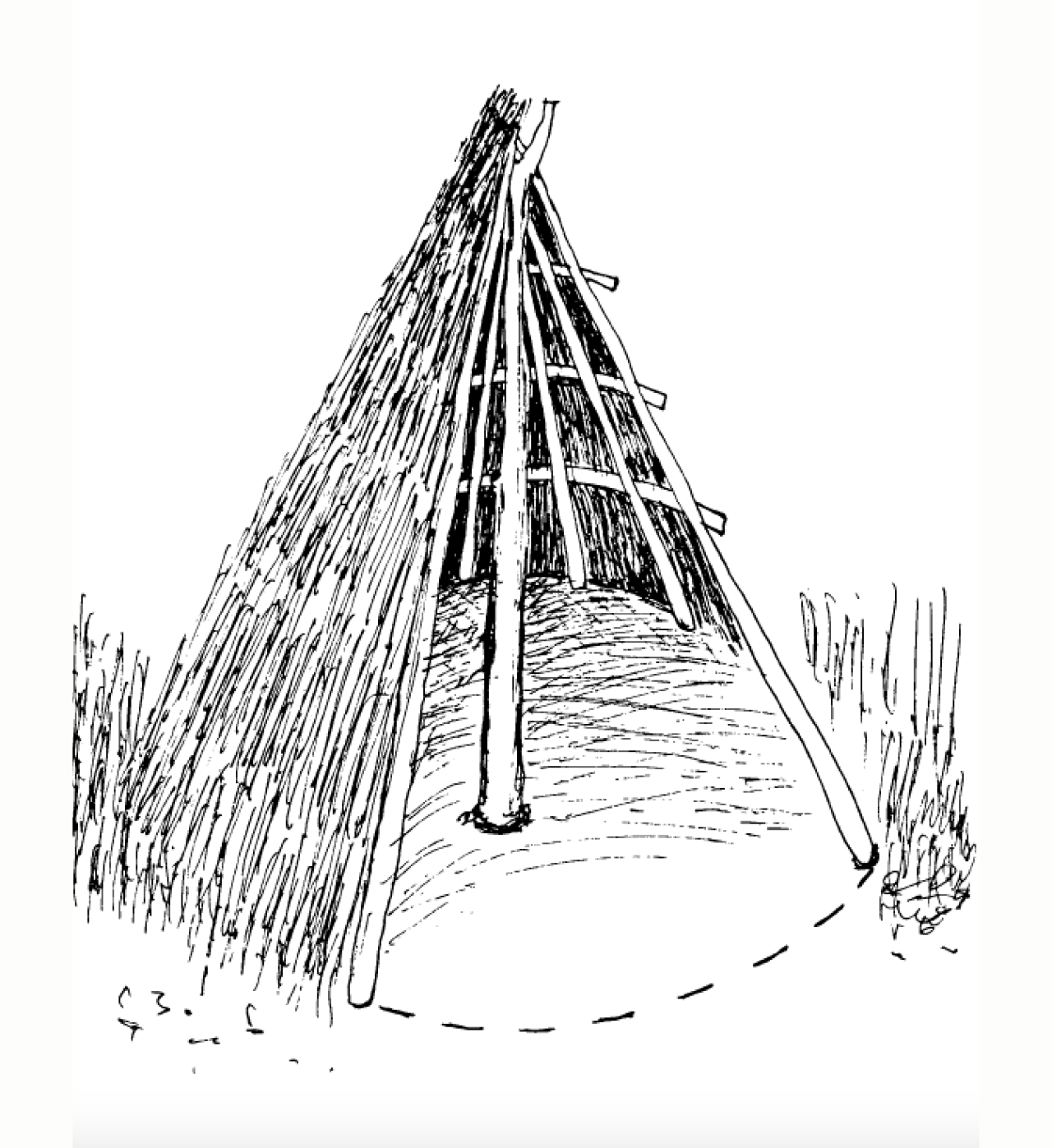
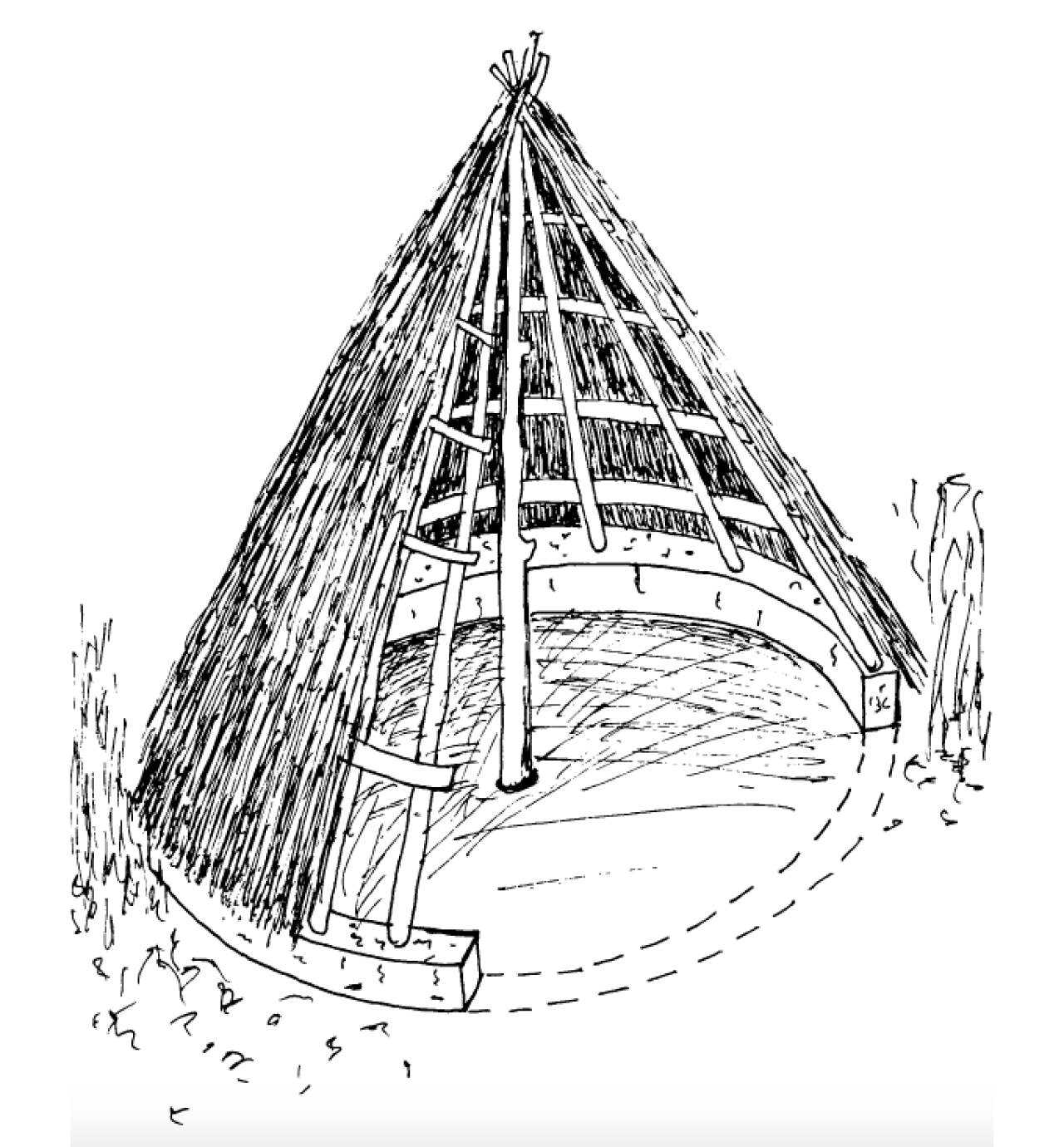
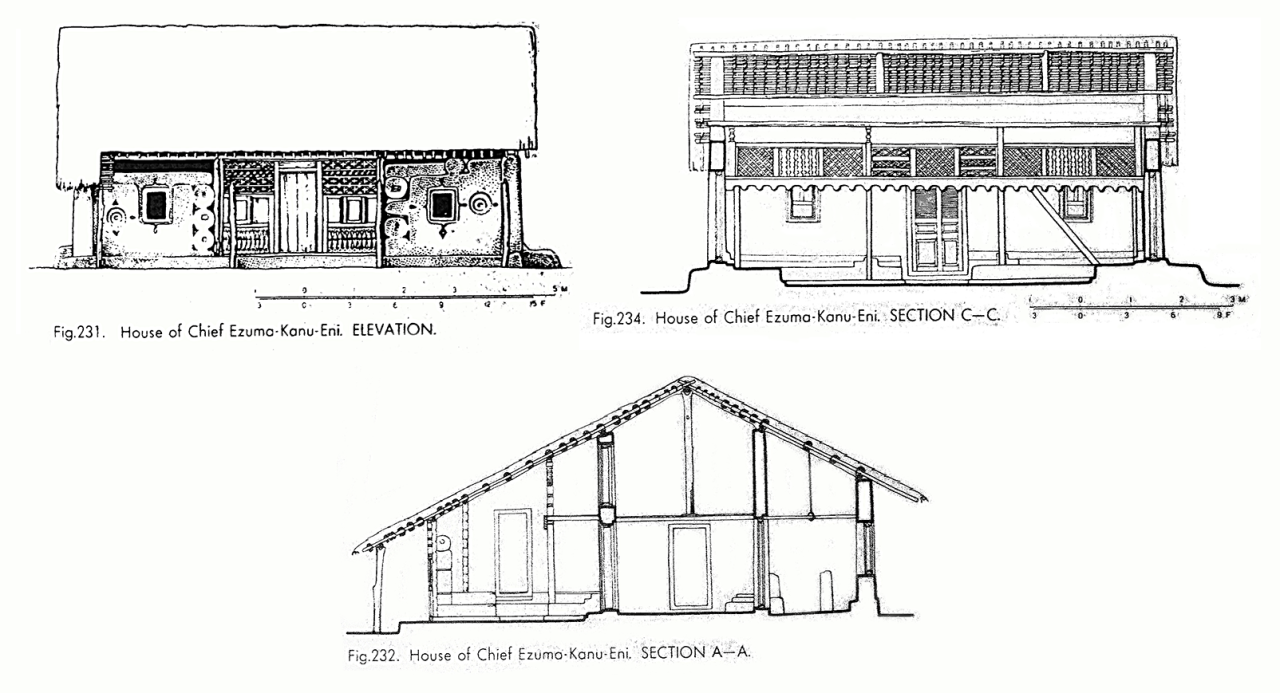
[size=14pt]Development of Ancient Igbo Shelter/Housing[/size] https://41.media.tumblr.com/adc2d0cacb57f1e7968cbb73316bee08/tumblr_nt700xz5v41qjh37to2_1280.png Possible Earliest Shelter https://41.media.tumblr.com/4d50f1df4ee8cc601ebc3ebd44120869/tumblr_nt700xz5v41qjh37to3_1280.png Further Development of the Earliest Shelter https://40.media.tumblr.com/d9b4a5f1c2b42630e9522f133fec224d/tumblr_nt700xz5v41qjh37to1_1280.png Possible Earliest Use of Mud in House Building by Igbo Ancestors https://41.media.tumblr.com/ca421acec7b337ffa0c5b933d055825c/tumblr_nt700xz5v41qjh37to4_1280.png House of Chief Ezuma-Kanu-Eni in Arochukwu, Zbigniew Dmochowski "From the possible earliest form of ancient shelter to a traditional 19th/20th century Igbo house. The supposed primacy of the conical shape of housing is reconstructed from the housing of the peoples who now populate the areas around the Benue River which is possibly the point of migration of the ancestors of the Igbo. The quadrangular style housing started taking shape with the development of architectural elements such as posts and beams. [Godwin Chikwendu Nsude (1987). The Traditional Architecture of the Igbo of Nigeria.Thames Polytechnic School of Architecture and Landscape, Dartford.; Zbigniew Dmochowski (1990). An Introduction to Nigerian Traditional Architecture: South-Eastern Nigeria, the Igbo-speaking Areas. Ethnographica Limited.]" 1 Like |
| Culture › Re: Which Among The Three Major Languages In Nigeria Is Fast Going Into Extinction? by ezeagu(m): 11:25pm On Aug 19, 2015 |
Ify3:Strange. I don't know any Igbo village where Igbo isn't the main mode amongst kids. |
| Celebrities › Re: Skiibii Death Stunt: Kcee & Skibii, Almost In Tears, Tell The True Story (pics) by ezeagu(m): 11:06pm On Aug 19, 2015 |
Who? 1 Like 2 Shares |
| Culture › Re: Brave New World: Overhauling Igbo Grammar by ezeagu(m): 10:43pm On Aug 19, 2015 |
scholti:The whole Arabic influence on Hausa making it more 'advanced' and therefore easy to spread is something I'm not going to buy, so agreement to disagree maybe. The fact that English is spoken in southern Nigeria more than it is spoken in northern Nigeria is evident in the fact that Hausa is a lingua franca in itself. The level or form of English is not really relevant because people still use a form of English in southern Nigeria as a lingua franca. English is not widely spoken in Zinder and Kano how it is in Port Harcourt or Warri. I'm certain of that. And when I talked about schools, I was talking about instruction, not subjects. A 'classical English register' is different from classical English works. Classical English doesn't exist and there's no 'simple German' in the sense that you can get a simple English. The presumed affixes in the medical terms are compound words, or even pseudo-affixes like in Chinese, I've not argued against compounding, or even the use of 'ọnọdụ', what I've warned about was the one-size-fits all approach of adding English-transliterated affixes to all forms even when it is unnecessary and the idea that Igbo grammar can't work for today. What I've spoken for was the use of the present affixes in Igbo which are very clear and rational to Igbo speakers. Now I can't remember talking about sophisticated words, because I wouldn't describe words in such a way. I wasn't going to talk about civilisation. Civilisation is very irrelevant to this discussion because we are talking about vocabulary and the expanding of it, the only words we have trouble with are post-industrial words, apart from geographical and cultural words like tea. Most languages in the world, including European ones had to follow English' lead for industrial words and everything that followed. The stuff we're doing here trying to find terminology for post-industrial words isn't even done by languages like Japanese for many cases, they just adopt a loan word and 'Japanify' it, and I'm talking about common words like engine, motor and machine. Not saying this is good or bad, just that the idea that Igbo's lack of post-industrial terminology signifies a backwardness in the old society isn't really putting everything in perspective, especially with the introduction of industrial age going hand-in-hand with British imperialism and therefore education. If you believe this is wrong then give me examples of pre-industrial words that do not exist in Igbo which aren't obviously geographical and cultural words like ice. Most of the medical terms in English itself were coined from only around 300 years ago via Latin and Greek because the English believed those to be the classical languages of civilisation. This whole trajectory of this discussion was my contention in the first place: that we are assuming that the way Igbo words are formed is 'backward' simply because it doesn't follow the method used in the languages of 'more advanced' civilisations. There are people who speak Igbo really well, I mean really really well. They usually just use loan words and they communicate perfectly fine, if you came up with the vocabulary to simply replace these loans it'd work for them perfectly. Again, I don't see why we need to compeltely change the grammar of Igbo. I don't think that's the problem and I don't think that will solve the wider issue of people not speaking Igbo because they 1. they don't have to, the fact that this whole conversation is in English shows that 2. English is the official language of instruction and the most widely spoken language, in whatever form, in southern Nigeria. |
| Culture › Re: Brave New World: Overhauling Igbo Grammar by ezeagu(m): 2:34pm On Aug 19, 2015 |
ChinenyeN:I thought hard! 1 Like |
| Culture › Re: Brave New World: Overhauling Igbo Grammar by ezeagu(m): 2:23pm On Aug 19, 2015 |
Phut:You should get in touch with Oge Nnadi who developed mkpuruokwu.org. It was the best online dictionary and I don't know why it's no longer online. It also provided the region of origin of dialect words and have their tone, like with ákwà (cloth), they transcribed it as [HL]. And it was searchable in both ways (Igbo-English-Igbo). His contact details: http://nnadi.org/. |
| Crime › Re: Goat Thieves Stripped Naked, Paraded Round Town (photo) by ezeagu(m): 2:16pm On Aug 19, 2015 |
[size=14pt]When are they going to parade politicians who have stolen billions like this? Funnily enough those same politicians who steal daily have lead to the conditions where people feel they need to steal goats.[/size] 3 Likes |
| Culture › Re: 2014 Census Shows That Yoruba People Are Becoming The Major Ethnic Group by ezeagu(m): 1:54pm On Aug 19, 2015 |
pazienza:Yeah, I think I saw this before. I think the other populations were done the same as well. To be honest, there are no reliable statistics out there for ethnicity, all there are are estimates based on populations of the states, and as we know those statistics are also unreliable and apart from that many people live in different states, especially Igbo people. There was never a 2014 census so this thread is misleading. |
| Culture › Re: Brave New World: Overhauling Igbo Grammar by ezeagu(m): 1:42pm On Aug 19, 2015*. Modified: 1:58pm On Aug 19, 2015 |
Phut:I was thinking about how the word for court could be created with the affixing and compounding of 'kpé' and using tone to our advantage, as well as in the creation of other law terms. ikpe; legal battle nkpè; court ukpè; judgement, judge v. [gọ ụkpè] àkpè; legislation èkpè; act, decree; acting [èkpùkpè] òkpè; lawyer ókpè; court room compound àzúikpè; verdict ńjụíkpè, ọjụíkpè; objection ọláíkpè; inconclusive ọhàíkpè [ọhíkpè]; jury and so on, I haven't even gone into íwú and I've made, presumably, ten legal terms. From one verb. 10. Now imagine what could be done with the thousands of verbs using this simple affixing, and in that case understandable, style that's been used to create most Igbo words already. 1 Like |
| Politics › Re: Lagos Amongst Worst Cities To Live In Globally, Ranked 136 Out Of 140 by ezeagu(m): 12:14pm On Aug 19, 2015 |
FKO81:Hope you know as a Nigerian this paints the whole country in a sickly shade of doo doo brown? |
| Culture › Re: Brave New World: Overhauling Igbo Grammar by ezeagu(m): 12:01pm On Aug 19, 2015 |
scholti:Okay, first of all there's not classical English. I think you misunderstood me saying Chinese and all do not have those prefixes, not prefixes in general, to function. This is what your sources says on Chinese affixes in relation to English ones. "An affix is a morpheme that is attached to a word stem to form a new word. Words with multiple affixes (WMAs) such as “translatability”, “postmodernism” and “surrealism” are very common in English. But in Chinese most WMAs are borrowed from Japanese which were also influenced by English. In recent years, research such as in Pan et al. (2004) and Shen (1995) has been conducted to explore the new phenomenon of adding affixes to Chinese words to form new words in scientific literature, which are mainly translated from English or other western languages. Although these words have an English origin, they show their own characteristics. To distinguish them from their counterparts in English, Chinese linguists call them “quasi-affixes”. The concept was first proposed by Lu Shuxiang in The Analysis of Chinese Grammar in 1978, which turned a new leaf of study Chinese affixes. For this Xu(1997) also remarked: “In Chinese-Tibetan languages, the derivation that plays an important role in new word creation is not those affixes whose senses are fading and that only serve as formal markers, but those quasi-affixes that retain their certain senses”. Because quasi-affixes emerge very fast, many new words have been created in this way, especially in scientific literature. As we mentioned above, many Chinese compound words were borrowed from Japanese (more than 20,000) in late Qing Dynasty by introducing Japanese textbooks. In the process, WMAs became a part of Chinese lexicon, e.g. words with common affixes like “-性(-ity)” and “-度(-dom)”. "By comparing the WMAs in both English and Chinese, their features that can be used for automatic translation are summarized into the following three categories: First, in English the part-of-speech a word is generally shown by derivation and many multiple affixes are used to indicate their syntactic functions. But this is not true for Chinese. Therefore, when an English WMA is translated, the stem word is usually kept while the affixes will be taken off. For instance, the structure of the word “modernization” is “stem word+suffix+suffix”. Its Chinese translation is “现代化(modernization)” and the last suffix has to be omitted and corresponds to the empty character ε. In contrast, English words with a single affix may be translated to Chinese WMAs. For instance, when a word like “usable” is translated, the Chinese prefix “可-(-able)” has to be added and its translation becomes “可 利用 的 (usable)” (with the structure “prefix+stem word+suffix”). When analyzing this type of words, new characters need to be generated. Some WMAs correspond very well in both languages, e. g., word “nongovernmental” with the structure “prefix+stem word+suffix” and “ 非 政 府 的 (nongovernmental)” with the structure “prefix+stem word +suffix”. The work in this paper considers only verbs and adjectives, the majority of WMAs. Ordinary dictionaries usually cannot collect all the WMAs, especially in scientific literature. They often become “unknown words” in machine translation and cannot be translated successfully. Section 5 provides a few examples for such words." So the point is Chinese may have been influenced by the scientific words in English by way of Chinese, but their affix or quasi-affix system follows the way established way of affixing. I don't know why I need to say 'ọnọdụnwanyọ' when I can just say 'nwanyọ'. The nature of Igbo itself flows and removes redundancies in order to harmonise words. I see this as a classic example of what this process of affixing will do, which is to attach a one-size-fits-all English-derived affixation system to everything regardless of whether it is needed or not. Reading the Chinese affixation system makes it clear that theirs is different enough from English and works with the language how it has always done. Chinese didn't 'take from English and nativized' in the sense you're talking about, rather it looked at English and provided a suitable Chinese response. On Hausa and the Igbo languages use in media, again: I am 99% certain if you were to switch the language of all the Hausa speakers to Igbo and the language of the Igbo speakers to Hausa, we would still see a phenomena where Igbo would be used in all types of media. I am equally certain that Hausa is used in schools in northern Nigeria in a way Igbo isn't in southern Nigeria, in fact, speaking Igbo was/is often times punishable in some schools. The problem is diglossia and the rubbish orthography Igbo has, Igbo speakers don't need to speak Igbo because English is widely spoken, while in northern Nigeria Hausa is really all they've got. Even taking the Hausa example, we see that they did not need to change their grammar much to have a language that everyone uses comfortably in all or most areas of life. I'm not even going to talk about grades of civilisation, partly because it's quite irrelevant in the discussion of expanding vocabulary today. 1 Like |
| Education › Re: Obafemi Awolowo University Poor Welfare state by ezeagu(m): 5:30pm On Aug 18, 2015 |
What toilet? Looks like renderings from a zombie apocalypse game. Where's the tuition going? |
| Culture › Re: Brave New World: Overhauling Igbo Grammar by ezeagu(m): 5:24pm On Aug 18, 2015 |
Phut:The rest: trimness - ụkpá, ụchá, abruptness - ńkụjà, attentiveness - ńghé, fieriness - àgwà ọkụ, obi ọkụ, genteelness - ogaranya, gratefulness - ọgọ, greasiness - mmanụmmanụ, idi mmanụ, ụnya mmanụ, grouchiness - mkpasu, indebtedness - ịri ụgwọ, oriri ụgwọ, queasiness - afọ nsá, sọ oyi, spaciousness - mbadamba, sa, saasa, graciousness - úrè, uba, mma, braveness - obi shike 3 Likes |
| Politics › Re: Response to "Show Me The South South" Thread by ezeagu(m): 1:33pm On Aug 18, 2015 |
QuotaSystem: QuotaSystem:So what did you mean by "Imagine the audacity of telling me my land does not exist."? Dubious, no? 2 Likes |
| Politics › Re: Late Emir Of Katsina Admiring Traffic Light During Visit To UK In 1940s by ezeagu(m): 9:37pm On Aug 17, 2015*. Modified: 4:11pm On Jan 30, 2016 |
AnanseK:Where was the earliest textiles in Nigeria found and from what estimated date? What is the oldest kingdom in Nigeria? What is the oldest bronze making tradition in West Africa I want you to answer first. That Obasanjo wore more cloth like parachute did not make him more advanced than Tony Blair. By the way Hausa people today below.
|
| Politics › Re: Ndi-igbo Will No Longer Be Timid – Igbo Congress by ezeagu(m): 7:44pm On Aug 17, 2015 |
No vision whatsoever. |
| Politics › Re: Late Emir Of Katsina Admiring Traffic Light During Visit To UK In 1940s by ezeagu(m): 7:27pm On Aug 17, 2015 |
secretaryabdul:This is a Japanese man before western clothes, una pass them then? [img]http://cfile8.uf.tistory.com/image/155F293C5023DD7B01DC8A[/img] These are Japanese people today at a festival, una pass them now? https://news.xinhuanet.com/english/2009-02/25/xin_37202062520147961138023.jpg |
| Politics › Re: Eastern Nigeria Development Ideas by ezeagu(op): 7:14pm On Aug 17, 2015 |
Proposed rail. www.nairaland.com/attachments/2744343_esternigeriarail_jpegcff374ab293ef4f81bb4605f74db7e6a 6 Likes |
| Politics › Re: Late Emir Of Katsina Admiring Traffic Light During Visit To UK In 1940s by ezeagu(m): 7:06pm On Aug 17, 2015 |
BMZK:There's nothing wrong in being nude, nudity or reams and reams of clothing does not signal any type of civility. |
| Politics › Re: Late Emir Of Katsina Admiring Traffic Light During Visit To UK In 1940s by ezeagu(m): 7:03pm On Aug 17, 2015 |
NoRetreat:Sorry, when were the Igbo carrying people in rocking chairs, do you have a picture? |



1 2 3 4 5 6 7 8 ... 61 62 63 64 65 66 67 68 69 (of 349 pages)