PhysicsMHD's Posts
Nairaland Forum › PhysicsMHD's Profile › PhysicsMHD's Posts
1 2 3 4 5 6 7 8 ... 43 44 45 46 47 48 49 50 51 (of 67 pages)
 Politics › Re: Southern Sudan Seeks Nigeria’s Support by PhysicsMHD(m): 8:17pm On Feb 16, 2011 Politics › Re: Southern Sudan Seeks Nigeria’s Support by PhysicsMHD(m): 8:17pm On Feb 16, 2011 |
This is somewhat ironic, considering what's happening in Jos and Benue. |
| Politics › Re: Bakare Liable To Death By Stoning In Islamic Law- Jibrin by PhysicsMHD(m): 8:14pm On Feb 16, 2011 |
@ Kobojunkie, Chyz's question was perfectly valid, I think he just missed that you were being sarcastic/satirical in that post of yours that he quoted. |
| Politics › Re: Bakare Liable To Death By Stoning In Islamic Law- Jibrin by PhysicsMHD(m): 8:12pm On Feb 16, 2011 |
[quote author=Chyz* link=topic=606188.msg7742992#msg7742992 date=1297881425]Can you give me a verse out of the quran, where these ingrates say permits the stoning of those who change their religion from Islam?[/quote]http://en.wikipedia.org/wiki/Apostasy_in_Islam Apostasy in Islam (Arabic: ارتداد, irtidād or ridda) is commonly defined in Islam as the rejection in word or deed of their former religion (apostasy) by a person who was previously a follower of Islam. While the Qur'an states that apostates will be punished by God, Islamic scholarship differs on the earthly punishment for apostasy, ranging from death to no punishment at all. Some say the reason for the harsh penalty for apostates is an attempt to silence ex-Muslims who may speak out against Islam.[1]It's not from the Quran, but it's de facto Islamic policy apparently. |
| Culture › Re: Edo Colonized Yorubaland Not Vice Versa. by PhysicsMHD(m): 8:03pm On Feb 16, 2011 |
bokohalal:The Osun of Benin is very different from the Osun of Yoruba religion. The Osun of the Yorubas is a river/sea goddess and a goddess of fertility. The Osun of Benin was a specific magic and medical cult and the deity was a male god associated with birds that was worshiped by herbalists. Ogun is the same for Benin and Yorubas, and probably derives from the introduction of Yoruba orunmila/ifa divination to Benin in the 17th century (according to Paula Ben-Amos in The art of power, the power of art : studies in Benin iconography). 1 Like 1 Share |
| Politics › Re: Bakare Liable To Death By Stoning In Islamic Law- Jibrin by PhysicsMHD(m): 7:24pm On Feb 16, 2011 |
Do they have any proof that he's an apostate? Remember how some stories were claiming that he was from the North before? This sounds somewhat like that claim. |
| Culture › Re: Edo Colonized Yorubaland Not Vice Versa. by PhysicsMHD(m): 7:17pm On Feb 16, 2011 |
Odunharry:Not that I'm an advocate of this "Edo colonized Yorubaland" thing, but I should point out that no group that was ever under Benin influence came to speak Bini. Yet we know that at some point some groups were under Benin. I also think that this idea of formal colonization, like that which occurred in modern times, is completely the wrong word in the context of this discussion, so places where one group paid tribute to or acknowledged one other group's influence or representatives doesn't necessitate that the language be taught or spread there. As for names, what are these Yoruba names and what is the Yoruba that they speak in Benin? Just asking. |
| Politics › Re: Rascals In Govt: Jonathan A Drunk Fisherman -tinubu ! by PhysicsMHD(m): 6:14pm On Feb 16, 2011 |
https://pmnewsnigeria.com/wp-content/uploads/2011/01/Bola-Ahmed-Tinubu.jpg Look at that face.  A face only a mother could love. I think it's clear that ACN isn't getting any votes in Bayelsa come election time. |
| Politics › Re: Juju Aids Human Trafficking Business - Nigerian Immigration Service by PhysicsMHD(m): 6:09pm On Feb 16, 2011 |
RichyBlacK:What's the actual name of his chieftancy title? Or was he trying to remain anonymous? "Benin Chief of Benin kingdom" is certainly not a legitimate chief. Not doubting the story, just surprised that he could somehow remain anonymous after being arrested but that they would disclose that he was a chief. |
| Culture › Re: We Have No Roots In Nigeria- Obi Metzeger, Ayo King by PhysicsMHD(m): 11:18pm On Feb 15, 2011 |
fstranger3:His grandfather was Igbo. "Edward Wilmot Blyden’s story is remarkable. He was born on August 3, 1832, in the Virgin Islands in the West Indies, a descendant of Ibo slaves from Nigeria. He was an extremely gifted student, and at age of eighteen, attempted to enroll at a theological college in the United States. Upon realising that their potential student was a black man, the college in North America out rightly rejected him. According to reports, at this time, slavery was still lawful in the USA and his brazen attempt to try to fight the ‘system’ subjected him to many frightening experiences. A few months after his attempt to enroll was rejected, one white man named Reverend Holden, who recognised the high intellect in Blyden, assisted Blyden to emigrate to Liberia. Blyden thus boarded a ship with the intention of building a new life for himself in Africa. This young man remained in Liberia for more than thirty years, rising gradually to the highest levels of Liberian society. During his Liberian career, Blyden was a Presbyterian minister, a newspaper editor, a professor of classics, President of Liberia College, Ambassador to Great Britain, Minister of the Interior, and Secretary of State. In 1885, he was an unsuccessful candidate for the Presidency. It is reported that he lost the Liberian Presidential Elections by just a handful of votes. Fearing for his safety in light of his immense popularity which competed with the winner of the Presidential Elections, Blyden fled to Sierra Leone. He was already well known in Sierra Leone, where he had earlier spent two years (1871-73) as Government Agent to the Interior, leading two official expeditions — one to Falaba and another to Futa Jallon. Thus, it was easy for Blyden to become based permanently in Freetown. Blyden was in many ways a greater intellectual force in Sierra Leone than in Liberia. However, in Liberia, Sierra Leone and the United States, Edward Wilmot Blyden was not without controversy. Infact, in some ways, the name Edward Blyden is synonymous with controversy. A brave and outspoken man who lived well before his time, Blyden did not allow the status quo to sway him from saying exactly what was on his mind. He was gifted with amazing oratoral skills which he would readily use to publicly make his points. Blyden believed that posterity would reward those who spoke with their conscience even if what was said was against powerful forces. Therefore, he traveled far and wide giving lectures and undertaking controversial actions. Naturally, for such a controversial figure who preached ideas that were way ahead of his time, he inspired mixed feelings in many. Some people hated him with a passion whilst others granted him near-messiah status. He had a deep conviction that men had a responsibility to future generations of the human race to always say and do what their conscience dictated as highlighted in the following words from him during a lecture he delivered to a jam packed church in Washington DC on one of several trips he made back to the USA from Africa: "There is a talent entrusted to you. It is your duty to call into action the highest forms of your being. It does not matter what your calling may be - whether it be what men call menial or what the world calls honorable - whether it be to speak in the halls of Congress or to sweep out those halls - whether it be to wait upon others or to be waited on— it is the manner of using your faculties that will determine the result- that will determine your true influence in this world and your status in the world to come. Every one should do his part to advance humanity. Each should exert himself to be a helper in progress. Whatever your condition, you do occupy some room in the world; what are you doing to make return for the room you occupy? There are so many of our people who fail to realize their responsibility, who fail to hear the inspiring call of the past and the prophetic call of the future." Here in Sierra Leone, Blyden stirred controversy and lively debate in the Krio community by opposing the indiscriminate emulation of European culture. He told the Krios that they were "de-Africanised," scolded them for holding themselves aloof from the people in the provinces, and advised them to remember always that "you are Africans." After the 1887 publication of his masterpiece, Christianity, Islam, and the Negro Race, some Krios under Blyden’s captivating influence began to adopt African names and even to emulate traditional African dress. Although earlier pictures of him (two are shown accompanying this feature) sport him with European outfits, in his latter days, he wore only African outfits. Blyden looked forward to the rise of an independent West African nation and he urged the British to allow Africans more autonomy in political and church matters, and argued against the imposition of European culture. As early as 1872, Blyden called for an independent West African University to be run solely by Africans, teaching African languages, cultures, and values. Blyden, though a Christian himself, viewed Muslims as more authentically African, and he urged the British authorities to involve Muslim Africans in their colonial enterprise. Blyden taught himself to speak Arabic, and maintained close relations for many years with the Muslim community in Freetown. In his later years, he was Director of Mohammedan Education in Sierra Leone. When Edward Wilmot Blyden died on February 7, 1912, his funeral was attended by many hundreds of people from throughout the Freetown community, including both Muslims, who bore the coffin, and his fellow Christians. In a further reflection of how the respect Blyden commanded cut across race and colour, his monument sitting in front of the Freetown City Council was erected by his European white friends whilst the marble stoned monument at his graveside was erected by his Muslim friends. Edward Wilmot Blyden is dead but as the Internet Search Engines reveal, thousands and thousands of later generations of black intellectuals, in Africa, America, Europe and beyond continue to look up to Edward Blyden for inspiration." http://news.sl/drwebsite/exec/view.cgi?archive=3&num=148 |
| Culture › Re: We Have No Roots In Nigeria- Obi Metzeger, Ayo King by PhysicsMHD(m): 11:09pm On Feb 15, 2011 |
excanny:Didn't miss it at all. There's no record of a war between Igbos and Itsekiri, Igbos and Urhobo, Igbos and Isoko, etc. so the overwhelming majority of your post was just wrong. If you want to say there were conflicts between Edos and Igbos in the past, that's a possibility. However rather than breaking it down to address every group, I just pointed out the most wrong aspect - the grouping of Urhobo, Itsekiri, and Benin like that as groups that warred with each other in the past. I gave the 2 options that he's either Urhobo or Isoko. I also did mention that I could bet from my gut feelings that 'Okoro' is of Igbo origin. And I gave my reasons for feeling so. I need to really research that though.Yeah, I was just saying which of the two he was. Gut feelings are just gut feelings. There is absolutely no evidence that the word itself is of only Igbo origin. All we know is that Igbos use the word in personal names (first, last, middle) more and there may be cultural or historical reasons for that. I think I was a bit mistaken here. I thought he was arguing against the Igbo point of view.I don't think you read the article. It's just about different southern Nigerian groups naturally sharing words and the word not being spread by the Benin empire's influence as claimed by one Bini "overclaimer", but existing among many groups naturally. |
| Culture › Re: Aliko Dangote Started Out Like An Igbo Man by PhysicsMHD(m): 10:08pm On Feb 15, 2011 |
Bizarre |
| Culture › Re: We Have No Roots In Nigeria- Obi Metzeger, Ayo King by PhysicsMHD(m): 10:01pm On Feb 15, 2011 |
[quote author=tpiah! link=topic=603183.msg7736779#msg7736779 date=1297802507]there's an okoro county in uganda, same way there's a king called oyo there. lighten up people.[/quote]I'm not surprised, actually. Okoro is such a basic, simple sounding word. Wouldn't be surprised if it was in some non-African languages (maybe some Asian languages). |
| Culture › Re: Edo Colonized Yorubaland Not Vice Versa. by PhysicsMHD(m): 9:56pm On Feb 15, 2011 |
ezeagu:Oyo is not included in any supposed "colonization" of Yorubaland, and it was the largest part of Yorubaland. I could post specific quotes from Biobaku's Sources of Yoruba History which go into detail about the apparent Edo influence and origin of many of the smaller non-Oyo, non-Ife, Yoruba city-states, but it would be a lot of typing. I might post a few parts, but I don't really share the OP's zeal for this "Edo colonized Yorubaland" idea. As for Edo colonizing Yorubaland, I doubt it because the use of "colonization" implies a kind of relationship which I don't think Benin actually had with most of the groups or city-states whose institutions they influenced or originated. It was more loose than that, I think. My view with regard to the Edos and Yorubaland is that the acknowledgment of the religious supremacy of Ife is what kept Oyo and Benin from really clashing all those years, but the Alaafin of Oyo was certainly not the vassal of the Oni of Ife and the Oba of Benin was certainly not the vassal of the Oni of Ife. In the same manner, neither the Oni of Ife nor the Alaafin of Oyo were the vassals of the Oba of Benin, so how can one say Edo colonized Yorubaland when it never subjugated or attempted to subjugate the two most important states of Yorubaland? In 1863, Benin did seem to clearly feel that at one time long ago they had bequeathed "civilization" on the Yorubas, but of course that view got suppressed and overridden by the Johnson-Talbot-Egharevba construction of the Yoruba-Edo relationship. Whichever version of origins is true, I think "colonization" is not what happened between either group upon the other. 1 Like |
| Culture › Re: We Have No Roots In Nigeria- Obi Metzeger, Ayo King by PhysicsMHD(m): 9:25pm On Feb 15, 2011 |
ezeagu:Yeah, it actually does. No doubt that's why they're apologizing to AAs today.I don't think everything they had should have been burnt to shreds though. |
| Politics › Re: "The Crimes Of Buhari" - Wole Soyinka by PhysicsMHD(m): 9:08pm On Feb 15, 2011 |
Truth. |
| Culture › Re: We Have No Roots In Nigeria- Obi Metzeger, Ayo King by PhysicsMHD(m): 9:05pm On Feb 15, 2011 |
A prominent Igbo of Sierra Leone: http://en.wikipedia.org/wiki/Edward_Wilmot_Blyden_III There are probably lots of other Sierra Leone Igbos without any name indicating that they are Igbo. |
| Culture › Re: We Have No Roots In Nigeria- Obi Metzeger, Ayo King by PhysicsMHD(m): 9:01pm On Feb 15, 2011 |
excanny: @ Physics1. The Binis, Urhobos, and Itsekiris did not have wars. Yes there was trade and intermarriage. 2. Peter Ekeh is Urhobo, not Isoko, and he was not at all one-sided toward disclaiming an Igbo origin for the names. In fact he actually posted the article because of a somewhat obnoxious Bini historian who claimed that all of Southern Nigeria got the word Okoro from the Binis, because Benin happened to have ruled all or parts of every group which happens to have the name. He was actually countering a Bini "overclaimer" and expressing his own knowledge of the word within his own culture, which he is familiar with. He is not an Igbo man, nor an Igbo scholar so there is no way he could go in depth about the significance and usage in all contexts and ramifications of Okoro to the Igbos. In reality, you are biased towards asserting an exclusively Igbo origin to the word despite evidence to the contrary. He even stressed the similarity between the Urhobo and Igbo sense of the word: "However, the similarities in these groups' uses of Okoro far outweigh these tonal differences." P. Ekeh 3. Peter Ekeh is well aware that different groups in Urhoboland have different origin stories, some of which include Igbo origins, so don't assume what he does or doesn't know about his own name. http://books.google.com/books?id=fFdeYB1lIPwC&printsec=frontcover&dq=ekeh+origin+of+urhobo&source=bl&ots=L4WzLf0ZQN&sig=3MdC5yhTyjDB50KnFATUsCddz5M&hl=en&ei=lNdaTan7FIeEtgf1lIzwCw&sa=X&oi=book_result&ct=result&resnum=1&ved=0CBMQ6AEwAA#v=onepage&q=igbo&f=false Your arguments are really flawed. Every shared word has an original source if you trace it well.I'm sorry but this is horrible reasoning. Every shared word does indeed have an original source but your identification of the original source with whichever group you are familiar with that more often uses that word for first or last names is downright ridiculous. The word Smith is used by British and Schmidt by Germans, and if through history or culture (for example, a greater number/percentage of blacksmiths and other smiths in one society than the other, leading to one group adopting it as a name much more frequently) it ends up being more prevalent for one group as a first name or last name, you will now claim that that group originated it? In reality English (Smith) and German (Schmidt) are both Germanic languages. In the same way, Igbo, Urhobo, Itsekiri, Esan, Yoruba, Bini etc. are all Eastern Kwa or "Volta-Niger" languages and the presence of cognates and false cognates between these languages is nothing unique or extraordinary and can't just be written off every time by assertions of war and trade or intermarriage. For the record, ojo appears to be the word for a certain plant in Igbo: http://books.google.com/books?id=A68qyOyhOdkC&pg=PA555&lpg=PA555&dq=ojo+igbo&source=bl&ots=BOSJiCVBtU&sig=O0QNWjaHEtjGIm_AfOWU8U9CsBg&hl=en&ei=49haTd_QDIq5tgeRzITXCw&sa=X&oi=book_result&ct=result&resnum=10&ved=0CFsQ6AEwCQ#v=onepage&q=ojo%20igbo&f=false (Not that Africans name themselves after plants  , just showing that the sound itself is not exclusive to Yoruba. If ojo had come to mean something different in Igbo, or Igbo culture had been different (adopting plants as names, like "Rose" which some English speakers have as a name), ojo might be prevalent as an Igbo name.) , just showing that the sound itself is not exclusive to Yoruba. If ojo had come to mean something different in Igbo, or Igbo culture had been different (adopting plants as names, like "Rose" which some English speakers have as a name), ojo might be prevalent as an Igbo name.) |
| Culture › Re: We Have No Roots In Nigeria- Obi Metzeger, Ayo King by PhysicsMHD(m): 8:34pm On Feb 15, 2011 |
ezeagu: I think it's nonsense to discredit him for his works and contributions to African independence because he served as a medical officer in the British Army. It is just as much as it would be nonsense for someone to discredit all that Malcom X had done because of his past as a gangster. James Beale was one of the first to speak up against White superiority and the thinking that everything African was inferior. He was one of the men who set up the foundations of what would become the independence movements in Africa. I don't need to lionize him, the man is a legend.How is it nonsense? He had the opportunity to turn down serving as an officer to an army that was invading an independent African kingdom but he went twice to assist them. Kumasi was burned the second time. Kumasi and the Ashanti in general were an example of something that challenged ideas of black barbarity, and when the British entered Kumasi they were impressed by the palace. Then they burned the capital. Today all we have are photos of a few houses and a few reconstructed buildings. And then today they tell us that Africans were not capable of architecture - only huts. As for setting up foundations of what would become the independence movements in Africa, I can't recall a single independence leader or movement that traced its inspiration to him. For example J.E. Casely Hayford, Edward Wilmot Blyden, and I.T.A. Wallace-Johnson, tower over him in influencing independence movements. As for being a legend, he's actually quite obscure in comparison with other black nationalists. I just see a contradiction in assisting those who would occupy, burn and pillage an independent African kingdom and then going on the way he did. Let's just agree to disagree. |
| Politics › Re: Southerners, The Country Would Split In April! by PhysicsMHD(m): 8:09pm On Feb 15, 2011 |
seanet02:When? When did I even discuss this with you? Lay off the weed. |
| Politics › Re: What Wher The Hausa's Doing When The Igbo,s & Yoruba's Wher Developing? by PhysicsMHD(m): 8:07pm On Feb 15, 2011 |
[quote author=Me_Aboki link=topic=603323.msg7735243#msg7735243 date=1297783546]I would have responded to earlier posts of rebuttals by PysicsHD et al but it seems Jenifa's penultimate post would for now suffice the need for any further response  [/quote]If you can defend her assertion, do so. Her penultimate post was an evasion, as far as I'm concerned. [/quote]If you can defend her assertion, do so. Her penultimate post was an evasion, as far as I'm concerned. |
| Politics › Re: What Wher The Hausa's Doing When The Igbo,s & Yoruba's Wher Developing? by PhysicsMHD(m): 8:06pm On Feb 15, 2011 |
[quote author=Jenifa_ link=topic=603323.msg7732762#msg7732762 date=1297749923]i'm disappointed in you I must say. anyways, I didn't make up my statement about northern nigeria being more organized. This was the british rationale as evident in historical documents. You can find them online. and you yourself just described a very clear system of organization in your post. If you want to argue against my comments, do so constructively please argue reasonably rather than resorting to personal attacks please and thank you. historical documents will also tell you that northern nigeria wasn't receiving as much imperial funds as southern nigeria. even the colonialists in the north were living under worse conditions than the southern nigerian government. They cited the presence of minerals and natural resources in the south for the unequal resource distribution. it had always been that way. When I learn something new, I thank the poster for the info and acknowledge my ignorance. I don't understand why some people will rather resort to insults rather than ask a simple question. ex. ask me where i got my info from and argue against it with your own sources and argument. etc[/quote]1. There wasn't a single insult or personal attack in my post and I'm somewhat puzzled and disappointed by this response. Asking you if you're actually a Latvian is not an insult. My agreement with fstranger was to the effect that you were not a Nigerian. It is not only this thread which made me reach that conclusion, but I was silent until now. 2. I indeed described a system of organization in my post. I never said the North was not organized. However, I was not the one who alleged that the North had a "relatively organized structure" relative to the Yorubas. If you don't know anything about the organizational systems of the Yorubas, just admit it and don't resort to accusing me of resorting to insults. I did ask a simple question. I asked you how the North was relatively more organized than the Yorubas given the system that I outlined. If you can't answer it, read Saburi Biobaku's Sources of Yoruba History, which has a chapter discussing Yoruba organizational systems, and then get back to me and we can have a reasonable discussion about whether your original assertion was correct. 3. Historical documents will tell you that Northern Nigeria was not producing as much imperial money as Southern Nigeria and that was the reason for the 1914 amalgamation of the Northern and Southern protectorates, so that the Southern protectorate could carry the North financially and greater investment in the development of the North could occur. By 1966, a disproportionately high number of the military and political institutions of the country were located in the North (see Nwankwo's and Ifejika's book on Biafra for evidence, I don't have the book with me and can't be bothered to get it just for this discussion), many of which had been built before the 1960 independence of Nigeria. 4. Please provide some evidence that "even the colonialists in the north were living under worse conditions than the southern nigerian government." I find this claim extraordinary and would like to know its source. Do you have any idea what a Native Authority was in colonial Nigeria? Do you think they were not in Yorubaland? |
| Politics › Re: What Wher The Hausa's Doing When The Igbo,s & Yoruba's Wher Developing? by PhysicsMHD(m): 7:47pm On Feb 15, 2011 |
[quote author=eku_bear link=topic=603323.msg7732706#msg7732706 date=1297747305] Reference for this?[/quote]"This was one of the last major slave societies, with high percentages of enslaved population long after the Atlantic slave trade had been cut off. Heinrich Barth, a German scholar who spent several years in northern Nigeria in the 1850s, estimated the percentage of slaves in Kano to be at least 50%, most of whom lived in slave villages.[11]" http://en.wikipedia.org/wiki/Kano#cite_ref-lovejoy_10-0 The actual source is: Lovejoy, Paul (1983). Transformations in Slavery: A History of Slavery in Africa. Cambridge UK: Cambridge University Press. p. 195. ISBN 0521243696. |
| Culture › Re: Benin Art And Architecture by PhysicsMHD(m): 3:20am On Feb 15, 2011 |
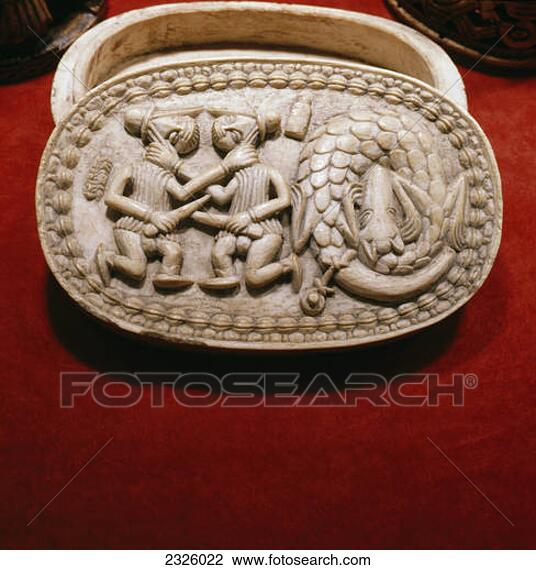
https://comps.fotosearch.com/bigcomps/IST/IST527/2326022.jpg Ivory box, Benin, Nigeria, 16th-17th century |
| Culture › Re: Benin Art And Architecture by PhysicsMHD(m): 3:17am On Feb 15, 2011 |
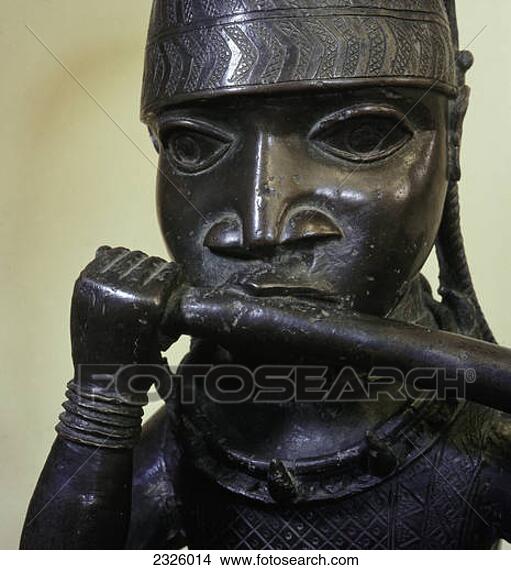
https://comps.fotosearch.com/bigcomps/IST/IST527/2326014.jpg Brass figure of a hornblower or trumpeter at the Benin court, Nigeria, probably 17th century |
| Culture › Re: Benin Art And Architecture by PhysicsMHD(m): 3:16am On Feb 15, 2011 |
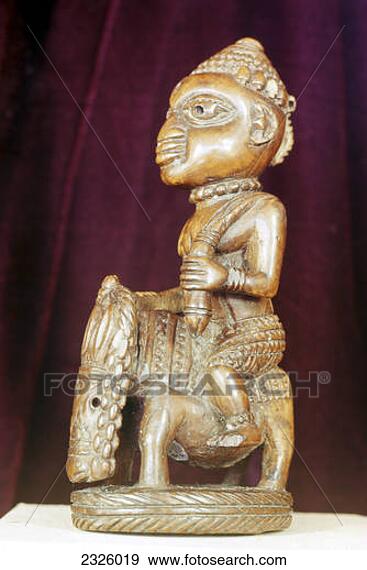
https://comps.fotosearch.com/bigcomps/IST/IST527/2326019.jpg An ivory carving of a horse and rider, Benin, Nigeria, 18th century |
| Culture › Re: Benin Art And Architecture by PhysicsMHD(m): 3:15am On Feb 15, 2011 |
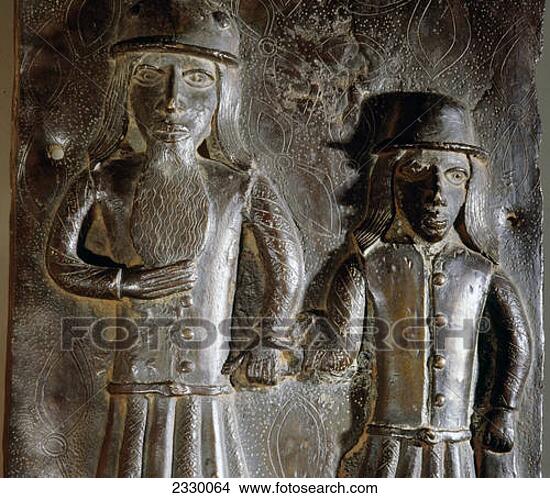
https://comps.fotosearch.com/bigcomps/IST/IST527/2330064.jpg Brass plaque which decorated the palace of the Benin Obas, Benin City, Nigeria |
| Culture › Re: Benin Art And Architecture by PhysicsMHD(m): 3:14am On Feb 15, 2011 |
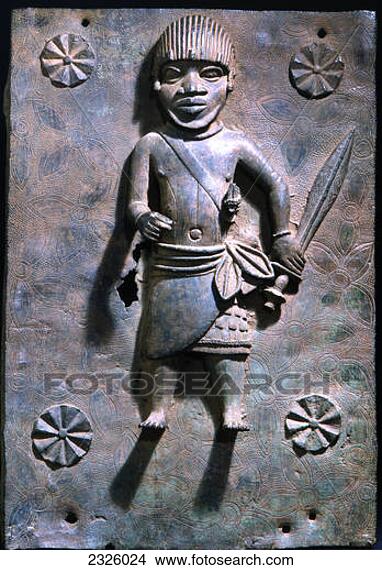
https://comps.fotosearch.com/bigcomps/IST/IST527/2326024.jpg Plaque depicting a messenger, Benin, Nigeria, probably 17th century |
| Culture › Re: Benin Art And Architecture by PhysicsMHD(m): 3:13am On Feb 15, 2011 |
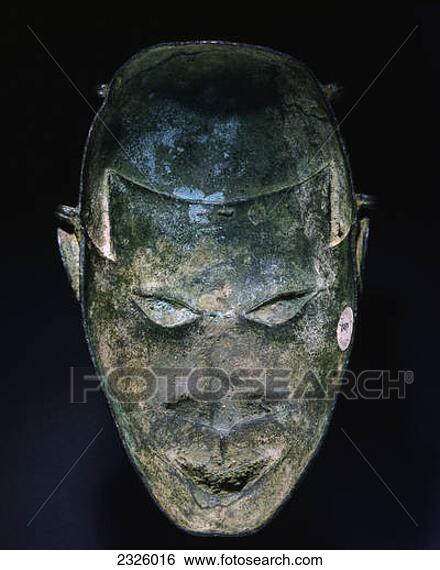
https://comps.fotosearch.com/bigcomps/IST/IST527/2326016.jpg Ornamental brass hip-mask, Benin, Nigeria |
| Culture › Re: Benin Art And Architecture by PhysicsMHD(m): 2:07am On Feb 15, 2011 |
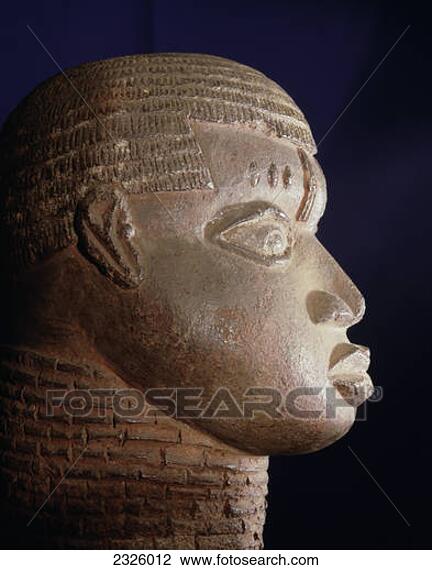
https://comps.fotosearch.com/bigcomps/IST/IST527/2326012.jpg Terracotta head of a man, Benin, Nigeria, 17th century |


1 2 3 4 5 6 7 8 ... 43 44 45 46 47 48 49 50 51 (of 67 pages)