 Culture › Re: Yoruba Hebrew Heritage by Olu317(m): 7:52am On Jul 22, 2020 |
macof:
If you cannot be proud and loyal to the yoruba because you think African people are "bunch of uncivilised naked people" then you are not useful to the yoruba nation, you are of greater use to the arabs and jews since those are the people you admire and prefer
You do not deny your parents because of whatever problem you have with your cousins and start claiming to be the son of someone else. That is the attitude of a bastard and i am sure you know that
And just to mention.... African people are not a bunch of uncivilised naked people. All africans are great people and we have every reason to be proud of our africanness. The Hebrews you admire had no great civilization but they remained proud and faithful to their heritage. Pride and Self esteem uplifts nations Lol |
| Culture › Re: Yoruba Hebrew Heritage by Olu317(m): 10:38pm On Jul 21, 2020 |
MetaPhysical:
Oru - Ur
IleIfe - Nineveh
As many times that you have made these connections, a true and unbiased historian....or even a linguist would have been inspired to investigate that angle.
An ambitious professional would show interest to see if something not previously touched could now be discovered to push forward knowledge for humanity and position, if any errors in past, a new truthful account divergent from past assumptions and or studies.
Macof is neither unbiased or ambitious. He is here to shut down inspiration, to snap at new leads and disparage theories, and steer blindly for a under-investigated and mis-applied Kwa structure.
When i heard you talked about Greek-Hebrew- Levant connection, I started going into Greek-English Bible. I swear I saw some words in there and wondered to myself if the authors knew they were writing Yoruba.
Words like Bere, to begin; Gabar, strength, Mulk, splendor, and many more. Respectively these are Ibere, Agbara and Miliki.
I am not a linguist or historian but you aroused my interest and through that discovered new things and independent sources that confirmed knowledge I already obtained in another source. Not that I do but If I had doubt about my source for any reason, following your info share and picking up a Greek Bible to find same knowledge in its consistency settled my trust.
This is what I have observed everyone here doing....improving knowledge and info share through open-mindedness and interest. Macof remains the exception. Yet he refuses to offer his own theories.
Tao is an opponent view but reading some things she shared I have been able to add to my knowledge.
Opposition should not be a "tear it down" drive....but rather an approach to assist and expand awareness.
I wish Alade-Kwa good luck! Bro, Ur is Ooru in Yoruba language and the information on that city that Yoruba acknowledged as the ancestral home. The word Ur(Oorru) mean hot city via Sun.. This place is known as Elasra in Iraq. Interestingly , Iraq is part if the olacw Ninveh came to be. This information, does not mean the Yorubas ancestor's were they first group on earth.but that the language is the supposedly spiritual and franca lingua of religious belief. Wishing him best of luck ib over ambitiously. because right now ,he is a failwd |
| Culture › Re: Yoruba Hebrew Heritage by Olu317(m): 4:59pm On Jul 19, 2020 |
2prexios,
Pardon me for the late response to your question on the word ‘sin' in Hebrew, if it is connected to Yoruba's word for sin though there, root that has S N in Hebrew's ideograms.
This bilateral root S N is written as Son by one of the interpreter, which means ‘ to flock animal for migration.'
This word is tactically in cognate with Yoruba's sin : to flock or stray while animal husbandry
While ,Sin in English ; offence,guilt, do smething thats wrong , does not have same cognate with classic Hebrew after transliteration and translation which is derived from the following alphabetical order
Aleph(ah/eh)
Shin(sh)
mem(m)
Ashem/or Eshem ,which is same as Yoruba's Eshe or Eshem( my sin).
transliterated as the following: 
|
| Culture › Re: Yoruba Hebrew Heritage by Olu317(m): 4:44pm On Jul 19, 2020 |
MetaPhysical:

You are right! I am yet to see any Hajj ritual in Mecca that is not also mirrored in some aspect of Yoruba spirituality.
The circumambulation of the Kaaba, Ooni observes same in Ife on Olojo day.
The shaving of men's head and drape of a white loin cloth, Ifa initiates observe this.
The blackstone on the Shrine structure, Yoruba keep blackstones inside Shrines.
The supplication to God and culmination into the ritual sacrifice of a ram, Yoruba do exact same thing on Isese day.
He is waiting for Arabs to write about Yoruba first before he will believe. This is what he is always asking for..."if it was true Arabs would have written about it". ....but they did when they said Koreish (awon ti won "ki orisha" ) were the occupants of Mecca and Kaaba before Islam. Mohammed himself was born into the clan of "awon olorisha". It explains co-observation of many Islamic practices with Yoruba spirituality.
If he would not believe Mecca because he doesnt like Islam, you have brought more than sufficient and convincing evidence to demonstrate the footprint of Yoruba in AfroAsia, NorthAfrica....and particularly Canaan. So has Prexios and Obalufon.
Macof has been on this thread since day 1.....I am yet to see him give a convincing evidence that supports Yoruba is kwa. All the cognates he brings are donated....Yoruba being the donor.
Macof's new alias is Alade-Kwa.
. This is a laughter beyond me bro  . The guy is so blind that he doesn't even know that there is any account that Hebrew spoke Aramaic in Egypt .Yet he was asking me to show him the link to verify if it is true or not to showcase how I camr about Language similarities between Egypt's and Yoruba's language. This is someone who condemned Theophile Obenga's account on the similarities between root words found in Egyptian language and Yoruba's. Yet he believe Ibo and Yoruba's are same.The Ibo people who have pygmy bloodline in their Dna while Yoruba don't have The lazy historian who never knew the purpose of Ram killing in Yoruba culture, which was replicated in Elephantine , Yeb Seyen ,in Lower Egypt of Egypt, which is called Ni-Ile( Nile),i.e land that's not atop. This singular acts led to the mass exodus of Hebrew to Sudan Belts after the destruction of their land called Land of Oni-as. And this led to the disappearance of these Ancestors of Yoruba's during the era of the Pharoah who was angry at the Hebrews, because of Ram,Calf bull, etc slaughtering as a sacrifice during Isese time, which was against Egyptian Khnub,in the land of Ra,that forbids killing of Rams and its likes. Funnily, their grouse is that we should not believe ,oral account.that point to migration, Sultan Bello's, Baba Ahmed that lived over 350 years before Sultan Bello.These guys are just too funny to even realise that Morphology has lot in determining protolanguage which all of them have failed to use to connect Ibo and Yoruba language, respectively. I even ask him to pin where my own oriki's that link me to Oru is in Yoruba's Ileife in Nigeiria, but he slipped the answer and fled. . After all, he can't deny the fact that Ileife has record of Oru ,in her Oral account that was destroyed by waters or flood . Yet he could not. Cheers |
| Culture › Re: Yoruba Hebrew Heritage by Olu317(m): 4:04pm On Jul 19, 2020 |
macof:
This guy is daft abeg As usual, you result to vulgar words,.once you're clueless.So, it the same old pattern with your pseudo knowledge of provocation. No wonder people don't chat with you to ask you questions. In fact, you don't even have knowledge of Yoruba language,in such a way that, you are likened to the people who call Eshu as Devil, in the koine Yoruba language which has its own flaws. Lol. After all you claimed ,germinate is not Ba in Yoruba language!. False from you because I posted Yoruba's dictionary to damn your falsehood You claim Phonecians didn't come to West Africa. False from you because I posted references to it You claimed Yoruba is a kwa language, which is related ti Ibo language, because she bordered in the North East yoruba land into Ibo land via Okun, Igala, Olukumi, Bini. False also from you. Even the Igala group is heavily present in Ibo land. False from you You claimed, emerged from North central without any information on archeological evidence or ethnography to support your claim. False from you You claimed Yoruba's Oduduwa group aren't migrants which Susan Blier affirm in her book.False from you becaj I posted Book that adduced migrants status of Odudua. You claimed Yoruba language is resident within West Africa. Yet, scholars have shown that replica of that language is once spoken in Egypt. False from you. You claimed that Ifaodu is not cognate with Hebrew's Ephod (Ifaod ). Yet you don't have any proof . False from you. Peradventure you don't know; Oracular practise is about cast lot,prophetic, foretelling etc. Below is the screenshot on a defined Hebrew's Ifaod as cognate with Yoruba's. Lol 
|
| Culture › Re: Yoruba Hebrew Heritage by Olu317(m): 1:19pm On Jul 19, 2020 |
macof:
Going off topic again. And adding inaccuracies as usual
I'm not even going to correct the errors and half knowledge in this one. It's usual for you to add inaccuracies in your posts with the aim to push your overall agenda.
This picture here which you posted as some sort of source even said nothing about Hebrew but sure, trust you to add Hebrew
www.nairaland.com/attachments/11917083_img20200713060051_jpeg55b68523a92901f9d6eb3305860a0603
"Iron" : of Hebrew origin?
As I have said, you 4 are committed to ignoring facts and evidence so it's not a surprise that you still argue despite the fact debunking all your previous claims staring at you in the face, you no go gree.. Lailai
I've told you I only deal with facts and credible sources
Anything you post on this forum on any thread needs to be verified because we can't even take the slightest things you say seriously until we verify if it's true
Picture 1. Here's the etymology of Iron again from another source... That's two sources I am giving you, both saying the same thing and none mentioning Hebrew
Picture 2. And the Hebrew word for Iron is "barzel". I searched for Yiron, Yir'on, yir-ohn as you claimed and found no results in Hebrew Even your screenshot definition put you away as with Barzel,which is same as my interpretation. Meanwhile, google further on Biblehub.com to appease yourself, to check for more interpretation of Barzel such as axe,chain,axehead ,iron . But know it, these dictionaries that you used aren't my guide and not well accepted amongst the scholars on Classic Hebrew ideograms which I can I READ THE IDEOGRAMS as well.Thus, newer researchers support my own view accordingly o who I reference .So don't kill yourself if you don't have such knowledge at present time, Perhaps, your son may be equipped in his own generation. Besides, try to spend money to acquire education and not the dehydrated one you possess ,right now. So, the word Alade does not necessary mean ,‘crown owner.' Dade is one who wears crown! This indeed part of my own Oriki(panegyric). These should make you realise that Yoruba's taught in Schools are not as mainly spoken as ‘intimate Yoruba language,'. Kindly google what such mean as language of intimacy in linguistic. Lol Re affirming my point ,and others, support the following words that remain heavily used in Yoruba language,such as : Ala: purity, white, holy. Ala: The Ala: dream Ala: path or demarcation Ala: to be cut, to be broken, , Ala: owner Ala ala: The dreamer Ala ba: white father, lord of purity, fourth child after twin, holy father ;Ba' Ala when Ba is prefixed!etc In effect, Alade : is a contraction of Ala-ade,‘ or ‘A ni Ade' or ‘ A li ade' or ‘Ala ade' , (la or ni-owns/has) a crown. Olodo like you! Meanwhile Alade is the one that has crown.' and not necessarily the owner of Crown. Are you also not aware that li and ni are interchangeable in Yoruba's lexicons ? Just look at a glorified Historian without information on Yoruba language. Basal ( onion )is Semitic and not Hausa's or African language. Alpha Alifa, aluph, Olifa Onifa Alufa All the above words are synonym and, mean Priest in Semitic language and Yoruba's. Olifa is one who has Ifa or practice divination or cast lot i.e ,intermediaries between God and Man. So, do yourself the needful ; Zooooom off and go get knowledge on Semitic languages,if you're interested in it. |
| Culture › Re: Yoruba Hebrew Heritage by Olu317(m): 12:35pm On Jul 19, 2020 |
MetaPhysical:
Are you sure?
You are assuming that AL was originally an Arabic word. You made same error when you disconnected Sigidi from Masjid. You have been engineered to accept all Arabic word as default. Is it possible Arab could have loaned words from Yoruba? Yes, very possible. Well...Al is one of such words.
In Yoruba, Al occur in following -
Al - as in alamodi
Alu - as in alubosa
Ale - as in alejo
Alla - as in Alade (should be "ll"
Ala - as in alatupa
Im current with the above but they are more than that. I will clarify each for you. Before I do let me say ALLA is an authentic Yoruba word.
As you have heard me say many times, this is not a forum I can divulge indepth knowledge of who we are in relation to rest of civilizations.
I once mentioned here and Im going to repeat now, Obatala was a Meccan.
The Arabs know this. They would never accept any record of it and if one existed they have obliterated it. They wiped out all physical records and monuments to do with Mohammed and he exists only in written records now, much more Obatala. Mohammed did not build Kaaba, Abraham did, Yorubas worshipped in Kaaba....the cult of Obatala....before Islam.
Much of what is paraded as Arab words today are loaned words from Old Hebrew and they are articulated to sound unique. The religion of Islam mandates prayer in Arabic. This has greatly helped to facilitate and legitimize Arabic as a root and independent language, and anywhere any semblance of it is used the assumption is that it is borrowed.
At first glance does it not sound ridiculous that Amodi in Yoruba is same as Medic, from which we have medical, medicine and medicare? Yoruba had alchemy and herbal science. Its cult is Osanyin. It taught balance in emotions and purity in blood through the use of herbs and compounds to manage Illness - Amodi. Nowadays we hear Sanguin (a state of mental wellbeing and healthy living) but we never connect it back in relation to Osanyin.
So Osanyin, Amodi have their cognates in Sanguine and Medic respectively.
The use of Alu in Yoruba is to communicate sense of something different, a variant, other, abnormal, deficient and is contexual in its application.
Alubosa - Onion
There are many types of onions. Basal is the common compound or element in all. Garlic is one kind. So a "different basal" is what Alubosa means.
Alujanu - Genie
Janu is Gene. In this sense Alujonu is a "different being".
Yoruba use Alu in the same manner it is used when we say Allo.
Example :
Allotropy - different kinds of chemical
Allocate - set aside or apart, other need.
To return to Yoruba use of Alu -
Alubarika - a different stage of blessing
Aluqurani - a different or other Holy Book.
Qurani itself comes from Iqra...to read.
You can express a position of "otherliness" or "differerence" for any object using Yoruba language but our Alu has same application that Allo does in English. Not every object in English is prefixed Allo.....same goes for us. Those that carry Alu in our language are not borrowed words.
Should we say we borrowed Alejo (guest) from Arab? Did we borrow Imura (preparation) from them? How about Ale (night), was it borrowed?
Arabs dont have the word Alfa. Did we borrow Alufa? Ignorant Macof does not know that dancing to the left is also observed in Kaaba(a shrine). Kaaba is synonym and cognate with Kabo( a welcome place to worship God). That guy has Phd. in falsification. |
| Culture › Re: Yoruba Hebrew Heritage by Olu317(m): 11:39am On Jul 19, 2020 |
macof:
See them running helter skelter.
Arguing that "Al" is "The" in Yoruba what dah hell
And the contuined mission on Ìrìn being cognate with "Iron"
It's as if when you 4 make claims without having any prior knowledge of the issue, you still keep to the claim when shown how you are wrong but switch the style of argument to using the pieces of the very information newly taught to you that debunks the claim
1. The fact that Yoruba words like Alubọsa, Alukurani, Alubarika with "Al" prefixes serving as "the" in their original Arabic meanings are modern loan words from Arabic through Hausa proves further that indeed Yoruba has no "the" just like other Kwa languages
funny guys. Normally your command of yoruba should be sufficient enough to know and accept this without argument but nah, you already committed so now you can't accept and move on to something else, you must run helter-skelter around this because you know the implications of this fact on your semitic nonsense
2. Now using the several Germanic forms of the word "Iron" when the very fact that the word "Iron" has ancient Germanic and Celtic (Indo-European) origin proves that the word cannot be from Hebrew. It is either one or the other
But nah. You already claimed it was Hebrew and you can't accept now that you were wrong
Now its no more just Yoruba - Hebrew connection.. Its now Yoruba - Hebrew - Indo European connection all because you don't want to admit you were wrong to say Ìrìn and Iron are cognates
You can't dismiss the fact but can't accept the fact. What a conundrum. Problem upon Problem Lol! As stated earlier, I wil never give you the link because, ignorance has envelope your path. Meanwhile, Yoruba's Ki is same as Ki in Classic Hebrew,which is different from Ibos ginni In as much as you can't understand the Hebrew alphabets.then you have no reason to understand Yoruba language. You will wail in till eternity, since you are dubious and have no intention to learn the basis. Peradventure, you have a change of heart and ready then, you will baptised into such knowledge. I quote: ” The substantive כי (ki), expresses "a temporal, causal, or objective relationship among clauses expressed or unexpressed" (in the elegant words of HAW Theological Wordbook of the Old Testament). " While still struggling with Irin,in Hebrew, enjoy the be low screenshot of Ki; csusattive word in. Yoruba language and Hebrew's classic language. 
|
| Culture › Re: Yoruba Hebrew Heritage by Olu317(m): 10:13am On Jul 19, 2020 |
2prexios:
You are taking an "historian" that can open his mouth and say "what concerns Robin Law of Oyo empire with Oduduwa of Ile Ife" seriously?
First impression last longer, but you don't know when you make that first impression. That boy made his first impression on me right there.
This guy is only proficient in finding fault and fighting anything in sight from whoever he chooses as adversary, no more, no less.
From the comments that follows, you can guage his train of thought that he's unaware of Robin Law or the book titled The Oyo Empire.
What manner of Yoruba historian is this? He question Robin Law as though I mean Robin Law is some kind of law pertaining to a bird called Robin from Oyo empire. You get the drift?
He was unaware that there's an historian like that, yet he is quick to mock me that I don't read, when indeed he is clueless in the very issue at hand. You teach him, he use it against you.
That tells you who you are dealing with and what you are up against. That's why I called him scammer and Chameleon professor. Have you any idea how far he has to go?
As long as you can go teaching him. It's called parasitic existence. The host feed the parasite and the parasite might outlive the host, drain it and go to the next victim.
2.
Redbonesmith posted on the shared words between the Yoruba and Igbo somewhere on page 4 or so, where I picked Olu's table and draw ideas from it.
I adopted kwa, owo, ego, and copied the prototype (protoword) on the Olu's table, in the first row, to highlight some ideas used on the table as idea for divergent in owo, kwa and ego.
There on Olu's table, consonants in an original shared words are listed first as protoword, then each language's pattern of pronunciation follows.
This guy went to fetch redbonesmith ideas from the same thread and call it his, and did exactly what I did earlier in the post he quoted in "confusing style" that he called his.
He has no idea just before then, he employed this trick as validation of all the claims he ever made between Yoruba and Igbo. My approach has given him an eureka!
Next, he called it been keen and parade false humility that he's not even a linguist and equally exposed himself as a quack subsequently.
Olaaka and Oruka sounds divergent than bo'a and bowa. Yet he would make authoritative statement few paragraphs away as how historical linguistics work.
A blind leading the blind is catastrophic. Please don't patronize him as a linguist, you should be helping a fraudulent character massage his ego doing just that.
A man should be rewarded for his bravery and brainy contributions in either side of an argument, not for his invincible sense of deception.
Please note, macof is a sham. He's operating in the peripheral, and he knows how to use that to his best advantage till favourable tide turns for him. He's a clever opportunist without depth.
I have predicted earlier in my response to him that whatever he read, he won't be able to fathom knowledge from it. Thus as apparent as the ideas he fetch himself, he couldn't see the knowledge hidden below the surface.
He brought out iron and irin, he butress it with the barzel, yet all insight and knowledge concealed below the surface were in his blind spot. Then that question whatever principles he alluded to as linguistic rule.
You are a very versatile thinker from the first time I got here till date, and you have profound effect on my perspectives. You are the best bro, you pave way for breaks. Think about this things.
All the best sir. Shockingly, Yoruba didn't developed with Ibos language as been speculated in many quarters but as means of loaned Yorunba words via Easern Yoruba language of Okun that manoeuvred through Igala link to Ibo land due to trade interaction. So, don't be perturbed with the Semitic word boa or bowa,which is same as Yoruba's root word that match perfectly with classic Hebrew as : Bw This came to be as result of ; Bet + Waw( w,o,u ) = BW This point to the direction of Semitic and Ethiopic root of the roo word ,‘bw' , which is seen in the below screenshot, that support Sultan Muhamed Bello as claiming that Yoruba's had a few elements among the Ethiopians in 19th century information he revealed. Interestingly, the these few people have been moved out of Ethiopia ,known as Falasas;Beta Israel. So, Yoruba's bo or bowa is absolute in cognates and synonym with Hebrews or Semitic, which is alien to Ibo, even Hausa language that's classified as Afro Asian language. 
|
| Culture › Re: Yoruba Hebrew Heritage by Olu317(m): 9:12am On Jul 19, 2020 |
MetaPhysical:
Olu,
I'm glad you are beginning to see Yoruba concepts in the material and in the spiritual. When I first outlined the connection between Masjid and Sigidi, you responded and denounced it. You just used the same approach for Barzel. In fact, if you push further into that interpretation for Iron you will discover some other features of its connection with Yoruba knowledge......it will de-crypt itself.
In Greek alphabets, each sound has a material and a spiritual. Sound has always been a spiritual force anyway....they found cognates for it in the material. When you look at Hebrew, it is same thing. Yoruba is similarly rooted. It is unfortunate for us that linguists, such as macof, are wasting time regurgitating a century old Kwa theory instead of moving us into future and expanding the hidden energies in our alphabets. If they would do this for us, without being dismissive and suspicious of its esoteric discoveries, there is no reason Yoruba could not pioneer inventions and advance into new technological age.
Just take a look at this -
Substitute OX with Oxa...or Osha. This indicates the worship of calf was started by Israelites but it was inspired by their encounter of Oxa on the celestial throne.....ancient descriptive for the bright night sky. This Oxa was an helper of God. So they believed in this Oxa and started worshipping it in the image of the calf. There is both material scale and spiritual link here. They did not recreate the Ox, instead they created a mini version...a Calf! They accepted Oxa as an intermediary. By worshipping his son, the Calf, they earn his (Oxa) pleasure and benevolence. But Israelites did not speak English and would not have known the words Ox and Calf. In Semitic tongue Ox is Aleph, Calf is Heifer.
ALEPH has become a phenomenon in science and religious arts.
Look, no be everything person go open mouth say for here jare.
Cheers bro! Yes, it is true, I disagree with the connection between masjid and sigidi ,which was due to the role Sigidi played ,according to Yoruba's history.,as a warrior ; human and later deified as ancestor. Although, knowledge increases once a superior facts emerged. Secondly, Macof is not a linguist or philologist neither is he ideograms interpreter but a passionate man ,who dwell jn the past ideology of 1884/1885 claims by who classified Yoruba language along others as Kwa,which means ‘human being'in Tao, Gbe etc languages, respectively. Thirdly, the Greek, Roman-Latin,English writers of translations of Hebrew didn't understand the language nor vast in it but used the Greek language to reconstruct the classica Hebrew,which has flaws because the languages are different.With due, respect,this does not take away the fact, that transliterated and translations done by these great men are borne out of the root words for all the Hebrew words being transliterated as well in such way I used the root Barzel to agree with the Root: B R Z A B R S A B R S E; Bet + Resh + Zan + Al or El . Each root word has pictograph(s) to it, which are used to identify the the combination of these letters to form the purpose it serves. Though, there are some words that I don't agree with because of the difference in the interpretation by the Septuagint, Roman-Latin- English scholars etc, in roday's world. Honestly, credit to all the unique scholars who has shown that the Bible through ideograms exist. Furthermore, there are words which has transliteration but no English translation that I have seen, after the transliteration has been made known. This is how incredible, the language is regarded within the scholars world's,despite it being classified as non existence. Fourthly, the Aleph that you see as cognate with Arabic has the image that's connected with Strength, might in Hebrew ,which the horn represent one who has power from above with thundering. Accordng to the interpreters, The word is called Al El, without considering how these words sound if vowel or consonant establish the connection. For examples: Al: Ala Ale Ale Ali(e) Alo Alor Alu El Ela Ele Ele Eli(e) Alo Alor Alu Obviously, the letterings hadn't developed fully which made it difficult to understand the language which led to generating sequence words that could fit the coinages cognates in Greek, Latin's interpretation of the Tora(Teaching). Meanwhlie, their language were trace to Egypt in Africa , even with evdience of migration after destruction of Elephantine through different conquests, such as , Greek, Roman, and evetual Islamic conquests before they fled again into Sudan and their taces were not seen again. Plainly , Horn as symbol of Strength is adduce to the knowledge of A b r m (ebram) , who used Ram to replace the death of his son as a form of Thanksgiving unto God at the mountain Morem(Moraim), in Arabia peninsula envrion. Cheere |
| Culture › Re: Yoruba Hebrew Heritage by Olu317(m): 9:06am On Jul 19, 2020*. Modified: 12:17pm On Jul 19, 2020 |
MetaPhysical:
Olu,
I'm glad you are beginning to see Yoruba concepts in the material and in the spiritual. When I first outlined the connection between Masjid and Sigidi, you responded and denounced it. You just used the same approach for Barzel. In fact, if you push further into that interpretation for Iron you will discover some other features of its connection with Yoruba knowledge......it will de-crypt itself.
In Greek alphabets, each sound has a material and a spiritual. Sound has always been a spiritual force anyway....they found cognates for it in the material. When you look at Hebrew, it is same thing. Yoruba is similarly rooted. It is unfortunate for us that linguists, such as macof, are wasting time regurgitating a century old Kwa theory instead of moving us into future and expanding the hidden energies in our alphabets. If they would do this for us, without being dismissive and suspicious of its esoteric discoveries, there is no reason Yoruba could not pioneer inventions and advance into new technological age.
Just take a look at this -
Substitute OX with Oxa...or Osha. This indicates the worship of calf was started by Israelites but it was inspired by their encounter of Oxa on the celestial throne.....ancient descriptive for the bright night sky. This Oxa was an helper of God. So they believed in this Oxa and started worshipping it in the image of the calf. There is both material scale and spiritual link here. They did not recreate the Ox, instead they created a mini version...a Calf! They accepted Oxa as an intermediary. By worshipping his son, the Calf, they earn his (Oxa) pleasure and benevolence. But Israelites did not speak English and would not have known the words Ox and Calf. In Semitic tongue Ox is Aleph, Calf is Heifer.
ALEPH has become a phenomenon in science and religious arts.
Look, no be everything person go open mouth say for here jare.
Cheers bro! Yes, it is true, I disagree with the connection between masjid and sigidi ,which was due to the role Sigidi played ,according to Yoruba's history.,as a warrior ; human and later deified as ancestor. Although, knowledge increases once a superior facts emerged. Secondly, Macof is not a linguist or philologist neither is he ideograms interpreter but a passionate man ,who dwell jn the past ideology of 1884/1885 claims by who classified Yoruba language along others as Kwa,which means ‘human being'in Tao, Gbe etc languages, respectively. Thirdly, the Greek, Roman-Latin,English writers of translations of Hebrew didn't understand the language nor vast in it but used the Greek language to reconstruct the classica Hebrew,which has flaws because the languages are different.With due, respect,this does not take away the fact, that transliterated and translations done by these great men are borne out of the root words for all the Hebrew words being transliterated as well in such way I used the root Barzel to agree with the Root: BAR ZEL B R S EL B R S EL Bet + Resh + Zan + LAM . Each root word has pictograph(s) to it, which are used to identify the the combination of these letters to form the purpose it serves. Though, there are some words that I don't agree with because of the difference in the interpretation by the Septuagint, Roman-Latin- English scholars etc, in roday's world. Honestly, credit to all the unique scholars who has shown that the Bible through ideograms exist. Furthermore, there are words which has transliteration but no English translation that I have seen, after the transliteration has been made known. This is how incredible, the language is regarded within the scholars world's,despite it being classified as non existence. Fourthly, the Aleph that you see as cognate with Arabic has the image that's connected with Strength, might in Hebrew ,which the horn of ox that represent one who has power from above. Therefore accordng to the interpreters, the word is called Al El, with considering how these words sound if vowel or consonant are used in between. Examples: Al: Ala Ale Ale Ali(e) Alo Alor Alu El Ela Ele Ele Eli(e) Alo Alor Alu Obviously, the letterings hadn't developed fully which made it difficult for the people who reconstruct the language which led to generating sequence words that could fit the coinages cognates in Greek, Latin's interpretation of the Tora(Teaching). Meanwhlie, this language were trace to Egypt in Africa around 409BC,that was spoken in Egypt lower part,which with evdience of migration after destruction of Elephantine through conquests, after Apries, was re rebelled against. Apart from this, such as , Greek, Roman, and evetual Islamic conquests happened before they fled again into Sudan and their traces were not seen again. Plainly , Horn as symbol of Strength is adduce to the knowledge of A b r m (ebram) ifaod who used Ram as a sacrifice of his son which s a form of Thanksgiving unto God at the mountain Morem(Moraim), in ancient Arabia peninsula envrion. Cheers |
| Culture › Re: Yoruba Hebrew Heritage by Olu317(m): 3:48pm On Jul 15, 2020*. Modified: 8:56pm On Jul 15, 2020 |
Macof, Definite article ‘The' in Yoruba language is or are how you see it though I agree with this English version and not Yoruba's definite article, which is Al or al u . Truthfully, “ Definite article is the word "the" used before a noun eg. The Car." The below mentioned by you are mostly loaned into Ibo lexicon through the Yoruba's language. So, Words like Ewure (Yoruba) - Ewe (Edo) Ewu (Igbo) : Goat Akuko (Yoruba) - Okhokho (Edo) - Okuko (Igbo) : Fowl Erin (Yoruba) - Eni (Edo) - Enyi (Igbo) : Elephant Nti (Igbo) - Eti (Yoruba) : Ear Ọnu (Igbo) - Ẹnu (Yoruba) : Mouth Miri (Igbo) - Omi (Yoruba) :Water are mostly loaned into Ibos because Yoruba language is descriptive in nature and didn't just exist from the blues. Study bro to learn! Honestly, I know the following cognates between yoruba and Ibos. So,you're ignorant bro because you don't want to learn as follow : Aso ebi : family cloth for celebration Alkamu : prepared pap or custard Egusi/Egwusi: seed of Ibe / eba : there Orisa/ oliseh: god,ancestor Peh/ Kpom: call Je/ ji: owe/debt Kutu/otutu : early/ morning Ile-Ale/ Ala : earth, land Oyinbo-Oyibo/Oyibo : Europeans As you can see above cognates which shows, I am familiar with Ibo language than,even you. . Thus, Kindly find what the following meaning or cognates of Al, alu ,which are also Definite Article,“the" in Yoruba llanguage in Ibos language as following: Al bosa : the peek,onion Al jonu : the genie Al agidi : the stubborn , the notorious Al la fin/al lo ofi : the fort owner Al l'anu : the merciful Al la'be : the nurse,the razor user, the incision expert Al la'iye : the living Al lu jo : the dance hall beat Al ukamu/Al kamu : prepared india corn in a custard form. Al le jo : the visitor etc Al lo a jo : sojourner You're practically ignorant of the depth I posses through the rigorous study and Ifaodu path, which is my ancestral path of Iwa( Almighty God). Seek peace with God and, wisdom will locate you but haughfy is spirit your downfall. Cheers |
| Culture › Re: Yoruba Hebrew Heritage by Olu317(m): 2:50pm On Jul 15, 2020 |
2prexios:
You are wasting your time on professor Google Gbamila again this early momo, you sef. 
Give him truth, he will disagree with it. And you want to be even with him? Can you be even with someone who disagree with himself consistently?
Can't be wasting time on him on end bro. Let's pick up the apparent item he has shared and put it to good use. Engage him on Google stuff and he beat you to it.
Barzel, baba: false cognates true friends
The closest version to barzel is baba, as it is said, "Ogun o roke, agbede o ro baba". In that sense, baba is the metal in viscous or liquid form.
You can't beat the iron into shape in this state, hence it's said agbede o ro baba.
Iron, aro, true cognates true friends
Sometimes the Yoruba uses obsolete or archaic words to buttress the point they're making about a particular object or idea poetically.
Somehow that alternative often happen to be a perfect word or cognates in another language entirely, this happens in aro and iron.
Kereun mogbo nimoya nile aro... the Yoruba know the song very well, so I won't interpret. Modele aro moseba Ogun onire...
iren, ire, true cognates true friends
Iren is akin to ire. This term is part of the linguistic progression in English for the term iron. But by some unknown reason, Ogun is acknowledged as onire.
It's the praise poetry of the Ondo stock of the Yoruba race, irenimogun, omo amuda p'ekun, omo amode m'aja. So, ire is an attribute of Ogun and his family, the Ondo folks.
And, what does ire mean? Ore, Are, Ere, all these plays out in giving the meaning to the word. It's what metaphysical calls the spirit of the word not long ago.
I won't preemp him, because that's his style and it works 70% of the time or more. From that mix you will find Ore, (iron ore), and Ere, (mud), where iron can be extracted from aside from the rock.
Mud type gives away where iron is deposited in an area before it's exploited in the days of old. Ere is a historical place too at Ado, it's the link to the sea, olisa-Ere: we will come back to this.
Internal Harmony
Now the version I chose to embrace is the synonyms to ire, which are ilo, irin, which combined as ilorin, just as you have it in ore.
So, Ogun onire is akin to saying Ogun, onile, alo. And that is definitely apparent in "onile kogun kogun", wavy, agege, Aegean, aje, iloko, etc.
Ogun was a dweller on the rocky side of the country that leads to the capital of the Yoruba original home. He was a metallurgist.
Lo has not finished with us: when you use pestle and mortar to pound something, you are "gun-ing" that thing, so that rhymes with agonyin...okun le, agonyin o we.
But when you lo something, you have passed it through machine, iron and you can have it as flour or smooth mix, so gun and lo are synonyms.
Metallurgical sense of the word lo is to file an iron implement. Those who subscribed to this concluded that ilorin is where the cutlasses were filled.
Ilorin is rather, the anvil, the Àfín, the place where iron is forged. Hence the Àfín Ogun is referenced in the saying, Ogun onile aro. Then aro is a lo. Let's stop here to consider irin.
Ìrìn is the continuation of the song, kereun mogbo nimoya nile aro, alagbede nkirin lona odo, modele aro moseba Ogun onire... the anvil is by the path of the river, where you have rich deposit of iron filings washed up by flooding.
Moseba is to salute the king or the father, so the visitor at the factory saluted the ironsmith who was busy "Kirin", which is forging an iron. Thus irin as in journey is homonym for iron in Yoruba.
Ire, ilo, iro, irin, ije, Isa, ija, Ike, ise, ifo, ige, ire, ikan, Ida, ipin, Iya, iyan: all this are related, drawn from the idea of the most persistent meaning to all the synonyms, which is movement from one place to the other.
This is instructive of the Yoruba history, because iron begin it's journey from the process of extrusion to it's final stage, oje or irin. That state is it's solid and final stage.
Now we can refresh on the conclusion of Oba Ado in the path of Ifa that says "awa d'onile bi ado, a digba oke, a le gboingboin". Hence our fathers were reckoned awonrin.
West coast harmony
The treasure box of the Yoruba history also contain obiri oloja. Iri was the vision statement, ìrìn was their mission in quest of the original vision. Obiri oloja is akin to obiri Yeboa. Lol. Seriously, I can't waste my energy on someone who thinks, he knows more than I am but practically empty. Nigeria is the only place, where I see a lay man claims he has knowledge on what he doesn't! This is shocking to me but I know that a haughty spirit dwell heavily in such people's heart in such a way that Macof represent these people in that capacity. So how do I go along with such a person? This is Practically impossible but I have to show the dormant members whose intebruon to learn and not someone known with vulgar words, yet he claims, he is Iwa worshipper! Thus show that lying seeker of Hebrew knowledge is absolutely ignorant on the path he seeks. Howbeit, Barzel is accepted as Iron by the English language interpreters because of their understanding of the Septuagints information which I found out as not in existence within Yoruba's lexicon until I realise that the word are combination of descriptive process. Barzel ,sjmply broken down as : Ba- bend Ri(ry)- iron Zan- (Z-English of England origin)S-English of America's origin) zi or si- existing el- mighty In Yoruba's: Ba : bend Ri: iron Si : exist ele: strong This word is a description of a particular iron which is , ‘ bend or create a mighty or strong iron'; iron made as a weapon.This is the purpose of the descriptive word for this particular iron. So, I know, he thinks Barzel is not same as cognate with Yoruba's description of iron, which I mock that lad because he practically thinks, I am philander of pseudo writing he does. Sincerely, I mock at Macof ignorance because, he thinks, Classic Hebrew are for antagonist or ignorant lot,who pick words out of ignorance without understandings the descriptive nature of the classic Hebrew language or Yoruba's. Note: You do have a great point in all your information, which I learn some tangible information but an isolate language which is non existence in the world is importantly a language one wboy claims it exist must be vastly read to prove the existence of the root words, ideographs , obelisks or Alphabets exists in such language, if it is actually true cognates. This is what I have been doing and will be shown to the world at the right time because, it is real. This platform is a tip of the iceberg. Cheers. |
| Culture › Re: Yoruba Hebrew Heritage by Olu317(m): 11:55pm On Jul 14, 2020 |
macof:
Nobody knows where you got that word from. You cannot post yourself as your source My God. So, source which picked the acceptable dictionaries amidst several authors are wrong ? Perhaps, you didn't realise the year of existence of Oxford dicrtionary which begun in 19th century is different from 17th century's English translated Septuagint (Greek)-Roman Latin- Torah(Hebrew script) work. Unfortunately, you can't get what you want unless you buy these books to know more about classic Hebrew. Punch line: Are you aware ‘ts',a Yoruba alphabet as found as, ‘ tse'(tsad) in Hebrew alphabet exist in Yoruba language's alphabet as well?/You don't know Jack! |
| Culture › Re: Yoruba Hebrew Heritage by Olu317(m): 11:21pm On Jul 14, 2020 |
macof:
Common keep quiet.
I have shown you dictionary to hebrew showing barzel as the word for Iron. No Yiron there. Then I showed you how English acquired the word "Iron" which has no connection to Hebrew.
Suspect whatever you like. If you say you have knowledge of Hebrew language and you claim a word means something in Hebrew, then you should be able to provide a credible dictionary that shows same thing. You claim you want to keep your Hebrew language knowledge a secret whenever you are asked to prove your claim but you were not keeping it a secret the first time you made the claim mumu
Only thing you posted was from your own article. You cannot post yourself as source And is this Barzel or ‘Yir on' ? Seeking the site for your information, need have access to the acceptable dictionaries in translating Hebrew language. So, tbe one you posted doesn't have what other word is synonym with ‘Yhir on.'. Interestingly, I have explained as the authority of what each alphabet stand out as! Latly, are you even aware the classic Hebrew language is in ‘Isolate' ? Perhaps, you need google,‘ Isloat.' 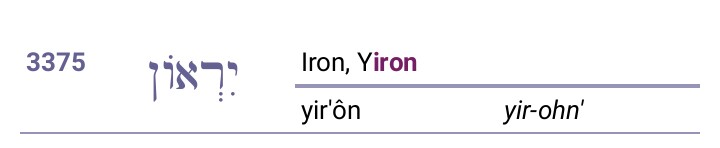
|
| Culture › Re: Yoruba Hebrew Heritage by Olu317(m): 11:03pm On Jul 14, 2020*. Modified: 11:20pm On Jul 14, 2020 |
macof:
Going off topic again. And adding inaccuracies as usual
I'm not even going to correct the errors and half knowledge in this one. It's usual for you to add inaccuracies in your posts with the aim to push your overall agenda.
This picture here which you posted as some sort of source even said nothing about Hebrew but sure, trust you to add Hebrew
www.nairaland.com/attachments/11917083_img20200713060051_jpeg55b68523a92901f9d6eb3305860a0603
"Iron" : of Hebrew origin?
As I have said, you 4 are committed to ignoring facts and evidence so it's not a surprise that you still argue despite the fact debunking all your previous claims staring at you in the face, you no go gree.. Lailai
I've told you I only deal with facts and credible sources
Anything you post on this forum on any thread needs to be verified because we can't even take the slightest things you say seriously until we verify if it's true
Picture 1. Here's the etymology of Iron again from another source... That's two sources I am giving you, both saying the same thing and none mentioning Hebrew
Picture 2. And the Hebrew word for Iron is "barzel". I searched for Yiron, Yir'on, yir-ohn as you claimed and found no results in Hebrew And you can't decipher which is ? I suspect that you anxiously seek the knowledge of the classic Hebrew language but you shamelessly act behind the entrance door as a disguise. So dont explain etymology of a minority Angles who have multiple ethnic group's loan words into her language. Barzel in Hebrew which is written by the translators begun as root word and tracing the Greek word for it. Thus, the accent being used is quite different from the English language's pronunciation , so don't be misled. Peradventure, you don't have such knowledge, Barze is not the only word for iron,which is borne out of the alphabet: bet+ resh+Zan+ aleph + lam which you fail to understand and can't understand because you can't differentiate the methodology which is being used to know the, words, cognates, synonym noun ,make you inconsistent. Thus, Kindly don't patronise me with unfounded perception. In fact barzel has same cognate with moulding(bending) of mighty iron. |
| Culture › Re: Yoruba Hebrew Heritage by Olu317(m): 8:00pm On Jul 14, 2020 |
MetaPhysical:
You stop using antagonism to provoke and incite others into sharing ideas and revelations for your secret works on a book. Collect ideas honestly, not through ona eburu (Hebrew).
I told you many times, as others have not minced words in sharing, you are fake linguist. You wait to see what others produce, you use it as keyword to obtain info from web records and respond with a counter. Pay attention to first paragraph in prexios response above. Pay attention and prove him wrong. Take action....be vexed by the challenge....open a thread and lead in with your linguistic kwa-kwa-kwa mumbo jumbo.
I stopped writing here and producing information after I suspected what you were doing, tested it myself and my suspicjon was confirmed in your counter rwsponse.
You press on the point of Yoruba and Ibo as co-origined but you refuse to delve underneath the surface and produce the phenomenal function for the terms on your list.
Conversely, every contributor on our side have given you the Yoruba spread, produced numerous words, their ideas, their root meanings, their applications and their phenomenal meaning.
A very good example is the APA. This is not even related with Arab or Hebrew or Egypt but with Europe.... the descendants of Roman and Greek civilizations.
So without any external prodding, your natural inquisitiveness - which is an instinctual response, not logic - should have fired up and be asking what in the world could have happened in remote past that gave direct linguistic link - without an internediary - between Yoruba and Greek? There is a consistency also in cultural symmetry between the two civilizations.....the deities, knowledge of constellations, arts.
Over the life of this thread I have produced numerous cognates and explained them. Olu has done same.
Im going to test your knowledge today. In your submission that Owo, Ogho, Ego are cognates and evidence Yoruba co-origin with Ibo and other kwas, go ahead and give the phemonemal function of OWO in Yoruba society. In other words, its etymology and function for the mundane. If I say Owo mi re (here is my money), there is an expression, which is explicitly on the surface but there is also a connection that is secured in that exchange. What role does Owo play in that exchange? Lol! I suspected your perception when I saw him with his pattern. But certainly he will fail like a project without proper methodology. So, don't be perturbed in his personality and dubious ways. Thanks for confirming our suspicion. Macof is the fake personality and the dubious one. Cheers. |
| Culture › Re: Yoruba Hebrew Heritage by Olu317(m): 7:45pm On Jul 14, 2020*. Modified: 11:10pm On Jul 14, 2020 |
PastorAIO:
Hello. I would imagine that every language in existence borrows words from any culture it comes into contact with. Yoruba even has words from Portuguese due to interacting with them since the 15tj century.
Words like Bata for shoes together with sabata in itshekiri is actually from Zapata, the Portuguese word for shoe.
Also, about iwa, which means character and existence, Oduduwa I learnt means Odu ti o da Iwa, that is Odu (womb) that created existence.
There are different types of iwa. I believe it is iwa pele that is associated with God and is considered the highest achievement in Ifa discipline. Of course, there are loaned words across new entrant words into the learners language's community, so I don't see any big problem with such.But the question are : Is yoruba language founded in Niger congo Basin? Why is Yoruba language found among Coptic chritians ? Why is the language related and share same lexicons with Yoruba's? Who brought Yoruba language into the midst of ot speakers ? How is it possible to speak classic Hebrew that is over 5000 miles apart from Yoruba land ? However, once any loaned words supersede the learner's language, then the teacher's language dominates, which is unlike Yoruba's because she has nearly every created word for foreign or loaned words . Beside, Yoruba didn't meet Portuguese language in 17th or 16th century if I must be honest with you because of cognates via Arabic, Persians, Greek, Sanskrit{ oldest indo European language}, Latin - Roman language and English language. This information remain as a fact. Funnily, this may look unbelievable before a lot of people and you but it is true if one understand Semitic language which is classified as non existence yet the writers of the Bible into English language who didn't understood the language they translated into English language through Septuagint(Greek),yet classified the language as non existence. Furthermore, historians acknowledge the writers of Hebrew descendants migrated into Sudan and disappeared without any trace. In as much as my unreleased work is concerned , O dud Iwa is not not womb that created existence because O dud is different from Iwa. The name Iwa is worshipped in Ore grove which the elder association has Odu Iwa ; Igba Iwa in another way. So, don't be misled. |
| Culture › Re: Yoruba Hebrew Heritage by Olu317(m): 9:48am On Jul 14, 2020 |
2prexios:
Chameleon professor. I've said it earlier that your facts never comes before but after: you are always enamored by the preceding inputs from the opponent, then comes such an amazing work of plagiarism.
Anybody with keen knowledge should see through the fact that your inputs above is clumsy, lack luster copy and paste job without individual language to correspond with each etymon for easy identification. Yet you claim to have written it.
Check Olu's table for ideas.
You are speaking out of sense here brother. Your golden rule is being broken by you in the same paragraph, iron and irin are your inputs, because both were similar in writing and means the same thing, iron.
How could something look similar when written down and means the same thing and then were not to be taken as cognates? You stopped where you stopped because that's how much you know.
But to you, it's a lazy logic to claim these are cognates. What makes you select this examples in the first instance? And what discouraged you from studying what they might likely have in common? You're a separatist.
Anyways, you have a crazy way of twisting things up afterwards. So iron is not a cognate with irin, just as apa is not a part or apart. To you, thinking in the affirmative is what we used to do, hence Debora is ebora, aramean is Oranmiyan.
My answers
Let's first figure out what cognate means: the word is derived from Latin "natus", meaning "born", as you have it in antenatal. So cognate don't even resemble the root word at all.
Then both targets the same idea. So cognate in English is cognate with natus in Latin, iron in English is cognate with irin in Yoruba, aramean in English is cognate with Oranmiyan in Yoruba.
Thus, the cognates that sounds similar and means the same thing are true cognates true friends, the ones that don't sound similar but are cognates (natus, cognate) are false cognates true friends.
How about Oranmiyan and aramean? This could be true cognates false friends. Just as you can't write it off at the face value, you can't conclude on it until proven otherwise. And the Debora is ebora, malicious mind, it rhymes.
Every scientific formulas should be blind to sentiment. It should work on its own and give repetitive result every time it's used. You are left to interpret the inputs and results in your own language.
Acid+base=salt+water: area=l×b, etc.
Doing the squeezing of water from stones
You said it's lazy to see apa as cognate with apart or a part. What work ethics is that? You the lazy one who makes categorical statements rather than do the job.
Some folks turn gold to stone and some, the other way around. You have enemies whatever you do. Aomari solution si.
Exercise 1
First, the etymology of the word apart trace to Latin, where it means "ad partem", so it's a loaned word for "to separate". The word apa in Yoruba is hand, or either side of a separate place.
To part ways in Yoruba is to y'apa. It's much like saying sorrow is cognate with isoro, as ro is to run, the point is, cognate is evidence of contact at some remote past through trade and ancestry
The homonym path, which means something else than part equally register with Yoruba for path, ipase, footpath, ipado, river path. Ipa is therefore a cognate with English path. Doing this is an exercise, not a lazy logic.
No one begs you to validate anything, you can't beat the reach and do what you can't do. If the establishment of Yoruba in Niger Congo is settled, use the technique to teach us why Odiyan is not Odion.
And the list you put up there are the names of the founding fathers of the Niger Congo? Keep deceiving yourself. You have your version of Yoruba history different from the traditions of the Yoruba ancestors via linguistics.
You have a problem with the truth, you don't know the difference between fact and hypothesis. Your problem is because you think in prints. You can't fathom fact on your own, so whatever appeals to you in a book is a fact.
How do you establish a fact when you can't squeeze fact from mulky deceptive data that has not been explored? Your damned facts are second hand hypothesis, you consume what you can't produce, so you are no authority to be.
You did this, but you didn't have the iota of knowledge that it's a tip of an iceberg. Ke is cognate with care, to protect, to nurture, to keep a fragile thing with care.
Ke, to cry is synonymous with care, which is the obsolete English word for pain that proceed crying. Observe how part and path has played out, then ke have it's own story too. So kereo is synonymous with cry out.
The protoword for care in Indo-European language is GehR-, and the Yoruba substitutes Ike with igeh. Elege, elegant, el ege, delicate like an egg or something, and our fathers says Odu, eleyinju ege, because she has delicate/elegant eyes.
You know this, but went ahead to use the same logic to transform owo and ego as cognates of common origin. This proofs you are not the original thinker in that input, for how would you arrive at protoword without silencing the vowels?
You were equally changing not just the vowels but the consonants too. So your technique is not definite but haphazard. Here's where you are inadvertently speaking against it.
What language speak without vowels? Plus Semitic languages are not thought in English alphabets. Alhmnasra, Allah humo nas ira. The Yoruba language says it all by tradition: alwa, aluwala.
Another perambulation. You don't understand what you mean by etymon. You have two formulas with you, one is clear and the other is clumsy. The clumsy formula will confuse you. It takes expertise to enlighten you.
Should you have known, it would be clear to you that the first column in Olu's table is "protoword" then the rows that follows compared how the protoword is pronounced and meaning to be deduced in targeted languages.
You don't have that understanding, yet you want to get everyone confused. Funny it's on this erroneous premises you are making an authoritative statement about how historical linguistics work, how? GIGO.
Thanks for the efforts bro, God will continue to give you more wisdom and knowledge and understanding. I will be here to make things easier and clearer anytime. Thinking differently help scholarship and absolute power corrupts.
Pardon my excesses some of the time. I've learned from your inputs on regular occasion, God bless you sir.
They are professors of history, not professors of Yoruba tradition. That minuscule difference means a lot. John Hunter Duvar gave us the three ages in human civilization, professor Akintoye abridged Yoruba history to the European fad.
In that one stroke, we wake up to a new historical dispensation: our tradition from antiquity about our origin no longer counts. The fact that the prof is a professor of history and not the professor of Yoruba tradition makes the difference.
If you find it suitable and convinient to question Samuel Johnson for putting sultan Bello's work in the spotlight, you can do the same for Professor Akintoye for selling out to linguistics. Then we can continue to pass the buck around.
Making mistakes is part of learning. We're all linguists, only that the practitioners devote to it as their profession. Languages make us wiser.
You have emotional problem bro. The hate is so much and get the best of you as if it's the only in the world that means anything to you. It's not a healthy way to live.
Amennnn and amen. What faculty of history offered Yoruba oral tradition as a core course? I don't force people to my findings, I only exposes my studies to people. I may be right to myself and be wrong to you. Should I wrong myself to be right with you?
It's my choice, I am living my choice, you can live your choice too. I have given you reasons why I won't bow to you. I have enlighten you. And, are you doing this to make me cry? Damn my tears are your joy then, that's something in it for you.
Bro, get the book and read!!! You won't die for crying out loud.
Kayfra of the pro-century language change fame, hope you are good? It's been a while since you make inputs here. Miss you.
May God bless us all in our various endeavors. Awesome piece. You actually did justice jn the above response. God bless. Quitters don't win and winners don't quit.So ride on. |
| Culture › Re: Yoruba Hebrew Heritage by Olu317(m): 9:21am On Jul 14, 2020 |
Obalufon:
Drop all these your kwa Kwa volta Niger congo. etymology . The classification was done over a century ago by a white man that doesn't know much about us ... Make your own research.. Don't depend on schizophrenic racist white man's imagination on Africa language .. God bless you Sir. The name was first used in 1885 by Gottlob Krause for the Akan or Tao people ,Ga ,Gbe languages who have kwa or kua in their Languages which mean ‘HUMAN BEING,.Even among other western researchers like Joseph Greenberg, objected to the unfounded lumping of unrelated languages together without careful analysis and genetic connection. So, some one like Macof and like mind are brainwashed to the extent that they didn't realise Yoruba language has minute loaned into her language and thus do have cognates with Hausa language or Northern Nigeria's languages, which have more elements of shared cognates with Yoruba language through Arabic's knowledge or Semitic lexicon's , which is heavily found in Yoruba language. For example Among the Udoma, ‘Adami is (man who is a biological father; my father ) which is closely related to Yoruba's Adami(one who creates me,one who brought me to life) or Adamo(man from soil or man). Interestingly the Ibo's word for man or father is is Nna for man that has no cognate with Yoruba's. Furthermore, Ada among the Ibos is first female child while in Yoruba, Ada means cutlass,Creator, to be good,will be good, to be adore. So, seeing Among the Hausa, Massa Massa is cognates with Yoruba's Mosa Mosa ( quickly quickly). Among the Hausa, Patako(plank) has cognates with Yoruba's Patako or Pako (plank/ hoof) It is suffixed to affirm here that Yoruba language is one of the oldest language in the world and is the language of foundational religion of ‘One God' without a face. |
| Politics › Re: Wole Soyinka Celebrates His 86th Birthday Today: Uncommon Facts About Him by Olu317(m): 7:08am On Jul 13, 2020 |
Happy Birthday to this awesome Enigmatic Yoruba leader, Professor Wole Shoyinka . Thanking Ela for another additional age to yours. |
| Culture › Re: Yoruba Hebrew Heritage by Olu317(m): 6:49am On Jul 13, 2020 |
macof:
i believe we can all trust Oxford Languages Of course, we can trust Oxford dictionary to an extent though English language are mostly loaned from outside England because I am familiar with English history so, whatever is written in English dictionaries are heavily loaned from and outside Germanic. The migrants from Germanic enclave and extension are Saxons, Angles,Jutes, and the earlier settlers in England, who were celtic groups. The Angles language developed into modern day England and English language, even when it is well known that the name seemingly stood out because she came with an identity as Englaland and the language spoken was known as Englisc during that era, from West Germanic language. Interestingly the language spoken before 17th century are not intelligible to modern speakers of English language in England, which show the difference between learners and teacher's language( English language developed 1000s of loaned words into her language). This is because the English language did not developed from Germanic language only but also along non Germanic language which are,such as Latin, Italian,Greek and French and muxh later Classic Hebrew. This begun during the era of King William, the English language developed more and incorporated or loaned Classic Hebrew's language into her lexicon through Biblical interpretation from Greek-Latin into new era English language. Thus, using English dictionary to convey your point has some flaws from it, which actually point to the fact that Iron or Iren is loaned from Hebrew through the Greek's Septugint knowledge of Torah(Tawra) of Classic Hebrew known as English Bible. Contrary to hi(i) in English language's accent, the classic Hebrew, use ee,yi for (i). And no other known Classic kingdoms such as Latin-Roman,French,German,Russian, Armenia, Greek, except Hebrew. Even the Arabs who are amongst the pioneer relation don't have such cognate with Hebrew's word for yhe-ron or eeren.So, don't defend your view from English language's persoer. Plainly Europeans don't own the word nit Semitic in origin. Below screenshot will show who were the migrants English people.. Read and proof the above information wrong, If you can! Note: Perhaps, at your humility and non usage of vulgar words, you will know that Yoruba language developed from the foundational language of the world which was spoken to mankind after man deserted God through the development to the pioneer ancestors of the man called Ebora(A b r ; E b r ) ,who is called Abram in English and world's knowledge. The pioneer ancestors of Ifaodu . 
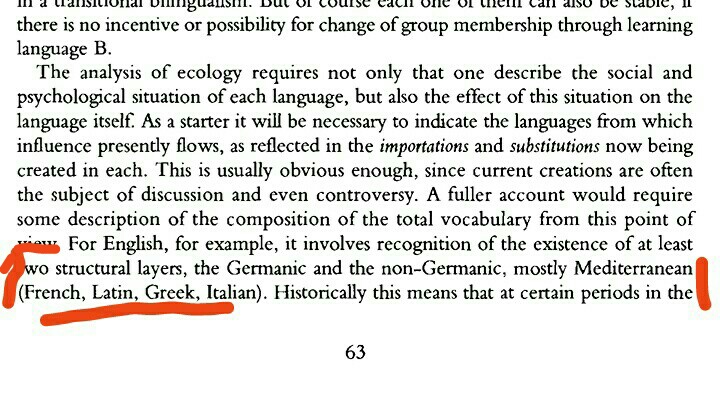
|
| Culture › Re: Yoruba Hebrew Heritage by Olu317(m): 9:19pm On Jul 12, 2020*. Modified: 9:41pm On Jul 12, 2020 |
macof:
I have stated on this very thread a few patterns in the change of sounds that can be observed in the relationship between cognate words in Volta Niger (East Kwa) languages and their evolution from their original etymons.
Like gh - w, h, g eg. Money : Owo, Ogho, Igho, Ego/ You sg. : iwọ, ihọ, gi/ They : ghan, gha, ha, wọn.
Or kp - k eg. Hand: Apá [Akpá], Aka/ Frog : Ọpọlọ[Ọkpọlọ] /Akolo /Eko .
Or l - n, r eg. Neck: Olu, Onu, Ọrùn / Ring : Olaaka, Oluka, Òrùka / Sky/Above : Elu, Ọlu, Ọ̀run / In/at : li, ni, na
And I am not even a linguist.. Meaning anybody with keen interest should be able to identify at least one pattern
Cognates don't need to look alike when written down if not Ìrìn and Iron should be Cognates. Apá would be Apart or A part.. and so on
Same lazy logic that made you say Ebora is Deborah and MetaPhysical said Ọranmiyan is Aramean and still stand on it till today
Again, I have told you the establishment of yoruba in Niger Congo is settled. You only further embarrass yourself by calling Yoruba a semitic language, when Yoruba doesn't possess any of the defining elements of a semitic language.
So I don't need to validate anything. You validate things in question not established facts. All I have to do is make citations to the works already done. I am not making a claim when I say Yoruba is Niger-Congo, I am stating a damn fact
I said every word you try to establish between Yoruba and Hebrew has a different pattern.. You have no Method
Simply patch work : like saying Apá = Apart or kẹ = care
Yoruba like all Niger Congo languages are not consonant dependent, rather meanings are formed by a combination of a single consonant sound and a single vowel with a given tone.
So pattern of evolution from etymon to several Cognates can be established through looking at both consonants and vowels as well as tones if studied properly.
This is what historical linguistics is all about
It is not like semitic languages that meanings are derived from combination of consonant sounds leaving little relevance to vowels. Plus semitic languages don't have tones
You don't eliminate vowels in Yorùbá and leave ordinary meaningless consonants. While consonants are not meaningless on their own in semitic languages, Kwa languages like Yoruba are a whole different ball game. Goes to show that you don't know what you are doing
You don't even understand Yoruba language
You can scream fake historian from now till next year. It won't help you prove your claims. I've told you my reasons for responding to you is to serve as the voice of reason in a sea of madness and irrational sentiments so people who do not know better can be exposed to that reason and we know that is what pains you because you want free rein to deceive gullible people
If I am a fake historian because you see me here mincing words with you, good because it is not about me but the content. Then listen to those who are renowned professors like Prof. Akintoye
Or he is also a fake historian?
You that claim to be a linguist (without training but by gift of God) but a none linguist is pointing out your errors
you always sound pained because you are frustrated with your mission to destroy Yoruba history. I told you you can't find headway. You and those that sent you might only succeed in deceiving people who never had interest in history but just want to identify as Hebrew. But nobody with basic historical knowledge is fooled
Would be nice to see you take your claims to any faculty of history. You will come back crying more than you do after reading my posts
PS. You are yet to point out where Robin law supports your nonsense.
You are a known fraud, you and olu. I have exposed you both on countless occasions mentioning scholars who do not support your claim
TAO11
lx3as
kayfra
BabaRamota1980 Lol, it is foolhardy on your part to claim that, ‘ Cognates don't need to look alike when written down if not Ìrìn and Iron should be Cognates.' Funnily, ‘true cognate' have closely knitted homophone letters, and translated meaning as same or closely related meaning. So stop lying to the audience. The reality is that you seek knowledge but in a cunning way, which is well known amongst the oga ( chameleon)alike set of people amongst Yoruba. Plainly, Iron is cognate with Irin because it former loaned from Classic Hebrew language into English's language. This is the power kf Yoruba's ANCESTORS,which is the reason,the English's Iron was borrowed from Yoruba's ancestors from the land of ancient Israel which is cognate with English speaker ,who are the learners of Yoruba language. Below is where English language loaned Irn from Classic Hebrew. Meanwhile, the root word for Yhiron are from the following alphabets combined from thw root words Yud + resh + nun Comparing the English language translation and the Transliteration, with Yoruba's spoken words as you have stated shows the classic Hebrew language still exist till eternity. Meanwhile the combination for the word are transliterated as following: yeern/yirn/eerin/yhiron. obviously, Yoruba ancestors are extraordinarily outstanding. 
|
| Culture › Re: Yoruba Hebrew Heritage by Olu317(m): 10:32pm On Jul 10, 2020*. Modified: 5:07am On Jul 11, 2020 |
2prexios:
Se, se'y, asa, mehri, bo'a
@Olu, I saw your piece on page 4 where you alluded to this list as you have it above. Se is to do or to create, establish or originate in Hebrew. Likewise, the Genesis gave us the tale of the original sin.
The proximity of this idea is what I'm exploring in Oduduwa. Se equally implies sin or offence and Ose, the originator in Yoruba is equivocation for an offender.
It's like saying isedale is identical with saying the original sin. That agreement in linguistic proximity is such that either the writer of Genesis think in Yoruba or that Yoruba somehow feels at home in that story through her language.
Sw, sy,
This protoword, means to do something bad for someone else, seni, asebi, aseni bani daro. Esu ma se mi. This particular one is the figurative for "doing" or remotely controlling the other person to their hurt.
Another Hebrew or Semitic variant domiciled in Yoruba is sa, as found in asasi. Nasr is it's transitive form, Ebenezer, ibi ni isa: -sir, -zer, -sa (isapa) are derivative of the same prototype.
Kutere asa l'oogun: the asa here shows that kutere is the power of the charm.
That empowerment is Isa or oosa, such that Yoruba Osa should have Hebrew counterpart in the Bible, and you have it exactly at the passage where the word Ebenezer is in the Bible.
Whoever is picking stones and placing one on top of the other and pouring oil on it is establishing an altar, and the same practice is iborisa, the stone that the head or the seer placed together in one place are ori-sa.
Asa
Bad mannered woman, someone who is capable of saying trash just to score a point. Uncouth or uncultured person. The other variant asa that stands for culture in Yoruba connect with ise.
Asa ati ise: asa is the way of life. Observe that the way here doesn't translate to road, the same way asa here translate to k'asa, learned behavior, thus asa is ise (character) at work = asa.
So like the case of koro and abuja, asa ati ise are synonyms, one is registered for culture or behavior at work, while the other is reserved to mean 'work' or behavior proper. Otherwise, asa is behavior, ise is behavior.
Asa is transitive form for Ose in Hebrew language, where it means to work or create.
Mehri (Obameri)
To see in proto word, but Obameri as Oluweri should be like a captain of the Mariners and someone who call the shot. Kikida Ori akesan nii dari oko nile iseri, akesan nleri omo agbebi omuwe. That dari and merhi are prototype. Giving direction and mr indicate seer.
Bo'a
I've talked about this before as akin to saying eranle nii bowa o y'ode. On my honor, I will do my best to share what we can get from what we already have.
Bo bata, wear a footwear, wo Bata, put on a footwear,
Hyy
Aye, life, existence.
All the proto words have expression in Yoruba language, as others and Yoruba equally have cognates with related languages in the same study.
An idea that the proponents cannot demonstrate for a barely literate person to understand is an assumption or opinion at best.
It is left for Professor Chameleon to try his hand on any protoword sourced from Niger Congo linguistic family to validate just a claim at any point to prove a point.
That would be like squeezing water from stones. I will give it to you 90% accuracy of my voice. I perceive you have seen my point about the linguistic connection that's even further than with Arabic. Believe me, hyy combined throughly in classic Hebrew's transliteration will hey,which is aiye or iye ; life,world,to have breath, etc. Interestingly, the English translators who did the translation under king williams are only vast in Septuagint( Greeks scholars information) to make the knowledge of ancient Hebrew known in English language. This only point to the fact, that Yoruba ancestors were the one who did the work of writing any piece about themselves. Bo'a classically mean come, come here, to come, to go , go ,which is in the manner as Yoruba's. On the traditional word for one's culture, it is translated as aish or aesh,which make it more as a cognate. Same as she, or se which stand for Hebrew word as sh: to do, act , to make in the same manner as , she: to be, to make, to act , to work, in yoruba from where the Yoruba's word‘ she ota ni, in the same way with Hebrew's root s t n ; setan or satan ; one's adversary or enemy. Interetingly , this word is not against God in both tradition whose God are same notably : Hebrew's Ella, El, Al, which are Ela, Ele,Ale which are same in Yoruba's lexicon but against man in both tradition or cosmology of Hebrew and Yoruba's. Again, prostitution in classic Hebrew is known as Zenah; Senah as in same cognates in Yoruba's Shena,or Sena.Plainly, there are many words that I have balance up the proto-languistic connection between the Classic Hebrew's and Yoruba's which point to same direction of same ancestors or were same people but differentiated in genetic mutilation. Furthmore, the root word for proclamation, speak, talk sound, voice information to be pased on, is same as Yoruba's though modified with just like 0.5% because the Hebrew's Qr is written or as kr which is kar , kaerae, kere ,as in same as kere o , ká(kar), etc in Yoruba's language, which mean same as speak, proclaim, to confess, pass information unto others, speak, Note: Lastly, I hope you're gradually seeing the heavy cognates between Hebrew and Yoruba's as same people. |
| Culture › Re: Benins Are The Owners Of Ogboni Confraternity and olokun worship by Olu317(m): 3:39pm On Jul 10, 2020 |
TAO11:
(1) It's not an oath per se, but rather the culminating rites that grants him final authority as King over his Edo subjects.
(2) It's not at the spot of the "Oranmiyan Obelisk" per se, but rather inside the "Oranmiyan House" where Oranmiyan himself is belived to reside eternally.
To be clear, tourists who visit the Oranmiyan grove, may go near the Obelisk. But there is a special place quite some distance from the Obelisk -- called Ile Oranmiyan -- where no tourist may visit.
That place is the "House of Oranmiyan" where a new "Omo N'oba N'Edo", et al., must visit for his culminating ascension rites.
Although I should add that a ram is often sacrificed (at the pathway near the Obelisk) whose blood the new "Omo N'oba" must walk on in procession to the "House of Oranmiyan" where the culmination ascension rites will be carried out.
(3) This is the traditional reason behind why all new Omo N'obas visit Ife. Every other reason you hear of is a cover-up.
A new Ife king have no business visiting Benin on ascension, but it is mandatory that a new Benin King visit Ife.
The internet has some fun memories of at least three of such visits to Ife of Akenzua2, Erediauwa1, and Ewuare2.
And I can assure you 100% that Ewuare2 -- the reigning Benin monarch -- did indeed make it to complete the above-described rites.
During this rite, the signature Ife's "Ada" is re-consecrated and re-presented to the new Omo N'oba as his sign of authority over his Edo subjects.
This is why, among the Edos, the Oba of Benin is NOT praised as the owner of the Ada. Rather, he is praised as the child of the owner of the Ada -- "Ovbi' Ada".
(4) Just for fun, some other interesting praise titles by which the Oba of Benin is praised in Edo land include:
(A) "Ovbi' Adimula" -- meaning: "The son of Adimula".
(Ask them what or who is Adimula in the Edo language).
(B) "Ikeji Orisa" -- meaning: "The Second to the deities".
(Ask them if these words actually exist in their language).
(C) "Abieyuwa N'Ovbi Odua N'Uhe" -- meaning: "The son of the wealthy Odua of Uhe".
(Ask them why the praise regard him as the son of a cOrRupTeD wOrD and not son of Ekaladerhan, lol.).
(D) "Ovbi' oven owie no gbaisi (erhan gba iri)" -- meaning: "The son of the morning sun that covers everywhere".
(Ask them where this morning sun lights up from according to Edo tradition). Awesome insight. |
| Culture › Re: Benins Are The Owners Of Ogboni Confraternity and olokun worship by Olu317(m): 8:57am On Jul 10, 2020 |
TAO12:
A quick clarification:
(i) The heads of the Benin Obas taken to Ife are for every third reign.
(ii) The custom was stopped just before Oba Ovoranmwen's reign from whom the British hijacked the Benin polity.
(iii) When Oba Ewuare II visited Ife, he actually paid homage at the Orun Oba Ado site. Channels TV confirmed this.
Also, from a dependable source, I learnt he also completed his ascension rites at the Oranmiyan grove -- which is the actual reason for the visit anyways -- just as is always the custom.
Follow the link I embedded in the comment above for the details on the Orun Oba Ado burial.
Cheers! This piece of information which you asert as tbus, “ Also, from a dependable source, I learnt he also completed his ascension rites at the Oranmiyan grove -- which is the actual reason for the visit anyways -- just as is always the custom." Is the oath at the tagged, “oramiyah obelisk" being done by Oba Bini ? |
| Culture › Re: Where Does The Name Yoruba Come From? by Olu317(m): 8:49am On Jul 10, 2020 |
TAO11:
I'm so, so pleased to see how my fellow Yoruba people are dealing with our Edo slaves.
Our heroes past (i.e. Oranmiyan, Awolowo, et al.) must be so pleased to read these threads and realize that their labours over their Edo slaves was never in vain.
I will wrap this up by citng one of the earliest sources on Benin history, viz. H.L. Gallwey (1893).
H.L. Gallwey notes on pages 127-128 of his 1893 "Journeys in the Benin Country, West Africa" along the following paraphrased lines:
"It is virtually impossible that the word 'brave' should appear in the same sentence with the name 'Edo'."
Reference: H.L. Gallwey, "Journeys in the Benin Country, West Africa", The Geographical Journal, Vol. 1, No. 2 (Feb., 1893), pp. 127-128.
.
.
.
In other news: "Yoruba" = "Oyo r' Oba" = "Oyo is the King" --- An Oyo hegemonic endonym.
Cheers! cc: rhektor, Pharaoh4rin, Olu317, Podakejol, llakes4real, lawani, firestar, baby124 To be honest, I can only agree with over 95% of your take on Igodomigodo false claim which you've proved beyond reasonable doubt that they were colonised by Yoruba ancestors. While some of them became assimilated through intermarriages, conscription through priests apprenticeship,as servants and votaries.Kudos |
| Culture › Re: Yoruba Hebrew Heritage by Olu317(m): 11:55pm On Jul 08, 2020*. Modified: 8:41am On Jul 10, 2020 |
2prexios:
Sometimes historical words are disguised by the rhythm of the Yoruba language as a result of the influence of closely related rhymes that happened at two different places in the language but implies different meaning.
It's such a circumstance whereby, the common rhythm overwrite the actual sense intended in an historical piece and, the not so careful student of history settles for the wrong but familiar option.
Makin and Mokin
Obamakin
Ilaramokin
Obamakin is an example of how rhythm of the Yoruba language can mislead us to a different address in history. Akin is a familiar option to the earliest listener to place the word in writing.
But ikin was the core idea that the word intended to pass across. This is because the word is related to knowledge of, or descended from "ikin", a typical Yoruba for Ifa oracular dicta.
So the idea most tenable is that the king in question was a keen or knowledgeable in Ifa, not just brave. Then we can see him in different guises of our own:
Amodu
Amawo
Amokin
Amofa
Amowo
Amori
Amewo
The other option, akin is a noun for the brave. Bravery is the common currency for leadership. The presence of akin in obamakin implies that he was a king that is the son of a brave parent.
Ikin represent the original Ifa in it's pristine form as a scroll, iqra, okra (ila), okoro, ekuro, elekuro, ekoro, eko... cognates. Ila, as found in Orunmila...okikin tii m'eyin Erin in Fon. Thus obamakin had all of these attributes.
On the other hand, okin is equally present in obamakin, oba amokin, oba amo okin, oba amo ikin, oba omo okin. Okin is said to be oloja eye, that is, king of all birds.
That's a reminder of hudhud.
And what's the place of okin in Yoruba history? Okin is the totem of the town of Ofa, home to Moremi. Iyeru okin olofa m'ojo. The Feeder here is Ojo, (day) and it is akin to osan gangan.
The key points shows internal cohesion in Yoruba history. I didn't know what I know about Yoruba history at the last paragraph when I wrote the first paragraph.
But keeping up with the connection helped. Thus ilaramokin served as guide and it's another historical data from the same ideology, ilu ara omo okin, ilu ara amo ikin, ila, ara mokin. This is indeed a deep information but hudhud doesn't have bird cognate in Yoruba land from what I am familiar with. Apart from that, Eri(elephant) , elephant tusk, igunugu(vulture), preferably white cork( adie/adiye/aduye) are reverence birds. From the cosmological angle, Yoruba's tradition have detest for darkness,unless it is for sleeping, unexpected journey that came to be, special form of traditional association meeting or festivities period. Furthermore, if hudhud is a reference to dark bird ,if such exist in Arabic world, then information on o dud iwa complexion point to an information that he was a white skin man, but Ogun was dark skin while Ora miyah was an half caste(white and dark ) person, whose mother was Lakange or Yemoja from Otun Moba; daughter of Ore Otun. Shockingly, I have seen my patrilineal cousins with a form of curly hair without any present or past traces of any link to white ancestry though some also have wooly hair and a form of straight hair. |
| Culture › Re: Whole Ondo State Was Under Benin Kingdom Except OWO by Olu317(m): 9:39pm On Jul 07, 2020 |
AreaFada2:
My dear, Owo at some point paid tribute. Proper Owo history doesn't even deny this. But mostly Owo and Benin saw each other as brothers.
True Owo was always much more autonomous. Never really strict tribute conditions as imposed on others. Many towns near Owo happily admit their mostly Benin links and Origin. Like Ipele/Upele, only 15km from Owo who admit being largely descendants of Oba Ozolua of Benin.
Cultural flow was mutual too between Owo and Benin. And of course marriages between royalties and nobility both ways.
If you listen to Orlando Owoh songs you will notice some Owo twangs in it, despite only his mother coming from Owo.
Even the monarchical system are pretty close.
Technically all of Eastern Yorubaaland was Benin sphere of influence. The rest belonged to Oyo up to North Central before the Jihadists took much territory from Oyo.
You will notice that Deji Arakale did not run to Owo in 1818. He knew no chance of protection there. Even the Ewi of Ado sent him packing quickly too
Note that Benin Empire was from 1440 to 1897. Growing and shrinking at times. Like Lagos lost to the British in 1850s. While Oyo empire was from 1680s to about 1830s. A much shorter period. A period of slave trade boom too.
As for Ife conquering everywhere, such are not recognised in Benin or Oyo. Both empires respect and admired fellow conquerors. Even Modakeke people next door to Ife would doubt such Ife conquest story.
I straddle both Owo and Benin so nothing to gain putting one above another. .... I can't comment but laughing at your ignorance! |
| Culture › Re: Yoruba Hebrew Heritage by Olu317(m): 9:29pm On Jul 07, 2020 |
2prexios:
Lovely, @Olu.
When we compare works, it's in the hope that we shall find a common ground. We are the incoming old men, and we should know where a given thought is fetched when in long time to come the same thought is shared with us as "history".
I will encourage you to know you have to read between the lines every classics that pertained to the Yoruba history. As a writer, don't go for the history itself but for the feeders. No one is damn accurate here, only the feeders from the same source as the history itself.
The ditch and the continuum
If you study the flow of history, it's meant to be a continuum and not a ditch. That should be "why" we're here talking about cognates. History is the ripple effect of events of old and must have been talked about that it generates feedbacks on each side of the divide.
A ditch is where you have just the interpretation of a word and it's a complete orphan and one claims it's an historical word. No, that's not in the character of historical words as you have it in Yoruba.
It's just as claiming ateworo is coming down through a chain. So, what preceded that? Every precedent details are lost in that direction. Yet it's meant to be "baa ba fa gburu, gburu a f'agbo".
The feeders I'm talking about is "the much talked about" historical stuffs domiciled in Yoruba tradition and internal cognates or rhymes. Ina kii jo loko ki majala ma sofofo.
Majala is the burnt particule that wind blows to far away when you burn the weeds in preparation for the ridging and sowing that follows. When majala settles on your arm, you know a weed is burning somewhere.
Aroko and abd
Abaja is what you have been referencing all along as Hebrew alphabet sir, abja, abuja, are examples of internal cognates in a language. When we says kosabuja lorun ope, it means there's no short cut on the neck of a palm tree.
The proverb means that the only possible event is to fall or come down the same way you climb, no short cut. So abuja is short cut?
Then abuja is koro, somewhere somehow, the thought that possibly eludes us is that koro, equally implies "to write", much like qere or iqra in Hebrew and Arabic respectively.
But abja is the much older idea that trace back to the Canaanites. It's the mother of the alphabets and the ancient "abd olowe". In it you have the resh, gimel, etc.
Now let's look at aroko, first with it's internal cognates: iroko, then it's feeders oluwere, owara. I think oluwere is taking about speed, waransesa, wara nise orisa. Aroko, iroko, oluwere. Let's take out iroko, the verb form of the word.
Iro-thought, ko-match: thus aroko is an object of thought matching. It's not a written inclined message but insignia to be decrypted. So it's an ideogram just as you have insinuated.
Point of agreement
This didn't erode the notion that the founding fathers were familiar with writings. It means that they improvise for it's lost, whereas writings has left indelible imprint on the language.
I think the bird is hudhud in Arabic. I followed the way our ustads taught us to pronounce it way back.
There's a particular bird like that. My prediction is that if Yoruba have name for the same bird, it will evoke Yoruba and Oduduwa history.
Will come back. I can't but agree to your thought provoking piece.It has indeed increase the fact finding of what elude our loss of memory of the past,in such a way that our ancestors encrypted their knowledge in pictographs, obelisks iron ore production, ceramic works,jewellery production. Another unattended information is about, the renown Islamic studies Professor, Isaac Ogunbiyi, who assert also in his book, Orhography of Yoruba, that Yoruba language have been studied by scholars to the extent that nearly all have Arabic root. This information alone shows the direction where the language came from to the new world they met in West Africa On the ‘o dud Iwa 'as a name remain descriptive of a person and the perfect character of his God. And it does show a reference to Iwa . The name Iwa is God in Yoruba Ifaodu corpus from the verse, I came in contact with,which I will share in not too long a time from now. The reason being that Ela was said to fuse Iwa with self; married to Iwa and they became one .Obviously, it was from this interpenetration that such as a woman came into existence. In Yoruba's world view,‘Iwa' is not adequately defined by mavern, scholars alikes because I the name Iwa does not have opposite of it. Iwa is Iwa and when we bring in negation to the name. Thus becomes, ‘ ko ni or è ni Iwa or ō ni Iwa! Finally, many Yoruba words is even more interwoven with Hausa's. Elements of Arabic terms in Hausa's language are also found in Yoruba lexicon. Although, accent or pronunciations and replica of same phrase or words, twice differentiate them. 
|
| Culture › Re: The Progenitor Of Igbo Is Eshi, And Not Eri. Igbo Ronu! by Olu317(m): 8:44pm On Jul 07, 2020 |
|
| Culture › Re: Where Does The Name Yoruba Come From? by Olu317(m): 10:25pm On Jul 03, 2020 |
AreaFada2:
Well, we already knew it came from Muslim people.
Hausa Fulani still deal with the SW with their original meaning at the back of their mind. The Muslim you mentioned was aggressively established in 19th century.So, you don't have a say. May be you will exple the identity of the ethnic group that mentioned Bini as a descriptive word for angered or vexed people Thus, Yoruba names are intact |


