 Family › Re: My Parents Move In To My Ongoing New House Without My Consent by Efewestern: 9:15am On Oct 05, 2021 Family › Re: My Parents Move In To My Ongoing New House Without My Consent by Efewestern: 9:15am On Oct 05, 2021 |
Kehindeaj78:
I live outside the country but I entrusted my house development with my parents in Nigeria, but they leave in a rented apartment. They're are due for new rent payment at their rented apartment which i sent them the money, only for them to call me that they don't want to rent another apartment again and have moved into my ongoing house and used the money to do somethings in the ongoinghouse. What do I do? Oshare, let them be, as African, we owe it to our parents to always provide and care for them. Leave that house for them. |
| Business › Re: Report: Domiciliary Account Balances In Nigeria Estimated At $16 Billion by Efewestern: 11:21am On Oct 03, 2021 |
PENISgod:
Please guys is 25k salary a Month good for a single teenager living with his parents? Yes... Very okay. Start from somewhere. |
| Family › Re: Life As An Albino (my Experience) by Efewestern: 1:55pm On Sep 28, 2021 |
Cokahot:
I don't use cheap phones,my phone does that,once in a while giving and submitting its own suggested word,I knownits from Germany fool This one feet no get shii shii. � |
| Culture › Re: Early Igbo Sojourners In Eastern Yorubaland by Efewestern: 9:43pm On Sep 22, 2021 |
RedboneSmith:
This is not hard to understand. Urhobo people were the first large group of people from the east of the Ondo area to settle in the Ondo axis where we are told they were involved in rubber tapping and some other agricultural pursuits. When the Igbo (eg. Awka migrants) also began to arrive there, the Yoruba of the Ondo axis lumped everyone who came to their land from the eastern direction and called them Isobos.
No, there is zero evidence of Urhobo working as smiths in Yorubaland. Noted, made corrections to my earlier comment. I meant no harm and I wasn't trying to derail. |
| Culture › Re: Early Igbo Sojourners In Eastern Yorubaland by Efewestern: 12:50pm On Sep 22, 2021 |
Igboid:
Nah.
What you tried to do was claim Igbo feat for your Isoko people or atleast try to water it down by attaching your Isoko people to it.
It's an evil thing to do.
The Isokos were never known for metallurgy in history, not at home, not abroad.
So how exactly could you link this article to Isoko, even when it was made obvious to you that the Yorubas referred to anyone East of Ondo who is not Edo as Isobo?
Are Igbos not East of Edo?
What you did wasn't cool. I'm sick of Nigerians always trying to diminish Igbo feats. You were simply paranoid, you should know this is a section were we are free to debate anything and beside i wasn't even claiming the achievements of the Igbo blacksmiths. Only reasoned why a known ethnic group was called Isobo because that was a tag used strictly for the Urhobo/isokos, not even Edo was called Isobo. I will modify my OP because I don't want this thread to get derailed. |
| Culture › Re: Early Igbo Sojourners In Eastern Yorubaland by Efewestern: 12:26pm On Sep 22, 2021 |
Igboid:
What is wrong with people like you?
The text was unmistakable that Yorubas then referred to anything East of Edo as Isobo!
They didn't Know about Igbo.
And the name of Igbo blacksmiths involved were as well mentioned, and you still want to claim it for Urhobos?
You even saw an Igbo masquerade there photographed by the colonial officer in Okitipupa.
Are you okay at all?
Oka(Awka) blacksmiths went as far as Cameroon making weapons for local people there.
In Igueben Edo, they have IdumuOka who were descendants of Oka blacksmiths who brought their superior skills to the the area.
Urhobos were never known for metallurgy,
Ndiigbo were great with Metallurgy with multiple ancient iron ore minning sites to show for it. We have Igbo clans known for Metallurgy, Oka was the most popular, but there were Nkwere ( Opiaegbe) "the gun makers", Agbaja blacksmiths, Abriba people, etc. Stop the madness already. Your outburst was just not neccesary. Quite disappointed. I never claimed that the Blacksmiths were Isobo's, only tried to reason out why everyone was called Isobo when the Isobo's weren't even part of the Eastern region. I Went further to state that there could be a probability of them venturing into tools development because of their high population in this territory in the 1900's. |
| Culture › Re: Early Igbo Sojourners In Eastern Yorubaland by Efewestern: 12:10pm On Sep 22, 2021 |
SlayerForever:
Very unlikely. Yes, very unlikely, the overwhelming population of the Urhobos in Eastern yoruboid territory as at the time mentioned in the OP could be the reason every non-indigene were referred to as Isobo. I'm not just ruling out the possibilities of some of them venturing into the development of these tools. No doubt, the Igbos were good in blacksmithing, we could see that in some of their artifacts like the igbo-Ukwu bronze. |
| Culture › Re: Early Igbo Sojourners In Eastern Yorubaland by Efewestern: 11:16am On Sep 22, 2021*. Modified: 12:50pm On Sep 22, 2021 |
Igboid:
Early Igbo Sojourners in Eastern Yorubaland.
The attached pictures depict people at a masquerade dance. The masquerade is the famous Mgbedike masquerade, popular in the Nri-Ọka area. In Picture 1, a man can be seen wearing a hat, with ichi marks on his face.
But these pictures were not taken in Igboland. They were taken in the village of Okitipupa, in the Ondo area of eastern Yorubaland in the 1940s by British colonial officer Edward Harland Duckworth. Who were these people and what was Mgbedike doing in Yorubaland in the '40s?
Ọka tradition relates that their itinerant blacksmiths had penetrated into Yorubaland at some undetermined time in the past. Professor O. N. Njoku says this happened sometime between the 1890s and 1904. But it was in the Colonial Period, from the 1930s, that they began to appear there in significant numbers for Yoruba tradition to take notice of their presence.
It was their skill in gun-smithing that enabled the Ọka to penetrate Yorubaland. While Yoruba gunsmiths used nails and riveted their gun parts, Ọka smiths used screws. Ọka guns could thus be taken apart, cleaned and re-assembled.
The best-known of the Ọka smiths in Yorubaland in the 1930s was one Godwin Okafọ who settled in Igede Ekiti. Ekiti people didn't even know his name and simply called him Ọka. He brought innovations and enriched the smithing tradition of Igede, just as his fellow Ọka craftsworkers were changing the face of the profession in other towns in Ekiti.
This is what an elder from Igede, Chief Akande, had to say about Godwin and his 'brothers':
"These Isobos [a name originally referring to Urhobos, but extended to anyone from the Eastern Region] came and began to make heavy duty guns that could kill 2 or 3 animals at once. They were the first to seriously start producing knives, cutlasses hoes and others in large quantity for sale. Look at Awka [i.e., Godwin Okafọ], he is small in stature but stronger than many around us. He was the person who first started producing short, rather than the usual long, guns here. Not only that, these Awka people performed their smithing activity by producing, for the first time, double-barrel guns that could kill a whole district if there is war..."
(" Economic History of Ekiti People in Nigeria, 1900 - 1960" by Jumoke Oloidi PhD. Thesis, UNN)
#Nonso Uche Nnajide
cc: Bkayy, Eastlink, Sufferingboy, Slayerforever, AnambraIstson Educative! I knew we had few migration of igbos into Eastern Yoruboid territory in the 18000 & 19000's, but never knew they had impact like the Urhobos who dominated the economy. |
| Family › Impotency, Culture, Marriage, Family And The Story Of OMONOSE by Efewestern(op): 1:22pm On Sep 16, 2021 |
I grew up in Adarode Village of Okpara in the 1940s and 1950s. It was a period when literacy was rare. Today, Okpara and its numerous villages and sub-towns are renowned to have produced one of the highest concentrations of medical doctors in Africa. It was not always so, although it must be mentioned that Urhobo's first university graduate, M. G. Ejaife, hailed from Okpara. That literacy was rare could be imagined from the way the all-important matter of age seniority of one person over another was determined by references to landmark events in the history of the Okpara community.
The first time I heard of Ômônôsê was in connection with a dispute over age seniority. Two young people, a boy and a girl, were contesting age seniority, which would confer certain privileges during my youth in Okpara. Their mothers had to intervene. As it turned out, they were quite close in their birthdays. One mother asked the other how old her daughter was at the time of Omonose. She replied that she had her baby during Omonose. The boy's mother said she had her son a day before Omonose. The dispute was settled. That was my corner of Okpara, a vast complex of the main town and its numerous satellite villages and towns. Elsewhere in the Okpara complex of culture, similar references to Omonose were used to settle disputes of age seniority of children who were born probably around 1938.
So, what was this Omonose saga that was so enthralling in Okpara's folk history? It was a true story of an event that traumatized the whole of Okpara for several weeks. Worse, it was an event that challenged the morality of the extended family's claim of rights over an individual's life and possessions. At the time of its occurrence during the dreary late 1930s, men and women debated the morality of what Omonose's family did to him and whether Omonose had overreacted in his methodical revenge that took so many lives from the Okpara community. Well up to the 1950s, when as a youngster I was active in Okpara's cultural affairs, I witnessed grown-up men and women debating the morality of what Omonose's family did to him, some twenty years earlier.
The story was woven around the issues of family, marriage, and manhood. Omonose was deemed to be an ideal young Urhobo man. He was strong and hard working. That meant that he attended to farming matters diligently. Quite importantly, being a hardworking young man implied that he collected palm nut bunches from wild and tall palm trees, with alacrity and great results. All accounts of this story -- and they had grown numerous by the 1950s -- insisted that Omonose was a good family man. That is, he was loyal to the elders and members of the extended family. He would take part in communal events sponsored by the family, including such demanding chores as digging graves for deceased members of the extended family.
When it came to the time of his marriage, Omonose's hard work paid off handsomely. He had no difficulty coming through with the onerous bride price that he had to lay out for enabling his marriage ceremonies. But the transactions of the marriage were not all left to him, alone. The extended family, including the elders of the family, had to be involved in concluding the nuptials that brought to him his new bride.
The events of marriage ceremonies were usually concluded with a night of conviviality. It was on that special night when the family of the bride brought her to the family home of the bridegroom. The Urhobo term esuôvwa -- coined from esuo, escort, and ôvwa, bride -- that is employed to characterize this occasion is ritually nuanced. The ceremonies actually did not involve the bridegroom in any major way. There was the ritual prayer from the family over the bride and bridegroom for as many children as they could bear. May their children be a blessing to the family. The young woman was being married into the family. The bridegroom was the agent for his extended family in transactions that brought together two extended families. That was the ritual sense of marriage in Okpara.
The night of the marriage was special in another important sense. It was the night that the bridegroom was to begin his physical relationships with his young wife. Nosy old women wanted to know whether she was a virgin or whether she came into their family already experienced in sexual encounters. It was all part of living in Urhobo communities in the 1930s. The family was all round you -- to help, but also to interfere with some of your individual liberties. Stories rapidly circulated about the new marriage, as the bridegroom was openly teased about his sexual conquest of his new wife, with questions of when the family should expect a child from the marriage. But the bridegroom and his new wife were treated with great respect
* * *
That was the world in which Omonose entered his new life as a husband. He had played his role perfectly. His extended family had played its role as well. But Omonose’s life story after his marriage did not follow the line of cultural expectations. Within days, it was clear matters had gone wrong. Omonose's mother-in-law received word from her daughter that Omonose was not performing. He was impotent. Embarrassed, he did nothing and pretended that things were normal with his new marriage. Soon, however, word came from his wife's family to his own extended family. Something had to be done to correct this anomaly.
The family's most senior elder then took the first of the great missteps of the Omonose tragedy. He convened a family gathering to discuss the matter. There were sharp divisions in the family on what should be done to resolve this uncommon problem. One version of the story was that Omonose was summoned to this open meeting and asked if it was true that he was impotent and what he was going to do about it. Embarrassed, he pleaded with the family that he would want to release his wife from the marriage.
Led by the extended family's oldest man, and against opposition and advice from other elders, the family took a fatal decision. The bride did not belong to Omonose. She was brought into the family. If Omonose could not consummate the marriage, she must be given to some other young person within the family. Through several surrogates, Omonose pleaded with the family not to give his wife out to another member of the family. But, as several versions of the story affirmed, the oldest man scoffed at Omonose's impotency, saying that the family was propagated by potent men, not by "impotents." One could refer to a man's impotent disabilities indirectly, as Urhobo language tends to avoid direct confrontation with such difficult and humiliating circumstances. But the oldest man applied that dreaded word: ochibê. So it was that Omonose's new wife was given by the family to another young man who was generally regarded as a lazy fellow. Through the fiat of the elders, this man now reaped the rewards of Omonose's hard work.
Omonose was deeply hurt, but unusually calm. He talked to his sister and a few supportive family relatives and loyal friends who consoled him. But he revealed no plans for his future. Then he disappeared from any body's notice. There were gossips all over town about the behaviour of the family. There were the usual jokes about the fate of impotency in a community where marriage was a necessity, not a choice. Omonose's whereabouts were the subject of varied rumours. It was reported that someone saw him at Warri, some twenty miles from Okpara, but a long and dangerous distance by foot, which would be the only means available to him in the late 1930s. Others guessed that Omonose might have left for Okitipupa to which hardworking Urhobo men went to make their fortunes in the 1930s and 1940s. There was also a rumour that he was receiving treatment for his condition in a secret location.
Then, a good number of days later, Omonose appeared in town. It was on Okpara's market day. Market days had their own logic. Few people ventured into the bush on that day. Towards afternoon, men and women, and boys and girls, drifted from their streets to the main street. Elders tended to stay behind in the family hall to deliberate on family's and Okpara's affairs. Omonose chose his return with remarkable insight. He slipped into the house of the man who took his wife from him. There is a debate about how Omonose could have known that the man who dispossessed him of his wife was at home with his former -- now his rival's -- bride. But they were in, in bed. There appeared to have been no struggle. There was no commotion. Both died from cutlass wounds -- perfectly applied.
Omonose closed the door behind him and approached the elder's hall. The elders were all seated. He went straight after the sarcastic old man. It was swift. He also went after another elder who supported the decision to give his wife away to another family member. Then he fled, not touching with his bloody cutlass those elders whom he judged to be innocent.
* * *
News of the tragedy spread fast. Murder was rare in Okpara. During my youth, one could count the number of homicides by the fingers of one hand. Multiple murders of four people were extremely rare. The town market broke up in confusion. There was a version of the story, told to me by an old woman, that Omonose appeared on the same day in a distant village where he shot a family member who had taken part in the decision on the transfer of his wife.
Shot! That was rare and dangerous. Guns and gunshots were not the instruments of violence in Okpara of the 1930s. Cutting down people by cutlass was not unusual. But guns? The unsuspecting townsfolk of Okpara had not imagined that the reported sighting of Omonose in Warri, the new British colonial commercial town, was true. His journey to that distant township had enabled him to acquire a gun, possibly guns, and to amass plenty of ammunition. There was panic. Few people could venture into the bush, in a community that relied on farming and the frequent harvesting of farm products for daily living.
It soon became clear, as the toll of Omonose's revenge killings mounted, that he was not a random murderer. He spared those who empathised with him and gunned down those who bad-mouthed him or made fun of his impotency. There were numerous stories of Omonose's methodical approach to his killings. One of them, repeated over and over again in Okpara of my youth, was his attack on a company of women who were going to market on foot. There was a conversation, inevitably, about Omonose's impact on economic activities. One of these women was said to have blamed Omonose, making fun of what she called his dead sex organs. The others berated her, saying what the elders of the family did was evil. Little did they know that Omonose was listening. He pushed into their midst and killed the woman who was abusing him.
Capturing Omonose became the preoccupation of the town’s authorities. It displaced all other affairs in numerous sessions of Okpara’s open and closed assemblies. Then the British Colonial Provincial Government from Warri got involved, sending a number of policemen to Okpara in the effort to arrest this clever mass murderer. There were many problems in the community's and the Colonial Government's attempt to capture Omonose. First, he knew the bushes thoroughly. He slipped out of difficult areas with ease. Before the large rubber plantations of the 1940s, Okpara was surrounded by a densely forested landscape. Food was not a problem for him. Omonose could cook for himself in deserted farmsteads. The policemen sent into the hunt were of course useless. They demanded that the townspeople should do the arresting.
There were other difficulties. Omonose was armed with a gun that he used quite effectively on his victims from a distance, from time to time. That struck terror in most people. But a larger problem lay with Okpara’s youth, who were expected to arrest Omonose. They were unwilling to show their usual bravery. In other times, in other circumstances, capturing a mass murderer would have provided an opportunity to many a youth for establishing a record of bravery. But not this time! Many of them were angry at the behaviours and arrogance of the elders whom they considered oppressive. There were many instances of young people who openly said they would have behaved like Omonose if they found themselves in the same predicament. It was a moral crisis in Okpara.
The deaths had climbed to fourteen -- the figure varied in different accounts. The town was desperate to do something that would work. The matter was now beyond some erring elders in a single extended family out of Okpara's multiplex social structure. It was now the town's responsibility. The youth were cajoled with apologies and with frank admissions of injustice to Omonose. But he had to be caught. The hunt for Omonose intensified. Many times he slipped out of areas where he was sighted. There were fears that he might ensnare his hunters.
* * *
The end of the hunt was culturally intriguing. It ended up in a scene that literary accounts would love to paint up as an anticlimax. But Okpara’s folkloric renditions of the capture of Omonose have consistently featured the end as dramatic, at least from their cultural perspective. There was a credible report that Omonose was in a well-known area. Plans were being made on how best to flush him out and possibly capture him. Then stepped forward a man. He said he would do it all alone. It should be left to him. How? He was Omonose’s friend. More importantly, he and Omonose were namesakes. Namesakes! Ôkpô was ritually important in Okpara, right up to the days of my youth and well beyond. Namesakes don't hurt each other, cannot kill each other. They are soul mates. You entrust your life in the hands of your namesake. There was implicit mutual trust between namesakes.
The strategists of the hunt for Omonose thought it might work. Then, all alone, plainly clad to rule out any appearance of deceit, Omonose's namesake pushed into the area where the elusive multiple murderer was believed to be hiding. He shouted out:
Ôkpô, it is I. It is enough. Everybody knows it was an injustice. But it is enough. If this is how you want it, you may kill me. But spare our town from further torment.
The story, at least in one version that I was told, said Omonose was already quite close to his friend and namesake -- close enough to kill him outright if he chose to. Omonose asked his namesake, "Why are you doing this to me?" He pointed his gun at his namesake who said, "Go ahead, but spare Okpara." It was an empty threat from Omonose. He could not kill his namesake. Meekly, he handed over his gun to his friend and namesake who took him to his hunters who were waiting for the outcome of the encounter between namesakes. A point of joke in Okpara was that the colonial policemen immediately sprang into action and handcuffed the man they ran away from all along.
That was not the end of the story, at least in the narration of the Omonose saga in Okpara. Omonose requested a meal from his sister. A mature cock, not like modern mass-bred chicken, was chased and caught, prepared, and used for a good meal for Omonose. And he said goodbye to his beloved sister. As he sat in the vehicle especially brought to Okpara to take him to Warri, sympathisers came to greet him. Then occurred one of the most narrated portions of the Omonose saga.
Omonose turned to one of those who had come to see him and said,
Friend, you are a lucky man, a very lucky man. You could have lost your two wives. But your good tongue saved them.
The individual to whom Omonose addressed those words lived to be an influential man in the affairs of Okpara. He knew what Omonose was saying. One afternoon, his two wives, frustrated that they could not go to farm, were abusing Omonose's behaviour in a loud conversation in the open compound. He came from inside the house quite angry at them. He shouted at his wives, saying,
Women, you have no right to be insulting a man to whom such great wrong was done. Are you saying that if I became impotent, you would agree to be given to another man in this family while I am still alive?
What he did not know was that Omonose was listening to his garrulous wives and that his anger at them saved their lives.
Omonose was taken to Warri. News came months later that he had been hanged. But his shades remained in Okpara's collective consciousness. The authority of the elders had been singed, albeit in a costly campaign of revenge murders. Right up to the years of my youth in Okpara, Omonose was not simply a demarcation date for telling age seniority. It was a matter whose morality continued to haunt Okpara's kinship culture. Omonose was an Okpara tragedy. But it was a human story.
The first time I visited Warri was in 1951. A team of us, youngsters from Catholic School at Okpara Inland, had under-taken the tough trek of more than twenty miles in order to take an entrance examination for admission to a secondary school. Our leader had lived in Warri and knew the township quite well. He showed us the landmarks: European Quarters, Cemetery, European Burial Grounds, Tennis Court, etc. But the most haunting experience we had was a trip to the neighbourhood of Okere Prisons. There our leader pensively told us, "That was where they killed Omonose."
I believe I said Hail Mary. I probably said, silently, "May His Soul Rest in Peace." I probably empathized with Omonose. But I am no longer sure. It was a story that tormented every Okpara youth of my generation. By Late Professor Peter Ekeh Credits: http://www.waado.org/urhobo_kinsfolk/archive/short_stories/omonose/Omonose.html |
| Romance › Re: Careers Of Men That Turn You Off As A Lady? by Efewestern: 1:25pm On Sep 15, 2021 |
pocohantas:
Some people do not like stay-at-home-jobs because many of them end up as recluse. Another set do not pay attention to their looks because they rarely have the need for outing clothes. It is not always about the money like guys like to insinuate. But that is understandable. Everything is a dick-measuring contest for Naija men. They are beginning to bore me real bad.  Damnnnnnn |
| Politics › Re: Photos From The Burial Of Brigadier-general (olorogun) Dominic Oneya by Efewestern(op): 9:05am On Sep 12, 2021 |
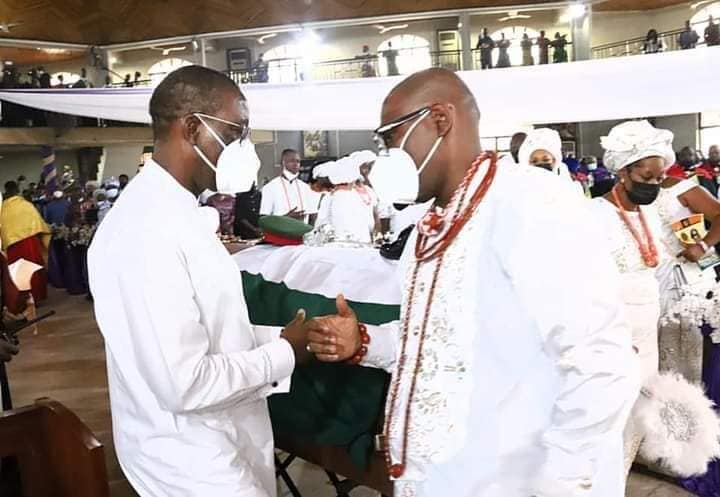
Delta State Governor Sen Ifeanyi Okowa, Former Governor Chief James Ibori, Benue Governor Samuel Ortom Represented by his Deputy, Chief of Army Staff Gen Farouk Yahaya (Represented), NFF Chairman Amaju Melvin Pinnick, Secretary to the State Government Chief Patrick Ukah , Chief of Staff Rt Rt Hon Festus Ovie Agas, Hon. Solomon Ahwinahwi and other dignitaries attended the funeral of the he late icon. 
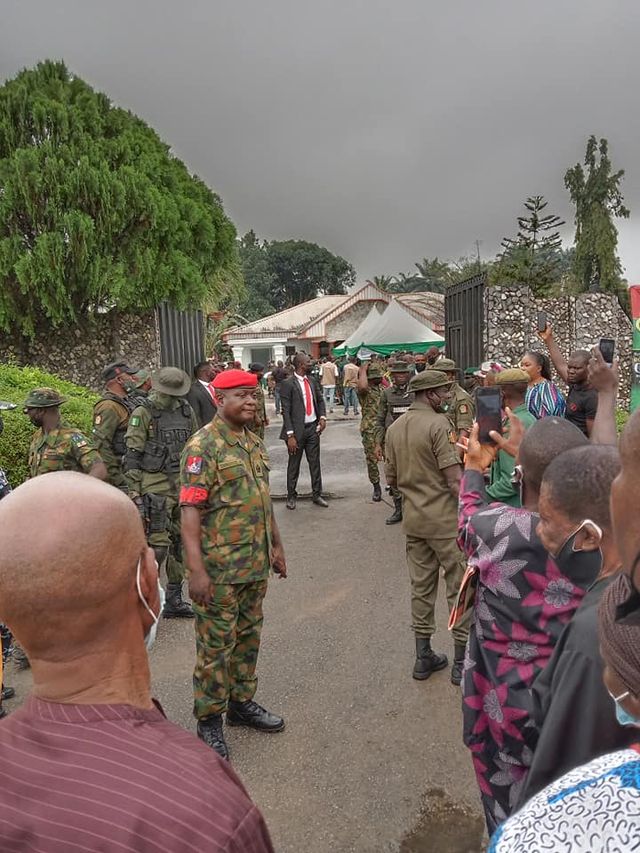
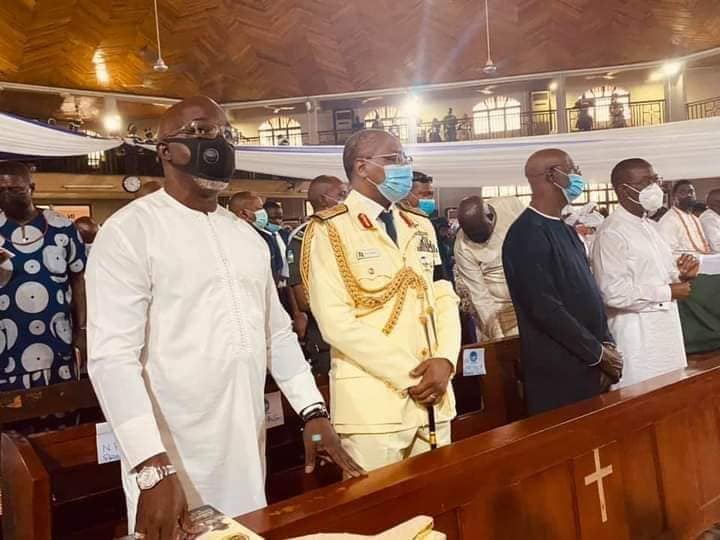
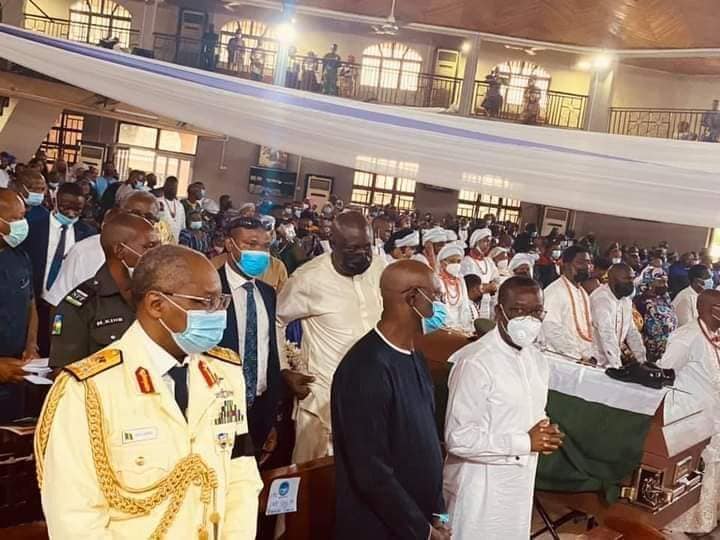
|
| Politics › Photos From The Burial Of Brigadier-general (olorogun) Dominic Oneya by Efewestern(op): 9:01am On Sep 12, 2021 |
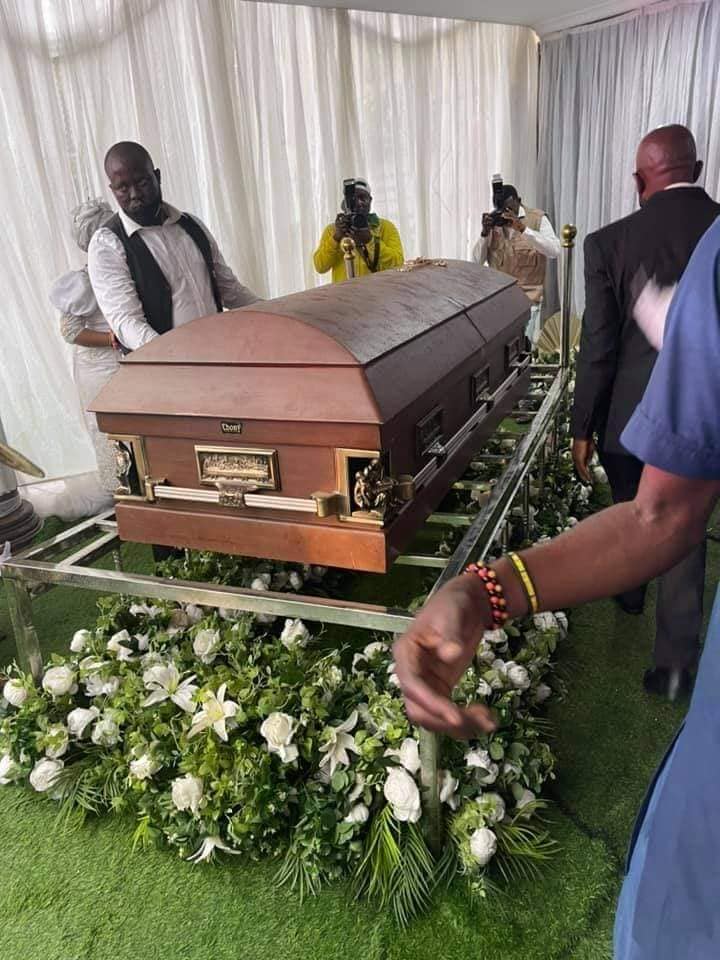
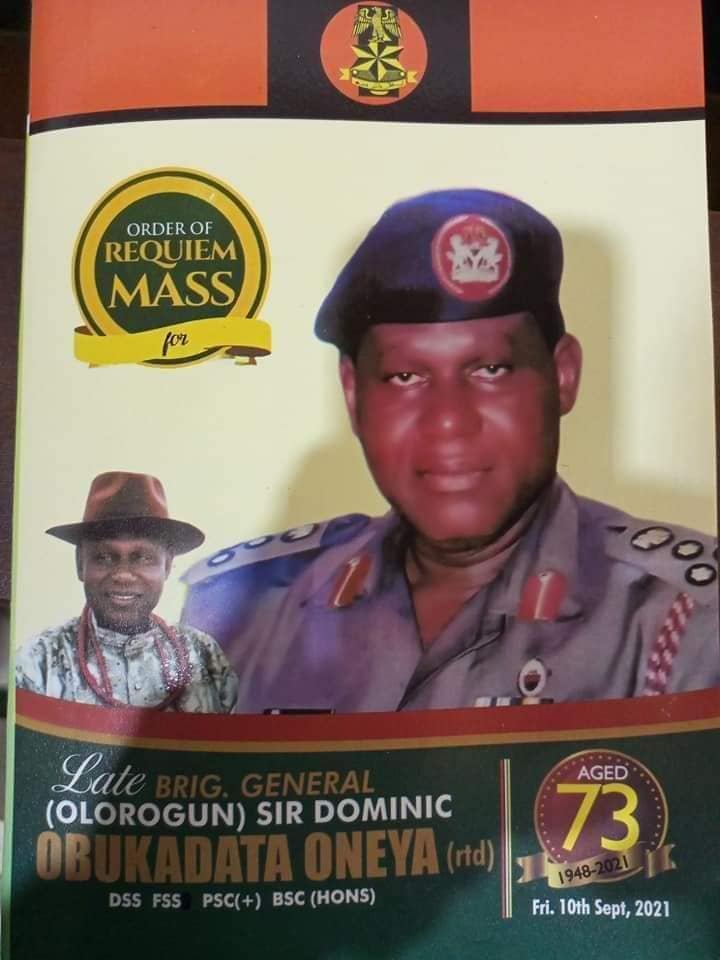
Brigadier-General Dominic Obukadata Oneya was Administrator of Kano State, Nigeria from August 1996 to August 1998 during the military regime of General Sani Abacha, then Administrator of Benue State from August 1998 to May 1999 during the transitional regime of General Abdulsalami Abubakar, handing over power to the elected executive governor George Akume on 29 May 1999. He died on the 4th of August 2021 and was laid to rest on Friday, 10th of September 2021.
Below are some photos from his funeral service. 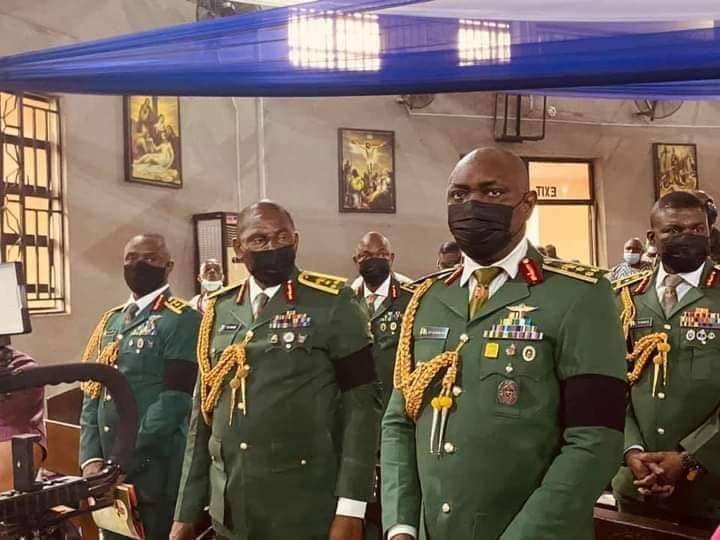
|
| Politics › Re: OKITIPUPA: A Town In Nigeria Without Electricity For over 12 Years (Pictures) by Efewestern: 4:11pm On Sep 10, 2021 |
GorillaApp:
How is this.
Is it does that went to do farm there? My madam always mention it Palm oil trading |
| Politics › Re: OKITIPUPA: A Town In Nigeria Without Electricity For over 12 Years (Pictures) by Efewestern: 10:52am On Sep 10, 2021 |
urbobo20:
But omotosho is very close to that place This town was a blessing to lots of Urhobos in the past. 1 in every 10 Urhobo had relations who grew up in that part of the country. What happened to a once booming town? This country menh! |
| Politics › Re: Isoko Tribe Of Bayelsa State And Igbo Misconception by Efewestern: 6:41pm On Sep 08, 2021 |
oyatz:
Okunrin (Yoruba)= Okoro (Bini)= Okoro (Igbo)= MAN.
Okorodudu (Urhobo)= Okunrin dudu (Yoruba)= Okoroji (Igbo)
Okuta( Yoruba) = Okute (Itsekiri)= Okwute= Igbo
Yoruba-Bini-Itsekiri-Urobo/Isoko-Ika-Ikwerre- Ekpeye-Igbo represent a language continum.
In the distant past, we spoke the same language. I had this discussion the other day with someone that OMO (Child) isn't entirely a yoruboid word because several distant/distinct ethnic groups make use of it albeit in a modified way. Oma Umu Emo. |
| Politics › Re: Isoko Tribe Of Bayelsa State And Igbo Misconception by Efewestern: 6:28pm On Sep 08, 2021 |
ZZ22:
Same way we have the name Okoronkwo/Okonwo a man born on Nkwo market day, Okorie/Okoye a man born on Orie/Oye market day and Okeke from Eke market day.
Efewestern hope you have been schooled for free here so throw that your Bini imprint mentality to dustbin and next time you see these names never you think, add or suffix anything Bini to it. You just like the Bkay guy aren't open to proper cultural discussion. I ended his conversation because I knew where it was driving to. I don't want to be caught in the web of your ethno-centric iisshh. You can believe whatever you want to believe. |
| Politics › Re: Isoko Tribe Of Bayelsa State And Igbo Misconception by Efewestern: 3:06pm On Sep 08, 2021 |
Obdk:
Before you continue ur lies.
Which language is edoid.. Know basics before you quote me. |
| Politics › Re: Isoko Tribe Of Bayelsa State And Igbo Misconception by Efewestern: 3:02pm On Sep 08, 2021 |
oyatz:
I know one aunty in our area bearing Ufoma Akonaghovwo (I am not so sure I get the spelling of the surname well). She is Urbobo UFUOMA is the correct spelling and it means Peace. |
| Politics › Re: Isoko Tribe Of Bayelsa State And Igbo Misconception by Efewestern: 3:00pm On Sep 08, 2021 |
Collyweed:
I will rather think the "oko" root word is from the ancient proto-kwa language. (Ok)urin is man in Yoruba. Oke/Oko is male in Igbo. Even Idoma has a similar word (I think something like Oklo) for male. These languages are all related and from a single source. It has very little with one group influencing the other. Never thought it this way. Thanks for your input. Indeed we all came from a single root. |
| Politics › Re: Isoko Tribe Of Bayelsa State And Igbo Misconception by Efewestern: 1:14pm On Sep 08, 2021 |
BKayy:
Thanks for yielding on time before we dive deeper into history so that you won't disgrace yourself and the entire Isoko people further.
Okolo being Bini? Mtcheww
Make Bini people no catch you I yielded on time because I noticed everything was becoming a supremacy battle for you and not you wanting to argue intellectually. So yes, you win and I was wrong. Thanks for your time. |
| Politics › Re: Isoko Tribe Of Bayelsa State And Igbo Misconception by Efewestern: 12:34pm On Sep 08, 2021*. Modified: 1:16pm On Sep 08, 2021 |
BKayy:
Only the true sons of Idu (those that maintain their igbo root) and contact with Ndigbo use Okoro to describe men and it is not Okoro standing on its own but reflecting the circumstances of it.
Okorafo = Okoro Afọ (a man born on Afọ market day)
I believe you've now been clarified.
As for before, I was allowing you all air your ignorance to the fullest before clarifying. Our argument holds no bearing and i will end it here. |
| Politics › Re: Isoko Tribe Of Bayelsa State And Igbo Misconception by Efewestern: 11:32am On Sep 08, 2021 |
BKayy:
You know you are lying but you think it's cool because you don't know the implications.
I will allow you to finish before I let you know Lying? What will I benefit from lying? First, I've given you all use of okoro amongst the Edoid groups and second, some of these groups had no contact with igbo, so it's just impossible for them to borrow a word from a group of people they never had contact with. Okoro was used by ancient Bini kingdom and we all know how the Bini influenced most groups in southern Nigeria, that was how tribes like Itsekiri and Ilaje got to make use of it. Definitely, Urhobo being a direct offshoot of Bini kept its usage. Okoro is derived from the Edoid word "Oko". Oko When translated into English means Young man. |
| Politics › Re: Isoko Tribe Of Bayelsa State And Igbo Misconception by Efewestern: 11:26am On Sep 08, 2021 |
kmcutez:
We call him okorafo. I’m not sure how it’s spelt. My first and last name sounds Igbo. Most people think I’m Igbo when they hear my name, but both parents are isoko. What's your name? We have some Urhobo names that sound igboid but aren't. Umukoro is one good example. In igbo, it can be translated into Umu-okoro (Children of Okoro) but in Urhobo it means Umuko-oro (Golden Cup). If you tell me your name, I will give you its Edoid translation. |
| Politics › Re: Isoko Tribe Of Bayelsa State And Igbo Misconception by Efewestern: 11:23am On Sep 08, 2021 |
isokomarine:
you are right, even isoko bear okorafo but not common What's the meaning? Haven't heard of such name. |
| Politics › Re: Isoko Tribe Of Bayelsa State And Igbo Misconception by Efewestern: 11:05am On Sep 08, 2021 |
BKayy:
LOL.
Isoko friend called "Okorafo"
Nigerians no go finish me with laugh Okoro is an ancient Edoid word for man. It is used by almost all groups influenced by Edo. Ilaje, Isoko / Urhobo, Itsekiri etc make use of okoro. examples Okoro - Man/boy Okoro-tie/Okotie - Short man Okoro-Odudu/Okorodudu - Black man I can't give a translation to Okorafo, maybe it's wrongly spelt. |
| Politics › Re: Isoko Tribe Of Bayelsa State And Igbo Misconception by Efewestern: 10:58am On Sep 08, 2021 |
VeeVeeMyLuv:
How about Ufoma ?
Similar : Ifeoma, Ijeoma, Iheoma, Chioma UFUOMA is different from Ifeoma. UFUOMA means peace and it is completely Edoid. |
| Culture › Re: Th by Efewestern: 4:56pm On Sep 01, 2021 |
HornyTave:
so you want to say Ayelala is a Yoruba gods??
Lol
very soon you'll claim Osun and Igbe.
You'll also claim Ane and Ikhimi.
also dint forget to claim Agba
There are Itshekiri names that start with 'Ike' Ike isn't found in Itsekiri's lexicon unless you mean "Iken" which has different meanings in both Itsekiri and Igbo. Next time if you want to keep a valid point, make use of Okoro, a word that means man in both languages. E.g Okorodudu (Okoro-odudu when translated in Itsekiri means black man). In general igbo language we have names like Okoromadu which means man/banchelor. By the way Okoro might be a lost Edoid word that was borrowed by these groups due to the heavy Bini influence in the past. Okoro is also used in Eastern yoruba land like Ondo. Thou it has fallen into disuse. in all your argument you havent presented historical fact how the Itshekiri people got to Delta state, you haven't presented names of their Ancestral Olu who began their dynasty. You havent presensted how their royal emblem and regalia came into use. you also haven't laid anything historical. You and 9jakool have failed to educate we the readers, you guys were just beating around the bush. I expected TAO12 to counter you with a far superior arguments by telling us how each and every Itsekiri communities migrated into their present locations but she is no where to be found. When an Itshekiri man speaks, I can pick one or two words, nothing special. You lie, you won't understand Nada  . give me historical details how the Itshekiri left Ife or any yoruba towns and lets die this matter, Now this is how to debate, left for those guys to tell you how those guys got to their present location In Delta state and how the Bini relationship came into existence. |
| Culture › Tsola Emiko Explains The Meaning Of "Atuwatse" by Efewestern(op): 9:35am On Aug 24, 2021*. Modified: 10:50am On Aug 24, 2021 |
Ogiame Atuwatse III formerly known as Tsola Emiko is Itsekiri's 21st OLU. No doubt, the young king has prepared for this moment and he is indeed made for the throne.
Last night, i stumbled upon a tweet of him were he explained the meaning of the title "Atuwatse".
Atuwatse when translated into English means "The one Who restores Wealth" 
|
| Politics › Re: Top 10 imports in Nigeria in Q1 2021- Nairametrics by Efewestern: 10:06am On Aug 05, 2021 |
alizma:
Is not about the manufacturing sector is about our consumption preference. You want something from China or us and I want something from Canada or UK who local manufacturer go produce for? To start with, what are we producing locally? |
| Politics › Re: Top 10 imports in Nigeria in Q1 2021- Nairametrics by Efewestern: 10:02am On Aug 05, 2021 |
PediakAuthor:
It is always hard to have a sustainable development if the gross importation of a country is more than its exportation... The manufacturing sectors of Nigeria should be revitalized for national benefits.... I've always canvassed for this notion... We aren't ready for this discussion. The last time I raised this issue here, I got no response. Nigeria and Nigerians aren't ready for real development. I just pity the next generation. |
| Politics › Re: Afghanistan And Taliban by Efewestern: 9:52am On Aug 04, 2021 |
thebosstrevor1:
They don't have the same idealogy and they are not the same.
Talibans are mostly a nationalist group fighting for Afghanistan survival while ISIL is an international jihad terrorist organization sponsored by some countries to destabilize the middle east. No such thing as Nationalism when it comes to Taliban, they are fantastics just like Isis, only difference is their aim when it comes to territory, whilst the Talibans struggle to corner the entire Afghanistan, Isis is eyeing the entire region. |
| Politics › Re: Afghanistan And Taliban by Efewestern: 6:12am On Aug 04, 2021 |
thebosstrevor1:
Talibans hate ISiS
Taliban is only Afghanistan citizens, it was the legitimate government of Afghanistan before the United states invaded.
Isil were never friends with the talibans
Since 2015, the talibans have been fighting against isil in Afghanistan territory. Taliban is no different from ISIS, both are lunatics. Only difference between both is, ISIS wants to capture more territory, while Taliban wants to secure their their zone. They have same ideology and operates in similar ways. |


